
Review · BOLíVAR
Cartagena: Historic Center and Getsemaní Shared Walking Tour
Cartagena’s old streets tell difficult, unforgettable stories. This $12 walking tour links the Walled City and Getsemaní in 150 minutes, moving from conquest and slavery to independence, music, street life, and modern Cartagena. I like the clear route through major landmarks, and I especially like the way the tour connects the past with salsa, champeta, African traditions, and daily life today. The main drawback is the heat: even with shade stops, two and a half hours on foot can feel long in Cartagena’s sun.
The guides bring much of the energy. Alvaro, Dani, Legacy, Robert, Ingrid, Rebeca, and Daniela are among the names praised for making the history easy to follow and fun to hear. Some guides add simple dance lessons, local food suggestions, or practical advice about prices and places to eat. Bring water, sunscreen, and comfortable shoes, and try to book an earlier or later starting time if strong heat bothers you.
Key points at a glance
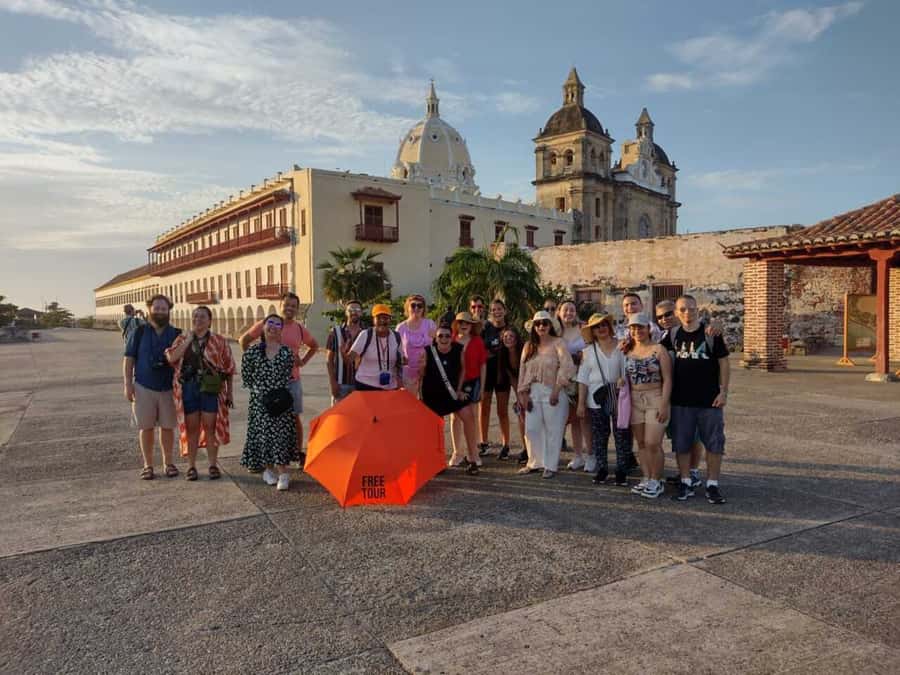
- A strong first look at Cartagena: The route covers the Walled City, San Diego, Getsemaní, key plazas, city walls, churches, museums, and public parks.
- History with human context: You hear about Indigenous people, Spanish rule, slavery, independence, San Pedro Claver, and the African roots of Cartagena’s culture.
- Getsemaní adds modern life: Graffiti, umbrellas, music, dance, street traditions, and local customs give the second half a different feel.
- A very low price: At $12, the tour offers a useful introduction for very little money, with the tip already covered.
- Guides shape the experience: Alvaro, Legacy, Dani, Robert, Ingrid, Rebeca, and Daniela have been praised for humor, clear explanations, local pride, and practical advice.
- Plan for tropical weather: Shade is used when possible, but rain and heat can affect the experience.
Starting beneath Cartagena’s Clock Tower
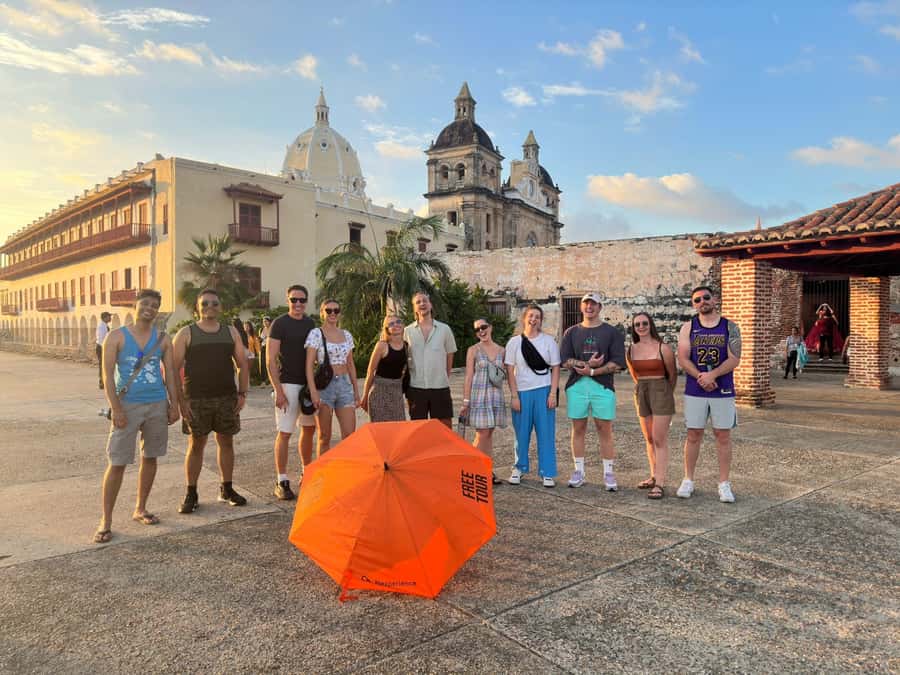
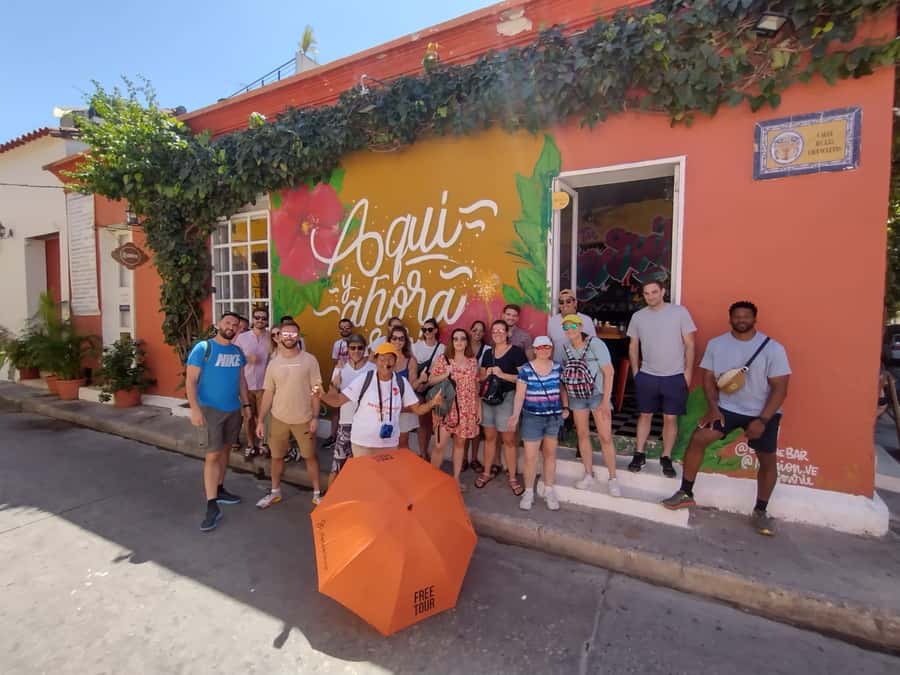
Meet at Plaza Cervantes, also called Camellón de los Mártires, directly in front of the Clock Tower. Look for the orange umbrella. This is a practical meeting point because the tower is one of the easiest landmarks to find in central Cartagena.
The opening stop sets the tone. Before focusing only on Spanish buildings and colonial power, the guide introduces the Indigenous people who lived in the area before and during the Spanish arrival. That matters. Cartagena’s story is not just one of stone walls, wealthy merchants, and pirate attacks. It also includes forced labor, cultural survival, African heritage, and the reshaping of local society.
The guide then leads you toward the Clock Tower, once known as the Golden Key of Cartagena. You enter Plaza del Ecuador, formerly called Plaza del Esclavo, and begin following part of the old enslavement route through Porto Carrero and Candilejo streets.
This is one of the tour’s strongest features. The route does not treat the old center as a pretty collection of colorful façades with the hard parts removed. You get a direct explanation of how commerce, slavery, Spanish rule, and the city’s growth were connected.
More Old Town and Historic Centre Walks in Colombia:
- Shared Tour of Bogota’s Historic Downtown (La Candelaria)
★ 4.7 · 100 reviews - Cali: Walking tour of the historic center
★ 5.0 · 69 reviews - Cali: Walking tour of the historic center
★ 4.9 · 18 reviews
From Pedro de Heredia to the Portal de los Dulces
Pedro de Heredia, the Spanish founder of Cartagena, appears early in the story. His presence helps frame the city’s origins, though the guide also places those origins within the lives of the people already here and those later brought to Cartagena by force.
At the Portal de los Dulces, the focus shifts to women’s work and family traditions during the period of slavery. The location is still associated with sweets sold by descendants of those communities. You may find the stop especially useful because it links an old economic role with a living tradition, rather than leaving the subject in the past.
The route continues to Plaza de la Aduana, once central to the sale and movement of goods, including enslaved people. The Municipal Hall and surrounding buildings provide a clear setting for explaining how colonial trade operated.
I appreciate this part of the walk because the guide uses ordinary streets to explain systems of power. You are not only memorizing building names. You are learning why these spaces mattered and how the city’s wealth was created.
Museums, art, emeralds, and the city’s public face
The tour passes the Museum of Modern Art, which focuses on Caribbean and Latin American art from the 1950s onward. You do not appear to spend a long period inside the museum, so think of this as an introduction rather than a full museum visit.
The Gold Museum presents Indigenous pieces from the Colombian Caribbean. The Emerald Museum is another notable stop, with displays of stones regarded as among the finest in the world and associated with famous wearers. These brief encounters help show that Cartagena’s cultural story reaches beyond Spanish architecture.
The tour also passes sites connected to religion, especially the Church and Museum-Monastery of San Pedro Claver. San Pedro Claver is remembered as the Slave of the Slaves because of his work with enslaved Africans arriving in Cartagena. The complex now also serves as a headquarters for human rights.
This stop gives the route moral weight. You see a beautiful religious building, but you also hear about the people who suffered under the system that made colonial Cartagena prosperous. The best guides handle that contrast carefully and make room for questions.
Cartagena’s walls, bastions, and pirate defenses
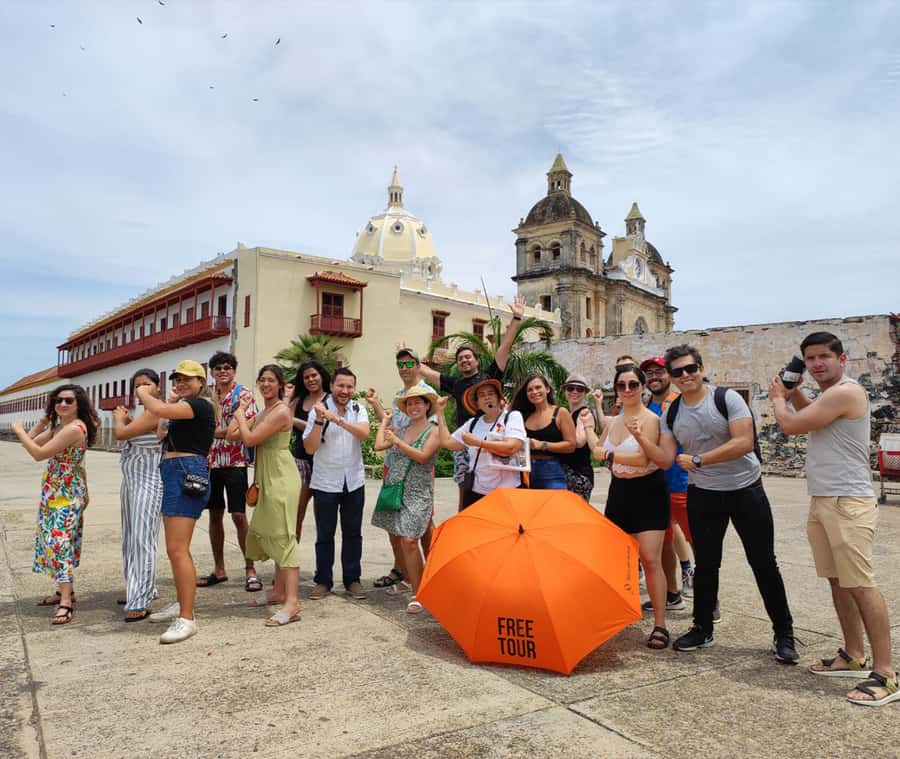
At the San Ignacio Bastion, the guide explains the military role of Cartagena’s walls. The bastion helped defend the Bay of Souls from pirate attacks, and it offers a useful way to understand Spanish defensive planning.
You hear about pirates and corsairs, but the story is not reduced to swashbuckling entertainment. The walls were part of a much larger system designed to protect trade, military supplies, and colonial control. The stonework becomes easier to appreciate once you know what it was built to protect and from whom.
The route’s wall section is historical rather than a full walk along every part of the fortifications. If your main goal is a long sunset stroll on the wall, you may want to set aside another time for that. This tour gives you the background, then keeps moving through the city.
Plaza Bolívar provides a natural pause. The square honors Simón Bolívar, an important figure in the independence movement, and gives you a chance to cool down. Guides often use this kind of open public space to answer questions and connect the colonial period with the struggle for independence.
More History Walking Tours in Colombia:
- Medellin Historic Walking Tour
★ 4.9 · 86 reviews - History and Hauntings of Salem Guided Walking Tour
★ 5.0 · 14,564 reviews - Lisbon: History, Stories and Lifestyle Walking Tour
★ 4.8 · 10,902 reviews - Boston: Freedom Trail History Small Group Walking Tour
★ 5.0 · 6,450 reviews
Centennial Park and Cartagena’s unexpected wildlife
The walk continues to Centennial Park, described as one of Cartagena’s important green lungs. The park occupies the site of the former railway station and preserves part of the city’s tropical dry forest.
This is a welcome change after the hard paving and close streets of the center. Under the shade of the trees, you may see sloths, squirrels, and iguanas. The park has even been described casually as Cartagena’s zoo, although it is a public green space rather than a formal zoo.
The wildlife adds a light moment after the heavier historical material. It also reminds you that Cartagena is not only churches, plazas, and fortifications. The park’s shade can be valuable, especially during a late afternoon walk when the heat has built up.
Still, do not count on seeing every animal on every departure. The available information says these creatures can be seen, not that a sighting is guaranteed. Bring patience and keep your eyes open.
Getsemaní brings music and street life
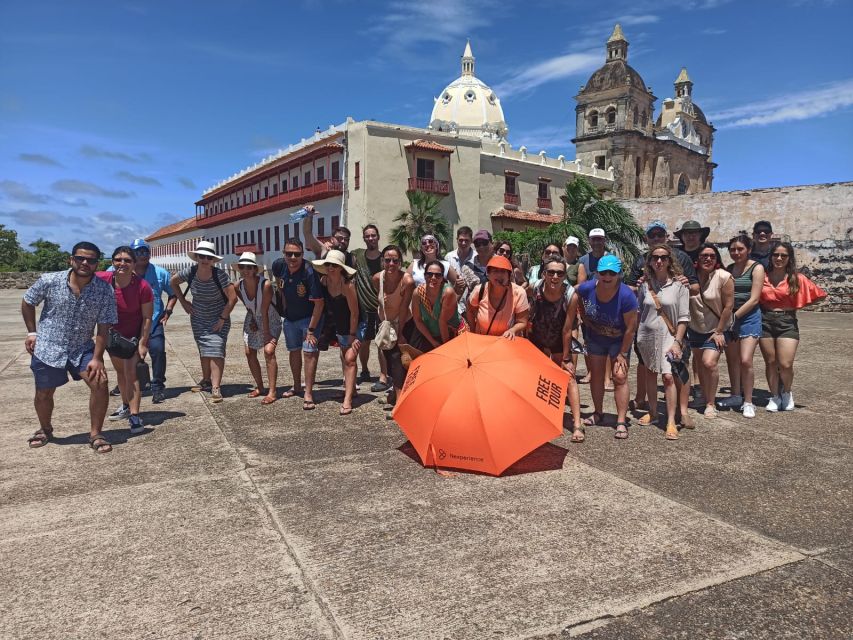
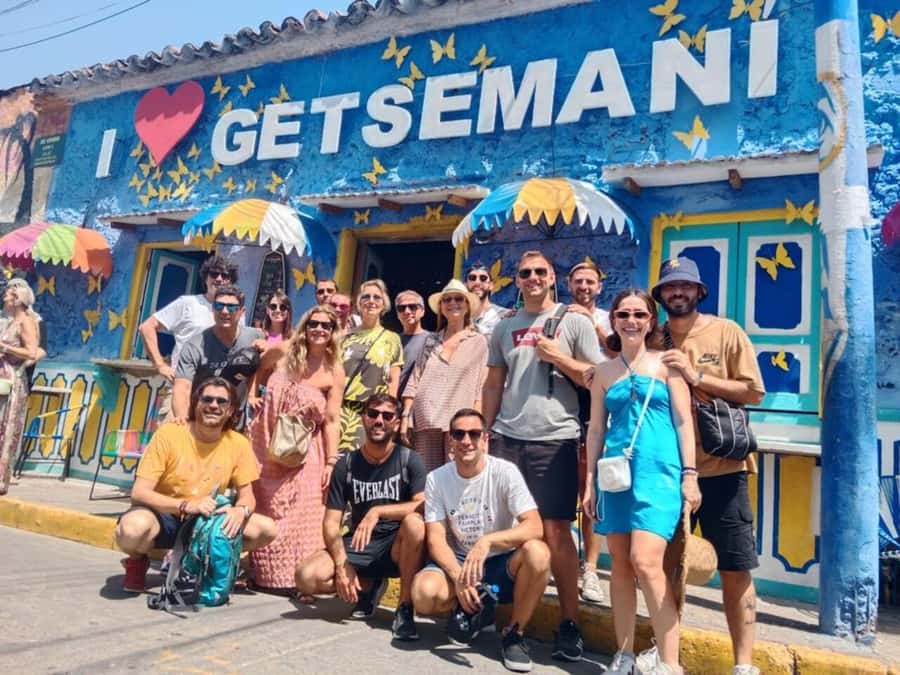
The second half of the tour shifts into Getsemaní, one of the city’s most colorful cultural areas. You pass an alley known for its umbrellas, graffiti, and distinctive architecture before entering Callejón Ancho.
Getsemaní feels different from the formal plazas of the Walled City. The guide talks about local customs, the changing social order, and how Caribbean traditions continue to shape the neighborhood. The setting makes the lesson immediate because the streets themselves carry signs of creativity, neighborhood pride, and public life.
Music becomes more important here. The route finishes near Calle San Juan with salsa and African champeta. Some guides teach the group basic dance steps along the way. Dani and Daniela have been praised for adding dance to the walk, while other guides, including Legacy, have used humor and short interactive moments to keep the group involved.
This is more than a photo stop. Salsa and champeta help explain Cartagena’s African and Caribbean roots in a way that a list of dates cannot. The dancing is simple and informal, so you do not need experience. You only need to be willing to take part, or watch with a smile.
The discussion of African braids is another memorable detail. The style is presented as a sign of freedom, identity, and hope connected to African history in Colombia and elsewhere. That kind of cultural explanation gives Getsemaní more meaning than a quick walk past colorful walls.
What the guides add to the walk
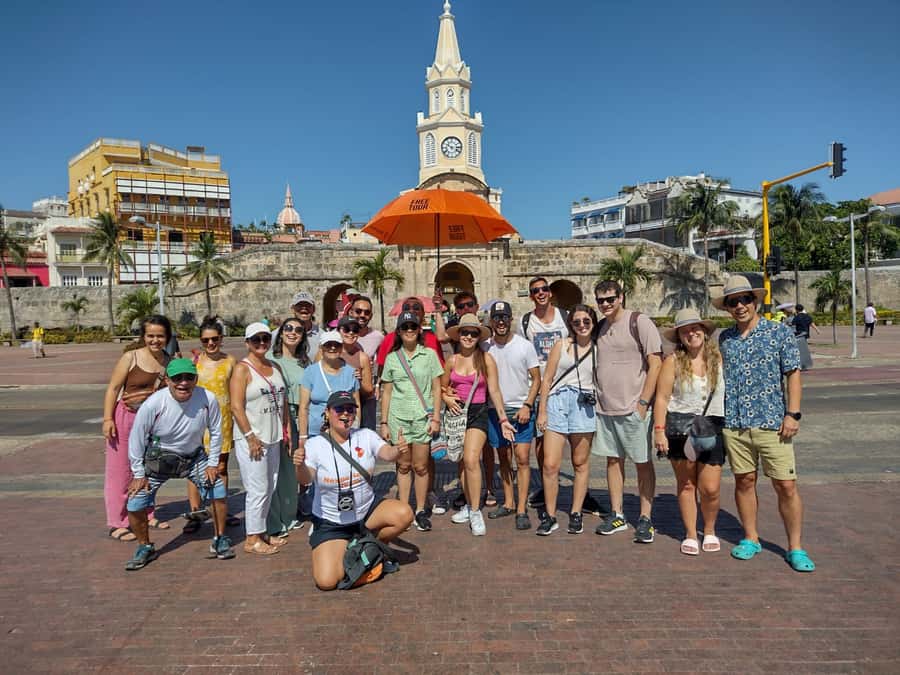
The guide can make a major difference on a shared tour. The strongest examples from this experience are guides who combine solid historical facts with local pride, humor, and room for questions.
Alvaro has been praised for explaining major events with a strong sense of affection for Cartagena. Legacy is known for high energy, jokes, historical detail, and practical guidance about avoiding overpriced businesses. Dani and Daniela bring dance, warmth, and enthusiasm for local culture. Robert is noted for giving restaurant and drink suggestions, keeping groups in the shade, and offering detailed advice after the tour. Ingrid and Rebeca have been praised for patience, clear explanations, and a friendly style in Spanish and English.
The language options are English and Spanish. One useful point: English ability can vary by guide. One English-speaking guide was described as excellent, while a comment about another guide suggested that slowing down would improve clarity. If English is not your first language, do not hesitate to ask the guide to repeat or slow down.
The groups are shared, so the pace and group size can vary. Guides generally try to keep everyone together and include people in the conversation. A family with a two-year-old found the guide attentive to the child’s needs, but you should still consider the heat and walking time before bringing very young children.
Price, pace, and practical comfort
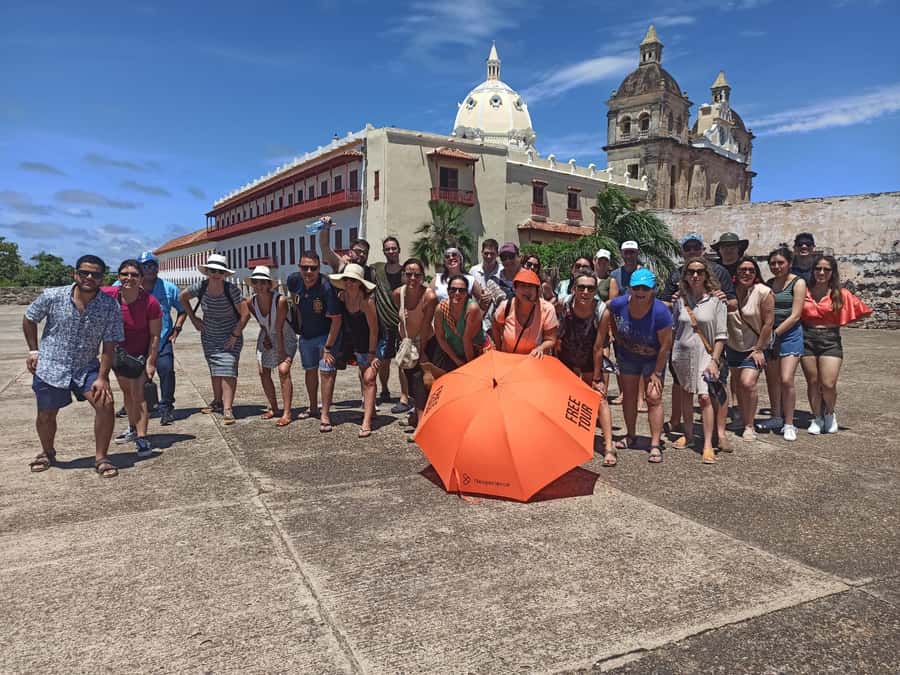
At $12 per person, this is an unusually affordable way to get your bearings in Cartagena. The price is especially good if you use the tour to decide which churches, museums, plazas, restaurants, or neighborhoods deserve a separate visit. The tip is already paid, so you are joining a free walking tour with that gratuity included in your booking.
The stated duration is 150 minutes, with about two hours in the Historic Center and one hour in Getsemaní. That is enough time to build a clear picture of the city, but not enough for long interior visits at every museum or church.
The route is wheelchair accessible. Even so, heat, street surfaces, crowds, and the walking distance can affect comfort. Wear supportive shoes, loose clothing, and sunscreen. Bring water, and use the shade whenever the guide offers it.
Rain is another factor. One departure was made less enjoyable by wet weather, although the guide still performed well. Weather-appropriate clothing is a sensible part of the plan.
The tour does not include hotel pickup, drop-off, food, or drinks. You meet at the orange umbrella and make your own way there. That keeps the cost down, but you should allow time to reach Plaza Cervantes.
Free cancellation is available up to 24 hours before departure, and you can reserve now and pay later. Starting times depend on availability.
Who should book this Cartagena walk?
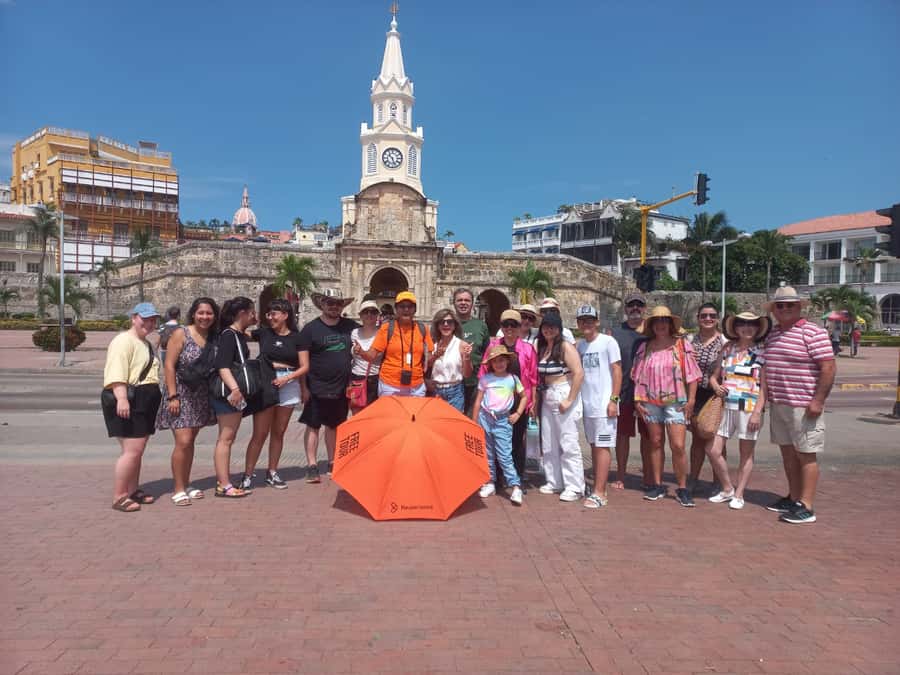
I would choose this tour early in a Cartagena stay. It gives you the basic map, the major historical themes, and useful suggestions for food and sightseeing. Several guides also share practical advice about street-vendor prices and places to avoid overpaying, which can help you make better choices afterward.
It suits first-time visitors who want one compact introduction rather than separate tours for the old center and Getsemaní. It also works well for people interested in colonial history, independence, slavery, African heritage, music, architecture, and local customs.
You may want something else if you dislike walking in heat, prefer private guiding, or want long visits inside museums. This is a shared outing with a lively, conversational style. It is not a quiet architectural lecture, and the dance moments may feel too playful if you want only formal history.
Should you book it?
Yes, especially at $12. The best reason to book is the range: conquest, colonial trade, slavery, independence, walls, religion, art, wildlife, Getsemaní, salsa, champeta, and practical city advice all fit into one route.
Choose an earlier or later time when possible, carry water, and arrive ready to participate. If you get Dani, Legacy, Alvaro, Robert, Ingrid, Rebeca, or Daniela, you can expect a guide with a clear connection to Cartagena. No matter who leads the walk, this is a useful and inexpensive way to understand why the city is beautiful, complicated, and still very much alive.
FAQ
Where does the tour meet?
The meeting point is Plaza Cervantes, also called Camellón de los Mártires, in front of the Clock Tower. Look for the orange umbrella.
How long does the tour last?
The full experience lasts 150 minutes. The Historic Center portion takes about two hours, followed by about one hour in Getsemaní.
What areas does the tour cover?
It covers Cartagena’s Historic Center, also called the Walled City, plus the Getsemaní neighborhood.
Which languages are available?
The tour is offered in English and Spanish.
Is the tour wheelchair accessible?
Yes, the activity is listed as wheelchair accessible.
Is the tip included?
Yes. The tip is already paid as part of the free walking tour arrangement.
Are food and drinks included?
No. Food and drinks are not included, and hotel pickup and drop-off are also excluded.
What should I bring?
Bring comfortable shoes, sunscreen, comfortable clothing, water, and clothing suited to the weather.
Just added around Colombia
- Cartagena Instagrammable History★ 4.5 · 29 reviews
- Cali: Walking tour of the historic center★ 5.0 · 69 reviews
- Chiva Private Cultural Tour with Audio Guide in Buga★ 5.0 · 49 reviews
- Bogota scooter tour★ 5.0 · 46 reviews
- Historical tour Bogota★ 5.0 · 72 reviews
- Medellín: Flower Farm & Silletero History Tour★ 4.3 · 23 reviews
- Shared Tour of Bogota’s Historic Downtown (La Candelaria)★ 4.7 · 100 reviews
- Santa Marta A Historical & Street food Experience★ 4.7 · 41 reviews
Old Town & Historic Centre Walks, compared.

Live Fado Show with Port Wine in Historic Center
Read our review →
Valencia Old Town Tour with Wine & Tapas in 11th Century Historic Monument
Read our review →
Prague Old Town, Medieval Underground and Dungeon Historical Tour
Read our review →
Old Town Walking Tour History and Tales in Edinburgh
Read our review →
Philadelphia Old City Historic Walking Tour with 10+ Top Sites
Read our review →
Saadian Tombs & Bahia Palace, Medina Guided Tour
Read our review →
Browse the lists this tour appears in