
Review · BOGOTá
Historical tour Bogota
Bogotá’s past is written into its streets. This three-hour walking tour gives you a useful first look at La Candelaria, the old center where indigenous traditions, Spanish colonial rule, independence, politics, art, and everyday city life meet. You also walk through La Concordia and Las Aguas, with stops at major squares, a market, monuments, and cultural sites.
I like the tour’s broad range. In one morning, you move from the founding of Bogotá and the legend of El Dorado to Fernando Botero, Gabriel García Márquez, chicha, emeralds, and the Bogotazo. I also like the practical advice at the end, including suggestions for restaurants, museums, coffee, and money exchange.
The main drawback is that this is a walking tour with a lot of ground to cover. The pace can feel brisk, and the group may include up to 30 people. Since the tour runs in bad weather, bring an umbrella and wear shoes suited to uneven city streets.
Key points at a glance
- A three-hour introduction to Bogotá: The route covers La Candelaria, La Concordia, Las Aguas, and several central landmarks.
- History beyond colonial buildings: You hear about the Muisca people, El Dorado, independence, the Bogotazo, and Colombia’s period of violence.
- Strong guide-led experience: Named guides including Paula, Jennifer, Ricardo, Diane, Carlos, and Rodrigo have been praised for clear explanations, friendly manner, and useful local advice.
- A taste of local culture: The route includes La Concordia Market, where you can buy chicha, Colombian juice, or a souvenir.
- Good value for a first morning: The listed price is $19.77 per person, with group discounts and no separate admission fees for the stops.
- Weather does not stop the walk: The tour operates in rain, so pack an umbrella rather than hoping for a cancellation.
Why this is a smart first walk in Bogotá
Bogotá can feel large and hard to read when you first arrive. This tour helps you place the city’s central landmarks in a story, rather than seeing them as a string of attractive buildings with no context.
The route is especially useful if you have only a short stay or want help deciding what to do next. One guide, Jennifer, used photographs to explain historical events, which can make the political chapters easier to follow while you are standing in busy streets. The final stop also includes recommendations for museums, restaurants, coffee, and money exchange.
I would choose this walk early in a Bogotá visit. You can use the advice later that day, and the route gives you a clearer sense of where La Candelaria ends, how the central districts connect, and which places deserve more time.
The tour is not built around museum entry. You mainly see places from outside and listen to the guide. That keeps the route moving and avoids admission charges, but you should not book it expecting long indoor visits or a detailed look at individual collections.
A few more history tours around Colombia worth a look
- Cartagena: Historic Center and Getsemaní Shared Walking Tour
★ 4.9 · 2,716 reviews - Shared Tour Cali’s Historical Downtown
★ 4.8 · 143 reviews - Historical Shared Tour Salsa, Graffiti & Resistance in Cali
★ 5.0 · 107 reviews
Starting at Plaza de Bolívar
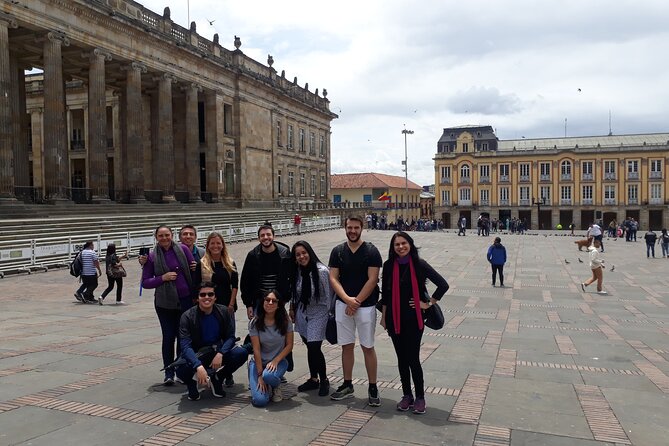
The tour begins at Cra. 7 #11-10 in La Candelaria and first heads to Plaza de Bolívar, Bogotá’s main civic square. You spend about 30 minutes here, making it the longest single stop on the route.
This is where the tour sets up the city’s story. You learn how Bogotá began and get an introduction to the important buildings around the square. The setting gives the guide a natural place to explain the capital’s political and colonial past before the walk moves into narrower streets.
I like this opening because it gives you a fixed point in a city that can otherwise feel sprawling. Take a moment to look around as the guide speaks. The square is not just a photo stop. It is the place where the tour’s larger themes, power, religion, government, and national identity, begin to connect.
The group size can reach 30 people, so stand close enough to hear. A larger group may make it harder to ask questions at once, but guides are praised for answering questions and keeping the mood friendly.
Teatro Colón and the independence story
The next stop is Teatro Colón, about a 15-minute visit. You can admire the theater from the outside and hear about one of Colombia’s important cultural buildings. The tour also connects this area with Simón Bolívar, who lived nearby.
This section adds a personal detail to the independence story. Instead of hearing only about battles and dates, you get a sense of the people and places tied to the creation of Colombia.
Do not expect a theater performance or an interior tour. The value comes from the explanation and the surrounding setting. If architecture interests you, this is a useful pause, but the guide’s historical context is the main reason to pay attention.
The cultural block near Banco de la República
At the museums of Banco de la República, the guide explains the cultural block of La Candelaria from outside. The stop lasts about 15 minutes and also introduces the life and work of Fernando Botero.
This is a compact but important cultural link in the walk. Bogotá’s historic center is not only about government and churches. Art is part of the city’s public identity, and Botero gives the guide a well-known figure through whom to discuss Colombian creativity and culture.
Since the museum visit is external, consider returning later if the subject catches your interest. The walk gives you an orientation, not a full art lesson. I find that a sensible approach for a first tour because you learn what each place offers before deciding where to spend your limited museum time.
The guides Paula and Diane received particular praise for making the city’s history clear and approachable. Paula was also singled out for connecting history and politics with literature, especially during a stop associated with Gabriel García Márquez.
Same place, a different slice of the past:
- Shared Medellín Downtown Tour with Wireless Audio
★ 4.8 · 315 reviews - Shared Tour of Bogota’s Historic Downtown (La Candelaria)
★ 4.7 · 100 reviews - Medellin Historic Walking Tour
★ 4.9 · 86 reviews - From Medellín: Private Pablo Escobar History Tour
★ 4.9 · 84 reviews
Plaza del Chorro de Quevedo and Bogotá’s founding
Plaza del Chorro de Quevedo is one of the most atmospheric stops. You spend around 20 minutes learning about the square’s importance as Bogotá’s foundation site.
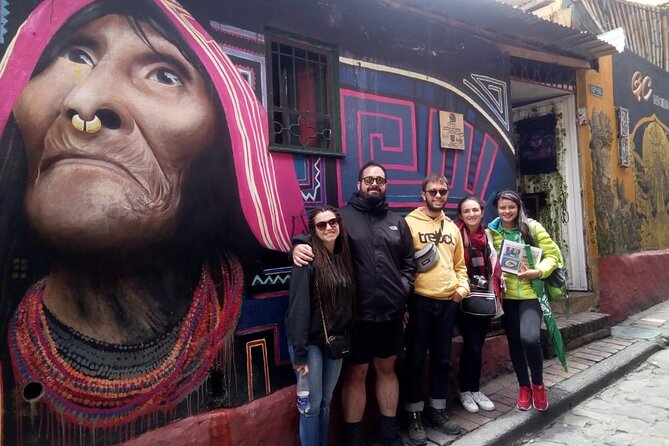
This is where the tour moves further back, to the indigenous people who lived in the region and the legend of El Dorado. The guide also explains chicha, the traditional fermented drink associated with Bogotá, and why it was prohibited.
That combination is one of the route’s strengths. You are not getting a simple colonial-era timeline. The explanation includes indigenous culture, Spanish colonization, local food and drink, and the way authorities tried to control traditional customs.
The square can be lively, and the group may gather in a tight space. Listen for the guide’s explanation before wandering off for photographs. The stories are the point here, and the setting can be easy to appreciate once you understand its place in Bogotá’s beginnings.
Trying chicha at La Concordia Market
The walk continues to Plaza de Mercado La Concordia, where you spend about 20 minutes inside the market. This is the most hands-on part of the route.
You can buy traditional chicha, order a typical Colombian juice, or purchase a souvenir. Drinks, food, and purchases are not included in the tour price, so bring money if you want to try something.
I like this stop because it shifts the experience from monuments to daily life. A market tells you something about a city that a grand square cannot. You can look at the goods, watch the movement around the stalls, and decide for yourself if chicha is worth trying.
The stop is brief, so do not expect a full market meal. It works better as a quick taste of local culture than as a dedicated food tour. If you want to buy something, keep an eye on the time so you do not lose contact with the group.
Eje Ambiental and views toward Monserrate
At Eje Ambiental, the guide points out Monserrate and explains how to reach the hill. You also hear about a square where Gabriel García Márquez went for social meetings.
This stop connects the historic center with one of Bogotá’s best-known sights. If Monserrate is on your plans, the directions can help you understand how it fits into your day. The tour does not take you up the hill, so treat this as orientation rather than a substitute visit.
The stop lasts about 15 minutes. It is also a chance to pause and look beyond the immediate old quarter. The connection to García Márquez adds a literary thread to the political and artistic subjects already covered.
Several guides have been praised for offering useful suggestions beyond the official route. Paula, in particular, was noted for recommending places to drink coffee, change money, and visit museums. That sort of advice can be more useful than another list of facts, especially on a short visit.
The Jorge Eliécer Gaitán Monument and the Bogotazo
The monument to Jorge Eliécer Gaitán is one of the tour’s most serious stops. You spend about 20 minutes learning who Gaitán was, why he mattered, and how his death connects to the Bogotazo and Colombia’s later violence.
This part gives the tour more weight. Bogotá’s story is not only colorful squares, colonial architecture, artists, and food. The city also carries painful political memories, and a useful guide should explain them without reducing the subject to a quick dramatic anecdote.
The discussion can be demanding because Colombia’s political history is complex. The guide has to cover major events within a three-hour walk, so you will receive a clear introduction rather than a complete account of the country’s violence. If this subject interests you, write down names and dates and use the stop as a starting point for further reading or a museum visit.
The guides Ricardo and Jennifer were praised for explaining historical events clearly. Paula was also noted for her understanding of Colombian history and politics. Those comments suggest that the quality of this section depends heavily on the individual guide, but the route gives them an important place to explain it.
Finishing at Plazoleta del Rosario
The final stop is Plazoleta del Rosario, reached after about 20 minutes. The square is associated with Bogotá’s emerald market, so the guide explains what emerald trading looks like and how this somewhat informal market operates.
This is a distinctive ending. You finish with a subject tied to Colombian commerce and local life, rather than simply ending at another colonial building. You may see emeralds being marketed, but the tour does not promise a formal shopping experience or a purchase.
The guide then gives recommendations for the rest of your stay, including restaurants. The end point is Av. Jiménez de Quesada #6-71, and the tour finishes at Rosario Square. Since the walk does not return to the starting point, plan your next stop from the final location.
What the guides add to the experience
The strongest praise is aimed at the guides. Paula is repeatedly described as warm, clear, and especially good at explaining history, politics, and literature. Ricardo is praised for being attentive and for explaining Bogotá’s story in a direct way.
Jennifer receives credit for an informative Spanish-language walk and for using pictures to explain historical material. Diane is described as professional and well prepared, while Carlos and Rodrigo are also praised for strong explanations and a friendly approach.
The tour may be offered in Spanish or with guides who speak to different audiences, but the supplied information does not specify a fixed language schedule. Confirm the language when booking if that matters to you.
A good guide matters here because the route itself is compact. You are not entering every building or spending hours at a single museum. The story, pacing, and answers to questions are what turn the walk into something useful.
Price, pace, and physical demands
The listed price is $19.77 per person, and group discounts are available. Since the stops are free and the experience lasts about three hours, I consider the price reasonable if you want historical context and local orientation in one morning.
The value is not in admission tickets. It is in having someone explain why the places matter and help you make better choices for the rest of your time in Bogotá. One person decided to pay 50,000 Colombian pesos at the end of a three-hour walk, but the supplied details do not state a required gratuity, so check the current booking terms before you go.
You need a moderate level of physical fitness. The route is on foot, and the description does not provide a detailed accessibility plan for the streets or surfaces. Service animals are allowed, and the starting area is near public transportation.
The tour operates in bad weather. An umbrella is not optional advice here, especially because Bogotá weather can change during the day. Wear comfortable shoes, keep valuables secure, and leave enough room in your schedule for the full three hours.
Who should book this walk
I would recommend it to first-time visitors, people with limited time, and anyone who wants a historical framework before visiting museums on their own. It also suits curious eaters and culture-focused visitors who like small local details such as chicha, market drinks, emeralds, and García Márquez’s connection to the city.
It is less suitable if you want a slow photography walk, a long museum visit, or a private tour with constant personal attention. A group of up to 30 can feel crowded, and the route covers many subjects quickly.
Families and mixed-age groups may appreciate the variety, though the political history and discussion of violence require attention. The guide’s style matters, and names such as Paula, Ricardo, Jennifer, Diane, Carlos, and Rodrigo have been associated with especially positive experiences.
Should you book the Bogotá historical tour?
Book this tour if you want to understand Bogotá before exploring it on your own. The route covers the essential center, but its real strength is the range of subjects: indigenous culture, El Dorado, colonization, independence, Botero, García Márquez, Gaitán, the Bogotazo, chicha, and emeralds.
I would book it near the beginning of a stay and bring an umbrella, water, comfortable shoes, and a few Colombian pesos for the market. Skip it only if you dislike group walks or want substantial indoor sightseeing. For most first visits, the $19.77 price buys a useful introduction to the city and a practical plan for what to see next.
FAQ
How long does the Bogotá historical tour last?
The walk lasts approximately three hours.
Where does the tour begin?
It begins at Cra. 7 #11-10 in La Candelaria, Bogotá.
Where does the tour end?
The tour ends at Rosario Square, at Av. Jiménez de Quesada #6-71 in La Candelaria.
What areas does the route cover?
The walk covers parts of La Candelaria, La Concordia, and Las Aguas.
What is the listed price?
The listed price is $19.77 per person. Group discounts are available.
Are admission tickets included?
The listed stops have free admission. The tour includes a guide and a walk through areas of interest in central Bogotá.
Are food and drinks included?
No. Drinks, meals, snacks, and personal purchases are not included.
Can I buy chicha during the tour?
Yes. At Plaza de Mercado La Concordia, you can buy traditional chicha, a typical Colombian juice, or a souvenir.
Does the tour operate in bad weather?
Yes. The tour is not cancelled because of bad weather, so you should bring an umbrella.
How large can the group be?
The maximum group size is 30 people.
Just added around Colombia
- Cartagena Instagrammable History★ 4.5 · 29 reviews
- Cali: Walking tour of the historic center★ 5.0 · 69 reviews
- Chiva Private Cultural Tour with Audio Guide in Buga★ 5.0 · 49 reviews
- Bogota scooter tour★ 5.0 · 46 reviews
- Medellín: Flower Farm & Silletero History Tour★ 4.3 · 23 reviews
- Shared Tour of Bogota’s Historic Downtown (La Candelaria)★ 4.7 · 100 reviews
- Santa Marta A Historical & Street food Experience★ 4.7 · 41 reviews
- Medellin Historic Walking Tour★ 4.9 · 86 reviews
Colombia History Tours, compared.
Historic Center and Getsemaní Shared Walking Tour
Read our review →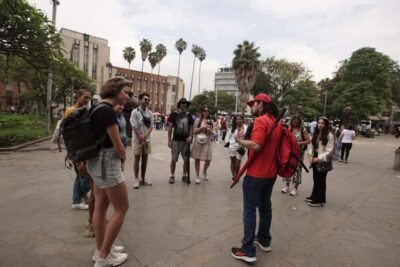
Shared Medellín Downtown Tour with Wireless Audio
Read our review →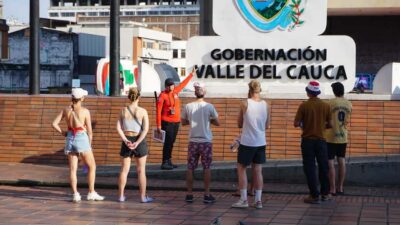
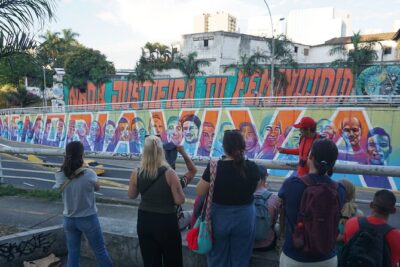
Historical Shared Tour Salsa, Graffiti & Resistance in Cali
Read our review →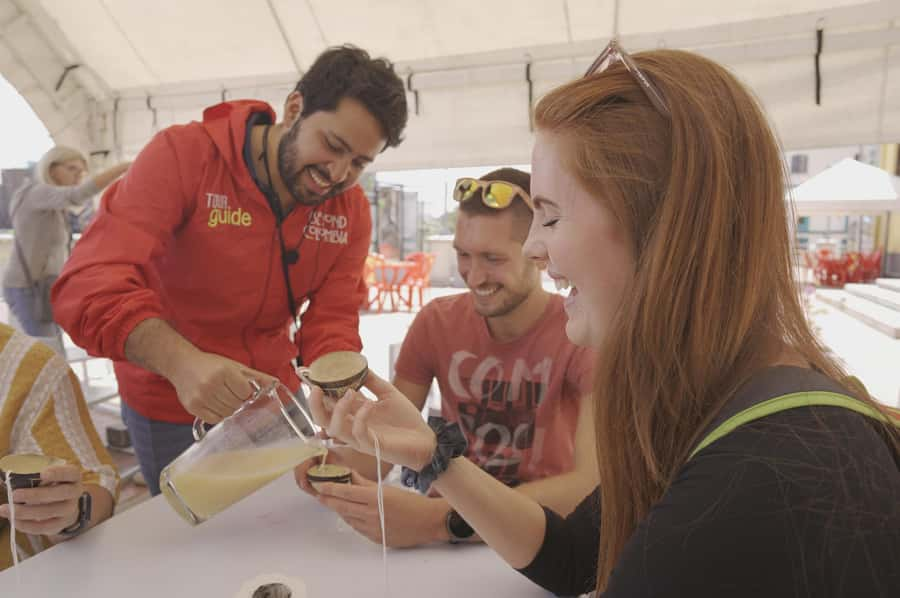
Shared Tour of Bogota’s Historic Downtown (La Candelaria)
Read our review →
From Medellín: Private Pablo Escobar History Tour
Read our review →
Browse the lists this tour appears in