
Review · ANTIOQUIA
Shared Medellín Downtown Tour with Wireless Audio
Medellín makes more sense on foot. This three-hour walk links Botero Plaza, La Alpujarra, Junín Street, and the Park of Lights while explaining how the city changed from a troubled industrial center into a place known for public investment and social renewal. I like the clear focus on Medellín’s full story, including the painful years of the 1980s and 1990s, and I like the wireless audio system, which lets you hear the guide even when the streets get noisy.
The tour also gives you useful local orientation. Guides such as Miguel, Santiago, Carolina, Daniel, Deisy, and Sebastian have been praised for explaining difficult subjects in a friendly, direct way and for offering tips on coffee, souvenirs, food, and other things to do. The main caution is the length and pace: you may walk about 8 kilometers, and some city-center areas can feel crowded and uncomfortable, especially around persistent street solicitors and people struggling with addiction.
Key points at a glance
- Botero Plaza sets the scene: Start beside the Museo de Antioquia and Fernando Botero’s famous sculptures, one of Medellín’s best-known public meeting places.
- The difficult past is discussed openly: The tour covers drug trafficking, violence, and the social costs of the 1980s and 1990s without making those years the only story.
- Railways explain Medellín’s growth: La Alpujarra and the railroad story show how transport helped turn Medellín into an industrial center.
- Wireless audio helps in noisy streets: You can take photos and still hear the guide clearly, though the equipment cannot be used in rain or by children under 15.
- The local perspective is a major strength: Paisa guides explain regional culture, industry, politics, and daily life with room for questions.
- The price is unusually low: At $13 per person, this is a strong introduction to downtown Medellín, provided you are comfortable with a long urban walk.
Meeting Fernando Botero in Botero Plaza
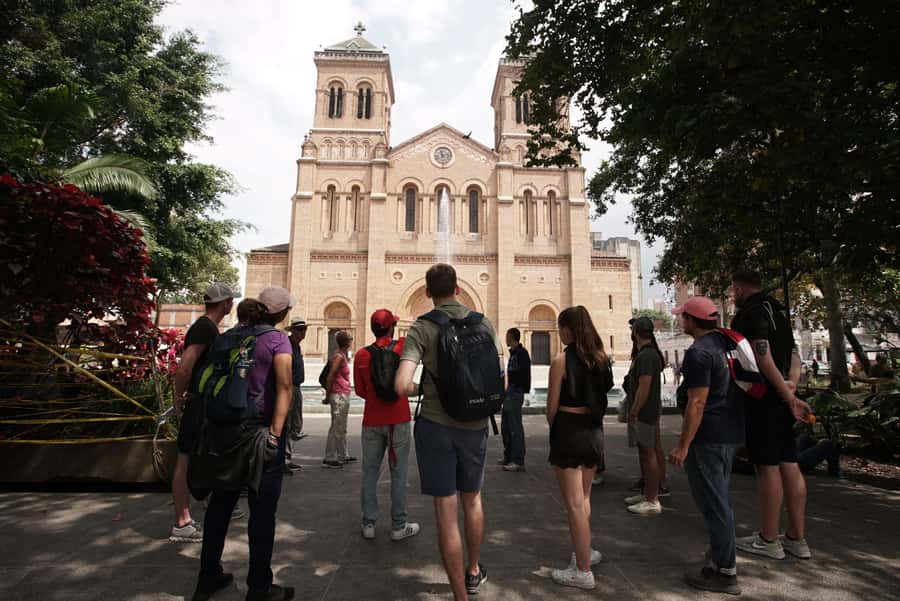
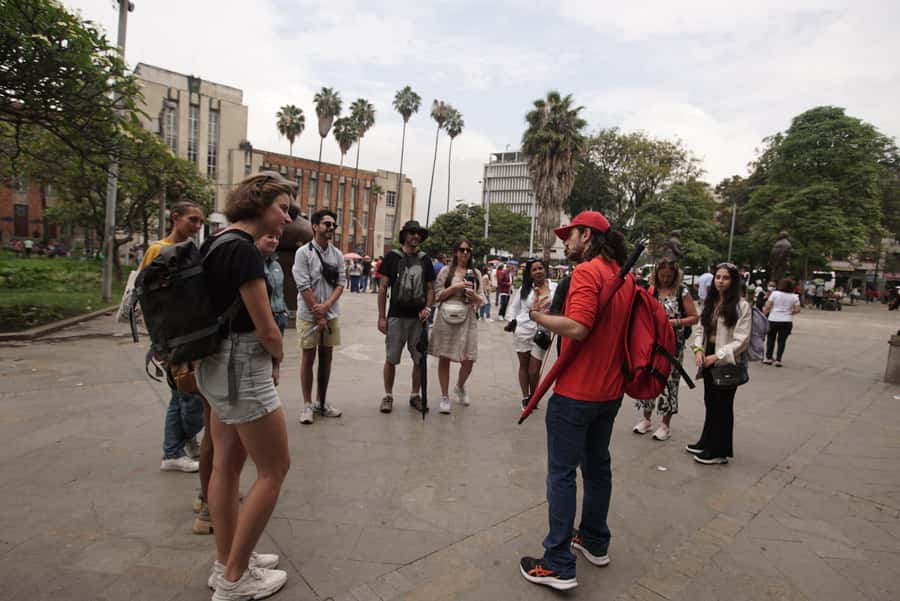
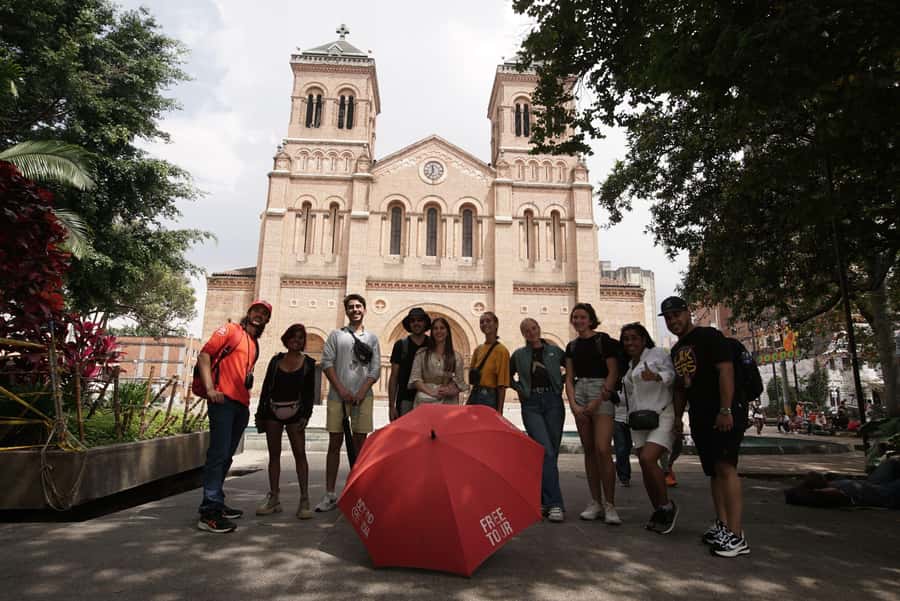
The tour begins in front of the Museo de Antioquia at Botero Plaza. Look for the red umbrellas belonging to Beyond Colombia. This is a practical meeting point because the museum and the large bronze sculptures give you an easy landmark in the middle of downtown.
Botero’s rounded figures are not just photo props. They give the guide a natural way to discuss Medellín’s art scene and one of Colombia’s best-known artists. You will learn about Botero’s connection to the city, his artistic style, and his contribution to public life. One guide, Santiago, was especially praised for explaining Botero’s work along with the artist’s place in Colombian culture.
I like starting here because the plaza quickly changes your first impression of downtown. Medellín is not presented only as a city of statistics, crime stories, or modern urban projects. Art is placed right in the middle of daily life, surrounded by people moving through the city.
Allow time to look around before the walk begins. You may be standing for the first explanation, and the plaza can be busy. Keep your phone and wallet secure from the start, since the tour passes through crowded parts of the center.
Other history tours people book around Colombia:
- Cartagena: Historic Center and Getsemaní Shared Walking Tour
★ 4.9 · 2,716 reviews - Shared Tour Cali’s Historical Downtown
★ 4.8 · 143 reviews - Historical Shared Tour Salsa, Graffiti & Resistance in Cali
★ 5.0 · 107 reviews
What paisa culture means in Medellín
A central theme is paisa identity. Paisas are people from Antioquia and nearby parts of Colombia, and the tour uses local culture to explain Medellín’s importance within the country.
You will hear about industry, work, entrepreneurship, family life, and regional pride. This is useful context because Medellín’s development did not happen by accident. The city’s commercial and industrial character helped shape its politics, neighborhoods, public spaces, and reputation across Colombia.
The best guides adjust the explanation to the group. Alex was praised for handling political and social questions, while Carolina made a point of checking that Spanish-speaking and less confident English speakers were following along. That kind of flexibility matters on a history walk, since the subject can quickly become dense.
The tour is offered in English or Spanish. A live guide leads it, so you can ask about things you see along the way rather than simply listening to a fixed recording. Wireless receivers make this easier. You can step aside for a photograph or examine a building without losing every other sentence.
The system has limits. It is not waterproof, and if rain begins, the devices must be collected. Bring an umbrella or rainproof jacket, and do not assume the audio equipment will keep working through a downpour.
Medellín’s 1980s and 1990s without a movie version
The section on Medellín’s violent past is one of the tour’s most valuable features. The guide discusses drug trafficking, conflict, and the damage done to ordinary people during the 1980s and 1990s. You get the subject directly, without treating it as a glamorous crime story.
That distinction matters. Medellín is often reduced to television images about cartels and violence. This walk places those years inside a longer story that includes economic change, public policy, community effort, and attempts to build a safer city.
The tone may vary with the guide. The tour promises an objective approach, but one participant felt the presentation was not completely neutral. That is a fair point to keep in mind. A local guide is explaining events from within Colombian society, not delivering a detached university lecture. You may hear strong views about government, inequality, violence, and social investment.
For me, that is not automatically a flaw. A completely emotionless account can miss why the subject still matters to people in Medellín. The important thing is to listen critically and ask questions. Guides including Daniel and Sebastian were praised for discussing both the city’s progress and its current challenges rather than presenting a perfect success story.
If you want only cheerful sightseeing, this may not be your tour. If you want a fuller understanding of Medellín, this difficult section is essential.
Following the railroad to La Alpujarra
The railroad and La Alpujarra provide the tour’s clearest explanation of Medellín’s economic rise. The guide describes rail transport as a major force behind the city’s development and connects it with the people and industries that helped Antioquia grow.
This is one of the places where a guided walk earns its price. A building or public space can look ordinary until you understand why it exists. The railroad story gives meaning to the city’s movement of goods, workers, and ideas. It also helps explain why Medellín became such an important industrial center in Colombia.
La Alpujarra is more than a stop for photographs. It represents the city’s public and administrative heart, and it connects with the broader story of modernization. You will pause here, listen, and then continue on foot rather than entering a series of paid attractions.
That keeps the $13 price honest. There are no surprise entrance charges built into the route, but you should not expect museum admissions, meals, coffee, or souvenirs to be included. The value comes from the guide’s interpretation and the amount of ground covered.
Same place, a different slice of the past:
- Shared Tour of Bogota’s Historic Downtown (La Candelaria)
★ 4.7 · 100 reviews - Medellin Historic Walking Tour
★ 4.9 · 86 reviews - From Medellín: Private Pablo Escobar History Tour
★ 4.9 · 84 reviews - Historical tour Bogota
★ 5.0 · 72 reviews
Junín Street and the everyday city
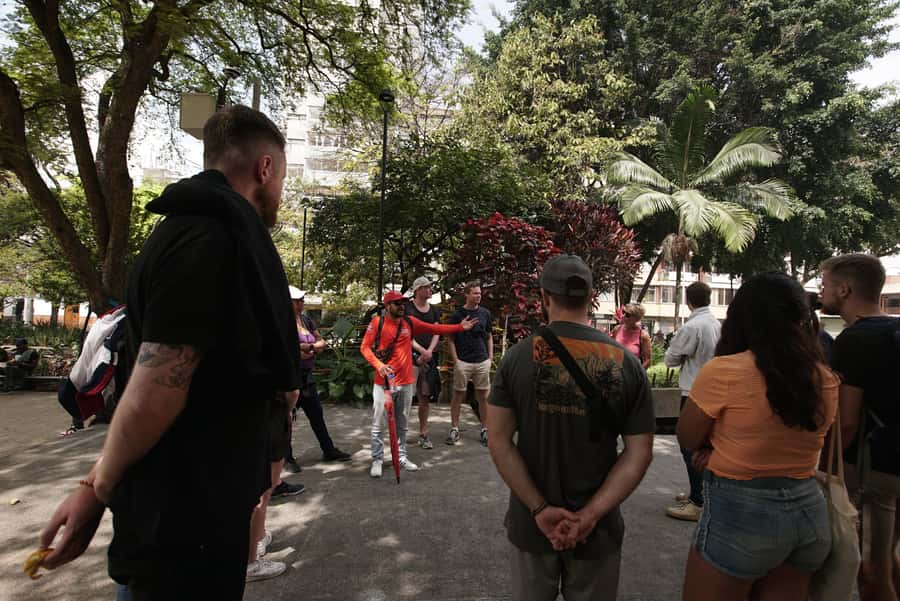
The route crosses Junín Street and moves through passages in the center. This is where you see Medellín as a working city rather than a set of carefully framed monuments.
The walk may include shops, street activity, public buildings, informal commerce, and ordinary urban scenes. Guides use these surroundings to explain how people live, work, and move through downtown. You may also hear recommendations for local coffee, lunch, souvenirs, and other places to visit after the tour.
Several guides were praised for helping first-time visitors get their bearings. That practical help is worth more than a long list of attractions. After three hours, you should have a clearer idea of where the center is, what deserves another visit, and how to plan the rest of your stay.
The tradeoff is comfort. Downtown Medellín can be crowded, noisy, and rough around the edges. One account described persistent beggars and people using crack cocaine in some areas. This is not caused by the tour, but it is part of the setting you may encounter. Keep your belongings close, avoid displaying cash, and follow the guide’s advice.
The local phrase no dar papaya means not making yourself an easy target. It is good advice here. A small crossbody bag worn in front, a modest phone, and sensible attention are enough for most people, but this is not the place to wander distractedly.
The Park of Lights and Medellín’s public message
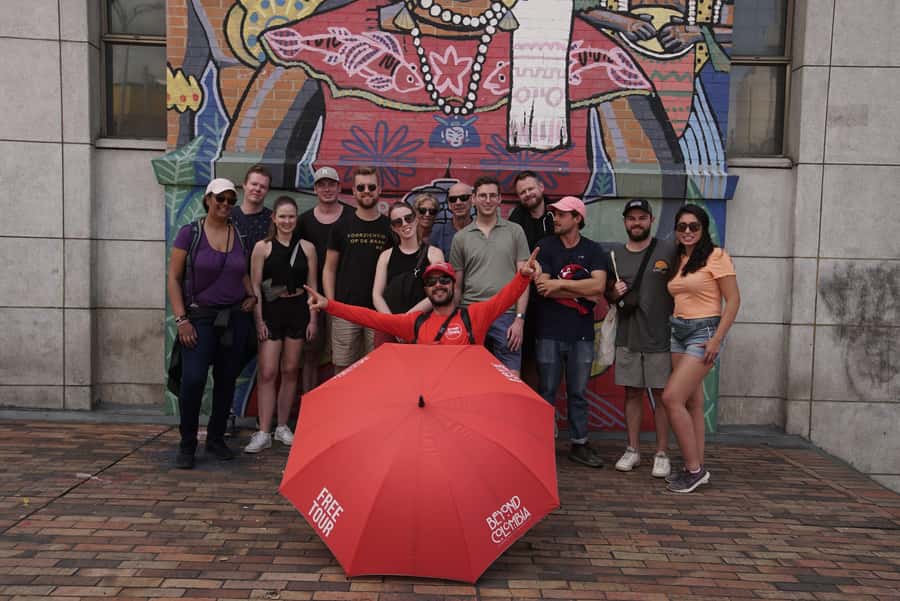
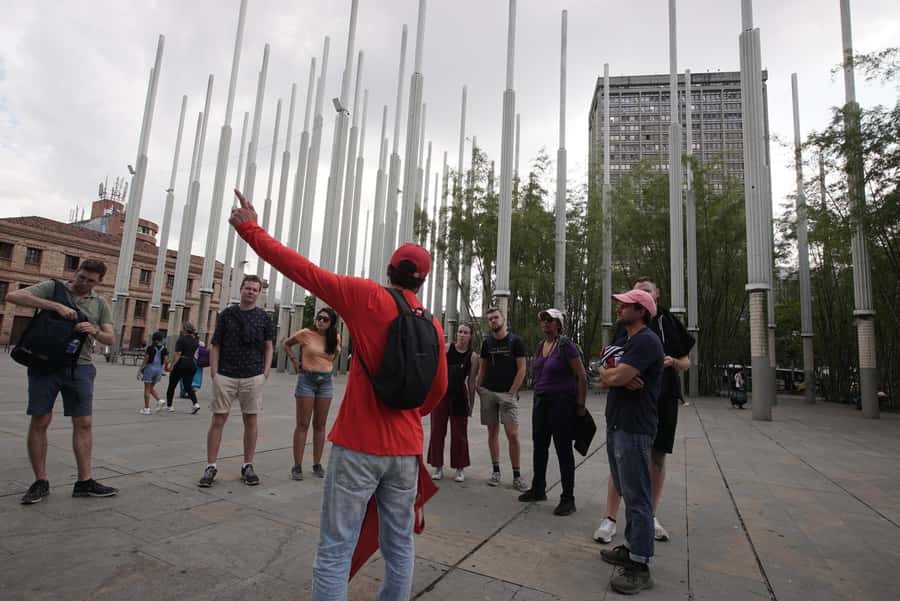
The Park of Lights is presented as a tribute to the father of Medellín’s railroads. The park helps connect transport, industry, civic identity, and public space in one stop.
You will hear how Medellín has used public projects and social investment to change the way people experience the city. The tour does not claim that every problem has disappeared. Instead, it explains the effort to turn neglected or troubled places into shared civic areas.
That point gives the route its wider purpose. You are not simply collecting landmarks. You are being asked to consider why Medellín looks and feels different from the city described in old news reports, and why the transformation remains unfinished.
The park also provides a useful pause during a long walk. Still, do not mistake a resting stop for a fully relaxed afternoon. The route covers about 8 kilometers, with periods of standing and walking between explanations.
How the wireless audio changes the walk
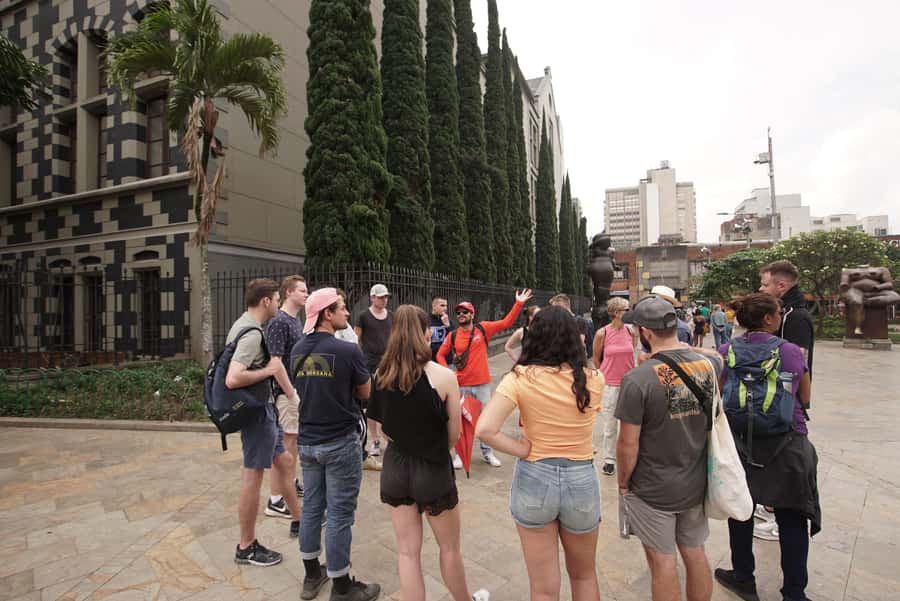
The receivers are a practical feature, not a gimmick. In a busy city center, a guide speaking to a group can be hard to hear. The audio system lets you stand slightly apart, take a picture, or look at a building while keeping up with the story.
This is especially helpful when a guide is explaining a complicated timeline. Missing one key date or name can make the next ten minutes confusing. The equipment also reduces the need for everyone to crowd around the guide.
There are two catches. Children under 15 cannot use the system, and rain means the devices must be collected. If you are visiting during a wet spell, pack rain protection that can go on quickly.
The equipment also does not replace attention. You still need to watch traffic, stay with the group, and listen for instructions in crowded areas.
Guides who shape the experience
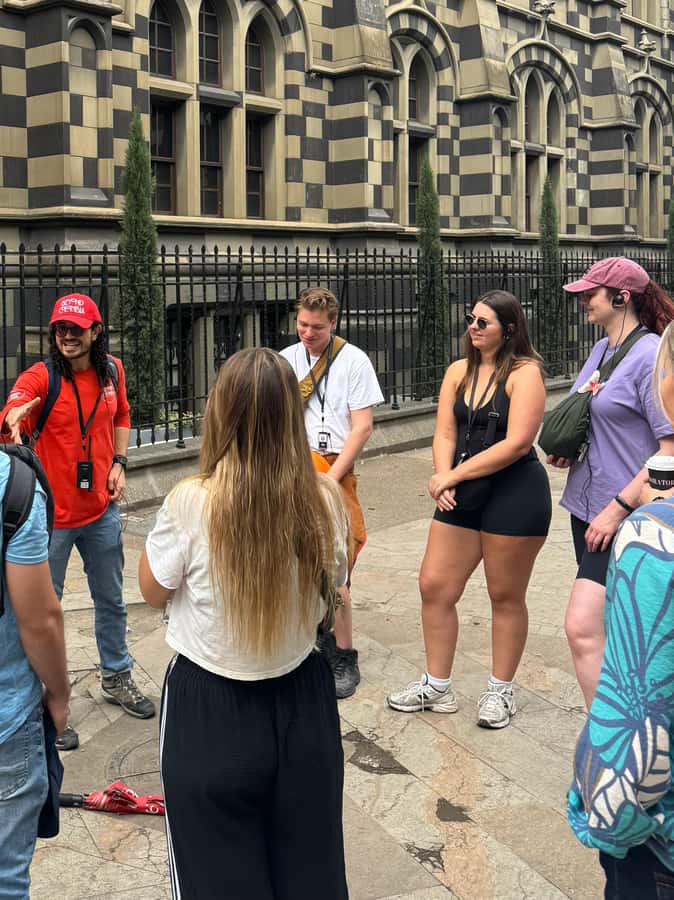
The company uses local Paisa guides, and the guide you receive will shape the tone of the walk. Miguel was praised for combining history with current affairs and for helping late participants reschedule. Santiago was often described as energetic, clear, and passionate about Medellín. Daniel received praise for answering questions and discussing the city’s ongoing changes.
Other guides named in the feedback include Carolina, Deisy, Sebastian, Alejandro, Alex, Jhon, Manuel, Luis Miguel, and Sian. English ability was repeatedly praised, while Carolina was noted for checking comprehension with visitors whose Spanish was limited.
That range matters because this is a shared tour, not a private outing. You do not choose the guide, and group size can vary. One small group had only five people, while other departures may feel more social. The benefit is meeting other people and hearing their questions. The cost is less control over pace and discussion.
If you have a specific interest in politics, art, architecture, or modern urban policy, ask about it early. The guides appear willing to shape parts of the conversation around questions.
Price, walking demands, and who should book
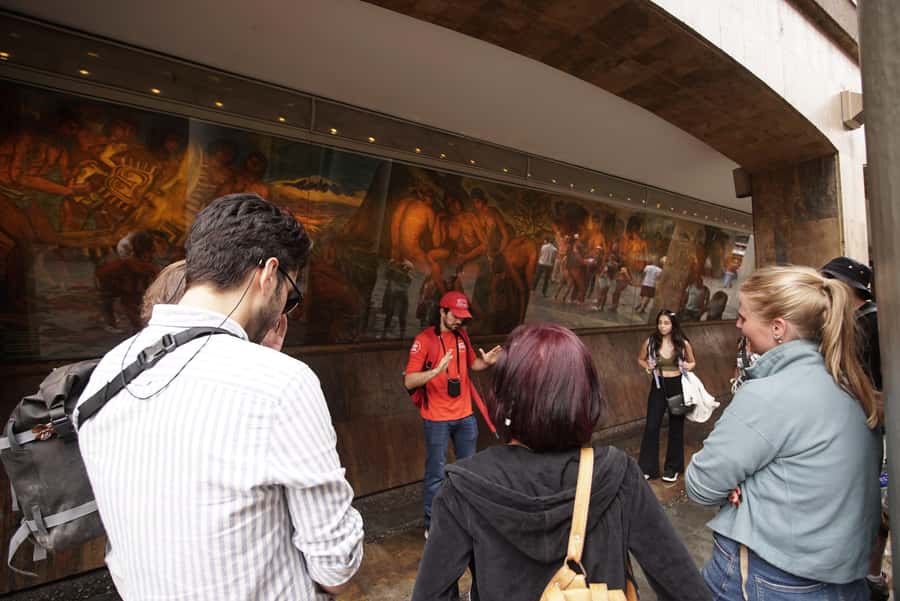
At $13 per person, the tour offers strong value for a first day in Medellín. You receive a live guide in English or Spanish, a carefully chosen route through central sights, wireless audio, and practical local advice. You do not pay for food, drinks, souvenirs, hotel transfers, or attraction tickets, but the tour also does not add sudden charges along the way.
The length is the main cost. The advertised duration ranges from 150 minutes to three hours, and the walking distance is about 8 kilometers. Wear supportive shoes, bring water, and dress for the weather. Medellín may be known for its mild climate, but rain can arrive and the walk continues outdoors.
This tour suits you best if:
- You are visiting Medellín for the first time.
- You want context about the city beyond crime stories.
- You enjoy walking and asking questions.
- You are comfortable seeing an imperfect, active downtown.
- You want recommendations for food, coffee, souvenirs, and later sightseeing.
- You are at least 15 years old if you need the audio receiver.
It is a poor match if you have mobility limitations, dislike long walks, or want a quiet private tour. The experience is also less suitable for anyone seeking only museums or indoor attractions.
Booking is flexible. You can reserve now and pay later, and cancellation is allowed up to 24 hours before the tour for a full refund. Check the available start times, then meet at the red umbrellas in front of the Museo de Antioquia.
Should you book this Medellín walking tour?
Yes, if you want a serious introduction to Medellín at a low price. The strongest part is the balance between art, Paisa culture, industry, railroad history, social change, and the violent decades that still shape the city’s identity.
Go with realistic expectations. You will walk a long way through a crowded downtown, encounter some uncomfortable street scenes, and depend on the guide assigned to your group. Bring water, rain protection, comfortable shoes, and an open mind.
For a first visit, I would book it early in my stay. The route gives you a useful mental map, and the local advice can help you decide where to spend the rest of your time. The wireless audio is a welcome bonus, but the real value is the chance to hear Medellín explained by someone who knows the city from the inside.
FAQ
Where does the tour meet?
Meet in front of the Museo de Antioquia at Botero Plaza. Look for the red umbrellas marked Beyond Colombia.
How long does the tour last?
The tour lasts about 150 minutes to three hours. The stated walking distance is approximately 8 kilometers, with stops to listen to the guide.
What languages are available?
The tour is offered in English and Spanish, with a live guide.
What does the $13 price include?
The price includes the live guide, sightseeing at essential historic-center locations, local recommendations, and the wireless audio system.
Is transportation included?
No. You must make your own way to the meeting point, and the tour itself is done on foot. Transportation to and from your hotel is not included.
Are food and entrance tickets included?
No. Food, drinks, souvenirs, and entrance tickets are not included. The route does not take you to places where unexpected entrance charges apply.
Can children use the wireless audio system?
The audio system is not suitable for children under 15 years old.
What happens if it rains?
The audio equipment is not waterproof. If rain begins, the devices must be collected, so bring an umbrella or rainproof jacket.
Is the tour suitable for people with mobility impairments?
No. The tour involves about 8 kilometers of walking and is not suitable for people with mobility impairments.
Just added around Colombia
- Cartagena Instagrammable History★ 4.5 · 29 reviews
- Cali: Walking tour of the historic center★ 5.0 · 69 reviews
- Chiva Private Cultural Tour with Audio Guide in Buga★ 5.0 · 49 reviews
- Bogota scooter tour★ 5.0 · 46 reviews
- Historical tour Bogota★ 5.0 · 72 reviews
- Medellín: Flower Farm & Silletero History Tour★ 4.3 · 23 reviews
- Shared Tour of Bogota’s Historic Downtown (La Candelaria)★ 4.7 · 100 reviews
- Santa Marta A Historical & Street food Experience★ 4.7 · 41 reviews
Colombia History Tours, compared.
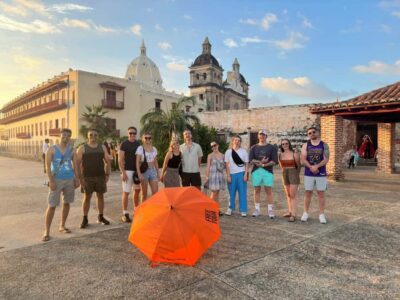
Historic Center and Getsemaní Shared Walking Tour
Read our review →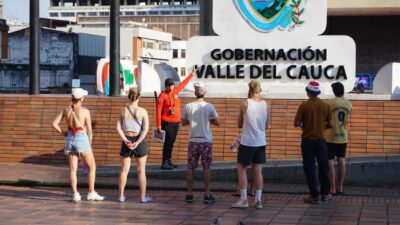
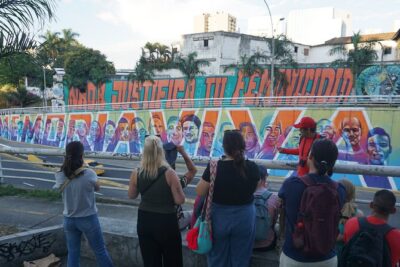
Historical Shared Tour Salsa, Graffiti & Resistance in Cali
Read our review →
Shared Tour of Bogota’s Historic Downtown (La Candelaria)
Read our review →
From Medellín: Private Pablo Escobar History Tour
Read our review →
Browse the lists this tour appears in