
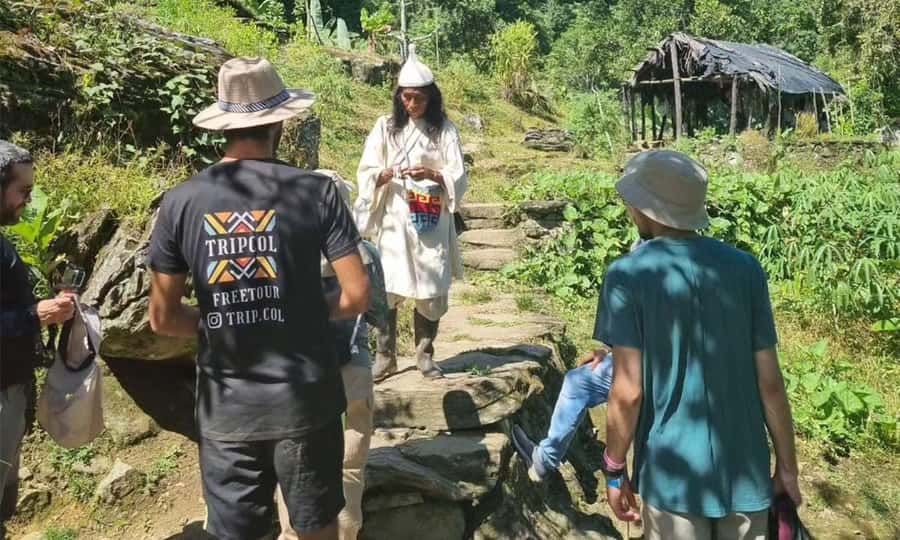
Review · MAGDALENA
Santa Marta A Historical & Street food Experience
Santa Marta rewards curious walkers. This tour links the city’s colonial buildings, Tairona culture, public squares, churches, cemeteries, and street food into one central-city introduction. I especially like the Tairona Gold Museum visit and the chance to taste Colombian staples such as ceviche, lulo, juice, and empanadas without arranging separate stops.
I also like the human side of the experience. Guides trained in history, journalism, and anthropology can explain more than dates and façades, and Sergio has been praised for his warmth, local suggestions, and care with guests. The main concern is value for money: at $56 per person, the tour feels expensive if food stops are missed or the walk is hurried.
- Tairona culture takes center stage: The Casa de la Aduana and Tairona Gold Museum give useful context before you explore Santa Marta’s streets.
- A compact tour with a long itinerary: The stated duration is two hours, but the listed stop times add up to nearly three hours, and one reported outing lasted close to four.
- Food is part of the story: Ceviche, lulo, local fruit juice, and empanadas connect the city’s past with its everyday eating habits.
- Sergio earns special praise: He is described as personable, helpful, and able to answer basic questions about what to do elsewhere in Colombia.
- The route ends in Santa Marta’s social center: Los Novios Park, San Francisco Church, and the nearby restaurants, pubs, and clubs make this useful for a first afternoon in town.
- Afternoon timing may be wiser: A 4:30 p.m. departure has been appreciated because Santa Marta is cooler later in the day.
Starting at the Casa de la Aduana
The tour begins at the Museo del Oro Tairona, located in the Casa de la Aduana. This is a smart starting point because the building connects Santa Marta’s present-day streets with its commercial and cultural past.
The opening visit is not just a quick photo stop. You receive a guided museum visit, with the published schedule allowing 15 minutes followed by another 30-minute museum segment. That wording is a little confusing, but the intent is clear: the museum should be a major part of the experience.
Inside, the focus is the Tairona people and the indigenous cultures connected with the Sierra Nevada. The gold objects and other artifacts help you understand that Santa Marta’s story began long before Spanish colonial buildings appeared. This context matters. Without it, the cathedral, plazas, and old commercial buildings can seem like disconnected sights. With it, the city becomes a meeting point of indigenous tradition, Spanish power, trade, religion, and modern Colombian life.
I would pay close attention here and ask questions. The museum portion is one of the strongest reasons to book this tour, yet some outings have reportedly included less museum time than expected. If the museum is important to you, confirm at the start how much time your guide plans to spend inside.
Simón Bolívar Park and the city’s public memory
From the museum, the route moves to Simón Bolívar Park for a guided explanation of the city’s political and civic past. The stop is scheduled for about 30 minutes, enough time for more than a passing look.
The park introduces Simón Bolívar’s connection with Santa Marta and gives your guide room to explain why this city matters in the story of independence. Santa Marta is not presented only as a beach gateway. It is also a city where national history, local identity, and public memory meet in open squares.
I like this kind of stop because it helps you read the city as you walk. The guide can point out how monuments, buildings, and gathering places reflect changing ideas about power and belonging. You are not simply collecting photographs. You are learning why these spaces were built and why people still use them.
More Food and History Tours in the world:
- Sevilla Food Tour: Tapas, Wine, History & Traditions
★ 5.0 · 3,468 reviews - Victoria Guided Food and History Tour
★ 5.0 · 2,015 reviews - Gastown Historic Walking Food Tour
★ 5.0 · 1,863 reviews
Camellón Rodrigo de Bastidas and the waterfront route
The walk continues through Parque Camellón Rodrigo de Bastidas, where you have time for photographs and a guided visit. The route offers scenic views along the way and gives the tour a change of pace after the museum and park discussions.
This section is useful for getting your bearings. You see how Santa Marta’s historic center relates to the waterfront and to the city’s public spaces. I would treat it as a chance to look around rather than expect a long formal lecture. The stop is listed at about 15 minutes, so the guide will need to keep things moving.
The waterfront connection also helps explain Santa Marta’s long commercial life. The city’s position on the Caribbean shaped its trade, its buildings, and its contact with people from outside the region. That story becomes clearer at the next major stop, the old Customs House.
The Cathedral Basilica and colonial Santa Marta
The Cathedral Basilica of Santa Marta is one of the route’s key architectural stops. The guided visit is scheduled for around 20 minutes, with scenic views along the way.
The cathedral gives you a direct look at Santa Marta’s colonial religious architecture. The tour description also highlights frescoes and possible hidden messages, so this is a place where I would listen closely to the guide rather than simply walk through, take a photograph, and leave.
A short stop can work well here, but it also creates a risk. Religious buildings reward careful explanation, and twenty minutes goes quickly if the group is large or the guide has already fallen behind. The quality of this part depends heavily on the guide’s storytelling and time management.
The cathedral is especially useful after the Tairona museum. You can compare two very different cultural systems: indigenous traditions connected with the Sierra Nevada and the Spanish Catholic institutions that shaped the colonial city. That contrast is one of the tour’s best features.
Los Novios Park, where the city gets social
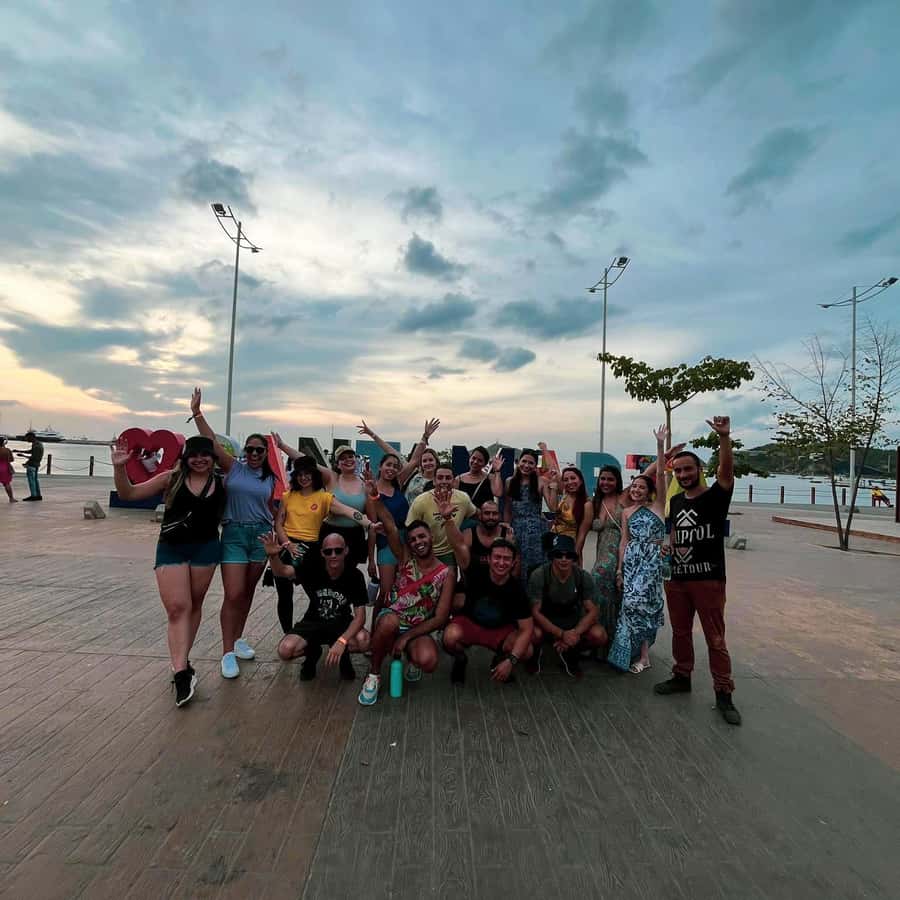
Parque de los Novios is scheduled for about 45 minutes, making it the longest stop after the museum. This is the social heart of the route, surrounded by restaurants, pubs, and clubs in Santa Marta’s central district.
The park is a good place to hear stories about romance, local legends, and daily city life. It also helps you understand the area you may return to after the tour. If you want an evening meal or a drink in the center, this stop gives you a useful first look at the options.
I like that the tour does not treat Santa Marta as a museum piece. The old center is also a living neighborhood, and Los Novios Park shows that clearly. You see the connection between heritage and nightlife, between historic façades and the places people use today.
This is also one of the practical strengths of the route. The tour ends at Parque de los Novios or back at the Tairona Gold Museum, so you can remain in the central area for dinner. If you prefer to finish where you started, the museum is the second drop-off point.
A few more history tours around the world worth a look
- Big Island Historical Dinner Cruise to Kealakekua Bay
★ 4.5 · 1,279 reviews - Dubai: Heritage Safari in Vintage Land Rover with Dinner
★ 4.8 · 861 reviews - Dubai: Abu Dhabi Trip with Lunch at Al Khayma Heritage Restaurant
★ 5.0 · 805 reviews - Madrid Local’s Tapas Tour Dinner with a side of History
★ 5.0 · 530 reviews
San Francisco Church and San Miguel Cemetery
The walk includes a photo stop and guided visit at Iglesia San Francisco. The listed time is about 15 minutes, so expect a focused introduction rather than a long church tour.
San Francisco adds another religious and architectural layer to the city. Along with the cathedral, it shows how Santa Marta’s central streets contain several different expressions of colonial and later religious life. The shorter time here makes sense if the guide is trying to cover a lot of ground, but it may feel brief to anyone especially interested in church architecture.
San Miguel Cemetery receives about 20 minutes, including a photo stop and guided explanation. Cemeteries can reveal a city’s social history in ways monuments do not. Names, family memorials, and the arrangement of the grounds can offer clues about local traditions and changing communities.
This is a thoughtful addition to a food-and-history walk. It moves the story away from official buildings and toward personal memory. I would expect the guide to provide the meaning of the site rather than a detailed tour of every grave.
The food stops: ceviche, lulo, juice, and empanadas
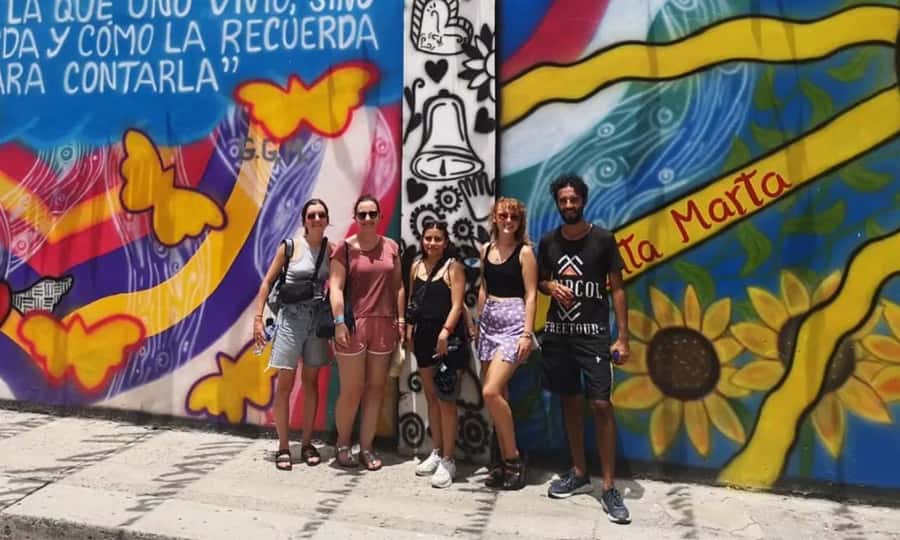
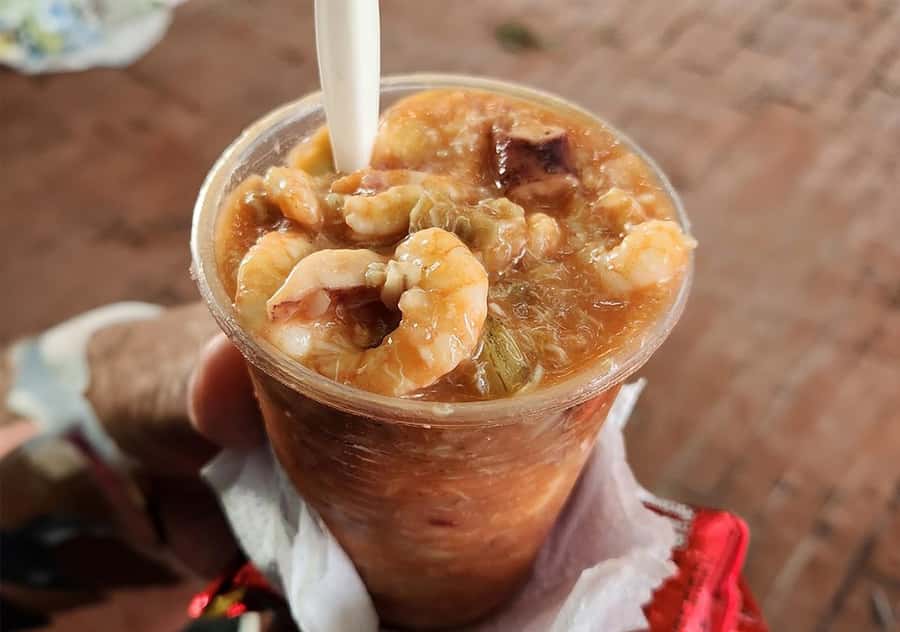
The food element is one of the tour’s biggest draws, but it is also the part you should clarify before booking. The experience is designed to include a local drink and tastings connected with Colombian street food and regional produce.
The planned flavors include:
- Exotic fruit juice: Possible fruits include guanábana, maracuyá, and zapote.
- Ceviche: A Colombian-style seafood preparation with fresh ingredients and local flavor.
- Lulo: This fruit may appear as juice or an artisanal infusion, with an explanation of its place in Colombian cooking.
- Empanada: A crisp, golden street-food staple filled with local flavors.
These tastings are small, but they add something a standard walking tour often misses. Food gives you a quick, practical way to understand the region. Lulo, for example, is not just a sweet drink. The tasting can show how Colombians use a familiar fruit in different preparations. Ceviche connects the city to its Caribbean setting, while empanadas offer a simple taste of everyday eating.
There is a practical catch. One outing could not include the ceviche because the chosen place was closed, and no replacement stop was provided. That means the food portion may depend on opening hours and the day’s arrangements. At $56, I would expect the guide or operator to offer a substitute when a promised tasting is unavailable.
The published details also specifically guarantee a local drink, while the wider food list describes the other tastings. I would confirm exactly which tastings are included on your date. That small step can prevent disappointment.
Timing, pace, and the two-hour question
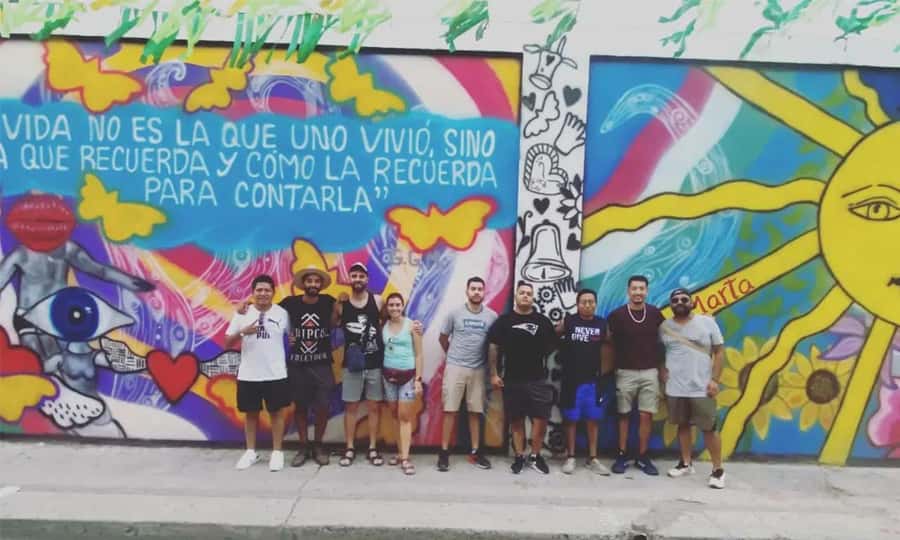
The stated duration is two hours, but the individual stop times tell a different story. The listed museum, park, waterfront, cathedral, Los Novios Park, church, and cemetery segments add up to roughly three hours before walking time is counted.
This matters because the experience can go in two very different directions. If the guide follows a fast schedule, you may cover the sights but feel rushed. If the guide allows questions and meaningful museum time, the walk may last much longer. One outing lasted close to four hours, while other experiences felt too short and hurried.
I would not book this expecting a precise two-hour appointment. Plan for flexibility, especially if you have a dinner reservation or another activity afterward. The difference between a rushed two hours and an engaging three or four hours is significant.
The afternoon departure at 4:30 p.m. is worth considering. Santa Marta can be hot, and a later start makes the walking easier. It also lets you reach Los Novios Park as the central district becomes more social. The tradeoff is that a longer-than-planned tour could finish later than expected.
Guide quality makes the biggest difference
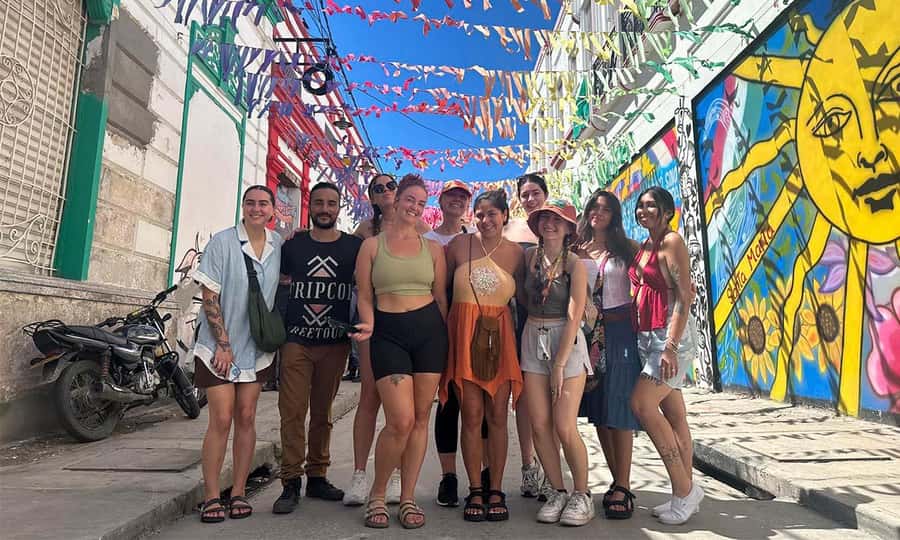
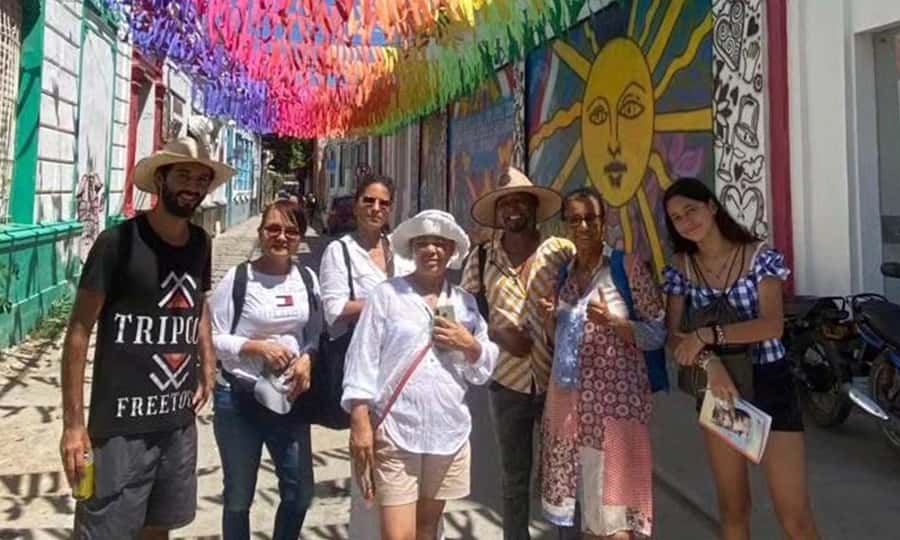
The guide is central to this experience. The company uses guides with backgrounds in history, journalism, and anthropology, and the strongest reports describe a guide who explains Santa Marta with care and enthusiasm.
Sergio receives especially warm praise. He has been described as personable, easy to talk with, and helpful beyond the scheduled route. He also offered suggestions for other things to do in the area and assisted one person with a hostel problem. That sort of practical help is valuable when you are just arriving in Santa Marta.
I would use the walk as an orientation session. Ask about places to eat, sights to visit, and how the central area fits together. A good guide can turn a list of stops into a useful map of the city.
At the same time, guide quality appears to vary in pace. Some outings felt rushed, while another stretched far beyond the stated duration. That inconsistency is the tour’s main weakness. You may get a thoughtful local interpreter, but you should be ready to speak up if the group is moving too quickly or if a scheduled tasting is skipped.
Is $56 a fair price?
The price is $56 per person, which is high for a two-hour walking tour in Santa Marta. It becomes easier to justify if you receive substantial museum time, a strong bilingual guide, several food tastings, and a walk that lasts closer to three hours.
The value is strongest for first-time visitors who want several introductions at once. You receive history, indigenous culture, architecture, food, nightlife orientation, and a guided walk through the central district. Booking separate museum guidance, a food walk, and a historical tour could cost more and take extra planning.
The value is weak if the experience is shortened, the museum visit is limited, or the food tastings are not replaced when a venue is closed. At this price, those details are not minor. They are the core of what you are paying for.
I would consider it a fair purchase for someone who wants an all-in-one introduction and values a personal guide. If you mainly want a quick orientation, the price may feel steep. If you are comfortable exploring on your own and can visit the museum independently, you may prefer to spend the money on a longer meal or another paid attraction.
Who should book this Santa Marta walk?
I think this tour suits you best if:
- You are visiting Santa Marta for the first time.
- You want history explained while you walk, rather than read it from signs.
- You are interested in Tairona culture and the indigenous history of the Sierra Nevada.
- You like trying small portions of local food.
- You want an introduction to the restaurants, pubs, and clubs around the central district.
- You appreciate a guide who can answer general questions and suggest what to do next.
It may not suit you if you need a firmly timed two-hour activity. It may also disappoint if you expect a full meal, guaranteed access to every food stop, or detailed museum treatment at every location.
Free cancellation up to 24 hours before the experience and the option to reserve now and pay later give you some flexibility. The tour is offered in English and Spanish, with a live guide.
Should you book it?
Book this tour if you want a broad, personal introduction to Santa Marta and are willing to let the schedule breathe. The Tairona Gold Museum, the contrast between indigenous and colonial history, Los Novios Park, and Sergio’s strong personal touch are the best reasons to go.
Before paying $56, confirm the expected duration, the exact food tastings, and how much time will be spent inside the museum. If the operator can deliver those elements, the tour can be a useful first look at Santa Marta. If you need speed, certainty, and a low price, choose a simpler walking route instead.
FAQ
Where does the tour start?
It starts at the Museo del Oro Tairona, located in the Casa de la Aduana.
Where does the tour end?
The drop-off options are Parque de los Novios and the Museo del Oro Tairona, Casa de la Aduana.
How long does the tour last?
The stated duration is two hours. The listed stops add up to longer than two hours, and the actual pace can vary.
Which languages are available?
The live tour guide is available in English and Spanish.
Is food included?
The experience includes a local drink. The planned food experiences include ceviche, lulo, exotic fruit juice, and empanadas, but you should confirm the exact tastings available on your date.
Can I cancel for a full refund?
Yes. You can cancel up to 24 hours in advance for a full refund.
More Food Tours in the world
- Amsterdam Food and Cultural Tour with Tastings
★ 5.0 · 4,315 reviews - Barcelona: Tapas Walking Tour with Food, Wine, and History
★ 4.8 · 4,261 reviews - Madrid Tapas & Taverns Small Group Food & History Tour
★ 5.0 · 2,664 reviews - Historic Ybor City Food Walking Tour
★ 5.0 · 2,210 reviews
Just added around the world
- Savannah: Historical Pub Crawl Tour with Drinks Included★ 3.9 · 34 reviews
- Savannah: History and Culture Walking Tour★ 4.6 · 149 reviews
- Savannah: African American History Tour★ 4.9 · 72 reviews
- Savannah: Historical Panoramic City Tour★ 4.8 · 72 reviews
- Savannah: Historic District Guided Bike Tour★ 4.8 · 47 reviews
- Savannah: Battles & Brews Civil War History Pub Crawl★ 4.4 · 36 reviews
- Savannah: History, Culture, & Scenic Views E-Bike Tour★ 5.0 · 69 reviews
- Santiago: Private tour, historic center, high altitude viewpoint, cable car★ 4.9 · 27 reviews
Food & History Tours, compared.
Sevilla Food Tour: Tapas, Wine, History & Traditions
Read our review →

Dublin Historical Centre Food Tour with 8 Food Tastings & Drinks
Read our review →
The Great Indian Food Tour: Old Delhi Food and Heritage Walk
Read our review →
Browse the lists this tour appears in