
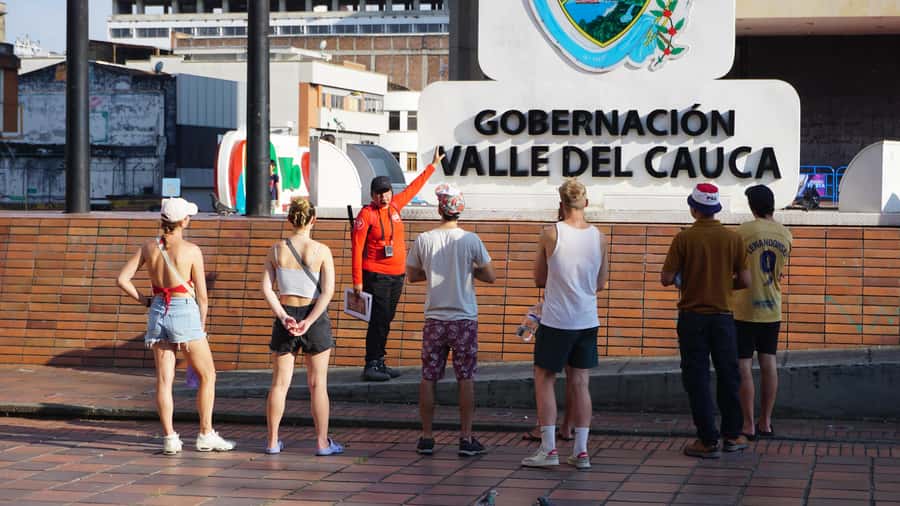
Review · VALLE DEL CAUCA
Shared Tour Cali’s Historical Downtown
Cali’s story dances beyond the salsa clubs. I like how this walking tour connects Afro-Colombian culture to food, music, and dance, and I like that it does not polish away difficult subjects such as drug trafficking, discrimination, and social unrest. The $13 price also gives you a lot of city context for very little money.
The route links La Merced, the river boulevard, major plazas, theaters, churches, and the Jairo Varela area into one clear story. Guides such as Cristian, Fernando, Juliana, Lem, and Adriana Alvarez have been praised for their energy, local insight, and easy English. The main drawback is the pace: you may walk about 7 kilometers, and the tour can run closer to three hours than the advertised 150 minutes.
Key points at a glance
- A 7-kilometer introduction to central Cali: You cover major churches, theaters, plazas, bridges, and public spaces on foot.
- Cali beyond salsa: The tour explains how African heritage shaped local food, slang, music, dance, and identity.
- History without a sugar coating: Drug trafficking, discrimination, civil conflict, protests, and resistance all have a place in the story.
- A strong guide makes the difference: Cristian, Fernando, Juliana, Lem, and other Beyond Colombia guides are praised for clear English, warmth, and lively storytelling.
- Good value at $13: There are no entrance fees built into the walk, but you receive a broad orientation to the city center and useful local suggestions.
- Come prepared for weather and distance: Bring water, rain protection, comfortable shoes, and a watchful eye for your belongings.
Starting at La Merced and the origins of Cali
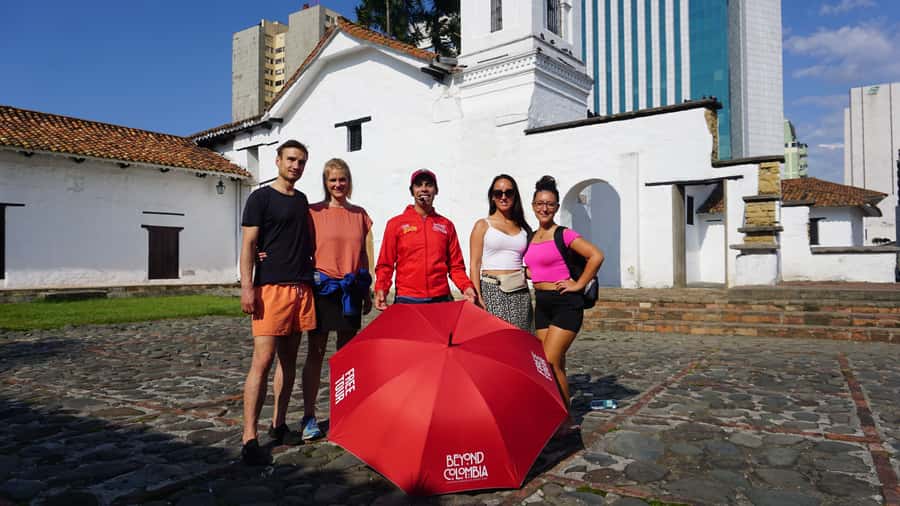
You meet the guide in front of the Museo Arqueológico La Merced, near La Merced Church. Look for the red Beyond Colombia umbrellas. This is a sensible starting point because the church and museum area introduce the earliest chapter of Santiago de Cali and the forces that shaped the Valle del Cauca.
The tour uses this opening to explain why the wider Valle region matters. Cali did not develop in isolation. Its location, agriculture, trade, and links to the Pacific help explain the city’s economic growth and its mix of cultural influences.
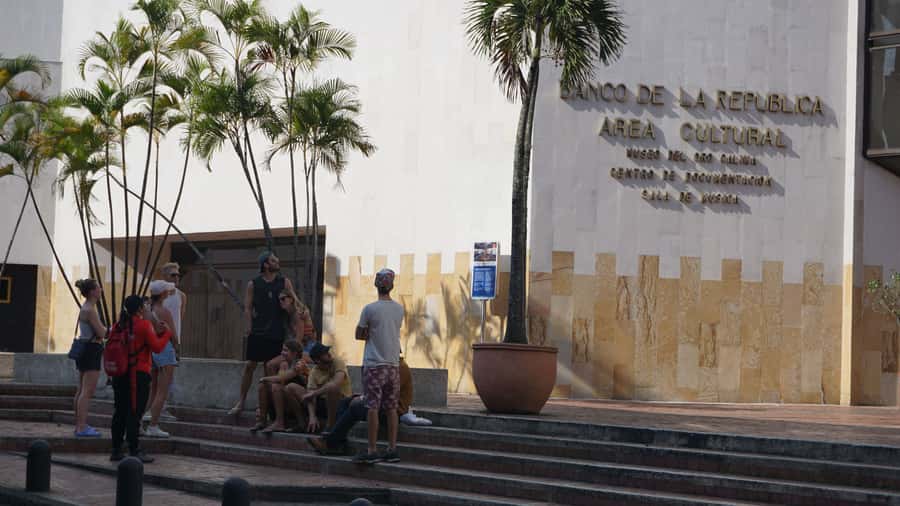
The Calima Gold Museum adds a useful pre-colonial layer. You are not simply shown a church and told to admire the façade. Instead, the guide places Cali within a much older regional story, then moves forward into the city’s later social and economic development.
This part should appeal to you if you want a clear framework before wandering around on your own. It is less useful if you only want quick photo stops. The guide spends time explaining causes and consequences, so the walk feels like a history lesson with streets and buildings as its classroom.
A few more history tours around Colombia worth a look
- Cartagena: Historic Center and Getsemaní Shared Walking Tour
★ 4.9 · 2,716 reviews - Historical Shared Tour Salsa, Graffiti & Resistance in Cali
★ 5.0 · 107 reviews - Shared Tour of Bogota’s Historic Downtown (La Candelaria)
★ 4.7 · 100 reviews
From colonial landmarks to modern city life
From La Merced, the route passes several of Cali’s main architectural and civic markers. The exact order can change, but you can expect to see places such as the Ermita Church, St. Peter’s Cathedral, the Municipal Theater, the Jorge Isaacs Theater, Puente Ortiz, and the central plazas.
The Ermita is one of the city’s best-known visual symbols. Its appearance gives the walk a strong photo stop, but the real value comes from hearing how Cali’s public image and civic identity developed around its central buildings.
The Municipal Theater and Jorge Isaacs Theater shift the subject toward the arts. Cali’s culture is not only about dancing until late at night. Literature, cinema, and theater have helped people describe the city, question its power structures, and preserve local voices.
Puente Ortiz and the River Boulevard bring you into a more public, contemporary part of downtown. The boulevard gives you a sense of how the city has opened parts of its center to walking and public life. It also creates a welcome change of pace after tighter streets and church interiors.
You should expect stops rather than long visits inside each landmark. Entrances are not included, and the walk does not promise access to every building. The emphasis is on the buildings, streets, and public spaces as part of a larger story.
San Francisco, Cayzedo, and Jairo Varela
The route crosses important gathering places, including San Francisco Square, Cayzedo Square, and the Jairo Varela area. These stops help explain how Cali works as a civic city, not just a collection of attractions.
Cayzedo Square is especially useful for getting your bearings. It is one of the central points of downtown, and the surrounding buildings reveal the city’s formal, commercial, and political sides. Your guide can connect the square to changing ideas about power, class, and public life.
Jairo Varela brings salsa into the route. Varela was a major figure in Colombian salsa, and his name is closely tied to Cali’s musical identity. The stop helps explain why salsa became more than entertainment here. It became part of the city’s public image, social life, and international reputation.
The timing of salsa’s growth is one of the more interesting parts of the tour. The guide discusses La Feria de Cali and the way the salsa movement grew during the era of drug cartels. This is not presented as a simple success story. You hear about the music, dance, money, and city pride, but also about the damage caused by trafficking and the way those forces affected daily life.
That balance matters. You will understand why Cali celebrates salsa while still facing the painful legacy tied to the period when the music industry, nightlife, and criminal money could overlap. It is an honest way to look at a city that can be both joyful and troubled.
The African roots of Cali’s flavor
One of the strongest parts of the experience is its attention to the African heritage that shaped Cali and the Valle del Cauca. The guide explains how enslaved Africans and their descendants influenced gastronomy, music, dance, language, and local customs.
You may also learn about the songs and traditions of the Pacific coast. This gives the city’s music a wider setting. Salsa is the famous sound, but Cali’s identity also includes Pacific rhythms, local expressions, and food traditions that came from many communities.
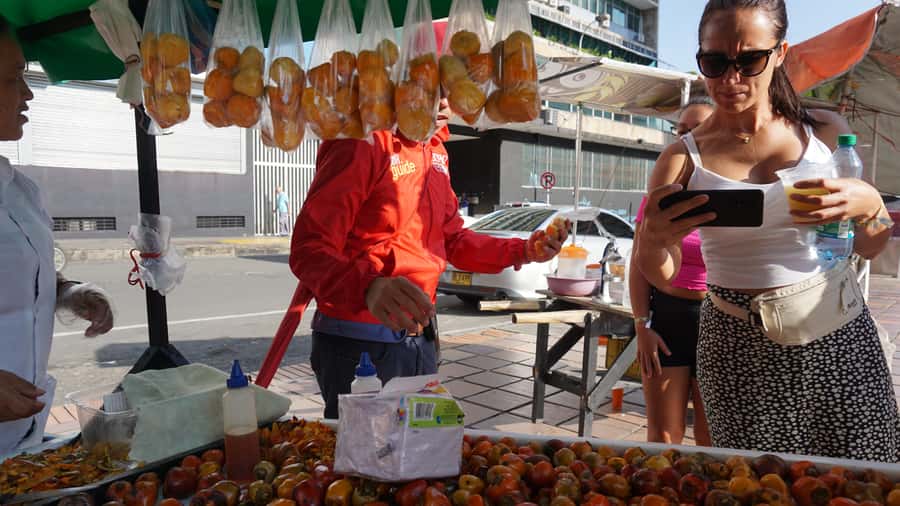
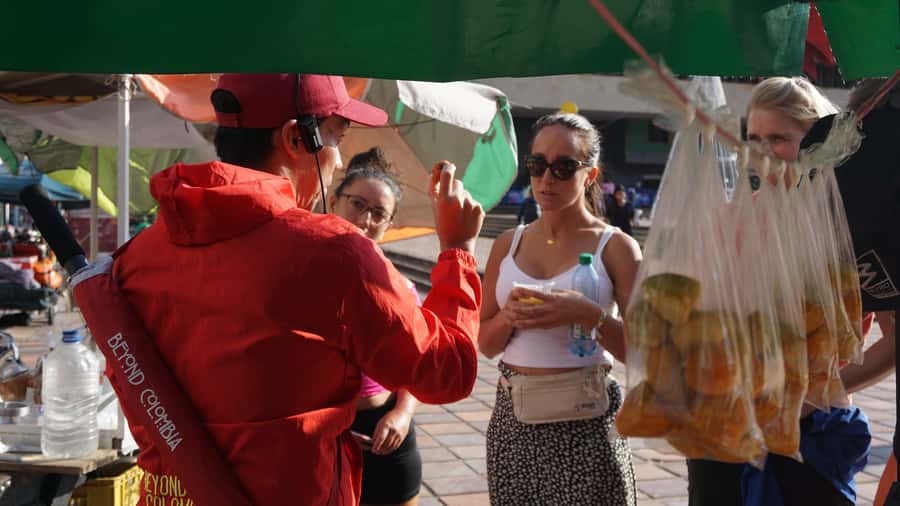
When available, the tour includes a tasting of chontaduro. This is a small sample, not a full food tour, but it adds something physical to the discussion. You are not only hearing about local food. You get a chance to try one of the region’s distinctive ingredients.
The tasting is not guaranteed, so you should not book this walk expecting a meal. Drinks and other food are not included. Still, the guide can point you toward local places for lunch, coffee, and further eating after the tour. That practical advice can be worth as much as the tasting itself, especially on a first day in Cali.
Same place, a different slice of the past:
- Shared Medellín Downtown Tour with Wireless Audio
★ 4.8 · 315 reviews - Medellin Historic Walking Tour
★ 4.9 · 86 reviews - From Medellín: Private Pablo Escobar History Tour
★ 4.9 · 84 reviews - Historical tour Bogota
★ 5.0 · 72 reviews
Difficult chapters: discrimination, trafficking, and protest
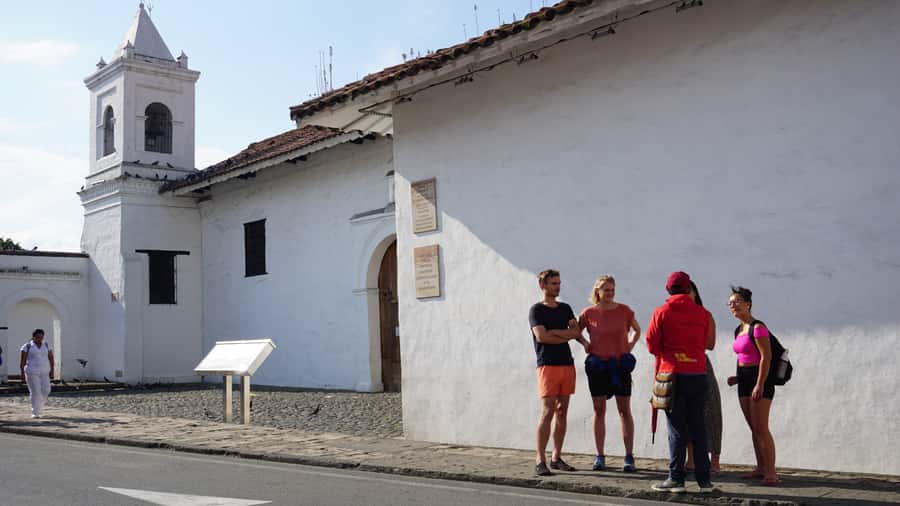
This walk earns its value by refusing to treat Cali as a postcard. The guide covers civil wars, discrimination, drug trafficking, and the effects these events had on ordinary life.
The treatment of social unrest is especially current. The tour discusses protests and social revolts during and after the pandemic, including the revolutionary behavior and resistance movements that remain part of Cali’s public identity. You are encouraged to see these events within a longer pattern, rather than as isolated headlines.
The subject can feel heavy, but it belongs here. A tour about Cali’s culture would be incomplete if it only covered dance, colorful buildings, and cheerful slogans. The city’s music and celebrations exist alongside inequality, political tension, and memories of violence.
The provider aims to give an objective account rather than take sides. That does not mean every political question will be settled in two or three hours. It means you should hear more than one layer of the story and leave with better questions for your own exploration.
An open mind helps. If you prefer a light sightseeing walk with little history, this may feel too serious. If you want to understand why Cali’s public culture can be proud, defiant, and emotionally charged, this section is essential.
What the guides add to the experience
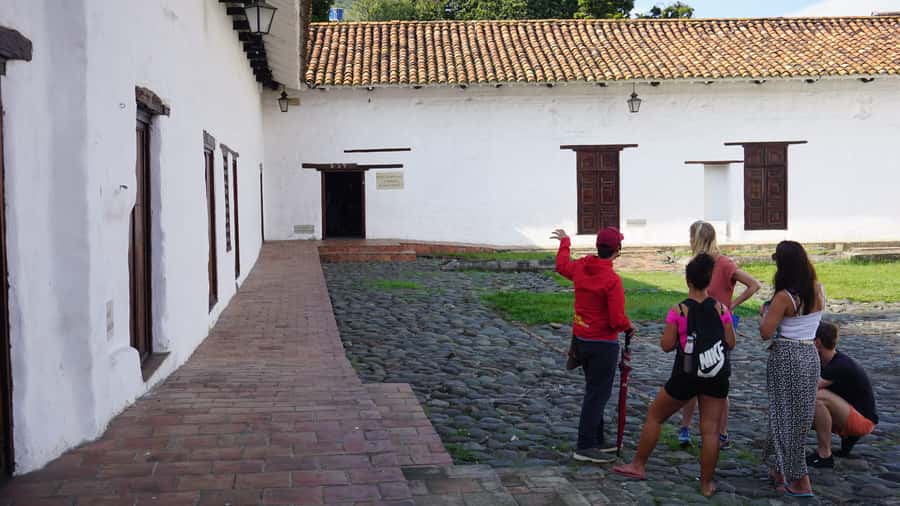
The quality of this tour depends heavily on the guide. The strongest feedback centers on guides who explain Cali clearly while keeping the group involved.
Cristian is repeatedly praised for high energy, strong local knowledge, and an engaging way of speaking. Fernando is described as friendly, interactive, and full of useful local suggestions. Juliana brings the perspective of a Cali resident and is praised for her English and command of the city’s story.
Lem is a particularly good match if salsa is your main interest. His enthusiasm for the music adds personality to the historical explanation. Adriana Alvarez has also received praise for leading a thoughtful introduction to Cali and its past.
Names and assignments can change, so you cannot choose a particular guide with certainty. Still, the pattern is encouraging: this is not a walk where the guide simply recites dates beside a church. The best guides ask questions, get to know the group, adjust the route when city conditions require it, and keep the energy moving.
One practical note: the English appears to be strong, but accents, group size, street noise, and the seriousness of the subject can affect how easy every detail is to catch. Stay near the guide when the group is moving and use the stops to ask questions.
Timing, walking, and the $13 price
The stated duration is 150 minutes, while the tour description also says approximately three hours. Feedback places it in the two-to-three-hour range. Plan your day around three hours, not a strict two and a half.
You will walk about 7 kilometers, with stops for explanations and rest. That is a fair amount of ground, especially in warm or wet weather. Wear shoes you can walk in for several hours, bring water, and carry a rainproof jacket or umbrella. Cali’s weather is not part of the booking agreement, so you need to prepare for it yourself.
At $13 per person, the value is strong. You get a professional English-speaking guide, a broad tour of essential downtown sites, a possible chontaduro tasting, historical context, and suggestions for food and shopping afterward. There are no surprise entrance charges because the route does not rely on paid attractions.
The low price does not mean the experience is private. This is a shared tour, so you meet other people and will not have the guide’s full attention at every moment. That trade-off works well for solo visitors, couples, and anyone who wants an affordable first look at Cali.
Transport is not provided. You make your own way to La Merced, and the rest is on foot. There is no hotel pickup, no tour vehicle, and no ride back at the end. That is easy to manage if you are already staying near central Cali, but you should allow time to reach the meeting point.
Who should book this Cali walk?
I would choose this tour for a first visit, especially if you want to understand the city before deciding where to spend your remaining time. It gives you a useful map of downtown and introduces the social forces behind Cali’s food, music, and public life.
It also suits you if you enjoy difficult conversations. The tour includes uncomfortable subjects, and the guide does not treat drug trafficking or social conflict as colorful decoration. You need to be willing to listen and ask respectful questions.
Salsa fans will get extra value from the discussion of La Feria de Cali, Jairo Varela, and the growth of the city’s dance culture. Food-focused visitors will appreciate the chontaduro tasting when available and the local recommendations at the end.
This is less suitable if you dislike long walks, need frequent transport, or want a relaxed tour with little commentary. The experience is not recommended for people over 70, according to the stated suitability guidance, and the 7-kilometer route may be tiring for anyone with mobility concerns.
The walk is also not designed for party groups. Alcohol and drugs are not allowed, and audio recording is prohibited. Keep your belongings close in crowded areas, as the guide specifically warns you to stay alert.
Should you book Shared Tour Cali’s Historical Downtown?
Yes, if you want an affordable and serious introduction to Cali. For $13, you cover major downtown landmarks while learning how African heritage, salsa, literature, cinema, protest, and difficult political events have shaped the city.
Book it early in your stay so the guide’s food, coffee, shopping, and nightlife suggestions can improve the rest of your visit. Bring water, rain protection, comfortable shoes, and patience for a walk that may last close to three hours.
Skip it if you want private guiding, short distances, or a simple architecture tour. But if you want to meet Cali as a living city, with its music and pride alongside its wounds and arguments, this is a very good use of an afternoon.
FAQ
Where does the tour meet?
Meet in front of the Museo Arqueológico La Merced, near La Merced Church. Look for the red Beyond Colombia umbrellas.
How long does the tour last?
The listed duration is 150 minutes, but the description says approximately three hours. Plan for a walk lasting roughly two and a half to three hours.
Is the tour conducted in English?
Yes. The tour has a live English-speaking guide.
How much walking is involved?
You will walk about 7 kilometers, with stops to rest and listen to the guide.
What should I bring?
Bring comfortable shoes, comfortable clothes, water or another preferred drink, and a rainproof coat or umbrella.
Is transportation included?
No. You must reach the meeting point yourself, and the tour is conducted on foot. Transportation to or from your hotel is not included.
Is food included?
A chontaduro tasting is offered when available. Other food and drinks are not included, though the guide provides recommendations for local places to eat and drink.
Can I cancel or pay later?
You can cancel up to 24 hours in advance for a full refund. You can also reserve now and pay later.
Just added around Colombia
- Cartagena Instagrammable History★ 4.5 · 29 reviews
- Cali: Walking tour of the historic center★ 5.0 · 69 reviews
- Chiva Private Cultural Tour with Audio Guide in Buga★ 5.0 · 49 reviews
- Bogota scooter tour★ 5.0 · 46 reviews
- Historical tour Bogota★ 5.0 · 72 reviews
- Medellín: Flower Farm & Silletero History Tour★ 4.3 · 23 reviews
- Shared Tour of Bogota’s Historic Downtown (La Candelaria)★ 4.7 · 100 reviews
- Santa Marta A Historical & Street food Experience★ 4.7 · 41 reviews
Colombia History Tours, compared.
Historic Center and Getsemaní Shared Walking Tour
Read our review →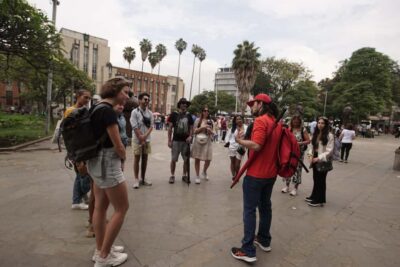
Shared Medellín Downtown Tour with Wireless Audio
Read our review →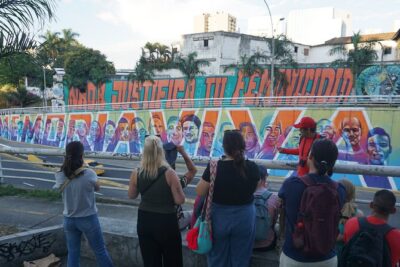
Historical Shared Tour Salsa, Graffiti & Resistance in Cali
Read our review →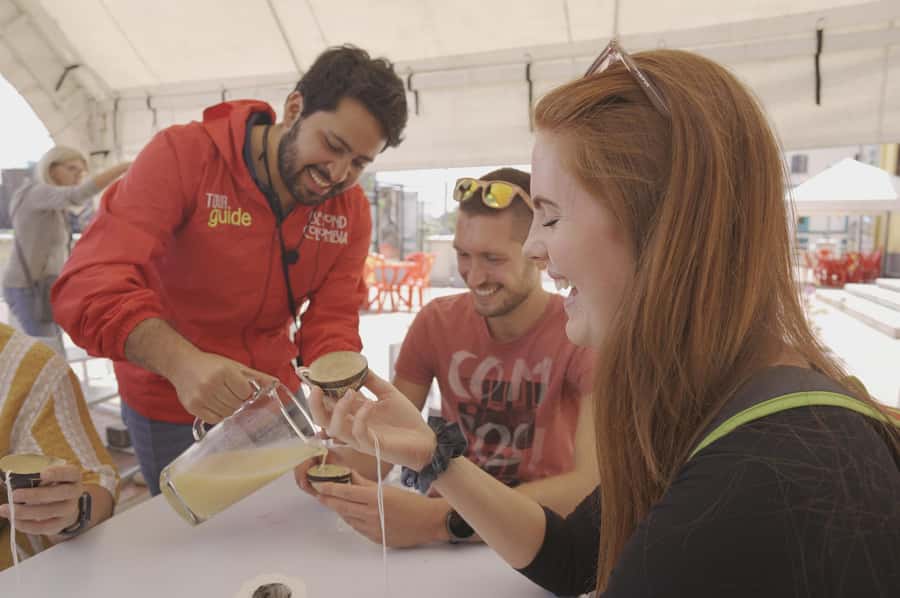
Shared Tour of Bogota’s Historic Downtown (La Candelaria)
Read our review →
From Medellín: Private Pablo Escobar History Tour
Read our review →
Browse the lists this tour appears in