
Review · PELOPONNESE
3-Day Ancient Greek Archaeological Sites Tour from Athens
Ancient Greece comes alive on the road. This three-day tour from Athens links Mycenae, Olympia, and Delphi with the Corinth Canal, Epidaurus, Nafplio, and Arachova. I like the way it handles long distances by combining guided visits, comfortable bus transfers, hotel stays, breakfasts, and dinners in one package.
I also like the guides’ strong record for storytelling, especially Anna, Marianna, Evangelist, and Dimitris, who brought mythology and archaeology into the same conversation. The main drawback is the pace. You cover a lot of ground, and Olympia and Delphi can mean several hours on foot in hot sun, with limited time to explore every corner.
Key points to know before booking
- Three major ancient sites in three days: Mycenae, Olympia, and Delphi form the heart of the trip.
- A useful route from Athens: The tour makes the long journey practical by linking sites that are difficult to visit independently in only three days.
- Strong guiding is central to the experience: Guides explain the ruins, myths, museums, and modern Greek life during the drives.
- The Corinth Canal and Rio-Antirrio Bridge add variety: You get more than a sequence of archaeological grounds.
- Dinner and breakfast are included: Lunch, drinks, personal purchases, and hotel tax are extra.
- Expect walking, stairs, heat, and long bus rides: This is not suitable for wheelchair users and is most comfortable in spring or autumn.
Why this route works from Athens
The main value here is not just the admission to several ancient sites. It is the route planning.
Mycenae, Olympia, and Delphi are spread across the Peloponnese and central Greece. Visiting them alone in three days would require careful driving, hotel planning, entrance tickets, and a good deal of navigation. This tour takes care of that framework, letting you focus on the sites and the scenery between them.
The price is $506 per person. That includes a live English-speaking guide, luxury air-conditioned bus transfers, entrance fees, two nights in a three-star or four-star hotel, breakfast, and dinner. You still pay for lunch, drinks, personal expenses, and hotel tax, but the package covers the costly pieces of a short archaeological trip.
The tour is described as carbon-neutral, which will appeal to you if you want to see several major sites without arranging separate car journeys. The carbon claim does not change the physical demands of the trip, though. You will still spend plenty of time on the road.
Pickup is available from most centrally located Athens hotels, normally about an hour before departure. You can also meet at the supplier’s office 15 minutes before the tour begins. Confirm the exact pickup location and time with Key Tours, since hotel pickup details vary.
More Ancient History Tours in Athens
- Athens: Ancient Greek Theater Performance
★ 4.7 · 2,481 reviews - Historical Delphi One Day Tour with Arachova Stop & Expert Guide
★ 4.5 · 1,247 reviews - From Athens: Ancient Corinth Day Trip with Canal & VR Guide
★ 4.6 · 1,073 reviews
Day one: Corinth Canal, Epidaurus, and Mycenae
The first morning starts with the Corinth Canal, a narrow artificial waterway cut through the isthmus. It is a quick stop, but a worthwhile one. You can see how the canal slices between the mainland and the Peloponnese, and you get an early reminder that this tour is about engineering and geography as well as ancient stones.
Epidaurus is the first major archaeological visit. Its ancient theater is the star. The theater is famous for its acoustics, and your guide will usually explain how the shape of the seating and stage helped sound travel through the structure. Even if no performance is taking place, the theater gives you a clear sense of how public entertainment worked in the ancient Greek world.
The site involves walking outdoors, so comfortable shoes, water, a hat, and sun protection matter. The theater itself is memorable, but the visit is not only about taking a photograph from the top rows. Listen for the explanation of the theater’s design, then take a moment to look down across the seats and stage.
The route continues to Nafplio, written as Nafplia in some tour information. This attractive harbor town served as the first capital of the First Hellenic Republic. The stop helps break up the archaeological visits and gives you a glimpse of a more modern Greek setting.
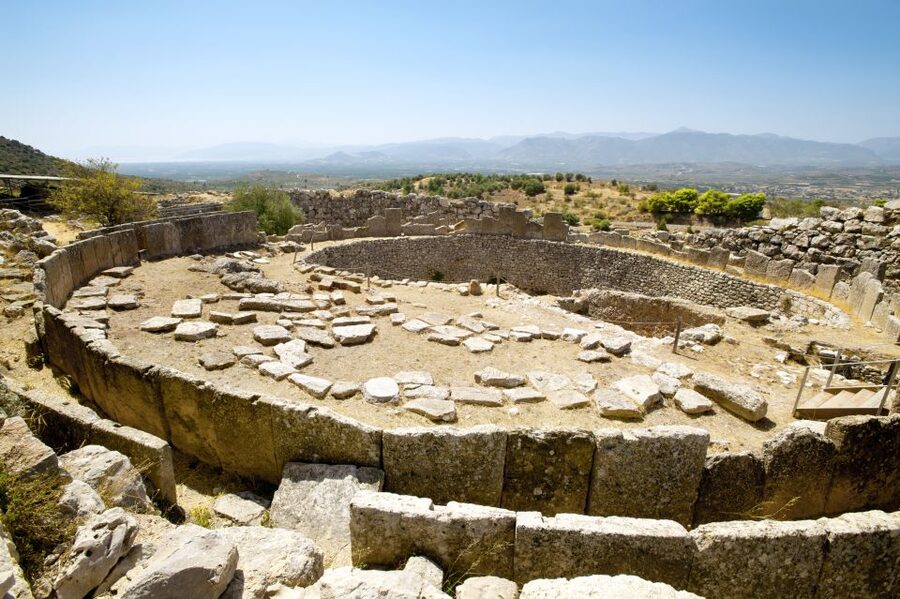
You then travel through the plain of Argos toward Mycenae. The countryside connects the ruins to the old stories of the region. Mycenae is linked with Agamemnon, the legendary king associated with the Trojan War, and the site gives those myths a physical setting.
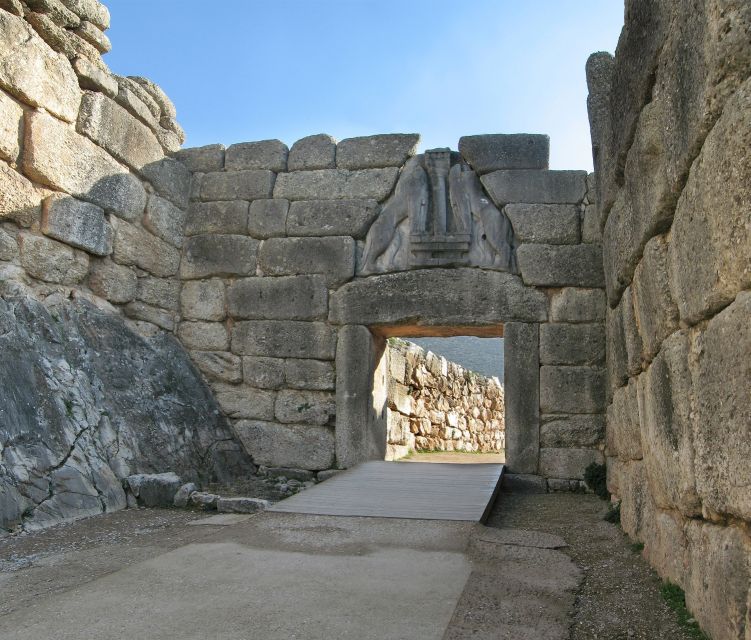
At the citadel, you see the famous Lion Gate, the ruins of the fortified settlement, and the Tomb of Agamemnon, also called the Treasury of Atreus. The tomb is especially effective because its large beehive-shaped interior is much easier to understand in person than in a photograph.
Mycenae is not a restored city. You will see foundations, broken walls, and scattered remains, so the guide’s explanation is important. Several guides on this route have used drawings, photographs, or reconstructions to show how the ruins may have looked when complete. That kind of visual help makes the site easier to read.
After Mycenae, the bus continues toward Olympia. Short breaks in Tripolis and Megalopolis provide time to stretch your legs or buy a snack and a souvenir. These are practical pauses, not major sightseeing stops, so keep your expectations modest.
Overnight in Olympia and what the hotels mean
You spend the first night in Olympia. Hotel quality can vary depending on the selected category and available property. The three-star option has been described as quite comfortable by some people, while the Delphi accommodation has drawn criticism for worn facilities in at least one case.
That makes the hotel choice worth considering. The four-star option costs more, but it may offer a better margin of comfort after a full day on the road. The tour assigns double or triple rooms by default. A single room requires a separate booking for one person, so solo visitors should check the booking arrangement before paying.
Breakfast and dinner are included. Lunch is not, which gives you some choice but also means you should budget for it each day. Drinks are extra, and the hotel tax is paid directly to the property. The stated tax is €5 per room per night in a three-star hotel and €10 per room per night in a four-star hotel.
Day two: Olympia, the Olympic flame, and Delphi
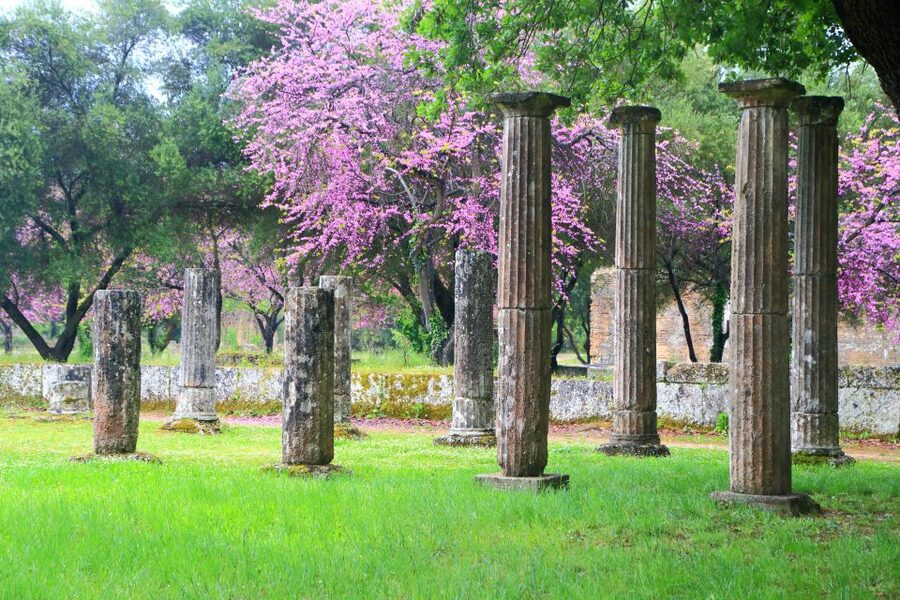
Olympia is the emotional center of the second day. This is where the ancient Olympic Games took place, and the site was sacred to the Greeks long before the modern international sporting event began.
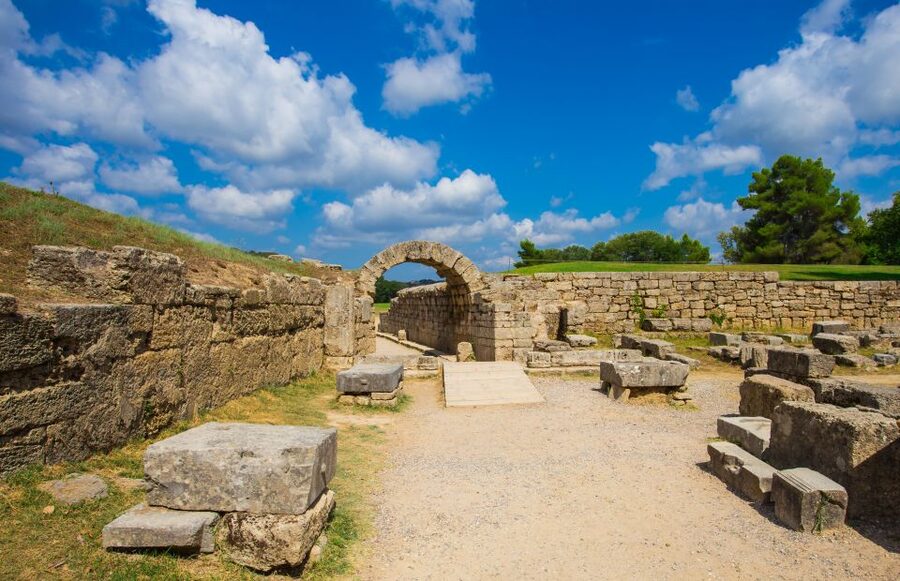
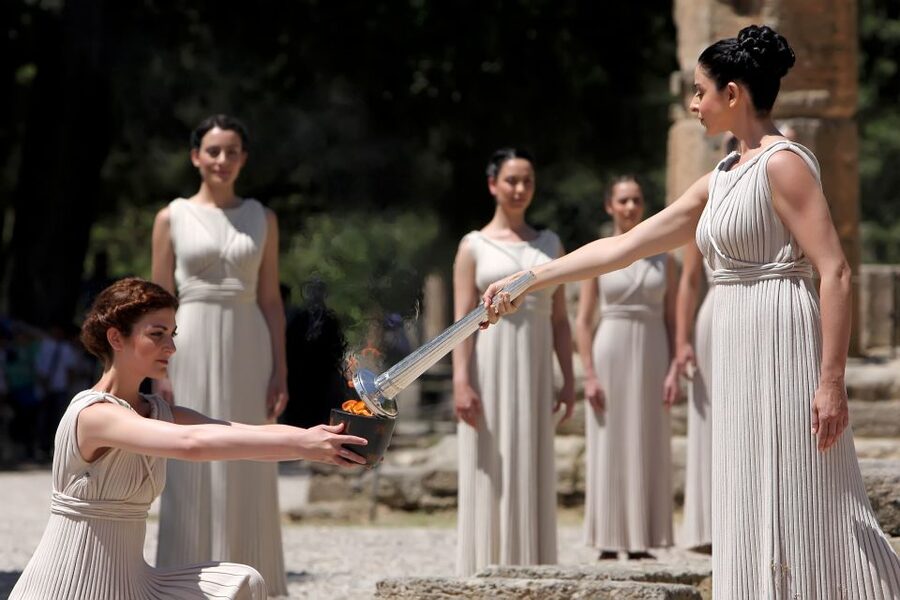
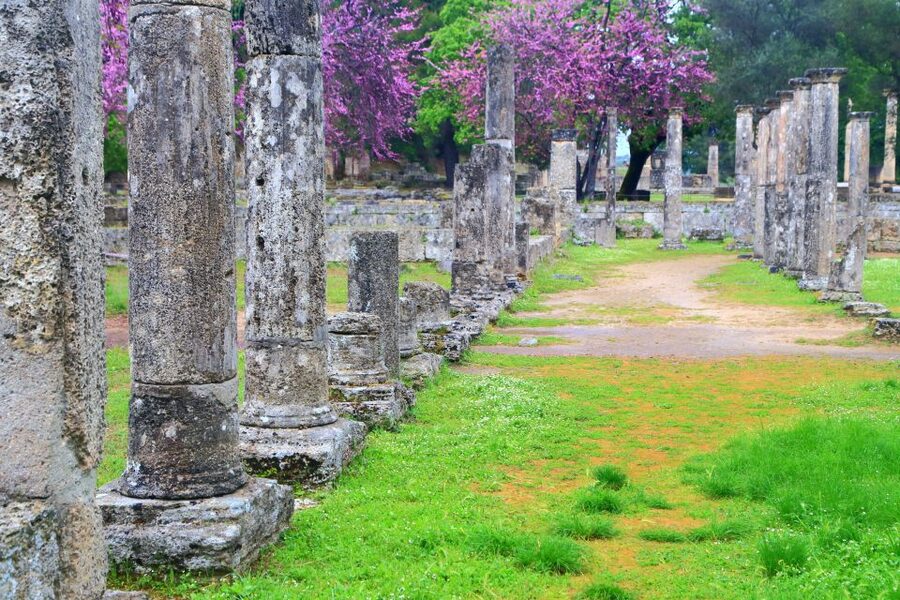
You will see the remains of the Temple of Zeus and Temple of Hera, including their Doric columns, along with the ancient stadium. The altar of the Olympic flame is another key stop. It connects the ancient site with the modern ceremony that still begins the Olympic Games.
The nearby Archaeological Museum of Olympia is included. This matters because the ruins alone can leave you trying to imagine missing statues, decoration, and architectural details. In the museum, excavated objects give you a clearer idea of what once filled the temples and public spaces.
Set aside energy for this visit. Olympia is exposed, and the walk through the site can be tiring in high temperatures. One person described spending around three hours at Olympia and Delphi in roughly 35°C heat, moving from one patch of shade to the next. That is a useful warning. Bring a large hat, sunglasses, water, and an umbrella if you use one for sun protection.
After Olympia, the route goes to Rion and across the Corinthian Gulf by the new bridge to Antirion. The bridge crossing is a pleasant change after the ruins. From there, the bus follows the coastal road toward Delphi and passes Nafpaktos, a small harbor town with a more relaxed feel.
The drive is part of the experience, but it is also where the trip can feel long. You may spend hours sitting on the bus, so use the rest stops, keep water within reach, and do not expect every part of the day to feel equally active.
Before reaching Delphi, the tour stops in Arachova, a mountain village on the slopes of Mount Parnassus. This adds a cooler highland setting and a chance to see a Greek town away from the major ruins. The stop is brief, but it helps show how different the regions around Delphi can feel from the coastal and lowland parts of the route.
More Ancient History Tours in Greece
- Acropolis, Parthenon & Athens Old City Heritage Walking Tour
★ 4.5 · 876 reviews - Private Biblical Tour Ancient Corinth & Isthmus Canal from Athens
★ 5.0 · 762 reviews - Athens: Ancient Corinth & Nafplio Full Day Trip with Swim
★ 4.8 · 531 reviews - Athens Skip the Line: Open Air Ancient Greek Theatre Performance
★ 4.5 · 520 reviews
Day three: Apollo, the Oracle, and the views from Delphi
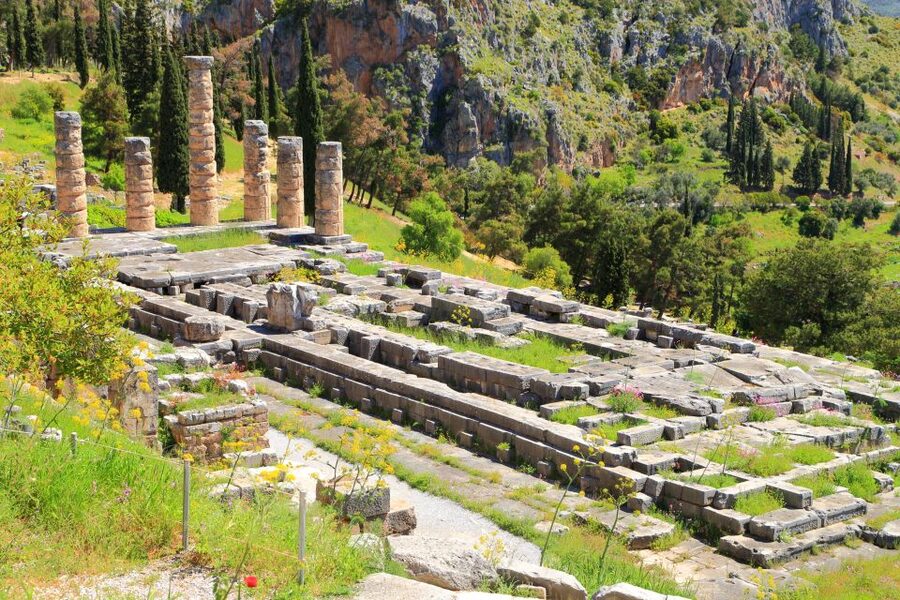
Delphi is the most atmospheric site on the tour. Ancient Greeks regarded it as the center of the world, and pilgrims came to consult the Oracle of Apollo. The site’s position high on Mount Parnassus gives it a powerful setting, with views across the valley and surrounding mountains.
Your guide will explain the older connection with Gaia, or Mother Earth, and the story of the Python dragon killed by Apollo. These myths are not side notes here. They help explain why Delphi mattered as a religious center and why Greek city-states sent offerings to this remote sanctuary.
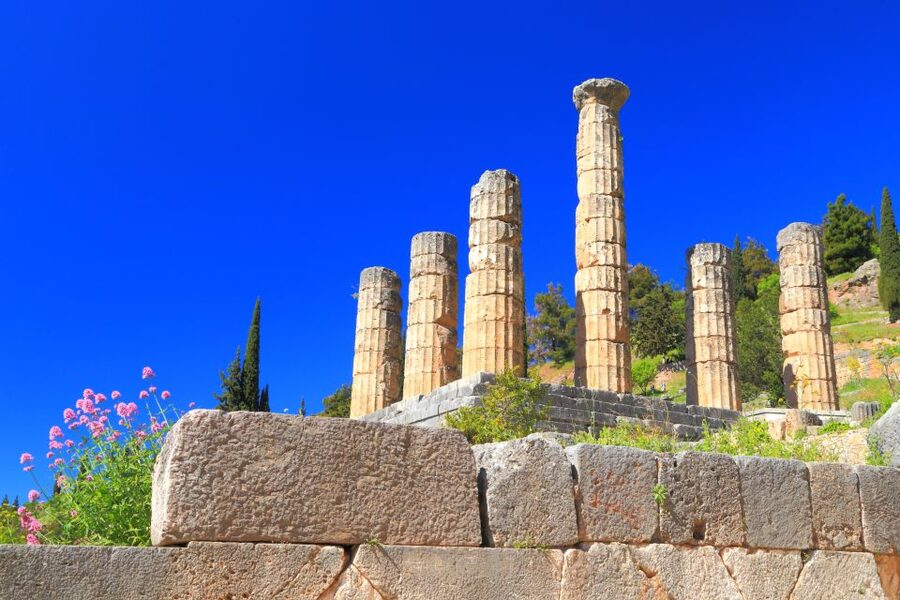
The Temple of Apollo is the essential stop. Much of it is in ruins, but the surviving columns and foundations show the scale of the sanctuary. You also visit the theater, which could hold up to 5,000 spectators for plays, poetry readings, and festivals.
The climb through Delphi takes effort. The site rises along a slope, and you may be walking over uneven ground and steps. Good shoes are more useful than stylish ones. If your knees, balance, or stamina are limited, ask about the walking demands before booking.
The Archaeological Museum of Delphi completes the visit. Its collection includes objects and relics from the sanctuary, helping you understand what the site looked like beyond its remaining stonework. The famous Charioteer of Delphi is among the works associated with the museum, though the exact presentation can depend on current arrangements.
The guides are a major reason this itinerary works. Marianna Tsigaridou was praised for turning mythology into clear stories and for finding shaded places where the group could sit while she explained the artifacts. Another guide, Evangelist, was singled out for his care with timing, questions, and practical details. Dimitris was remembered for linking the myths, places, and modern Greece during the drives.
The final return to Athens passes through the vine and olive-growing hills of Parnassus and the Valley of Phocis. It is a long finish, but the route lets you look back over the three days and see how the sanctuaries, fortified citadels, theaters, and sporting grounds fit into the wider Greek world.
The bus, group size, and pace
Transport is by air-conditioned bus, though the exact vehicle can vary. A small group once traveled in a mid-sized passenger van with charging ports, while other departures used a 20-seat minibus. That suggests the ride may feel more personal than a large coach trip, but you should not assume every departure has the same vehicle.
The driver matters on this route. You will pass through small towns and travel along curving roads, particularly around mountain areas. Drivers such as Spiros, Thomas, and Georgios received especially warm praise for handling the route smoothly.
The group may not remain exactly the same at every guided visit. Some departures involve transfers between groups, and this can be confusing at Mycenae or Delphi when larger site groups gather. Pay attention to meeting times and locations, and take a photograph of your bus if several similar vehicles are parked nearby.
This is a guided overview, not a slow archaeological study. You usually receive an explanation at the key points, then some free time to look around independently or rest. That balance works well if you want context but do not want a guide speaking every minute.
If you are an archaeology specialist, you may want more time at each site. If you are seeing classical Greece for the first time, the pace is a sensible tradeoff for covering so much territory.
Food, comfort, and practical preparation
Breakfast and dinner are part of the package, and the meals have generally been considered good. One particularly useful detail is that gluten-free meals were accommodated at each location for a person with celiac disease. You should still notify Key Tours about dietary needs in advance rather than relying on a last-minute request.
Lunch is your responsibility. The schedule includes stops where you can buy food, and some lunches may be arranged at your own expense. Keep a small supply of water and snacks with you, especially on the longest road sections.
Pack light enough to manage your own luggage. One departure had luggage misplaced for 24 hours, an uncommon but serious inconvenience. The incident is a reminder to carry essential medication, documents, and basic toiletries in your day bag rather than placing everything in your main suitcase.
The tour is not suitable for wheelchair users. Even for people without mobility restrictions, Delphi, Olympia, and Mycenae involve uneven surfaces, slopes, or extended outdoor walking.
Who should book this three-day tour?
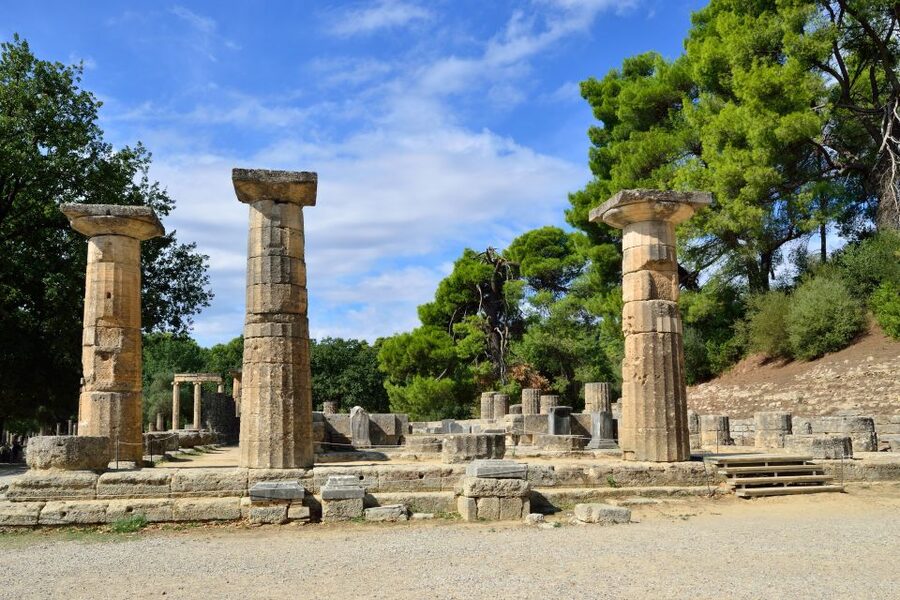
I would choose this tour if you want a strong first look at classical Greece and prefer not to rent a car. It suits people who enjoy stories, ruins, museums, scenic bus rides, and a full schedule.
It is also a good match if you want a guide to connect mythology with what you are seeing. The best guides on this route do more than point out stones. They explain why Delphi mattered, how the Olympic sanctuary functioned, and how Mycenae fits into Greek legend.
I would hesitate if you dislike long bus journeys, hot outdoor sites, or fixed group schedules. You will not have unlimited time at every ruin, and the remains at Olympia and Mycenae require some imagination.
Spring and autumn should be more comfortable than the hottest summer months, based on the heat reported during a summer visit. If you go in July or August, prepare seriously for the sun.
Should you book it?
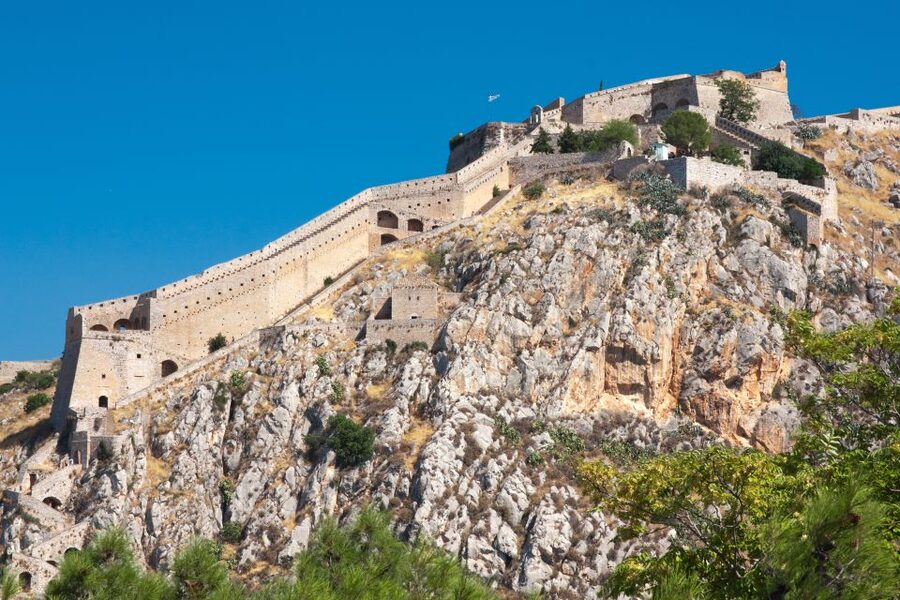
Book this tour if you want the most efficient three-day route to Mycenae, Olympia, and Delphi, with Epidaurus, the Corinth Canal, Nafplio, Arachova, and the Rio-Antirrio Bridge added along the way. At $506, the value is strongest for you if you would otherwise pay separately for transport, hotels, guides, entrance fees, breakfasts, and dinners.
Skip it if you want slow mornings, long museum visits, or complete control over the schedule. For most first-time visitors to the archaeological sites around Athens, though, this is a practical and well-supported introduction. Bring good shoes, sun protection, patience for the bus, and a willingness to let a strong guide fill in the missing pieces.
FAQ
How long does the tour last?
The tour lasts three days and includes two nights of hotel accommodation.
Which major archaeological sites are included?
The route includes Epidaurus, Mycenae, Olympia, and Delphi. It also includes the Corinth Canal, with stops or drives through Nafplio, Tripolis, Megalopolis, Nafpaktos, Arachova, Rion, and Antirion.
Is transportation included?
Yes. Transfers are provided by luxury air-conditioned bus.
Are hotel stays included?
Yes. Accommodation is included in a three-star or four-star hotel, depending on the option selected.
Are meals included?
Breakfast and dinner are included. Lunch, drinks, and personal expenses are not included.
Is the tour conducted in English?
Yes. The tour has a live English-speaking guide.
Can I be picked up at my Athens hotel?
Pickup is available from most centrally located Athens hotels on request. It generally takes place about one hour before departure, and you should confirm the exact location and time with Key Tours.
Is the tour suitable for wheelchair users?
No. The tour is not suitable for wheelchair users, and the archaeological sites involve outdoor walking over uneven or sloping ground.
More 3-Day Experiences in Athens
- Cairo: 3-Day Siwa Oasis Tour, Safari, Camp & Historical Site
★ 4.9 · 80 reviews - Beijing: All-Inclusive 3-Day Private Tour of Must-See Sights
★ 5.0 · 35 reviews - 3-Day All-Inclusive Beijing Private Tour: Top Sights+Peking Duck
★ 5.0 · 28 reviews
More Archaeological Site Tours in Athens
- Buggy Tour in Ancient Ruins and Temples around Athens-SOUNIO Poseidon Temple
★ 5.0 · 56 reviews - Private Athens Walk: Ruins, Markets & Local Stories
★ 5.0 · 41 reviews - Discover the Ancient Ruins of Pompeii: Day Trip from Rome
★ 3.5 · 2,247 reviews - Ancient Olympia: Archaeological Site and Museum Entry Ticket
★ 4.3 · 555 reviews
Just added around Athens
- The original Christian tour on Paul’s footsteps in Athens and ancient Corinth★ 4.5 · 25 reviews
- Small-Group Women History in Ancient Greece Walking Tour★ 5.0 · 38 reviews
- Athens: Combo Ticket for Acropolis & 6 ancient sites★ 3.0 · 21 reviews
- Ancient Sparta & Mystras Private Day Tour from Athens★ 5.0 · 52 reviews
- Ancient Olympia & Isthmus Canal Private Tour from Athens★ 5.0 · 20 reviews
- Ancient Agora & Temple of Hephaestus Entrance Ticket★ 3.5 · 22 reviews
- Half Day Historical Athens City Private Taxi Service Tour★ 5.0 · 79 reviews
- Ancient Olympia & Ancient Corinth Private LuxuryTour from Athens★ 5.0 · 25 reviews
Archaeological Site Tours, compared.
Discover the Ancient Ruins of Pompeii: Day Trip from Rome
Read our review →
Ancient Olympia: Archaeological Site and Museum Entry Ticket
Read our review →
Cusco: Historical Guided City Tour with 4 Inca Ruins
Read our review →
Ancient Chacchoben Mayan Ruins & Mayan Experience from Costa Maya
Read our review →
Ancient Syracuse: private guided tour of the Neapolis archaeological park
Read our review →
Coba Private Tour – Ancient Ruins & Refreshing Cenote Swim
Read our review →
Alanya: Ancient Ruins & Hidden Coves of Gazipaşa w/ Cave
Read our review →
Buggy Tour in Ancient Ruins and Temples around Athens-SOUNIO Poseidon Temple
Read our review →Browse the lists this tour appears in