
Review · AUVERGNE-RHôNE-ALPES
Lyon: Kheops VR Experience – Immersion in Ancient Egypt
The Great Pyramid comes to life in Lyon. Khéops VR lets you walk around the Giza Plateau, enter Khufu’s Pyramid, and see its corridors and chambers through a highly detailed virtual reconstruction. I like the blend of solid historical information and cinematic presentation, and I also like that the whole activity takes place indoors, which is useful on a rainy or very hot day. The main drawback is that the actual VR portion lasts about 45 minutes, although the full visit is sold as a one-hour activity.
This is not a film that you watch from a seat. You use a modern VR headset and move through a recreated version of Ancient Egypt. I especially appreciate the chance to grasp the pyramid’s scale from the outside before entering it, since that order helps the setting make sense. The cost is about $34 per person, so it is not a bargain attraction, but the price can make sense for families, history fans, and anyone wanting something different from Lyon’s usual museums.
The activity has earned a 4.7 rating from 26 reviews, with especially strong praise for its memorable presentation and its usefulness as a way to revisit the story of the pyramids. If you are booking for four people, ask about group pricing before paying. One French family of two adults and two young people, ages 11 and 13, said they were not told in advance that a group rate might apply.
Key points at a glance

- A 45-minute VR journey inside Khufu’s Pyramid: The core activity takes you through the Great Pyramid, including corridors, chambers, and reconstructed spaces.
- Start outside at the Giza Plateau: You first see the monument in its wider setting, which gives the interior visit a useful sense of scale.
- Historical context comes before the headset: A short introduction explains the main facts behind the pyramid and prepares you for the virtual visit.
- French and English support: The host or greeter can assist in both languages, making the activity practical for international visitors.
- Good indoor option in Lyon: The experience works well when weather makes outdoor sightseeing less appealing.
- Check health and age restrictions: The activity is not suitable for children under eight, people with heart problems, or people with epilepsy.
Why Khéops works better than a pyramid film
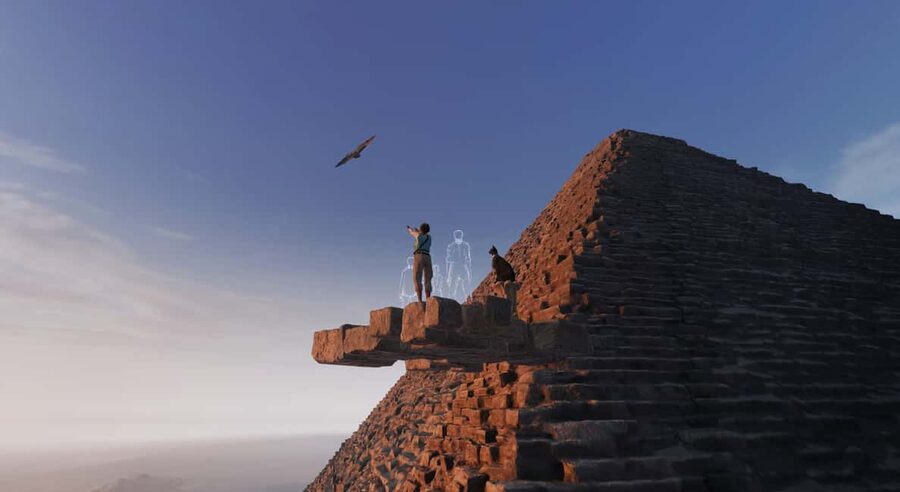
A documentary can explain how the Great Pyramid was built. A museum can show you models, plans, and photographs. Khéops takes a different route: you enter a digital reconstruction and use your own movement to examine the monument.
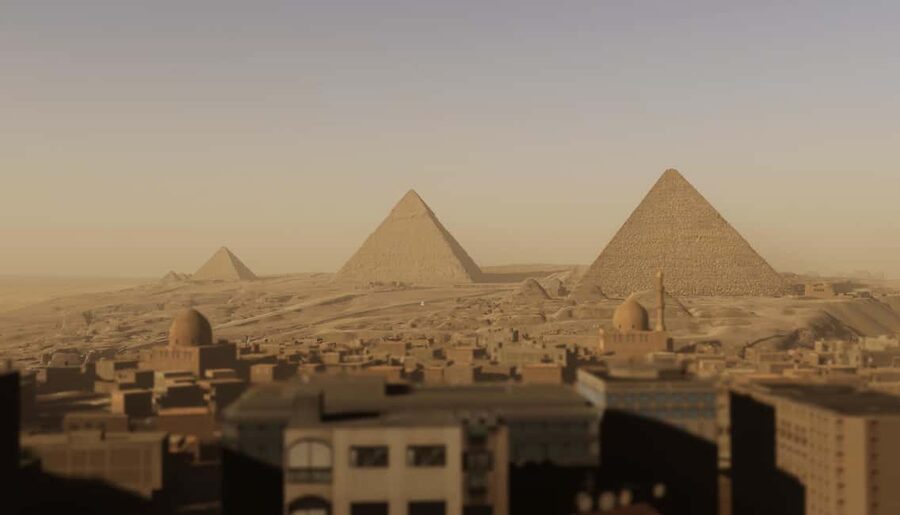
That difference matters. The pyramid is enormous, but photographs often flatten its size. In VR, you can first look across the Giza Plateau toward the structure, then move closer and inspect its form from ground level. This gives you a better feel for the relationship between the monument and the open area around it.
The presentation also tries to connect information with feeling. Sound, lighting, and motion support the story without making it a simple arcade game. You are still learning, but the information arrives through a place you can explore rather than through a long lecture.
I would not treat this as a replacement for visiting Egypt. You do not get the heat, dust, open sky, or real stone beneath your feet. What you do get is access to spaces that can be difficult to understand from photographs and difficult to visit in person. For a short activity in Lyon, that is a fair trade.
More Ancient History Tours in France:
- Colosseum: Underground and Ancient Rome Tour
★ 4.7 · 12,691 reviews - Colosseum & Ancient Rome with Arena Floor Option I Max 6 People
★ 5.0 · 3,306 reviews - Rome: Colosseum, Ancient Rome Tour or AudioGuided Tour
★ 4.4 · 2,879 reviews
The opening introduction sets the scene
Your visit begins with a short introduction to the pyramid and its background. This part is important because the VR sequence moves quickly into the setting, and a few basic facts help you understand what you are seeing.
Expect an overview rather than a university lecture. The introduction gives you the essential historical points and explains why Khufu’s Pyramid is such an important architectural achievement. That makes the experience easier to follow for children and for adults who know the name of the Great Pyramid but not much else.
I like this brief preparation because it avoids throwing you into the headset without context. It also keeps the visit moving. With a total activity time of about one hour, you do not want half the session spent on a long classroom talk.
Families can use this opening as a quick history lesson. The story of the pyramids has plenty of room for questions, and the visual section gives younger visitors something concrete to connect with. Children must be at least eight years old, so this is aimed at school-age children and older, not toddlers.
First stop: the Giza Plateau in virtual reality
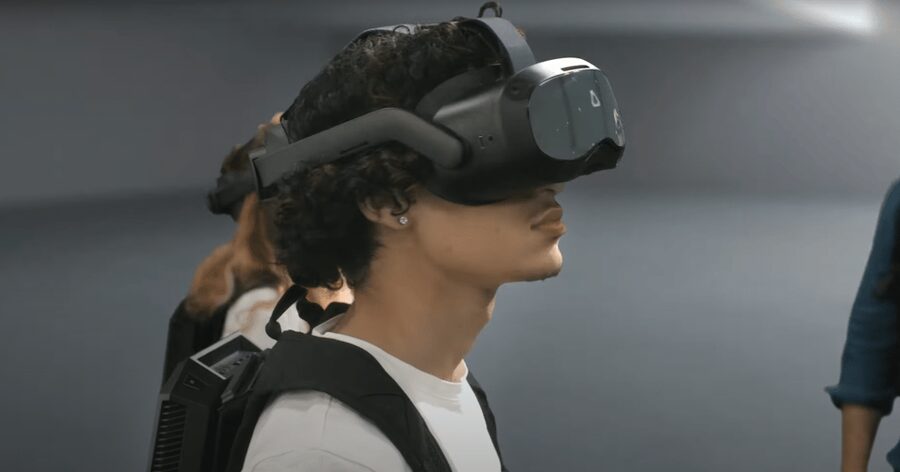
After the introduction, you put on the VR headset and arrive at a 360-degree recreation of the Giza Plateau. The first view is designed to show the Great Pyramid as a monument, not merely as a collection of tunnels.
Take a moment here. Look around. Notice how the pyramid occupies the scene and how different it feels to stand near it rather than see it in a book. The ability to walk freely around the virtual site is one of the strongest parts of the activity.
This outside section gives the visit a clear rhythm. You begin with the broad view, then move toward the details. That is more helpful than starting inside a dark corridor with no idea where you are.
The VR setting also lets you inspect parts of the monument that are hard to appreciate in ordinary images. You can look upward, turn around, and view the pyramid from different angles. The experience is designed to make the structure feel present and physical, even though you are still in an indoor venue in Lyon.
This is likely to appeal most to people who enjoy seeing how technology can explain history. It also suits anyone who has seen pictures of the pyramids for years and wants a fresh way to understand their size.
Inside Khufu’s Pyramid, from corridors to chambers
The central section takes you into the pyramid itself. You move through corridors, chambers, and other reconstructed areas connected with the monument. The route is built to feel like an expedition, but it remains guided by historical research rather than pure fantasy.
That distinction matters. A cinematic treatment can easily turn Ancient Egypt into decoration. Here, the aim is to use the drama of entering the pyramid while keeping the reconstruction tied to information from historical experts.
The interior is where VR has its clearest advantage. You can see how passageways connect and how the structure changes as you move farther inside. In a real visit to Egypt, access to certain areas may be limited or impossible. In this digital version, the story can show you spaces that would otherwise remain abstract.
The sound design and atmospheric lighting help create a sense of movement through the monument. I would expect this to feel powerful for first-time VR users, though people who are sensitive to headsets or motion may need to take it at a comfortable pace.
Do not expect a long, slow architectural study. The entire visit is compact, and the advertised one-hour duration includes the welcome and preparation. The actual VR segment is listed as 45 minutes, so you should think of it as a focused introduction rather than an all-day archaeological program.
A few more history tours around France worth a look
- Paris: Louvre Museum Entry with History of Mona Lisa
★ 3.9 · 2,823 reviews - Paris: Dark History and Ghostly Guided Walking Tour
★ 4.7 · 1,000 reviews - Vieux Lyon Cultural & Historical Walking Guided Tour (English)
★ 5.0 · 942 reviews - Bordeaux: Historic Center & Chartrons District Bike Tour
★ 4.8 · 709 reviews
What the technology adds, and what it cannot replace
The headset is the star of the activity, but technology alone does not make a good cultural visit. Khéops works because the VR visuals are tied to a clear story and a physical sense of place.
The 360-degree format lets you choose where to look. That makes the experience more personal than a standard video. You are not limited to the camera angle selected by a filmmaker. If a detail catches your eye, you can turn toward it and spend a moment looking.
The virtual setting also gives you a sense of scale that diagrams often miss. Corridors feel connected. Chambers feel like part of a larger structure. The pyramid becomes a place with a layout, not just a triangular outline.
Still, there are limits. You are not touching ancient stone or standing beneath the Egyptian sun. The sound and lighting are designed effects, and the reconstruction remains an interpretation. If your main goal is to see original artifacts, this is not a substitute for an archaeology museum.
I see it as a useful middle ground. You get more movement and atmosphere than a documentary, but more historical purpose than a typical VR game. That mix explains why the experience has earned a strong 4.7 rating from 26 reviews.
A practical choice for families
Khéops is well suited to families with children aged eight and older. The subject is educational, but the format is active enough to hold attention better than a long wall of museum text.
The visual journey gives parents a chance to discuss architecture, archaeology, and Ancient Egyptian society without turning the outing into homework. Children can focus on the feeling of exploring, while adults can pay closer attention to the historical points and reconstruction.
The age restriction matters. Children under eight cannot take part, so families with younger children will need another plan for this activity. The supplied information also lists heart problems and epilepsy among the reasons not to participate. Those are important safety considerations, not minor fine print.
Because the activity lasts about an hour, it fits neatly into a day of sightseeing. You can use it as a break between outdoor stops or as a weather-proof part of your Lyon schedule. It is also short enough that most families will not need to commit an entire afternoon.
For a group of four, check the final price before booking. A French family of two adults and two young people, ages 11 and 13, reported that they were not informed about a possible group rate. That does not guarantee a discount in every case, but it is a good reason to ask.
Is $34 a fair price?
At roughly $34 per person, Khéops sits above the price of a simple museum entry. The question is what you are paying for.
You are paying for a hosted VR production with a headset, a 45-minute virtual program, historical content, sound, lighting, and a purpose-built digital reconstruction. If you already enjoy VR or have a strong interest in the pyramids, the price may feel reasonable because the activity offers something a standard exhibition cannot.
The value is also better when you consider the setting. This is an indoor activity in Lyon that does not depend on good weather. On a wet afternoon, it can give you a structured cultural outing without sending you across town in search of shelter.
The value is weaker if you want extensive historical detail, original objects, or a long visit. You will not spend several hours here, and the main attraction is the digital journey rather than a large collection of physical displays.
I would compare it with the price of a film, an attraction, or another paid cultural activity in Lyon. For a special family outing, it can justify the cost. For a budget-conscious visitor already planning several museums, it may be the first activity to skip.
There is also a useful booking safety net. You can cancel up to 24 hours before the activity for a full refund, and the reserve-now, pay-later option lets you keep plans flexible. Those terms help if your Lyon schedule is still changing.
Language, access, and comfort
The host or greeter can assist in French and English. That makes the activity easier to use for international visitors and removes one common worry about a history-based presentation.
The experience is wheelchair accessible, which is valuable for an activity that relies on digital movement rather than a long walk through old stone buildings. You should still consider your own comfort with a VR headset and the health restrictions listed for the activity.
VR does not suit everyone. People with epilepsy or heart problems should not take part, according to the supplied safety information. Children under eight are also excluded.
If you are new to virtual reality, the staff are there to help you get started. The presentation is intended for different levels of familiarity, so you do not need previous VR experience to understand what to do.
The one-hour format is another comfort advantage. You are not committing to a lengthy session. If you are concerned about headset fatigue, the short duration makes this a more manageable introduction than a full-day VR program.
The best time to fit it into your Lyon plans
I would save Khéops for a rainy day, a very hot afternoon, or a point in your itinerary when you want a break from walking. Since the activity is entirely indoors, it gives you a reliable alternative when outdoor plans become unpleasant.
It also works well before or after other cultural visits. The content is focused on one monument, so you can enjoy it without needing to prepare for a broad survey of Ancient Egypt.
For families, an early or mid-day booking may be easier, especially if you want to combine the session with lunch or another Lyon attraction. For adults who are mainly interested in technology and historical storytelling, it can fit almost anywhere because the program lasts only about an hour.
Check the available start times when choosing a date. The exact schedule is not fixed in the information provided, so you should select a time that leaves room for Lyon traffic, meals, and any other reservations.
Who should book Khéops VR?
I would recommend it most strongly to four groups:
- Families with children aged eight and older who want history presented in an active format.
- Visitors fascinated by the pyramids but unable to travel to Egypt.
- People who enjoy trying well-produced VR rather than watching a standard film.
- Anyone needing a worthwhile indoor activity during bad weather or extreme heat.
I would be more cautious if you dislike headsets, motion-based attractions, or heavily visual presentations. I would also skip it if your main aim is to see authentic objects, since the core visit is a digital reconstruction.
The strongest praise focuses on the experience itself. One French visitor called it excellent for revisiting the story of the pyramids, while another described the experience as wonderful. Those comments match the activity’s main strength: it gives familiar history a new physical shape.
Should you book the Khéops VR Experience?
Book it if you want a short, polished cultural activity that lets you move through the Great Pyramid rather than simply read about it. The combination of the Giza Plateau, the pyramid interior, historical background, and cinematic sound makes this more meaningful than a basic VR game.
At $34, it is best viewed as a special attraction, not a cheap filler activity. Ask about group pricing if you are booking for four people, and confirm that the age and health rules suit everyone in your party.
I would choose Khéops for a rainy Lyon afternoon, a family outing, or a first taste of VR with a strong historical subject. I would pass if you need original antiquities or a long museum visit. For the right audience, this is a memorable way to meet one of the world’s most famous monuments without leaving France.
FAQ
How long does the Khéops VR Experience last?
The activity lasts one hour in total. The included VR program is listed as 45 minutes, with the remaining time covering the introduction and visit setup.
What languages are available?
The host or greeter can assist in French and English.
Is the experience wheelchair accessible?
Yes, the activity is listed as wheelchair accessible.
Can children take part?
Children must be at least eight years old. Children under eight are not suitable for this activity.
Who should not participate?
The activity is not suitable for people with heart problems or epilepsy.
Can I cancel my booking?
Yes. You can cancel up to 24 hours in advance for a full refund. A reserve-now, pay-later option is also available.
Just added around France
- Mont Saint Michel: Village History and Legends Walking Tour★ 4.8 · 96 reviews
- Lyon: Music History Tour with Wine Tasting★ 4.9 · 34 reviews
- Historical and naughty tour of Lyon in french★ 4.5 · 49 reviews
- Historic Paris Walking Tour in English★ 4.9 · 78 reviews
- Historic Center of Dijon : Discovery Tasting Wine Burgundy★ 4.5 · 40 reviews
- Group Visit to Mont Saint-Michel: A Shared Historic Journey★ 4.4 · 31 reviews
- From Avigno: Full-Day Roman Sites and Historical Places Tour★ 4.7 · 28 reviews
- Explore the Marais: History, Art & Local Culture★ 4.6 · 105 reviews
Ancient History Tours, compared.
Colosseum: Underground and Ancient Rome Tour
Read our review →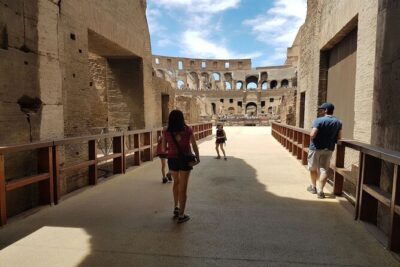
Colosseum & Ancient Rome with Arena Floor Option I Max 6 People
Read our review →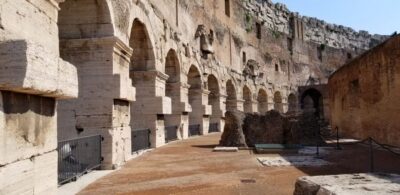
Colosseum, Ancient Rome Tour or AudioGuided Tour
Read our review →
Colosseum Underground & Ancient Rome Guided Tour
Read our review →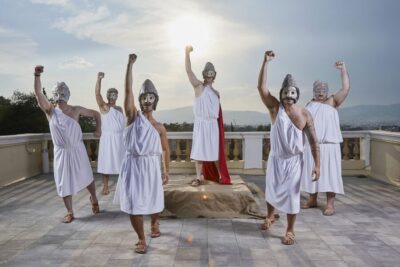
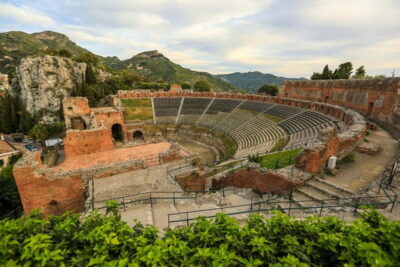
Taormina: Ancient Theater Skip-the-Line Ticket & Audio Guide
Read our review →
Discover the Ancient Ruins of Pompeii: Day Trip from Rome
Read our review →
Discover Matera, the ancient city – English tour
Read our review →Browse the lists this tour appears in