
Review · TASMANIA
Hobart Historic Walking Tour
Hobart’s past is written into its streets. This 90-minute walk brings colonial buildings, convict tales, and waterfront stories together with a local guide who explains how the Tasmanian capital took shape. I like the clear introduction to Hobart’s layout, and I like that the tour puts real people and difficult events at the center of the story. The main drawback is pace: some visitors found the information came quickly and wished the walk lasted closer to two hours.
The tour begins at the Tasmanian Travel & Information Centre on Davey Street, making it a useful first activity in Hobart. I would book it early in a visit so you can use the guide’s explanations to make sense of the city afterward. Comfortable shoes and warm layers matter, since this is a full 90 minutes on foot and Tasmanian weather can change quickly.
Key points to know before you book

- A useful first look at Hobart: The tour introduces the city’s history, central streets, heritage buildings, and present-day layout.
- Stories lead the way: Convicts, settlers, explorers, maritime figures, and resilient local characters give the walk its human focus.
- An English-speaking local guide: Guides such as Dianne have been praised for clear explanations, humor, and an easy manner.
- A compact 90-minute route: You get a solid orientation, though the amount of information may feel fast for some people.
- Good value at $26: The price is modest for a guided city introduction, especially if you want context before exploring alone.
- Seasonal operating days: Tours run Monday to Saturday in high season and Wednesday to Saturday in June, July, and August.
Starting at Davey Street and getting your bearings
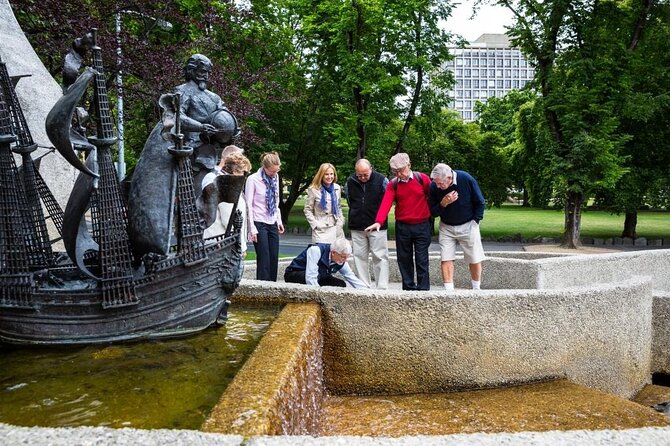
The meeting point is the Hobart Travel Centre at 20 Davey Street, also identified as the Tasmanian Travel & Information Centre. That is a practical location for a city walk because you begin near the central part of Hobart rather than spending time getting out to a distant attraction.
I like starting a historic walk at an information center. You can ask about the day’s conditions, confirm the departure point, and get your bearings before the guide begins. If you have just arrived in Hobart, the first few minutes should help you understand how the central streets connect with the waterfront and the older parts of town.
The tour lasts 90 minutes, so it is not an all-day history course. Think of it as a brisk introduction with enough detail to give later sightseeing more meaning. You will hear about the city’s beginnings, then connect those broad events to streets, buildings, and places you can see around you.
The timetable changes with the season. During high season, the walk operates Monday through Saturday. In June, July, and August, it operates Wednesday through Saturday, so you should check the available start time before planning your day around it.
More History Walking Tours in Australia
- Ultimate Melbourne Walking Tour: History, Laneways & Culture
★ 5.0 · 1,451 reviews - Sydney: The Rocks 90-Minute History Walking Tour
★ 4.7 · 1,092 reviews - Discover Perth Walking Tour: History, Art, Local Insights + More!
★ 5.0 · 458 reviews
Colonial streets and heritage-listed buildings
Hobart’s old streets provide the setting for the tour. The walk focuses on colonial architecture, cobbled lanes, heritage-listed buildings, and the older parts of the city. These are not simply backdrops for photographs. The guide explains what they reveal about the way Hobart developed.
I find this kind of walking tour more useful than moving from one isolated museum to another. You see the city as a working place, with history built into ordinary routes. A building may look quiet or familiar at first, but a guide can point out its age, function, or connection to a larger event.
The tour also helps you notice details you might miss on your own. The information supplied for the walk promises forgotten stories and smaller details that are not always found in standard guidebooks. That does not mean every stop will be a major monument. Some of the value comes from learning how a street, lane, or old building fits into Hobart’s wider story.
Photography may require some patience. One person found that several stopping points were not ideal for taking pictures because of nearby traffic and the side of the road used for explanations. If photographs matter to you, listen first, then look for a safer and better angle when the group moves on. Do not let the camera make you miss the story.
Convict stories and the hard beginnings of Hobart
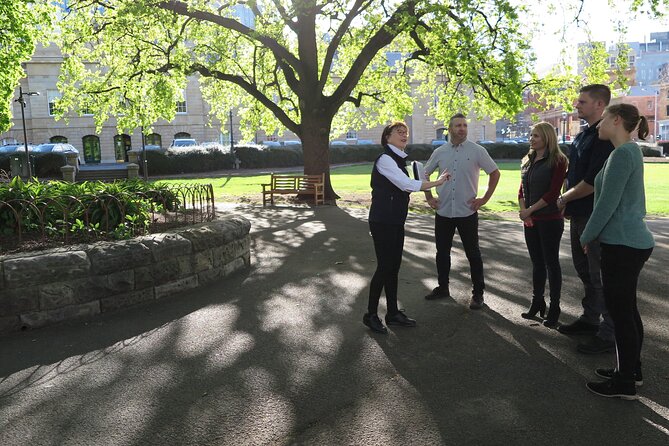
The central subject is Hobart’s colonial past, including the convict system and the people who shaped early Tasmania. The walk presents this period through individual stories, not only dates and official milestones.
That human focus is important. Convict history can become dry when it is reduced to transport numbers and government decisions. A good guide makes you think about the people involved: those sent across the world, those who governed them, those who built new lives, and those who helped a rough port town survive.
You will also hear about explorers, settlers, rogues, and resilient characters. These stories give the tour some color without turning the past into a simple adventure tale. Hobart’s early years involved hardship, control, ambition, and opportunity, and the guide’s job is to connect those tensions to the places under your feet.
Dianne has received particular praise for explaining the colonization of Hobart in a way that was easy to hear and understand. That matters on a street tour. A guide can know the material well, but you also need a voice that carries, a pace you can follow, and an ability to explain difficult subjects without making the walk feel like a lecture.
The waterfront and Hobart’s port-town story
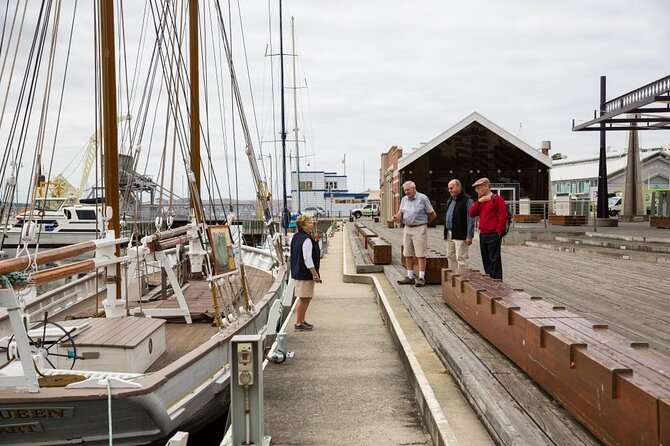
Hobart’s waterfront heritage adds another layer to the tour. Maritime adventures and the rise of a thriving port town are part of the story, showing how the city’s position shaped its growth.
The waterfront is valuable in historical terms because it links Hobart to movement: ships, trade, exploration, settlement, and the arrival of people and supplies. The tour uses that setting to move beyond architecture. You are not only looking at old walls. You are considering why the city grew where it did and how its connection to the water affected daily life.
The exact stops and order can vary with the guide and route, so you should not expect a fixed list of monuments with long time periods at each one. The supplied description emphasizes an overall journey through the old town and waterfront rather than entry into specific buildings.
That is both a benefit and a limit. You cover more of the city than you would inside one museum, but you do not get an extended visit to a single historic site. If you want detailed interiors, formal exhibits, or a long look at objects from the colonial period, this walk should be paired with another Hobart attraction.
Same place, a different slice of the past:
- Puffing Billy Railway: Heritage Steam Train Journey
★ 4.6 · 1,195 reviews - Morning World Heritage Cruise on the Gordon River from Strahan
★ 5.0 · 1,193 reviews - Strahan: World Heritage Cruise on Gordon River with Lunch
★ 4.8 · 1,143 reviews - Experience History onboard The Mary Valley Rattler
★ 5.0 · 963 reviews
A lively guide makes the difference
This tour depends heavily on the person leading it. The strongest feedback focuses on the guides’ personal style. Dianne has been described as humorous, easy to hear, and enjoyable, while other comments praise a friendly and engaging approach.
I would choose this experience for the guide-led storytelling, not just for the route. Streets and buildings can be visited without paying for a tour. The extra value comes from having someone explain the connections between them and answer questions as the walk unfolds.
The guide also chats with the group before departure, which can make the start feel relaxed rather than formal. Once the tour begins, though, the pace can be quick. One person felt that a great deal of information was delivered in a short time and suggested extending the walk to two hours.
You should consider your own listening style. If you like a compact stream of facts and stories, 90 minutes may feel efficient. If you prefer to pause for photographs, ask many questions, or take notes, you may feel hurried. The walk is more suited to active listening than to a slow, leisurely stroll.
What the 90-minute pace means for you
Ninety minutes is long enough to cover a useful part of central Hobart without taking over your day. You can fit the tour before lunch, after arrival, or between other plans. It also avoids the fatigue that can come with a much longer historical walk.
The trade-off is clear. A short route has to keep moving. You may hear several stories in a single stop, then shift to another street before you have had time to study every building. The guide may point out more places than the group can photograph carefully.
I suggest bringing a small notebook only if you can write quickly. Otherwise, focus on the names, themes, and locations that interest you, then return later at your own pace. Since the walk gives you an introduction to the city’s layout, you should be better prepared to revisit places independently.
The route is listed as wheelchair accessible, which makes this option useful for people who need an accessible walking experience. You should still check current conditions and the exact route when booking, since outdoor streets and surfaces can affect comfort even when a tour is designated accessible.
Is $26 a fair price?
At $26 per person, the tour is reasonably priced for a live, 90-minute city walk. You are paying for an English-speaking local guide, not admission to a major attraction, so the value depends on how much you want interpretation and conversation.
I see the best value in booking this early in your Hobart stay. The guide’s explanation of the city’s history and layout can help you decide where to spend more time afterward. You also avoid wandering through the old town without knowing which details matter.
The value is weaker if you already have a strong grasp of Hobart’s colonial past or prefer to explore silently with a guidebook. One person felt they had taken better tours for less money, although the overall reaction was still that this walk was acceptable. That is a fair warning: the experience is worthwhile, but it may not feel exceptional to every history fan.
The quality of the guide will also shape your sense of value. Strong storytelling, clear speech, and humor can make $26 feel like a bargain. A fast presentation with limited time for questions may feel less satisfying. I would book it for orientation and local context rather than expecting an exhaustive study of Hobart.
Who should take this Hobart walk?
I would recommend the tour to first-time visitors who want a quick introduction before exploring on their own. It suits people who enjoy history but do not want to spend half a day indoors, and it gives you a useful framework for understanding Hobart’s streets and waterfront.
It is also a good fit if you are curious about convict history, colonial architecture, maritime stories, and the people behind major events. The stories of settlers, explorers, rogues, and resilient characters give the walk a human feel.
Families with older children may find the format easier than a museum visit, especially if the guide uses humor and vivid stories. Younger children may struggle with the steady pace and historical detail, though the 90-minute length is manageable.
You may want to skip it if photography is your main aim. Some stopping points are not ideal for pictures, and you may not get long pauses beside every building. You should also think twice if you dislike guided groups or want time to examine each site at leisure.
What to bring and how to prepare
Wear comfortable shoes. The tour is on foot, and even a short city walk can feel tiring if your footwear is poor.
Bring warm clothing, a hat, a camera, and a reusable water bottle. Those suggestions make sense for Hobart’s changeable outdoor conditions and for a route with limited opportunity to stop for supplies.
I would arrive with an open mind about the pace. Listen for the main story first, then take photographs when it is safe and practical. If you need the guide to repeat a point, ask. The most useful part of a walking tour is often the chance to connect a general question with the exact street where you are standing.
The tour is conducted in English. If you are comfortable following spoken English in an outdoor setting, the guides have been praised for being easy to hear and understand. If you rely heavily on taking photographs or reading notes while walking, give yourself extra attention time after the tour.
Should you book the Hobart Historic Walking Tour?
Book it if you want a friendly, affordable introduction to Hobart’s colonial streets, convict past, and waterfront story. The $26 price is sensible, the meeting point is central, and the 90-minute format fits neatly into a busy itinerary.
I would especially recommend it for your first day or two in the city. You will leave with a clearer sense of Hobart’s layout and a list of places worth seeing again. The strongest guides, including Dianne, add humor and clear explanation that make the past easier to follow.
Skip it if you want a slow photography walk, long stops at individual buildings, or a detailed two-hour history lesson. The compact format can feel rushed, but for a short introduction led by a local guide, it offers a solid way to begin.
FAQ
How long does the Hobart Historic Walking Tour last?
The tour lasts 90 minutes, or one and a half hours.
How much does the tour cost?
The listed price is $26 per person.
Where does the tour meet?
The tour departs from the Hobart Travel Centre at 20 Davey Street, also identified as the Tasmanian Travel & Information Centre.
What language is the tour conducted in?
The tour is conducted in English with a live English-speaking guide.
Which days does the tour operate?
During high season, it operates Monday to Saturday. During low season in June, July, and August, it operates Wednesday to Saturday.
Is the tour wheelchair accessible?
Yes, the activity is listed as wheelchair accessible.
What should I bring?
Bring comfortable shoes, warm clothing, a hat, a camera, and a reusable water bottle.
Does the tour include a guide?
Yes, the price includes a 1.5-hour guided walking tour with an expert local guide.
Does the tour cover Hobart’s convict past?
Yes, the experience includes convict stories along with colonial history, maritime events, explorers, settlers, and the development of Hobart as a port town.
Can I cancel for a full refund?
Yes. You can cancel up to 24 hours in advance for a full refund.
Just added around Australia
- Longreach History and Town Tour★ 4.8 · 23 reviews
- Hobart: Cascades Female Factory Historic Site [official]★ 4.8 · 18 reviews
- Melbourne: History and Donuts Walking Tour★ 4.9 · 72 reviews
- Discover Perth Walking Tour: History, Art, Sights + More!★ 4.9 · 183 reviews
- Darwin: Small Group 2-Hour Heritage Walk★ 4.9 · 28 reviews
- Albany: Historic Whaling Station Entry Ticket★ 4.8 · 24 reviews
- A Barossa Valley pickup: Wine and Heritage Tour, Local Guide★ 4.9 · 20 reviews
- Hobart: Historic Lunch Cruise★ 4.6 · 271 reviews
History Walking Tours, compared.

History and Hauntings of Salem Guided Walking Tour
Read our review →
Freedom Trail History Small Group Walking Tour
Read our review →
Historic Charleston Guided Sightseeing Walking Tour
Read our review →
Tapas Walking Tour with Food, Wine, and History
Read our review →
Savannah History and Haunts Candlelit Ghost Walking Tour
Read our review →
A History of Terror – Belfast City Centre Walking Tour
Read our review →Browse the lists this tour appears in