
Review · QUEBEC CITY
Walking Tour Through Quebec City’s History
Quebec’s story is written in stone. This two-hour walk leads you through Old Quebec, from the grand Château Frontenac setting at Dufferin Terrace to the birthplace of the city at Place Royale. A local guide in period costume turns streets, churches, and stairways into chapters from 400 years of French and British rule.
I like the small-group format, capped at 20 people, because it gives the guide room to answer questions and keep the walk personal. I also like the route itself: you see the upper town, descend toward the waterfront, and finish in the oldest part of Quebec City rather than simply circling the same streets. The main drawback is physical. This is a real uphill and downhill walk with cobblestones, steep sections, and stairs, including the Breakneck Steps.
The experience costs $24.03 per person, which is a fair price for two hours with a professional local guide. Its 4.7 rating from 263 reviews and 92 percent recommendation rate reflect its strongest qualities: lively storytelling, strong historical content, and guides such as Keven, Mark, Annabelle, Guy, Louise, Chantal, Gary, and Yves who bring plenty of personality to the route.
Key points at a glance
- 400 years in two hours: The walk connects Quebec’s French founding, later British influence, religious history, and modern Old Quebec.
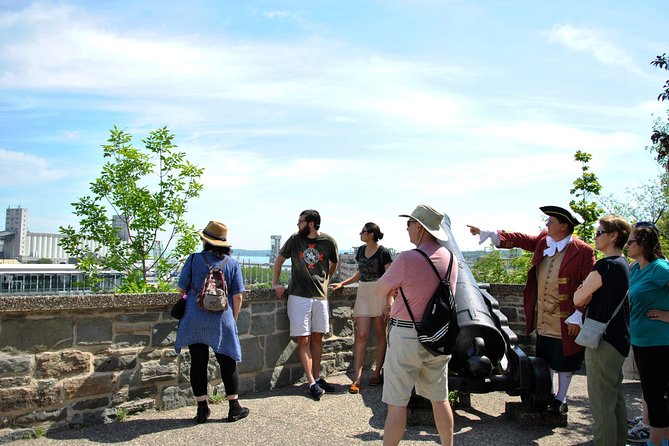
- A costumed guide leads the way: Guides use historical characters and dramatic storytelling instead of giving a dry list of dates.
- Upper town to lower town: You begin near Dufferin Terrace and finish at Place Royale, with a long downhill section between them.
- Excellent city views: Dufferin Terrace looks over the St. Lawrence River and the surrounding area.
- Expect hills and stairs: Good walking shoes are essential, and some people may find the descent tiring.
- A useful first-day activity: The route helps you understand Old Quebec’s layout before exploring on your own.
Why this Old Quebec walk works so well
Old Quebec is easy to admire and surprisingly easy to misunderstand. You can photograph Château Frontenac, wander Petit-Champlain, and admire the fortified walls without knowing how the upper and lower sections fit together. This tour gives those places a storyline.
The guide-led format is especially useful here. Buildings in Quebec City reflect both French and British influence, while churches, military sites, trading streets, and river views all point to different periods. A good guide links those pieces together, and this experience places a strong emphasis on storytelling rather than simple sightseeing.
The period costume adds a theatrical touch. Some guides take on the identity of a historical figure and speak from that person’s point of view. Gary, for example, was praised for bringing a historical character to life, while another guide used dramatic performance to explain subjects such as family life, mortality, and the realities of colonial society.
That approach will not suit everyone. One person found the presentation a little too dramatic at times. If you prefer a quiet academic lecture, the acting may feel like extra seasoning. If you like history with a human face, it makes the past easier to remember.
The small group helps. With no more than 20 people, you are not simply following a flag through the streets. Guides have more chance to respond to questions, point out side lanes, and adjust their explanation to the group. Several guides were praised for being funny, warm, and willing to answer questions throughout the walk.
More History Walking Tours in Canada
- Gastown Historic Walking Food Tour
★ 5.0 · 1,863 reviews - Vancouver: Gastown Historical Walking Food Tour
★ 4.8 · 539 reviews - Quebec City: Old Quebec Historical Walking Tour
★ 4.8 · 409 reviews
Starting at Dufferin Terrace beside Château Frontenac
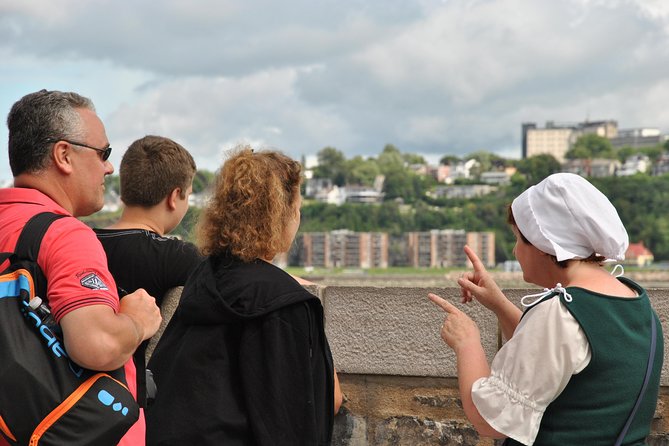
The meeting point is at 12 Rue Sainte-Anne, near the upper town and Dufferin Terrace. The tour opens with one of Quebec City’s finest views. Dufferin Terrace is a long wooden promenade beside Château Frontenac, with broad views of the St. Lawrence River and the surrounding area.
You get about 10 minutes here, and that is enough to take in the setting before the historical route begins. The terrace is enjoyable in every season, though weather matters because this is an outdoor walk and poor conditions can lead to cancellation or a new date.
This opening also helps you understand Quebec City’s geography. The upper town sits above the lower sections near the river. Soon, you will be walking downhill, so take a moment to enjoy the view and make sure your shoes are ready for uneven streets and changing surfaces.
The Château Frontenac itself provides an impressive visual reference, but the tour is not described as an interior visit. You should expect to learn from the outside spaces and buildings along the route. That works well for a short history walk because you keep moving and cover more of the old city.
The Basilica and Quebec’s religious story
The route includes the Basilica of Notre-Dame de Québec, a major historical and architectural stop. The cathedral has occupied the same location since 1647 and is recognized as a Canada National Historic Site for its architectural value.
Inside, the building connects religious history with the wider story of Quebec. Four governors of New France are buried here, along with bishops of the Diocese of Quebec. A funerary chapel is dedicated to François de Laval, and visitors can see works of art, archival pieces, and ornate interior decoration.
The Holy Door may also be visible, adding another distinctive feature to the visit. This stop is valuable because it shows how closely religion and civic life were linked in early Quebec. The cathedral was not just a place for worship. It also preserves the memory of political leaders, church authorities, and the community that developed around them.
One point to keep in mind: the tour may explain the basilica from the outside, and the supplied details do not promise a full guided interior visit. One person specifically enjoyed seeing historical sites without entering every building, since that allowed time to decide which places deserved a longer personal visit later.
Place Royale and the city’s 1608 beginning
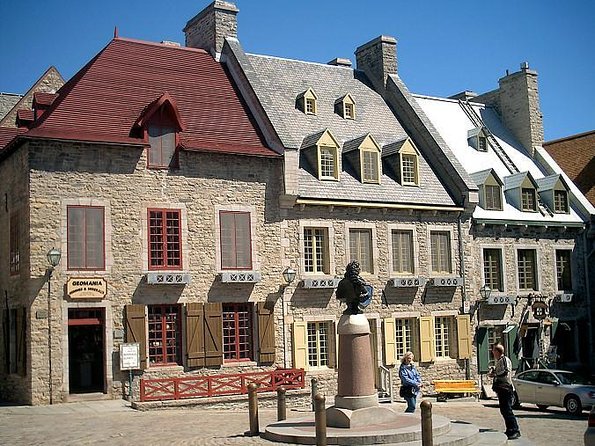
The route continues to Place Royale, where Samuel de Champlain founded Quebec City in 1608. This is one of the most important stops because it gives the city a clear starting point.
Place Royale has a strong visual mix of French and British influence. Its buildings show how Quebec developed over time, while the square’s oldest stone church in North America adds another layer to the setting. The guide has about 15 minutes here, enough to explain the square’s role and help you notice details you might otherwise pass without a second glance.
I find Place Royale more rewarding after seeing the upper town first. The descent gives you a sense of how the city grew around the river and why the lower section became such an important center of trade and daily life. You are not just visiting an attractive square. You are seeing the place where the city began and then watching its story unfold through the surrounding streets.
The square is also the final destination. After the guided portion ends, you can stay in Place Royale and explore at your own pace. That makes the route practical for a first visit. You finish in a part of town where you can continue walking, stop for refreshments, or return to streets that deserve a closer look.
Same place, a different slice of the past:
- Victoria Guided Food and History Tour
★ 5.0 · 2,015 reviews - Evening Gourmet Tour 5 Course Dinner – History and Food in Old Quebec City
★ 5.0 · 496 reviews - Combo Historical and Food Tour of Old Quebec
★ 5.0 · 360 reviews - Pete’s Historic Walking Tour
★ 5.0 · 321 reviews
Petit-Champlain, the most atmospheric section
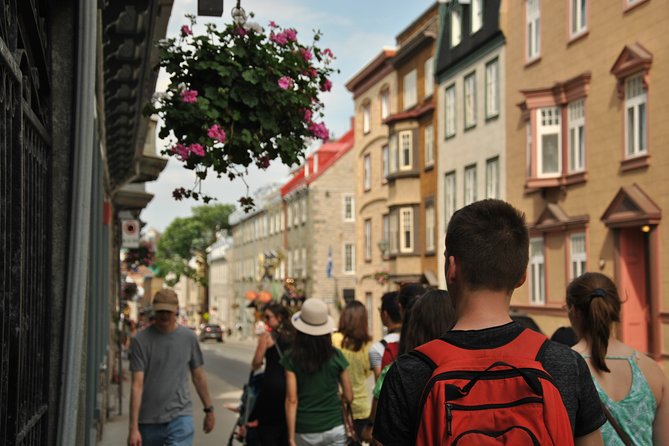
The Petit-Champlain district receives the longest scheduled stop, about 45 minutes. That makes sense. Its narrow streets, old buildings, and position below the upper town create the most storybook setting on the walk.
The district and Place Royale together invite you to picture Quebec at the time of its founding more than four centuries ago. The atmosphere is one of the main attractions, but the guide adds context that keeps the experience from becoming just a pretty stroll.
This is also where the route may feel most crowded or active, depending on the time of day, and the streets are not flat or uniform. You may be walking over cobblestones, changing grades, and narrow passages. The setting is beautiful, but it asks for attention underfoot.
I like having 45 minutes here because the area deserves more than a quick photograph. The guide can point out streets and lanes you might not choose on your own. Louise was praised for taking the group through back streets and lanes, showing a side of Quebec that can be missed if you stick only to the main viewpoints.
The long stop also gives you a chance to understand how the lower town differs from the terrace and upper streets. You move from grand civic and religious landmarks into a smaller-scale district shaped by old streets and close-set buildings. That change is one of the most memorable parts of the route.
Taking on the Breakneck Steps
The Breakneck Steps, or L’Escalier Casse-Cou, are the oldest outdoor staircase in Quebec City. You have about five minutes here, mainly to hear about the steps and take in the view toward rue du Petit-Champlain.
The name tells you enough about the climb. The staircase is a popular photo point because it looks down toward one of the city’s most picturesque streets, but the steps are also a practical warning about the tour’s physical demands.
Most of the concern comes from the total route rather than this single stop. The walk includes a long descent from the upper terrace to the waterfront, steep hills, stairs, and cobbled surfaces. Older people in particular may find the ascents and descents tiring. Street cleaning or garbage collection can also make it harder to hear the guide for short stretches.
You do not need athletic ability, but you should have moderate physical fitness. Wear shoes with a secure grip, and do not book this as a gentle, level stroll. If steep streets cause trouble, you may prefer exploring Old Quebec at your own pace with shorter walks between stops.
The guides make or break the experience

The strongest part of this tour is the human element. Guides use history as a story rather than reciting a timeline. Keven was praised for explaining both major events and the lives of ordinary people. Mark was described as entertaining and well informed. Annabelle received strong praise for making the walk fun and informative.
Other guide styles add different strengths. Guy was noted for his enthusiasm and ability to explain Quebec’s importance. Chantal told the city’s story through an entertaining narrative. Yves kept the tour interactive and answered questions from a group of about 12 people.
That variety matters. A period character can make the walk memorable, but the style depends on the person leading your group. Some guides lean into drama, while others focus more on facts and conversation. The consistent thread is a strong command of the city’s past and a willingness to engage with questions.
Several people considered the tour a useful first activity in Quebec City. I agree with that logic. The route helps you get your bearings, understand the upper and lower sections, and identify places you may want to revisit. You are likely to enjoy later solo walks more because you will know what you are looking at.
Price, timing, and who gets the most value
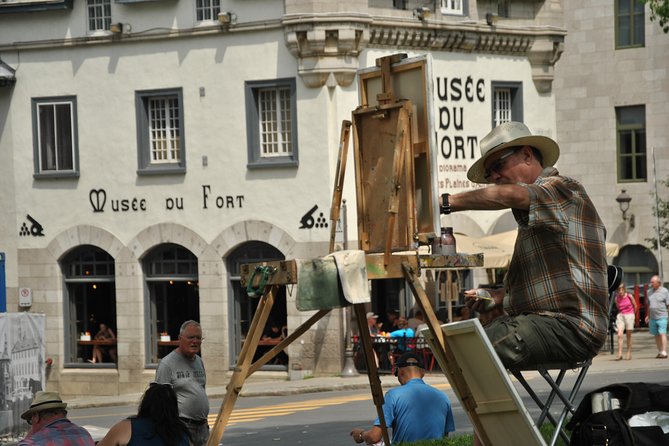
At $24.03 per person, this is a modest investment for a two-hour guided walk in one of Canada’s most historic districts. The value comes from the structure. You are not paying simply to be led through attractive streets. You are getting a connected explanation of the city, plus access to a route that covers several key areas in one outing.
The tour is offered in English and includes a local professional guide. A mobile ticket makes arrival simple, and the meeting point is near public transportation. The end point at Place Royale is useful because you can continue exploring without returning to the starting point.
The experience is best for:
- First-time visitors who want a clear introduction to Old Quebec
- Adults and older children who enjoy listening to history for two hours
- People who like costumed interpretation and lively storytelling
- Anyone who wants to understand the relationship between the upper and lower town
- Visitors comfortable with hills, stairs, and uneven streets
It may not suit young children who cannot stay focused for a two-hour history walk. One assessment suggested ages 12 and older because the experience involves sustained listening. It may also be a poor choice for anyone who needs level ground or finds long descents difficult.
Book at least a day ahead if possible. The experience is often reserved about 24 days before the date, which suggests that popular times can fill early. Free cancellation is available until 24 hours before the start time. Changes made inside that window are not accepted, and poor weather or a failure to reach the minimum group size can lead to a new date or a full refund.
Should you book this Quebec City history walk?
Book it if you want Old Quebec to make sense, not just look pretty. The combination of Dufferin Terrace, the basilica, Place Royale, Petit-Champlain, and the Breakneck Steps gives you a strong two-hour introduction to the city’s main historic zones.
The best reason to choose it is the guide-led storytelling. A period costume, a funny character, or a dramatic explanation can turn a church, square, or staircase into something you remember. The strongest guides make the history personal and answer questions instead of rushing through prepared remarks.
Skip it if steep hills, stairs, cobblestones, or two hours of listening will make the experience stressful. For everyone else, the price is sensible, the route is well chosen, and the finish at Place Royale leaves you in an excellent position to keep exploring.
FAQ
How long is the Walking Tour Through Quebec City’s History?
The tour lasts approximately two hours.
How much does the tour cost?
The listed price is $24.03 per person.
What language is the tour offered in?
The tour is offered in English.
Where does the tour begin?
The meeting point is 12 Rue Sainte-Anne, Québec, QC G1R 3X3, Canada.
Where does the tour end?
The tour ends at Place Royale in Quebec City.
Is the tour conducted in a small group?
Yes. The maximum group size is 20 people.
Does the tour include a guide?
Yes. A local professional guide is included, and guides may wear period costume.
What locations are included?
The route includes Dufferin Terrace, the Basilica of Notre-Dame de Québec, Place Royale, Petit-Champlain, and the Breakneck Steps.
Is the tour physically demanding?
You should have moderate physical fitness. The route includes hills, stairs, cobblestones, and a long downhill section from the upper terrace toward the waterfront.
Can I cancel for a refund?
Yes. You can cancel at least 24 hours before the start time for a full refund. Poor weather or failure to reach the minimum number of participants may also result in a new date or full refund.
Just added around Canada
- Horse Drawn Historical Guided Tour★ 5.0 · 24 reviews
- Historic Walking Tour of Charlottetown★ 5.0 · 211 reviews
- From Calgary to Waterton National Park Nature History and Wonders★ 5.0 · 22 reviews
- Heritage Park Admission★ 4.5 · 155 reviews
- Toronto: Distillery District Historic Walking Tour★ 4.8 · 267 reviews
- Toronto: Niagara Falls & NOTL Heritage Town Guided Day Tour★ 4.8 · 28 reviews
- Toronto: Dark History Nighttime Walking Tour★ 4.7 · 273 reviews
- Vancouver: Guided Food and City History Tour★ 4.5 · 53 reviews
History Walking Tours, compared.
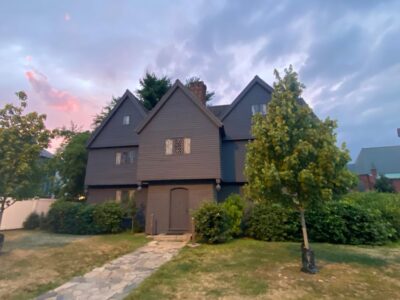
History and Hauntings of Salem Guided Walking Tour
Read our review →
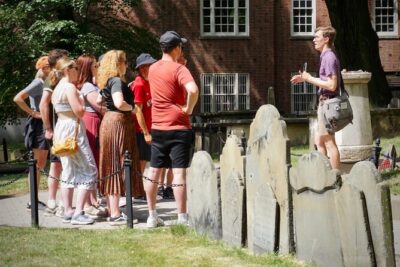
Freedom Trail History Small Group Walking Tour
Read our review →
Historic Charleston Guided Sightseeing Walking Tour
Read our review →
Tapas Walking Tour with Food, Wine, and History
Read our review →
Savannah History and Haunts Candlelit Ghost Walking Tour
Read our review →
A History of Terror – Belfast City Centre Walking Tour
Read our review →Browse the lists this tour appears in