
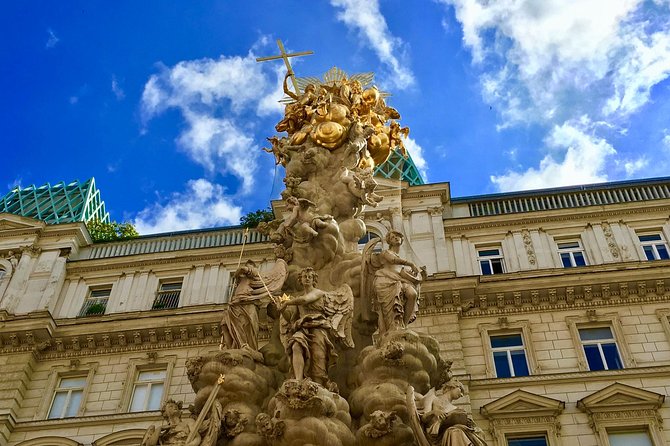
Review · VIENNA
Vienna Historic Center Small Group Walking Tour
Vienna rewards a good first walk. This 2.5-hour tour gives you a smart introduction to the city’s imperial core, moving from Maria-Theresien-Platz along the Ringstrasse, through the Hofburg, and onward to St. Stephen’s Cathedral. I like the small group limit of 15 people, which makes it easier to hear the guide and ask questions. I also like the route’s range, from grand palaces and museums to coffeehouse culture, university life, and famous composers.
The main tradeoff is clear: this is mostly an outdoor sightseeing walk. You see the fronts, courtyards, squares, and streets, but you do not tour the inside of the major museums. You should also expect a serious amount of walking. One review counted about 14,000 steps, so comfortable shoes are not optional.
Guides such as Dace, Giselle, Gabriela, Beatrice, and Annelie have earned especially warm praise for clear explanations, humor, personal stories, and useful local advice. The tour has a 4.9 rating from 1,746 reviews, with 97 percent of participants recommending it.
Key things to know before booking
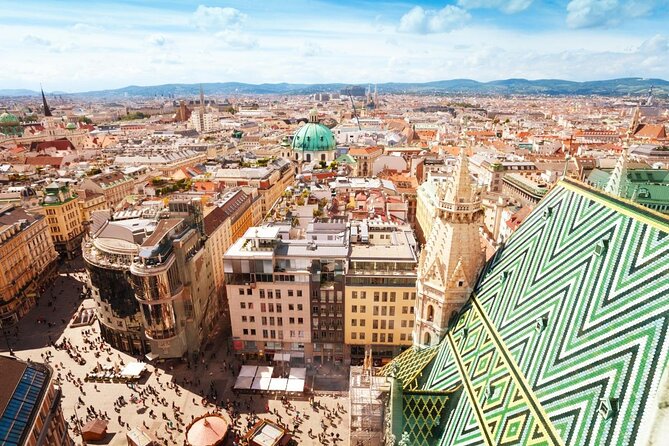
- A 15-person maximum keeps the walk personal: You are less likely to get lost in a large crowd, and the guide can respond to questions.
- The route covers Vienna’s essential center: Expect Maria-Theresien-Platz, the Ringstrasse, Hofburg Palace, Heldenplatz, Rathaus, Graben, and St. Stephen’s Cathedral.
- The tour is mainly about context, not admission tickets: You see major buildings from outside, with occasional indoor visits depending on the day.
- Individual audio devices help in busy streets: You can hear the guide while walking through crowded areas.
- Several start times help fit a short stay: The tour works well on your first day or during a packed Vienna visit.
- The finish is useful for independent sightseeing: You end at Stephansplatz, beside St. Stephen’s Cathedral and close to more central attractions.
Why this walk works well on a first day
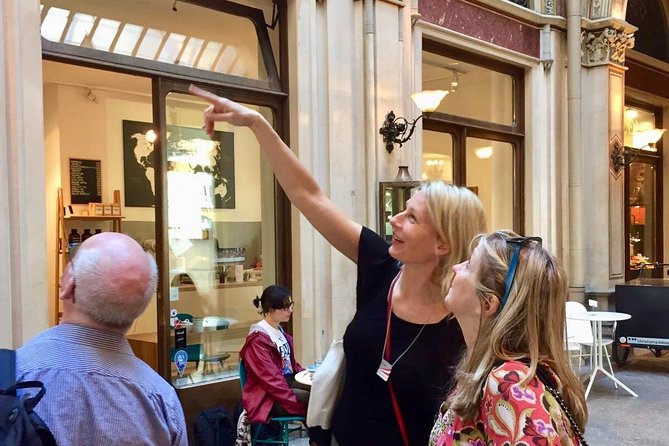
Vienna’s center is compact, but its story is not simple. Roman foundations, Habsburg power, imperial ambition, Nazi-era politics, music, science, and modern Austrian government all appear within a fairly small area. A guide helps connect the grand buildings instead of leaving you to admire them one at a time.
I like the route as a first-day orientation. You pass many places you may want to return to later, including the Hofburg museums, the Spanish Riding School area, St. Stephen’s Cathedral, the State Opera, and the coffeehouses around the center. By the end, you have a working map of central Vienna and a better sense of where to spend your own time.
The tour is offered in English and costs $72.56 per person. That is not cheap for a walking tour, particularly because major interior admissions are not included. The value rests in the guide’s interpretation, the carefully planned route, the small group, and the local suggestions for food and cafés. If you only want building names and quick photographs, the price may feel high. If you want the story behind the buildings and a useful first look at the city, it makes more sense.
More Old Town and Historic Centre Walks in the world:
- Madrid Essential: Historic Center, Plaza Mayor & Royal Palace
★ 5.0 · 6,416 reviews - Lisbon: Live Fado Show with Port Wine in Historic Center
★ 4.7 · 4,166 reviews - Valencia Old Town Tour with Wine & Tapas in 11th Century Historic Monument
★ 5.0 · 3,234 reviews
Maria-Theresien-Platz and Vienna’s museum quarter
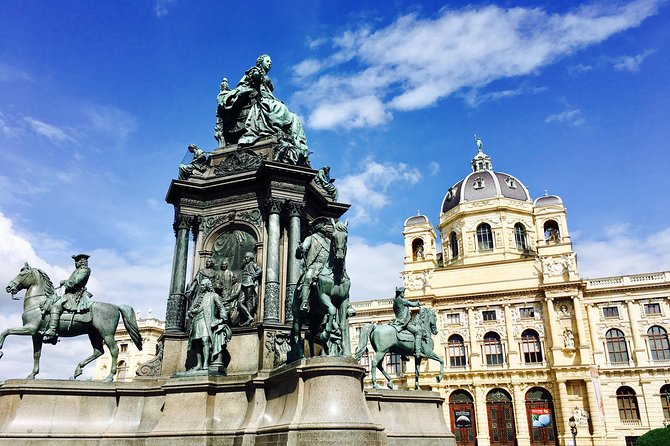
The meeting point is Maria-Theresien-Platz, a broad square between the Ringstrasse and the MuseumsQuartier. Two matching monumental buildings face each other here: the Kunsthistorisches Museum, home to the former imperial art collection, and the Natural History Museum.
The square’s central monument honors Empress Maria Theresa. The guide uses the statue and its surrounding figures to explain the Habsburg family and the political reach of the empire. Mozart appears among the figures on the monument, a reminder of how closely Vienna connects imperial power with music and the arts.
You only spend a few minutes at the square, so this is not a museum visit. That is useful to understand from the start. You get architectural orientation and background, but you must return on your own if you want to see the paintings, sculpture, or scientific collections inside.
The route begins beside the Kunsthistorisches Museum, giving you an immediate look at the scale of imperial Vienna. Even from outside, the paired buildings make the city’s ambition plain. They were designed to frame a formal public space, not simply to house collections.
The Ringstrasse and the grand public face of Vienna
The Ringstrasse is one of the tour’s main teaching points. This broad circular boulevard replaced Vienna’s medieval fortifications in the second half of the 19th century. Its construction opened space for grand public buildings, parks, cultural institutions, and government offices.
As you walk, your guide points out different architectural styles, including Classical, Gothic, Renaissance, and Baroque elements. The variety can feel like a history lesson written in stone. You see how Vienna presented itself as a major imperial capital through its boulevards and public buildings.
The route includes the neo-Gothic Rathaus, or City Hall, which houses Vienna’s government and also serves as a major event venue. You also pass the Austrian Parliament Building, the Burgtheater, Vienna State University, and the State Opera area. The guide’s commentary gives these buildings a place in the city’s political and cultural life.
You should not expect long stops at every building. Several stops last only five minutes, and some are brief photo and explanation points. The advantage is coverage. The drawback is that you will not have much time to study every façade or enter each site.
Hofburg Palace, Heldenplatz, and imperial power
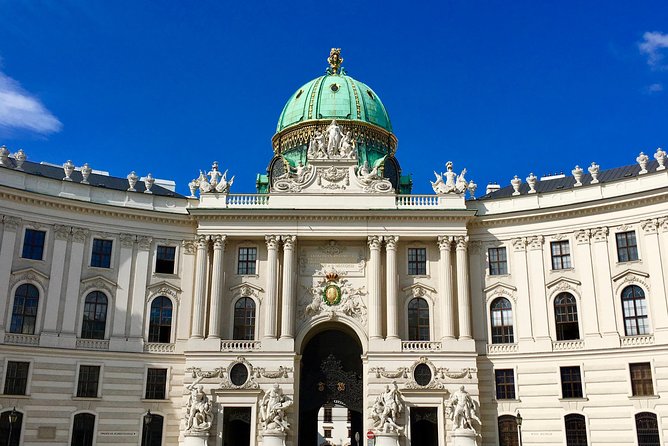
The Hofburg receives more attention than most individual stops, and rightly so. This former Habsburg palace was the center of power in Vienna for centuries. It is not one single palace in the simple sense, but a large collection of courtyards, wings, façades, museums, offices, and ceremonial spaces built and changed over time.
Your guide explains how the complex developed and shares stories about emperors, empresses, court life, and modern Austria. The focus is not only on architecture. You also hear how the palace functioned as a seat of government and how its meaning changed across different political eras.
The New Castle contains several museums, including the Austrian History Museum, the World Museum, the Imperial Armoury, and the National Library. The Hofburg Congress Centre is also located within the complex. You may hear about the palace’s difficult 20th-century history as well, including the balcony from which Adolf Hitler proclaimed Austria’s annexation into Nazi Germany.
Nearby, Heldenplatz opens out beside the palace. The square was created after old fortifications were removed during the Napoleonic period. It is a broad, green space with a powerful connection to Austrian public life and political memory.
The route also brings you near the Austrian National Library and the Baroque Winter Riding School. The latter is associated with the famous white Lipizzan horses, which train and perform there. The tour does not include a riding performance, so you should treat this as an exterior orientation rather than a horse show.
You may visit parts of the Hofburg or other buildings inside depending on the weekday and the guide’s arrangements, but no museum entry is included. That distinction matters when comparing this tour with a palace tour that includes tickets.
More History Walking Tours in the world:
- History and Hauntings of Salem Guided Walking Tour
★ 5.0 · 14,564 reviews - Lisbon: History, Stories and Lifestyle Walking Tour
★ 4.8 · 10,902 reviews - Boston: Freedom Trail History Small Group Walking Tour
★ 5.0 · 6,450 reviews - Historic Charleston Guided Sightseeing Walking Tour
★ 5.0 · 6,216 reviews
St. Michael’s Church and the old center
St. Michael’s Church dates to 1220 and is one of the older churches on the route. The stop is short, but the church adds a different mood after the open spaces of the Ringstrasse and palace grounds.
The tour also passes the Office of the Federal Chancellor and other government buildings. These stops help show that Vienna’s center is not only a preserved imperial stage. It remains a working political district.
The route then turns toward the older heart of Vienna. You may pass a traditional coffeehouse associated with the city’s writers, composers, architects, painters, psychoanalysts, and political thinkers. Vienna’s café tradition is more than a place to order cake. It is part of the city’s intellectual and social life.
One particularly useful feature is the guide’s restaurant and café advice. Some participants received suggestions for places to eat and even enjoyed a coffee break at Café Demel. Do not assume a café stop is guaranteed, since the information describes recommendations and occasional visits rather than a fixed meal inclusion. Still, asking your guide for current advice is one of the practical benefits of taking the walk early in your stay.
Rathaus, Burgtheater, and the city’s public culture
The Rathaus is one of Vienna’s most memorable façades. Its neo-Gothic towers and elaborate details make it easy to understand why it is a favorite stop for photographs. The building remains the seat of Vienna’s government, so the guide can connect its decorative imperial-era design with the city’s present-day civic role.
The Burgtheater is another major landmark. It is regarded as one of the world’s leading theaters and forms part of the Ringstrasse’s cultural belt. You see how theater, opera, museums, university life, and government were placed close together in the imperial capital.
Volksgarten offers a welcome change of pace. At its center is the Theseus Temple, a small replica of the Hephaisteion in Athens. The park also recalls Vienna’s musical life, including performances associated with Johann Strauss at the Cortisches coffeehouse.
These short park and theater stops keep the tour from becoming a procession of palace façades. You get a better sense of how people used the city’s public spaces, not just how rulers commissioned its monuments.
Beethoven, Freud, Meitner, and Vienna’s creative minds
The itinerary brings in several figures who broaden the story beyond the Habsburg court. At Beethoven Pasqualatihaus, you hear about the former residence of Ludwig van Beethoven, located on the ramp of the old town fortifications.
You also pass the Palais Ferstel, once home to the Austro-Hungarian National Bank and the Stock Exchange. Its story points to Vienna’s financial and commercial role, which can be overlooked when the city’s imperial and musical identity gets most of the attention.
At the University of Vienna, the guide connects the city’s academic life with figures such as Sigmund Freud and Lise Meitner. Meitner, a Jewish physicist whose work helped change modern science, adds an important scientific and personal dimension to the tour.
This section is especially good for you if you enjoy history told through people. The strongest guides do not simply recite dates. They use figures such as Beethoven, Freud, Maria Theresa, and Meitner to show how different kinds of power and creativity shaped Vienna.
Freyung, Graben, and the final walk to Stephansplatz
Freyung is one of the oldest squares in central Vienna. Compared with the formal scale of Heldenplatz and Maria-Theresien-Platz, it feels more intimate and picturesque. The guide uses the square to shift from imperial avenues into the older city center.
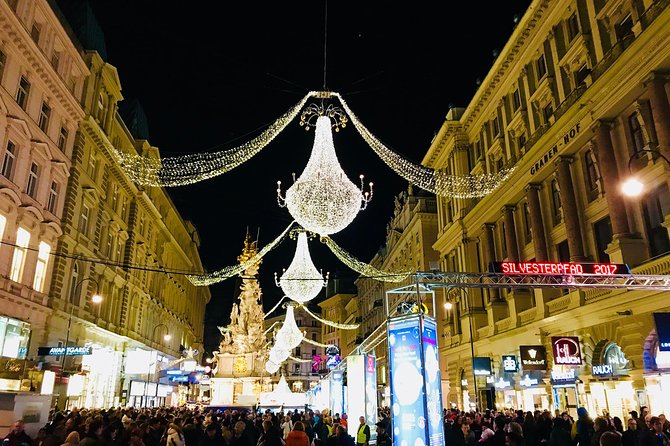
From there, the walk continues along Graben and Kohlmarkt, among Vienna’s most elegant pedestrian streets. These are active shopping areas, but they also preserve a strong sense of the historic center. You can look up from the shops and see layers of architecture, sculpture, churches, and old façades.
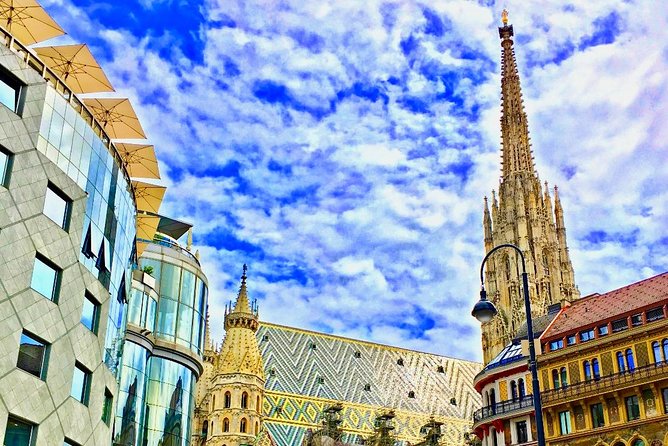
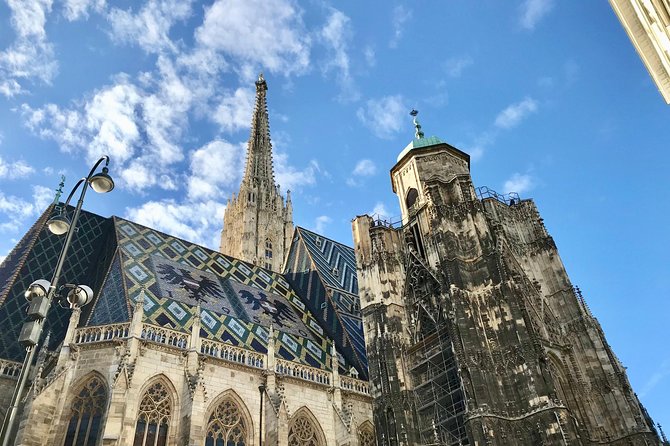
The tour ends at Stephansplatz, the central square of Vienna. St. Stephen’s Cathedral dominates the space and serves as the city’s best-known landmark. You receive a brief introduction to the cathedral, but admission and a full interior visit are not part of this walking tour.
The ending is well chosen. From Stephansplatz, you can continue exploring on your own, return to a museum, find a café, shop along Graben, or arrange a cathedral visit. Since the tour ends in such a central location, you do not lose time traveling back to a distant meeting point.
Walking conditions, group size, and guide style
The tour lasts about two and a half hours and requires moderate physical fitness. The route includes extended walking, standing, crowded streets, and some brisk movement between stops. It is not recommended if you have a walking disorder.
Wear comfortable shoes and dress for the weather. One winter participant specifically praised the guide for finding places to warm up, but you should still plan for an outdoor experience. In cold or wet conditions, much of the value depends on your clothing and willingness to keep moving.
The audio devices are a practical advantage. Vienna’s streets can be noisy, and a guide speaking to 15 people can otherwise be hard to follow. Individual listening devices let you hear the commentary without crowding around the guide.
The guide style appears to be one of the tour’s strongest features. Dace is praised for humor, clear English, and personal anecdotes. Giselle is described as passionate and highly informed, while Gabriela is praised for keeping the group comfortable and entertained. Beatrice and Annelie also receive strong comments for making the history easy to follow.
The tone can vary by guide, as with any scheduled walking tour. The best fit for you is a guide-led experience with plenty of explanation, not a free-roaming photo walk. Several stops are lecture-like, so anyone wanting hands-on activities or repeated interior visits may prefer another format.
Who should book this Vienna walk?
I would choose this tour if you are visiting Vienna for the first time, have only a day or two, or want a clear orientation before planning the rest of your stay. It is also a good choice if you enjoy political history, architecture, music, and stories about the people who shaped a city.
It suits solo visitors, couples, families with older children, and anyone who values the chance to ask questions. The 15-person cap feels small enough for personal attention without becoming a private-tour price.
I would hesitate if your main goal is to enter museums and palaces. You will need separate admission tickets and extra time for the Kunsthistorisches Museum, the Hofburg collections, St. Stephen’s Cathedral, or other interiors. The tour points you toward those places, but it does not replace them.
Free cancellation is available up to 24 hours before the start time. The tour needs good weather and a minimum number of participants, so poor weather or low enrollment can lead to a new date or a full refund.
Should you book it?
Book this walk if you want Vienna explained, not simply photographed. The strongest reasons are the compact route, the small group, the audio devices, and guides who bring humor and personal detail to a demanding amount of information.
At $72.56, it is best value on your first day, when local food advice and a clear sense of the center can shape the rest of your visit. Skip it if you want interior access or a slow architectural stroll. For a first look at Vienna’s imperial core, political past, musical identity, and modern city life, it is a useful and well-paced introduction.
FAQ
How long does the Vienna Historic Center Small Group Walking Tour last?
The tour lasts approximately 2 hours and 30 minutes.
What is the maximum group size?
The tour has a maximum of 15 participants.
Where does the tour begin?
It begins at Maria-Theresien-Platz in central Vienna.
Where does the tour end?
It ends at Stephansplatz, beside St. Stephen’s Cathedral.
Is entry to the museums included?
No. The tour does not include entry to museums. It focuses mainly on exterior views and historical explanations, although some indoor visits may occur depending on the weekday.
Is the tour offered in English?
Yes. The tour is offered in English.
What should I wear or bring?
Wear comfortable shoes and dress for the weather. The tour involves substantial walking and is mainly outdoors.
Can I cancel for a full refund?
Yes. You can cancel at least 24 hours before the start time for a full refund. Cancellations or changes made less than 24 hours before the start time are not refunded.
More Small-Group History Tours in the world
- London Small Group Tour of Historical Pubs
★ 5.0 · 10,422 reviews - Madrid Tapas & Taverns Small Group Food & History Tour
★ 5.0 · 2,664 reviews - Hidden Alleyways and Historic Sites Small-Group Walking Tour
★ 5.0 · 2,335 reviews - New Orleans Small-Group Haunted History Carriage Tour
★ 4.5 · 2,289 reviews
Just added around the world
- Charlotte Historic : Queen Bee City Tour★ 4.5 · 31 reviews
- Charlotte’s Premier Historical City Bus Tour★ 5.0 · 178 reviews
- Charleston’s Historic Pubs, Taverns, and Taprooms Tour★ 4.5 · 33 reviews
- Charlotte’s Ultimate Southern Charm Historical City Bus Tour★ 5.0 · 61 reviews
- Charleston’s Strong Women of the South History Tour★ 4.5 · 27 reviews
- Small-Group Tour: Charleston Old Walled City Historical Walking Tour★ 4.5 · 283 reviews
- Private Walking Tour of Historic Charleston★ 5.0 · 38 reviews
- Sip History in The Sun Cabana Covered Cocktail Class★ 5.0 · 332 reviews
Old Town & Historic Centre Walks, compared.
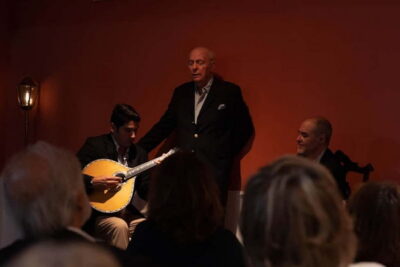
Live Fado Show with Port Wine in Historic Center
Read our review →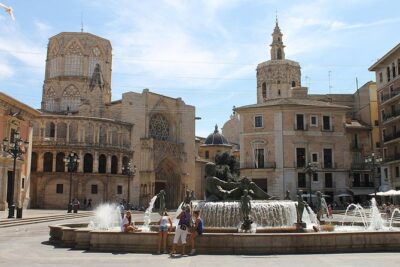
Valencia Old Town Tour with Wine & Tapas in 11th Century Historic Monument
Read our review →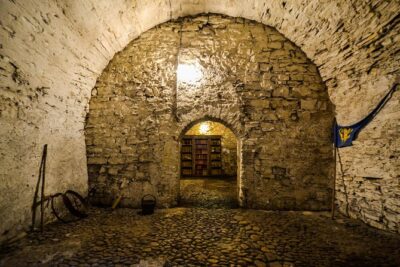
Prague Old Town, Medieval Underground and Dungeon Historical Tour
Read our review →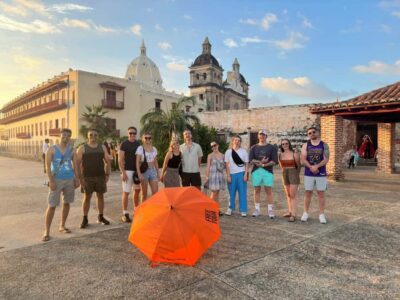
Historic Center and Getsemaní Shared Walking Tour
Read our review →
Old Town Walking Tour History and Tales in Edinburgh
Read our review →
Philadelphia Old City Historic Walking Tour with 10+ Top Sites
Read our review →
Saadian Tombs & Bahia Palace, Medina Guided Tour
Read our review →Browse the lists this tour appears in