

Review · ANDALUCIA
Úbeda-Baeza historical tour with Water Synagogue
Renaissance Spain hides in plain sight. This five-hour experience links two World Heritage cities with grand palaces, old churches, the unusual Water Synagogue, and an olive oil tasting. I especially like the chance to visit both Úbeda and Baeza while keeping some control over the timing. I also like that entrance tickets are included for several major sights, including the Water Synagogue and Baeza Cathedral. The main catch is practical: transportation between the two cities is not included, so you must arrange that part yourself.
The tour costs $40.52 per person and is usually booked about 10 days ahead. The guided visits run at 11:00 and 17:00, with the option to visit the cities on the same day or on different days. That flexibility helps, but you need to read the schedule carefully, especially since Baeza does not offer the Sunday afternoon visit.
Key points at a glance
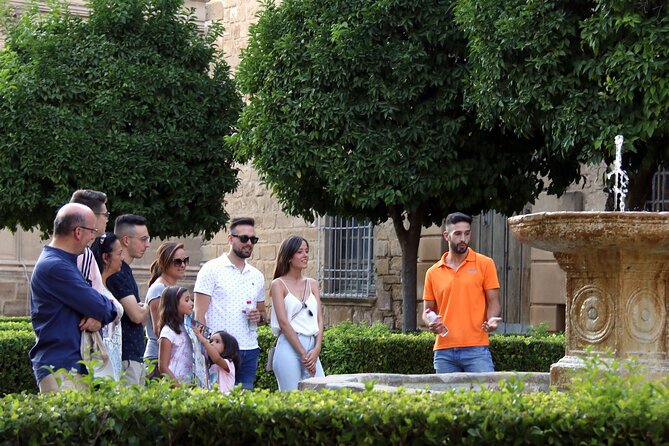
- The Water Synagogue is the tour’s rarest stop: See its mikveh, women’s gallery, cellar, ovens, and possible former rabbi’s quarters.
- Two Renaissance cities share the spotlight: Úbeda brings Vandelvira’s grand architecture, while Baeza adds university buildings, Machado’s classroom, and medieval views.
- You choose the order: Take one city in the morning and the other in the afternoon, or schedule the visits on separate days.
- Major admissions are covered: Tickets include the Holy Chapel of El Salvador, Water Synagogue, Baeza Cathedral, the olive oil tasting, and the medieval interpretation center.
- The price is fair if you use the admissions: At $40.52, the package offers solid value, but your transport costs come on top.
- Expect a small-group format: The maximum is 20 people, and the visit is guaranteed with at least two participants.
Why these two cities belong together
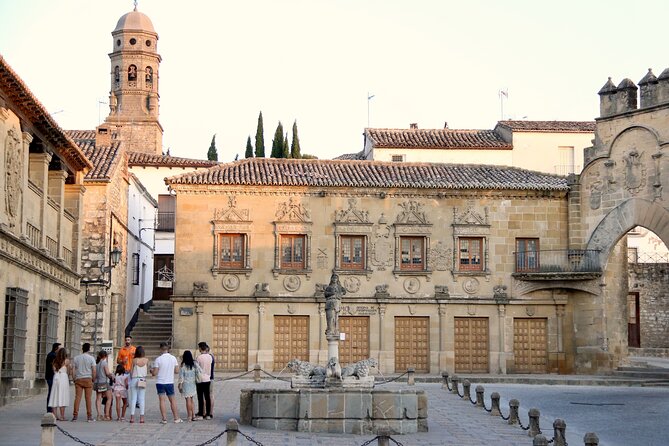
Úbeda and Baeza sit close enough to combine, yet they offer different moods. Úbeda is the stronger choice for monumental Renaissance architecture, with the work of architect Andrés de Vandelvira appearing again and again. Baeza adds a compact historic center filled with religious buildings, academic connections, and views from its old fortifications.
I like this pairing because you are not spending five hours seeing the same kind of building. One moment you are studying a polished Renaissance palace. The next, you are looking at a medieval gate, a Romanesque church, or a classroom linked to the writer Antonio Machado.
The experience is guided rather than self-guided, which matters here. The buildings are attractive, but their importance is not always obvious from the outside. A guide can explain why a palace has a particular courtyard plan, how Vandelvira shaped Úbeda’s appearance, and why a small church in Baeza is unusual in Andalusia.
There is one point to keep clear before booking. The advertised duration is about five hours, but the cities are separate stops, and the transfer between them is not included. You will need to handle that transfer on your own. The schedule also allows the two guided visits to happen on different days, which can be useful if you are staying nearby.
More Jewish Heritage Tours in Spain:
- Private Jewish Heritage Journey by Barcelona Dreaming
★ 4.8 · 383 reviews - Girona: Jewish Heritage Guided City Tour and Museum Visit
★ 4.8 · 124 reviews - Caceres: Highlights, History and Jewish Quarter Walking Tour
★ 4.7 · 20 reviews
Úbeda begins with Vandelvira’s Renaissance
The first part in Úbeda focuses on the city’s grandest architectural center, Plaza Vázquez de Molina. This is one of Spain’s finest examples of Renaissance urban planning, and the tour gives you several ways to understand it.
The Holy Chapel of El Salvador receives about 30 minutes and includes admission. Its exterior is impressive, but the interior is just as important. Diego de Siloé designed the original concept, while Andrés de Vandelvira carried out the work and is responsible for the sacristy.
That division of creative roles gives the building a useful story. You are not simply looking at an attractive church. You are seeing how Italian Renaissance ideas were adapted and executed in Spain. The chapel’s scale and decoration make it one of the tour’s strongest stops.
Next comes the Palace del Dean Ortega, now the National Tourism Parador. The guided stop is brief, listed at about five minutes, so do not expect a full hotel visit or a long interior tour. The palace has recently been arranged for historical interpretation, and its importance comes from its place among Spain’s Renaissance residences.
The nearby Juan Vázquez de Molina Palace takes about 10 minutes. It is now Úbeda’s city hall and was designed by Vandelvira in the 16th century. Its formal layout follows the pattern of major Spanish palaces and noble homes from the period.
These early stops work best as a group. The chapel shows Renaissance ideas in a religious setting. The two palaces show how those ideas shaped civic and private buildings. You begin to see Úbeda not as a collection of isolated sights, but as a carefully planned city center.
Churches that show Úbeda’s changing styles
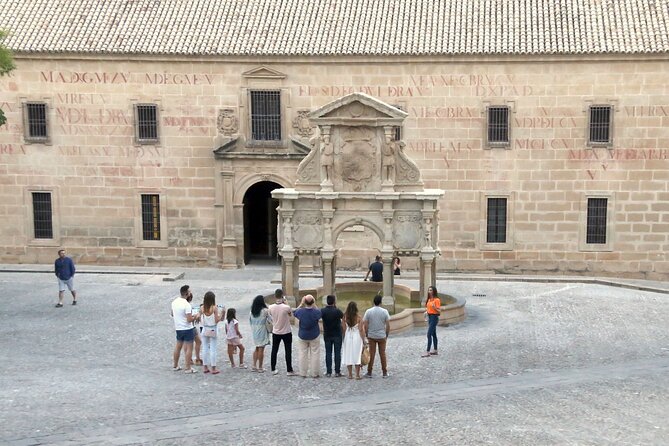
The Parish Church of Santa María de los Reales Alcázares adds a different lesson. This church contains several architectural periods layered together, along with a 15th-century cloister, noble chapels from the 15th and 16th centuries, ironwork, and paintings.
It is a good reminder that Spanish churches often changed over centuries. Rather than presenting one clean style, they reveal repairs, additions, and new tastes. If you enjoy architecture, this may be one of the more rewarding interiors in Úbeda.
The tour also passes the Vela de los Cobos Palace. Francisco Vela de los Cobos ordered this Renaissance palace in the mid-16th century. Vandelvira prepared the plans, and stonemason Jorge Leal carried out the work. The building helps fill in the story of Úbeda’s local elite, who used architecture to display wealth and influence.
The Church of San Pablo is another important stop. It began in the 13th century on the site of a neighborhood mosque, but its current Gothic form owes much to restoration funded by Bishop Alonso Suárez de la Fuente del Sauce. This gives you another clear example of how Úbeda changed as political and religious power shifted.
A much smaller church provides a sharp contrast. Its Neo-Renaissance design includes three naves, a transept, half-barrel vaults, and a dome with a prominent lantern. The exterior’s two-color tilework is especially attractive. Because the church is small, the stop should be easy to appreciate without getting lost in a vast interior.
The Convent Museum of San Juan de la Cruz brings the religious story into personal focus. It occupies the place where Saint John of the Cross died and was buried, and it contains relics and objects linked to him. You do not need to be a specialist in Christian thought to understand the importance of the site. The value is in seeing a place tied directly to a major spiritual figure.
The Water Synagogue is Úbeda’s unusual surprise
The Water Synagogue is the stop that makes this experience different from a standard Úbeda and Baeza architecture tour. It contains six spaces, including a mikveh, the ritual bath used for purification in Jewish tradition.
The mikveh is the key feature. It gives the visit a more intimate character than the grand churches and palaces seen earlier. Instead of looking up at monumental decoration, you are considering how a small community may have organized religious life in a private setting.
The synagogue also includes a women’s gallery, screened by latticework. This space offers a glimpse into how women took part in ceremonies while remaining separate from the main area. The former room called the Inquisitor’s room includes a patio, cellar, and ovens. These areas are connected with the possible home of a rabbi in the Middle Ages.
The visit lasts about 30 minutes and admission is included. That is enough time for a focused explanation, though not a long independent exploration. I would pay close attention to the guide here, since the meaning of the rooms is more important than their size.
This stop also adds balance to the tour. Úbeda is often presented through its Renaissance churches and palaces, but the Water Synagogue introduces another part of the city’s past. It is the tour’s most distinctive inclusion and one of the strongest reasons to choose this package over a basic sightseeing walk.
A few more history tours around Spain worth a look
- Madrid Essential: Historic Center, Plaza Mayor & Royal Palace
★ 5.0 · 6,416 reviews - Barcelona: Tapas Walking Tour with Food, Wine, and History
★ 4.8 · 4,261 reviews - Sevilla Food Tour: Tapas, Wine, History & Traditions
★ 5.0 · 3,468 reviews - Valencia Old Town Tour with Wine & Tapas in 11th Century Historic Monument
★ 5.0 · 3,234 reviews
Baeza opens with a compact monumental center
In Baeza, the route begins at Plaza del Pópulo. This square gathers several important buildings in one place: the old butchers, now used as courts, the Casa del Pópulo, the Fountain of the Lions, the Puerta de Jaén, and the Arco de Villalar.
The stop lasts about 15 minutes and is free to enter. It is a good place to get your bearings because the square presents several layers of Baeza’s civic and medieval identity at once. The buildings are close together, so the guide can explain how the square worked as a public center without requiring a long walk.
From there, the route moves to the Fountain of Santa Maria. Its position between Baeza Cathedral and the Seminary of San Felipe Neri makes it one of the city’s best-known settings. The Church of the Holy Cross and the Old University are nearby, so even a five-minute stop gives you a strong view of the surrounding historic center.
Baeza Cathedral is allotted about 30 minutes, with admission included. The building has changed many times, and several architectural styles remain visible. That mixture may appeal to you if you like buildings that show their age through alterations rather than presenting a single, perfect design.
The Church of Santa Cruz is a smaller but important contrast. It is described as the best-preserved Romanesque church in Andalusia, a rare style in this region. The visit takes about 10 minutes, and its modest size makes it easier to grasp than some of the larger churches.
Jabalquinto Palace and the Antonio Machado connection
The Jabalquinto Palace is one of Baeza’s most decorative secular buildings. Dating from the late 15th century, it is a major example of Elizabethan Gothic architecture. The palace now serves as the International Headquarters of the Antonio Machado University.
That present use gives Baeza an academic identity that Úbeda does not share in quite the same way. The city’s old university began in the first half of the 16th century and is now used as an institute. The stop lasts about 10 minutes, enough for a short explanation of the building’s changing role.
You also visit the classroom where Antonio Machado taught French grammar. The room is preserved within the former university, and it belongs to Spain’s network of historic institutes. This is one of the most human stops on the route. Grand architecture can blur together after a while, but a preserved classroom gives you a direct connection to daily teaching and literary life.
The classroom visit takes about 10 minutes. If you have an interest in Spanish literature, pay special attention here. If not, it still offers a useful change of pace after the palaces and cathedrals.
Finish with olive oil and a medieval view
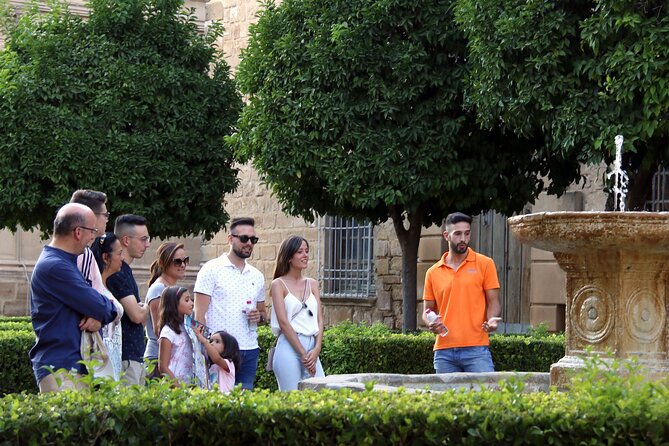
The visit to La Casa del Aceite ends the main route with an olive oil tasting. You learn about the benefits of the region’s liquid gold and taste the product itself. The stop takes about 15 minutes and admission is included.
This is more than a snack break. Olive oil is central to the economy and food culture of Jaén province, so the tasting connects the monuments with the working culture of the surrounding area. It also gives you a practical way to remember the region after the tour, perhaps with a bottle purchased elsewhere if you wish.
The final stop is the Interpretation Center of Medieval Baeza. From the highest part of the Torreón de la Puerta de Úbeda, you can look across the city and learn about its medieval period. The stop lasts about 10 minutes and includes admission.
The view is a fitting end because it lets you understand Baeza spatially. After seeing individual buildings at street level, you can look back over the city and see how the historic center fits together. The medieval focus also balances the Renaissance material that dominates much of the tour.
Timing, transport, and value at $40.52
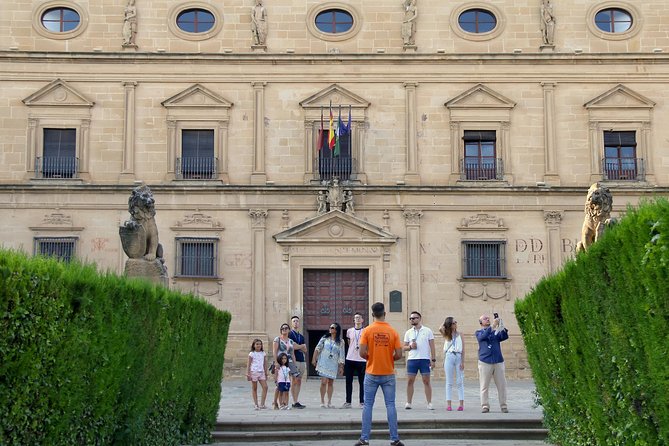
At $40.52 per person, I consider this a good deal if you plan to visit several of the included sights. The price covers guided visits and admission to the Holy Chapel of El Salvador, the Water Synagogue, Baeza Cathedral, the olive oil tasting, and the medieval interpretation center.
The value is less clear if you already hold tickets for those places or only want a short walk through the squares. This is not just a photo stop. You are paying for explanations, entry to selected interiors, and a structured route through two historic cities.
Transportation is the main extra cost and planning issue. You must arrange travel between Úbeda and Baeza yourself. Since the two-city format is flexible, you can visit one in the morning and the other at 17:00, or use separate days. The guided visits are held daily at 11:00 and 17:00, except for Sunday afternoon in Baeza.
The group limit is 20 people. That keeps the format more manageable than a large coach tour, though the experience can still feel busy at the most popular interiors. Radio guides are provided for groups of more than 20 according to the service information, although the stated maximum for this activity is 20.
The minimum operating group is two people. If that minimum is not reached, you are offered another date or a full refund. You can cancel for a full refund up to 24 hours before the start time. Changes or cancellations inside that window are not accepted.
Who should book this experience?
I would choose this tour if you want context rather than a quick list of monuments. It suits first-time visitors to Úbeda and Baeza, architecture fans, people interested in Spanish religious buildings, and anyone curious about the Jewish heritage represented by the Water Synagogue.
It is also a good match for travelers who prefer a planned route but do not want every minute fixed. The ability to visit the two cities on one day or separate days is useful when you are building a wider Andalusian itinerary.
I would think twice if you have limited mobility or dislike frequent stops, since the route includes many churches, palaces, squares, and historic centers. The information says most people can participate, and service animals are allowed, but it does not provide detailed access information for every building.
You should also skip it if you want transportation included from one city to the other. That is the one major convenience missing from the package. Arrange your route first, then book the tour times around it.
Should you book the Úbeda and Baeza tour?
Yes, if you want both cities explained in one cultural experience and the Water Synagogue appeals to you. The strongest parts are the Holy Chapel of El Salvador, the Water Synagogue, Baeza Cathedral, the Antonio Machado classroom, and the olive oil tasting.
The package offers a lot for $40.52, especially with several admissions included. Just treat transport as your responsibility, check the 11:00 and 17:00 schedule, and remember that Sunday afternoon in Baeza is not available. If those details fit your plans, this is a well-priced way to see two of Andalusia’s most rewarding historic centers without reducing them to a quick photo stop.
FAQ
How long does the Úbeda and Baeza tour last?
The experience lasts approximately five hours.
How much does the tour cost?
The listed price is $40.52 per person.
Does the tour include transportation between Úbeda and Baeza?
No. Transportation between the two cities is not included.
Can I visit Úbeda and Baeza on different days?
Yes. The guided visits can take place on different days, or on the same day with one visit in the morning and one in the afternoon.
What time are the guided visits held?
Visits are held daily at 11:00 and 17:00. Baeza does not offer the Sunday afternoon visit.
Is admission to the Water Synagogue included?
Yes. Admission to the Water Synagogue is included.
Is the olive oil tasting included?
Yes. The tasting at La Casa del Aceite is included.
What is the maximum group size?
The activity has a maximum of 20 participants.
What happens if fewer than two people book?
The visit requires at least two participants. If that minimum is not reached, you are offered another date or a full refund.
Just added around Spain
- Jerez de la Frontera History and Art Walking Tour★ 4.5 · 49 reviews
- 2 Hours Tour around Cádiz: History, anecdotes and curiosities★ 5.0 · 89 reviews
- Bilbao Historical Small Group Tour★ 4.5 · 159 reviews
- Barcelona Jewish & Gothic Tour★ 5.0 · 18 reviews
- Andorra Original History and Sightseeing Tour (Private, Pickup)★ 5.0 · 350 reviews
- History Museum of Catalonia & Rooftop Access Ticket★ 4.5 · 43 reviews
- Sip, Sites & Bites Barcelona Food, Drinks & History Tour★ 4.5 · 95 reviews
- Barcelona Tapas Food Tour, Taverns, History & Local Culture★ 5.0 · 42 reviews
Jewish Heritage Tours, compared.
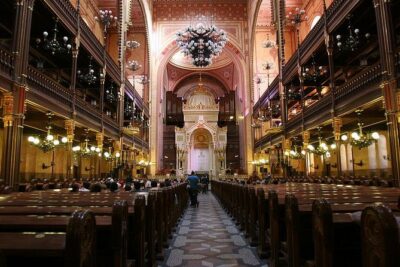
Budapest Jewish Heritage Memorial Walking Tour & Synagogue Entry
Read our review →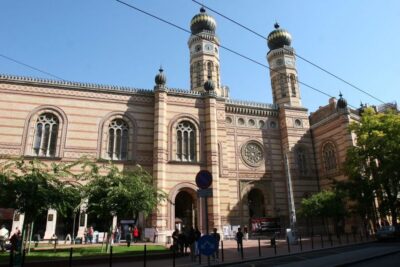
Jewish Heritage Guided Tour with Synagogue Ticket
Read our review →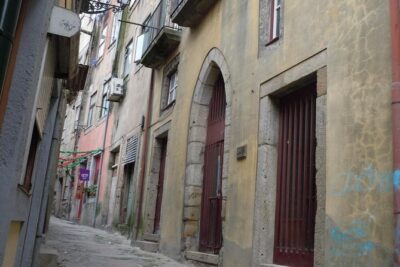
3-Hour Porto Jewish Heritage Walking Tour with Local Guide
Read our review →
Private Jewish Heritage Journey by Barcelona Dreaming
Read our review →
Anne Frank and the Jewish History of Amsterdam Private Tour
Read our review →
Lisbon Jewish Heritage and History – Private Tour Van
Read our review →
Browse the lists this tour appears in