Review · BIRMINGHAM
The Sacred Ground of 1963: Birmingham’s Civil Rights Struggle
History is powerful when you can walk through it. This 60 to 90 minute tour connects Birmingham’s Black business district, entertainment venues, churches, parks, and Civil Rights landmarks in one compact route. I like the focus on real places rather than a classroom-style talk, and I especially like the chance to hear from Birmingham native Wilhelmina, whose personal connection gives the tour a human voice. The main drawback is that the experience depends on clear weather and reliable communication from the operator, with a few serious complaints about last-minute cancellations and missed departures.
You begin at 285 20th Street North and finish back at the same meeting point. The route is short enough to fit into a morning or afternoon, but the subject matter is heavy. Wear comfortable shoes, expect outdoor walking, and allow extra time afterward if you want to visit the Civil Rights Institute or spend more time at 16th Street Baptist Church.
Key points to know before you book
- A local guide gives the tour its strongest edge: Wilhelmina, a Birmingham native, brings personal perspective to the city’s Civil Rights past.
- The route links several important sites: You visit Kelly Ingram Park, 16th Street Baptist Church, the A.G. Gaston Motel, Carver Theater, and Lyric Theatre.
- It covers more than the 1963 campaign: The opening section looks at Black business, hotels, entertainment, zoning, and the Chitlin’ Circuit.
- It is a short walking experience: The advertised time is about one hour to one hour and 30 minutes, useful if your Birmingham schedule is tight.
- The subject is emotional: Kelly Ingram Park and the church memorial require quiet attention, not a rushed photo stop.
- Communication deserves care: Some bookings have reportedly been canceled close to departure or suffered from poor follow-up, so confirm the tour before setting out.
Why this Birmingham walk matters
Birmingham is often introduced through the events of 1963, when demonstrations, police violence, arrests, and the bombing of 16th Street Baptist Church brought national attention to the city. That year matters greatly, but this tour does not treat the movement as if it appeared from nowhere.
The first part looks at the Black community that built businesses, social spaces, hotels, churches, theaters, and cultural institutions despite segregation. That wider view is important. You begin to understand that Birmingham’s Civil Rights struggle was not only a sequence of famous marches. It was also a long fight over where people could live, work, eat, sleep, gather, and be treated with dignity.
I like that the route includes both well-known landmarks and less obvious pieces of the city’s Black history. The stories of the Palm Leaf Hotel, the 1926 Red Line zoning laws, and the Chitlin’ Circuit help explain how segregation shaped daily life. The tour also points toward what was once a city within a city, a phrase that captures the strength and limits of Black business districts under Jim Crow.
This context makes the later stops more meaningful. By the time you reach Kelly Ingram Park and 16th Street Baptist Church, you have some sense of the community that organized, worshipped, entertained itself, and fought for change in the surrounding blocks.
Other history tours people book around the USA:
- History and Hauntings of Salem Guided Walking Tour
★ 5.0 · 14,564 reviews - Charleston’s Old South Carriage Historic Horse & Carriage Tour
★ 5.0 · 10,023 reviews - Beneath The Streets Underground History Tour
★ 4.5 · 8,006 reviews
Starting on 20th Street, where Black Birmingham takes shape
The meeting point is at 285 20th Street North, near the corner of 3rd Avenue North and 20th Street. From there, the group walks along 20th Street toward 4th Avenue North.
The opening section covers Black contributions to Birmingham’s founding and growth. It also introduces the 1926 Red Line zoning laws, the Palm Leaf Hotel, and the Chitlin’ Circuit. These details give you a look at the practical world behind the larger political story.
The Chitlin’ Circuit refers to the network of venues where Black performers could work during segregation. A mention of it places Birmingham within a larger Southern music and entertainment route. It also prepares you for later stops at the Carver Theater and Lyric Theatre.
This part of the walk may appeal most to people who want more than a standard Civil Rights timeline. You are not only hearing about Martin Luther King Jr. and major demonstrations. You are also learning how Black residents created places for business, lodging, music, and community life when white-controlled institutions shut them out.
The route is urban and outdoors. The tour does not include admission at this first stop, but you should plan for sidewalks, standing, and regular walking. The group can include up to 30 people, so the experience may feel more like a guided public walk than a private conversation.
Eddie Kendrick Memorial Park and the music of the neighborhood
Eddie Kendrick Memorial Park honors Eddie Kendricks, a Birmingham native and founding member of the Temptations. The stop is scheduled for about 10 minutes and includes statues dedicated to him.
This is a welcome change of pace. Birmingham’s Black history is not only defined by injustice and protest. Music, performance, and popular culture also shaped the city’s identity and gave people a way to create, earn, and reach beyond local boundaries.
The park also connects with the story of the former Black business district. The itinerary notes possible stops at Nelson Brothers and Green Acres, two places tied to the area’s earlier commercial and social life. Those visits may depend on time and the day’s conditions, so do not treat them as guaranteed interior tours.
I would pay attention here to the guide’s explanation of how the district worked as a self-contained center. The phrase city within a city is useful because it points to both independence and exclusion. Black-owned businesses served local needs, but segregation forced that self-reliance in the first place.
Carver Theater, Prince Hall, and Black cultural life
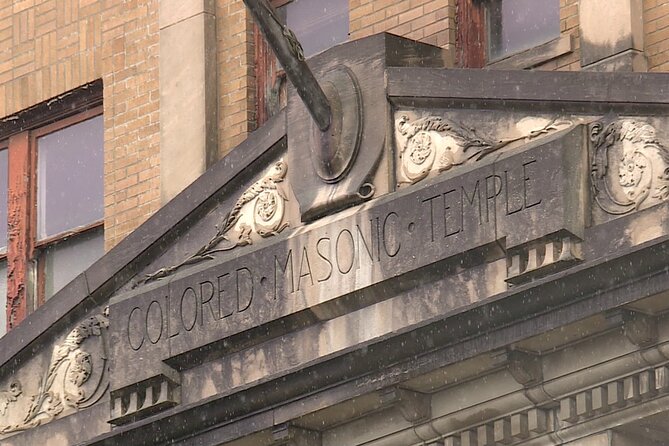
The Carver Theater is one of the major cultural stops. It is described as one of Birmingham’s best Black theaters and now houses the Jazz Hall of Fame. Nearby, you also see the Prince Hall Colored Masonic Lodge.
The theater adds a cultural layer to the tour. A place like this was not simply a building where people watched films. It was part of a network of Black entertainment and public life, connected to the music routes introduced earlier.
The Prince Hall Masonic Lodge adds another thread. Fraternal organizations played an important role in Black communities across the United States, providing social structure, support, and meeting places during segregation. The tour’s value here is in connecting buildings to the institutions that used them.
The stop is listed at about 10 minutes, so expect an exterior-focused visit unless your guide says otherwise. If you want a long museum visit or detailed architectural study, this tour will feel too brief. If you want the building placed in its social setting, the stop earns its place on the route.
Same place, a different slice of the past:
- Boston: Freedom Trail History Small Group Walking Tour
★ 5.0 · 6,450 reviews - Historic Charleston Guided Sightseeing Walking Tour
★ 5.0 · 6,216 reviews - Charleston Horse-Drawn Carriage Tour: Explore Historic Charleston
★ 5.0 · 3,561 reviews - Savannah History and Haunts Candlelit Ghost Walking Tour
★ 5.0 · 3,235 reviews
Kelly Ingram Park, where the struggle becomes visible
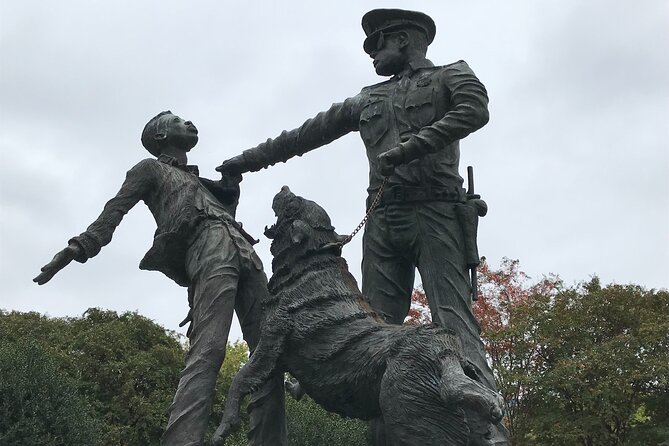
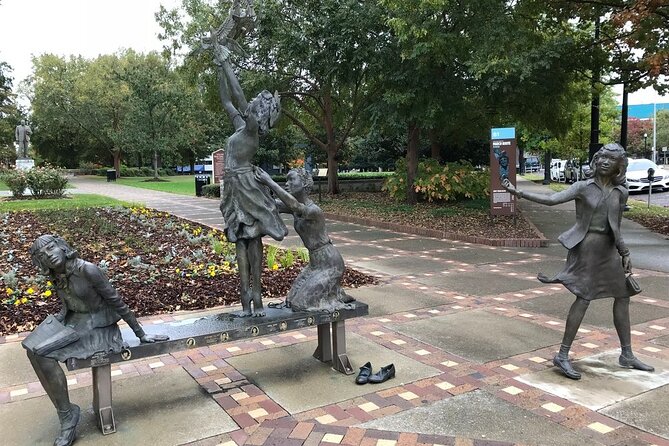
Kelly Ingram Park is the emotional center of the walking tour. The park served as an assembly point for the Southern Christian Leadership Conference and other Civil Rights groups. Today, its sculptures depict scenes from the struggle in direct and often painful form.
You should slow down here. The scheduled visit is about 15 minutes, but the subject can easily call for more time. The sculptures are designed to make events physical and immediate. Instead of hearing only dates and names, you confront images connected to children, police violence, confinement, and protest.
This is also where a local guide can make a real difference. Wilhelmina is repeatedly praised for explaining Birmingham through lived experience, not simply repeating a textbook account. Her ability to answer questions and discuss controversial subjects is one of the strongest reasons to choose this tour.
I would not expect a perfectly sequential lecture. The route combines economic, architectural, musical, and Civil Rights material. One participant wanted a clearer chronological presentation, and that is a fair point. The tour seems strongest as a conversation with place, rather than as a tightly organized academic course.
16th Street Baptist Church and the four girls
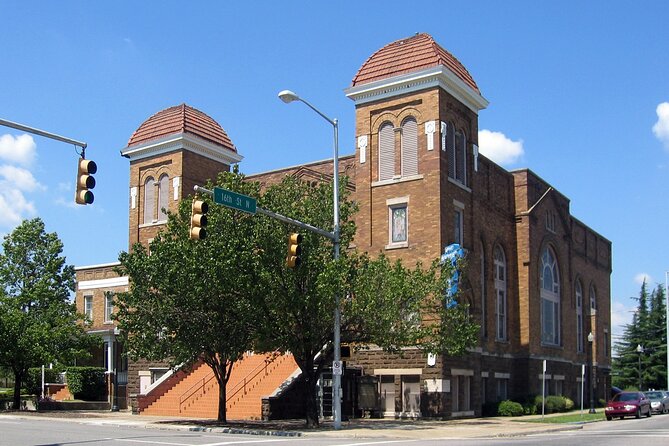
The 16th Street Baptist Church is the most solemn stop. On September 15, 1963, a racially motivated bombing killed four young girls: Addie Mae Collins, Denise McNair, Carole Robertson, and Cynthia Wesley. The church remains a central Birmingham Civil Rights site and a place of remembrance.
The tour allows about 15 minutes here. Admission to the church is not included, so check the arrangements if entering the building is important to you. The experience includes the church’s exterior and the nearby memorial imagery, including the sculpture depicting the four girls.
You may find this stop especially affecting after visiting Kelly Ingram Park. The park shows the public struggle, while the church brings the cost of racial hatred into sharp focus. It is worth treating this portion with respect and leaving room for silence.
One practical point: the Civil Rights Institute is nearby, but it is not included in this walking experience. If you want exhibits, documents, and a longer visit indoors, plan that separately. The tour gives you a framework for the area, while the museum can provide a more extended look at the movement.
The A.G. Gaston Motel and Black enterprise
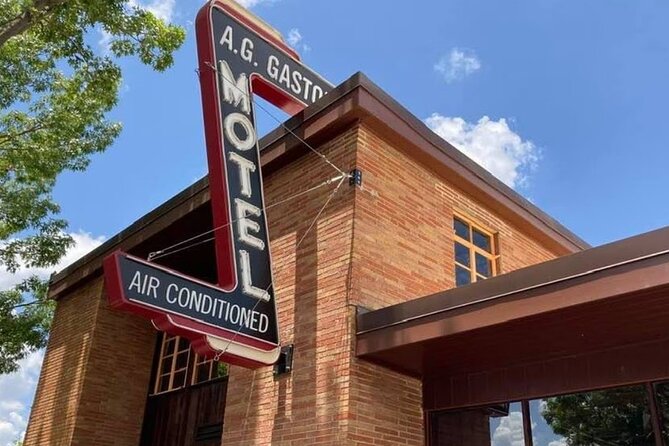
The A.G. Gaston Motel is another key site. Built by businessman and entrepreneur Arthur George Gaston, it opened in 1954 and provided first-class lodging and dining for Black visitors in Birmingham. The building was designed by Birmingham architect Stanley B. Echols.
The motel matters because it links the Civil Rights story to Black ownership and economic power. Segregation restricted access to many hotels and restaurants, so a Black-owned property could provide safety, comfort, and a place for organizing.
The motel is closely tied to the 1963 campaign and the wider struggle in Birmingham. On this walk, you see it as part of a neighborhood network rather than an isolated historic building. The roughly 10-minute stop will not cover every detail, but it helps explain why local businesses were so important to the movement.
I also appreciate the way this stop broadens the idea of leadership. Civil Rights history is often told through ministers and national figures. The A.G. Gaston Motel reminds you that entrepreneurs, hotel workers, cooks, clerks, and local business owners also supported the work.
Lyric Theatre and the limits of integration
The Lyric Theatre is described as Birmingham’s only surviving theater that allowed mixed audiences, though seating remained segregated. That detail captures the awkward, limited nature of change before full desegregation.
A mixed audience did not mean equal treatment. The theater could bring people into the same building while still dividing them by race. That makes the stop useful because it avoids presenting progress as a clean switch from segregation to equality.
The Lyric also connects with the Carver Theater and the Chitlin’ Circuit. Together, these places show how entertainment venues could offer pleasure, employment, community identity, and a measure of access in a city structured by racial separation.
The stop is expected to take about 10 minutes. Like several points along the route, it may be mainly an exterior explanation. I would value it most as part of the larger sequence, not as a stand-alone theater visit.
What the guide adds to the experience
The guide is the heart of this tour. Wilhelmina is a Birmingham native, and her local connection is repeatedly singled out as a major strength. She is described as patient with questions, open to difficult subjects, and able to explain what life in Birmingham was like during the turbulent 1960s.
That personal element changes the feel of the walk. You are not simply moving between plaques. You are hearing interpretation shaped by someone who knows the city and can connect major events with local memory.
The best fit for this tour is someone who enjoys discussion and does not need every point delivered in strict order. It can suit a solo visitor, a family, or anyone with only a few hours in Birmingham. It may be especially useful if you learned the broad Civil Rights story in school but want to reconnect the names and events with actual streets.
The guide’s strengths do not remove the need for your own preparation. I would read a short overview of Birmingham in 1963 before arriving, then use the walk to ask focused questions. That approach can help you get more from a tour lasting only an hour to an hour and a half.
Price, pace, and practical tradeoffs
The cost is $65 per person. That is not a small fee for a short walking tour, so value depends on the guide and the quality of the discussion. I think the price can make sense if you want local interpretation and a concentrated route through several important sites.
You are paying for access to a connected story, not admission to a collection of museums. Most stops list no admission charge, while entry to 16th Street Baptist Church is not included. The tour also does not replace a longer visit to the Civil Rights Institute.
The compact length is useful. You can fit the walk into a busy Birmingham day, then continue to another attraction. The tradeoff is limited time at each location. If you want to linger, take photographs, enter buildings, or ask many questions, the advertised 60 to 90 minutes may pass quickly.
The walking requirement is moderate, but you should be comfortable on your feet. Service animals are allowed, and the tour is offered in English. The maximum group size is 30, which keeps it from becoming a huge outing, though it may not feel intimate at full capacity.
Weather matters. The experience requires good conditions, and poor weather can lead to a new date or a full refund. You can cancel for a full refund up to 24 hours before the start time, but cancellations made later are not refundable under the stated policy.
There have also been troubling reports of last-minute cancellations, unanswered messages, and one missed departure. These problems do not tell you how the history portion will be handled, but they do make confirmation worthwhile. Contact the operator before leaving for the meeting point, especially if you have built your day around this walk.
Who should book this Birmingham Civil Rights tour?
I would choose this experience if you want a focused introduction to Birmingham’s Black history and Civil Rights landmarks. It is particularly well suited to first-time visitors, families with older children, solo visitors, and anyone who wants local commentary instead of exploring the sites alone.
It is also a good choice if you have only a few hours in the city. The route covers a lot of ground without demanding a full day, and it gives you useful context before visiting other museums or historic locations.
I would hesitate if you need a guaranteed departure, extensive indoor access, or a highly structured chronological lecture. The operator’s communication record is a real concern, and some people may find the presentation more conversational than orderly.
Book it for the guide, the local voice, and the connected route through Birmingham’s Black business and Civil Rights districts. Confirm the departure, allow emotional space at the church and park, and treat the walk as an introduction rather than the whole story.
FAQ
How long does the tour last?
The experience lasts approximately one hour to one hour and 30 minutes.
Where does the tour begin?
It begins at 285 20th Street North, Birmingham, Alabama 35203, near the corner of 3rd Avenue North and 20th Street.
Where does the tour end?
The tour ends back at the meeting point.
What language is the tour offered in?
The tour is offered in English.
How much does the tour cost?
The listed price is $65 per person.
Is admission to 16th Street Baptist Church included?
No. Admission to 16th Street Baptist Church is not included.
Which major Civil Rights sites are included?
The route includes Kelly Ingram Park, 16th Street Baptist Church, and the A.G. Gaston Motel. It also visits several sites connected to Black business, entertainment, and community life.
Does the tour include Carver Theater?
Yes. The route includes the Carver Theater, which now houses the Jazz Hall of Fame, along with the nearby Prince Hall Masonic Lodge.
Is the tour suitable for someone with limited fitness?
Participants should have a moderate level of physical fitness because this is a walking tour.
What happens if bad weather cancels the tour?
If poor weather causes a cancellation, you will be offered a different date or a full refund.
Just added around the USA
- Walking Tour: Civil Rights History -The Church, Children & Community★ 5.0 · 21 reviews
- Experience Birmingham – The Historic Highlights★ 4.5 · 38 reviews
- Kona Tour: Bee Farm, Kona Coffee, and National Historical Parks★ 4.5 · 78 reviews
- Kona Shore Excursion: Sea Turtles, Historic Kona & Coffee★ 4.5 · 324 reviews
- Cruise Ship Shore Excursion of Historic Kona★ 4.0 · 33 reviews
- Kailua-Kona Haunted History Walking Ghost Tour★ 4.5 · 27 reviews
- Historic Hilo Bay and Coconut Island Guided Kayak Adventure★ 4.5 · 28 reviews
- Historic Bar Harbor Self-Guided Walking Audio Tour Guide★ 4.5 · 38 reviews
USA History Tours, compared.
History and Hauntings of Salem Guided Walking Tour
Read our review →
Charleston’s Old South Carriage Historic Horse & Carriage Tour
Read our review →
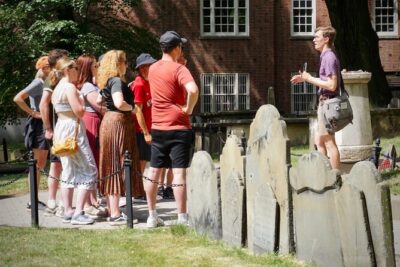
Freedom Trail History Small Group Walking Tour
Read our review →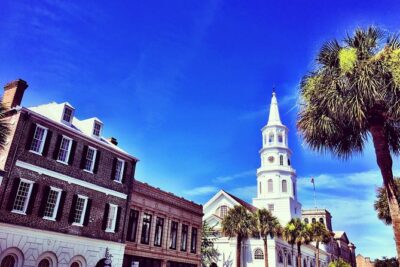
Historic Charleston Guided Sightseeing Walking Tour
Read our review →
Charleston Horse-Drawn Carriage Tour: Explore Historic Charleston
Read our review →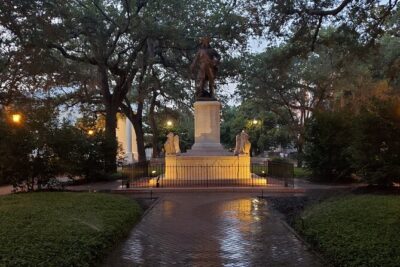
Savannah History and Haunts Candlelit Ghost Walking Tour
Read our review →