
Review · PARIS
The History of Paris: Historical Le Marais Private Tour
Le Marais rewards slow walking. This private two-hour outing gives you a personal way to read one of Paris’s most layered districts, from Place des Vosges and Victor Hugo’s former home to the grand church of Saint-Paul-Saint-Louis and the Hôtel de Ville. I like the one-party format, which lets you ask questions and adjust the route, and I like the useful local advice on food, coffee, cheese, shopping, and other places to visit. The main caution is that the experience depends heavily on your guide: some guides focus on broad ideas and churches, while others deliver the sharp historical detail you may be seeking.
At $106.93 per person, this is not a bargain walking tour for a solo visitor. It can make good sense for a couple or small group that wants a private conversation, a slower pace, and recommendations shaped around its interests. You should also know that one serious service failure was reported, when a guide did not appear, although most of the feedback praises the guides and the way they handle the neighborhood.
Five useful things to know before you book
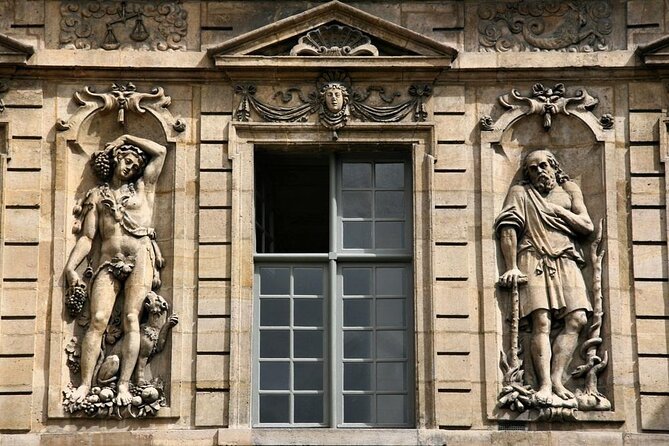
- Place des Vosges is the opening anchor: You begin with one of Le Marais’s most recognizable squares and a look at Victor Hugo’s former home.
- The route can change on the spot: Your guide may adjust the walk to suit your interests, a feature that matters if you want more architecture, culture, food, or local history.
- Guides receive the strongest praise: Isabelle, Carlos, Paolo, Murilo, and Maxime are singled out for warmth, storytelling, flexibility, and practical advice.
- The church stops may take time: Saint-Paul-Saint-Louis is historically important, but a guest who wanted fast-moving facts found the church visits too long.
- The walk ends at Pont Marie: You start at 29 Rue de Rivoli and finish near Pont Marie, with no hotel transportation or food included.
Why Le Marais works so well for a private walk
Le Marais is a good district for a guide-led introduction because its story changes from street to street. You are not simply ticking off one grand monument. You are moving through a compact part of Paris where royal planning, religious history, municipal power, architecture, and neighborhood life meet.
A private guide gives you something a large group cannot: room to stop when a detail catches your eye. You can ask why a building looks the way it does, request more information about a particular period, or shift the conversation toward Parisian culture. That flexibility is one of the tour’s best selling points.
The experience lasts about two hours. That is long enough to get your bearings and see several important places, but short enough to fit into a busy Paris schedule. I would treat it as an introduction, not a complete study of Le Marais. You will gain a useful framework for returning on your own, rather than covering every street and museum in the district.
The private format also changes the mood. You are not trying to hear a guide over a crowd or waiting for ten people to finish taking photographs. If your group walks at a different speed or has mixed interests, the guide can adapt more easily.
More Private History Tours in France
- Paris City of Fashion History Private Guided Walking Tour
★ 5.0 · 221 reviews - History of Paris City Center w/ Notre Dame Semi-Private 12ppl Max
★ 5.0 · 194 reviews - Private Half Day Historic Tour
★ 5.0 · 58 reviews
Starting at Place des Vosges
The meeting point is 29 Rue de Rivoli, in the 4th arrondissement. From there, the route includes Place des Vosges, one of the district’s most recognizable spaces.
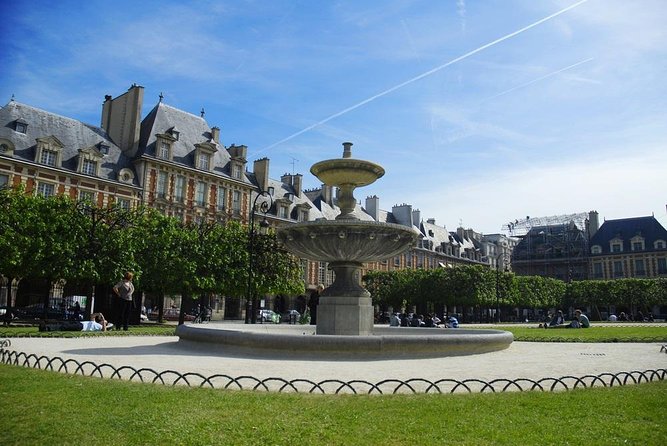
The square is a strong first stop because it gives you a clear sense of Le Marais’s formal side. Its repeated façades and orderly layout feel planned and composed, a contrast to the smaller streets nearby. Your guide can use the square to explain how Paris developed and how the area gained its royal associations.
The visit lasts about 20 minutes, and there is no admission charge. That keeps the opening simple. You are outside, free to look around, and not spending the first part of the tour waiting in a ticket line.
You also get a look at Victor Hugo’s former home. The property adds a literary connection to the square and gives the guide an easy way to connect architecture with the people who shaped Parisian culture. The description does not promise an interior visit, so you should think of this as an exterior introduction unless your guide tells you otherwise.
I like this beginning because it gives you a visual reference point. Later, when the walk moves into narrower streets and more complicated stories, you have already seen one of Le Marais’s clearest architectural statements.
Saint-Paul-Saint-Louis and the question of pacing
The next named stop is Eglise Saint-Paul-Saint-Louis. Construction began in 1627, when Louis XIII laid the first stone. Cardinal Richelieu dedicated the church in 1641, only 15 years later.
That timeline gives the guide solid material to work with. You can expect a discussion of royal support, Catholic power, and the role of major churches in the shaping of Paris. The church is also a change of rhythm after the open square. Instead of looking across a planned urban space, you are considering a building designed for ceremony, worship, and public display.
Admission is not included, and the tour information does not state a separate entrance fee. That means you should be prepared for the possibility of an extra cost if your guide takes you inside. The description confirms the church as a stop, but it does not guarantee a particular length of interior access.
This is where your expectations matter. One guest wanted concise historical facts and felt that extended visits to two churches slowed the walk, especially on a very cold day. That is a fair warning. If you are visiting in winter, ask at the start for a brisker outdoor route. If you enjoy church interiors, architectural detail, and the ideas behind Paris’s religious buildings, you may appreciate the extra time.
The private setup helps here. You can tell the guide that you want a quick exterior explanation, a longer look inside, or more time for another subject. Still, flexibility works best when you speak up early.
Hôtel de Ville and the modern city
The itinerary also includes the Hôtel de Ville in the 4th arrondissement. Despite its name, this is not a hotel. It houses local administration, the Mayor of Paris, and large receptions.
This stop helps connect old Paris with the city you are visiting today. Le Marais is often presented through royal squares, churches, and old streets, but municipal government is part of the district’s daily life. The Hôtel de Ville gives the tour a civic dimension and reminds you that historic buildings are not only museum pieces.
The stop is listed at about 15 minutes, with no admission charge. It is an efficient visit, likely focused on the building’s role and exterior rather than a long indoor tour. You should not expect a full municipal tour or guaranteed access to reception rooms from the information provided.
That short pause can be useful near the end of the walk. After hearing about kings, cardinals, writers, and older institutions, you get a clearer sense of how Paris is administered now.
More Private History Tours in Paris
- Paris Jewish History 2-Hour Private Guided Walking Tour
★ 4.6 · 32 reviews
The route is personal, but not fully fixed
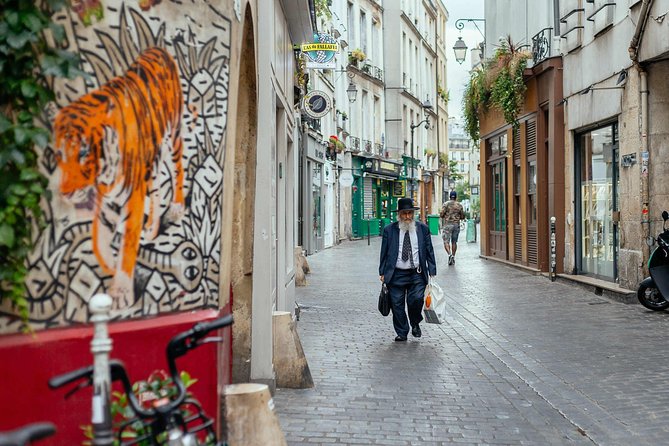
Several additional stops may be included depending on your host and the route chosen for your tour. That wording is important. You are not buying a rigid checklist with every possible point guaranteed.
For some people, this is a strength. A private guide can shape the walk around your group. If you want architecture, you can ask for more buildings and design details. If food is high on your list, ask for recommendations along the way. If you want cultural context, say so before the walking begins.
For others, the flexible format may feel less certain. You may have expected a detailed treatment of one subject, such as Jewish history, but receive more discussion of churches, philosophy, or general Parisian culture. One guest specifically wanted more Jewish history and more straightforward facts. That does not make the tour poor, but it shows why a short conversation with your guide at the beginning matters.
I would arrive with two or three priorities rather than a long wish list. Tell your guide what you already know, what you want to learn, and what you do not want to spend time on. In a two-hour tour, that small bit of planning can make a real difference.
What the guides add to the experience
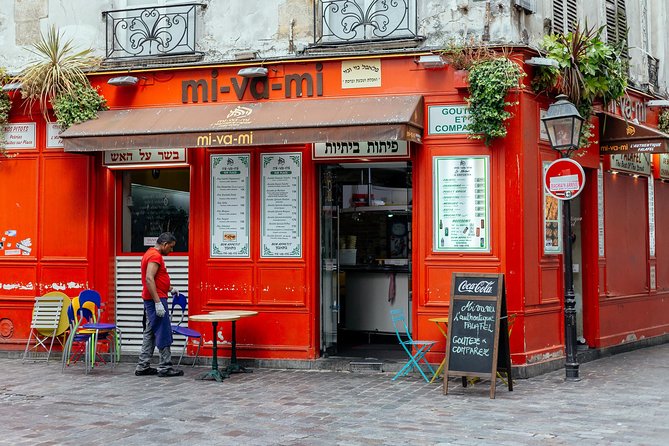
The clearest strength of this tour is the human element. Isabelle receives especially warm praise for combining history with practical recommendations for shopping, food, coffee, and cheese. That kind of advice can be more useful than a long list in a guidebook because you can ask what fits your taste and schedule.
Carlos is praised for showing places that even someone who had once lived in Paris had not encountered. His appeal seems to be his energy, flexibility, and ability to present familiar Paris from a fresh angle.
Paolo receives repeated praise for his enthusiasm, warmth, and broad knowledge. His style appears to suit people who want both historical explanation and an enjoyable conversation while walking. Murilo is credited with pointing out less obvious places in Le Marais and making the walk feel lively.
Maxime is praised for changing the planned route to match a group’s curiosity. That is exactly the kind of response you want from a private tour. It suggests that you do not have to accept the original plan if another street, subject, or building catches your interest.
The guides are not all described in the same way. One French-language experience featured a friendly Brazilian guide, and another featured a pleasant Spanish guide. The common thread is personal connection, not a single scripted style. That can be a benefit, but it also means the experience may vary from one booking to another.
The local advice may be worth the price
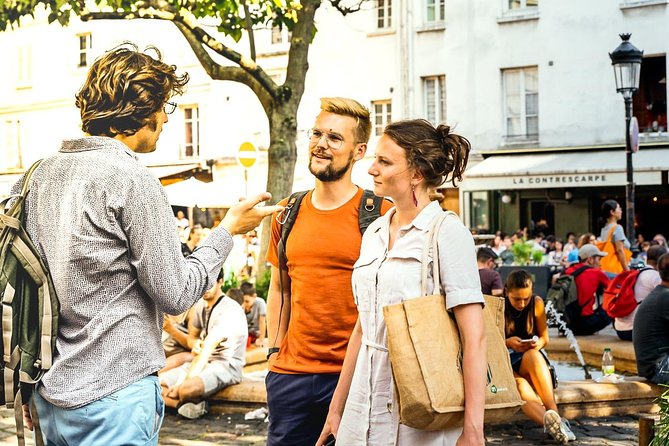
At $106.93 per person, value depends on your group size and how much you use the guide. If you are alone, the cost is high for a two-hour walk. If two or more people share the experience, you are paying for private attention rather than a seat in a large group.
The practical recommendations add value. Isabelle’s advice on coffee, cheese, food, and shopping is the sort of information you can use immediately after the tour. A guide who learns what you like can save you from spending the rest of the day wandering without a plan.
I would also consider the timing of your visit. On a first day in Paris, the tour can help you understand where Le Marais fits into the city. Later in your stay, it may work better as a more focused walk, especially if you already know what you want to ask about.
Food and beverages are not included. Hotel pickup and drop-off are not included either. You will need to reach 29 Rue de Rivoli yourself and arrange your next stop after saying goodbye at Pont Marie.
Who will enjoy this walk most
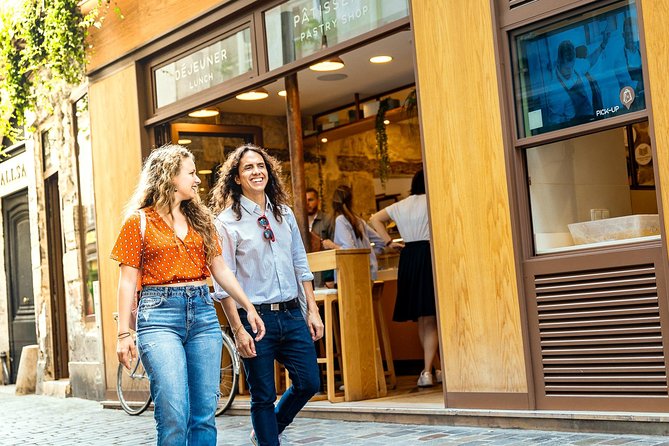
This tour suits you if you prefer conversation to a scripted lecture. It is a good match for couples, families, and small groups who want a guide to adjust the pace and subject matter.
You will likely enjoy it most if you:
- Want an introduction to Le Marais with historical and cultural context
- Prefer a private walk to a large group
- Like asking questions as you go
- Want recommendations for food, coffee, shopping, and cheese
- Are happy to see a mix of major sights and less obvious places
- Can tell the guide clearly what interests you
It may be less suitable if you want a tightly academic history lecture, a guaranteed deep focus on Jewish history, or a fixed list of every advertised point. It is also not the best choice if you want to stay indoors on a cold or wet day, since the core experience is a walking tour.
Most people can participate, and the meeting point is near public transportation. The information provided does not describe special accessibility arrangements, so you should ask the provider directly if your group has specific mobility needs.
A practical note about reliability
One booking went badly when the guide failed to appear and the customer waited at the meeting point while trying to reach support. The situation was later acknowledged as unacceptable, and a replacement experience was arranged for another guest whose first guide also did not arrive.
That is a serious concern, even though the larger pattern of feedback is strongly positive. The experience is recommended by 94 percent of customers and has a 4.7 rating from 47 reviews, with especially strong praise for the guides themselves.
I would confirm the meeting details before the day of the tour and keep your booking information handy. If the guide is not present at the agreed time, contact support promptly and document your calls and messages. This is basic travel practice, but it matters when your tour has a fixed meeting point and a short duration.
Free cancellation is available if you cancel at least 24 hours before the start time. A cancellation within 24 hours is not refundable, and changes inside that window are not accepted. Cut-off times follow Paris local time.
Should you book the Historical Le Marais Private Tour?
I would book this tour if you want a flexible introduction to Le Marais and value a personable guide more than a fixed academic program. Isabelle, Carlos, Paolo, Murilo, and Maxime represent the best of what the experience can offer: warm conversation, strong local recommendations, and the freedom to adjust the route.
I would hesitate if your main goal is a precise treatment of Jewish history or a fast list of dates and facts. In that case, tell the guide your priorities before setting off, and ask how much time will be spent inside churches.
The price is easier to justify for a small group than for one person. For the right group, the benefit is not just seeing Place des Vosges or Hôtel de Ville. It is learning how to read the streets between them, then knowing where to eat, shop, and walk next. That personal guidance is the real reason to choose this tour.
FAQ
How long is the Historical Le Marais Private Tour?
The tour lasts approximately two hours.
Where does the tour begin?
It begins at 29 Rue de Rivoli, 75004 Paris, France.
Where does the tour end?
The tour ends at Pont Marie in the 4th arrondissement.
Is this a private tour?
Yes. Only your travel party and your guide participate.
Is the tour offered in English?
Yes, English is one of the offered languages.
Are admission tickets included?
The tour includes free admission at Place des Vosges and Hôtel de Ville. Admission to Eglise Saint-Paul-Saint-Louis is not included.
Are food and drinks included?
No. Food and beverages are not included.
Can I cancel for a full refund?
Yes, if you cancel at least 24 hours before the experience start time. Cancellations within 24 hours are not refundable.
Just added around Paris
- The historic district of Montmartre★ 4.9 · 66 reviews
- Paris: Fashion History Walking Tour in the Heart of Paris★ 4.9 · 22 reviews
- Paris: Khéops VR Experience – Explore Ancient Egypt★ 4.9 · 39 reviews
- Paris: French Fashion History Walking Tour★ 4.9 · 37 reviews
- Paris Jewish History 2-Hour Private Guided Walking Tour★ 4.6 · 32 reviews
- Montmartre Walking Tour: A Journey Through Art and History★ 5.0 · 21 reviews
- Historic Paris Walking Tour in English★ 4.9 · 78 reviews
- Explore the Marais: History, Art & Local Culture★ 4.6 · 105 reviews
Private History Tours, compared.
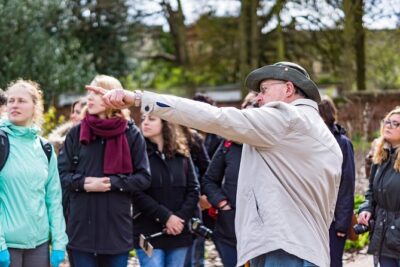

Private Guided Historic Electric Cart Tour of St. Augustine
Read our review →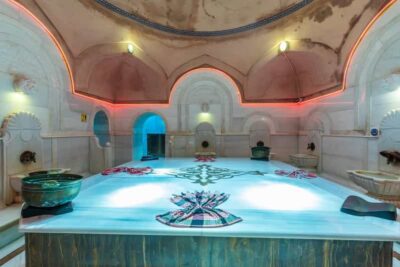
Acemoglu Historical Turkish Bath w/Private Options
Read our review →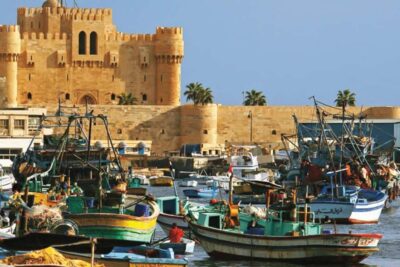
Private Full-Day Tour of Historical Alexandria
Read our review →
Private Tour of the Historic City in a Ford T Car
Read our review →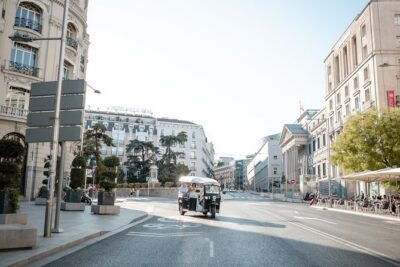
Madrid Historical Tour with Local Guide in Eco Tuk Tuk Private
Read our review →
Private Biblical Tour Ancient Corinth & Isthmus Canal from Athens
Read our review →
Private Kathmandu Sightseeing Tour | UNESCO World Heritage sites
Read our review →Browse the lists this tour appears in