
Review · GEORGIA
Tbilisi: Discover History on an Old Town Walking Tour
Tbilisi rewards curious walkers. This three-hour tour brings together old churches, Jewish and Muslim landmarks, local food, Georgian wine, and a cable-car ride to the Mother of Georgia. I like the way it connects religious sites with everyday customs, and I like that it ends with wide views over the Mtkvari River and Narikala Fortress. The main drawback is the pace: with many stops in three hours, some visits are brief, and steep streets plus steps make this a poor fit for anyone with limited mobility.
I also like the flexible booking terms and the option to take the tour in English or Spanish. If you speak Spanish, guide Shmagi has received especially strong praise for his clear, warm explanations and useful suggestions about where to eat and what to do in Tbilisi. Bring modest clothing for the churches, comfortable shoes, water, and some cash for food or other personal expenses.
Key points at a glance
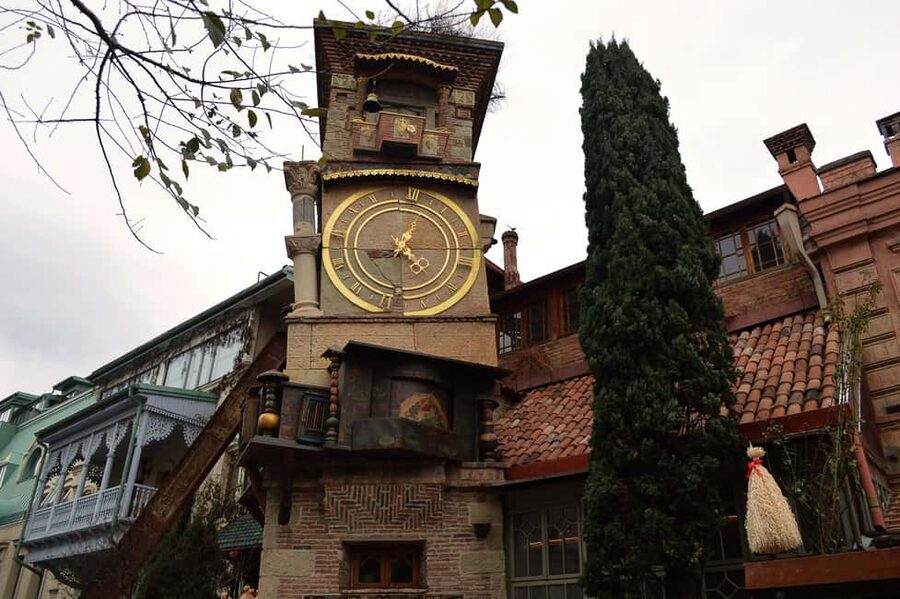
- Gabriadze Clock Tower begins the tour with character: Its crooked shape and puppet show introduce Tbilisi’s playful artistic side.
- Anchiskhati Basilica is the oldest church stop: The sixth-century building gives the tour a strong starting point for understanding Georgian Christianity.
- Several faiths appear within one short walk: You visit a church, synagogue, mosque, and religious centers tied to Georgia’s past and present.
- The Tamada Statue explains Georgian hospitality: The bronze toastmaster is a natural place to learn about feasting, wine, and traditional toasts.
- The cable car saves time and adds a view: From Rike Park, you ride toward Narikala and the Mother of Georgia monument.
- The final panorama is the payoff: You look across Tbilisi’s rooftops, the Mtkvari River, and Narikala Fortress from the hilltop.
Starting beside the Berikaoba monument
The tour begins at 17 Ioane Shavteli Street, beside the Berikaoba monument and near the Ambassadori Tbilisi Hotel. This is a useful meeting point in the old center, but give yourself enough time to find the monument rather than relying on a quick glance at the street number.
The route finishes at the Mother of Georgia, so this is not a loop back to the starting point. That matters if you have a dinner reservation, a hotel pickup, or another activity planned immediately afterward. The stated duration is three hours, and travel time is included, so the schedule is fairly full.
The starting point itself hints at Tbilisi’s sense of humor. Berikaoba is connected with a traditional Georgian theatrical folk performance, and the nearby streets quickly lead into the city’s older quarters. Your guide sets the context before the walking begins, which helps the later buildings feel like parts of one story rather than isolated photo stops.
More Old Town and Historic Centre Walks in the world:
- Madrid Essential: Historic Center, Plaza Mayor & Royal Palace
★ 5.0 · 6,416 reviews - Lisbon: Live Fado Show with Port Wine in Historic Center
★ 4.7 · 4,166 reviews - Valencia Old Town Tour with Wine & Tapas in 11th Century Historic Monument
★ 5.0 · 3,234 reviews
The Gabriadze Clock Tower and Anchiskhati Basilica
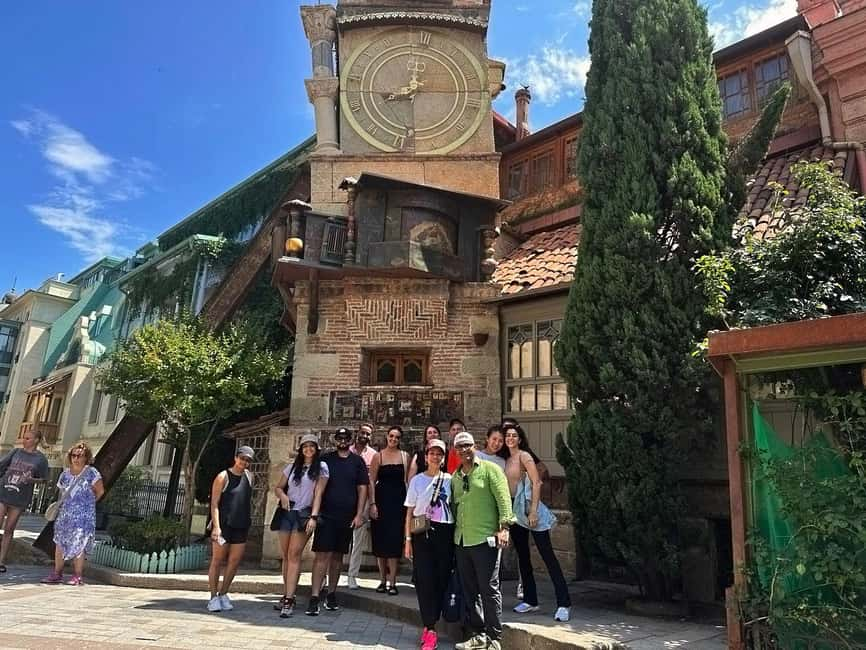
The first major stop is the Rezo Gabriadze Theater and its famous clock tower. The tower’s leaning, handmade appearance looks almost like a stage prop, which is fitting for a building tied to puppetry and Georgian theater. A small puppet show is part of its charm, although your visit here is listed as a 15-minute stop, so the exact timing may be short.
From there, you walk to Anchiskhati Basilica. Dating from the sixth century, it is the oldest surviving church in Tbilisi and one of the most important stops for understanding the country’s Christian identity. I appreciate this early visit because it gives the tour a solid historical anchor before it moves into monuments, food, and city views.
Inside, expect a place of worship rather than a museum arranged for sightseeing. The guide explains how Christianity shaped Georgian culture, but the visit also calls for quiet and respectful clothing. Photography inside the church is not allowed, and women need a head covering. Shorts are not permitted.
That dress code applies to the church stops, so it is easier to arrive prepared than to improvise along the way. A scarf is a practical item to carry, especially if you are visiting in warm weather.
Georgia’s religious center and the Bridge of Peace
The walk continues toward the Patriarchate of Georgia, an important center for the country’s Orthodox religious life. The stop is short, around 10 minutes, but it adds present-day context to the older churches. You get a sense that religion here is not only a subject from the past. It remains part of public and national life.
Next comes the Bridge of Peace, one of Tbilisi’s most recognizable modern landmarks. Its glass-and-steel form provides a sharp contrast with the stone churches, narrow lanes, and older courtyards around it. This change of mood is one of the route’s strengths. Tbilisi is not presented as a preserved old town frozen in time.
The bridge is a photo stop and a walking segment, with about 15 minutes listed for the visit. You may find the contrast more interesting than the bridge itself. It shows how the city has added new civic spaces without removing the older buildings that give the center its character.
Sioni Cathedral and the story of Stalin’s marriage
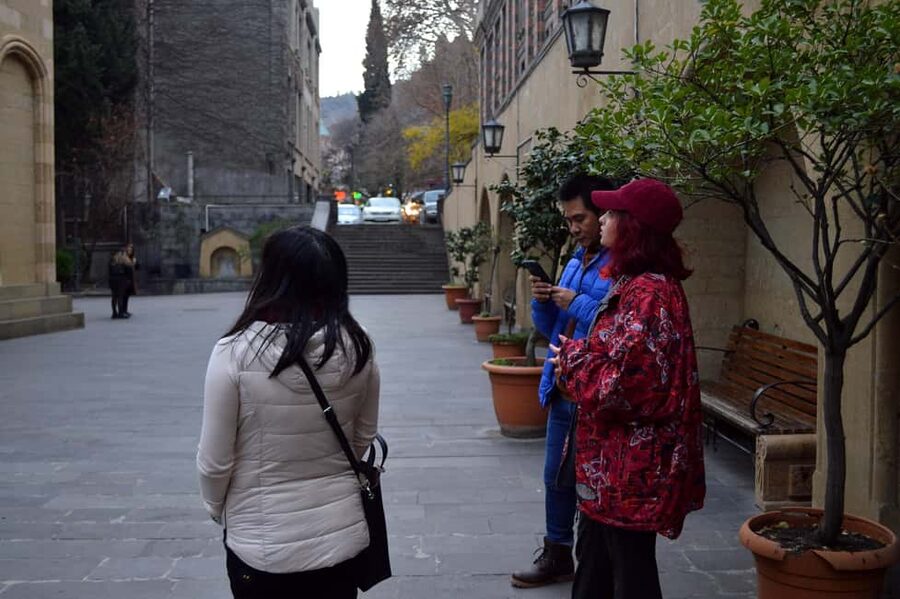
Sioni Cathedral is another important religious stop. The tour introduces its old relics and legends, then connects the building with a surprising piece of modern history: Joseph Stalin was married to his first wife at the church.
That detail gives the stop a human scale. Instead of hearing only about rulers, battles, and religious institutions, you also encounter a personal event linked to a figure who later shaped the twentieth century. The cathedral visit lasts about 15 minutes, so expect an explanation and a look around rather than a long independent exploration.
As with Anchiskhati Basilica, follow the dress rules and do not take photographs inside. The route includes several sacred places in quick succession, so I would pay close attention to what makes each one different. The guide’s storytelling matters here, since the buildings themselves can begin to blur together if you rush through them.
More History Walking Tours in the world:
- History and Hauntings of Salem Guided Walking Tour
★ 5.0 · 14,564 reviews - Lisbon: History, Stories and Lifestyle Walking Tour
★ 4.8 · 10,902 reviews - Boston: Freedom Trail History Small Group Walking Tour
★ 5.0 · 6,450 reviews - Historic Charleston Guided Sightseeing Walking Tour
★ 5.0 · 6,216 reviews
Tamada, Georgian hospitality, and the food stop
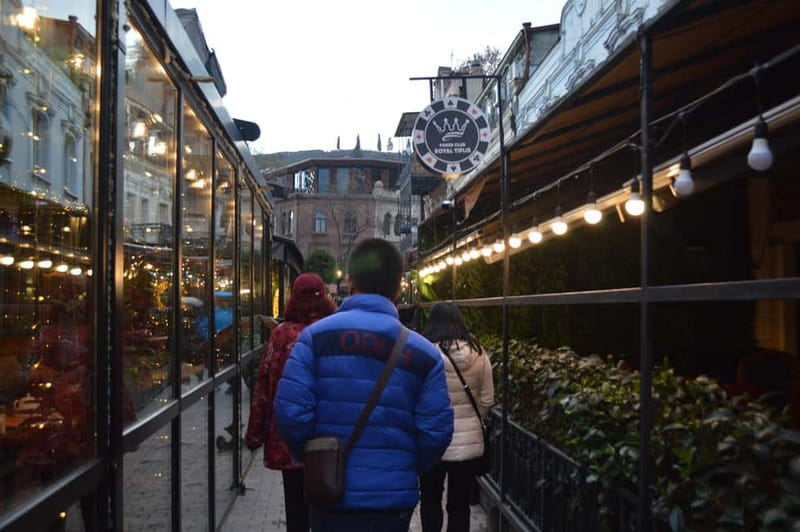
The Tamada Sculpture is one of the tour’s more lighthearted stops. Tamada means toastmaster, the person who leads formal toasts at a Georgian feast. The cheerful bronze figure opens a natural conversation about friendship, celebration, wine, and the role of hospitality in Georgian culture.
This is more than a quick statue photograph. Georgian toasting has its own social rules and rituals, and the Tamada helps explain why food and drink carry so much meaning here. I like this part of the tour because it shifts attention from buildings to behavior, giving you a better sense of how local culture works.
The route also includes a 20-minute secret stop listed with wine and wine tasting. Since the precise location is not provided, you should treat this as a planned surprise rather than a guaranteed type of venue. The tour price covers the guided walking tour and cable-car ride, while the full inclusions do not separately spell out every cost connected with the wine stop. It is sensible to carry cash and ask your guide what is included when you arrive.
A traditional bakery is also mentioned as a possible break, with khachapuri or lobiani available to try. Bakery costs are not included. Khachapuri is cheese-filled Georgian bread, while lobiani is filled with beans. Both are filling, affordable local foods, but you should budget separately if you want one.
The food break is useful because it gives your feet a rest and puts the country’s hospitality into practice. It is also one of the few parts of the route where you can taste something rather than simply look at it.
The Great Synagogue and Tbilisi’s mix of faiths
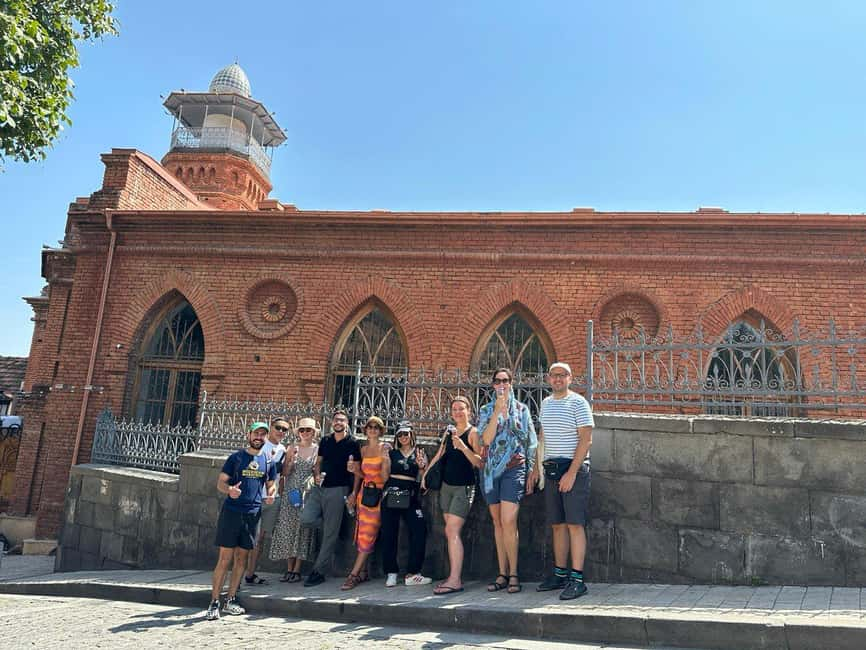
The Great Synagogue follows the food and wine portion of the walk. Its place in the route matters because the tour does not describe Tbilisi through Orthodox Christianity alone. You also visit a Jewish place of worship, alongside the later mosque, within one compact city-center route.
The synagogue visit is listed at about 15 minutes. The guide provides the setting and background, while you get a chance to see how different communities have contributed to the city’s identity. Specific access rules beyond the general tour information are not provided, so follow your guide’s instructions inside.
This sequence is one of the best reasons to choose the tour. In a short afternoon, you are introduced to several religious traditions without needing separate transport across the city. The tradeoff is limited time at each location. If you want detailed architectural study or extended quiet time in every building, you may prefer to explore the sites again on your own.
Rike Park and the cable car to Narikala
At Rike Park, the walking route turns into a cable-car ride. The ride is listed at about 10 minutes and takes you uphill toward the Narikala area. It is a practical break from walking, but it also gives you a changing view of Tbilisi as the rooftops and river open out below.
The cable car is included in the tour price, which improves the value. Without it, reaching the hilltop would require more walking and climbing, and the tour would have less time for the religious and cultural stops earlier in the afternoon.
The ride also helps pace the experience. Three hours on foot through old streets can feel demanding, especially if the weather is hot. The cable car gives you a short seated interval before the final viewpoints.
Mother of Georgia, Narikala, and the final view
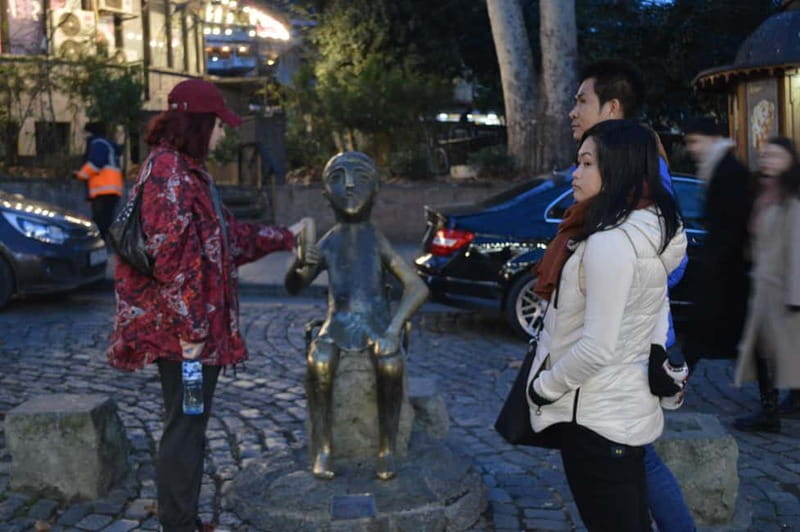
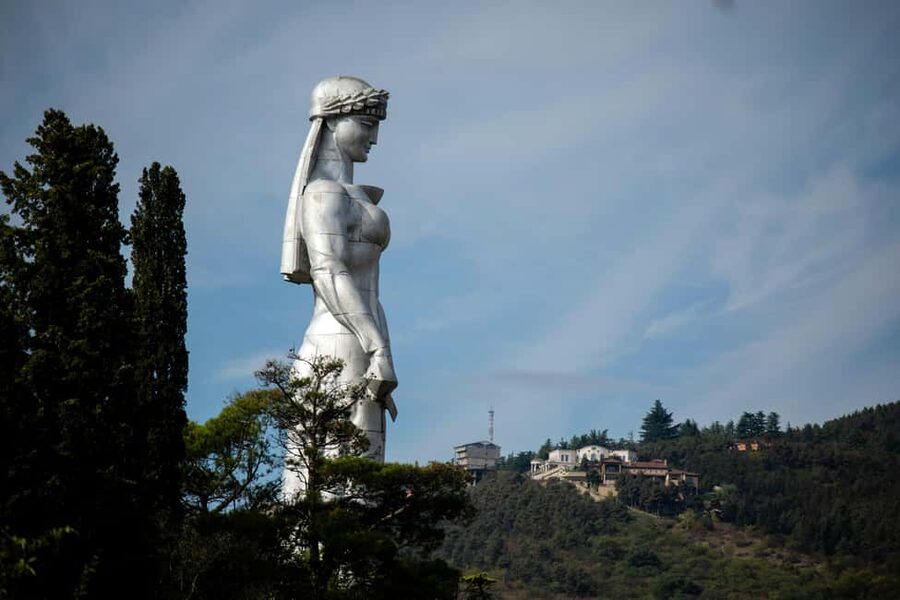
The tour ends at Kartlis Deda, better known as the Mother of Georgia. The monument holds a sword in one hand and a bowl of wine in the other. The image expresses a firm welcome: strength when needed, generosity toward friends.
The guide uses the monument to discuss Georgian women and their place in the country’s history. This is a welcome addition because the tour does not limit its story to kings, churches, and military landmarks. The statue becomes a way to talk about identity, resilience, hospitality, and the symbolic role of women.
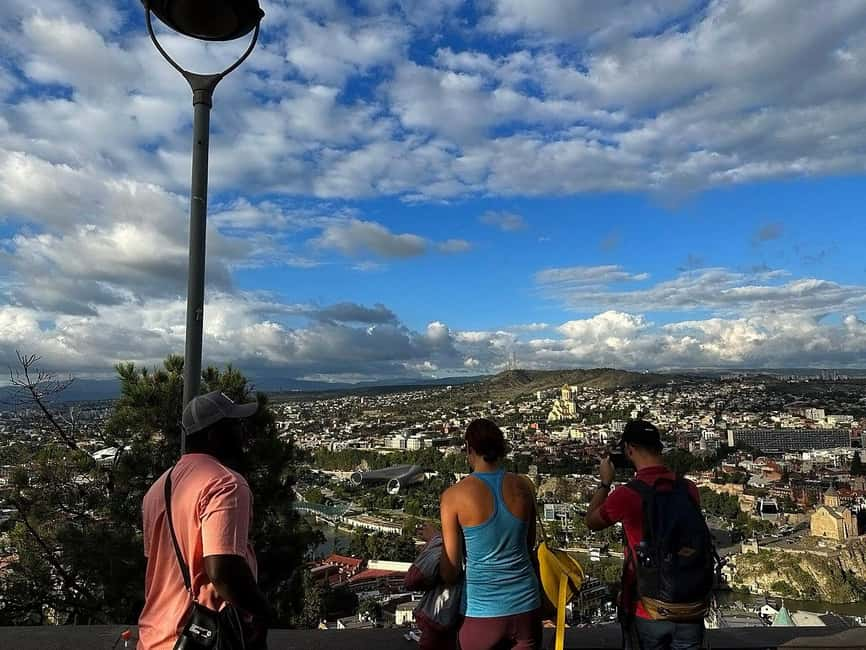
From the hill, you can look over Tbilisi’s rooftops, the Mtkvari River, and Narikala Fortress. This is the clearest visual reward of the afternoon. You have moved from narrow lanes and enclosed courtyards to an open view that shows how the city is arranged around the river and hills.
The final location is also where the tour ends, so plan your next step from there. The route does not include a hotel transfer or return transport. Your guide can likely help with general orientation, but no onward transportation is included in the activity.
What $38 buys you
At $38 per person, this is not the cheapest way to wander through Tbilisi, since many old-town streets and exterior landmarks can be seen independently. The value comes from the guide’s connections between places: Christianity and Georgian identity, the Tamada and social customs, the synagogue and mosque, and the Mother of Georgia and ideas of strength and welcome.
The included cable-car ride also matters. You are paying for a compact route with a clear beginning and ending, not simply three hours of unstructured walking. If you are new to Tbilisi, the tour can help you get your bearings and collect useful suggestions for food and further sightseeing.
The strongest praise has gone to the guides, especially Shmagi for Spanish-language tours. His Spanish is described as excellent, and his practical advice about restaurants and activities is particularly useful at the start of a stay. English and Spanish are the available languages, so confirm your preferred language when booking.
The price does not include hotel pickup, hotel drop-off, or the bakery stop. The bakery cost is separate, and the published details do not clearly break out every possible expense at the wine stop. Carry cash and keep a little room in your budget.
Who will enjoy this walking tour
I would choose this tour if you want a broad first look at Tbilisi rather than a specialist study of one monument. It suits people who enjoy walking, short guided visits, cultural explanation, and a mix of serious history with food, wine, sculpture, and views.
It is also a good choice for Spanish speakers. The positive feedback about Shmagi’s language skills and friendly manner makes this a particularly practical option for Spanish-speaking visitors who want more than basic translation.
The tour is less suitable if you have a mobility impairment. The route uses old-town streets, includes a hilltop finish, and requires walking between many stops. It also depends on good weather. If poor weather cancels the experience, you can be offered another date or a full refund.
Wear comfortable shoes and bring water. A camera is useful outside, but remember that photographs are not allowed inside the church. Bring a head covering if needed, and avoid shorts so you can enter the religious sites without a problem.
Should you book it?
Book this tour if you want Tbilisi’s main old-town themes explained in one compact afternoon. The best reasons are the mix of church, synagogue, mosque, Georgian food and wine, Tamada traditions, and the included cable-car ride to the Mother of Georgia.
Skip it if you prefer slow museum visits, dislike walking on uneven or hilly streets, or already know the center well. For first-time visitors with three hours to spare, $38 is a fair price for a guided introduction, especially when the guide can add useful advice about what to eat and see next.
FAQ
How long does the Tbilisi Old Town tour last?
The tour lasts three hours, and travel time is included in that duration.
Where does the tour begin?
It begins at 17 Ioane Shavteli Street, beside the Berikaoba monument near the Ambassadori Tbilisi Hotel.
Where does the tour finish?
The tour finishes at the Mother of Georgia monument, also called Kartlis Deda.
Is the cable-car ride included?
Yes. The cable-car ride to Narikala mountain is included in the tour.
Which languages are available?
The tour is available in English and Spanish.
Does the tour include hotel pickup and drop-off?
No. Hotel pickup and drop-off are not included.
Is food included in the price?
No. The bakery stop is not included in the price. You may be able to try khachapuri or lobiani, but you should pay separately.
Can I take photos inside the churches?
No. Photography inside the church is not allowed.
Is there a dress code?
Yes. Women need a head covering, and shorts are not allowed in the church.
What happens if bad weather cancels the tour?
If poor weather causes cancellation, you will be offered a different date or a full refund.
Just added around the world
- The Queenstown Story @ Cobh Heritage Centre , Great Stories of Emigration.★ 4.5 · 181 reviews
- Visit 16 Sites Key Historical Sites And Experience Cobh Rebel Tours★ 5.0 · 167 reviews
- Historical Bicycle Tour of Dunedin★ 5.0 · 44 reviews
- Cincy Brunch History and Streetcar Tour with Riverside Food Tours★ 5.0 · 108 reviews
- 2.5 Hour Kayaking with Manatee and History Tour in Tarpon Springs★ 5.0 · 24 reviews
- Private Tour in Chichen Itza Official History Guide★ 5.0 · 36 reviews
- Dazu Ancient Rock Carvings Private Tour Extension★ 5.0 · 24 reviews
- Chicago River Architecture Tour Aboard a Historic Yacht★ 5.0 · 45 reviews
Old Town & Historic Centre Walks, compared.
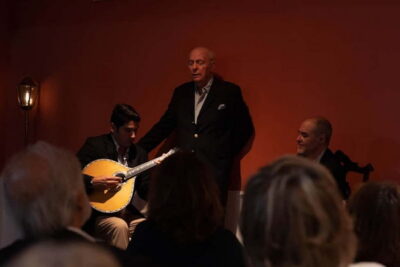
Live Fado Show with Port Wine in Historic Center
Read our review →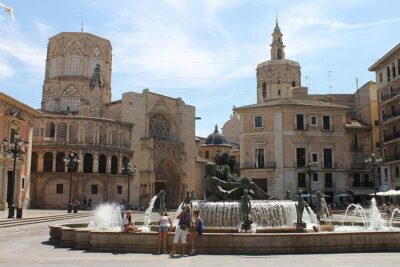
Valencia Old Town Tour with Wine & Tapas in 11th Century Historic Monument
Read our review →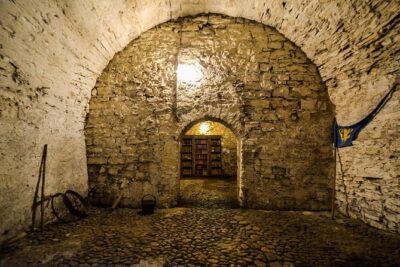
Prague Old Town, Medieval Underground and Dungeon Historical Tour
Read our review →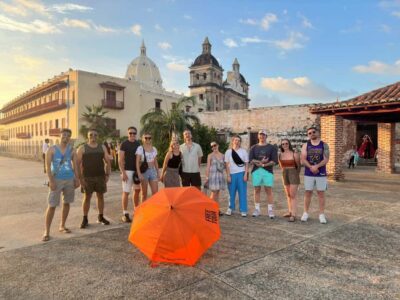
Historic Center and Getsemaní Shared Walking Tour
Read our review →
Old Town Walking Tour History and Tales in Edinburgh
Read our review →
Philadelphia Old City Historic Walking Tour with 10+ Top Sites
Read our review →
Saadian Tombs & Bahia Palace, Medina Guided Tour
Read our review →Browse the lists this tour appears in