
Review · MAHARASHTRA
South Mumbai: Cultural Heritage Walking Tour
Mumbai tells its story one street at a time. This 2.5-hour South Mumbai walk links the Gateway of India, Kala Ghoda, Horniman Circle, and Chhatrapati Shivaji Maharaj Terminus with a local English-speaking guide. I like the small group of up to six and the simple cup of chai, which adds a welcome local pause to the history and architecture.
I also like the short bus ride to CSMT, since it gives you a brief taste of ordinary city transport instead of keeping you on a polished sightseeing route. The main drawback is the amount of walking, plus uneven city conditions and no wheelchair access. Comfortable shoes are essential.
Key points at a glance
- A compact South Mumbai route: See major landmarks across the Fort, Kala Ghoda, and Colaba areas in 2.5 hours.
- Small-group guiding: With no more than six participants, you have a better chance to ask questions and hear the guide clearly.
- Chai included: A short tea break adds a local touch without turning the tour into a food-focused outing.
- Architecture takes center stage: Expect Gothic, Art Deco, colonial-era, and civic buildings rather than only famous photo stops.
- Local transport included: A short bus ride connects the Asiatic Society area with Chhatrapati Shivaji Maharaj Terminus.
- Strong guide record: Dawood, Dinesh, Lokesh, Loki, Maze, Ganesh, and others have been praised for clear explanations, humor, patience, and help beyond the walk itself.
Why this South Mumbai walk works
South Mumbai can feel like several cities pressed together. Grand hotels and civic buildings sit near busy roads, old libraries, college buildings, financial offices, and local transport routes. A guide helps you connect those pieces instead of simply passing them with a camera in hand.
At $16 per person, the tour is priced well for a small-group experience that includes a guide, chai, walking, and the bus ride. You are not paying for entry to a long list of interiors. You are paying for interpretation, a sensible route, and the chance to understand why these buildings matter.
The strongest part is the human explanation. Guides including Dawood, Dinesh, Lokesh, Loki, Maze, and Ganesh have been praised for giving detailed background, answering questions, keeping a good pace, and adding humor. Dawood was also helpful with practical arrangements after the tour, including helping organize a taxi.
The format suits you best if this is your first visit to Mumbai or if you want a clear introduction before exploring alone. It is less suitable if you want a slow photography walk, extensive interior visits, or a tour with no public transport.
More History Walking Tours in India
- Fontainhas Heritage Walk by Make It Happen
★ 5.0 · 2,834 reviews - The Great Indian Food Tour: Old Delhi Food and Heritage Walk
★ 5.0 · 1,698 reviews - Old Goa Heritage Walk by Make It Happen
★ 5.0 · 797 reviews
Meeting at the Gateway of India
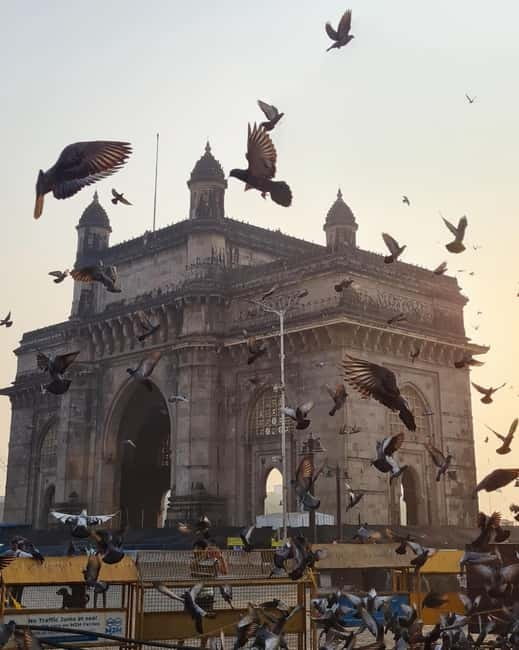
The usual meeting point is at the entrance to Pizza Express beside the Gateway of India. Check the selected option carefully, since the starting location can vary.
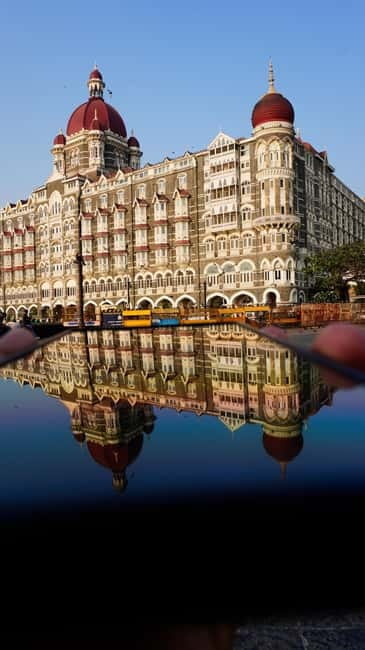
The Gateway is a strong place to begin. It gives you an immediate sense of Mumbai’s public face: monumental architecture, a major waterfront setting, and the famous Taj Mahal Palace hotel nearby. The guided stop lasts about 20 minutes, long enough to hear the key background and get oriented.
You should expect people, traffic, and plenty of activity around this part of the city. That is part of the setting, but it also means you will want to stay close to the guide. Bring an ID card, with a copy accepted, as requested for the activity.
The Taj Mahal Palace is a pass-by stop of roughly five minutes rather than a hotel visit. That distinction matters. You will see the exterior and hear about its place in Mumbai’s story, but this is not a chance to tour the hotel’s rooms or spend time inside.
From the Yacht Club to Mumbai’s civic buildings
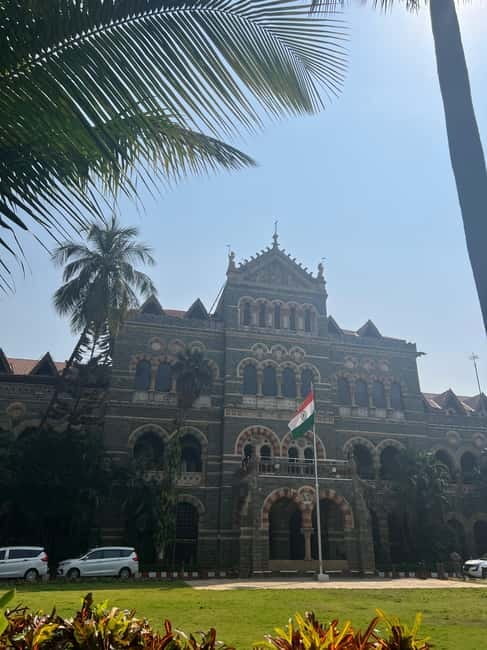
The next stretch brings you past the Royal Bombay Yacht Club, the Maharashtra State Police Headquarters, and the former palace of a Maharajah. Each stop is brief, around five minutes, so the guide’s commentary does much of the work.
This is where a good guide earns the fee. Without context, these can look like attractive old buildings on a busy street. With clear explanations, you begin to notice how different institutions shaped South Mumbai: clubs, government offices, royal connections, education, and public culture.
The pace is brisk but not punishing. You are moving between nearby sights rather than walking for long periods with no stops. Still, the tour is outdoors and city streets can be tiring, especially in warm conditions. I would wear supportive shoes and carry only what you need.
The walk then reaches Elphinstone College, one of India’s best-known colleges, and the David Sassoon Library. Both receive short visits of about five minutes. The library is especially useful for showing how learning and public institutions fit into the area’s architectural story.
You should not expect a long interior tour at either place. The value is in seeing them as part of a connected district and learning what to look for as you continue.
Kala Ghoda and the Oval Maidan
The 15-minute guided stop in Kala Ghoda is one of the more substantial parts of the route. This district is closely tied to Mumbai’s cultural and architectural identity, and the guide can help you read its buildings rather than treat it as a quick photo backdrop.
The name, the buildings, and the surrounding streets give the area a distinct character. You will spend enough time here to ask questions and take in the setting, though the schedule still keeps moving.
Next comes Oval Maidan, with around 10 minutes of guided attention. The open ground gives you a useful change of scale after the close-packed streets. It also helps you see the relationship between the city’s Gothic architecture and its open public spaces.
The tour then touches Mumbai’s Gothic and Art Deco Ensembles. This is one of its best features for anyone who likes architecture. You get more than one style and period in a compact area, with the guide pointing out the difference between the forms and the city’s changing identity.
Because the stop is part of a larger route, do not expect a specialist architectural lecture on every building. You will get a broad, useful reading of the district, with enough detail to make later independent walks more rewarding.
More Local Culture and Traditions Tours in India
- Old Delhi Food, Heritage&Cultural Walk with Rickshaw ride to Masterji Kee Haveli
★ 5.0 · 742 reviews - The Cultural And Historical Walking Tour in Margao
★ 5.0 · 280 reviews - Experience Bangalore – City Tour, Authentic Food & market (Food/Culture/History)
★ 5.0 · 156 reviews - Old Delhi Walking Tour: Food, Culture & Spice Bazaars
★ 5.0 · 94 reviews
Chai, Horniman Circle, and the Asiatic Society
A cup of flavorful chai is included during the walk. It is a small detail, but it improves the rhythm of the morning. You get a pause from the pavement, a taste of a familiar local drink, and a moment to talk with the guide and the other participants.
The chai is not the main attraction, and this is not a food tour. Think of it as a practical break that makes a walking route feel less formal. It also gives you a simple local experience without adding another booking or extra cost.
The route continues around Horniman Circle and the Asiatic Society of Mumbai. The Asiatic Society stop includes about 10 minutes of walking before the short bus ride. This section brings together civic space, historic architecture, and the city’s public intellectual life.
The bus ride lasts about 10 minutes. I like this choice because it keeps the route from becoming a long, exhausting march. It also adds a small piece of daily Mumbai to an otherwise heritage-heavy morning.
You should be ready to board and travel as part of a group. The bus is a practical link between sights, not a scenic ride with reserved seats or a private vehicle.
Arriving at Chhatrapati Shivaji Maharaj Terminus
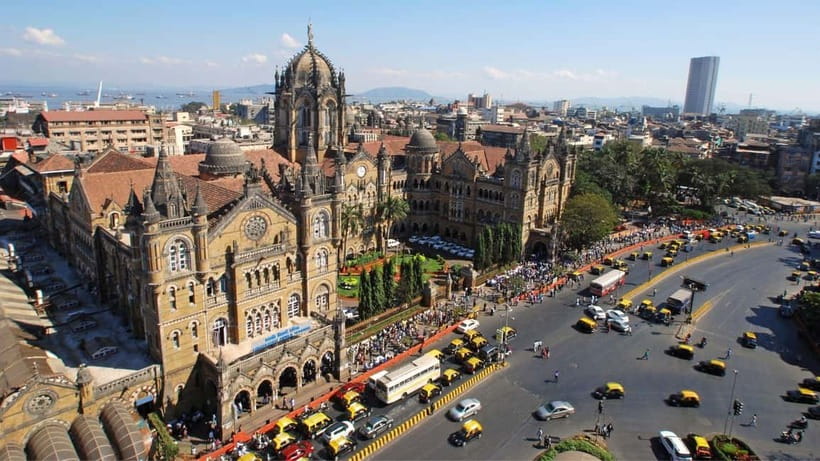
The final major stop is Chhatrapati Shivaji Maharaj Terminus, often called CSMT. The guided visit lasts about 10 minutes, and the station is recognized as a UNESCO World Heritage Site.
The brief stop works as a closing view of Mumbai’s grand public architecture. It also gives the tour a strong finish because the station is not just a historic building. It remains part of the city’s transport life, placing heritage beside everyday movement.
Ten minutes is enough for an introduction, key details, and photographs, but not a full study of the building. If CSMT is high on your list, plan to return on your own for more time.
The tour can finish at one of three drop-off points: Mumbai Cruise Pirs, the CSMT Viewing Stage, or Mumbai port. No hotel pickup or hotel drop-off is included, so you will need to arrange your own way to the meeting point and onward transport.
What the guides add
The guide quality is the clearest strength of this experience. Dawood has been praised for detailed explanations, patience, humor, and a helpful manner. Dinesh has been noted for explaining the history and architecture of each stop while keeping the walk enjoyable.
Other guides named by participants include Lokesh, Loki, Maze, Ganesh, and guides whose names were not remembered. The repeated pattern is useful: the tour depends heavily on spoken explanation, and the guides have generally been described as friendly, clear, and well prepared.
Maze, in particular, was praised for enthusiasm and detailed accounts of the city’s past. Lokesh was noted for answering questions and helping participants understand the city. Loki also helped arrange a taxi at the end for one participant.
Since this is a group experience, the exact personality and style will depend on who leads your departure. The small maximum of six helps. You are less likely to disappear at the back of a large crowd, and there is more room to ask about a building or local custom.
Pace, comfort, and practical limits
The advertised duration is 2.5 hours. The route includes many short stops, one longer guided visit at the Gateway, a 15-minute Kala Ghoda section, a 10-minute Oval Maidan stop, chai, and a short bus ride.
That makes it a good overview, not an exhaustive tour. You will cover a lot of ground and gather useful context, but you will not spend long periods inside museums, libraries, colleges, or the terminus.
The walk is not suitable for wheelchair users, and baby strollers are not allowed. The activity provider recommends comfortable footwear, which is practical advice rather than a formality. You should expect a group walking tour through an active city, with brief pauses rather than a fully accessible route.
The English guide is live, not an audio recording. That is valuable if you like asking questions, but it also means you need to stay near the guide and listen while standing in changing street conditions.
Cancellation is flexible up to 24 hours before the tour for a full refund, and you can reserve now and pay later. Those terms are useful if your Mumbai schedule may change, though the key decision remains whether you want a fairly active outdoor morning.
Who should book this tour?
I would choose this tour if you want a first look at South Mumbai with enough history to make the buildings meaningful. It suits solo visitors, couples, friends, and anyone who prefers a small group over a large coach.
It is also a good fit for cruise passengers because the route begins near the Gateway of India and can finish at the cruise piers or Mumbai port. Check the timing carefully before booking, since the tour does not include hotel or port pickup.
Architecture fans will appreciate the mix of Gothic, Art Deco, civic, educational, royal, and transport buildings. First-time visitors will appreciate having the route explained in plain terms. You will also get a little local flavor from the chai and bus ride.
I would look elsewhere if you need wheelchair access, dislike walking, want extensive time inside each landmark, or prefer a private guide and a flexible schedule. The tour is designed as a compact overview, and its value comes from the range of places covered in a short time.
FAQ
How long does the South Mumbai Cultural Heritage Walking Tour last?
The tour lasts 2.5 hours.
How much does the tour cost?
The listed price is $16 per person.
Where does the tour meet?
The meeting point is at the entrance of Pizza Express next to the Gateway of India. The exact starting location can depend on the selected option.
What language is the tour offered in?
The live tour guide speaks English.
How many people are in the group?
The group is limited to six participants.
Is chai included?
Yes. One cup of chai is included in the tour.
Does the tour include hotel pickup and drop-off?
No. Hotel pickup and drop-off are not included.
Is the tour suitable for wheelchair users or baby strollers?
No. The tour is not suitable for wheelchair users, and baby strollers are not allowed.
Should you book it?
Book this walk if you want a well-priced introduction to South Mumbai that combines major sights with useful local context. The strongest reasons are the small group, the range of architecture, the chai stop, and the short bus ride to CSMT.
At $16, it offers good value for a 2.5-hour guided route, especially if you are new to the city. Wear comfortable shoes, keep your schedule flexible, and choose it for interpretation and broad coverage rather than long interior visits.
Just added around India
- The Great Indian Food Tour: Old Delhi Food and Heritage Walk★ 5.0 · 106 reviews
- Stories of Jew Town: Guided Heritage Walk in Kochi★ 4.7 · 30 reviews
- Shimla: Guided Walk Tour-Heritage, Culture & Colonial Trail★ 4.7 · 28 reviews
- Panaji: Heritage Walking Tour in Fontainhas Latin Quarter★ 4.9 · 31 reviews
- Old Delhi: Spices, Heritage and Bazaars Walking Tour★ 5.0 · 173 reviews
- 3-Hour Old Delhi Heritage Walking tour with Rickshaw ride★ 4.6 · 158 reviews
- Madurai: Heritage & Cultural Trails Guided Walking Tour★ 4.3 · 21 reviews
- Kolkata: Guided Heritage Walking Tour★ 4.6 · 23 reviews
Local Culture & Traditions Tours, compared.

Amsterdam Food and Cultural Tour with Tastings
Read our review →
Sevilla Food Tour: Tapas, Wine, History & Traditions
Read our review →
Tromsø: Reindeer Camp and Sami Cultural Tour with Lunch
Read our review →
Half Day Dominican Republic Cultural Tour : Small Group
Read our review →
Ultimate Melbourne Walking Tour: History, Laneways & Culture
Read our review →
Tromsø: Sámi Reindeer Sledding and Sami Cultural Tour
Read our review →
Kyoto Gion: 2-Hour Geisha Culture & History Walking Tour
Read our review →
Marrakech Historical and Cultural Tour – Half Day City Tour
Read our review →Browse the lists this tour appears in