
Review · AZORES
Ponta Delgada: Historical Walking Tour
History has a local accent here. This three-hour walking tour links Ponta Delgada’s markets, museums, churches, gardens, theaters, and harbor defenses into one useful introduction to São Miguel. I like the route’s variety, especially the stop at Mercado da Graça and the finish at Mercado CORES, where Azorean crafts and creative work add a modern note. I also like that entry to the listed attractions, a guide, and insurance are included in the $41 price.
The main consideration is the guide’s delivery. Manuela has earned especially warm praise for her friendly, well-informed approach, but the quality of English can vary. Saturday departures may also find some stops closed, and one account found the tone more serious than lively. This is a history-focused walk, not a fast-paced sightseeing sprint.
Key points at a glance
- Three hours on foot: The route covers central Ponta Delgada at a steady walking pace, with several cultural and historic stops.
- Starts beside Luís de Camões: Meet at the Ernesto do Canto Public Library, next to the bust of Portugal’s famous poet.
- Market-to-museum variety: Mercado da Graça, the Carlos Machado Museum, churches, gardens, theaters, and fortifications all appear on the route.
- A strong Azorean focus: The tour explains local religious life, political autonomy, literature, maritime history, and daily culture.
- Accessible and multilingual: The tour is wheelchair accessible, with live guiding in English, Portuguese, Scots Gaelic, and Spanish.
- Best for orientation: At $41, it offers solid value if you want context before exploring Ponta Delgada independently.
A useful first look at Ponta Delgada
Ponta Delgada is compact enough to explore on foot, but its story has many layers. Portuguese poetry, Catholic traditions, island politics, maritime defense, local produce, and modern creative work all appear within a fairly small central area.
That is the strength of this route. You are not simply ticking off a church, a theater, and a fort. The guide connects them. A market helps explain daily life. A garden opens a conversation about literature or government. A military fort points back to the sea and to the island’s strategic position.
I would treat this as a city orientation walk rather than a specialist history seminar. You get a broad picture of Ponta Delgada and São Miguel, then you can return to the places that caught your interest.
The tour is also designed with accessibility in mind. It is described as wheelchair accessible, which is important for anyone who wants a central-city introduction without arranging separate transport. Still, a walking tour always calls for comfortable shoes and water. Wear clothes suited to three hours outside, even though several stops are indoors.
More History Walking Tours in Portugal
- Lisbon: History, Stories and Lifestyle Walking Tour
★ 4.8 · 10,902 reviews - Porto: Historic City Center Walking Tour
★ 4.7 · 1,172 reviews - Porto: Historical Center Walking Tour
★ 4.8 · 898 reviews
Meeting Luís de Camões at the Ernesto do Canto Library
The starting point is the Ernesto do Canto Public Library, on Rua Ernesto do Canto, beside the bust of Luís de Camões. This gives the walk a literary opening rather than dropping you straight into a generic city square.
Camões is one of Portugal’s best-known poets, so the meeting point places Ponta Delgada within the wider Portuguese cultural world from the first minute. It also gives you a clear landmark to look for, which is helpful in a city you may not know yet.
The early part of a walking tour matters. A good introduction helps you understand street names, public buildings, and the relationship between the old center and newer parts of town. Here, the guide begins with the city itself, not just a list of dates.
If you arrive early, use the time to get water and settle into comfortable footwear. There is no hotel pickup or drop-off, so you need to reach the library under your own arrangements.
Mercado da Graça: where the city feels most local
The Mercado da Graça is one of the route’s best stops because it puts history into everyday terms. Its colors, smells, and produce reflect the Azorean way of life more directly than a formal monument can.
This is where I would pay close attention to the guide’s explanations. A market can show you how an island community eats, trades, and presents its local identity. It also breaks up the architecture-heavy parts of the walk with a more sensory stop.
Do not expect a dedicated lunch break. Food is not included, and the tour is built around movement and interpretation rather than a meal. If you want time to browse or eat at length, plan to return to the market after the tour.
The market also makes a good early reference point. Later, when the walk turns toward museums, gardens, and government buildings, you have already seen one side of Ponta Delgada’s daily rhythm.
Teatro Micaelense and the Carlos Machado Museum
The Teatro Micaelense represents the performing arts and the cultural life of the Azores. Its inclusion helps show that Ponta Delgada is more than a port city with old churches. Theater, public culture, and island identity have a place here too.
The next major stop is the Carlos Machado Museum. This is where the tour brings together natural history and regional culture. The Azores are known for their distinct island environment, and the museum offers a way to understand local biodiversity alongside human traditions.
The museum stop adds welcome depth to the route. Streets and facades can tell you how a city looks, but museum displays can explain what makes the islands different. If you are interested in nature, local customs, or the wider archipelago, this may be one of the most useful portions of the tour.
Entry to the listed attractions is included, but opening hours matter. One important practical point is that Saturday tours may encounter closed stops. If the museum or another indoor site is high on your list, confirm the operating schedule before booking a Saturday departure.
Same place, a different slice of the past:
- Douro Valley: Historical Sites, Wine Experience, Lunch & Cruise
★ 5.0 · 5,133 reviews - Lisbon: Live Fado Show with Port Wine in Historic Center
★ 4.7 · 4,166 reviews - Porto: An Intimate Fado Show in a Historical Tavern
★ 4.8 · 2,055 reviews - Lisbon: Fado Show with Wine in a Historic Venue
★ 4.8 · 1,294 reviews
Igreja do Colégio and Antero de Quental’s literary world
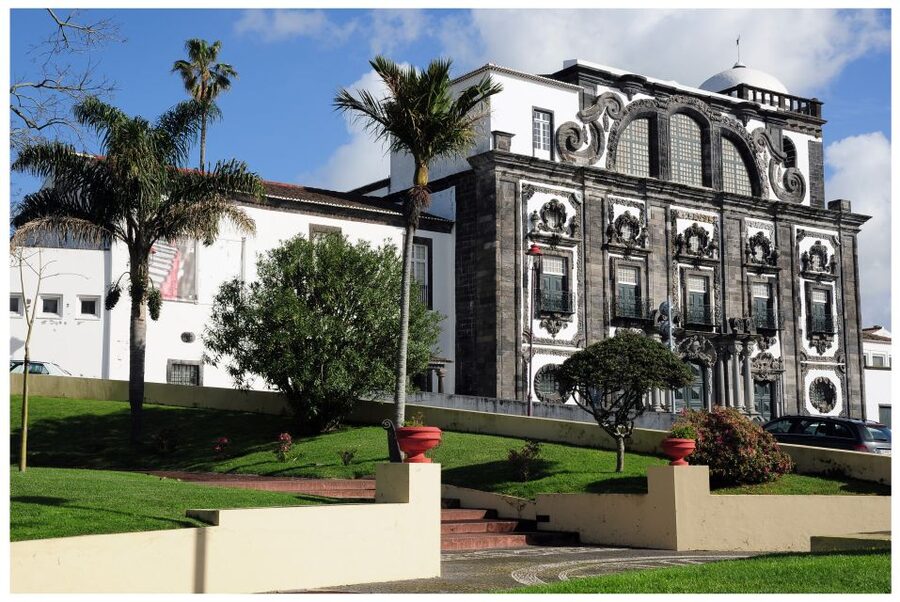
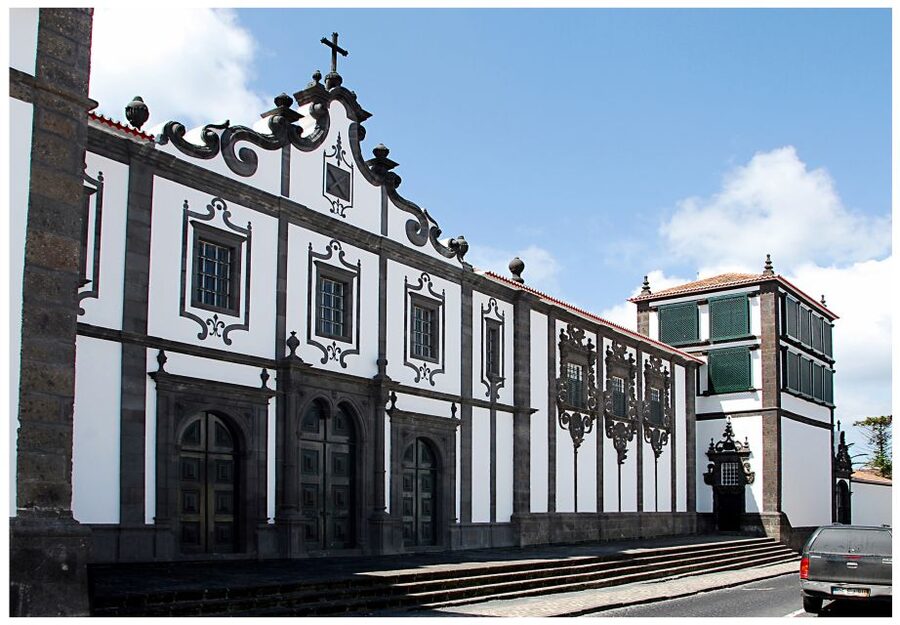
The Igreja do Colégio brings the walk back to religious architecture and local history. The church is paired with the Antero de Quental Garden, linking physical places to one of the Azores’ important literary figures.
Antero de Quental’s influence on Portuguese literature gives the tour another angle. You are not only looking at buildings. You are hearing how Ponta Delgada contributed to Portuguese intellectual life.
The route then includes the Public Library, where the story of Antero de Quental continues. This pairing works well because the garden and library create a natural setting for discussing a writer’s place in the city. It also gives the walking tour a pause from grand institutional buildings.
There is one point to understand before booking. Religious stories may form part of the guide’s interpretation, especially around churches and local celebrations. One account found the tour too focused on biblical stories and wanted more strictly historical explanation. If you prefer a secular, fact-heavy presentation, ask about the guide’s approach before you commit.
That does not make the religious material a flaw for everyone. Catholic tradition is part of São Miguel’s public life, and leaving it out would give you an incomplete picture. The key is knowing that the tour may blend faith, local memory, and documented history.
Padre Sena Freitas Garden and Palácio da Conceição
The Padre Sena Freitas Garden and Palácio da Conceição shift the subject from literature to government. Here, you learn about Azorean political autonomy and how authority is divided among the islands.
This is a valuable stop because island politics can be hard to grasp from a casual visit. The Azores are not simply a small Portuguese destination floating far from the mainland. Their island geography affects administration, public life, and the way residents think about their place within Portugal.
The garden also gives the walk a more open setting. Three hours of streets and interiors can feel tiring, so outdoor pauses help. You can listen, look around, and let the information settle before moving on.
The tour does not present only postcard views. It tries to explain how Ponta Delgada functions as the capital of São Miguel and as an important center within the wider Azores. That wider context is one reason the $41 fee can make sense for first-time visitors.
Coliseu Micaelense and the island’s cultural pulse
The Coliseu Micaelense is described as one of the largest theaters in the archipelago. Its size and role underline the importance of public entertainment in island life.
This stop complements Teatro Micaelense. Instead of treating culture as a decorative extra, the route gives it real space. You see how theaters help connect people across an island community, where public events can carry more weight than they might in a much larger mainland city.
The pace here depends heavily on the guide. A lively guide can turn a building into a story about music, performances, and local pride. A more reserved presentation may feel dry, especially if the group is tired. One account described the tour as informative but lacking energy, so do not expect constant jokes or a theatrical performance from the guide.
For many people, that calm approach will be fine. The walk is better suited to listening and observing than to a packed schedule of entertainment.
Campo de São Francisco and Forte de São Brás
At Campo de São Francisco, the tour reaches one of Ponta Delgada’s important public spaces. The area is tied to the Santo Cristo festivities, described as the second-largest religious celebration in Portugal.
That detail gives the square a special place in local life. It is not just an attractive open area. It is connected to a major event that draws strong religious and community feeling.
The nearby Forte de São Brás adds a maritime and military chapter. The fort reflects Ponta Delgada’s relationship with the sea and the need to protect an island port over the centuries. This is where the city’s geography becomes part of the story: São Miguel’s position made the harbor useful, but also strategically important.
The combination of a religious festival site and a coastal defense work is typical of the tour’s broad approach. You move from ceremony to military history, from public gathering to strategic protection, without leaving the central city.
You will want good shoes at this point. Even an accessible route can become tiring after several hours, particularly if you are arriving after a flight or carrying a day bag.
Portas da Cidade and Ponta Delgada’s civic heart
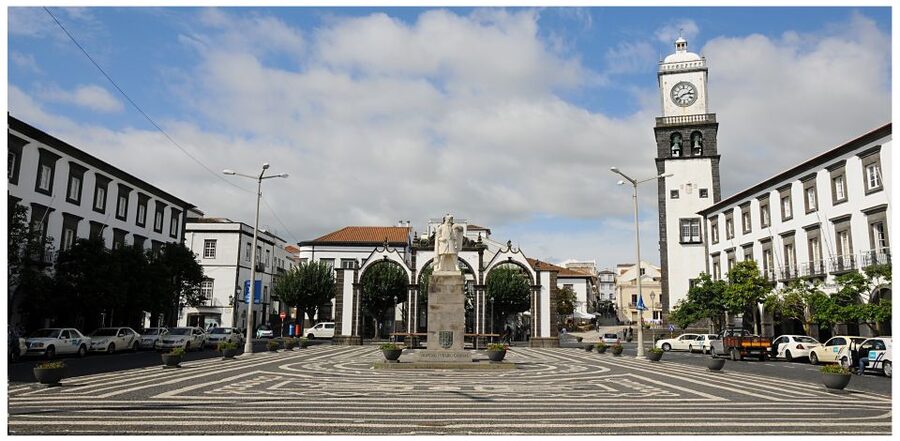
The tour concludes its main city circuit at the Portas da Cidade, the symbolic gateway to the Azores. This is one of the clearest orientation points in Ponta Delgada and a natural place to understand the city’s public image.
Nearby, the Câmara Municipal and Igreja Matriz de São Sebastião form the civic and religious heart of the city. The contrast is useful. One building represents municipal government, while the church reflects long-standing religious life.
Ending here gives you a strong sense of central Ponta Delgada. You have seen the city through markets, art, literature, religion, politics, defense, and public administration. That is a lot to cover in three hours, so the explanations may stay broad rather than highly detailed.
Take note of places you want to revisit. A walking tour moves on when the guide does, and you may not have enough time to inspect every facade or interior closely.
Mercado CORES and the modern Azorean identity
The final return to Mercado CORES, home to Azores for All, gives the tour a contemporary finish. Instead of ending only with old stone and historic institutions, the route closes with local crafts and creative projects celebrating Azorean identity.
I like this choice. It suggests that local culture is not frozen in the past. The Azores have traditions worth preserving, but residents also interpret those traditions through new designs, projects, and forms of expression.
The finish may also be useful if you want ideas for gifts or a closer look at local creative work. The information provided does not promise a shopping session, so think of it as a final cultural stop rather than a guaranteed retail experience.
By this point, you should have enough context to explore independently. Ponta Delgada is easier to read after you understand why its market, gardens, government buildings, churches, and fortifications sit where they do.
Is $41 a fair price for three hours?
At $41 per person, the tour is not the cheapest way to walk around Ponta Delgada. You can see many exterior sights without paying for a guide. The value comes from the structure, interpretation, and included admission to the listed attractions.
You also receive insurance covering personal accident and liability. Lunch, hotel pickup, and drop-off are not included, so budget for your own food and for reaching the meeting point.
I think the price is reasonable if you want an organized introduction and plan to visit museums or other included sites. It is less compelling if you prefer to wander alone, read your own guidebook, and spend as long as you like at each stop.
The 4.4 rating from 41 reviews points to a generally positive experience, but not a flawless one. The strongest praise goes to the local character of the guiding and to Manuela, who was described as friendly and highly informed. The main warnings concern English clarity, a serious tone, and possible closures on Saturdays.
Who should book this walking tour?
I would choose this tour if you have only a short time in Ponta Delgada and want a broad introduction. It suits people who enjoy museums, public buildings, literature, religious history, and local politics more than those who want a food tour or a photography walk.
It is also a good fit if you want to understand São Miguel beyond its famous natural sights. The tour focuses on the capital, its people, and its institutions, not on volcanic lakes or countryside scenery.
Families, older adults, and wheelchair users may appreciate the accessible format, though the route still lasts three hours on foot. If you have limited stamina, confirm the practical details with the provider before booking.
The language choice is another useful advantage. English, Portuguese, Scots Gaelic, and Spanish are offered. Still, if clear English is essential, ask which guide is scheduled. Manuela receives particularly strong praise, but she may not lead every departure.
FAQ
How long does the Ponta Delgada Historical Walking Tour last?
The tour lasts three hours.
Where does the tour begin?
It begins at the Ernesto do Canto Public Library, next to the bust of Luís de Camões.
Where does the tour finish?
It finishes at Mercado CORES, the home of Azores for All.
What languages are available?
Live guiding is available in English, Portuguese, Scots Gaelic, and Spanish.
Is the walking tour wheelchair accessible?
Yes, the activity is described as wheelchair accessible.
What is included in the price?
The price includes a guide, entry to the listed attractions, and personal accident and liability insurance.
What should I bring?
Bring comfortable shoes, water, and comfortable clothing. Lunch and transportation to or from the meeting point are not included.
Should you book it?
Book this tour if you want Ponta Delgada explained rather than simply photographed. The route covers an unusually broad mix of local life, museums, literature, faith, politics, culture, and maritime history, and the included admissions make $41 a fair price for a three-hour introduction.
I would avoid booking blindly for a Saturday if a museum visit matters to you. I would also check the guide’s language ability and style if you want a highly energetic or strictly secular tour. For most first-time visitors who want a grounded look at São Miguel’s capital, this is a useful starting point, especially when Manuela is leading.
Just added around Portugal
- Arrábida: Beach, Nature & History★ 5.0 · 89 reviews
- Albufeira Wine Tasting: Boutique Winery Tour & Historic Silves★ 5.0 · 380 reviews
- Albufeira History Walking Tour with Wine and Tapas★ 5.0 · 47 reviews
- Private jeep safari with historical highlights of Silves town★ 5.0 · 33 reviews
- Private Historical Tour in Algarve★ 5.0 · 21 reviews
- Albufeira Wine Tour: 2 Vineyards, 6 Tastings & Historic Silves★ 5.0 · 123 reviews
- Historical Algarve – Full-Day Trip★ 4.5 · 150 reviews
- Full Day Guided Tour Historical Algarve Finest★ 4.5 · 370 reviews
History Walking Tours, compared.
History and Hauntings of Salem Guided Walking Tour
Read our review →
Freedom Trail History Small Group Walking Tour
Read our review →
Historic Charleston Guided Sightseeing Walking Tour
Read our review →
Tapas Walking Tour with Food, Wine, and History
Read our review →
Savannah History and Haunts Candlelit Ghost Walking Tour
Read our review →
A History of Terror – Belfast City Centre Walking Tour
Read our review →Browse the lists this tour appears in