
Review · OSLO MUNICIPALITY
Oslo: Historic Myths & Legends Evening Walking Tour
Oslo’s old streets have plenty of secrets. This two-hour evening walk links Norse folklore with real places, from City Hall and Christiania Torv to Akershus Fortress and Bankplassen. I like the mix of trolls, Vikings, prisoners, thieves, and medieval justice. It gives you more than a quick look at Oslo’s buildings.
I also like how well the tour works as a first introduction to the city. Guides such as Maria and Anastasia have earned repeated praise for their humor, clear English, local tips, and lively storytelling. The main drawback is practical: cold wind, darkness, cobblestones, and uneven walking can make the tour tiring, especially in winter.
Key points to know before you book
- Norse myths meet city streets: Hear stories of trolls, nisse, huldra, ghosts, and underground kingdoms at the places connected with them.
- City Hall starts the story: Look for wooden friezes showing Viking beliefs and important ideas from Norway’s past.
- Akershus Fortress adds a darker edge: Learn about medieval defenses, prisoners, punishment, and the people who met grim fates behind its walls.
- Bankplassen brings crime into the tale: The walk covers audacious thefts, robberies, and Oslo’s changing system of justice.
- The guides are the main attraction: Maria and Anastasia are often praised for warmth, humor, strong English, and answers to questions.
- Dress for the hour, not the season on paper: Winter walks can be below freezing, with sharp wind. Comfortable shoes are essential year-round.
What kind of Oslo tour is this?
This is a story-led city walk rather than a formal museum tour. You move through central Oslo while your guide explains how old beliefs, famous crimes, royal power, religion, and local architecture fit together.
The myths are not treated as proof of ghosts or magic. That matters. The tour uses legends as a way to explain Norwegian culture and the fears, customs, and beliefs passed through generations. You hear about trolls, kind nisse, mysterious huldra, spirits, bells, flutes, and underground kingdoms, but the focus remains historical and cultural.
I think that balance makes the experience work for people who enjoy folklore but do not want a staged ghost hunt. You will not go underground, and this is not a spooky attraction built around jump scares. The mood comes from the old stories, evening light, and the real age of the places you visit.
At $42 per person, the value depends on what you want from a walking tour. If you only want quick photographs of Oslo’s main sights, you can see several of these places on your own for free. But the fee pays for two hours of connected storytelling, background, and local interpretation. A good guide turns familiar buildings into places with characters and consequences.
More History Walking Tours in the world:
- History and Hauntings of Salem Guided Walking Tour
★ 5.0 · 14,564 reviews - Lisbon: History, Stories and Lifestyle Walking Tour
★ 4.8 · 10,902 reviews - Boston: Freedom Trail History Small Group Walking Tour
★ 5.0 · 6,450 reviews
Starting beside Oslo City Hall
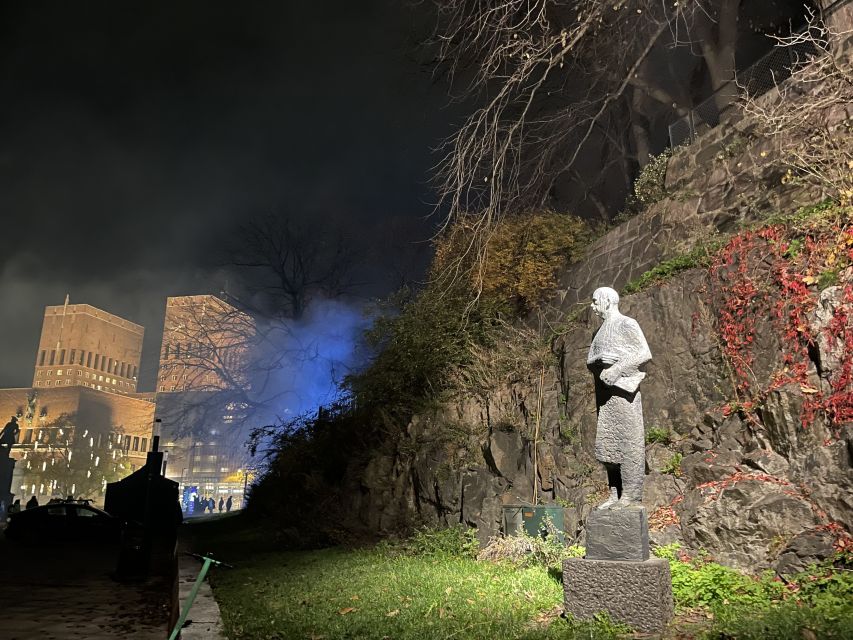
The meeting point is near the swans fountain at the entrance to Oslo City Hall on Fridtjof Nansen’s square. Take a moment to locate the fountain before the start time, since the square can feel different in the evening and winter darkness arrives early.
City Hall is more than a place to take a photograph of Oslo’s red-brick landmark. The tour uses its walls and wooden friezes to introduce Viking beliefs and Norwegian ideas about the past. These carvings help show how mythology appears in public art, rather than leaving Norse stories trapped in books or souvenir shops.
I like this opening because it gives you a cultural frame for the rest of the walk. You are not simply collecting dates about buildings. You are learning why legends still appear in Norwegian art and how old stories help explain the way people understood danger, nature, luck, and protection.
The opening also tends to be broad. The guide may move from Viking expeditions to local superstition and then to the history of Oslo itself. That range is useful if this is your first day in Norway, as several guides have also offered suggestions for other areas to see during the rest of your stay.
Christiania Torv and Oslo’s changing identity
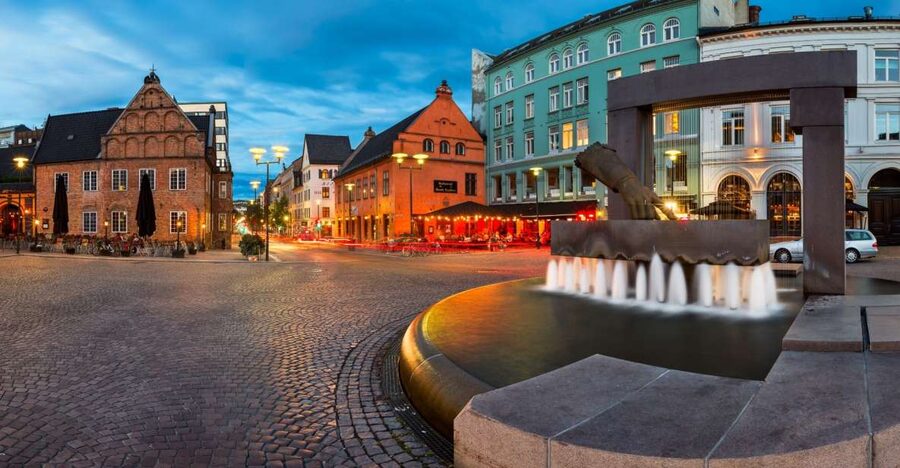
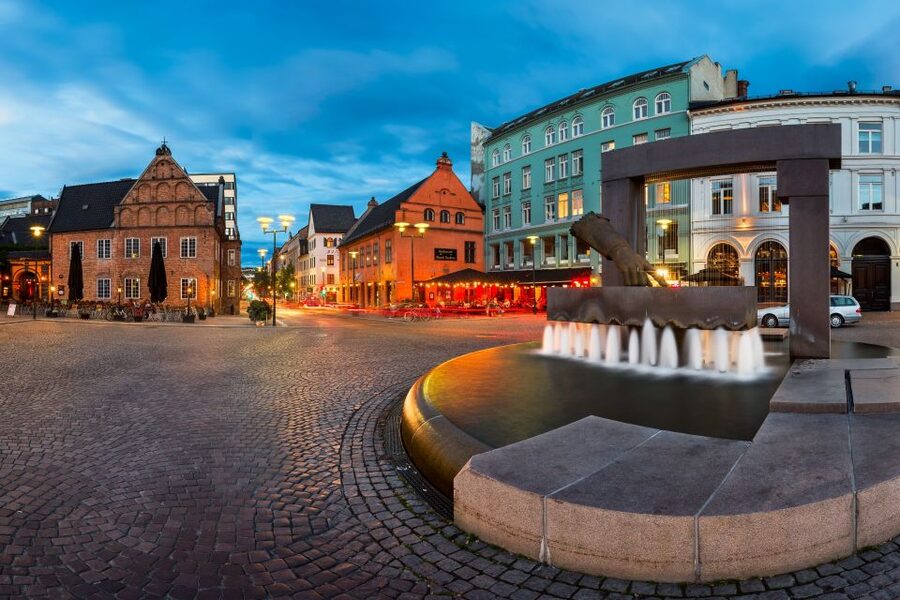
From City Hall, the group continues toward Christiania Torv, one of the historic squares in the old part of the city. This is where the walk shifts from general mythology to stories tied more closely to Oslo’s streets and past events.
Your guide explains how the square has changed over time and points out the marks left by earlier periods. The appeal is not just the architecture. Christiania Torv becomes a setting for tales about people who lived, worked, argued, traded, and sometimes broke the law in the city.
This part suits you if you like local history delivered through small details. Instead of hearing only about major kings or grand national events, you get episodes connected to ordinary city life and the decisions people made under older rules.
The tour does not promise a long stop at every sight. It is a walking experience, so the guide must keep the group moving while telling the story. If you want detailed architectural study or extended time inside historic buildings, this may feel too light. If you prefer a steady route with plenty of spoken context, the pace should feel manageable.
Akershus Fortress, defenses, and prisoners
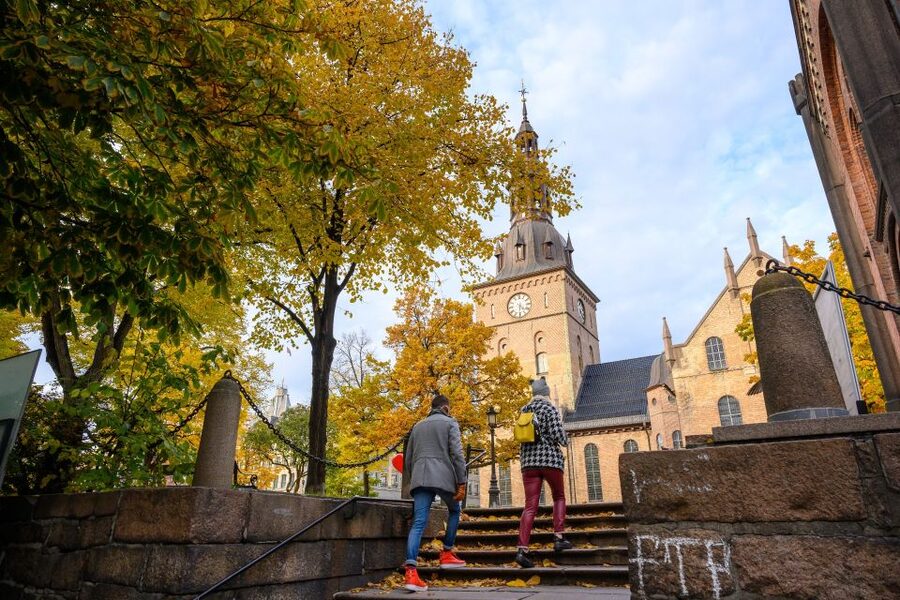
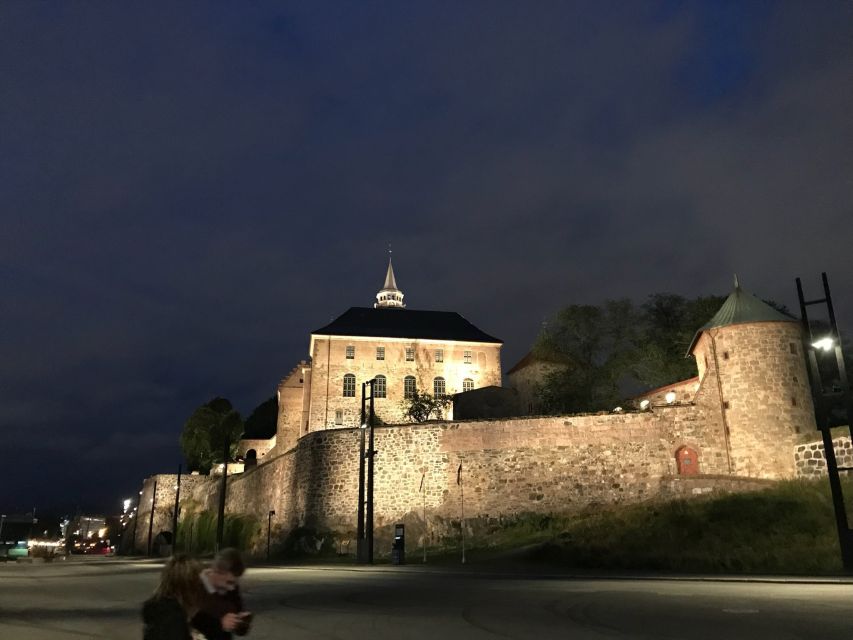
Akershus Fortress is the most dramatic stop on the route. Its walls and defensive design give the guide a strong setting for explaining how Oslo protected itself through different periods.
You hear about the fortress as a working military and political place, not just an old structure on the waterfront. The discussion includes its engineering, design, prisoners, and the fates of people held inside. That darker material gives the walk more weight than a simple collection of amusing legends.
I especially like this part for visitors who want history with human consequences. Walls and towers can seem impressive but remote. Stories about imprisonment and punishment help you picture how power operated inside them.
The exact access to fortress interiors is not specified, so you should think of this as a guided visit to and around relevant locations rather than a guaranteed tour of every room. Evening conditions may also affect what you can see. The strength here is the guide’s explanation, not a promise of extensive indoor sightseeing.
The fortress section can also carry a ghost-story mood, but the tour keeps its feet on the ground. You may hear about spirits connected with the site, yet the stated purpose is to explain the cultural meaning of those tales.
A few more history tours around the world worth a look
- Colosseum: Underground and Ancient Rome Tour
★ 4.7 · 12,691 reviews - London Small Group Tour of Historical Pubs
★ 5.0 · 10,422 reviews - Prague: Oldtown, Medieval Underground & Dungeon History Tour
★ 4.3 · 10,277 reviews - Charleston’s Old South Carriage Historic Horse & Carriage Tour
★ 5.0 · 10,023 reviews
Bankplassen and Oslo’s criminal past
At Bankplassen, the subject turns to theft and robbery. This is one of the more unusual parts of the route because it moves away from the familiar Viking material and into the city’s history of crime.
You learn about daring heists and complicated robberies that once shook Oslo. The guide also explains how medieval justice worked and how punishments were imposed. That makes the stop useful for understanding not only what happened, but also how earlier societies decided what counted as a serious crime.
I appreciate this change of subject. A myths tour could easily become a nonstop parade of trolls and supernatural creatures. The crime stories add real people, risk, greed, and fear. They also show that Oslo’s past was not only heroic or picturesque.
The details can be grim, so this is not a purely lighthearted family stroll. The guide’s style matters here. Maria and Anastasia have both been praised for making serious subjects clear while keeping the overall walk friendly and engaging.
Folklore without the haunted-house treatment

The title may attract anyone hoping for a ghost walk, but you should set your expectations correctly. This is not a ghost-hunting expedition, and the route does not go underground.
You can still expect stories about ghosts, spirits, trolls, underground kingdoms, and supernatural beliefs. The point is to show how these tales shaped local culture and how they relate to real places in Oslo.
The most enjoyable part of folklore is often the odd detail. One account connected to the tour concerns fears of flutes and the protective use of bells. Details like this make the stories easier to remember because they show how superstition could influence daily habits.
Norwegian folklore also gives the guide an easy way to discuss the relationship between people and the natural world. Trolls, huldra, and nisse are not simply cartoon characters. They belong to a larger collection of beliefs about danger, hospitality, the unknown, and the need to respect forces beyond human control.
If you want polished entertainment with actors, costumes, and special effects, choose something else. If you enjoy hearing how stories survive and change, this format is much more rewarding.
Why the guide matters so much
The route itself is worthwhile, but the guide controls the quality of the experience. The strongest comments about this tour focus on the people leading it, especially Maria and Anastasia.
Maria is often praised for being funny, warm, easy to listen to, and ready with advice about what to see next in Oslo. Anastasia is described as enthusiastic and passionate about the city, with a strong command of English and a gift for vivid stories.
That tells you something important. This is not a tour where you simply follow a flag from one monument to another. You should expect questions, side comments, and room for the group to react. One guide has been praised for allowing time for photographs, personal anecdotes, and questions while still finishing on time.
Guide quality can vary on any walking tour, but the consistently positive response here suggests that the storytelling is the central strength. The best guides connect the old tale to the building in front of you, then explain why the story still matters.
You should also feel free to ask questions. The experience covers a wide range of subjects, from Norse mythology and city architecture to World War II-era history and justice. A curious group will probably get more from it than one that only wants a quick route through the sights.
Evening atmosphere and seasonal conditions
The evening timing changes the feel of the city. In summer, you may walk through softer light and catch a striking sunset. One October walk was made memorable by a fiery sky and illuminated streets.
Winter creates a different mood. A December tour from 4:00 to 6:00 p.m. took place in darkness, while January and February walks have faced temperatures in the minus teens and sharp wind. That can make Oslo look atmospheric, but you need to dress for it.
Wear warm layers, gloves, and a hat in cold weather. The supplied advice specifically calls for comfortable shoes, and that is good advice in every season. You will be outside for two hours, so footwear matters more than it might on a short sightseeing stop.
Do not assume that a mild daytime forecast means a comfortable evening. Wind can feel piercing around open squares and waterfront areas. If you are visiting during a cold spell, check the temperature shortly before heading out and dress accordingly.
In summer, the main concern is not cold but the length of the walk. It is described as relaxed and manageable, yet it remains a full two-hour city walk. Plan to stay on your feet.
Who will enjoy this walk most?
I would recommend this tour to first-time visitors who want a quick sense of Oslo before exploring more on their own. It gives you stories, landmarks, and practical ideas for the rest of your stay.
It also suits solo visitors. The guide-led format gives you company without requiring a full-day commitment, and the conversational style makes it easier to ask questions or get suggestions for other parts of the city.
History fans should enjoy the range. You get Viking beliefs, medieval engineering, prison stories, justice, theft, architecture, and later historical references. Folklore fans will get the strongest payoff, but you do not need prior knowledge of Norse mythology.
The tour may also work for teenagers, but the stated rule says it is not suitable for children under 13. That policy should guide your booking even though an individual family account describes younger children enjoying the stories.
It is not suitable for wheelchair users or people with mobility impairments. The route is on foot, and the evening setting may involve surfaces or conditions that are difficult for anyone who cannot walk comfortably for two hours.
Price, pace, and practical value
The $42 price is fair if you value a live guide and storytelling. You are paying for two hours in English, all taxes, and a route that combines major sights with less obvious stories.
The walk is not the best choice if you only want a low-cost orientation or a long indoor history lesson. You can see much of central Oslo independently, and the tour does not include food, drinks, hotel pickup, or drop-off.
It becomes better value if you book it early in your stay. The guide can help you notice places you might otherwise pass without understanding, then suggest other areas to visit. Several people have treated it as an introduction to Oslo, and that is exactly how I would use it.
The pace is intended to be relaxed, with time for questions and photographs. Still, you should not confuse relaxed with completely effortless. Two hours outside in winter, especially in wind or snow, asks more of you than the same walk on a mild summer evening.
You can cancel up to 24 hours before the start for a full refund, and the reserve-now, pay-later option keeps your plans flexible. Starting times vary, so check availability for your date.
Should you book the Oslo myths and legends walk?
Book it if you want Oslo explained through stories rather than a list of dates. The combination of City Hall friezes, Christiania Torv, Akershus Fortress, Bankplassen, Norse folklore, crime, and medieval justice gives the walk a broad reach.
I would especially choose it for a first or second day in Oslo, for solo visitors, and for anyone who enjoys local legends with a historical explanation. The guides are repeatedly praised for humor, warmth, strong English, and useful advice beyond the route.
Skip it if you dislike evening walks, cold weather, folklore, or standing outside for two hours. Also skip it if mobility limitations make an extended city walk difficult.
For most able walkers who dress properly, this is a personable and good-value introduction to Oslo. You leave with more than photographs. You get a way to read the city, spot its old beliefs in public art, and remember that every fortress wall has a human story behind it.
FAQ
How long is the Oslo Historic Myths and Legends Evening Walking Tour?
The tour lasts two hours.
How much does the tour cost?
The price is $42 per person.
Where does the tour meet?
Meet the guide near the swans fountain at the entrance to Oslo City Hall on Fridtjof Nansen’s square.
What language is the tour conducted in?
The tour is conducted in English with a live English-speaking guide.
Which places does the walk visit?
The route includes Oslo City Hall, Christiania Torv, Akershus Fortress, and Bankplassen, along with other relevant locations in central Oslo.
Is this a ghost-hunting tour?
No. The tour discusses ghosts, spirits, underground kingdoms, and related legends, but it focuses on their historical and cultural meaning. It does not go underground.
What should I bring?
Bring comfortable shoes. Warm clothing is also important in cold weather, since the walk takes place outdoors and winter conditions can include strong wind and temperatures below freezing.
Is the tour suitable for children or wheelchair users?
The stated information says it is not suitable for children under 13, people with mobility impairments, or wheelchair users.
Just added around the world
- The Queenstown Story @ Cobh Heritage Centre , Great Stories of Emigration.★ 4.5 · 181 reviews
- Visit 16 Sites Key Historical Sites And Experience Cobh Rebel Tours★ 5.0 · 167 reviews
- Historical Bicycle Tour of Dunedin★ 5.0 · 44 reviews
- Cincy Brunch History and Streetcar Tour with Riverside Food Tours★ 5.0 · 108 reviews
- 2.5 Hour Kayaking with Manatee and History Tour in Tarpon Springs★ 5.0 · 24 reviews
- Private Tour in Chichen Itza Official History Guide★ 5.0 · 36 reviews
- Dazu Ancient Rock Carvings Private Tour Extension★ 5.0 · 24 reviews
- Chicago River Architecture Tour Aboard a Historic Yacht★ 5.0 · 45 reviews
History Walking Tours, compared.

History and Hauntings of Salem Guided Walking Tour
Read our review →
Freedom Trail History Small Group Walking Tour
Read our review →
Historic Charleston Guided Sightseeing Walking Tour
Read our review →
Tapas Walking Tour with Food, Wine, and History
Read our review →
Savannah History and Haunts Candlelit Ghost Walking Tour
Read our review →
A History of Terror – Belfast City Centre Walking Tour
Read our review →Browse the lists this tour appears in