
Review · NORTHERN GERMANY
Lübeck: Hanseatic League History Walking Tour
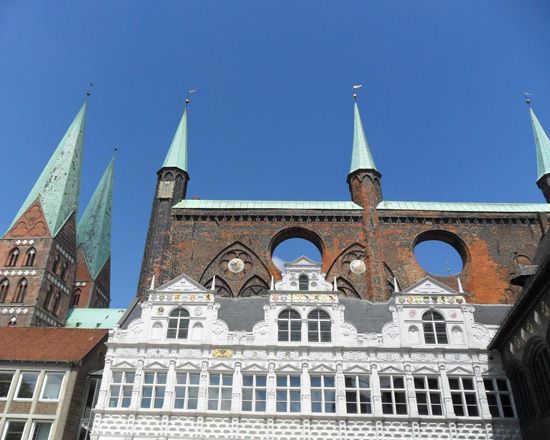
Lübeck’s old town tells its story in brick. This 90-minute walk makes that story easy to follow, linking Hanseatic trade with the city’s gates, churches, harbor, and merchant houses. I like the compact route and the private format, which gives you room to ask questions instead of marching behind a large group.
I also like the way the tour uses narrow lanes and quiet courtyards, not just postcard sights. Guides such as Bernd, Karin, and Chris have earned praise for clear explanations and for adapting the walk to personal interests. The main consideration is time: 90 minutes moves quickly, so you will see many landmarks but will not have time for long interior visits.
Key points at a glance
- Holsten Gate begins the story: Start beside Lübeck’s famous brick gateway and learn why fortifications mattered to a powerful trading city.
- A private group up to six: The $259 price works best for a small family or group of friends, especially when shared among six people.
- A route through real old-town details: Expect salt storehouses, the Trave Harbour, stepped-gable houses, narrow alleys, and traditional courtyards.
- Hanseatic history made practical: The guide explains how merchant connections grew into an association of roughly 300 cities from Riga to Bruges.
- Several strong architectural stops: St. Mary’s Church, Buddenbrook House, the Rathausmarkt area, and Schiffergesellschaft each add a different layer.
- Flexible and bilingual: Tours are offered in English or German, with free cancellation up to 24 hours before the start.
Why Lübeck is the right place to learn Hanseatic history
Lübeck is not simply a city with a few old buildings. Its streets were shaped by commerce across northern Europe. From the 12th through the 17th century, merchants used connections among North German towns to protect sea routes and support trade. Over time, those links grew from merchant guilds into a loose confederation of cities.
At its height, the Hanseatic League included about 300 maritime and inland cities. Its reach extended across Northern Europe, from Riga in the east to Bruges in the west. You do not need a background in medieval economics to enjoy the tour. The guide ties the large subject to visible things: a gate, a harbor, a warehouse, a church, and a guild hall.
That is the walk’s main strength. You are not asked to remember a long list of dates before seeing anything. Instead, the city supplies the evidence. Brick architecture and water routes become history lessons, and Lübeck’s compact center makes the connections easy to grasp on foot.
More History Walking Tours in Germany
- Leipzig: 1.5-Hour Historical Walking Tour in German
★ 4.7 · 2,217 reviews - Berlin: History of the Third Reich Guided Walking Tour
★ 4.7 · 791 reviews - Trier: Guided Old Town Highlights and History Walking Tour
★ 4.7 · 687 reviews
Starting at the Holsten Gate
Meet your guide at the Holsten Gate, Lübeck’s best-known entrance and a natural place to begin. It is one of the city’s historic fortification gates, and the wall passage here once included four gates. Starting at this point immediately gives the tour a sense of scale: Lübeck was not an open trading village, but a protected urban center with valuable goods and important access routes.
The gate also works well as a meeting point because it is unmistakable. If you arrive early, you can use the time to look closely at the heavy brick construction before the walking begins. Your guide can then explain how the defensive side of the city connected with its commercial success.
The tour does not linger at one site for too long. That is useful if you want a broad introduction to Lübeck, but less ideal if your main goal is detailed architecture study. You should think of this as a guided orientation walk, not a museum visit with extended stops.
Salt storehouses and the Trave Harbour
From the Holsten Gate, the route passes the salt storehouses and continues toward the Trave Harbour. This section gives the Hanseatic story a practical setting. Trade depended on water, storage, and reliable movement of goods. The harbor was not decorative scenery added to the old town. It was part of the reason Lübeck mattered.
The salt storehouses are especially useful for understanding how ordinary-looking buildings can reveal a city’s economic life. Salt was an important trade product, and warehouses show the link between arriving cargo and the merchants who handled it. Your guide can place these structures within the wider network of northern European commerce.
At the Trave Harbour, you get a clearer sense of Lübeck’s connection to the sea. The tour focuses on the association of North German merchants and its efforts to secure trade and sea routes. You are likely to appreciate this stop most if you enjoy seeing how geography affects history.
There is a small tradeoff here. A harbor walk is part of the route, but this is not a dedicated port tour. If you want a long waterfront pause or an in-depth account of shipping, you may wish to spend extra time in the harbor area after the official walk.
Große Petersgrube and Lübeck’s narrow lanes
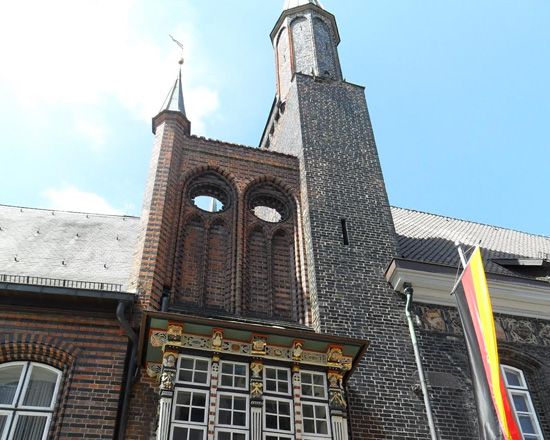
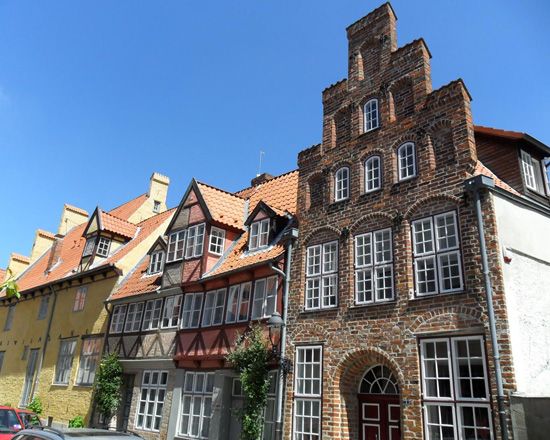
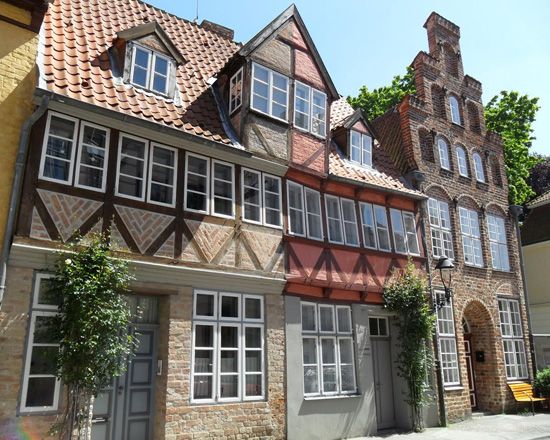
The route then enters Große Petersgrube, one of Lübeck’s oldest streets. Here the mood changes. Instead of broad public spaces and working waterfronts, you see old brick buildings, stepped gables, and the close texture of the historic center.
This is where the walk feels most personal. Narrow lanes help you notice details that are easy to miss when moving between headline sights. Traditional façades show how merchants and residents shaped the city over generations, while the tight street pattern hints at an old urban center built for walking and commerce.
I like this part because it slows the history down to street level. You can look up at the gables, compare façades, and listen as the guide explains how Lübeck’s architecture influenced other Hanseatic towns. The city does not need grand scenery at every turn. A quiet lane can say plenty.
The route also includes views into idyllic backyards. These smaller spaces are a useful contrast to the formal Rathausmarkt and major churches. They show the private side of the old town, though access to individual courtyards can depend on what is open at the time of the walk. The experience promises a look into one or two romantic backyards near the end, but you should not expect every courtyard in Lübeck to be open for entry.
Same place, a different slice of the past:
- Leipzig: City History Canal Sightseeing Tour on a Motorboat
★ 4.7 · 7,671 reviews - Berlin: 3-Hour World Heritage Cruise to Potsdam
★ 4.5 · 1,569 reviews - Heidelberg: Night Watchman Historic Adventure Tour
★ 4.7 · 1,186 reviews - The Local Tour of Hamburg Historic Centre
★ 5.0 · 1,058 reviews
St. Mary’s Church and the wider Baltic style
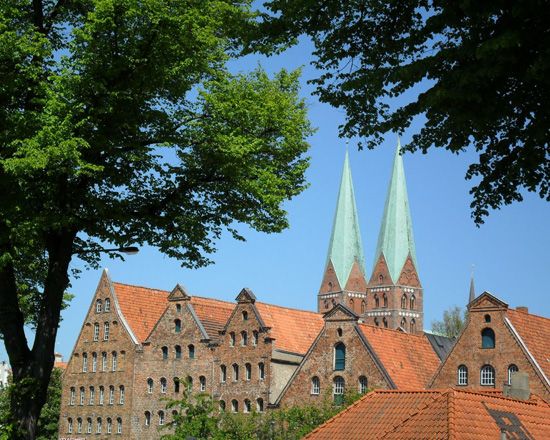
St. Mary’s Church is one of the tour’s major architectural stops. It served as a model for numerous churches in Hanseatic cities around the Baltic region, making it more than a local landmark. Its importance lies partly in the way Lübeck’s influence traveled outward.
The guide helps you see the church as evidence of the city’s reach. Trade carried more than goods. It also carried building ideas, civic ambition, and religious architecture. When you hear that other Hanseatic cities looked to Lübeck, the church becomes part of a wider northern European story.
Because the tour lasts 90 minutes, the stop is best treated as an exterior introduction unless your guide and timing allow more. The supplied details do not promise an extended interior visit or admission. If seeing the inside is important to you, set aside separate time rather than assuming the walking tour will cover it.
This is a useful planning point. The tour gives you context for St. Mary’s, which can make a later independent visit more rewarding. You arrive with a better idea of why the building matters, not just what it looks like.
Rathausmarkt and the civic center
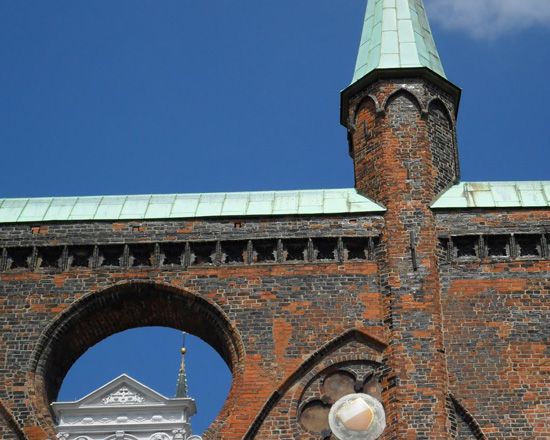
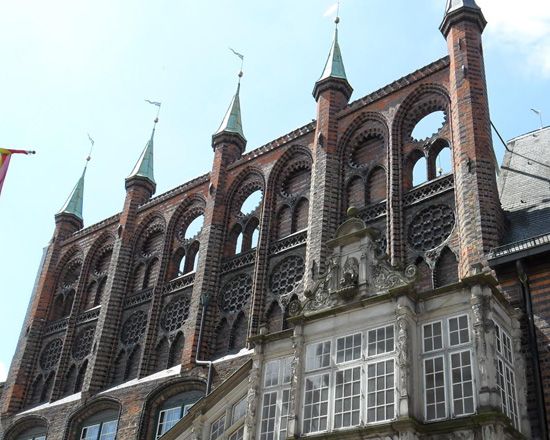
The route includes the Rathausmarkt square and Lübeck’s City Hall. This brings the focus from religious and commercial life to civic power. A confederation of trading cities needed rules, negotiation, and places where public decisions could be made. The square helps connect the Hanseatic League to the people and institutions governing urban life.
You will also see how the city’s main landmarks sit close together. Lübeck’s historic center rewards a walking tour because its important buildings are linked by lanes and squares rather than separated by long transfers. You spend your time looking and listening, not figuring out local transport.
The Rathausmarkt is likely to be one of the busier parts of the route, especially compared with the back lanes. That contrast is useful. The square shows Lübeck in its public role, while the smaller streets show its domestic and commercial character.
Buddenbrook House and a later chapter of Lübeck
Passing Buddenbrook House adds a different kind of cultural detail. The house is connected with the Mann family, bringing the route beyond medieval and early modern commerce. It reminds you that Lübeck’s identity continued to develop long after the Hanseatic League’s high period.
This stop may appeal most if you enjoy literature and the way a city’s buildings gather different eras. The tour remains centered on Lübeck’s Hanseatic past, but Buddenbrook House prevents the story from becoming too narrowly focused on merchants and ships.
As with St. Mary’s, the stop is primarily part of the walking route. The information provided does not include admission or a dedicated interior tour. Plan a separate visit if the house itself is high on your list.
Schiffergesellschaft, where sailors once stopped
The route continues to the Schiffergesellschaft guild hall. This is one of the most direct links to the people who worked within the Hanseatic trading system. The sailors who served the network used this guild hall, giving the site a human scale after the tour’s broader discussion of cities, routes, and merchant associations.
I find this kind of stop valuable because it moves the story away from powerful institutions. Trade depended on sailors, guilds, ships, and working people, not only on wealthy merchants. The building helps you picture the social world behind the commercial network.
It also gives the walk a strong final sequence. You have seen the defensive gate, the warehouses, the harbor, the church, the civic square, and the literary house. At Schiffergesellschaft, those pieces come together around a guild connected with maritime life.
Finishing at the Hospital of the Holy Spirit
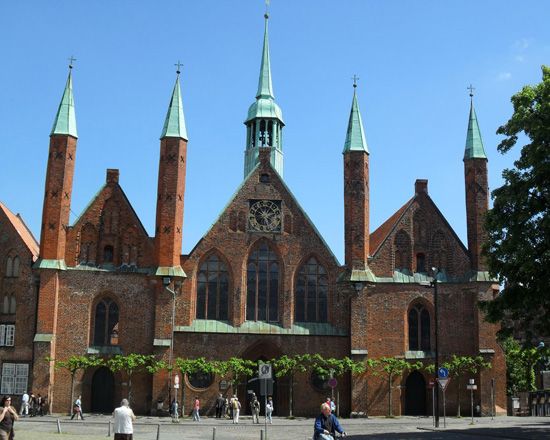
The tour ends at the Hospital of the Holy Spirit, one of Lübeck’s oldest social institutions. This is a fitting final stop because it adds charity and community care to the city’s story. Lübeck was shaped by trade, but its historic identity also included institutions that served people in need.
You can look into one or two courtyards here. That gives the ending a quieter feel than the opening at Holsten Gate. After the public gate, busy harbor, and major church, the route closes with smaller architectural spaces and a more intimate view of the old town.
The ending location can also help you decide what to do next. Karin, one of the guides praised for this experience, has been noted for offering useful suggestions for independent sightseeing after the walk. That kind of practical advice is valuable if Lübeck is a short stop and you need to make good use of the rest of your day.
What the private format changes
This is a private group tour for up to six people. That matters more than it might at first seem. A guide can respond to your pace and questions, and the group can ask to spend more time on courtyards, architecture, or Hanseatic trade when those interests come up.
Recent guide experiences associated with the tour include Bernd, Chris, and Karin. Bernd has been praised for an entertaining style and for adapting the route to requests such as seeing courtyards. Karin has been noted for explaining a great deal in a short time and suggesting further things to do. Chris has also received strong praise for making Lübeck’s story clear.
Guide assignment is not specified in advance, so you should not book expecting one particular person. Still, the consistent pattern is encouraging: clear explanations, enthusiasm for the city, and a willingness to respond to the group.
The private format is especially useful for families, couples traveling with friends, or a small business group. One recent group used the walk to add substance to a business meeting in Lübeck. If you are alone or traveling as two people, the total price is harder to justify.
Is $259 a fair price?
The total cost is $259 for a group of up to six. At the full group limit, that works out to about $43 per person for a 90-minute private tour. That is a reasonable price if you value personal attention and want one guide focused only on your party.
For six people, the price compares well with booking several individual places on a group tour. You also avoid transfers, since the route is on foot and begins at Holsten Gate. The guide is included, while food, drinks, and transportation are not.
For two people, the calculation changes to $129.50 per person. You are paying for privacy and flexibility rather than simply buying historical information. I would choose it for a special visit, a tight schedule, or a strong interest in Lübeck’s Hanseatic past. I would look for a cheaper shared walk if keeping costs low matters most.
Who should book this walk?
You should consider this tour if you want a clear first look at Lübeck and prefer a guide to connect the sights. It suits anyone interested in medieval commerce, city walls, Baltic trade, architecture, or the way old towns develop around water.
Families may like the short duration and the changing scenery. You are rarely focused on one subject for too long, moving from gates to warehouses, streets, churches, guild halls, and courtyards. Small groups can also ask for more attention to the things that interest them most.
It is less suitable if you want long museum visits, a full interior tour of the churches and historic houses, or an unhurried photography walk. The route covers a lot in 90 minutes, and the pace reflects that goal.
You can book in German or English. Free cancellation is available until 24 hours before the start, and the reserve-now, pay-later option gives you some flexibility while finalizing your plans.
My verdict: a strong introduction for small groups
I would book this tour when Lübeck is new to you and you want the city to make sense quickly. The route covers the most useful Hanseatic landmarks without wasting time on transfers, and the private format gives you a chance to shape the conversation.
The best value comes with five or six people. If you are a full group, the cost is sensible for a personal 90-minute introduction. If you are a couple, book it only if the private guide and historical focus are worth the extra spend.
You should also protect time afterward for independent visits. The walk gives you the framework, while the rest of Lübeck can supply the slower details. That combination, a focused guide first and free exploration later, is the smartest way to use this experience.
FAQ
Where does the tour begin?
The tour begins at the Holsten Gate in Lübeck.
Where does the tour end?
The walk ends at the Hospital of the Holy Spirit.
How long is the Hanseatic League walking tour?
The tour lasts 90 minutes.
How many people can join the private group?
The private group can include up to six people.
Which languages are available?
The live tour guide is available in German and English.
Are food, drinks, and transfers included?
No. Food, drinks, and transfers are not included. A professional city guide is included.
Just added around Germany
- Leipzig Old Cemetery: 75-Minute Dark History Tour★ 4.6 · 181 reviews
- Leipzig: fresh city tour 2.0 – We bring history to life!★ 5.0 · 89 reviews
- Koblenz: Historical Sparkling Wine Museum Guided Tour★ 4.6 · 28 reviews
- Karlsruhe: Guided City History & Culture Walking Tour★ 4.5 · 79 reviews
- Historical tour of the old town including a Saxon dinner★ 4.7 · 23 reviews
- Historical Walking Tour of Augsburg / Historische Führung★ 4.7 · 41 reviews
- Historic Christmas tour of Lübeck★ 4.3 · 47 reviews
- Historic Berlin Pubs & History Tour★ 4.9 · 73 reviews
History Walking Tours, compared.
History and Hauntings of Salem Guided Walking Tour
Read our review →
Freedom Trail History Small Group Walking Tour
Read our review →
Historic Charleston Guided Sightseeing Walking Tour
Read our review →
Tapas Walking Tour with Food, Wine, and History
Read our review →
Savannah History and Haunts Candlelit Ghost Walking Tour
Read our review →
A History of Terror – Belfast City Centre Walking Tour
Read our review →Browse the lists this tour appears in