Review · LAHORE
Lahore Heritage and Sightseeing Guided Tour
Lahore tells its story one monument at a time. This private, eight-hour tour brings together Lahore Fort and Badshahi Mosque, the Walled City, Shahi Hammam, Wazir Khan Mosque, and the Wagah Border ceremony. I like the broad mix of royal buildings, street life, religious art, and modern Pakistani history. I also like that the guide can shape the pace for your group.
The main consideration is the busy schedule. Lahore Fort gets two hours and Wagah Border gets another two, but several other stops are brief. The $135 price is also easier to justify for a private group that values a licensed, English-speaking guide than for someone who wants only a quick sightseeing ride.
Key points to know before booking
- Two hours inside Lahore Fort: The largest time block goes to the Mughal citadel and its major buildings.
- A strong Walled City section: Delhi Gate, Shahi Hammam, Gali Surjan Singh, and Wazir Khan Mosque show Lahore beyond its grand monuments.
- Private touring: Only your group takes part, so the pace can be adjusted.
- Wagah Border ceremony included: The final two-hour stop adds a highly theatrical modern event to the historical program.
- Guide-led interpretation: The guide is described as a licensed graduate of a relevant discipline, with English-language training and an IELTS certification.
- Free cancellation up to 24 hours ahead: Changes made inside that period are not accepted, and the cost is not refunded.
A full day built around Lahore’s past and present
This tour is designed for you to see the main landmarks in one long outing rather than piece together separate visits. It begins at Food Street on Fort Road in the Walled City and ends back at the same meeting point. Pickup is offered, and transportation is included, but you should confirm the exact pickup arrangement when booking.
The route covers Mughal architecture, Sikh and later layers of Lahore’s old center, Pakistan’s independence story, and the military ceremony at the India border. That is a lot for one day. I see this as a useful first look, especially if your time in Lahore is limited, but not as a slow architectural study.
The tour is private, which matters here. You can ask questions without holding up a busload of strangers, and the guide can spend more time at the sites that interest you. Bilawal is identified as the guide connected with the experience, and he is praised for an academic background in Pakistani history and culture, a relaxed manner, and a willingness to follow the group’s pace.
More Guided Tours in the world:
- History and Hauntings of Salem Guided Walking Tour
★ 5.0 · 14,564 reviews - Edinburgh: Edinburgh Castle Guided History Tour with Tickets
★ 4.8 · 9,933 reviews - Historic Charleston Guided Sightseeing Walking Tour
★ 5.0 · 6,216 reviews
Lahore Fort: two hours with the Mughal court
Lahore Fort is the anchor of the morning. The fort occupies the northwestern part of Lahore and was built in 1566 during the reign of Akbar, the third great Mughal emperor. Its original purposes were practical and royal: defense and residence.
Two hours is a useful amount of time here. You have room to look at the fort as more than a wall and a gate. The guide can explain how the site served rulers, soldiers, and court life, while also pointing out the mix of construction associated with different Mughal periods.
The fort is a UNESCO World Heritage site, so it carries major cultural importance. The value of a guide is especially clear here because the buildings can otherwise become a sequence of courtyards and decorated rooms without a clear sense of how they fit together.
I would pay close attention to the contrast between the fort’s defensive role and its palace function. Lahore Fort was meant to protect power, but it was also built to display power. That idea helps you read the site with more purpose.
Two hours may still feel short if you want every detail. The itinerary includes many more places, so this tour favors range over a slow, scholarly visit.
Badshahi Mosque: grand scale in red sandstone
The next major stop is Badshahi Mosque, built in the 17th century by Aurangzeb Alamgir, the sixth Mughal emperor. Its red sandstone gives the mosque a strong visual presence, while its size reflects the ambition of the Mughal court.
The visit lasts about 45 minutes. That is enough to take in the mosque’s scale, hear its background, and appreciate the relationship between the mosque and the nearby fort. It is not enough for a long architectural lesson or an unhurried period of quiet observation.
The mosque was designed to accommodate up to 100,000 people, a figure that helps explain its place among the world’s largest mosques. I like this stop because it changes the focus from royal residence to public religious space. The two sites together show how Mughal Lahore joined government, faith, ceremony, and urban design.
As with any religious building, dress and conduct matter. The supplied tour details do not list a specific dress code, so ask the guide before the visit if you need practical guidance.
Minar-e-Pakistan and Allama Iqbal’s national story
Minar-e-Pakistan sits inside the larger Allama Iqbal Park. The minaret commemorates the Pakistan Resolution, passed at this location on March 23, 1940. This stop is brief, about 15 minutes, but its importance is political rather than architectural alone.
I would use this visit to connect old Lahore with the creation of modern Pakistan. After seeing Mughal royal buildings, you are suddenly looking at a national symbol tied to the country’s independence story. The change of subject gives the day a useful rhythm.
The route also includes a reference to Dr. Allama Muhammad Iqbal, known as Pakistan’s National Poet, the Poet of the East, and the Spiritual Father of Pakistan. His poetry and political thought helped inspire the idea of a separate Muslim homeland. The tour information does not give a separate duration for this stop, so it may be handled as part of the Minar-e-Pakistan or nearby city touring.
A few more history tours around the world worth a look
- Colosseum: Underground and Ancient Rome Tour
★ 4.7 · 12,691 reviews - Lisbon: History, Stories and Lifestyle Walking Tour
★ 4.8 · 10,902 reviews - London Small Group Tour of Historical Pubs
★ 5.0 · 10,422 reviews - Prague: Oldtown, Medieval Underground & Dungeon History Tour
★ 4.3 · 10,277 reviews
Delhi Gate and the Walled City of Lahore
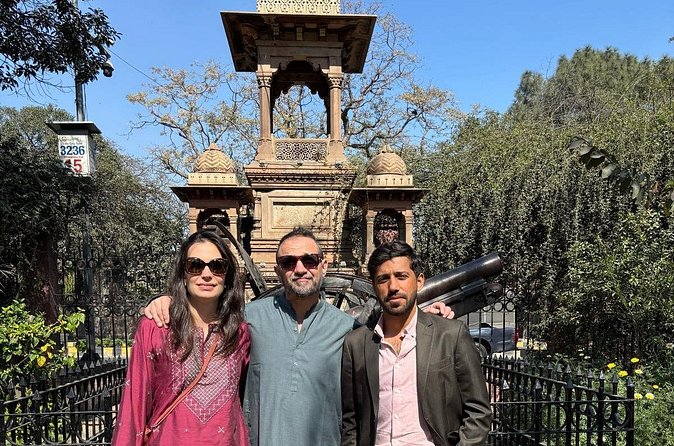
The Walled City section brings you closer to daily urban Lahore. The old city was enclosed by 12 gates, and Delhi Gate was one of the important entrances. Royal family members used it when entering the city on their way to the palace, and local people welcomed them there.
That detail gives the gate a human purpose. It was not simply an opening in a wall. It helped control movement, stage royal arrival, and connect the old city with the wider road network.
Food Street on Fort Road is the stated starting and ending point. Beginning here places you directly beside the old city, though the tour does not include meals. You should plan for food separately, especially since eight hours is a long period for sightseeing.
The Walled City can be more rewarding than simply checking off famous monuments. Its value lies in the relationship between narrow streets, old homes, historic gates, workshops, religious buildings, and royal routes. The tour provides only a short introduction, but it gives you a useful sense of Lahore as a living city rather than a museum collection.
Shahi Hammam: a royal rest stop from 1634
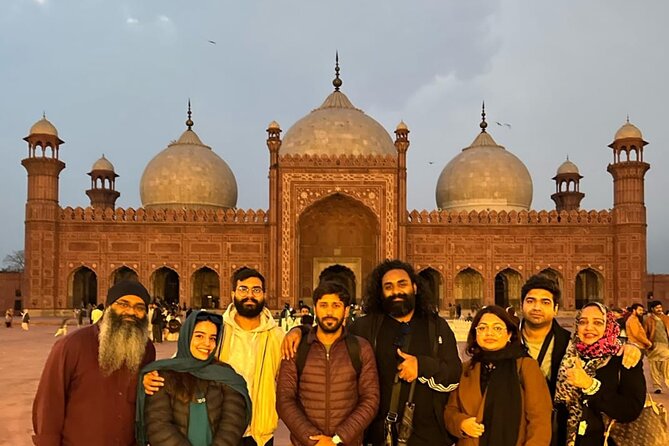
Shahi Hammam was built in 1634 during the reign of Shah Jahan. It served as a place where royal travelers could rest and refresh themselves when entering the Walled City.
The stop lasts about 30 minutes. That is a sensible length for a compact historic bathhouse, especially within a day already filled with major sites. The guide’s explanation matters here because the building’s original use is not always obvious from its surviving rooms.
I like this stop because it adds an everyday function to the royal story. Palaces and mosques show ceremony and power. A hammam shows comfort, hygiene, and the practical needs of people moving through the city.
Gali Surjan Singh and the old city’s domestic side
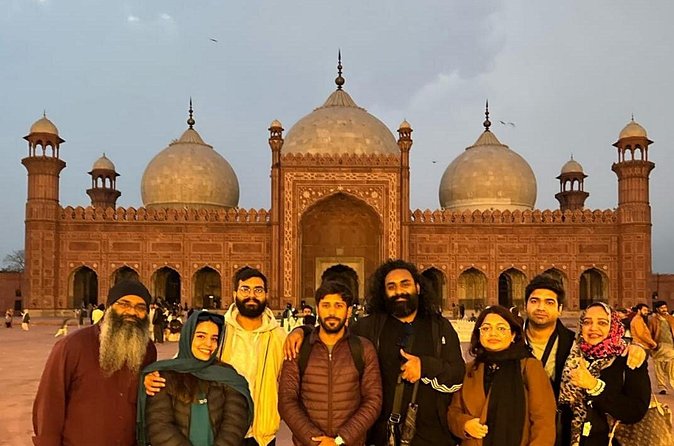
Gali Surjan Singh takes only about 10 minutes and is free to enter. The lane is traditionally decorated and is named after Surjan Singh, a physician to Mughal emperors who lived there.
This is a quick visual pause rather than a full attraction visit. You can look at the street’s decoration and get a glimpse of residential life inside the Walled City. I would not expect a long stop, but I would value it as a counterpoint to the monumental fort and mosque.
The short timing also shows the tour’s basic approach. It gives you a series of connected impressions, with the guide supplying the links between them. If you want time for detailed photography or shopping, you may need to ask whether the schedule can be adjusted.
Wazir Khan Mosque: color, tile, and calligraphy
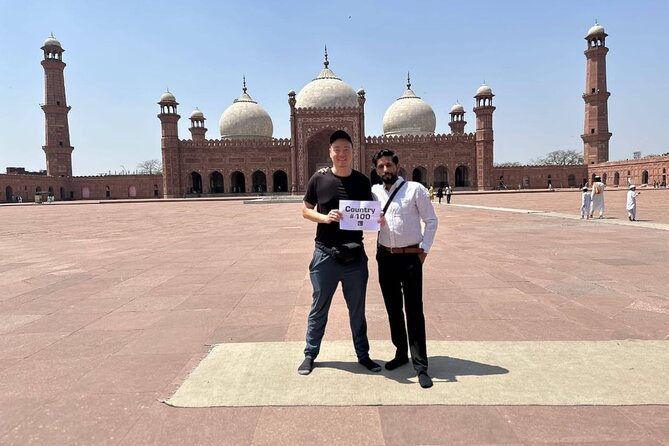
Wazir Khan Mosque is one of the most visually important stops. Built in 1634 under Shah Jahan, it is known for mosaic work, fresco painting, and calligraphy. The decoration reflects a different side of Mughal design than the red sandstone grandeur of Badshahi Mosque.
The planned visit lasts about 30 minutes. Admission is not included here, unlike several other stops, so check the current entrance cost before setting out. The tour includes transportation and sightseeing tickets in general, but this specific attraction is marked separately as not included.
I would give this mosque close attention even though the visit is short. The intricate surfaces reward a slower eye, and a guide can help explain the patterns, inscriptions, and artistic choices. Thirty minutes may be enough for an introduction, but anyone with a strong interest in Islamic art may wish for more time.
The mosque also helps you understand the Walled City as a place of faith and craftsmanship, not only a route between royal buildings. It is one of the stops where a trained guide can add real value.
Shalimar Gardens and the Shah Jahan ideal
Shalimar Gardens is another UNESCO World Heritage site connected with Shah Jahan. It served as a royal recreational area and was imagined as an earthly utopia, a carefully ordered place where people and nature could share a harmonious setting.
The supplied schedule does not give a separate duration for this stop. That is worth clarifying before booking, because the gardens could deserve a calm visit and the overall day already includes a long transfer to Wagah Border.
I see Shalimar Gardens as an important change of mood. Forts and mosques speak through walls, gates, domes, and inscriptions. Gardens express power through water, geometry, shade, and controlled space. If the schedule is tight, ask how much time you will have here rather than assuming it receives the same attention as Lahore Fort.
Wagah Border: two hours of ceremony and theater
The final major stop is the Wagah Border flag-lowering ceremony. Pakistani and Indian soldiers perform synchronized, highly choreographed movements before the flags are lowered. The event combines military precision, national pride, crowd energy, and theatrical gestures.
Two hours are allocated to this stop, making it one of the day’s longest visits. That time allows for the ceremony itself and the necessary waiting around it, though the exact sequence can vary.
This is not a quiet heritage site. It is a public spectacle tied to the modern relationship between Pakistan and India. I would recommend it if you want to see how national identity is expressed through ceremony, sound, uniforms, and performance. If your main interest is Mughal architecture, it may feel like a sharp change of subject.
The border visit also makes the tour broader than a standard old-city circuit. You finish with present-day patriotism after spending much of the day among imperial buildings and historic streets. That contrast is one of the tour’s most memorable features.
What the $135 price gives you
At $135 per person, the price includes sightseeing tickets, transportation, and an English-speaking guide. Meals are not included. The tour is private, so the value depends heavily on your group size and how much you want personal guiding.
For one person, the cost is a serious outlay. For a small group sharing a private vehicle and guide, it becomes easier to defend, particularly because the route covers sites spread across Lahore and reaches Wagah Border. You are paying for convenience, planning, transport, site interpretation, and the ability to move at your group’s pace.
I would not book it mainly for the admission tickets. The stronger reason is the guide. A licensed guide with relevant academic training can explain why the buildings matter instead of only naming them. Bilawal’s relaxed, non-rushed approach is especially useful on a day that could otherwise feel hurried.
The experience is booked, on average, 15 days ahead, so I would not leave it until the last minute if your dates are fixed. Confirmation is provided at booking, and public transportation is nearby.
Who should book this Lahore tour?
I would recommend it to a first-time visitor who wants a broad introduction to Lahore in one day. It suits people who value context, private transport, and a flexible pace more than bargain pricing.
It is also a good fit if you want both historic Lahore and the Wagah Border ceremony. Many sightseeing programs focus only on forts and mosques. This one adds national history, old-city streets, a royal bathhouse, a decorated lane, and a border event.
I would think twice if you dislike long days, prefer to linger at one or two sites, or want meals included. The schedule is ambitious, and some stops are very short. It is also less suitable for someone seeking a specialized art or architecture tour unless the guide can adjust the timing.
The tour has a 5.0 rating from 20 reviews, with 100 percent recommending it. The strongest praise centers on Bilawal’s academic background, clear guidance, relaxed pace, and friendly manner. Those qualities matter because the route contains a lot of information and several distinct historical periods.
Should you book it?
Book this tour if you want Lahore’s major sights tied into one clear story, with a private English-speaking guide and transportation included. Its best feature is the combination of serious heritage sites and living city experiences, from Lahore Fort and Wazir Khan Mosque to Gali Surjan Singh and Wagah Border.
Skip it if you want a cheap, slow day or if you need every stop to receive equal time. Before paying, confirm pickup details, the time available at Shalimar Gardens, and the separate admission cost for Wazir Khan Mosque. Cancel at least 24 hours before the start time if your plans change, since cancellations inside that window are not refunded.
FAQ
How long does the Lahore Heritage and Sightseeing Guided Tour last?
The tour lasts approximately eight hours.
Where does the tour start and end?
It starts at Food Street on Fort Road in the Walled City of Lahore and ends back at the meeting point.
Is pickup available?
Pickup is offered. The stated meeting point is Food Street Fort Road, so confirm the exact pickup details when booking.
Is this a private tour?
Yes. Only your group participates in the activity.
Is an English-speaking guide included?
Yes. An English-speaking guide is included. The guide is described as a licensed graduate of a relevant discipline with IELTS certification.
Are meals included?
No. Meals are not included in the tour price.
Is cancellation free?
You can cancel for a full refund up to 24 hours before the experience start time. Cancellations or changes made less than 24 hours before the start time are not accepted and are not refunded.
Just added around the world
- Brodie’s Historical and Fun Lagos Walking Tour★ 5.0 · 188 reviews
- Lahore Heritage in a Day★ 5.0 · 40 reviews
- Tour Historic Vermilionville★ 4.5 · 107 reviews
- Slave Trade Tour: Badagry Black Heritage Adventure★ 5.0 · 20 reviews
- Small Group Historic Walking Tour of A Coruña★ 5.0 · 43 reviews
- Historic La Jolla Walking Tour★ 5.0 · 124 reviews
- Baton Rouge Historic Downtown Self-Guided Audio Walking Tour★ 4.0 · 19 reviews
- Private Guided Historical Sightseeing Tour in Kyoto★ 3.5 · 24 reviews
Guided, compared.
History and Hauntings of Salem Guided Walking Tour
Read our review →
Edinburgh Castle Guided History Tour with Tickets
Read our review →
Historic Charleston Guided Sightseeing Walking Tour
Read our review →
Colosseum with Arena, Roman Forum and Palatine Guided Tour
Read our review →
St. Mark’s Basilica Guided Tour & VR History Intro
Read our review →
Colosseum with Arena, Roman Forum and Palatine Hill Guided Tour
Read our review →