
Review · LA JOLLA
Historic La Jolla Walking Tour
La Jolla’s prettiest views come with a backstory. I like this tour for its clear look at the Scripps family’s influence and its easy mix of old buildings, ocean scenery, caves, seals, and sea lions. I also like the small group limit of 15, which makes it easier to hear your guide and ask questions. The main drawback is the walking: steep sections and roughly 90 minutes to two hours on your feet may not suit anyone with mobility problems.
The tour is especially strong when guide Chas brings out historic photographs to show how La Jolla looked before today’s galleries, hotels, and coastal parks. You get useful advice on restaurants and things to do afterward, too. Just remember that the museums and historic buildings are viewed from outside, so this is a walking history lesson, not an indoor museum tour.
Five things to know before you book

- The Scripps family shapes much of the story: Several stops explain how Ellen Browning Scripps and her relatives helped create the La Jolla you see today.
- Sunny Jim’s cave comes with a curious engineering tale: You visit the Cave Store and learn why its original owner built a tunnel toward the sea cave.
- Wildlife is part of the route: La Jolla Cove and Children’s Pool are good places to look for sea lions, seals, cormorants, and coastal birds.
- Historic photos make the past easier to picture: Chas uses images to connect modern streets and buildings with their earlier appearance.
- The route forms a coastal loop: You begin and end at the La Jolla Recreation Center, passing through central La Jolla and along the shore.
What this La Jolla walking tour feels like
For $70 per person, this is a two-hour to two-hour-15-minute introduction to La Jolla’s people, buildings, coastline, and public spaces. The experience is not built around a single major attraction. Instead, it connects many small pieces, which is exactly why a guide adds value.
You begin at the La Jolla Recreation Center and finish back there after moving through the village and along the coast. The route includes nine named stops, plus the Wedding Bowl and La Jolla Tide Pools. Several stops last only five minutes, while the larger coastal areas receive more time.
I would think of this as a walking tour with three equal parts: local history, family stories, and scenery. You learn about the people who shaped La Jolla, then see the parks and buildings they left behind. At the coast, the focus shifts to caves, wildlife, cliffs, seals, and sea lions.
The tour currently carries a five-star rating from 124 reviews, with 100 percent recommending it. That fits the strongest pattern in the feedback: people praise the guide’s command of local stories, his friendly manner, and his ability to make a familiar place feel newly interesting.
More History Walking Tours in the USA
- History and Hauntings of Salem Guided Walking Tour
★ 5.0 · 14,564 reviews - Boston: Freedom Trail History Small Group Walking Tour
★ 5.0 · 6,450 reviews - Historic Charleston Guided Sightseeing Walking Tour
★ 5.0 · 6,216 reviews
Starting at the La Jolla Recreation Center

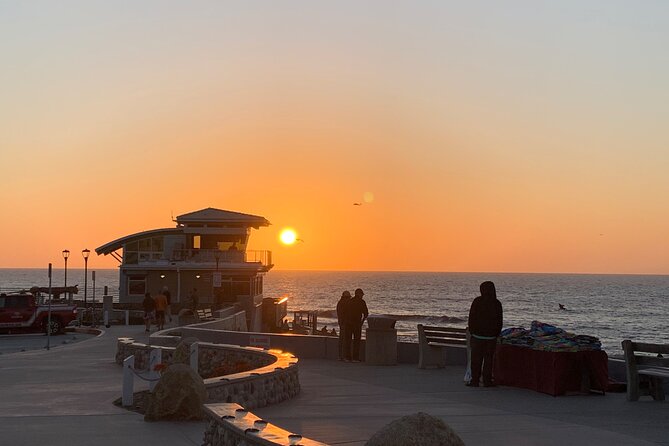
The first stop is the La Jolla Recreation Center, at 615 Prospect Street. This is not just a place to gather. It is one of Ellen Scripps’ gifts to La Jolla, so the tour begins by introducing one of the central figures in the area’s development.
You learn what makes the recreation center unusual and why it matters to the community. This opening gives you a useful frame for the rest of the walk. Ellen Scripps does not appear as a name attached to one building and then disappear. Her work and donations continue through several stops.
The tour is designed for a moderate level of physical fitness. You may want to arrive ready for steady walking, rather than treating this as a series of short, effortless sightseeing pauses.
Ellen Scripps and the homes behind the institutions
The next stops look at places linked to Ellen Scripps and her family. At the Museum of Contemporary Art San Diego, you do not tour the galleries. Instead, you learn that the museum incorporates Ellen Scripps’ former La Jolla home.
That detail gives the modern museum a local connection. You are not simply passing a contemporary art building. You are looking at a site tied to one of the women who helped shape the town.
At the La Jolla Historical Society, the focus shifts to Wisteria Cottage. The cottage was the home of Ellen Scripps’ half-sister, Virginia, known as Jenny. Again, you do not go inside, but your guide explains how the cottage was used over the years and shares stories about Jenny.
I like this part because it moves beyond dates and construction details. The tour treats La Jolla as a place shaped by real people, family relationships, generosity, and strong personalities. If you enjoy social history, these stops may be more rewarding than a simple list of architectural facts.
St. James by-the-Sea and La Jolla’s changing streets
At St. James by-the-Sea Episcopal Church, you see a beautiful church with a surprising question attached to it: the structure standing there today is not the original building. Your guide explains what happened to the first one.
The stop is brief, about five minutes, but it shows how La Jolla has changed. Buildings move, disappear, or take on new roles. A quick stop can give you a better sense of the town’s past than a long walk through streets with no explanation.
The tour then reaches the intersection of Girard Avenue and Prospect Street. This is described as ground zero for La Jolla history, with plenty of nearby stories and historic images to match. The photographs are useful here because they let you compare the modern scene with earlier versions of the same streets.
If you have visited La Jolla before, this may be where the tour earns its fee. You may recognize the area, but the guide gives those familiar corners a second layer. The experience is not just about seeing La Jolla. It is about understanding why the village developed the way it did.
Same place, a different slice of the past:
- Charleston’s Old South Carriage Historic Horse & Carriage Tour
★ 5.0 · 10,023 reviews - Beneath The Streets Underground History Tour
★ 4.5 · 8,006 reviews - Charleston Horse-Drawn Carriage Tour: Explore Historic Charleston
★ 5.0 · 3,561 reviews - Savannah History and Haunts Candlelit Ghost Walking Tour
★ 5.0 · 3,235 reviews
The Cave Store and the story of Sunny Jim

The Cave Store is one of the most distinctive stops. It is the second-longest continuously operating business in La Jolla, and your guide also points out the oldest.
You learn why the original owner decided to build a tunnel to Sunny Jim’s cave. You also hear who Sunny Jim was, which helps explain the memorable name. The stop lasts about five minutes, so do not expect an extended cave visit or a long indoor presentation. Its value comes from the story and the setting.
This is the sort of detail that makes a walking tour useful. On your own, you could pass the shop and see only a storefront. With a guide, the building becomes part of a larger story about business, tourism, and La Jolla’s relationship with its shoreline.
La Jolla Cove brings the scenery into the tour
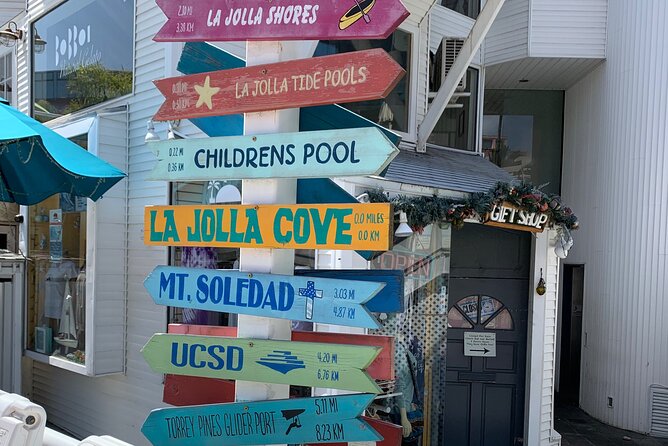
La Jolla Cove is where the history lesson opens into a strong coastal walk. You see sea caves, cormorant rookeries, sea lions, and broad ocean views. The tour allows about 15 minutes here, though the actual experience will depend on conditions and how much time the group spends looking at wildlife.
Bring your attention to the rocks and water. Sea lions may be visible, and the coastal bird colonies add another layer to the stop. One useful detail from the tour is the distinction between seals and sea lions, something many people notice only after it is pointed out.
The wildlife is a bonus, not a guarantee of a particular animal at a particular moment. Still, La Jolla Cove is one of the strongest sections for scenery, and several people specifically appreciated seeing seals and sea lions during the walk.
The coast can also change the feel of the tour. Earlier stops are about people and buildings. Here, you get the natural setting that helped make La Jolla such a desirable place in the first place.
Ellen Browning Scripps Park and Children’s Pool
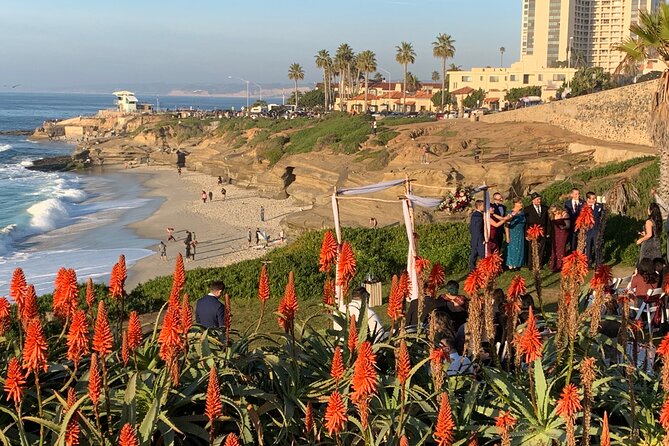
South of La Jolla Cove, Ellen Browning Scripps Park stretches toward Children’s Pool. The tour spends about 20 minutes in this section, the longest scheduled stop. That makes sense. This is one of the most scenic parts of the route, with open views and a chance to slow down after the denser village streets.
The park carries Ellen Scripps’ name and continues the focus on her contribution to La Jolla. You get both the public-space story and the coastal views, which work well together. This is a good place to listen, look around, and take photographs without rushing.
At Children’s Pool, you see the last gift Ellen Scripps made to La Jolla while she was alive. The break wall is a major feature, and seals are often found in the area. The stop is short, about five minutes, but the setting gives it weight.
The route also includes the Wedding Bowl and La Jolla Tide Pools. These add scenic and local-interest stops to the final part of the walk. The exact amount of time spent at each may vary, but they help complete the circle between La Jolla’s public spaces and its shoreline.
The guide makes the difference
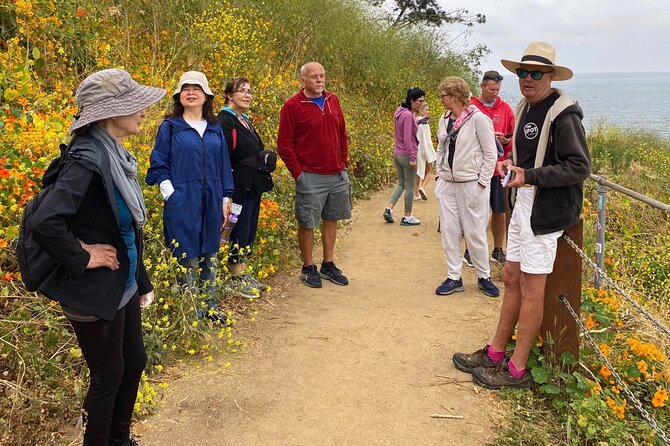
The strongest part of this experience is the guide. Chas is repeatedly praised for explaining La Jolla in a clear, engaging way and for answering questions without losing the pace of the walk. He is also described as a true local with direct involvement in keeping the area’s history alive.
That local connection matters. La Jolla’s story includes well-known figures, but it also includes smaller details about residents, buildings, businesses, and changing streets. A guide who cares about the place can connect those pieces without turning the walk into a dry lecture.
Chas also uses historic photographs. This is a simple but effective tool. Instead of asking you to imagine a vanished building or an earlier street scene, he can show you what changed.
The tone appears friendly rather than formal. One person compared the experience to walking with an old friend, while another appreciated the guide’s humor and willingness to answer many questions. If you prefer a brisk tour with only headline facts, this may feel more detailed than necessary. If you enjoy asking questions, it should suit you well.
How difficult is the walk?
The tour requires a moderate physical fitness level and is not recommended for people with walking problems. One person specifically felt that the guide should have adjusted the pace for a group dealing with a steep hill.
That is the main practical warning. The route includes streets, parks, and coastal sections, and at least one steep area can affect the pace. Another person described the walk as about four miles and 90 minutes or more, while the official duration is roughly two hours to two hours and 15 minutes. Plan for a substantial walk, not a short village stroll.
Children under 10 are not recommended for this experience. The subject matter, distance, and walking requirements are better suited to older children, teenagers, and adults.
The group is capped at 15 people, which is a useful middle ground. It is small enough for questions and conversation, but not necessarily a private tour. Service animals are allowed, and the meeting point is near public transportation.
Is $70 a fair price?
At $70, you are paying for interpretation, local knowledge, and a carefully arranged route rather than admission tickets. Every listed stop is free, and you do not enter the Museum of Contemporary Art San Diego or the La Jolla Historical Society.
That means the value depends on how much you want context. If you are content to walk through La Jolla, view the coast, and read signs on your own, you can see much of the same public scenery without paying for a tour. But you will miss the connected story about Ellen Scripps, Jenny, Sunny Jim’s cave, changing buildings, and the people who shaped the town.
The price looks more reasonable if you are visiting for a short time and want an efficient introduction. The guide also offers suggestions for eating and for things to do after the tour, which can save you time later in the day.
I would book it early if your schedule is fixed. The experience is booked an average of 20 days in advance, and the group limit is 15 people. Free cancellation is available up to 24 hours before the start time. The tour requires good weather, with a different date or full refund offered if poor weather causes cancellation.
Who should book this tour?
You should consider it if you want to:
- Understand how Ellen Scripps and her family influenced La Jolla
- See the main coastal sights with a local guide
- Look for seals, sea lions, and cormorants
- Learn the stories behind familiar buildings and streets
- Get restaurant and activity suggestions for afterward
- Combine sightseeing with a moderate walk
You may want to skip it if you have difficulty with hills or long walks, want extensive indoor museum time, or prefer a self-guided visit at your own pace.
My call: book it for context, not just scenery
I would book the Historic La Jolla Walking Tour if I were visiting La Jolla for the first time, especially early in a stay. The route gives you a useful map of the village, introduces the Scripps legacy, and finishes with the coast and wildlife that make La Jolla memorable.
The best reason to go is Chas’s local storytelling and the historic photographs. The main reason to hesitate is the physical effort and the fact that the museums are exterior stops only. If you can manage the walking and want more than pretty ocean views, $70 buys a solid introduction to La Jolla that can shape the rest of your visit.
FAQ
Where does the Historic La Jolla Walking Tour begin?
The tour begins at the La Jolla Recreation Center, 615 Prospect Street, La Jolla, California 92037.
Where does the tour end?
The activity ends back at the La Jolla Recreation Center, where it begins.
How long does the tour last?
The stated duration is approximately two hours to two hours and 15 minutes. One account described a walk of about 90 minutes or more, so you should plan enough time for a full walking experience.
How much does the tour cost?
The price is $70 per person.
What language is the tour offered in?
The tour is offered in English.
How large is the group?
The tour has a maximum of 15 travelers.
Do you enter the museums?
No. The tour visits the Museum of Contemporary Art San Diego and the La Jolla Historical Society from the outside. You learn about the sites and their history, but museum admission is not part of the walk.
Is the tour suitable for children?
It is not recommended for children under 10.
What happens if the weather is poor?
The experience requires good weather. If it is canceled because of poor weather, you will be offered another date or a full refund. You can also cancel up to 24 hours before the start time for a full refund.
Just added around the USA
- Tour Historic Vermilionville★ 4.5 · 107 reviews
- Baton Rouge Historic Downtown Self-Guided Audio Walking Tour★ 4.0 · 19 reviews
- Key West Historic Schooner When And If Sunset Cruise★ 5.0 · 114 reviews
- Key West Art History Private Tour★ 5.0 · 35 reviews
- Florida Keys Nature & History Tour from Key West★ 5.0 · 110 reviews
- Marathon: Historic 7-Mile Bridge Sunset Cruise★ 5.0 · 55 reviews
- Key Lime Pie Walking Tour of Key West Historic Seaport★ 5.0 · 38 reviews
- Cruisin’ and Boozin’ – 90 minute Historical Walking Tour of Sites and Bars★ 5.0 · 28 reviews
History Walking Tours, compared.
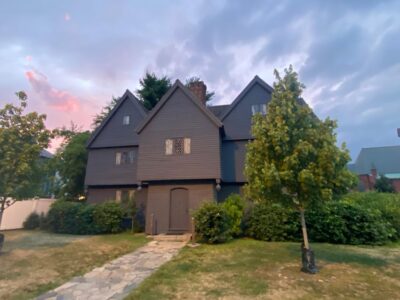
History and Hauntings of Salem Guided Walking Tour
Read our review →
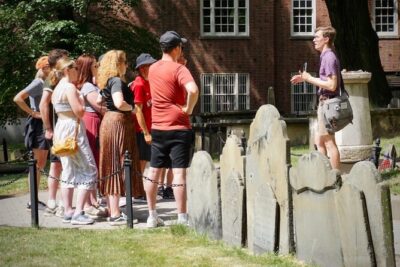
Freedom Trail History Small Group Walking Tour
Read our review →
Historic Charleston Guided Sightseeing Walking Tour
Read our review →
Tapas Walking Tour with Food, Wine, and History
Read our review →
Savannah History and Haunts Candlelit Ghost Walking Tour
Read our review →

A History of Terror – Belfast City Centre Walking Tour
Read our review →Browse the lists this tour appears in