

Review · JAIPUR
Heritage Culture and History Walking Tour in Jaipur
Jaipur reveals itself on foot. This 2-hour-25-minute private walk links famous monuments with temples, old markets, and useful stories about daily life in the Pink City. The route begins at Jantar Mantar and finishes at Isarlat Sargasooli, giving you both royal sights and ordinary city scenes.
I like the way the tour mixes major stops with places many first-time visitors might otherwise miss, especially Chandi Ki Taksal, Katla Purohit Ji Ka, and the temples. I also like the guides’ flexible style. Aditya has been praised for his clear storytelling, while another guide, described as a PhD student, adjusted the discussion to match the group’s interests.
The main drawback is cost clarity. The $20 tour price does not include entry fees, and visiting every listed paid site could add 1,600 INR. You also see Hawa Mahal from outside rather than touring its interior, so this works best as a city introduction, not a full monument ticket tour.
Key points to know before you book
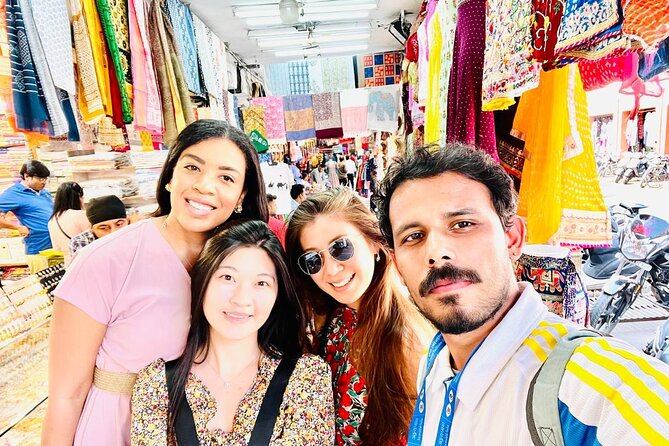
- Jantar Mantar starts the story with astronomy: You meet at the ticket counter and learn how Raja Sawai Jai Singh II used enormous instruments to study the sky.
- The route blends royal Jaipur with everyday neighborhoods: City Palace and Hawa Mahal share time with temples and old bazaars.
- Your guide can shape the conversation: Aditya, Ankit, and Richi are among the guides praised for friendly explanations and personal insight, though the exact guide is not guaranteed.
- The walk ends at a historic tower: Isarlat Sargasooli provides city views and a useful final photo stop.
- Tickets can cost far more than the tour itself: The listed paid admissions total 1,600 INR if you enter all four chargeable sites.
- You receive a water bottle and a written guide: English and Spanish written material is included, while the tour itself is presented in English.
Starting with Jaipur’s remarkable astronomical instruments
The tour begins at Jantar Mantar, where you meet the guide at the ticket counter. Allow 20 minutes here, with the admission fee paid separately.
Jantar Mantar is one of the best places in Jaipur to understand the ambition of Sawai Jai Singh II. Instead of seeing astronomy as a dry school subject, you get a sense of how rulers once used mathematics, observation, and architecture to measure time and study the heavens.
The instruments are large, fixed structures rather than small handheld devices. Your guide explains what they were designed to do and why Jai Singh II invested in them. This is an important first stop because it gives you a way to read Jaipur beyond its colorful facades. The city was planned with purpose, and science was part of that plan.
The short stop means you will not get an exhaustive lesson in astronomy. That is probably a fair trade for a walking tour covering so much ground. If you want detailed technical information, you may need more time at Jantar Mantar on your own. For a first look, the guide’s explanation helps the instruments make sense.
The listed admission is 200 INR. Since you meet at the ticket counter, make sure you know whether you need to purchase your ticket before the tour begins.
More History Walking Tours in India
- Heritage Walk & Street Food Tasting in Jaipur
★ 5.0 · 158 reviews - Jaipur Heritage Evening Walk – The Twilight Magic of Pink City
★ 5.0 · 93 reviews - Nahargarh Water Walk – Guided 2-Hour Heritage Tour in Jaipur
★ 5.0 · 89 reviews
From royal court to Govind Devji Temple
From Jantar Mantar, you walk to the City Palace. The visit is scheduled for about 20 minutes, with the admission fee separate.
City Palace gives the guide a chance to explain Jaipur’s ruling family, royal traditions, and architectural style. The complex is not just a single grand building. It offers a setting for stories about the people who governed Jaipur and the way royal power shaped the city around it.
Twenty minutes is brief for a large palace complex. I would think of this as a guided orientation rather than a full museum visit. You get context, key details, and a sense of why the palace matters. If ornate interiors, royal collections, and courtyards are a priority for you, plan to return with more time, or ask before booking how much of the complex is included.
The City Palace admission listed for this experience is 1,000 INR, which is the largest individual fee on the route. That changes the value calculation. The walking tour itself costs $20, but a couple entering all the listed paid attractions will need to budget for tickets in addition to that price.
Next comes Govind Devji Temple, with about 20 minutes set aside. The temple is known for its devotional atmosphere and aarti ceremony. The schedule suggests you may witness the ceremony, but the exact experience depends on timing, since religious services follow their own rhythm rather than a sightseeing timetable.
This is one of the route’s strongest features. You are not only looking at palaces and facades. You are seeing how worship remains part of the city’s daily life. Your guide can explain the religious setting and help you behave respectfully inside a sacred space.
Dress and conduct matter at temples. The supplied details do not give a formal dress code, so ask your guide if you are unsure. Stay aware of local instructions, especially during aarti.
Old markets, temples, and the city between monuments
The walk continues through Chandi Ki Taksal, a local bazaar that has been in existence since the 17th century. You are not required to buy anything. The point is to see the street activity, shops, lanes, and working side of the old city.
This is where the tour feels different from a standard monument circuit. Markets show you how Jaipur functions between grand sights. You may see shopkeepers at work, traditional goods, and the close-packed streets that give the old city its character. The tour provider says shopping is not promoted, though you can browse at your own discretion.
That distinction is useful. You can focus on the setting rather than feeling pushed toward a purchase. One guide has also been praised for patiently waiting while members of a group shopped, so you can ask about a short buying stop if your party wants one. Still, do not assume shopping time is a formal part of the schedule. The route has a lot to cover.
Mandir Shri Ram Chandra Ji follows, with about 20 minutes inside or around the temple. This temple is dedicated to Lord Rama, and the visit focuses on its calm setting, detailed architecture, and religious meaning.
Then the route moves to Hawa Mahal, the Palace of Winds. You will stop outside for about 15 minutes, admire the well-known facade, and hear about its design and purpose. You will not go inside.
That limitation is important. Hawa Mahal is one of Jaipur’s most recognizable sights, but an exterior stop does not replace an interior visit. The outside view is excellent for photographs and a quick explanation, especially if you are short on time. If you want to see the palace from within, arrange a separate visit.
The listed Hawa Mahal admission is 200 INR, though the walk itself does not include an interior visit. Ask the provider to clarify whether this fee applies to any optional entry during your booking, since the scheduled stop is outside.
Laxminarayan Temple and Jaipur’s jewelry quarter
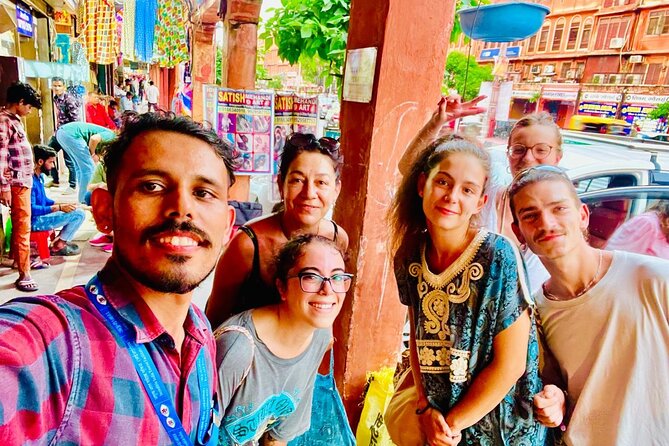
Mandir Shree Laxminarayan Ji receives about 25 minutes, making it one of the longer temple stops. It is dedicated to Lord Vishnu and Goddess Laxmi.
This visit adds another layer to the religious side of Jaipur. Rather than treating temples as quick photo stops, the tour uses them to explain Hindu worship, sacred architecture, and the meaning attached to these places. The supplied details describe a peaceful atmosphere and ornate design, though the exact ceremony or activity you see can depend on the time of day.
The temple admission is listed as free. As with the other religious sites, listen to your guide’s instructions and respect the setting.
Afterward, you walk through Johri Bazar, the city’s famous jewelry and handicraft market. The name is closely tied to jewelry, and the route lets you see colorful shops and traditional commercial activity without making shopping the main purpose.
This section may appeal most to people who like local streets more than polished attractions. It can also test your patience. Markets are active places, and the route takes you through narrow urban spaces rather than quiet museum halls. Keep your group together and listen for meeting instructions.
Katla Purohit Ji Ka comes next. The old market lanes offer another view of Jaipur’s commercial heritage. This is a short, atmospheric section where the pleasure comes from observing the street pattern, shops, and movement around you.
The market stops are also where the guide’s personality matters most. A guide who can explain local customs, trade, religion, and daily routines adds much more than a list of dates. The strongest feedback about this tour focuses on that human element. Aditya is praised for making the city easy to understand, while Ankit and Richi are described as passionate and engaging. One guide was also praised for strong English and for bringing personal academic knowledge into the discussion.
The exact guide may vary, so treat those names as examples rather than a promise. The provider is RICH walk, and the experience is private for your group, not a mixed public group.
More Local Culture and Traditions Tours in India
- Old Delhi Food, Heritage&Cultural Walk with Rickshaw ride to Masterji Kee Haveli
★ 5.0 · 742 reviews - The Cultural And Historical Walking Tour in Margao
★ 5.0 · 280 reviews - Experience Bangalore – City Tour, Authentic Food & market (Food/Culture/History)
★ 5.0 · 156 reviews - Old Delhi Walking Tour: Food, Culture & Spice Bazaars
★ 5.0 · 94 reviews
Finishing with Isarlat Sargasooli views

The final stop is Isarlat Sargasooli, also called Sargasooli or Sarkasuli, a historic tower built in the 18th century. You spend about 10 minutes here, and the listed admission is 200 INR.
The tower is a fitting endpoint. After temples, markets, and palace buildings at street level, you finish with a higher view over Jaipur. The guide explains its importance and architectural features, while you get time for photographs and a last look across the city.
Ten minutes is enough for a quick stop, but not a long visit. If you want to linger, ask whether the schedule allows it. The listed end point is at Aatish Market, Gangori Bazaar, J.D.A. Market, in the Kanwar Nagar area.
The view also gives the walk a clear shape. You begin with astronomy and royal planning, pass through worship and commerce, and finish by looking back over the city. That broad arc makes the route more satisfying than a string of unrelated stops.
What the $20 price really covers
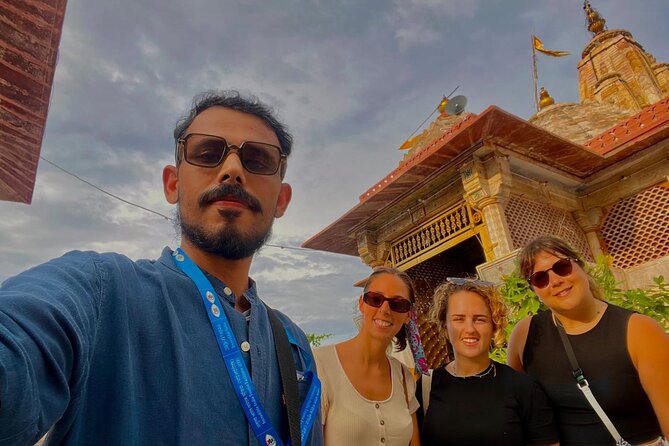
At $20, the tour price is reasonable for a private walking experience lasting about 2 hours and 25 minutes. You are paying for a guide, a planned route, local explanation, and the ability to ask questions within your own group.
The extra fees deserve close attention:
- Jantar Mantar: 200 INR
- City Palace: 1,000 INR
- Hawa Mahal: 200 INR
- Isarlat Sargasooli: 200 INR
If all four listed fees apply, admission adds up to 1,600 INR per person. The City Palace fee is the major expense. The tour also includes a water bottle and an English and Spanish written guide, which are small but practical additions in Jaipur’s heat.
The private format improves the value for families or small groups. You can ask for more detail about religion, architecture, history, or daily life instead of following a fixed lecture. The group discount may help larger parties, though the supplied details do not state the discount amount.
The tradeoff is breadth over depth. You see many places, but most stops last only 10 to 25 minutes. That makes the walk useful for orientation and first impressions, not for a slow examination of every monument.
Who will enjoy this Jaipur walk most

I would recommend this tour to first-time Jaipur visitors who want a quick framework for the city. It gives you royal buildings, religious sites, markets, and a city view in one compact route.
It also fits people who learn best through conversation. The strongest praise centers on guides who answer questions, tailor the discussion, and explain local culture in clear English. A guide described as a PhD student was especially good at adapting the tour to the subjects that interested the group.
Families can benefit from the variety. Children may find large astronomical instruments, temples, markets, and a tower more engaging than a long palace lecture. The schedule is still active, so make sure everyone in your group is comfortable walking for more than two hours.
This may not suit you if you want private transport, a slow palace visit, or extensive indoor sightseeing. It also may disappoint if entering Hawa Mahal is essential. The tour passes by the facade but does not include the interior.
Wear comfortable walking shoes and carry a little patience for city streets. A water bottle is supplied, and public transportation is nearby, but the experience is built around walking from stop to stop.
Booking advice and cancellation terms
Confirmation is provided at booking, and the experience is described as suitable for most people. It is a private activity, so only your own group participates.
Free cancellation is available if you cancel at least 24 hours before the local start time. Cancellations or changes made less than 24 hours ahead are not accepted for a refund.
Because the route depends on temples and an aarti ceremony, I would ask the provider about the start time if that ceremony is especially important to you. I would also confirm which paid sites you plan to enter, particularly Hawa Mahal, since the scheduled visit there is outside only.
Should you book the Heritage Culture and History Walking Tour?
Book it if you want Jaipur explained by a personable guide rather than viewed only through a car window. The mix of Jantar Mantar, City Palace, temples, old markets, Hawa Mahal, and Isarlat Sargasooli gives you a useful first reading of the city.
The biggest reasons to choose it are the private format, the guide’s reported ability to answer questions, and the balance between famous sights and ordinary streets. The main cautions are the added entrance fees, the short time at major monuments, and the exterior-only visit to Hawa Mahal.
For a compact introduction with strong cultural context, this is a good buy. For full palace interiors or a slow architectural study, use it as your first Jaipur walk, then return independently to the places that catch your attention.
FAQ
Where does the tour begin?
It begins at the Jantar Mantar ticket counter in Jaipur.
Where does the tour end?
It ends at Isarlat Sargasooli, also known as Sarkasuli, near Aatish Market and Gangori Bazaar.
How long does the tour last?
The walk lasts approximately 2 hours and 25 minutes.
Is this a private tour?
Yes. Only your own group participates.
What is included in the price?
A water bottle and an English and Spanish written guide are included.
Are admission tickets included?
No. Admission tickets for Jantar Mantar, City Palace, Hawa Mahal, and Isarlat Sargasooli are listed separately.
How much are the listed admission fees?
Jantar Mantar is listed at 200 INR, City Palace at 1,000 INR, Hawa Mahal at 200 INR, and Isarlat Sargasooli at 200 INR.
Does the tour enter Hawa Mahal?
No. The scheduled visit is outside the palace, where you can see the facade and hear about its design and history.
Does the tour include shopping?
The route passes through Chandi Ki Taksal, Johri Bazar, and Katla Purohit Ji Ka. Shopping is not promoted, but you can browse or shop at your own discretion.
Can I cancel for a full refund?
Yes, if you cancel at least 24 hours before the experience’s local start time. Changes or cancellations made less than 24 hours ahead are not accepted for a refund.
More History Walking Tours in Jaipur
- Jaipur@Twilight Guided Heritage City walk tour with Food Tasting
★ 5.0 · 67 reviews - Jaipur Heritage Walking Tour
★ 4.5 · 31 reviews - Cyclin’Jaipur – Pink City Heritage walking Tour
★ 5.0 · 18 reviews - History and Hauntings of Salem Guided Walking Tour
★ 5.0 · 14,564 reviews
More Local Culture and Traditions Tours in Jaipur
- Amsterdam Food and Cultural Tour with Tastings
★ 5.0 · 4,315 reviews - Sevilla Food Tour: Tapas, Wine, History & Traditions
★ 5.0 · 3,468 reviews - Tromsø: Reindeer Camp and Sami Cultural Tour with Lunch
★ 4.7 · 3,326 reviews - Half Day Dominican Republic Cultural Tour : Small Group
★ 4.5 · 1,862 reviews
Just added around Jaipur
- Jaipur City Heritage and Architecture Tour★ 5.0 · 32 reviews
- Private Jaipur Sightseeing Tour with Car and Guide★ 5.0 · 27 reviews
- Jaipur@Twilight Guided Heritage City walk tour with Food Tasting★ 5.0 · 67 reviews
- Jaipur Heritage Walking Tour★ 4.5 · 31 reviews
- Cyclin’Jaipur – Pink City Heritage walking Tour★ 5.0 · 18 reviews
- Nahargarh Water Walk – Guided 2-Hour Heritage Tour in Jaipur★ 5.0 · 89 reviews
- Full-Day Private Tour Heritage of Jaipur with Amber Fort★ 4.5 · 21 reviews
- Unlock Hidden Amber! – Guided 2-Hour Heritage Tour in Jaipur★ 5.0 · 62 reviews
Local Culture & Traditions Tours, compared.

Amsterdam Food and Cultural Tour with Tastings
Read our review →
Sevilla Food Tour: Tapas, Wine, History & Traditions
Read our review →
Tromsø: Reindeer Camp and Sami Cultural Tour with Lunch
Read our review →
Half Day Dominican Republic Cultural Tour : Small Group
Read our review →
Ultimate Melbourne Walking Tour: History, Laneways & Culture
Read our review →
Tromsø: Sámi Reindeer Sledding and Sami Cultural Tour
Read our review →
Kyoto Gion: 2-Hour Geisha Culture & History Walking Tour
Read our review →
Marrakech Historical and Cultural Tour – Half Day City Tour
Read our review →Browse the lists this tour appears in