
Review · RAJASTHAN
Heritage Walk & Street Food Tasting in Jaipur
Come hungry, leave curious. This three-hour walk pairs samosas, kachoris, sweets and masala chai with Jaipur’s old lanes, painted houses, temples and working artisan streets. I like that it goes beyond a standard food crawl: you also learn why the Pink City was laid out so precisely, how its gates shaped movement, and where local crafts are still made.
I also like the small-group format, limited to 10 people, and the guides’ personal approach. Vivek, Kumar, Raj, Sam, and Pushpendra are among the guides praised for clear explanations, patience, flexibility and care, especially with solo visitors. The main consideration is simple: this is a three-hour walking tour through busy, uneven city streets, so it is not suitable for wheelchair users and may feel tiring in hot weather.
The $21 price is strong value if you want both food and orientation on your first day in Jaipur. You are not paying only for snacks. You are paying for local access, help choosing what to eat, cultural background, and a safer way to handle the old city’s maze of lanes.
Five Things That Make This Walk Worthwhile
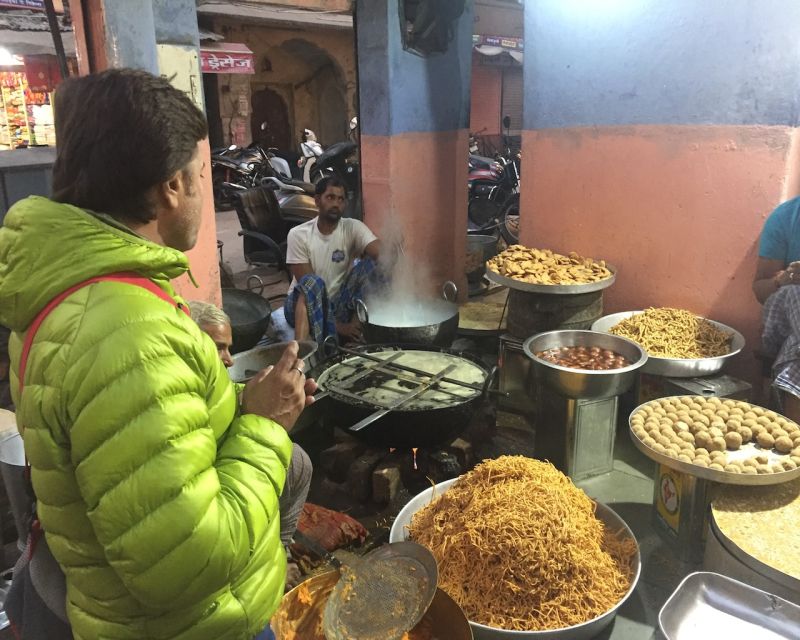
- About 15 food samples are possible: Several outings included roughly 15 items at six stops, though the exact selection can vary.
- The route leaves the main lanes: You enter smaller gullies, artisan quarters and streets that are easy to miss on your own.
- Food comes with context: Guides explain ingredients, recipes, eating customs and how to judge busy local food stalls.
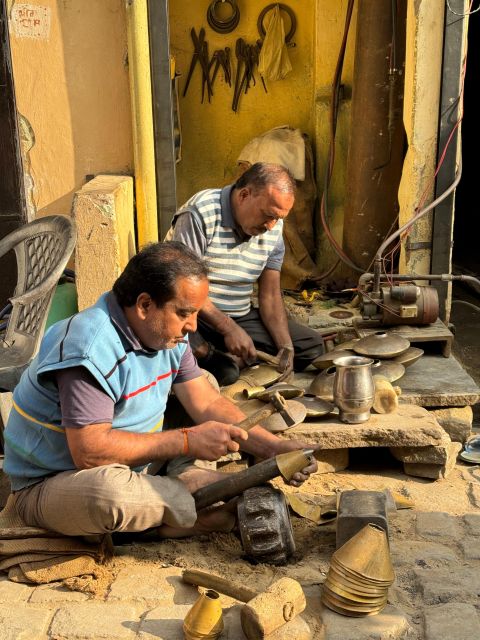
- Craftspeople are part of the story: You may see metal beaters called Thatheras, bangle makers working with sealing wax, and other local artisans.
- The group stays small: A maximum of 10 people gives you a better chance to ask questions and adjust the pace.
- The finish is well placed: Ending at Chhoti Chopad leaves you in the old city, rather than sending you back to the starting point.
Starting at Golcha Cinema
The meeting point is the entry gate of Golcha Cinema. This is important to check carefully, since one visitor arrived at the wrong place after a map link caused confusion. The guide was able to coordinate with the driver, but it is better to confirm the gate before setting out.
From there, you head toward Chaura Rasta. The route is not a sightseeing loop viewed from a vehicle. You walk through the old city, where traffic, shopfronts, pedestrians, painted facades and food stalls all share the same narrow public space.
Wear shoes you can walk in for three hours. Comfortable clothing, sunscreen and a hat are sensible, particularly when the sun is strong. Jaipur weather can change, so a light layer may also help. Water is included, but carrying your own bottle is still useful.
The tour is offered in English with a live guide. The company says it has no hidden sales agenda, which matters in a city where some sightseeing routes can turn into shopping stops. The focus here is food, architecture, local life and craft.
More History Walking Tours in India
- Fontainhas Heritage Walk by Make It Happen
★ 5.0 · 2,834 reviews - The Great Indian Food Tour: Old Delhi Food and Heritage Walk
★ 5.0 · 1,698 reviews - Old Goa Heritage Walk by Make It Happen
★ 5.0 · 797 reviews
Chaura Rasta: Tea, Snacks and the City’s Geometry
The first section lasts about 45 minutes and introduces the character of old Jaipur. You can expect a guided walk with tea and street food, rather than one large meal at a single restaurant.
Masala chai at a local tea shop gives you an easy start. It is also a chance to see how an everyday drink fits into the rhythm of the street. The guide can explain what you are tasting and how the stop connects with local habits.
The food may include samosa, kachori and other savory snacks. These are filling items, so pace yourself. One useful tip from past outings is not to eat a large breakfast before joining, especially if you want to try the full range of food.
This part also introduces Jaipur’s planned design. The old city is famous for its geometric organization, its quadrants and its entry gates. The point is not just to admire a pretty facade. You begin to understand how streets, markets and neighborhoods fit together.
The drawback is that walking and eating at the same time can be a little awkward. You may be standing, sharing space with shoppers and traffic, or moving between stops before you have fully finished one item. That is part of the local experience, but it is not a polished restaurant meal.
Badi Chaupar: Local Snacks Beside Major City Views
The next 45 minutes brings you to Badi Chaupar, one of the old city’s key squares. Here, the pace includes more tea, walking, local snacks, food tasting and views along the way.
Badi Chaupar helps you connect Jaipur’s grand plan with daily use. The square is not isolated from city life. It is part of the working old city, with people moving through on errands, shopping and business.
Your guide may use this stretch to explain the meaning of nearby buildings, street patterns and the city’s royal past. Several guides have been praised for adding background stories rather than simply naming monuments. That difference matters. You are more likely to remember why a place matters if the explanation connects it to people, trade, religion or everyday work.
The food stops are designed for variety. Expect more than the headline samosa and kachori. Famous sweets and other regional items may appear, depending on the day and what local shops are serving.
I would treat the food as a tasting route, not a fixed menu. The exact number of dishes can change, and the description does not promise every item on every departure. Still, several outings included enough food to leave people very full, so this is not a token sample tour.
Tripolia Bazar: Shops, Stories and Side Streets
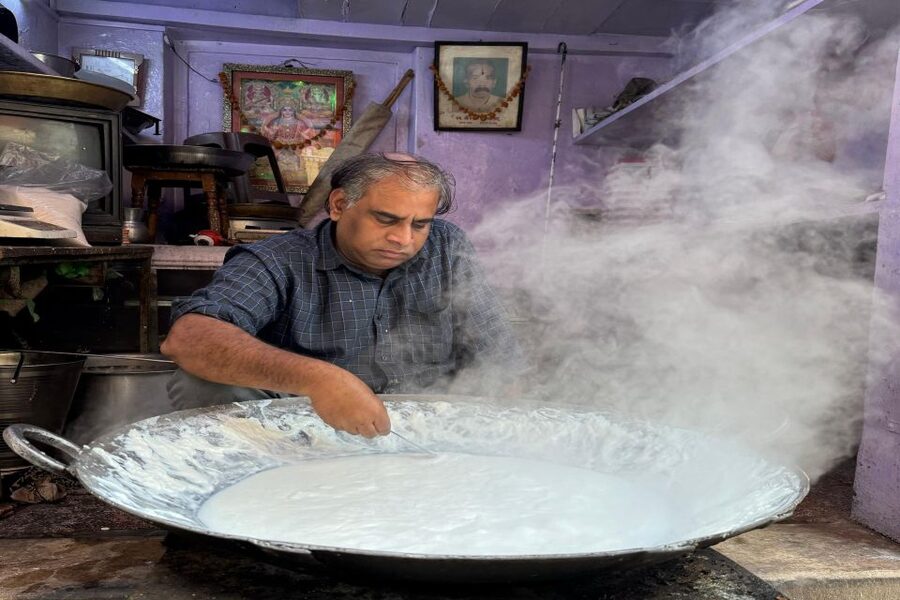
Tripolia Bazar is the third major section, again planned for around 45 minutes. This is primarily a guided walk and pass-by section, so do not expect every minute to involve eating.
That pause from food is useful. Jaipur’s old city deserves time to look up and around. You may pass fresco-painted houses, traditional shopfronts and architectural details that would be easy to miss while concentrating on your next snack.
The guide also takes you away from the main lanes and into smaller gullies. These side streets are where the tour feels most different from a standard Jaipur sightseeing circuit. You might see local residents going about their routines, craftsmen at work and smaller religious or community spaces.
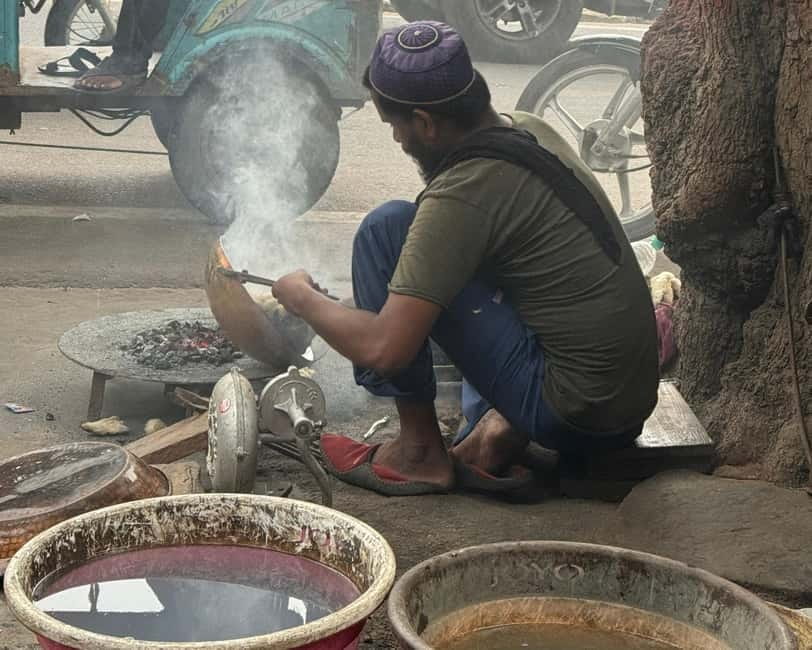
One particularly distinctive stop is a street associated with the Thatheras, a community of metal beaters. This gives the walk a working dimension. You are not just looking at Jaipur as a historic setting. You are seeing skills and occupations that still help define parts of the old city.
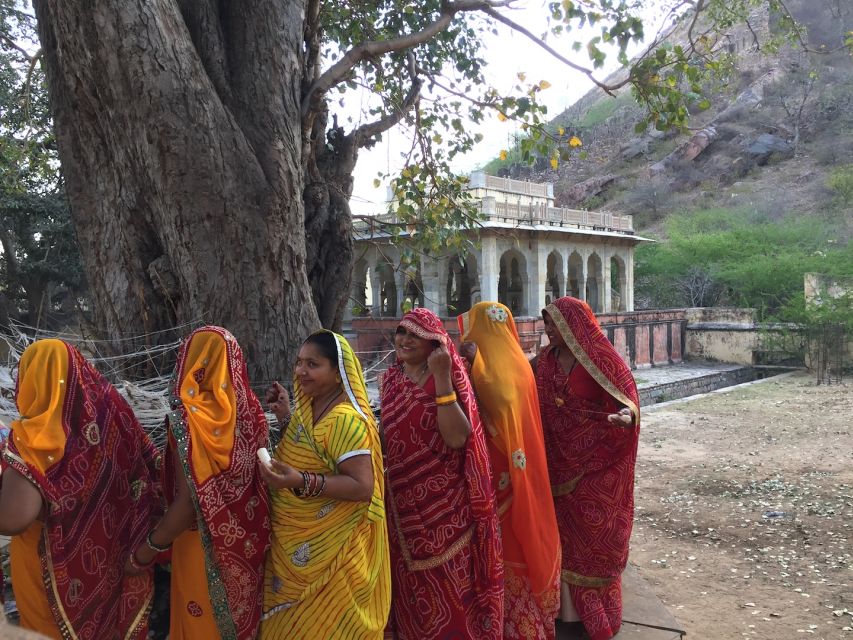
The route can also include a Hindu temple and a community well. These are modest but meaningful stops because they show how religion, water and neighborhood life shaped the city. Dress modestly for the temple, and avoid flash photography inside.
A guide makes a real difference here. Without local help, it would be hard to know which lane is worth entering, what a craft demonstration means, or when a temple visit requires extra respect. Guides including Vivek and Kumar have been praised for answering questions clearly and adjusting the walk to individual interests.
More Food and History Tours in India:
- The Great Indian Food Tour: Old Delhi Food and Heritage Walk
★ 5.0 · 106 reviews - Jaipur: History Street Food Tour with Local Guide
★ 4.4 · 50 reviews - Sevilla Food Tour: Tapas, Wine, History & Traditions
★ 5.0 · 3,468 reviews - Victoria Guided Food and History Tour
★ 5.0 · 2,015 reviews
Chhoti Chaupar: A Final Round of Street Food
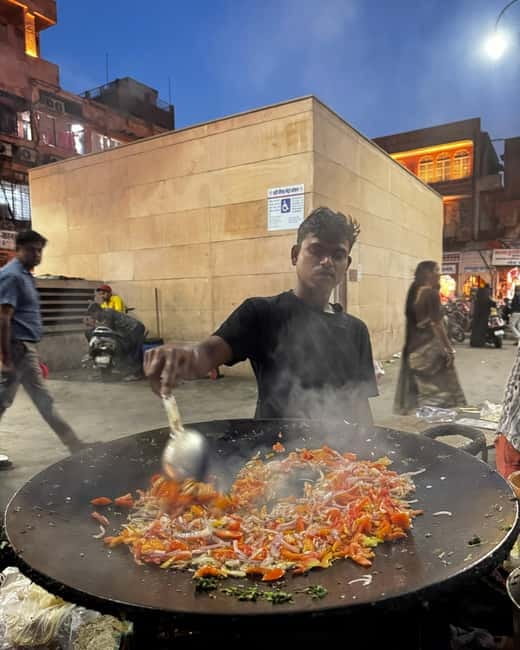
The last 45-minute section takes you to Chhoti Chaupar for more street food, local snacks and regional tasting. By this stage, you may already be full, so small portions and sensible pacing are your friends.
The food may include more sweets, savory items and drinks. A previous visitor suggested that the order could sometimes be improved, with sweet foods arriving before savory dishes. That is a minor issue, but useful to know if you prefer to finish with a clean savory taste rather than a sugar-heavy mouthful.
This is also where you can compare different kinds of Jaipur food. A kachori is not simply another fried snack. The texture, filling and spice can vary from one place to another. A good guide points out those differences and helps you understand what makes a local version special.
If you have a sensitive stomach, low spice tolerance or dietary restrictions, tell the guide at the beginning. One visitor with IBS and little tolerance for spice reported eating the full selection without trouble, and another group said the guide chose food they felt comfortable trying. That is encouraging, but it is not a guarantee. Food safety and tolerance differ from person to person.
The tour finishes at Chhoti Chopad, not back at Golcha Cinema. That makes the end practical if you want to continue exploring the old city, though you will need to arrange your own transport afterward. Hotel pickup and drop-off are not included.
What You Get for $21
At $21 per person, this is one of the better-value ways to spend three hours in Jaipur if you want an introduction rather than a formal monument tour.
The included package covers samosa, kachori, sweets, masala chai and other local-shop tastings, bottled water, the cultural walk guide and the heritage walk itself. Alcohol is not included, though that is unlikely to matter for a daytime food route focused on tea and traditional snacks.
The real value comes from combining several services in one outing. You get a food guide who helps you choose, a city guide who explains the streets, and a local escort who can make unfamiliar lanes feel manageable. Several solo visitors appreciated feeling safe and looked after, including one person who was helped onto an Uber at the end.
The small group limit of 10 is another plus. You are not part of a large crowd trailing behind a guide. You can ask about ingredients, religion, architecture, crafts or practical Jaipur advice. Some past outings were flexible enough to follow personal interests, and several people later arranged extra sightseeing with the same guide, including City Palace and Jantar Mantar.
Still, keep the price in perspective. You are not buying admission to those major sights, and the tour does not include hotel transport. If your only goal is to eat as many dishes as possible, a self-guided snack hunt might cost less. You would, however, lose the background, route planning and local judgment that give this walk its value.
The Guides Make the Biggest Difference
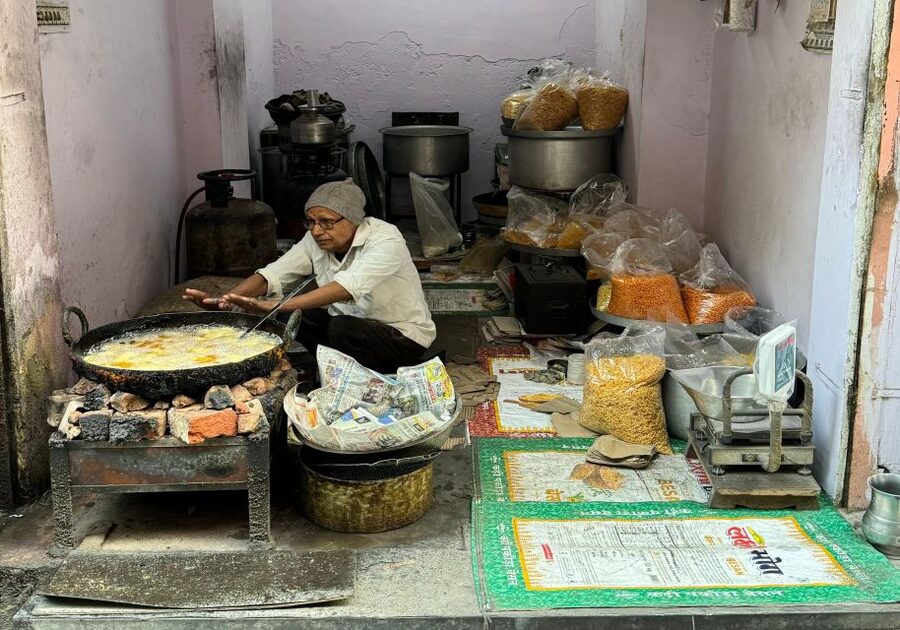
The guide quality is the strongest part of this experience. Vivek is praised repeatedly for his calm manner, local contacts, city knowledge and ability to explain food and history without rushing. Kumar is noted for clear speech and engaging stories, while Raj is described as warm and passionate about Jaipur.
Other guides named in the feedback include Sam and Pushpendra. The important point is not to expect one single personality every time. The experience depends partly on who leads your departure, but the consistent pattern is a friendly guide who knows the city well and takes the work seriously.
You can expect more than a list of facts. The best moments come when a guide connects a dish with a neighborhood, a craft with a community, or a gate with Jaipur’s urban plan. That is what turns three hours of walking into a useful introduction to the city.
The guides also appear comfortable with different kinds of visitors. They have adjusted food choices, slowed down for photos, answered basic questions patiently and helped solo visitors feel at ease. If you have a specific interest in food, religion, architecture or crafts, say so early.
Who Should Book This Jaipur Walk?
I would choose this tour for a first or second day in Jaipur. It gives you a working sense of the old city before you tackle larger sights, and it can help you recognize foods and streets later in your visit.
It suits you especially well if you:
- Want local snacks without choosing every stall yourself
- Enjoy history and architecture in small doses
- Prefer walking to sitting in a restaurant
- Are traveling alone and want a social but small-group activity
- Like meeting artisans and seeing ordinary neighborhood life
- Want practical food guidance in English
It is less suitable if you dislike crowds, cannot walk comfortably for three hours, need wheelchair access, or want a quiet sit-down meal. It may also be tiring during very hot weather. Bring water, sunscreen and medication you may need, and wear shoes that will not punish you by the final stop.
Photography is allowed, but ask before photographing people at close range and avoid flash inside temples. Modest clothing is the right choice for religious sites.
Should You Book It?
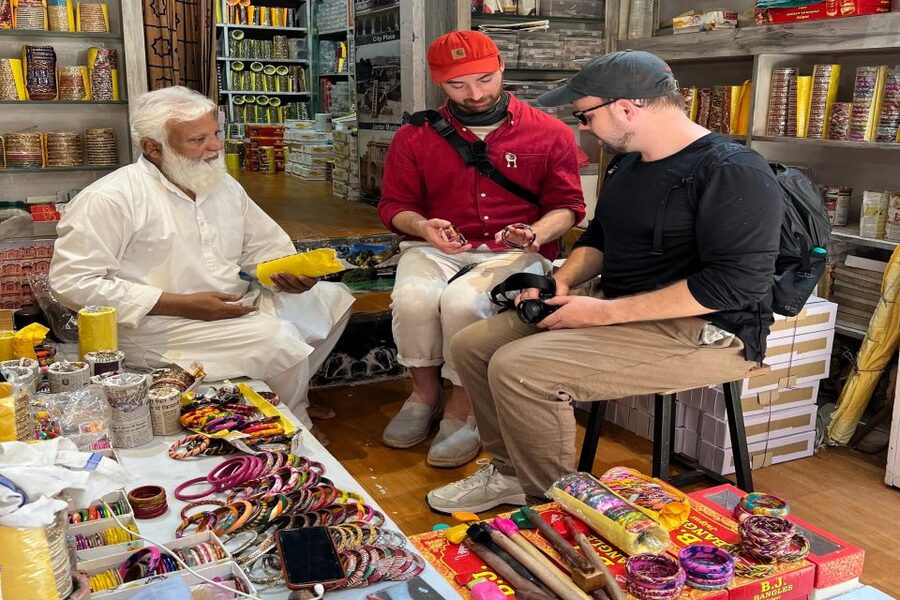
Book this if you want Jaipur explained through food, streets and people rather than only through palace facades. The strongest reasons are the small group, the range of tastings, the side-street route and guides such as Vivek, Kumar and Raj, who bring warmth and local detail to the walk.
I would not book it solely for a guaranteed menu or a relaxed restaurant experience. The food selection can vary, the route is active, and the city can be noisy and crowded. But at $21, the combination of snacks, tea, crafts, temples, architecture and local guidance is hard to fault.
For many visitors, this is a smart opening move in Jaipur: eat carefully, learn the city’s layout, and finish with enough practical knowledge to explore the Pink City with more confidence.
FAQ
Where does the tour start?
The tour starts at the entry gate of Golcha Cinema in Jaipur.
Where does the tour finish?
The walk finishes at Chhoti Chopad, also known as Chhoti Chopad.
How long does the experience last?
The tour lasts three hours. Availability should be checked for the specific starting time.
What food is included?
Included tastings feature samosa, kachori, famous sweets, masala chai and other local street food from nearby shops.
Is hotel pickup included?
No. Hotel pickup and drop-off are not included, so you must make your own way to Golcha Cinema and arrange transport after finishing at Chhoti Chopad.
Is the tour suitable for wheelchair users?
No. The experience is not suitable for wheelchair users because it involves extensive walking through old-city streets.
More Food Tours in India
- Old Delhi Food, Heritage&Cultural Walk with Rickshaw ride to Masterji Kee Haveli
★ 5.0 · 742 reviews - Old Delhi Food-Spice Market-Temples Tour Soon Featured on NETFLIX
★ 5.0 · 304 reviews - Experience Bangalore – City Tour, Authentic Food & market (Food/Culture/History)
★ 5.0 · 156 reviews - Old Delhi Walking Tour: Food, Culture & Spice Bazaars
★ 5.0 · 94 reviews
Just added around India
- Georgetown heritage walking tour in Chennai about the founding of Chennai★ 5.0 · 144 reviews
- Private Chennai Day Tour – Art History and Contemporary Chennai★ 5.0 · 21 reviews
- Chennai Heritage & Cultural Walk (2 Hours Guided Walking Tour)★ 3.5 · 32 reviews
- Exploring Mylapore: A Cultural & Historical Walking Tour★ 5.0 · 42 reviews
- See Bangalore through my eyes (Cultural / Historical / Walking Tour)★ 5.0 · 60 reviews
- Malleswaram heritage walk, an immersive walking tour in Bangalore★ 5.0 · 20 reviews
- Treasures of Mysuru – day tour★ 5.0 · 27 reviews
- Bangalore Heritage and Cultural Walking Tour★ 3.5 · 21 reviews
Food & History Tours, compared.
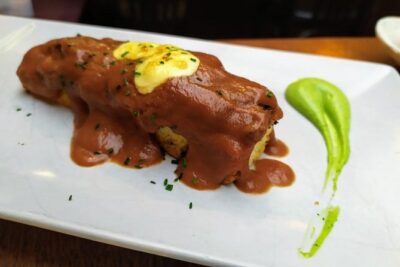
Sevilla Food Tour: Tapas, Wine, History & Traditions
Read our review →


Dublin Historical Centre Food Tour with 8 Food Tastings & Drinks
Read our review →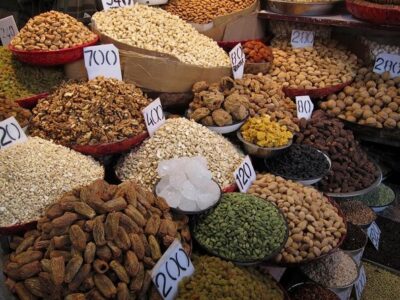
The Great Indian Food Tour: Old Delhi Food and Heritage Walk
Read our review →

Browse the lists this tour appears in