
Review · CASTILE AND LEóN
From Madrid: Ávila and Salamanca, a day among history and walls
Golden stone tells the story. This 11-hour trip links Salamanca’s grand university and cathedral with Ávila’s medieval walls and Santa Teresa sites, all in a small group of no more than eight people. I like the personal scale, which gives your guide room to answer questions and adjust the pace. I also like that cathedral, university, convent, air-conditioned transport, bottled water, and a drink in Ávila are included.
The main drawback is the length. Salamanca and Ávila are full-day destinations on their own, so this is a busy schedule with several hours on the road. You must also reach the Madrid meeting point yourself, pay for lunch, and be comfortable walking on cobbled streets. Still, for a first look at Castile and León, it offers a lot in one day.
Key points to know before booking
- Maximum of eight people: The small vehicle and limited group make it easier to hear the guide and ask questions.
- Two very different cities: Salamanca brings university life, ornate stonework, and grand interiors. Ávila offers quiet streets, medieval defenses, and the world of Saint Teresa.
- Three major admissions included: Your price covers Salamanca Cathedral, the University of Salamanca, and the Convent of Santa Teresa.
- Lunch is independent: You get a 90-minute restaurant break, but food and drinks are not included.
- Several guide languages: Tours are offered in English, Spanish, Portuguese, Chinese, and German.
- A long but useful day: The $153 price makes the most sense if you want both cities without arranging intercity transport and admissions yourself.
What the $153 price really buys you
At $153 per person, this is not the cheapest way to see Salamanca and Ávila. Yet the price includes the return transportation, a live guide, three paid entrances, bottled water, and coffee, tea, or wine at a terrace in Ávila. That gives you a clearer sense of the value than the headline price alone.
You are paying for convenience as much as sightseeing. Without this tour, you would need to plan the route between Madrid, Salamanca, and Ávila, work out how to fit both cities into one day, arrange entry tickets, and find your way through historic centers. The tour handles that structure for you.
The small group matters, too. A maximum of eight people is a real advantage over a large coach excursion. You are more likely to hear explanations clearly, keep the group together, and ask about details that catch your eye. Recent departures were led by guides including Andrés, Andreas, Elena, Miguel, and André. Andrés was especially praised for giving useful historical information without making the day feel dull, while Andreas was noted for his enthusiasm and welcoming manner.
Lunch remains your own expense. The plan allows 90 minutes at a traditional restaurant, with dishes such as Salamanca hornazo, chanfaina, grilled meats, and country stews available as regional choices. That is a good amount of time for a proper meal, but you should budget for it separately.
A few more history tours around Madrid worth a look
- Madrid Essential: Historic Center, Plaza Mayor & Royal Palace
★ 5.0 · 6,416 reviews - Madrid Tapas & Taverns Small Group Food & History Tour
★ 5.0 · 2,664 reviews - Madrid Historical Tour with Local Guide in Eco Tuk Tuk Private
★ 5.0 · 876 reviews
Meeting in Madrid and setting out
Pickup is not provided at your hotel. You meet at the corner of O’Donnell Street and Menéndez Pelayo Avenue, by the large iron gate called Puerta de O’Donnell. Arrive at least 10 minutes early, since a small-group departure cannot easily wait for late arrivals.
The vehicle has air conditioning, an important comfort on a long day. Bottled water is also supplied. The exact departure time depends on availability, so check the chosen date carefully before making other plans in Madrid.
Bring comfortable shoes and practical clothing. The historic centers use cobbled streets, and the day includes walking in Salamanca and Ávila. You also need a passport or identity card, with a copy accepted according to the tour information.
Salamanca begins with golden stone
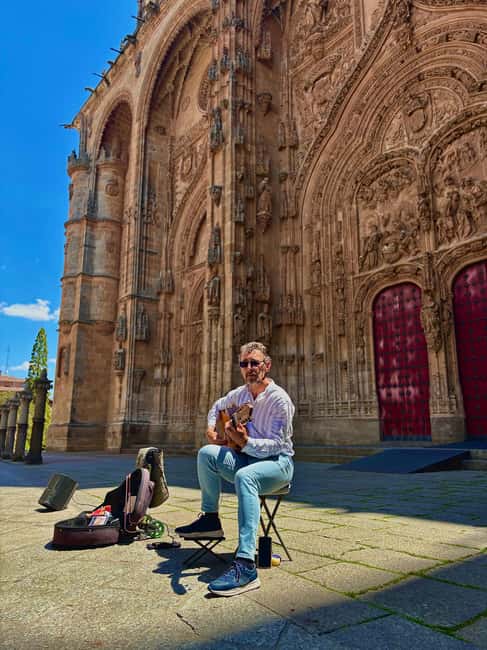
The first Salamanca visit gives you a short introduction to the city before the longer interior visits. Allow about 30 minutes for this initial look around. Salamanca is known for its warm-colored stone, formal squares, towers, and lanes that reward slow walking.
The city’s visual character is one of the pleasures of this stop. Sunlight changes the tone of the buildings, and carved façades give your guide plenty to point out. You will not simply be ticking off monuments. The best part is understanding how the city’s religious and academic buildings fit together.
The time is brief, so do not expect to see every corner. Think of this first walk as orientation. It helps you understand where you are before entering the major sites.
Salamanca Cathedral, Romanesque beside Gothic
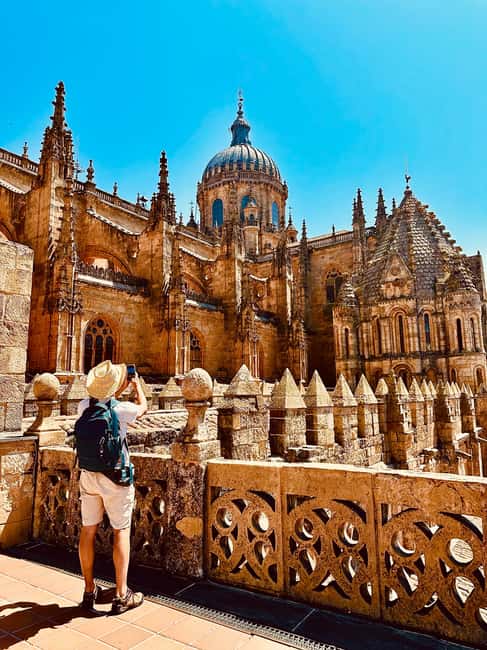
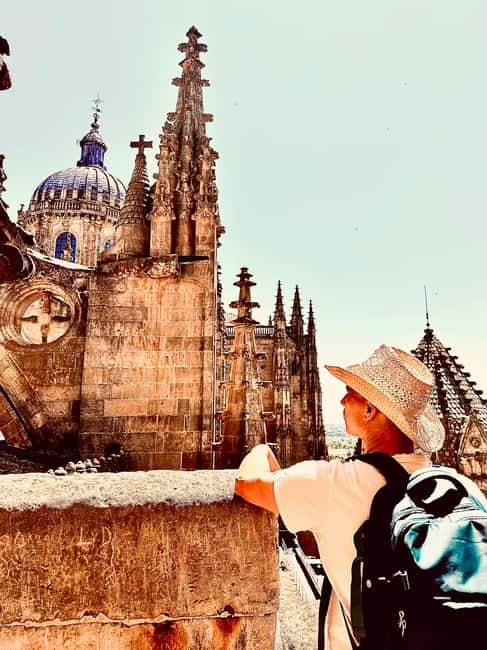
The cathedral visit lasts about an hour, and admission is included. Salamanca’s cathedral complex brings together Romanesque and Gothic styles, giving you a useful lesson in how Spanish churches changed over time.
Inside, high vaults and filtered light create a quieter mood than the busy streets outside. This is a place where your guide’s explanation adds real value, especially if you want to understand why the building looks like an architectural blend rather than one clean style.
You should expect some standing and walking on stone flooring. If church interiors are not your main interest, the visit may feel long at points, but the architectural contrast makes it one of the day’s stronger stops.
Same place, a different slice of the past:
- Madrid Historic Centre Food Tour with Authentic Tapas & Wines
★ 5.0 · 814 reviews - Madrid Historical Walking Tour
★ 5.0 · 721 reviews - Madrid in a Day Tour:Royal Palace, Historic Center & Prado Museum
★ 5.0 · 628 reviews - Madrid Local’s Tapas Tour Dinner with a side of History
★ 5.0 · 530 reviews
The University of Salamanca and its famous frog
The University of Salamanca receives about an hour, with entry included. Founded in the 13th century, it is among Europe’s oldest universities and remains one of the city’s defining symbols.
The best-known detail is the tiny frog carved into the ornate Plateresque façade. Finding it has become a local tradition, so listen closely when your guide explains where to look. It is a small detail, but it gives the façade a playful human touch.
Inside, you visit historic classrooms associated with generations of scholars and poets. The rooms are less about spectacle than atmosphere. You can picture the long academic life of the institution through its old interiors and restrained design.
I would give this visit your full attention. The exterior is easy to admire on your own, but the meaning of the carvings and the history of the classrooms are much easier to grasp with a guide. Elena, Miguel, Andrés, Andreas, and André are among the guides associated with recent departures, and the strongest feedback focused on their clear, engaging explanations.
A 90-minute lunch with regional food
The lunch break lasts about an hour and a half at a traditional local restaurant. Food is not included, and you choose and pay for your own meal.
This is a useful pause in the middle of a long day. Regional dishes may include hornazo, a Salamanca meat-filled pastry, chanfaina, grilled meats, or country stews. Local wines are also available. The tour does not promise a fixed menu, so treat these as examples rather than guaranteed dishes.
You have enough time for a relaxed meal, but keep an eye on the departure schedule. The afternoon still includes the drive to Ávila, a city visit, the convent, and a terrace stop.
Ávila and its medieval walls
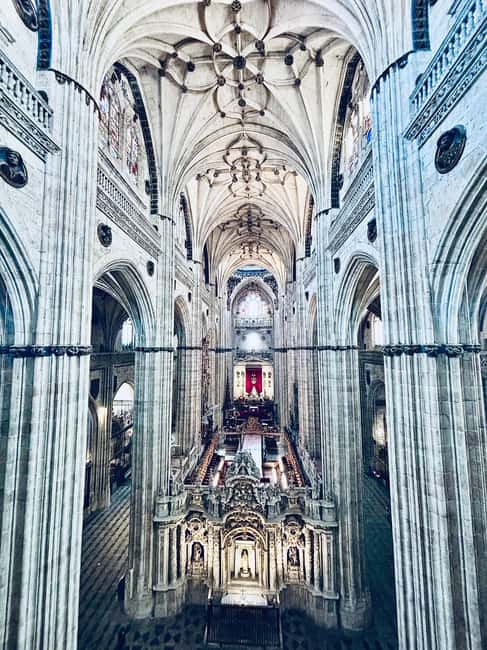
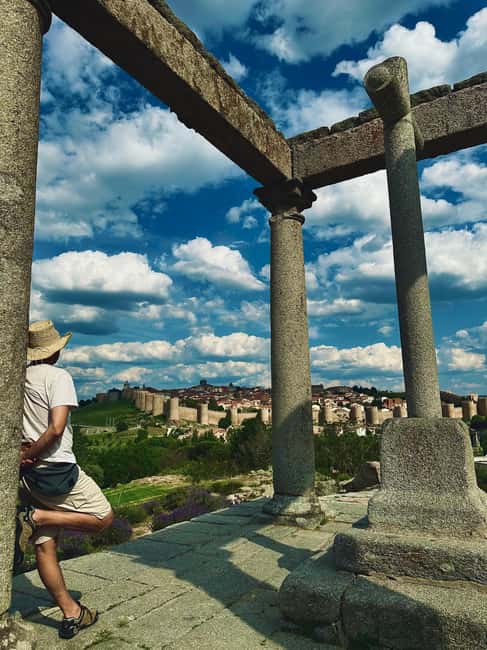
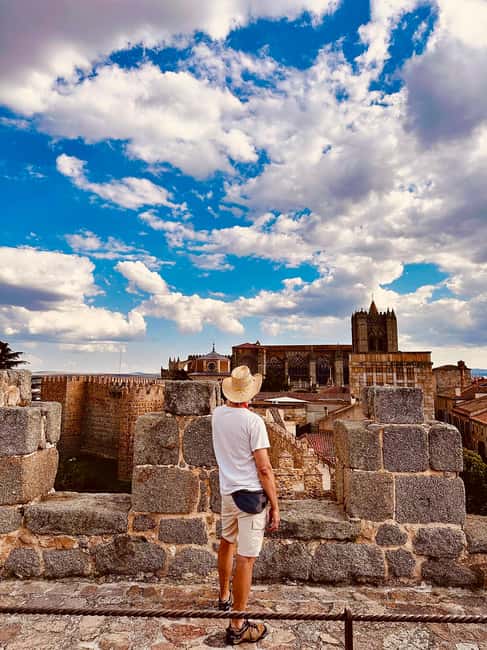
The Ávila visit begins with about 30 minutes of walking and orientation. The city feels markedly different from Salamanca. Here, the great attraction is the fortified setting, quiet lanes, and pale golden stone.
The walls are the visual symbol of Ávila, even though this tour description does not promise a full wall-walk or a specific section of wall access. You should expect to admire them and understand their place in the city’s identity, while following the guide through streets and squares.
The half-hour city visit is enough to give you the shape of Ávila, but not enough for a slow, independent exploration of every quarter. If you dream of spending a full day photographing the walls, this schedule may feel too compressed. If you want an introduction after Salamanca, the contrast works well.
The Convent of Santa Teresa
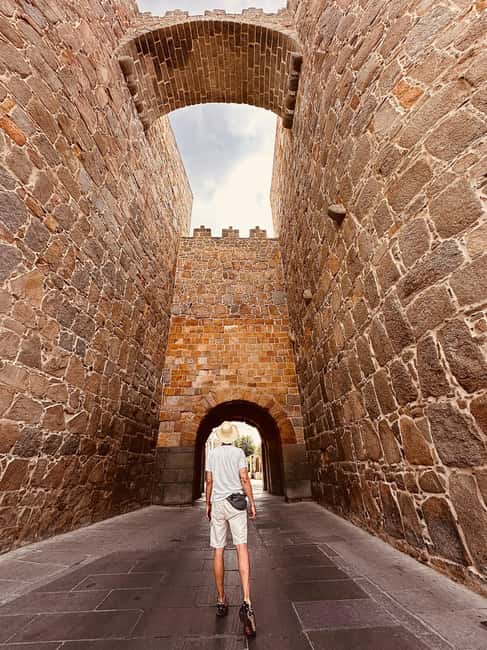
The Convent and Museum of Santa Teresa is the main interior visit in Ávila, with about an hour set aside and admission included. It was built on the house where Saint Teresa of Jesus was born.
Inside, the focus is on her religious and human legacy, including relics, writings, and personal objects. You get more than a quick look at an old convent. The visit explains why Ávila is linked so closely with Teresa and why the city became associated with Spanish mysticism.
You do not need to be a religious pilgrim to appreciate this stop. The convent offers a personal angle on the city, connecting its streets and stone buildings with one of Spain’s best-known spiritual figures. The experience is quiet and reflective, so it balances the more decorative architecture of Salamanca.
As with the cathedral and university, this is a guided visit rather than free time. That works well if you want context, but you may have less room to linger over individual objects.
A terrace drink before returning to Madrid
The schedule includes about 30 minutes at a local bar in Ávila. A coffee, tea, or wine at one of the city’s terraces is included.
This is a small but welcome detail. After a day of walking, you get a chance to sit, talk with the group, and take in the city at a slower pace. The drink is not a major attraction, but it makes the final part of the Ávila visit feel less rushed.
The timing may vary with the day’s progress, so do not count on a long independent break. It is best viewed as a short rest before the return journey.
Why the small group makes a difference
Eight people or fewer is one of the strongest reasons to choose this trip. The guides can keep the group together without the stop-and-start feel common on large excursions.
The small size also supports the friendly tone described by recent participants. Andrés was praised for being attentive and for selecting good viewpoints and visits. Andreas was described as enthusiastic, clear, and welcoming. Elena and Miguel were also noted for being approachable and willing to accommodate different needs.
That does not guarantee that every departure will feel identical. Guides have different personalities, and the precise route can vary with timing. But the format gives you a better chance of a personal exchange than a large bus tour.
The tour is available as a private or small-group experience. If you choose the private option, confirm how the price and group arrangement change before booking.
Walking, pace, and who should skip it
This is not a good choice for anyone with mobility impairments. The tour includes walking through historic centers, cobbled streets, church and convent interiors, and likely frequent standing during explanations.
You should wear shoes that are comfortable for a full day. Dress for changing conditions, since the experience moves between outdoor streets, vehicle travel, and indoor monuments.
The schedule is active rather than strenuous in a sporting sense. The biggest challenge is endurance. You leave Madrid, visit Salamanca, eat lunch, continue to Ávila, and return to Madrid in roughly 11 hours.
I would recommend it most to:
- First-time visitors to central Spain who want both cities in one day
- People who prefer an organized route to handling regional transport themselves
- History, architecture, university, and religious-art enthusiasts
- Solo visitors or couples who value a very small group
- People comfortable with a full day and moderate walking
I would choose a slower independent visit instead if you want extensive free time, long meals, or the chance to explore Salamanca and Ávila at night.
Practical booking advice
Free cancellation is available up to 24 hours before departure for a full refund, and you can reserve now and pay later. Those terms help if your Madrid plans are still shifting.
The tour offers live guiding in English, Spanish, Portuguese, Chinese, and German. Some material may be presented in its original language, so confirm your preferred language when selecting the experience.
Unaccompanied minors are not allowed. Children must therefore be accompanied, and the tour is not designed for independent young participants.
The return has two drop-off locations, Puerta de O’Donnell and Centro. Since no hotel pickup is included, check which return point is more convenient for your evening plans.
Should you book this Salamanca and Ávila day trip?
Book it if you want a well-organized introduction to two major Castilian cities and value a guide who can connect buildings, people, and local traditions. The included entries and small group make the $153 price easier to justify, especially when you add the cost and effort of arranging transport yourself.
Skip it if you dislike long day trips or need step-free, low-walking sightseeing. You will see a lot, but you will not have unlimited time in either city.
For the right person, this is a smart use of one day in Madrid: Salamanca supplies academic grandeur and ornate stonework, while Ávila brings medieval defenses and the quiet legacy of Saint Teresa. The pace is full, but the two places are different enough to make the long day worthwhile.
FAQ
How long does the tour last?
The experience lasts about 11 hours, including visits to Salamanca and Ávila and transportation from Madrid.
Where is the meeting point in Madrid?
You meet at the corner of O’Donnell Street and Menéndez Pelayo Avenue, beside the large iron gate called Puerta de O’Donnell.
Is hotel pickup included?
No. You must make your own way to the meeting point.
How many people are in the group?
The small-group option has a maximum of eight participants. Private options are also available.
Is lunch included?
No. The tour allows about 90 minutes for lunch, but you choose and pay for your own meal.
What admissions are included?
Entry to Salamanca Cathedral, the University of Salamanca, and the Convent of Santa Teresa is included.
Is a drink included?
Yes. The tour includes coffee, tea, or wine at a terrace in Ávila.
Which languages are available?
Live guiding is available in English, Spanish, Portuguese, Chinese, and German.
What should I bring?
Bring comfortable shoes, comfortable clothing, and a passport or identity card. A copy of the document is accepted.
Is the tour suitable for people with mobility impairments?
No. The tour is not suitable for people with mobility impairments because it involves walking through historic areas and visiting several sites.
Just added around Madrid
- Essential Madrid: Walking Tour of the Historic Center★ 4.7 · 58 reviews
- Madrid Historical in French (petit comité & private)★ 4.8 · 228 reviews
- Segway Private Tour in the Historic Center of Madrid★ 5.0 · 310 reviews
- Private: Madrid Historic Centre Food Tour with 10+ Authentic★ 5.0 · 97 reviews
- Guided Tour of Madrid of the Austrias and the Historic Center★ 5.0 · 520 reviews
- Madrid Local’s Tapas Tour Dinner with a side of History★ 5.0 · 530 reviews
- Madrid in a Day Tour:Royal Palace, Historic Center & Prado Museum★ 5.0 · 628 reviews
- Madrid Historical Walking Tour★ 5.0 · 721 reviews
Madrid History Tours, compared.

Madrid Tapas & Taverns Small Group Food & History Tour
Read our review →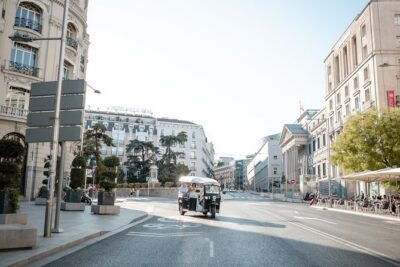
Madrid Historical Tour with Local Guide in Eco Tuk Tuk Private
Read our review →
Madrid Historic Centre Food Tour with Authentic Tapas & Wines
Read our review →
Madrid in a Day Tour:Royal Palace, Historic Center & Prado Museum
Read our review →
Madrid Local’s Tapas Tour Dinner with a side of History
Read our review →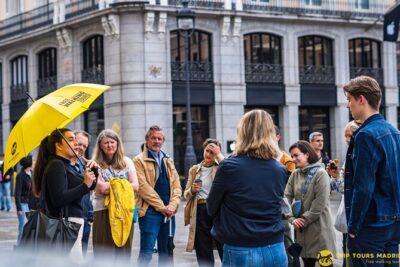
Guided Tour of Madrid of the Austrias and the Historic Center
Read our review →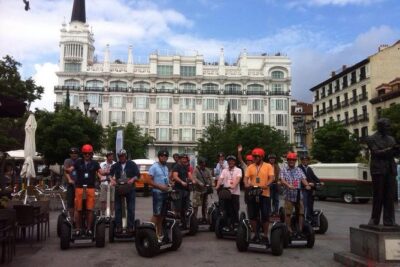
Segway Private Tour in the Historic Center of Madrid
Read our review →Browse the lists this tour appears in