
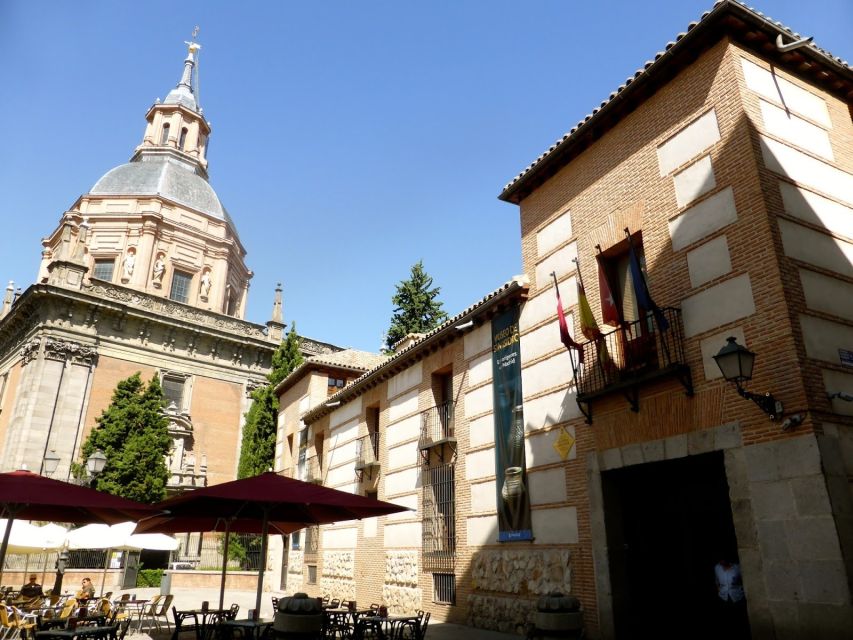
Review · COMMUNITY OF MADRID
Madrid Historical in French (petit comité & private)
Madrid rewards curious walkers. This French-language tour pairs small groups of up to 12 people with guides who explain the city through stories, questions, and local context. I especially like the fluent French commentary and the conversational style, which lets you ask about everything from Moorish Madrid to whether Spain’s royal family still lives at the palace.
I also like the route itself: Puerta Cerrada, Plaza Mayor, Mercado de San Miguel, Chocolatería San Ginés, Plaza de la Villa, the Royal Palace, and Almudena Cathedral give you a strong first look at central Madrid. The main consideration is that this is a walking tour without a food tasting, so you will need to return to San Ginés if churros are calling your name.
The standard experience lasts about two to two and a half hours and costs around $34 per person. That is fair value if you want historical context and a chance to talk with a guide rather than simply follow a memorized speech. Private bookings can add an hour in La Latina and allow the route to follow your interests more closely.
Key Things to Know Before You Book
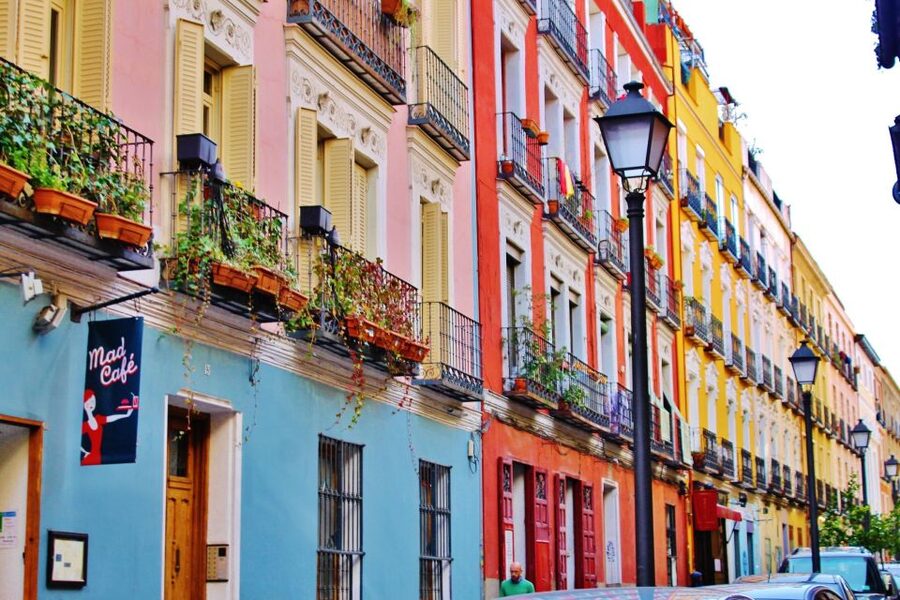
- French is the working language: The guides speak fluent French and explain Madrid’s past and present in a natural, accessible way.
- The group stays small: Shared tours are limited to 12 people, while private bookings offer a more personal pace and a customized route.
- Puerta Cerrada is the starting point: This historic square places you near Madrid’s oldest central streets from the very first minute.
- The route covers major sights from outside: You see Plaza Mayor, the Royal Palace, Almudena Cathedral, Plaza de la Villa, San Miguel Market, and San Ginés, but this is not an interior-entry tour.
- La Latina is the private-tour bonus: An extra hour traces the old Moorish quarter, now known for pedestrian lanes, old churches, bars, restaurants, and tucked-away palaces.
- Leire has earned especially warm praise: Her ability to connect history, current events, local anecdotes, and unexpected details makes the walk feel responsive rather than rehearsed.
Why a French Walking Tour Makes Sense in Madrid
Madrid is easy to admire but harder to understand without some background. A grand palace, an old square, and a narrow lane can look attractive on their own, yet the city becomes much more interesting when you learn how its role changed over time.
This tour is built for French-speaking visitors who want that context in French. You are not left trying to translate dates, royal titles, or architectural terms while keeping up with a group. Instead, you can ask questions in your own language and follow a conversation about the city’s development.
The guides focus on more than names and dates. You learn how Madrid began, how the Moors shaped its growth, and how it eventually became Spain’s capital. That approach matters because Madrid is not Spain’s oldest or most obvious royal center, so its rise needs a little explanation.
I also appreciate the guide’s willingness to adjust the talk. One recent route changed its emphasis because the royal family was at the palace, turning a standard stop into a timely conversation about modern Spain. That sort of flexibility is useful. It means you get a city walk connected to the day you are actually having, not just a fixed lecture.
More Private History Tours in Madrid
- Madrid Historical Tour with Local Guide in Eco Tuk Tuk Private
★ 5.0 · 876 reviews - Segway Private Tour in the Historic Center of Madrid
★ 5.0 · 310 reviews - Private: Madrid Historic Centre Food Tour with 10+ Authentic
★ 5.0 · 97 reviews
Starting at Puerta Cerrada and Madrid’s Medieval Core
The tour begins at Puerta Cerrada, a small square in the center of Madrid. It is a fitting meeting point because it introduces you to the older, less polished side of the city before the route reaches its grandest sights.
From here, the walk moves through streets shaped by Madrid’s medieval past. You can expect the guide to use the surrounding lanes to explain how the settlement developed and how the Moorish period affected the city. The focus is not only on surviving monuments. It is also on the pattern of streets, the changing role of central neighborhoods, and the layers beneath modern Madrid.
This is one reason the tour suits first-time visitors. You get a basic map of the city in your head while learning why certain areas matter. The central location also means you can return later without much trouble, perhaps to explore more slowly or find a café.
The route is wheelchair accessible, though any old-city walking tour can feel more comfortable when you wear supportive shoes and allow yourself time between stops. The supplied information confirms accessibility, but it does not provide a detailed description of every pavement or street surface, so a private booking may be useful if you need route adjustments.
Plaza Mayor: Madrid’s Great Public Room
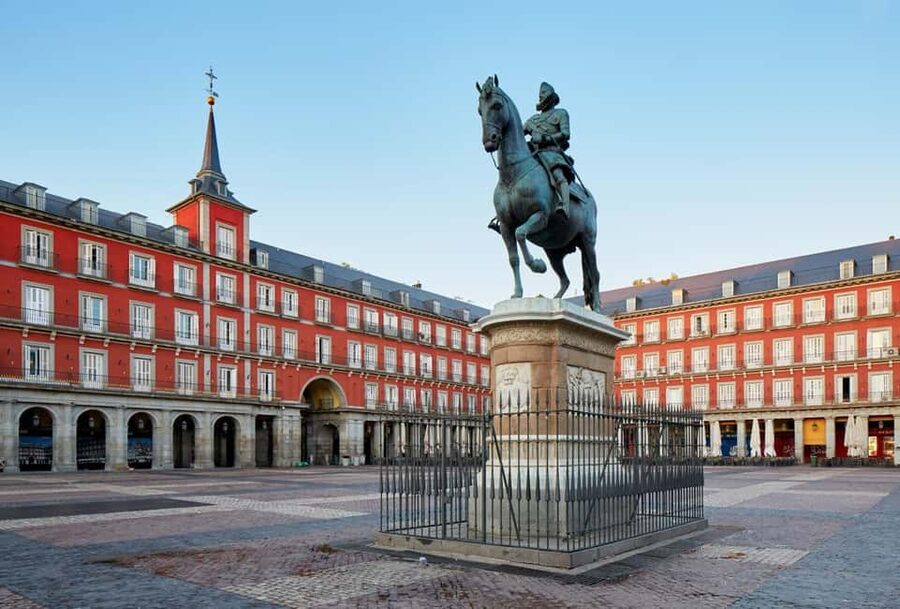
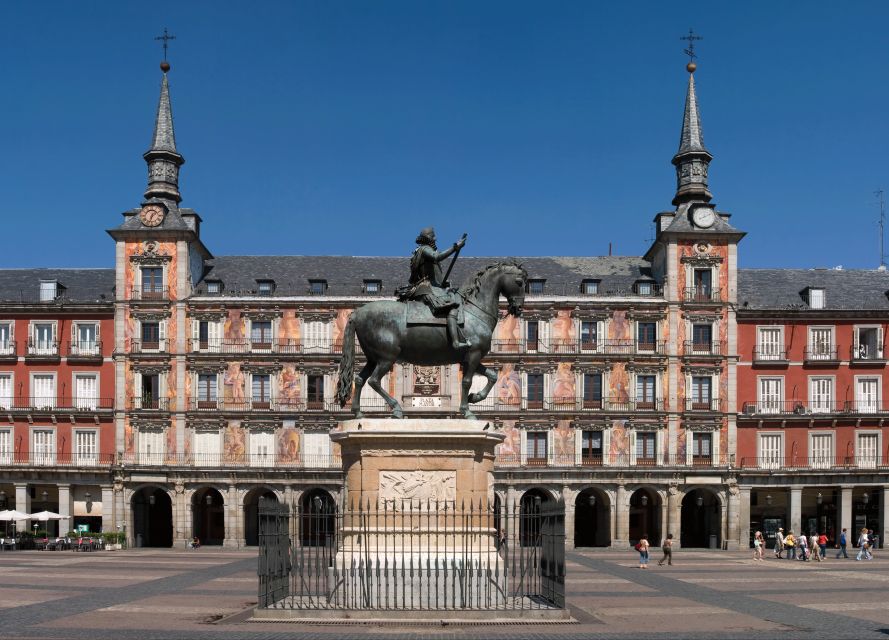
Plaza Mayor is one of Madrid’s essential sights, but the square makes more sense when you understand its original public role. It began as a lively market area and developed into a major gathering place surrounded by formal buildings.
Your guide uses the plaza to explain how Madrid’s public life changed. This is not just a photo stop. You get a chance to connect the square’s architecture with trade, celebrations, royal ceremony, and everyday city life.
Plaza Mayor can feel crowded and visually busy, especially during peak hours. A small group helps here because the guide can keep the discussion focused without trying to project over a huge crowd. Still, the route does not promise an empty square or a long period of quiet observation.
I would use this stop to listen first, then take photographs after the main explanation. The details are easier to appreciate once you know why the square was built and how it functioned.
Mercado de San Miguel and the Limits of a History Walk
Mercado de San Miguel sits in a historic building and now operates as a gourmet market. It is a useful stop because it links Madrid’s old architecture with its current food culture.
You will see the market as part of the route, but this tour does not include a tasting. That distinction matters. If you expect tapas, drinks, or a snack built into the $34 price, you may feel the outing is missing something.
I see the no-tasting policy as a drawback only if food is your main reason for visiting. The advantage is that the guide can keep the tour moving and concentrate on the city’s story. You can return afterward and explore the market at your own pace, with no pressure to eat quickly while the group waits.
The same applies to Chocolatería San Ginés. The famous establishment has served churros since the 19th century, and the route passes nearby. There is no included tasting, but the stop gives you a clear idea of where to come back for a classic Madrid treat.
My practical suggestion is simple: make a note of San Ginés during the walk, then return later when you have time to sit down. The tour gives you the introduction. You provide the appetite.
More Private History Tours in Spain
- Private Jewish Heritage Journey by Barcelona Dreaming
★ 4.8 · 383 reviews - Andorra Original History and Sightseeing Tour (Private, Pickup)
★ 5.0 · 350 reviews - Barcelona 1.5h Private Old Town, Gothic & Ramblas Walking Tour
★ 5.0 · 318 reviews
Plaza de la Villa and Madrid’s Older Character
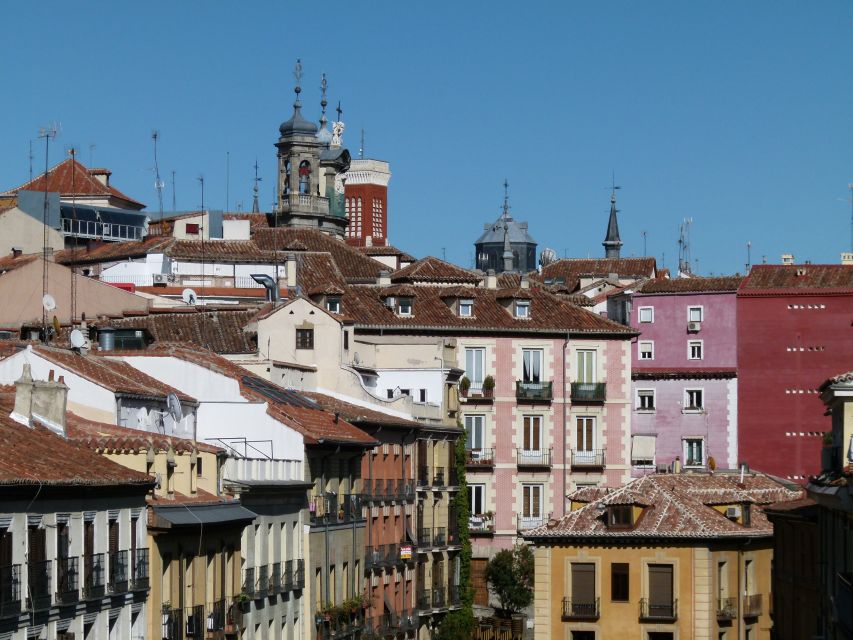
Plaza de la Villa is one of the most appealing stops on the route. It is smaller and more intimate than Plaza Mayor, with an older feel and a strong medieval character.
This contrast is important. Plaza Mayor shows Madrid as a grand public stage, while Plaza de la Villa helps you picture a tighter, older city. The guide can use the square to explain Madrid before its later expansion and to point out how the city’s administrative and civic functions developed.
The route’s mix of famous landmarks and less obvious corners is one of its strongest features. You get the required first-visit sights, but you also hear about unusual places and details that are easy to miss when walking alone.
The square is also a good moment to ask questions. If you are curious about Madrid’s oldest neighborhoods, the city’s government, or how the historic center changed, this is the sort of setting where a discussion can become more useful than a prepared paragraph.
Royal Palace and Almudena Cathedral
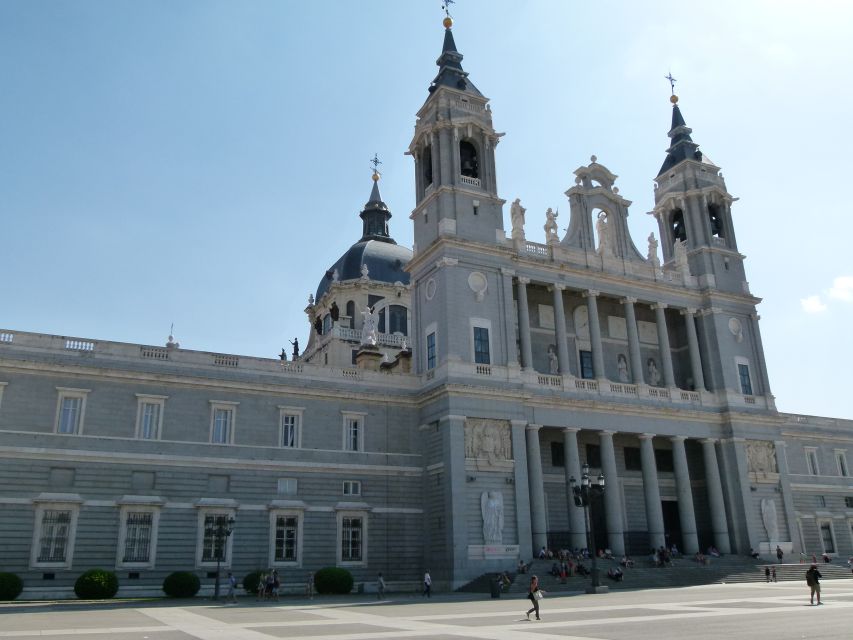
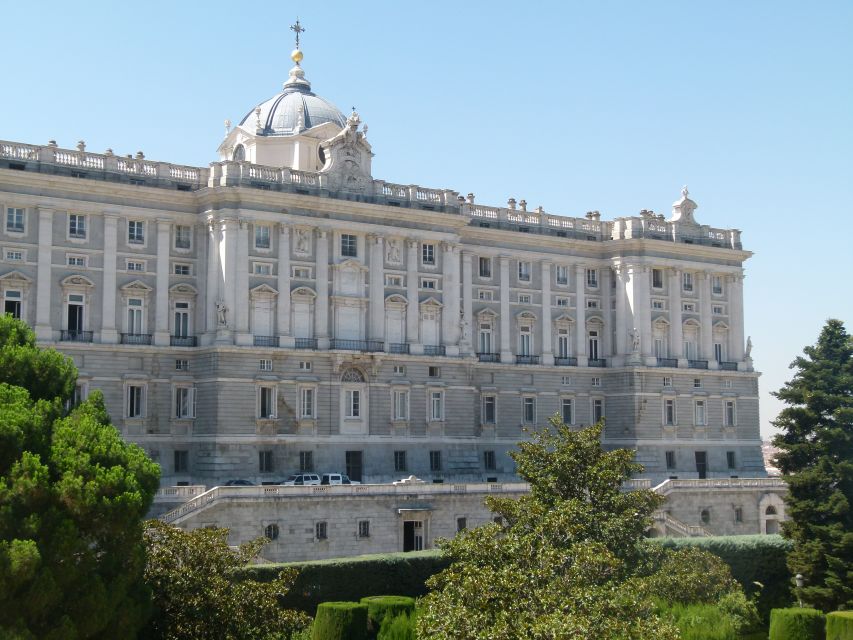
The Royal Palace is one of the tour’s main landmarks. The guide explains the Spanish monarchy and Madrid’s transformation through the centuries, including the practical question many visitors have: do the kings still live there?
The short answer is part of the appeal, but the larger value comes from understanding the palace’s role today and its place in Spain’s royal story. The tour focuses on the exterior area and nearby surroundings, so do not book this experience expecting palace-room access or a palace ticket.
Almudena Cathedral adds another layer. Its position near the palace makes it an easy pairing, yet the two buildings represent different parts of Madrid’s public identity. One points toward monarchy and state power. The other brings religious history into the same central setting.
The guide’s commentary helps you read the area as a connected space rather than a series of unrelated photo stops. You can ask about the monarchy, the cathedral, Madrid’s capital status, and changes in the city over time.
The route can also respond to current circumstances. If there is an unusual event around the palace, the discussion may shift accordingly. Leire has been praised for adapting her presentation to what is happening around the group, which is a real benefit in a city where history and public life often appear side by side.
The Optional One-Hour Extension Through La Latina
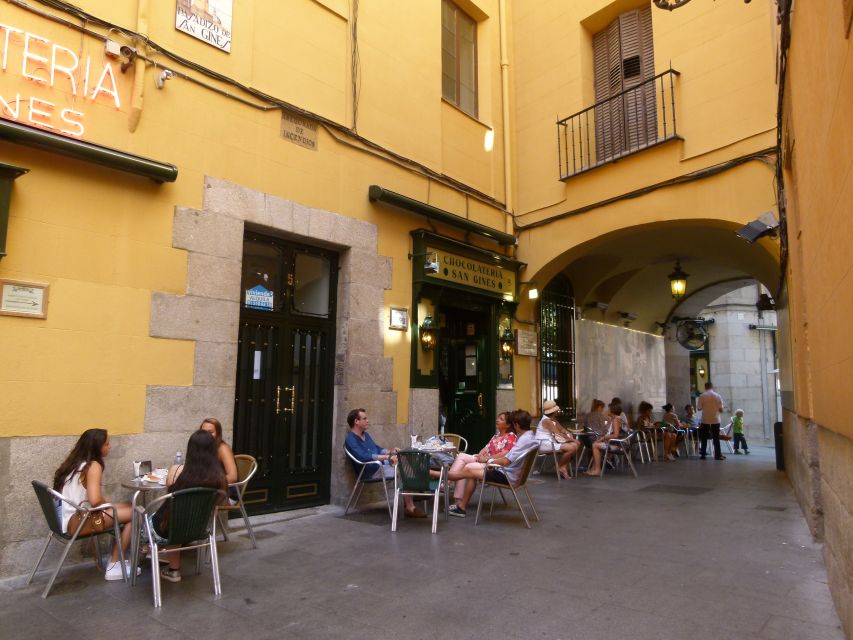
Private bookings can add one hour in La Latina, and this is the most useful upgrade for anyone who wants a more local feel.
La Latina occupies part of what was once the old Morería, the Moorish quarter. The extension leads through narrow pedestrian streets, small squares, old churches, and palaces tucked between ordinary buildings. The neighborhood is also known for bars and restaurants, giving you a chance to see how historic Madrid remains part of daily life.
The area is described as feeling like a village within the city. That is a helpful way to think about it, because La Latina offers a different mood from the formal spaces around the palace and Plaza Mayor.
I would choose the private extension if you have more than one day in Madrid or care about neighborhoods as much as monuments. It lets you ask for a slower pace, focus on the Moorish past, or get practical suggestions for eating and exploring later.
The extra hour is not included in the basic shared experience, so compare the total private price before booking. Its value depends on your priorities. If you only want a first orientation, the standard walk is enough. If you want a more personal route and local neighborhood context, the extension adds real substance.
Small Group, Private Tour, and Pace
The shared option is limited to 12 people. That is small enough for questions to be practical and for the guide to keep the group together without turning the walk into a loud procession.
This format suits solo visitors, couples, and families who want company but do not want a large coach-style outing. You still have a set route and a shared pace, so it is less flexible than a private booking.
The private option is better if you have strong interests or particular needs. The itinerary can be tailored, and the guide can spend more time on the subjects you care about. You can also add La Latina for a total experience of roughly three to three and a half hours, based on the stated two to two and a half hour main tour plus the one-hour extension.
The conversation is a key part of the experience. You are encouraged to ask questions throughout rather than wait for a formal question period. That helps if you prefer a guide who explains ideas in plain French instead of delivering a fixed speech.
Price, Timing, Weather, and Practical Details
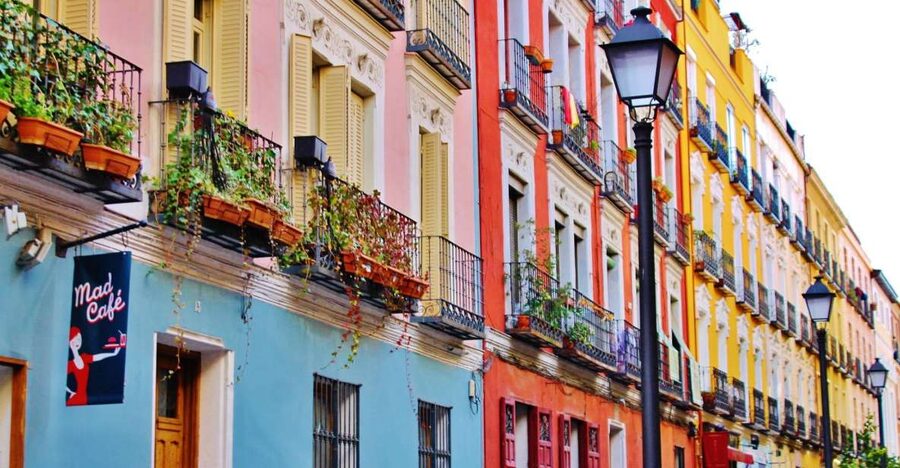
At about $34 per person, the standard tour is reasonably priced for a two to two and a half hour guided walk in central Madrid. You are paying mainly for the French commentary, the guide’s historical framing, and the chance to ask questions in a small group.
The value is strongest if you are new to Madrid. A good orientation can save you time later because you learn which places deserve a return visit and how the central districts connect. It is less compelling if you want museum entry, food, or long stops inside monuments, since none of those are included.
The meeting point can vary by the option you book, so check the final confirmation carefully. Group tours wait up to 15 minutes for late arrivals, then continue without them. Private guides wait up to 30 minutes, after which the booking is treated as a no-show.
Bring an umbrella if rain is possible. A last-minute cancellation caused by rain or poor weather is not rescheduled and does not receive a refund, so it is worth checking the forecast before the free-cancellation window closes. You can cancel up to 24 hours before the activity for a full refund, and the reserve-now, pay-later option keeps your schedule flexible.
Who Will Enjoy This Madrid Tour Most?
I would recommend this walk to anyone who wants Madrid explained in French, especially on a first visit. It is a strong fit if you like history but prefer stories and conversation to a long formal lecture.
It also works well for visitors who want a compact introduction to central Madrid. In one outing, you cover major squares, royal landmarks, medieval streets, food-market culture, and a former Moorish quarter if you choose the private extension.
Families and mixed-age groups may appreciate the adjustable style. You can ask the guide to clarify a point, change the emphasis, or connect the history to something you have already seen.
I would be more cautious if your priority is entering every major monument. This is a walking orientation, not a ticketed sightseeing package. Likewise, food lovers should know that San Miguel Market and San Ginés are places to note for later, not included tasting stops.
Should You Book Madrid Historical in French?
Book it if you want a French-speaking guide, a small group, and a clear introduction to Madrid’s story. The route covers the right central sights, and the conversational format gives it more personality than a basic landmark checklist.
The strongest reasons to choose it are the fluent French, the small maximum group size, and the guide’s ability to connect old history with current life. Leire’s praised style, including useful advice for the rest of your stay and unusual local details, is exactly what many visitors need at the start of a Madrid trip.
Skip it if you want interior visits, included food, or a private pace without paying for the private option. For everyone else, $34 buys a sensible first walk through Madrid, with enough context to make the rest of your time in the city more rewarding.
FAQ
Is the tour conducted in French?
Yes. The live guide speaks French, and the guides are fluent French speakers living in Madrid.
How long does the standard tour last?
The main tour lasts about two to two and a half hours.
How many people can join the shared tour?
The small-group option is limited to a maximum of 12 people.
Can I book a private group?
Yes. A private group option is available, and private tours can include an itinerary tailored to your interests.
What places does the tour visit?
The route includes Puerta Cerrada, Plaza Mayor, Mercado de San Miguel, Chocolatería San Ginés, the Royal Palace area, Almudena Cathedral, and Plaza de la Villa.
Is food included at Mercado de San Miguel or Chocolatería San Ginés?
No. The route passes these places, but no tasting is included. Chocolatería San Ginés is recommended as a place to return to for churros.
Can I add La Latina to the tour?
Yes. Private bookings can add a one-hour extension through La Latina, including parts of the former Moorish quarter.
Is the tour wheelchair accessible?
Yes, the activity is listed as wheelchair accessible.
Just added around Madrid
- Madrid: Tour of the Historic City Center★ 5.0 · 87 reviews
- Madrid: Royal Palace, Prado Museum & Historic Center Tour★ 4.6 · 50 reviews
- Madrid: Tapas, Taverns & History Tour★ 4.7 · 71 reviews
- Madrid: Tuk-tuk tour of the historic center and highlights★ 4.7 · 20 reviews
- Madrid: Authentic Tapas Evening Tour with a side of History★ 4.9 · 37 reviews
- Madrid City Tour: Culture and History★ 5.0 · 29 reviews
- Madrid: Small-group historical walking tour★ 4.9 · 19 reviews
- Tapas Crawl in Madrid Historical Quarter for Lunch or Dinner★ 4.9 · 45 reviews
Private History Tours, compared.

Private Guided Historic Electric Cart Tour of St. Augustine
Read our review →
Acemoglu Historical Turkish Bath w/Private Options
Read our review →
Private Full-Day Tour of Historical Alexandria
Read our review →
Private Tour of the Historic City in a Ford T Car
Read our review →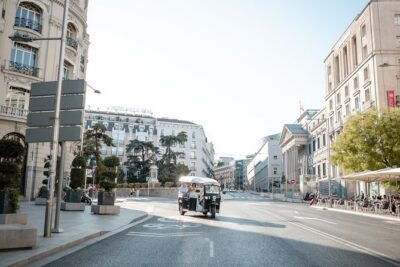
Madrid Historical Tour with Local Guide in Eco Tuk Tuk Private
Read our review →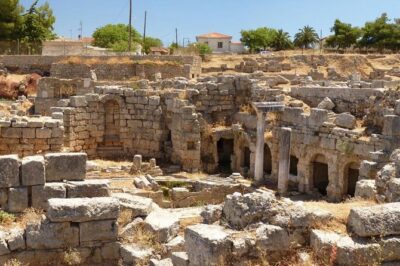
Private Biblical Tour Ancient Corinth & Isthmus Canal from Athens
Read our review →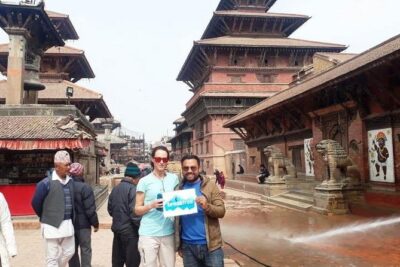
Private Kathmandu Sightseeing Tour | UNESCO World Heritage sites
Read our review →Browse the lists this tour appears in