
Review · HO CHI MINH CITY
Early Riser Walk: Grandma Noodles, Cafe, Exotic Fruits & History
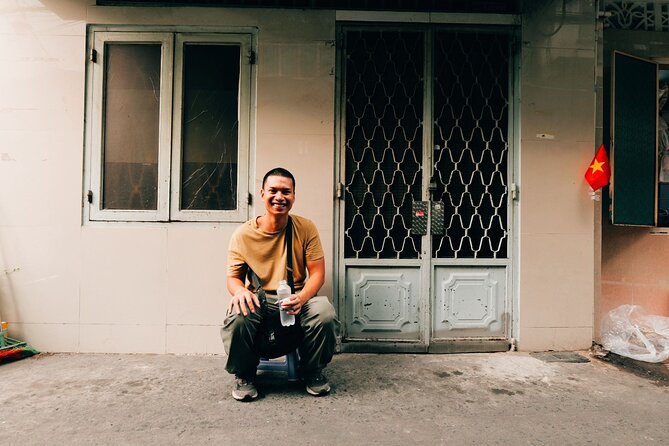
Wake up before Saigon gets loud. This small-group morning walk offers a thoughtful look at daily life through grandma-made noodles, crowded markets, old apartments, and a family coffee house dating to 1938. I like the relaxed pace and the way food is tied to local history, not treated as a string of random tastings. I also like that introverts can walk quietly, ask questions, or simply watch the city wake up.
The main drawback is the early start and the modest nature of the stops. This is not a polished sightseeing circuit with grand monuments or long stays at each address. It is a three-hour neighborhood walk, and you should be ready for narrow alleys, market noise, plastic stools, and a strong cup of Vietnamese coffee.
Key points to know before booking
- Breakfast in a grandmother’s home restaurant: Expect handmade dumplings, noodles, or slow-cooked beef stew in a tiny local setting.
- Two real neighborhood markets: Vuon Chuoi and Ban Co show everyday Saigon rather than a market arranged for visitors.
- A serious history stop: The Venerable Thich Quang Duc Monument adds a quiet, sobering chapter to the morning.
- Old Saigon architecture: Nguyen Thien Thuat Apartment Buildings offer a glimpse of layered residential life.
- Coffee made the old way: Cheo Leo Cafe has been family-run since 1938, with traditional coffee and tea brewing.
- Small group, easy pace: The maximum group size is six, and the walk lasts about three hours.
Why an early start changes Ho Chi Minh City
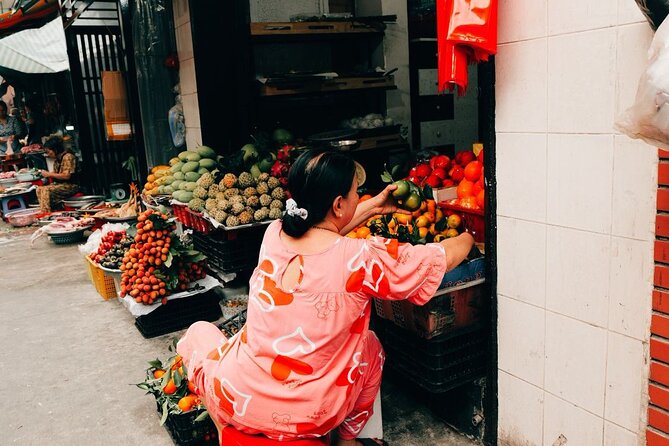
Ho Chi Minh City is energetic at almost any hour, but early morning shows a different side. Food stalls are serving breakfast, markets are handling the day’s produce, and neighborhood streets have not yet reached their full volume of traffic and commerce.
That timing is the heart of the experience. You are not simply visiting seven stops. You are watching the city perform its morning routine. The guide adds context, but the streets provide much of the entertainment.
I especially like the promise of a slower approach. The experience is designed for conversation, questions, photographs, or quiet observation. That matters in Saigon, where a first visit can feel like a steady wall of scooters, horns, signs, and movement.
The group limit of six is useful here. A large party would crowd the narrow market lanes and make a home-style breakfast feel less natural. A small group also gives the guide room to adjust the pace if someone wants to look more closely at a food stall or ask about a building.
The early hour is still a real commitment. If you have just arrived from a long flight or prefer late mornings, this may feel like work. The payoff is a more local morning, but you need to protect your sleep the night before.
More History Walking Tours in Vietnam
- Historical Walking Tour of Saigon
★ 5.0 · 24 reviews - Ho Chi Minh Best Walking Tour: Food, Coffee & History
★ 5.0 · 19 reviews - Hoi An: Ancient Town Guided Walking Tour
★ 4.9 · 766 reviews
The Thich Quang Duc Monument begins the walk quietly
The first stop is the Venerable Thich Quang Duc Monument on Cách Mạng Tháng Tám in District 3. It is described as small, quiet, and easy to miss, which makes it an effective opening.
This is not a long museum visit. You spend about 15 minutes there, with no admission charge. The value comes from the explanation. The monument carries a difficult story from Vietnam’s past, and the guide uses the place to connect national history with the streets around you.
I appreciate this kind of beginning. It asks you to pay attention before the food and market activity start. The site is not treated as a quick photograph. It gives the morning some weight and helps you understand that ordinary streets can hold painful memories.
The stop may feel heavy, especially so early in the day. That is intentional. If you want a purely cheerful food tour, this opening may not suit your mood. If you want history explained in a human way, it gives the walk a useful foundation.
Grandma noodles bring breakfast into a living room
At Võ Văn Tần, the walk turns from public memory to home-style food. The meal takes place in a tiny restaurant that is also described as the grandmother’s living room. That detail tells you what to expect: a personal, informal setting rather than a dining room designed for tour groups.
The food can include handmade dumplings and slow-cooked beef stew, along with a hearty noodle breakfast. The emphasis is not on sampling a huge number of dishes. It is on understanding why particular foods are eaten in the morning and how they fit into daily life.
That distinction makes this stop more useful than a simple tasting. You get to connect the bowl in front of you with local routines. The food is described as comforting, soft, and rich in flavor, with no need for theatrical presentation.
You may find the seating basic and the stop short, at about 15 minutes. That is part of the charm, but it also means you should not expect a leisurely restaurant meal. The exact dish may depend on what is being served that morning, so flexibility helps.
This is also one of the places where the guide’s relationship with local people matters. The experience aims to take you into a place you might not confidently enter alone. You are not just pointed toward a famous address and left to order. The guide explains the setting and helps make the interaction comfortable.
Vuon Chuoi Market shows the everyday food trade
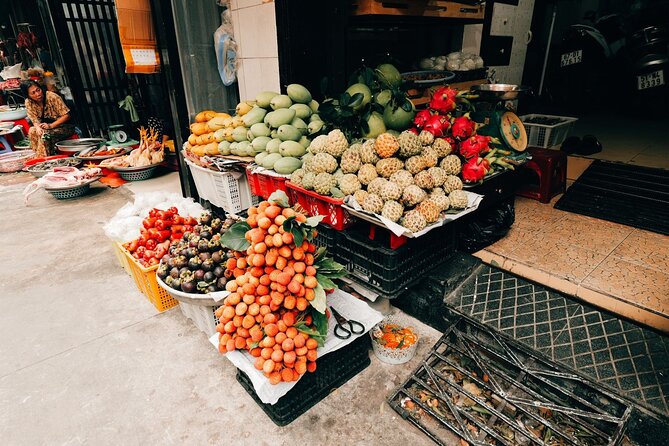
The next stop is Vuon Chuoi Market, where you get about 15 minutes to see a neighborhood market in motion. The setting is informal: scooters moving through tight spaces, fruit sellers calling out prices, and small stools appearing wherever there is room.
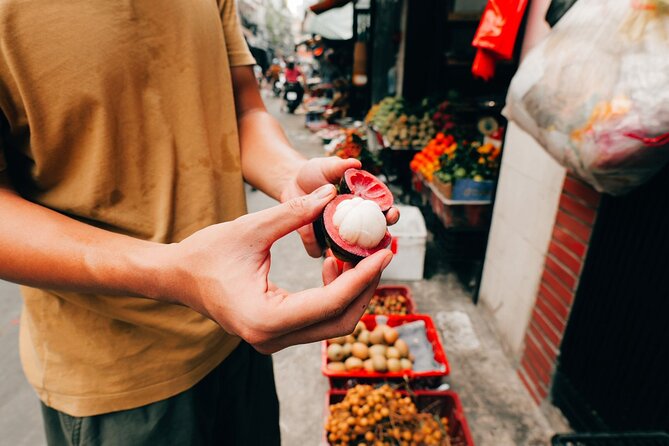
The market is a good place to sample exotic fruit at its freshest. The focus is on fruit sold as part of ordinary life, not arranged in a display for photographs. You may see papayas and other produce being handled, priced, and moved through the morning trade.
I like the practical lesson here. Markets are not only places to eat. They show what people buy, how vendors work, and how food moves through a neighborhood. A guide can explain what you are seeing and help you understand the rhythm without turning every stall into a formal lecture.
Fifteen minutes goes quickly. This is a snapshot, not a full market tour. You should stay close, watch for scooters, and avoid expecting a long, quiet chance to browse. The reward is the atmosphere and the chance to see how a real market functions.
More History Walking Tours in Ho Chi Minh City:
- History and Hauntings of Salem Guided Walking Tour
★ 5.0 · 14,564 reviews - Lisbon: History, Stories and Lifestyle Walking Tour
★ 4.8 · 10,902 reviews - Boston: Freedom Trail History Small Group Walking Tour
★ 5.0 · 6,450 reviews - Historic Charleston Guided Sightseeing Walking Tour
★ 5.0 · 6,216 reviews
Ban Co Market goes further into neighborhood life
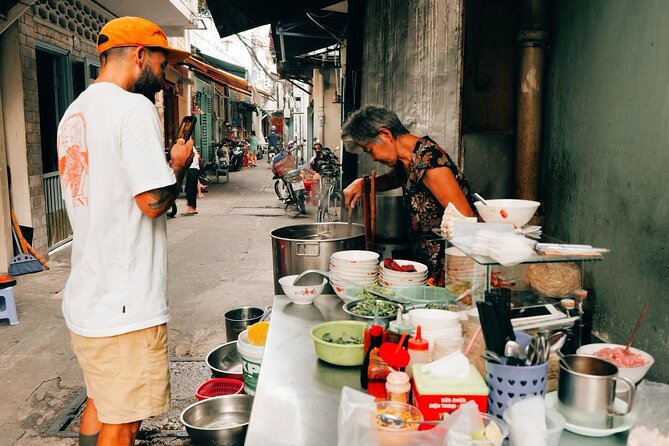
Ban Co Market receives about 30 minutes, making it the longest stop on the route. That extra time matters because this is described as a real neighborhood market rather than a destination built for sightseers.
You might see vendors slicing rau muống, neighbors talking while they shop, and small arguments over change. These details can seem ordinary, but they are exactly what gives the market its character. The guide helps you read the scene instead of simply walking past it.
This is one of the strongest parts of the morning for anyone who wants everyday Saigon. The market is not polished, quiet, or arranged for easy viewing. It may feel crowded and confusing at first. Once you understand what is happening, the noise becomes easier to follow.
The guide’s role is important here. A good explanation can turn a busy market into a series of understandable moments: who is buying, what is being prepared, and how the space works. Without that context, you might only remember scooters and shouting.
Keep your belongings secure and use care in tight lanes. The tour information says most people can take part, but this is still a walking experience through active markets, not a controlled indoor attraction.
Nguyen Thien Thuat apartments reveal layered Saigon
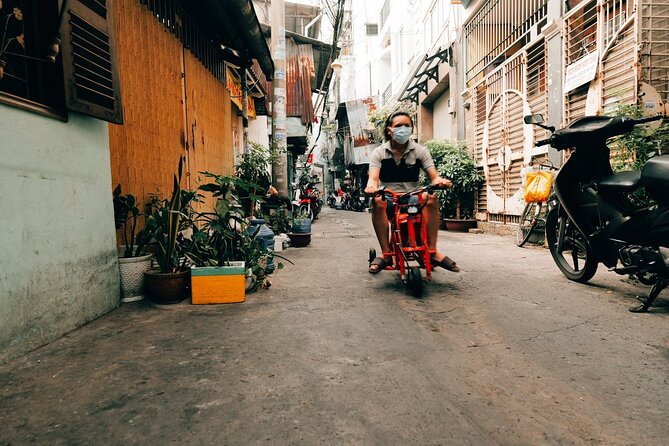
The Nguyen Thien Thuat Apartment Buildings offer a change of pace. After the market noise, you enter a residential area where the sound softens but daily life continues around you.
The buildings are presented as an old Saigon archive, with layers of lived-in space rather than restored architecture. You may notice how homes, corridors, small businesses, and shared areas fit together. The point is not a grand facade. It is the way history remains part of ordinary housing.
The stop lasts about 15 minutes and costs nothing to enter. Its value comes from observation and explanation. The guide can help you see how a block functions as a community, not just as an old building to photograph.
This stop may appeal most to people interested in architecture and local routines. If you want famous landmarks, it may feel too modest. If you enjoy seeing how people actually live, it offers a useful contrast to the commercial center.
Please remember that this is a lived-in setting. You should follow the guide’s lead, keep photographs respectful, and avoid treating private areas as an open-air museum.
Tàu hũ provides a small, sweet pause
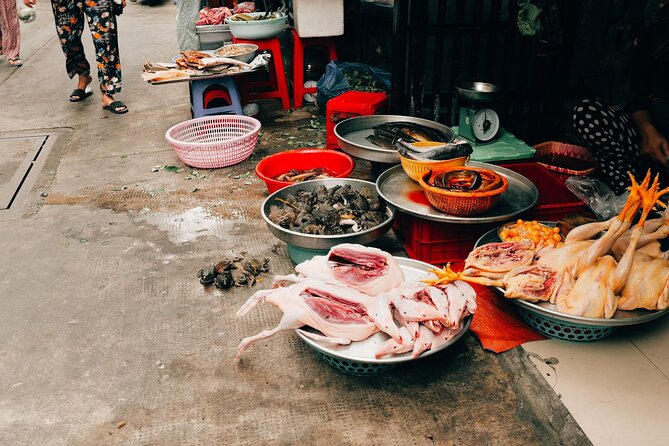
At Thế Giới Tàu Hũ, the group stops for a traditional dessert. The setup is simple: a large pot of steaming tàu hũ, a few plastic stools, and hot ginger syrup.
Tàu hũ is soft soybean pudding, and the ginger syrup gives it a sweet, warming finish. This is a short 15-minute stop, but it helps show another part of Saigon food culture. The experience is not limited to famous noodle dishes or strong coffee. Small desserts served in simple surroundings matter too.
The ginger syrup may be the most memorable part for you. It has a sweet, spicy quality and the kind of comforting aroma associated with home cooking. If you prefer elaborate desserts or dislike ginger, this stop may be less appealing.
I like the way it fits the route. After the market and apartment buildings, you sit for a moment, eat something warm, and let the pace settle before the final coffee stop.
Cheo Leo Cafe closes with coffee and old family methods
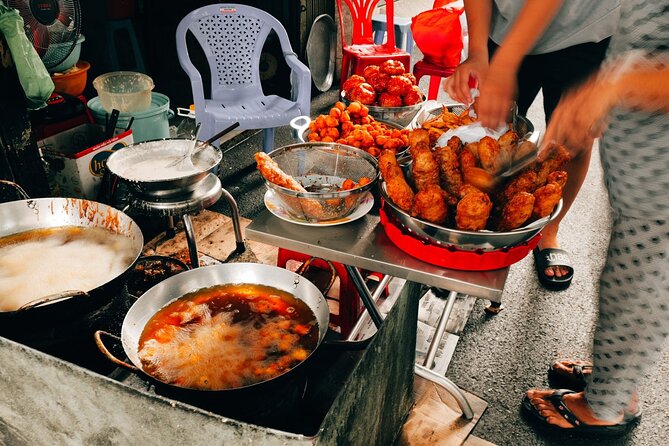
The final stop is Cheo Leo Cafe, an alley cafe with roots going back to 1938. It is described as a family-run place with the same recipe and atmosphere passed through generations.
The cafe is not presented as a modern specialty coffee shop. Instead, the aunties show the old-style method for brewing coffee and tea. You sip bold Vietnamese coffee and learn how this part of morning life has been maintained over time.
The drink can be strong. If you are sensitive to caffeine, keep that in mind before ordering or accepting a full serving. The tour description even treats the coffee’s force with humor, but the practical point is simple: this is not a mild hotel breakfast brew.
Cheo Leo is a fitting final stop because it brings together several themes from the walk. It is old, local, family-run, and still part of the neighborhood. You finish with a drink and conversation rather than a rushed photo at a major monument.
The 15-minute stop is brief, but the setting gives it more importance than the clock suggests. A tiny alley cafe with a long family history can tell you much about continuity in a fast-changing city.
What the guide adds to the morning
The strongest feature of this experience is not any single dish or address. It is the guide’s way of joining the stops together.
The guide may be Spring or Hieu, based on the guide names associated with the experience. Both are described as warm, attentive, and easy to talk with. The tone is less formal than a standard city tour. You can ask about food, history, or daily life, or simply walk quietly and take photographs.
That flexibility is particularly helpful if you are traveling alone. The pace can slow when you are tired, and the walk does not depend on constant conversation. It also suits families with teenagers because the guide is prepared to answer questions without talking down to younger participants.
The historical explanations are another strength. Instead of filling the morning with dates and names, the guide connects the past to buildings, food, and streets. That approach helps the city feel understandable without turning the walk into a classroom.
Still, the experience depends heavily on the guide’s style and the group’s mood. If you want a tightly scripted tour with exact timing and long historical presentations, this may feel loose. If you prefer a human morning walk with room for questions, the format should work well.
What $39 gets you in practical terms
The price is $39 per person. For roughly three hours, you receive a small-group walking experience, food and drink stops, local context, and access to places that can be difficult to approach comfortably on your own.
The value is strongest if you care about connection rather than quantity. You are not paying for an extensive meal or a long list of attractions. You are paying for the guide’s local access, the explanations, the small group, and the ease of moving through markets and residential areas with someone who understands the setting.
The group maximum is six, which is a meaningful benefit at this price. A private tour would cost more, while a large group would likely make the breakfast and market stops less personal.
The tour starts at the Venerable Thich Quang Duc Monument, 185 Cách Mạng Tháng Tám, in District 3, and ends in District 3. The meeting point is near public transportation. A mobile ticket is provided, and booking confirmation is sent at the time of booking.
You should allow extra time to reach the starting point, since the walk begins early. The tour ends in District 3 rather than returning you to your hotel, so plan your next stop from there.
Free cancellation is available if you cancel at least 24 hours before the local start time. Changes or cancellations inside that 24-hour window are not refunded.
Who should book this morning walk
I would choose this experience if you want to see how Ho Chi Minh City eats, shops, talks, and lives before the day becomes hectic. It fits solo visitors, couples, families with older children or teenagers, and anyone who prefers a small group.
It is also a good match for introverts. You do not need to perform enthusiasm every minute. You can ask questions, take photographs, or enjoy a quiet walk while the guide handles the social details.
You should think twice if you dislike early mornings, walking through active markets, simple seating, or food with unfamiliar textures. The route is not designed around major tourist sights, and the stop lengths are short.
Should you book it?
Book it if you want a personal introduction to Saigon built around breakfast, markets, neighborhood history, dessert, and coffee. The strongest reasons are the group size, the relaxed pace, and the access to ordinary places that are easy to pass without understanding.
Skip it if you want a late start, grand architecture, or a formal food itinerary with generous time at every stop. For the right visitor, $39 is a strong value because the experience gives you context and confidence, not just a meal and a few photographs.
FAQ
How long does the experience last?
The walk lasts approximately three hours.
What is the price?
The price is $39 per person.
Where does the tour start?
It starts at the Venerable Thich Quang Duc Monument, 185 Cách Mạng Tháng Tám, Phường 6, District 3, Ho Chi Minh City.
Where does the tour end?
It ends in District 3, Ho Chi Minh City.
How many people can join?
The maximum group size is six participants.
Is the ticket mobile?
Yes. The experience provides a mobile ticket.
What food is included?
The morning can include noodles and handmade dumplings or slow-cooked beef stew, exotic fruit, tàu hũ with hot ginger syrup, and Vietnamese coffee or tea.
Does the tour include market visits?
Yes. The route includes Vuon Chuoi Market and Ban Co Market.
Is admission included at the stops?
Admission is free at the Thich Quang Duc Monument, Võ Văn Tần, Ban Co Market, and Nguyen Thien Thuat Apartment Buildings. Admission is included at Vuon Chuoi Market, Thế Giới Tàu Hũ, and Cheo Leo Cafe.
Can I cancel for a refund?
Yes. You can cancel at least 24 hours before the experience for a full refund. Cancellations within 24 hours are not refunded.
Just added around Ho Chi Minh City
- Historical Walking Tour of Saigon★ 5.0 · 24 reviews
- Ho Chi Minh Best Walking Tour: Food, Coffee & History★ 5.0 · 19 reviews
- Saigon Morning City Historical Scooter Tour w Ao Dai Rider option★ 5.0 · 349 reviews
- Cu Chi Tunnels by Jeep The Ultimate Off-Road War History Tour★ 5.0 · 25 reviews
- Saigon Historical City Tour★ 5.0 · 139 reviews
- Explore Cu Chi Tunnels & Saigon History 1 Day Tour★ 5.0 · 23 reviews
- Ho Chi Minh City Tour with Colonial Heritage and Chinatown★ 4.6 · 48 reviews
- Cu Chi Tunnels Guided Tour: Vietnam War History Half-Day★ 4.6 · 189 reviews
History Walking Tours, compared.
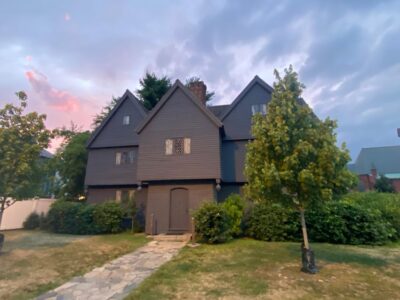
History and Hauntings of Salem Guided Walking Tour
Read our review →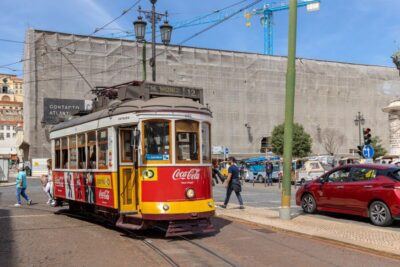
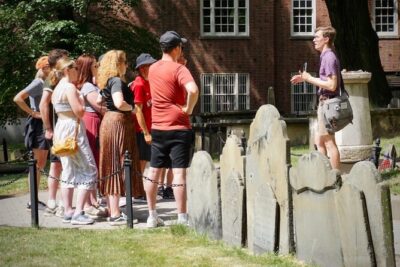
Freedom Trail History Small Group Walking Tour
Read our review →
Historic Charleston Guided Sightseeing Walking Tour
Read our review →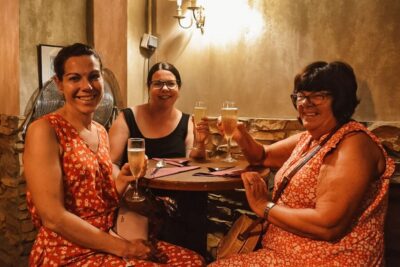
Tapas Walking Tour with Food, Wine, and History
Read our review →
Savannah History and Haunts Candlelit Ghost Walking Tour
Read our review →
A History of Terror – Belfast City Centre Walking Tour
Read our review →Browse the lists this tour appears in