
Review · MUNSTER
Cork: Guided Historical Walking Tour
Cork’s streets hide a river beneath them. This 75-minute walk makes that strange fact, and much more, easy to see as you move through the city centre with a local English-speaking guide. I like the tour’s strong sense of place and its mix of major sights with small details, such as old boathouse entrances and the route of ancient waterways under the streets. The $26 price also feels fair for a compact introduction to Cork, especially at the start of a visit.
I also like the human side of the storytelling. Guides including Noel, Mary, Gerard, Jarrod, Aiden, and Catherine have been praised for adding personal memories, humor, and local color to the historical facts. The main consideration is the pace: you cover a lot in 75 minutes, so this is an orientation walk rather than a deep visit inside every landmark. You should also dress for rain, since the tour runs in all weather.
Key points to know before walking
- The river runs beneath the city streets: Follow the curved main street and learn how Cork’s waterways shaped the city.
- A local guide gives the walk its character: Noel, Mary, Gerard, Jarrod, Aiden, and Catherine have all led tours praised for clear storytelling and local insight.
- The route links Cork’s major sights: See Shandon, the English Market, St Fin Barre’s Cathedral, Elizabeth Fort, Grand Parade, and South Mall.
- Small details make the walk worthwhile: Look for former boathouse entrances and hear why Cork’s streetlights have their unusual bulky shape.
- The group may be around 20 people: A headset microphone has been used, which helps with city noise.
- The English Market is the finish point: It is a useful place to continue exploring after the guide says goodbye.
Why Cork makes sense on foot
Cork is a city best understood from street level. Its center is compact, but the shape of the streets can seem unusual at first. That is because water has played such a large role in the city’s development. Streets curve along former channels, and some roads were built over waterways that once crossed the center.
This tour gives you a quick map of that story. You are not simply walking from one monument to another. You are learning why the streets bend, why the city became a trading center, and how its maritime past still appears in the architecture.
The walk is especially useful if you have just arrived in Cork. One person described it as a good way to find your bearings and choose extra stops afterward. That is exactly how I would use it: take the tour early, note the places that catch your interest, then return later with more time.
At $26 per person, the cost is reasonable for a 75-minute guided introduction. You are paying for a local voice, not admission to a series of attractions. Food, drinks, hotel pickup, and entry to interior sites are not included, so budget separately if you want to visit places such as Shandon Bells or explore the English Market after the walk.
More History Walking Tours in Ireland
- 2-Hour Historical Walking Tour from Dublin
★ 5.0 · 875 reviews - Historical 2-Hour Guided Walking Tour of Dublin
★ 4.7 · 865 reviews - Dublin’s Haunted History Walking Tour
★ 4.3 · 345 reviews
Starting at the Cork Tourist Information Centre
You meet at the Cork Tourist Information Centre, and you should arrive 10 minutes before the scheduled start. This is a central, practical meeting point, and the walk ends back there as well.
The tour is listed as lasting 75 minutes, although the route is also described as a one-hour stroll. In real terms, expect a short city walk with several stops for stories and explanation. The pace should suit most people who are comfortable walking around an urban center, but it is not designed for lingering at every location.
The guide speaks English. Several guides have been praised for projecting their voices clearly, and one group had a headset microphone to cut through background noise. That matters in Cork’s busy streets, where traffic and city sounds can make a soft-spoken guide difficult to follow.
The tour is wheelchair accessible, though the walk includes bridges, streets, and city-center paths. If you have particular mobility needs, it is sensible to confirm the current route when booking.
Curving streets and Cork’s covered waterways
The first part of the walk focuses on Cork’s unusual street plan. You follow the curved main street while the guide explains the river route beneath it. This is one of the tour’s best ideas because it changes the way you see the city. A street that first looks like an ordinary shopping route becomes part of a former water system.
The guide connects this physical setting with Cork’s role as a European and transatlantic trading hub. Maritime trade was not a distant side note here. It affected the city’s streets, buildings, businesses, and links with the wider world.
This is also where the tour’s local storytelling becomes valuable. The historical facts are paired with recent memories, personal stories, and details about ordinary city life. You may hear about characters connected with Cork, the city’s refugee communities, ex-slave heroes, music, and changing streets.
That balance is one of the strongest features of the walk. Cork’s past is not presented as a list of dates. It is tied to people, trade, faith, migration, and the physical river system under your feet.
Cork Opera House and the view toward Shandon
The route brings you past Cork Opera House, then across the river you see the distinctive form of Shandon Church. Its red and white brick bell tower and clock faces make it one of Cork’s most recognizable sights.
The tour does not appear to include admission to Shandon Bells and Tower. That is important to know before you arrive. If you want to climb the tower or pull the bell ropes, that is a separate visit and costs 6 euros per person according to the information provided.
Even without entering, Shandon gives the walk a useful visual anchor. The tower helps you understand Cork’s hills and waterways, while the guide adds context to a building that can otherwise be just a striking shape on the skyline.
I like this part because it gives you an immediate choice. You can stay with the group and continue the historical route, or make a note to return to Shandon later for a more hands-on visit.
Same place, a different slice of the past:
- Dublin Historical Centre Food Tour with 8 Food Tastings & Drinks
★ 5.0 · 1,718 reviews - Celtic Boyne Valley & Ancient Sites Day Tour From Dublin
★ 4.5 · 865 reviews - From Dublin: Celtic Boyne Valley and Ancient Sites Tour
★ 4.5 · 618 reviews - Dublin to Cork, Blarney Castle & Cóbh Heritage Centre by train
★ 4.5 · 510 reviews
Careys Lane and the Huguenot cemetery
The walk continues along Careys Lane to the Huguenot cemetery. This is the kind of stop that gives the tour more depth than a standard monument checklist.
The cemetery points toward Cork’s connections with refugees and communities who arrived from elsewhere. One of the memorable themes raised during the walk is the city’s history of refugees and people who overcame forced displacement. That subject fits naturally with the larger story of Cork as a port and trading center.
You should not expect a long cemetery visit. The whole route has to keep moving, and the guide is covering many parts of the city. Still, a brief stop here can help you see Cork as a place shaped by arrivals, not only by local families and famous buildings.
Coal Quay, Cornmarket Street, and Grand Parade
From Careys Lane, the route heads toward the Coal Quay and Cornmarket Street. These names preserve reminders of older commercial activity, and they help connect the modern center with Cork’s working past.
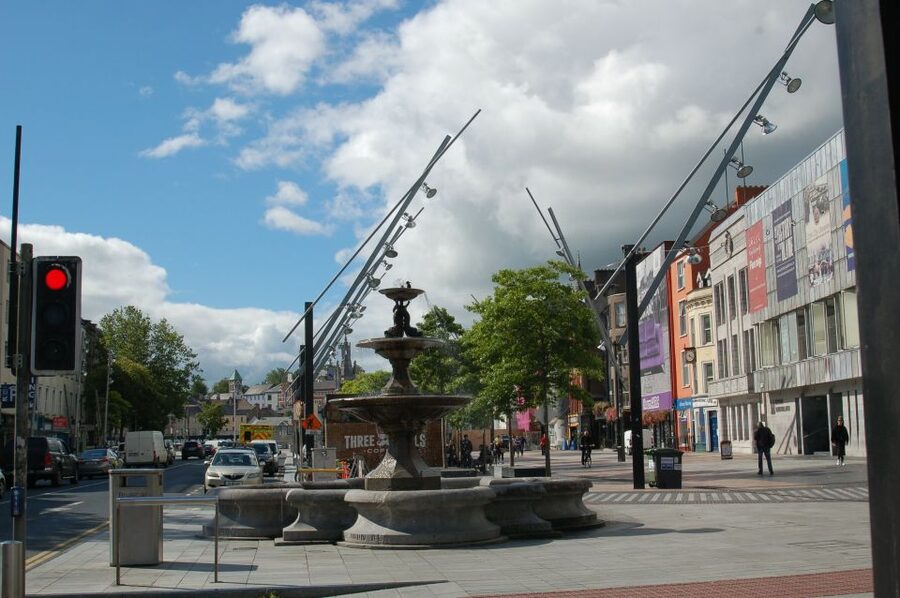
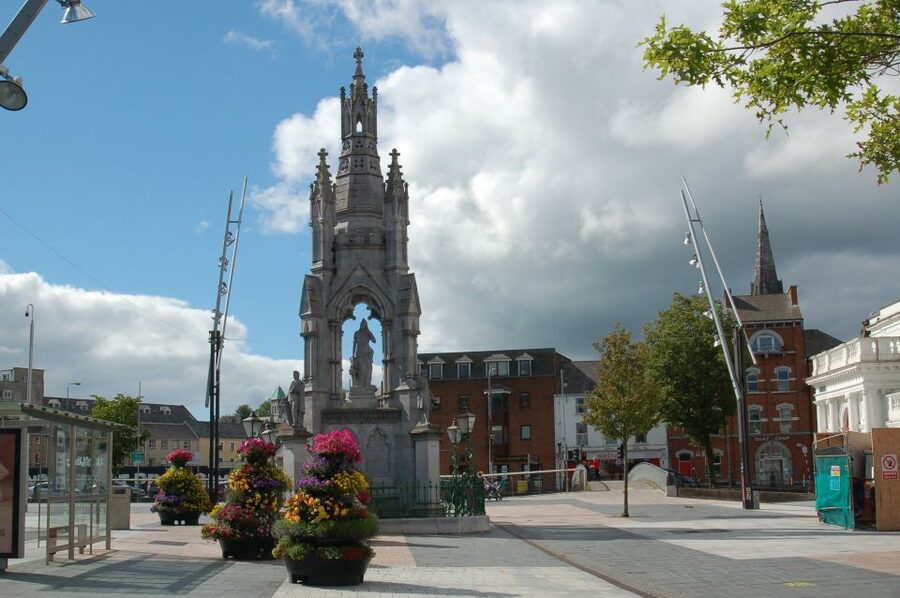
The walk then reaches Grand Parade, described as the widest street in Cork. Here you see Bishop Lucy Park, the Berwick fountain, and the National Memorial. This section is useful for orientation because Grand Parade is one of the city’s main public spaces and an easy place to return to on your own.
The guide also explains smaller modern details. One group learned why Cork has tall, bulky streetlights, a question that had puzzled them before the tour. Details like this may sound minor, but they are often what make a city walk stick in your memory. You begin noticing things instead of simply passing them.
Because the tour is short, you will likely pause for explanation rather than spend long periods inside parks or beside monuments. Bring your camera if you like, but keep your attention on the guide. The value here is the connection between the place in front of you and the story behind it.
Nano Nagle and the footbridge in her name
One of the most meaningful stops focuses on Nano Nagle and her work bringing education to poorer classes. The guide explains her humanitarian efforts while you stand on a footbridge named in her honor.
This gives the tour a welcome change of pace. Cork’s story is not only about ships, commerce, and buildings. It also includes people who worked to improve life for those with fewer opportunities.
The footbridge setting is practical as well as symbolic. You are standing in the middle of the city while hearing how one person’s work reached beyond private life and into education and social care. It is a good example of the tour’s wider approach: use a visible place to tell a story about the people who shaped Cork.
St Fin Barre’s Cathedral and South Gate Bridge
The route then takes you toward St Fin Barre’s Cathedral and South Gate Bridge. These are two very different sights, which makes the contrast useful.
St Fin Barre’s Cathedral brings architecture and religious history into the walk. The South Gate Bridge, meanwhile, helps you read the city as a place built around water crossings and movement. You see how bridges, streets, and buildings fit together rather than treating each landmark as an isolated stop.
The schedule is too tight for a full cathedral visit. Think of this as an introduction and a chance to decide if you want to return. If you are interested in architecture, note the cathedral’s location and plan extra time later.
The guide’s role matters particularly here. A local can point out the relationship between the cathedral, bridge, river, and surrounding streets in a way that a map alone cannot. Several guides have been praised for making the city’s history easy to understand without turning the walk into a lecture.
Elizabeth Fort and the city’s defensive past
Elizabeth Fort adds another layer to Cork’s story. After hearing about trade, waterways, religion, education, and migration, you reach a place connected with defense and control.
The fort helps explain why Cork’s position mattered. A city linked to maritime routes needed more than quays and markets. It also needed places that could protect key approaches and watch over movement through the area.
The stop is part of a broad sweep rather than a long fort visit. If you want to explore every corner, you may need to return separately. Still, its inclusion gives you a better sense of the forces that shaped the city: trade brought opportunity, while geography made security important.
South Mall’s former boathouse entrances
One of the most unusual details comes late in the walk, in South Mall. This is now the leading business quarter of Cork, but the guide points out remnants of former boathouse entrances.
These openings are easy to miss if you do not know what to look for. They make the buried-waterway story visible in a surprising way. Modern offices and business buildings can hide the older riverfront function of the street, but the entrances preserve a clue.
For me, this is the sort of detail that justifies taking a guided walk rather than following a standard map. You might pass the same buildings alone and never understand why they look the way they do.
Finishing at the English Market
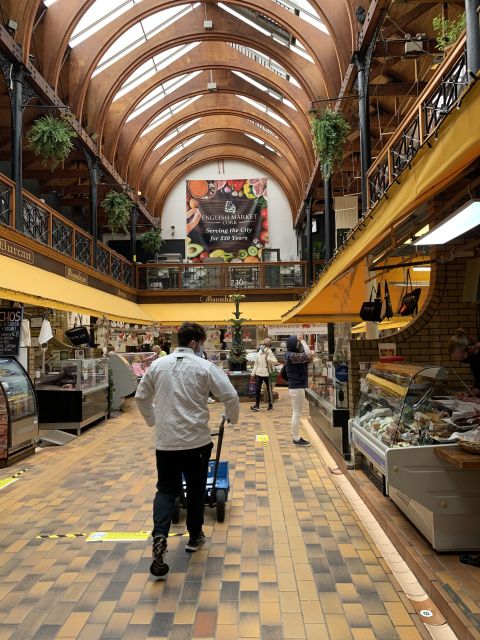
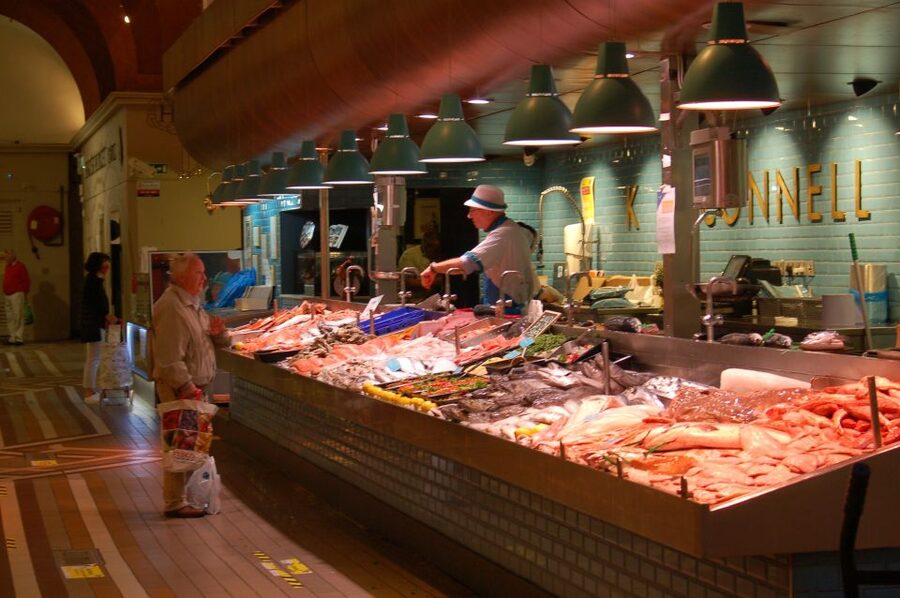
The tour ends in Princes Street, at the main entrance to the English Market. This is a smart finish because it gives you an immediate next step.
You can continue exploring Cork’s center, look for food, or return to another sight from the route. One group used the English Market as the next part of its sightseeing, while another discovered a restaurant during the walk and returned later to eat there.
The market is not included as a food tour, and food and drinks are not part of the $26 price. Still, finishing here makes the walk feel practical. You are left in one of Cork’s best-known central locations rather than at an out-of-the-way endpoint.
Guides, group size, and the feel of the walk
The guide can make or break a short city tour, and this one has received particularly strong praise for its human delivery. Noel is often described as a strong storyteller who adds personal experience. Mary has been praised for local insight, clear speaking, and a friendly manner. Gerard, also referred to as Ger, has been noted for being engaging and approachable.
Jarrod, sometimes spelled Jared in the tour information, has been praised for humor and energy. Aiden has been described as a professional and lively storyteller, while Catherine has been praised for her passion and interesting explanations.
Names matter here because the walk appears to benefit from guides who grew up in Cork or have close ties to the city. You are likely to get more than prepared facts. You may hear personal observations, local characters, explanations of recent history, and answers to questions as you go.
Group size can vary, but one reported group had about 20 people. That is large enough to create a social atmosphere, but still manageable if the guide uses a microphone. If you prefer private, slow-paced sightseeing, this may feel too structured. If you want a friendly introduction with enough people to keep the energy up, it should suit you well.
What to wear and who should book
Wear weather-appropriate clothing and prepare for rain. The tour runs rain or shine, so waterproof layers and comfortable shoes are more useful than trying to rely on a favorable forecast.
I would recommend this walk for first-time visitors, short-stay visitors, cruise passengers with limited time in Cork, and anyone who wants context before visiting the city’s major sights. It is also a good choice if you enjoy hearing about ordinary people, local traditions, and small urban details.
You may want something else if you need long indoor visits, extensive architectural detail, or a slow photographic walk. The route covers a lot of ground in 75 minutes, and several sights are viewed from outside or treated as brief stops.
The activity is wheelchair accessible, and the meeting point is central. The booking information includes free cancellation up to 24 hours before departure, though another note describes the tour as non-refundable. Because those terms conflict, check the conditions shown for your chosen date before paying.
Should you book the Cork historical walking tour?
Book it if you want a clear, compact introduction to Cork with a local voice. The best parts are the buried waterways, South Mall’s former boathouse entrances, the maritime trade story, and the guides’ personal way of explaining the city.
At $26, it offers good value if you use it as a starting point rather than a complete sightseeing day. Take it early, keep a note of Shandon, St Fin Barre’s Cathedral, Elizabeth Fort, and the English Market, then return to the places that deserve more time.
Skip it only if you prefer exploring alone or need long visits inside each landmark. For most people with a spare 75 minutes, this is an easy way to understand why Cork looks and feels the way it does.
FAQ
How long does the Cork historical walking tour last?
The advertised duration is 75 minutes. The route is also described as a one-hour city stroll, so allow roughly an hour to an hour and 15 minutes.
Where does the tour start?
The tour starts at the Cork Tourist Information Centre. You should arrive 10 minutes before the scheduled start time.
Where does the tour finish?
The walk finishes back at the meeting point, with the route ending at the main entrance to the English Market on Princes Street.
What language is the tour conducted in?
The live tour guide speaks English.
Is the tour wheelchair accessible?
Yes, the activity is listed as wheelchair accessible.
Does the tour run in bad weather?
Yes. The tour takes place rain or shine, so you should bring weather-appropriate clothing.
Are food and drinks included?
No. Food and drinks are not included in the tour price.
Is hotel pickup included?
No. Hotel pickup and drop-off are not included. You make your own way to the Cork Tourist Information Centre.
Does the tour include entry to Shandon Bells and Tower?
The walking route includes a view of Shandon Church, but entry to the tower is not included. Separate entry is listed at 6 euros per person.
Can I cancel the booking?
The booking information says you can cancel up to 24 hours in advance for a full refund, but it also includes a note calling the tour non-refundable. Check the current terms for your selected booking before confirming.
Just added around Ireland
- Cobh: Guided Historic Walking Tour★ 4.6 · 32 reviews
- Cobh: 3-Hour Cultural Tour Plus★ 4.9 · 31 reviews
- The History of Dublin With Locals: 1916 Easter Rising PRIVATE Tour★ 5.0 · 73 reviews
- Dublin Historical Centre Private Food Tour with 8 Food Tastings★ 5.0 · 152 reviews
- Semi-Private (8people max) 2.5 Hr Dublin Walking Tour★ 5.0 · 69 reviews
- Dublin Private Highlights & History of 1916 Easter Rising Tour★ 5.0 · 154 reviews
- Dublin’s Haunted History Walking Tour★ 4.3 · 345 reviews
- Deliciously Dublin: The Artisan Donut Walking & History Tour★ 5.0 · 329 reviews
History Walking Tours, compared.
History and Hauntings of Salem Guided Walking Tour
Read our review →
Freedom Trail History Small Group Walking Tour
Read our review →
Historic Charleston Guided Sightseeing Walking Tour
Read our review →
Tapas Walking Tour with Food, Wine, and History
Read our review →
Savannah History and Haunts Candlelit Ghost Walking Tour
Read our review →
A History of Terror – Belfast City Centre Walking Tour
Read our review →Browse the lists this tour appears in