
Review · ILLINOIS
Chicago: Food, History and Architecture Tour
Chicago is best understood on foot. This 4.5-hour outing links architecture and local food in a way that gives you a useful first look at downtown, from the underground Pedway to Millennium Park. I especially like the small group of no more than 12 and the chance to enter buildings rather than simply admire them from the sidewalk. The main drawback is the walking distance, about 3 to 4 miles, which can feel long in bad weather or after a full day of sightseeing.
I also like that the food is not treated as an afterthought. You get a Chicago-style hot dog, deep-dish pizza, Italian beef, and popcorn, with enough food to equal a full meal. The experience works best when you want a broad introduction rather than a deep architectural study or a restaurant-by-restaurant food crawl.
Key points at a glance
- Chicago classics in one afternoon: Try a hot dog, deep-dish pizza, Italian beef, and Chicago-style popcorn.
- Architecture from inside and out: Enter selected buildings and see details that are easy to miss from the street.
- A walk through Chicago’s past: Hear stories about Prohibition, downtown landmarks, and the city’s changing character.
- The Pedway and Riverwalk: Explore the underground paths used by locals, then follow the Chicago River past major buildings.
- Small groups matter: With a maximum of 12 people, guides can adjust the pace and answer questions without relying on headsets.
- A full meal’s worth of food: Portions and stops vary, but the included tastings are intended to add up to a substantial meal.
Why this Chicago tour works as a first-day introduction
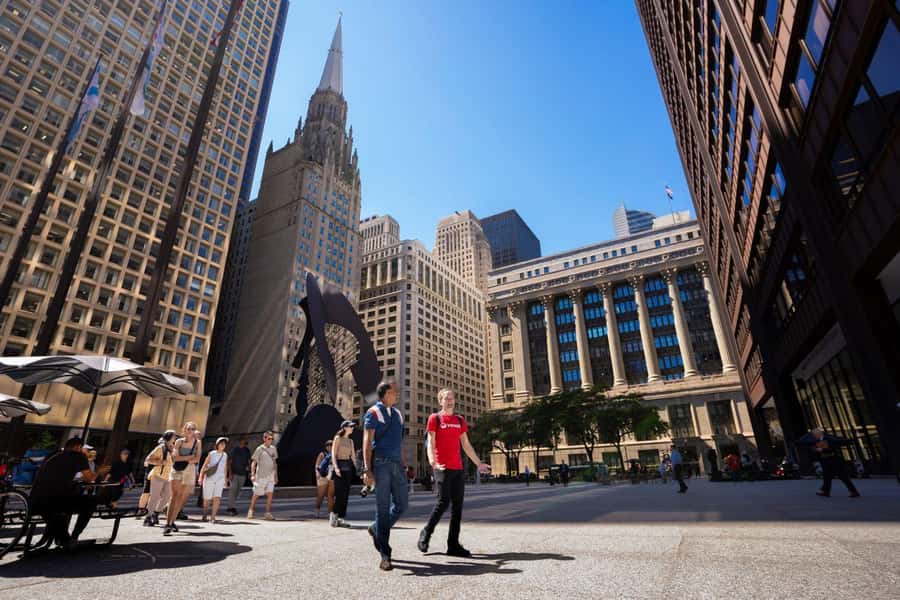
Chicago can be hard to read at street level. One block gives you a theater, the next a department store, then a canyon of office towers, a river, an elevated train, and a public park filled with modern art. This tour gives those pieces a sensible order.
You begin with the city’s built environment and past, then move toward its food traditions. That pairing is useful because Chicago’s food culture is tied closely to its working neighborhoods, immigrant communities, transportation links, and long-running downtown institutions.
The tour lasts 4.5 hours and usually runs in the morning or afternoon. I would choose the morning if you want to use the guide’s restaurant suggestions later in the day. An afternoon departure can work well if you prefer a slower start, but you should eat lightly beforehand and bring water.
This is not a tour for standing beside one famous building, taking a quick photo, and moving on. You walk, listen, enter buildings, pause for food, and keep moving. The pace is generally manageable, but 3 to 4 miles is still a real city walk.
More Architecture and Landmark Tours in the USA:
- Chicago in a Day: Food, History & Architecture Walking Tour
★ 5.0 · 1,153 reviews - Historic Charleston Walking Tour: Rainbow Row, Churches, and More
★ 5.0 · 691 reviews - Charleston’s Best Highlights: History, Culture & Architecture
★ 5.0 · 422 reviews
Chicago’s landmarks, from the Theater District to the river
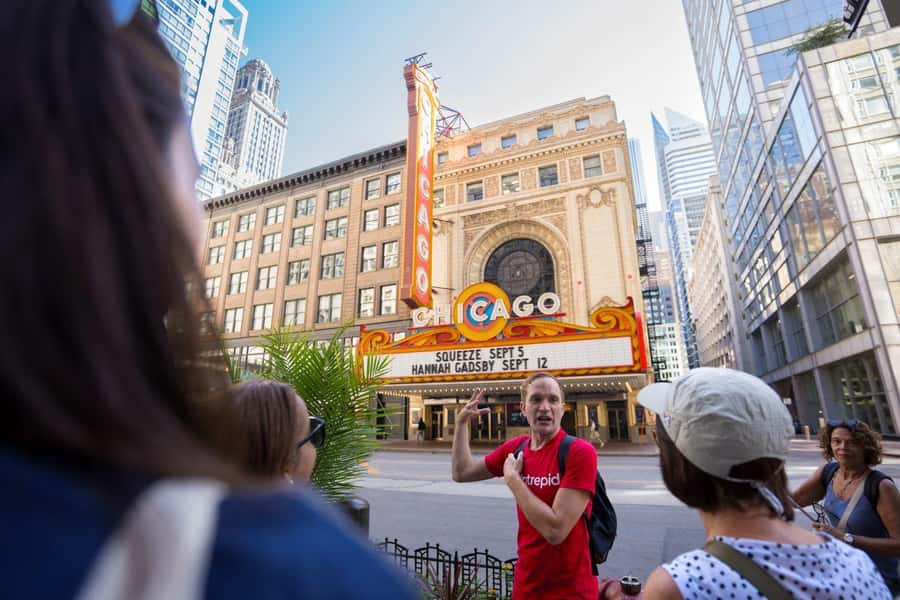
The route includes several of downtown’s best-known sights. The Chicago Theatre is an early reminder that this is a city of grand public interiors, not just tall glass towers. Its familiar marquee is one of the easiest downtown landmarks to recognize, but the guide’s stories give you more reason to look beyond the sign.
The walk also covers Willis Tower, formerly Sears Tower, one of the buildings that helped define Chicago’s reputation for ambitious skyscraper design. You may not go up to an observation deck on this experience, but seeing the tower as part of the street-level route puts its scale into context.
The Art Deco London House adds a different note. Instead of focusing only on Chicago’s earliest skyscrapers, the route shows how later decorative styles shaped the city. You will see how changing tastes affected facades, entrances, and the relationship between a building and the sidewalk.
The Wrigley Building is another major stop. Its pale exterior and clock tower are easy to recognize from the river, but the building makes more sense when you hear how downtown landmarks work together as visual anchors. The guide can help you notice details that might otherwise disappear among traffic and pedestrians.
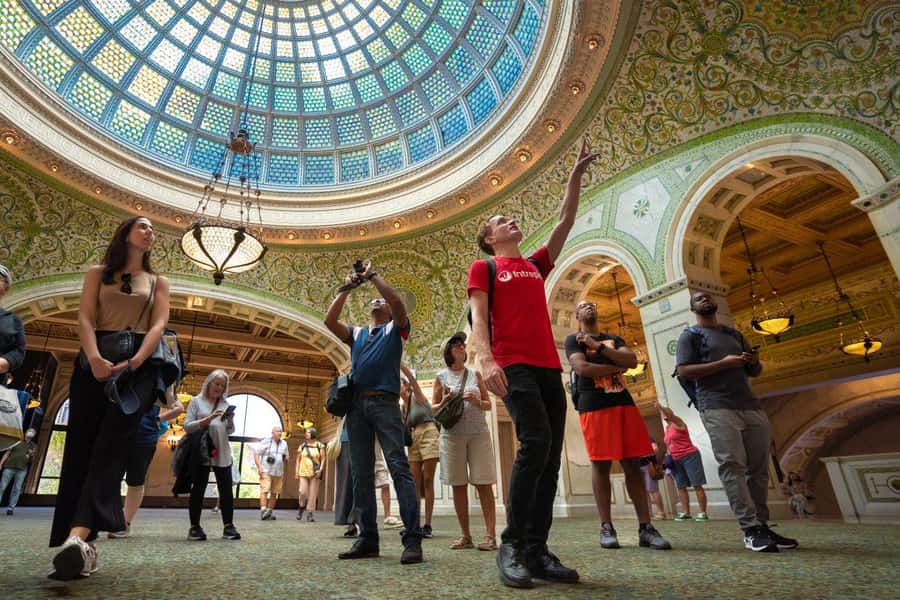
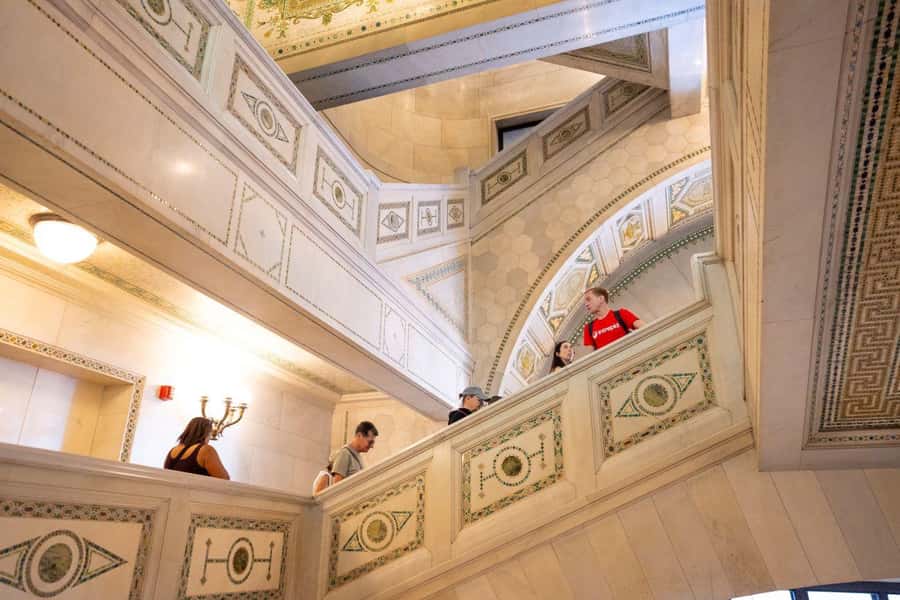
One of the tour’s strongest features is the chance to go inside selected buildings. Several people have particularly enjoyed seeing spaces such as the Chicago Cultural Center and Macy’s. The Cultural Center is valuable because it gives you a break from the street while showing off the kind of decorative public interior that often gets missed on a standard walking route.
Macy’s offers another surprise, especially its ceiling and interior details. You may not think of a department store as a sightseeing stop, but historic commercial buildings can tell you plenty about Chicago’s civic ambitions and retail past. Build in a few minutes to look up. The ceiling is easy to miss if you are focused only on the displays.
The Pedway gives you a local view of downtown
The Chicago Pedway is one of the more unusual parts of the route. This network of underground passages connects portions of the central business district and is used by office workers and residents to move around without always returning to street level.
It is not a polished attraction with a single grand entrance. That is part of its appeal. You get a glimpse of practical downtown life, where underground corridors, transit connections, shops, and office buildings create a second layer beneath the streets.
The Pedway can also make the tour feel more varied. You are not walking outdoors for four straight hours. The route shifts between sidewalks, building interiors, underground passages, and riverfront paths. That change of setting helps, especially if the weather is unpleasant.
Still, you should not expect the Pedway to be the main event. It is an interesting slice of the city rather than a sightseeing attraction filled with exhibits. Its value comes from seeing how Chicagoans use the center of town on an ordinary day.
Prohibition stories add character to the buildings
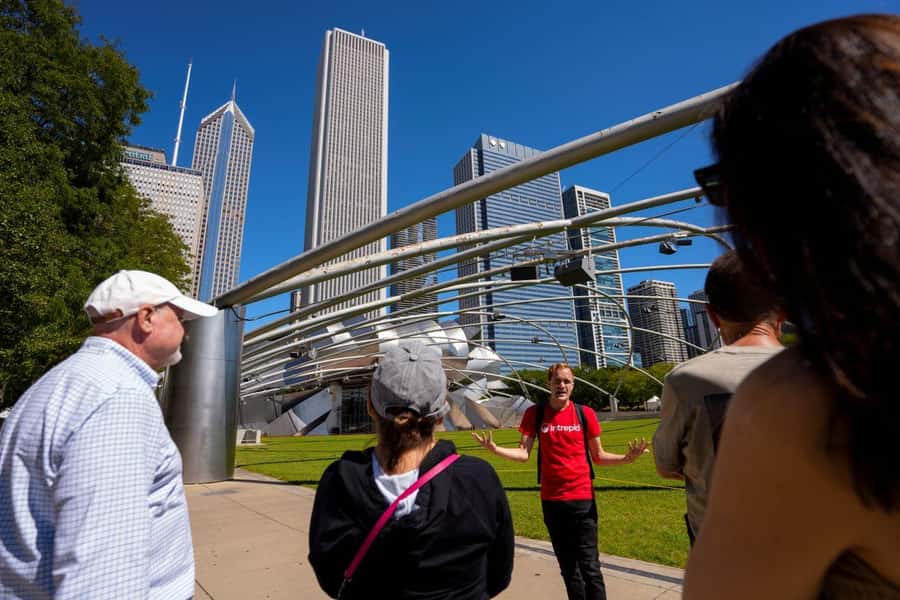
Chicago’s Prohibition-era past gives the architecture stops a human side. The tour uses stories from the 1920s and related downtown landmarks to explain how the city’s streets, businesses, and public image were shaped by an era of illegal alcohol and organized crime.
The focus is not simply on sensational gangster anecdotes. The more useful part is learning how a city can have a formal public face while operating with a very different private life. The buildings become settings for stories about power, business, nightlife, and law enforcement.
Your guide makes a large difference here. Guides named Daniel, Dave, Dash, Rich, Kevin, and others have led this experience, so the exact style will vary. Dave, often called Chicago Dave, is a Chicago native who brings strong personal enthusiasm to the route. Daniel has been praised for entering buildings and keeping the pace comfortable. Dash and Rich have also been noted for their energy and care with smaller groups.
That local connection is one reason the tour feels more personal than a standard recorded city walk. Guides can point out places you might otherwise pass and answer questions as the route develops. A small group also means you are less likely to lose the thread of a story in street noise.
More Food Tours in the USA:
- Historic Ybor City Food Walking Tour
★ 5.0 · 2,210 reviews - Boston Food & History: Pizza, North End & Freedom Trail
★ 5.0 · 1,772 reviews - Southern Flavors Food, Pub Crawl, and History Walking Tour
★ 4.5 · 1,623 reviews - New Orleans Food and History Walking Tour
★ 5.0 · 1,544 reviews
The Chicago Riverwalk puts the skyline in perspective
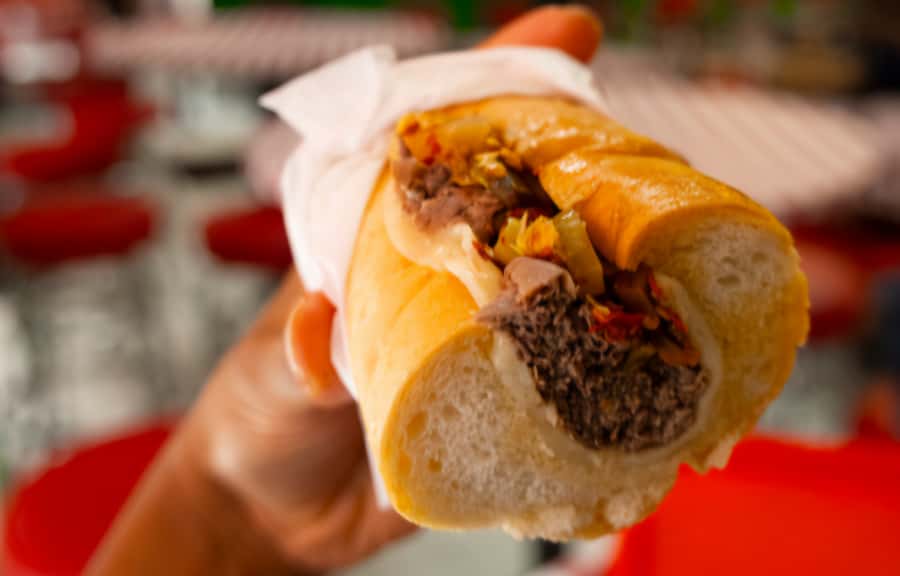
The Riverwalk is where the city’s architecture comes together most clearly. Walking beside the Chicago River gives you a clean view of how different building generations sit beside one another. You can look up at Marina Towers, the Wrigley Building, and other major structures without the same narrow street-level angles.
This part of the walk is especially good for photographs, but try not to spend the whole time looking through your phone. The river offers a chance to understand the city’s layout. Chicago’s buildings are not isolated monuments. They form walls around the water, frame bridges, and create changing views as you move.
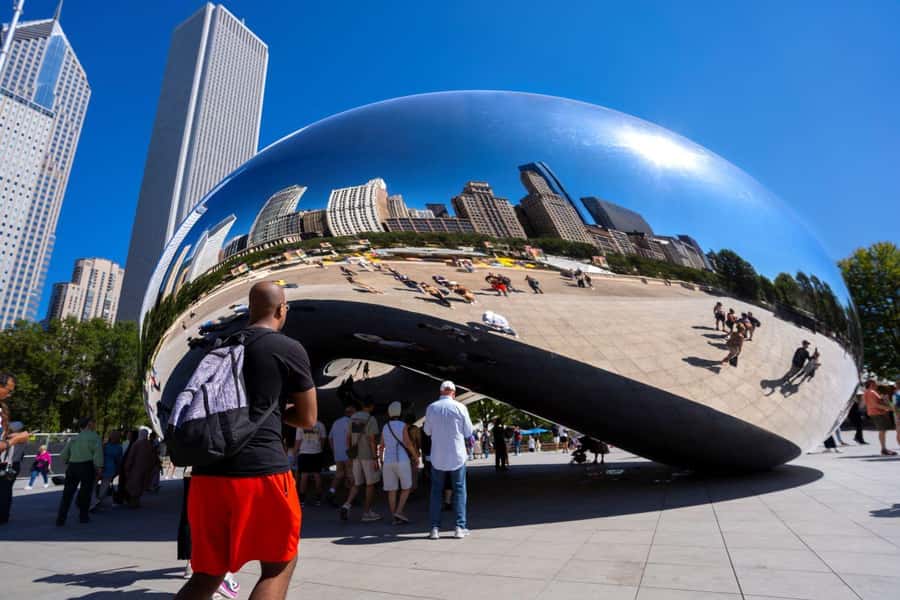
The walk to Millennium Park continues that visual story. The route ends near the Bean, officially Cloud Gate, where you get the familiar reflection of the skyline and passing visitors. It is a fitting finish because the sculpture turns the surrounding architecture into part of the artwork.
Millennium Park is also a practical ending point. From there, you can continue exploring downtown, visit another attraction, or follow the guide’s suggestions for food and sightseeing. Several guides have offered directions and ideas for what to do next, which is useful if Chicago is new to you.
The food stops cover Chicago’s essential menu
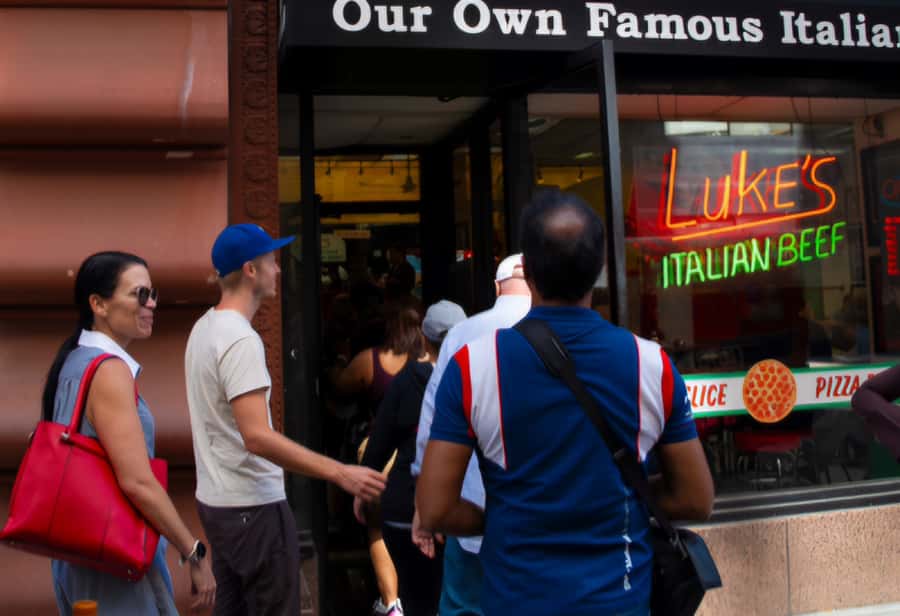
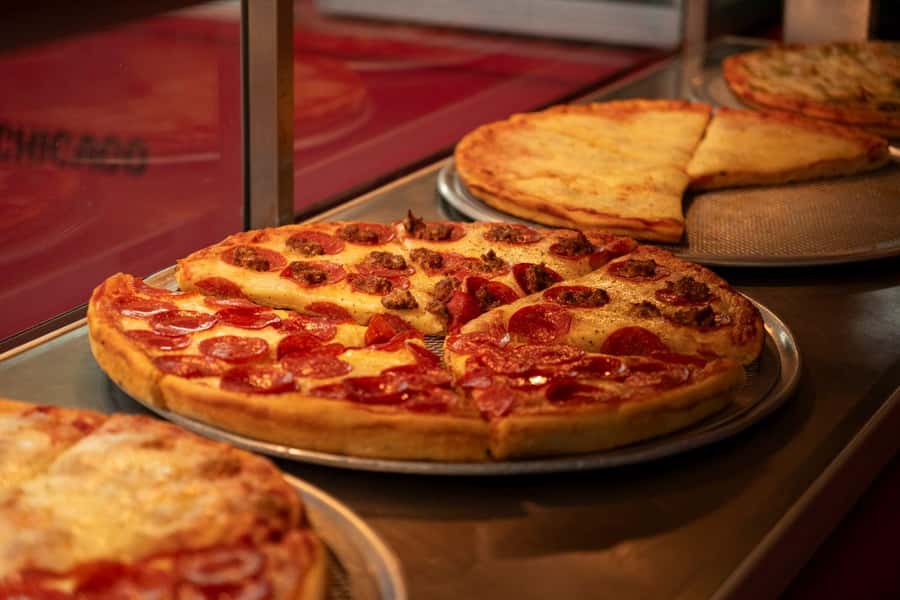
The food portion is built around three classic Chicago dishes. You sample a Chicago-style hot dog, deep-dish pizza, and Italian beef, along with a popcorn tasting. The exact businesses and portions can change by season and by the day’s route, so you should think of this as a guided introduction to local staples rather than a fixed restaurant itinerary.
The Chicago-style hot dog is a useful first taste because it is more than a sausage in a bun. The toppings and serving style are part of the local tradition. The portion may look modest, but it gives you a clear sense of the city’s casual food culture.
Deep-dish pizza is the heavier stop. It is not a quick slice eaten while walking. The thick crust and substantial filling make it a central part of the meal, and it is one reason you should avoid eating a large lunch before the tour.
Italian beef brings a different texture and flavor. The sandwich is filling and closely tied to Chicago’s working-class food traditions. Together, the hot dog, pizza, and beef show three very different sides of the city’s casual dining culture.
Popcorn adds a lighter, playful stop. Chicago-style popcorn is often associated with the sweet and savory combination of caramel and cheese flavors. The tasting breaks up the heavier food and gives the guide another local product to explain.
The total amount of food is intended to equal a full meal, though portion sizes vary. You will not be ordering additional drinks or extra dishes as part of the $99 price, so budget separately if you want a larger serving or something to drink.
Vegetarian options can be arranged if you notify the operator ahead of time. Other allergies and specific dietary preferences cannot be accommodated, so this tour is a poor fit if you need strict control over ingredients.
What $99 gets you, and where the value lies
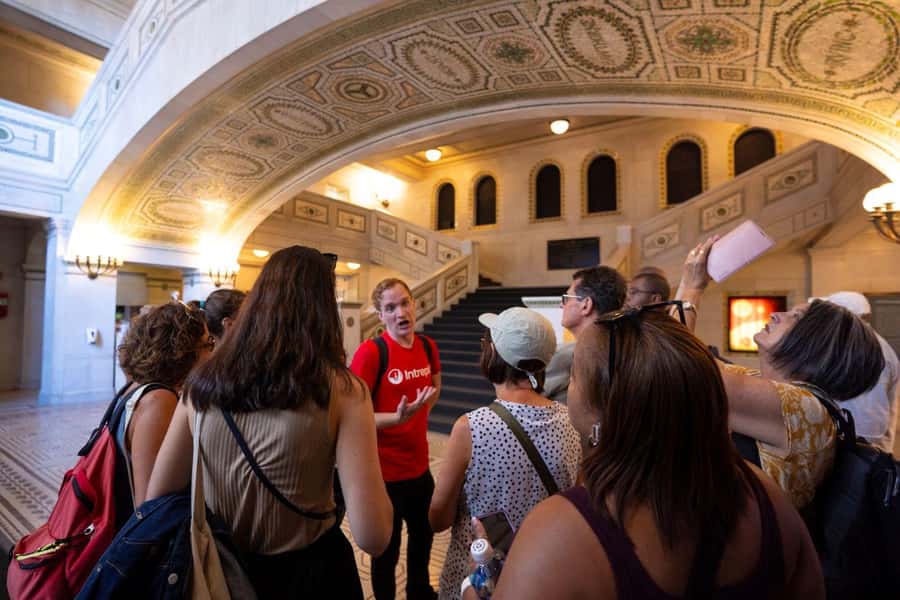
At $99 per person, this is not the cheapest way to eat in Chicago for half a day. The value comes from combining several services: a local guide, a structured downtown walk, access to selected interiors, historical interpretation, and enough food for a full meal.
If you were to buy three dishes and popcorn separately, you would pay for the food but not for the planning, route design, or explanations. The tour also saves you from guessing which local specialties to try and how to fit them around downtown sightseeing.
I think the price makes the most sense for a first visit, a short stay, or a day when you want one organized experience to cover several interests. It is less compelling if you already know downtown well, have strong restaurant plans, or want a specialized architecture lecture.
The small group improves the value. With no more than 12 people, the guide can keep an eye on the pace and answer questions. One guide even led a tour for a single participant during a quiet winter day, which shows that the experience can remain personal even when attendance is low.
Timing, weather, and walking details you should know
Wear comfortable shoes. This is not optional advice dressed up as a suggestion. You cover 4.8 to 6.4 kilometers, with time spent standing, crossing streets, entering buildings, and walking between food stops.
The tour operates in rain, snow, and sunshine. Chicago weather can change quickly, so wear layers and bring clothing suited to the forecast. The Pedway and indoor stops provide some relief, but they do not turn this into an indoor tour.
The experience is described as suitable for all ages and fitness levels, but the distance still matters. Children under six can join free, and children are welcome on the walk. Families should consider the length, the street crossings, and the amount of listening required before booking.
A short public-transit ride may be included depending on the route and day. Bring a payment method for any extra drinks or food, though the included samples are meant to provide a full meal.
The meeting point can vary by the option you book, so check the exact location before heading out. That detail matters in downtown Chicago, where a few blocks can add time if you are unfamiliar with the street grid.
Who will enjoy this experience most
I would recommend this tour to first-time visitors who want context quickly. It gives you architecture, public spaces, local food, city history, and practical suggestions for the rest of your stay without requiring separate bookings for each topic.
It also suits couples, families with older children, and small groups that prefer conversation over a large tour bus. The English-speaking guides have room to adapt the route and explain details in response to your interests.
Food-focused visitors should know what this is and is not. You get a strong taste of Chicago’s best-known casual dishes, but you are not spending four hours at restaurants or sampling a wide range of neighborhoods. If you want a serious food study, choose a dedicated food tour instead.
Architecture enthusiasts may also want a specialized river cruise or building-focused walk afterward. This tour offers a broad introduction, with indoor details and skyline views, but food and city stories share equal billing.
The tour is carbon neutral and operated by a B Corp certified company. That does not change the route or the food, but it may matter to you if you prefer an operator that has made a formal commitment to reducing its impact and using tourism for social good.
My verdict: book it for a broad, filling Chicago introduction
Book this tour if you want one half-day experience that connects Chicago’s buildings, stories, underground passages, riverfront, and classic foods. The best features are the small group, the chance to enter buildings, the local guides, and the satisfying range of food.
Skip it if you dislike walking, need to avoid most common allergens, or want a narrowly focused architecture or restaurant tour. For everyone else, $99 is a fair price for a well-filled introduction, especially at the start of a Chicago visit.
If you book, eat lightly beforehand, wear serious walking shoes, tell the operator about vegetarian needs in advance, and save room for deep-dish pizza. At the end, use the guide’s suggestions to shape the rest of your stay. That may be the most useful part of all.
FAQ
How long does the Chicago Food, History and Architecture Tour last?
The tour lasts 4.5 hours and is usually offered in the morning or afternoon.
How much walking is involved?
You will walk approximately 4.8 to 6.4 kilometers, or 3 to 4 miles. Comfortable shoes are strongly recommended.
What food is included?
The tour includes three food stops with samples such as a Chicago-style hot dog, deep-dish pizza, and an Italian beef sandwich. It also includes a popcorn tasting. The food amount is intended to equal a full meal.
Can vegetarian diets be accommodated?
Vegetarian options can be arranged if you notify the operator in advance. Other food allergies and dietary preferences cannot be accommodated.
Is the tour suitable for children?
Yes. The walk is child-friendly, and children under six are permitted to join free of charge. Parents should still consider the 3 to 4 miles of walking and the 4.5-hour duration.
How large is the group?
The group has a maximum of 12 participants. A private group option is also available.
Just added around the USA
- Washington DC: African American History Museum Private Tour★ 4.7 · 54 reviews
- Dallas: Historic West End Ghost Walking Tour★ 4.6 · 59 reviews
- NYC: New York City History of Stand-Up Comedy Tour★ 4.8 · 21 reviews
- Colorado Springs: Guided Ghost Story and History Tour★ 4.5 · 46 reviews
- Colonial Williamsburg: Colonial History Guided Walking Tour★ 4.9 · 83 reviews
- Civil War History Tour – The Battle of Franklin, Tennessee★ 4.9 · 85 reviews
- Chicago: Historic Gangsters & Twilight Tales Night Cruise★ 4.1 · 63 reviews
- Cincinnati: Historic Sightseeing Cruise★ 4.4 · 373 reviews
Architecture & Landmark Tours, compared.
St. Mark’s Basilica Guided Tour & VR History Intro
Read our review →
Venice’s Best: Basilica, Doge’s Palace, Gondola & History Gallery
Read our review →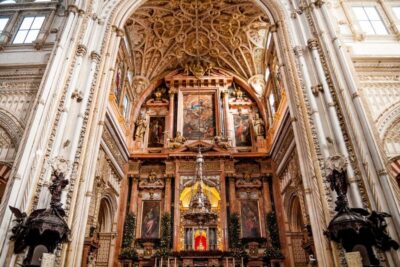
Córdoba: Skip-the-Line Great Mosque-Cathedral History Tour
Read our review →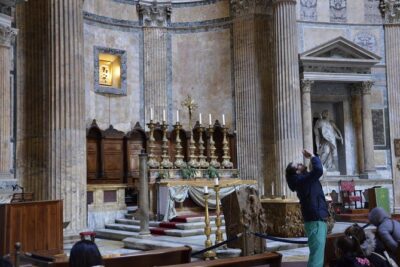
Pantheon Elite Guided Tour – Rome’s Iconic Ancient Temple
Read our review →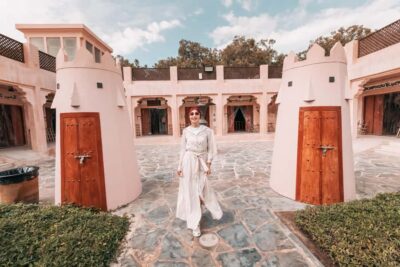
Abu Dhabi Grand Mosque, Palace, and Heritage Village
Read our review →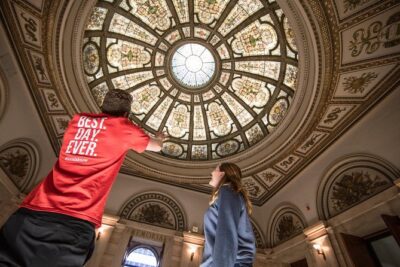
Chicago in a Day: Food, History & Architecture Walking Tour
Read our review →

Colosseum Special Access Tour, with Ancient Temples & Tombs
Read our review →Browse the lists this tour appears in