Review · BARCELONA
Barcelona El Raval Dark History Walking Tour
Barcelona has a darker story to tell. This two-hour walk through El Raval links old churches, crime tales, hospital history, industrial scars, and the city’s former nightlife district. I like the way it shows you a side of Barcelona that can be easy to miss, and I like the small group limit of 15 people, which gives the guide room to keep the conversation personal. The main consideration is the subject matter: stories of murder, abandoned infants, autopsies, and rough nightlife may not suit every family or every mood.
At $33.42 per person, the tour offers solid value if you want context rather than a quick photo stop. You get a local guide, about two hours of walking, and six substantial stops, but lunch and other food are not included. The route ends near Avenida del Paralelo, so you can continue with dinner, drinks, or more exploring afterward.
Key points before you book
- Six stops in two hours: Each stop gets roughly 20 minutes, so the walk keeps moving without rushing from place to place.
- A small group of 15 or fewer: This is a useful size for hearing stories clearly and asking questions.
- The Vampire of the Raval: The route explores the home and crimes associated with Barcelona’s notorious Raval villain.
- Old Barcelona beyond the postcard view: You visit former hospital grounds, medieval churches, industrial remains, and a former nightlife corridor.
- A strong guide-led experience: Guides including Eoghan, Zeynep, Callum, Cal, Andres, and Zaynab have been praised for clear storytelling, warmth, humor, and helpful city advice.
- A practical ending point: The walk finishes at Jardins de les Tres Xemeneies, a good place to continue around Paralelo and Poble-sec.
Why El Raval makes such a good setting
El Raval is one of Barcelona’s most layered neighborhoods. Its streets connect religious institutions, charitable work, medicine, crime, immigration, entertainment, political change, and industry. That mixture gives the tour more substance than a simple list of spooky tales.
The dark-history theme is also a useful way to understand the city. You are not only hearing about villains and grisly events. You are seeing how Barcelona cared for abandoned children, treated the sick, handled death, built factories, and entertained people after dark.
I like that balance. The subject can be dramatic, but the route also shows churches, public gardens, architecture, and street art. You get the darker side without being trapped in a parade of sensational stories.
The walk covers about two hours and includes six stops of around 20 minutes each. That pace should suit you if you want time for explanation but do not want to spend half a day on one neighborhood. Wear comfortable shoes, since the experience is on foot and several stops are outside.
More Dark History and Haunted Tours in Barcelona
- Barcelona: Dark History Night Walking Tour
★ 4.8 · 344 reviews - Barcelona’s Dark History Night Tour
★ 5.0 · 181 reviews - Barcelona Dark History Night Walking Tour With Drinks
★ 5.0 · 153 reviews
Starting at Sant Pere Nolasc Mercedaris
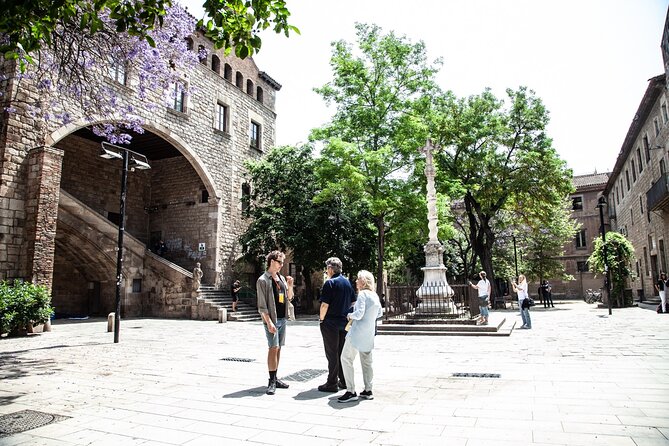
The meeting point is the Parròquia de Sant Pere Nolasc Mercedaris at Plaça de Castella, 6. This gives the tour a fitting beginning, since the church is part of the story of the area and helps place you in the older fabric of Ciutat Vella.
The church is also one of the named sights connected with the walk. Even if you know Barcelona’s famous Gaudí buildings, you may not know this part of the city’s religious and social history. The guide uses the surrounding streets to introduce El Raval as a real neighborhood, not simply a backdrop for crime stories.
The meeting point is near public transportation, which makes it practical to reach from other parts of central Barcelona. Check the exact address and allow enough time to find Plaça de Castella. Mobile tickets are used, so you can keep the booking on your phone rather than print anything.
Stop one: the foundling wheel at Casa de Misericòrdia
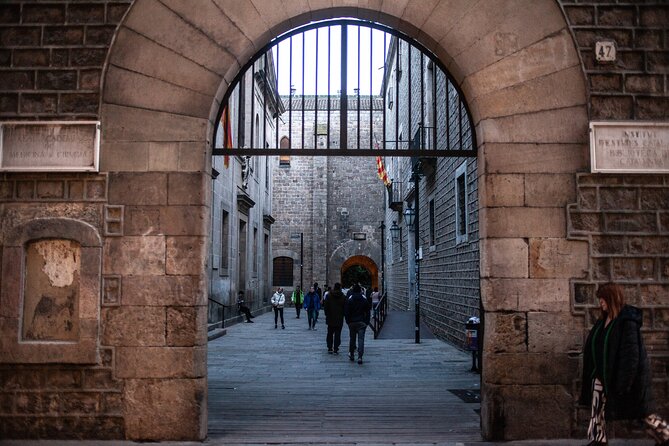
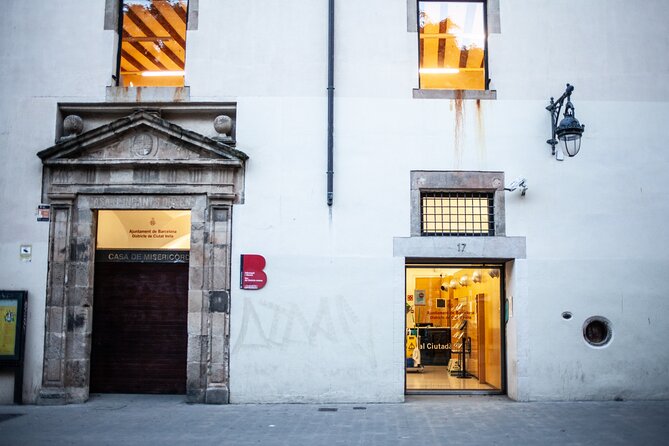
The first stop is Fundació Privada Casa de Misericòrdia de Barcelona, where a former foundling wheel is hidden in plain sight. This was a device connected with unwanted infants being left anonymously.
That detail changes the tone immediately. It is not a ghost story in the usual sense. It points to poverty, social pressure, religion, and the limited choices available to desperate parents in earlier Barcelona. A good guide can use this stop to explain how charitable institutions worked and why places like this mattered.
You should expect the guide to focus on the history and location rather than an indoor visit. Admission is listed as free, but this is primarily a storytelling stop. The subject may be difficult, especially for younger children, so keep that in mind when booking for a family.
Stop two: Joaquín Costa and the Raval’s most notorious villain
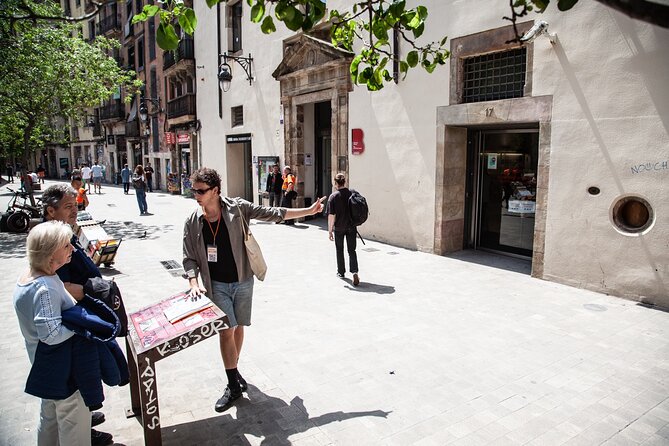
Carrer de Joaquín Costa brings the tour to one of its strongest crime stories. This street was once associated with the man known as the Vampire of the Raval, a Barcelona figure often compared with Jack the Ripper.
The appeal here is the setting. You are standing in an ordinary city street while hearing about crimes that helped shape the neighborhood’s fearful reputation. That contrast makes the story more powerful than hearing it in a museum or reading it in a book.
The guide’s skill matters a great deal at this point. Eoghan received repeated praise for his storytelling, humor, and passion for Barcelona, while other guides such as Zeynep, Cal, and Andres were also singled out for making the route engaging and easy to follow. Guide assignments can change, so treat those names as examples rather than a promise.
This stop is best for adults and older teenagers who enjoy true crime with historical context. If you prefer architecture, food, or art alone, the crime-centered sections may feel too heavy.
More History Walking Tours in Barcelona
- Barcelona: Tapas Walking Tour with Food, Wine, and History
★ 4.8 · 4,261 reviews - Barcelona Tapas Walking Tour: Food, Wine & History
★ 4.5 · 1,928 reviews - Barcelona 1.5h Private Old Town, Gothic & Ramblas Walking Tour
★ 5.0 · 318 reviews - Barcelona: The Spanish Civil War Historical Walking Tour
★ 4.9 · 239 reviews
Stop three: medicine and autopsies at the old hospital
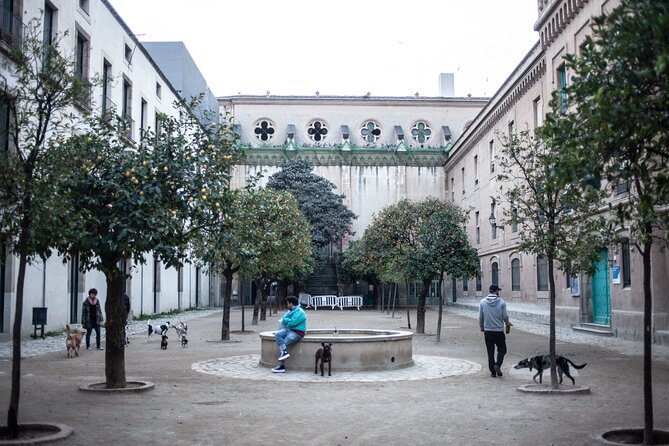
The Real Academia de Medicina de Cataluña occupies part of the former Hospital de la Santa Creu. The site is connected with autopsies and gives the tour a medical and institutional angle.
Barcelona’s old hospitals were not only places of treatment. They also reflected the city’s approach to poverty, death, research, and public health. That makes this stop useful even if you are less interested in horror stories. You get a look at how medicine developed within an old urban setting.
The stop is also a reminder that El Raval’s past cannot be reduced to crime. Religious care, medical work, charity, and social problems all existed close together. I appreciate that the route moves from an abandoned-infant story to criminal history and then to medicine. The subjects connect, but they are not repetitive.
Admission is listed as free, though the information provided does not promise an interior tour of the academy or former hospital. Expect the guide to explain the site from the route and surrounding streets.
Stop four: Sant Pau del Camp and a violent monastic past
Sant Pau del Camp is described as Barcelona’s oldest church. It was once a monastery, and its history includes violence as well as religious life.
This is likely to be one of the more atmospheric stops. Medieval churches can look peaceful today, but the guide helps you see them as institutions shaped by conflict, power, faith, and changing city life. The building gives the tour a visual break from narrow streets and crime anecdotes.
The church also brings in the architectural side of the walk. You are not simply passing anonymous corners. You are seeing a major old religious site that many first-time visitors may overlook while heading toward Barcelona’s better-known attractions.
The tour information does not say that admission inside is included, so do not book this walk expecting a full church visit or a dedicated architecture tour. Its value is the explanation of the place and its role in the city’s past.
Stop five: Avenida del Paralelo and the old Chinese district
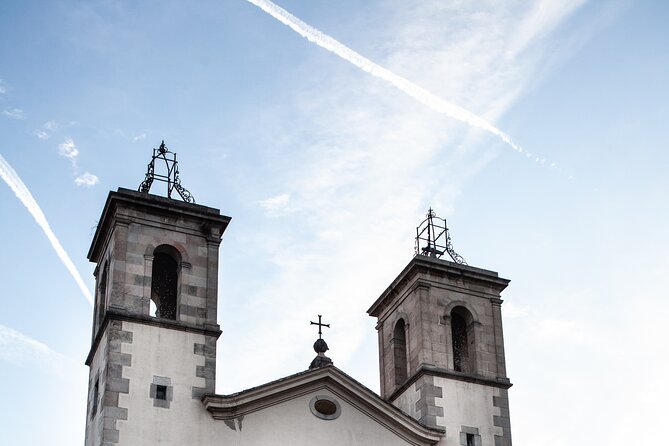
The route then reaches Avenida del Paralelo, described as the former Chinese district and a center of 20th-century Barcelona’s seedier nightlife.
This section broadens the story from medieval institutions and individual criminals to modern urban culture. The avenue was tied to theaters, clubs, entertainment, and nightlife, and the tour uses that past to show how Barcelona changed after dark.
The phrase Chinese district refers to an older name and period in the city’s history. Listen closely to the guide’s explanation, since labels for neighborhoods can reflect prejudice, migration, class, and the way outsiders viewed an area. The point is not simply that the district was rough. It is that Barcelona’s nightlife and social boundaries were changing.
This is a useful stop for anyone who wants to connect history with the city you see today. It also makes the tour feel less like a narrow ghost walk. You are learning about entertainment, urban reputation, and social life as well as crime.
Stop six: graffiti at Jardins de les Tres Xemeneies
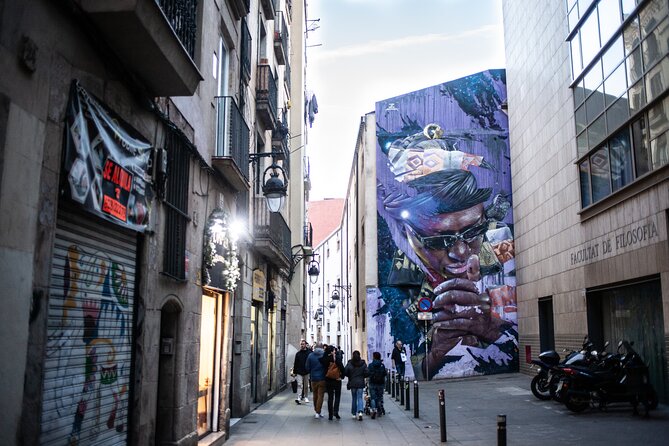
The final stop is Jardins de les Tres Xemeneies, or the Gardens of the Three Chimneys. The site recalls Barcelona’s industrial past and is now known for graffiti art.
The change in mood is welcome. After stories about violence, autopsies, and hardship, the route ends with public art and a more contemporary view of the city. The surviving chimneys point to the area’s industrial history, while the graffiti shows how former working spaces can take on a new public life.
This is also a practical ending. The tour finishes at Plaça de Les Tres Xemeneies on Avenida del Paralelo, near Poble-sec. You can continue walking, look for food, or use public transportation from the area. Since lunch is not included, plan a meal before or after the tour rather than expecting a food break along the way.
The ending also gives you a chance to think about the whole route. El Raval and the streets toward Paralelo are not frozen in the past. They have changed from religious and charitable institutions to hospitals, factories, clubs, public gardens, and art spaces.
How the guides shape the experience
This tour depends more on the guide than on entry tickets or special equipment. The places are important, but the stories connect them.
The strongest praise has gone to guides who combine historical detail with an easy personal manner. Eoghan is repeatedly described as warm, funny, passionate about Barcelona, and an excellent storyteller. Callum was praised for keeping the group involved and offering useful recommendations. Zaynab and Zeynep were noted for clear explanations and helpful local insight, while Andres and Cal were praised for making an unfamiliar part of the city feel welcoming.
That variety matters because the subject can easily become gloomy. A guide with humor and warmth can keep the tour human rather than turning it into a grim recital. You should also feel free to ask about places to eat or other parts of Barcelona, since guides have offered recommendations during the walk.
The small group limit helps here. With no more than 15 people, you have a better chance of hearing the guide, seeing the points being discussed, and asking a question without interrupting a large crowd. The exact group size can be smaller, but it will not exceed 15.
Is $33.42 a fair price?
At $33.42 per person, this is not the cheapest way to walk around Barcelona. You are paying for interpretation, local stories, route planning, and a small group rather than admission to a major monument.
I think the price is fair if you are curious about the city beyond the Sagrada Família, Park Güell, and Gothic Quarter highlights. Six stops over two hours gives you a focused introduction to El Raval and the route toward Paralelo. You can then return to the places that interest you most.
The value is weaker if you mainly want access to interiors or famous art and architecture. The tour includes a local guide, but lunch, drinks, and separate entrance fees are not included. It is best viewed as a guided neighborhood walk, not a full sightseeing pass.
The tour is often booked about 21 days ahead, so it is sensible to reserve early if the timing matters to you. Free cancellation is available up to 24 hours before the start time. Changes or cancellations inside that window are not accepted for a refund, and a minimum group size is required for the tour to operate.
Who should book this Raval walk?
I would choose this experience if you want to understand how Barcelona’s difficult past shaped its streets. It suits adults, older teenagers, first-time visitors who want an unusual introduction, and repeat visitors who have already covered the major sights.
It is also a good first tour for a Barcelona trip. One person described it as a way to feel like an insider at the start of a visit, and that makes sense. The guide can give you local recommendations while introducing the city through a neighborhood that many people skip.
You may want another activity if you dislike crime stories, discussions of death, or references to abandoned infants. The route is also less suitable if you need frequent seated breaks, since the experience is a two-hour walk with multiple outdoor stops. Service animals are allowed, and most people can participate, but the supplied details do not specify step-free access or the exact walking distance.
My verdict on the Barcelona El Raval Dark History Walking Tour
Book it if you want a thoughtful look at Barcelona’s less polished side, especially if you like history told through streets rather than museums. The best parts are the range of subjects, the small group size, the guide-led storytelling, and the final shift from industrial history to graffiti art.
Skip it if your ideal Barcelona experience is all Gaudí, grand interiors, and sunny plazas. This walk is frank about crime and hardship, and it asks you to look at parts of the city that guidebooks often soften.
For the right reader, the tour is a strong use of two hours. You leave with a better sense of El Raval, a handful of stories you are unlikely to find on a standard sightseeing route, and a practical ending point for continuing your evening.
FAQ
How long does the Barcelona El Raval Dark History Walking Tour last?
The tour lasts approximately two hours.
How much does the tour cost?
The listed price is $33.42 per person.
What is the maximum group size?
The tour accepts a maximum of 15 people.
Where does the tour begin?
It begins at Parròquia de Sant Pere Nolasc Mercedaris, Plaça de Castella, 6, in Barcelona’s Ciutat Vella.
Where does the tour end?
It ends at Plaça de Les Tres Xemeneies on Avenida del Paralelo, at Jardins de les Tres Xemeneies.
Is lunch included?
No. Lunch is not included in the tour price.
Can I cancel for a full refund?
Yes. You can cancel at least 24 hours before the start time for a full refund. Cancellations or changes made less than 24 hours before the start time are not accepted for a refund.
More History Walking Tours in Spain
- Barcelona Historical Walking Tour: Gothic Quarter and El Born
★ 5.0 · 217 reviews - Barcelona in 2 Hours: Guided Walk Through History and Sights
★ 5.0 · 203 reviews - Barcelona: La Boqueria Food, Wine & History Walking Tour
★ 5.0 · 126 reviews - Montjuïc Cemetery Walking Tour – Hidden Art, History & Views
★ 5.0 · 62 reviews
Just added around Barcelona
- Barcelona Jewish & Gothic Tour★ 5.0 · 18 reviews
- Andorra Original History and Sightseeing Tour (Private, Pickup)★ 5.0 · 350 reviews
- History Museum of Catalonia & Rooftop Access Ticket★ 4.5 · 43 reviews
- Sip, Sites & Bites Barcelona Food, Drinks & History Tour★ 4.5 · 95 reviews
- Barcelona Tapas Food Tour, Taverns, History & Local Culture★ 5.0 · 42 reviews
- Taste of Barcelona: Boqueria Market, Tapas & History Tour★ 4.5 · 22 reviews
- Historical Montserrat Half-Day Hiking Tour from Barcelona★ 5.0 · 26 reviews
- Savor Spain: Food, Wine, History & Culture Small Group Tour in Old Barcelona★ 5.0 · 140 reviews
Dark History & Haunted Tours, compared.
Savannah History and Haunts Candlelit Ghost Walking Tour
Read our review →

New Orleans Small-Group Haunted History Carriage Tour
Read our review →

Genteel and Bard’s Savannah Dark History and Ghost Encounter Walking Tour
Read our review →