Review · CATALONIA
Barcelona: Dark History Night Walking Tour
Barcelona gets much darker after sunset. This two-hour walk through El Born and La Ribera explores the city’s medieval punishments, forgotten cemeteries, executions, and Spanish Inquisition, using true historical accounts rather than haunted-house tricks. I like the serious historical focus and the way guides use a portable wall projector, photos, readings, and props to make old events easier to picture. I also like the small-group feel reported on several departures, with guides such as Elena, Sara, Noah, Albert, and Ross drawing people into the stories.
The main catch is the subject matter. Torture, executions, religious persecution, and grim medieval life are not light bedtime material, so this tour is not recommended for children under 14 or anyone who dislikes graphic history. It is also an outdoor walk in all weather, and the start time changes with nightfall.
The experience costs $24 per person, lasts two hours, and runs in English. At that price, I see it as a useful evening activity, especially if you want to understand the old neighborhoods beyond their pretty façades and narrow lanes.
Key points at a glance
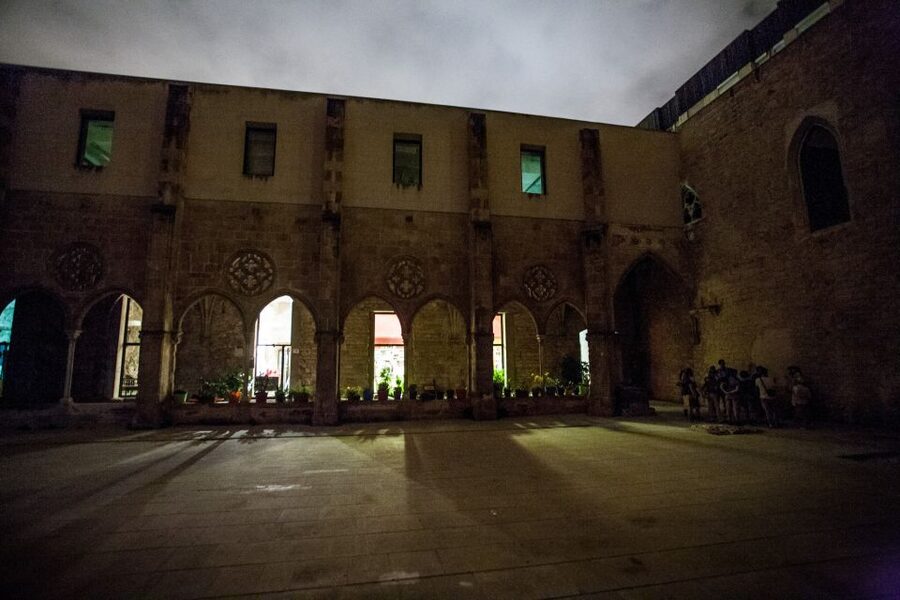
- True dark history, not a ghost tour: The focus is on documented punishments, executions, the Spanish Inquisition, and the people caught in those systems.
- El Born and La Ribera after dark: The old streets provide an atmospheric setting without needing theatrical scares or paranormal claims.
- Strong guide-led storytelling: Elena, Sara, Noah, Albert, and other guides have been praised for energy, clarity, humor, and audience involvement.
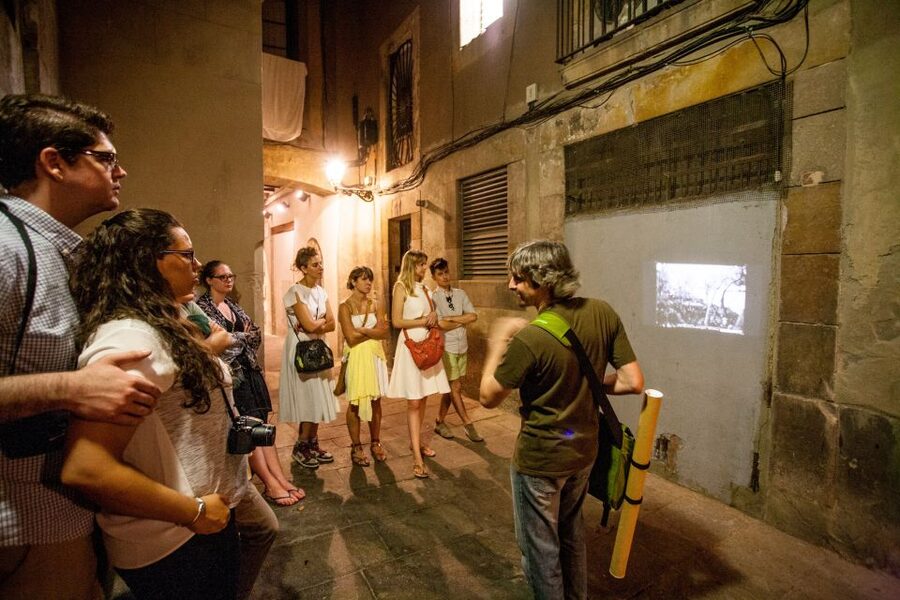
- Visual aids add context: A portable wall projector, images, excerpts, and props help turn names and dates into more understandable stories.
- Good value at $24: Two hours of live guiding, a focused subject, and a central meeting point make this a reasonably priced night outing.
- Plan for the weather: The walk operates in rain and other conditions, so bring suitable rain gear if the forecast looks poor.
Meeting beneath the Arc de Triomf
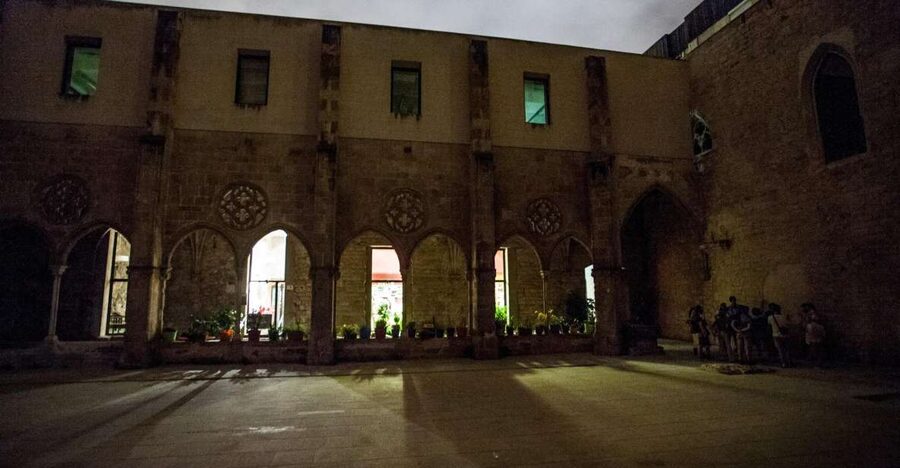
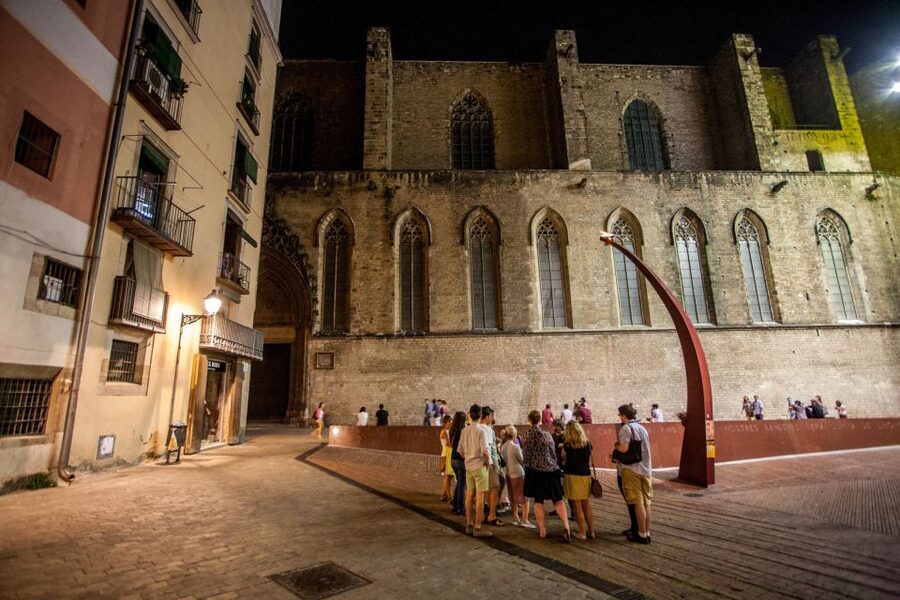
The tour begins beneath the arch of the Arc de Triomf, beside Arc de Triomf metro station on Line 1. That is a handy central meeting point, and the metro stop makes it easier to reach without hunting through the old quarter.
You should arrive ready to walk. The tour moves through the medieval neighborhoods of El Born and La Ribera, where narrow streets and old buildings help set the mood. The exact route and timing can vary, but the experience is built around stopping in places connected with Barcelona’s darker past.
The company supplies headsets so you can hear the guide while moving between stops. That matters at night, when street noise can swallow a soft voice and groups may spread out along tight lanes.
You also get a professional local guide and a portable wall projector used during explanations. Bring a camera if you like taking atmospheric street photos, though the main value here is listening carefully rather than collecting landmarks.
More Dark History and Haunted Tours in Barcelona
- Barcelona’s Dark History Night Tour
★ 5.0 · 181 reviews - Barcelona Dark History Night Walking Tour With Drinks
★ 5.0 · 153 reviews - Barcelona El Raval Dark History Walking Tour
★ 5.0 · 70 reviews
El Born and La Ribera after sunset
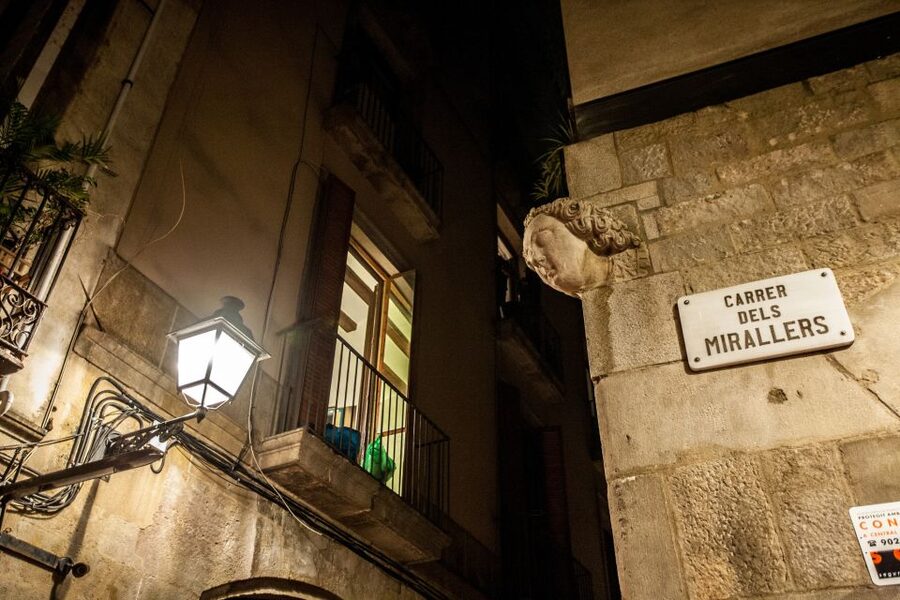
El Born and La Ribera are attractive neighborhoods to walk through at any hour. At night, the narrow streets change character. The same stone walls and old lanes that feel picturesque during the day become a useful backdrop for stories about punishment, fear, and public spectacle.
The tour does not simply point at old buildings and recite dates. It connects the streets with the people who lived, worked, suffered, and enforced authority there. You learn about victims of the Spanish Inquisition, alleged witches, medieval punishments, and the way accusations could lead to terrible consequences.
That approach is one of the tour’s strengths. Barcelona’s old quarter can blur together when you explore it alone. A guide gives each corner a reason to matter, helping you notice how street names, architecture, and local legends carry traces of earlier events.
You should not expect a polished sightseeing route packed with major monuments. The attraction is the interpretation. The streets are the setting, while the guide supplies the meaning.
The Spanish Inquisition in human terms
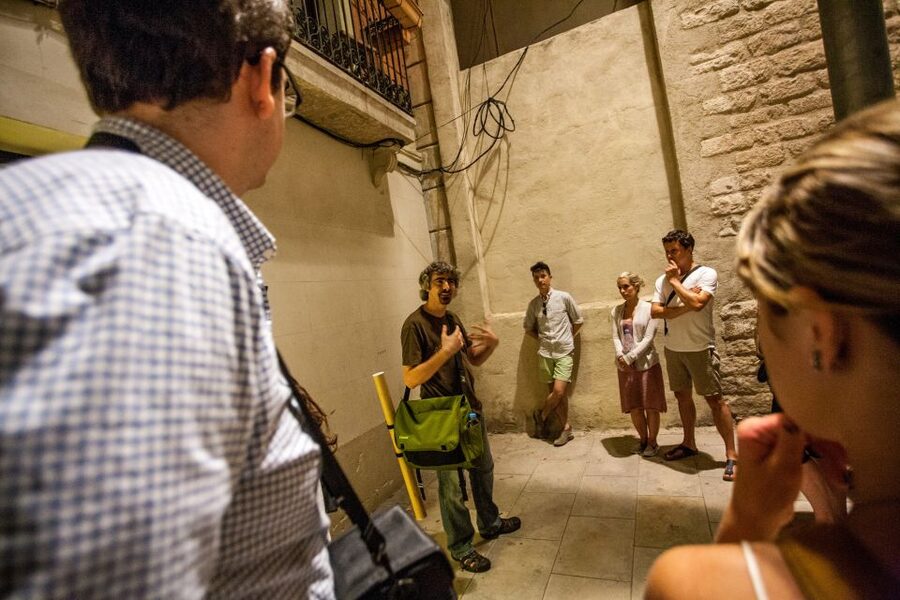
The Spanish Inquisition is a central theme, and the tour uses it to show how suspicion and religious control affected ordinary lives. Instead of treating the Inquisition as a distant chapter in a textbook, the storytelling places it within Barcelona’s medieval neighborhoods.
You hear about people accused of heresy and the grim process that could follow. The stories include supposed witches, trials, punishments, and victims. The details are dark, but the guides aim to make the period understandable rather than merely shocking.
This is where the quality of the guide matters most. Elena has been praised for bringing the period to life through vivid storytelling and visual material. Sara was also repeatedly described as warm, energetic, and skilled at explaining difficult subjects in an engaging way. Noah received praise for speaking slowly and clearly, which is especially useful if English is not your first language.
The English-only format works best if you are comfortable listening for long stretches. You can ask questions and interact with the guide, but the experience depends on following spoken explanations in a group setting.
Forgotten cemeteries and execution sites
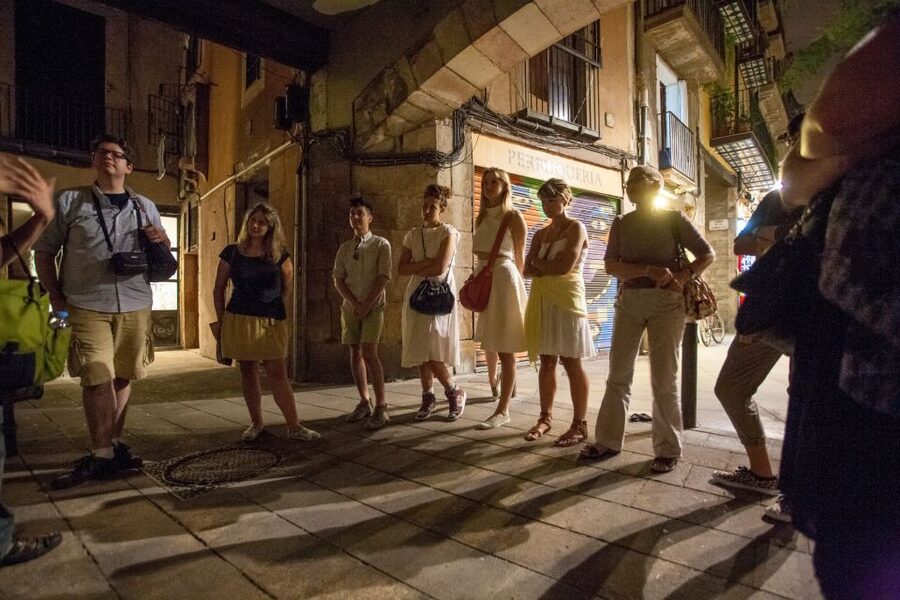
The route includes forgotten cemeteries and places connected with executions. These stops show how public punishment once formed part of city life. The point is not to stage a frightening scene, but to explain what happened at these places and why they mattered.
You may find this more powerful than a standard ghost walk. The tour occasionally includes legends, but it does not claim that spirits or supernatural events are present. Instead, it asks you to consider the real fear created by courts, prisons, public punishment, and religious authority.
That distinction is important. If you want actors, jump scares, or paranormal stories, this is the wrong choice. If you prefer documented events with a few local legends around the edges, the format should suit you much better.
The sites themselves may not look dramatic today. That is part of the value. A quiet street or ordinary urban corner can conceal a difficult past, and the guide helps you picture what is no longer visible.
More History Walking Tours in Barcelona
- Barcelona: Tapas Walking Tour with Food, Wine, and History
★ 4.8 · 4,261 reviews - Barcelona Tapas Walking Tour: Food, Wine & History
★ 4.5 · 1,928 reviews - Barcelona 1.5h Private Old Town, Gothic & Ramblas Walking Tour
★ 5.0 · 318 reviews - Barcelona: The Spanish Civil War Historical Walking Tour
★ 4.9 · 239 reviews
The executioner and the machinery of punishment
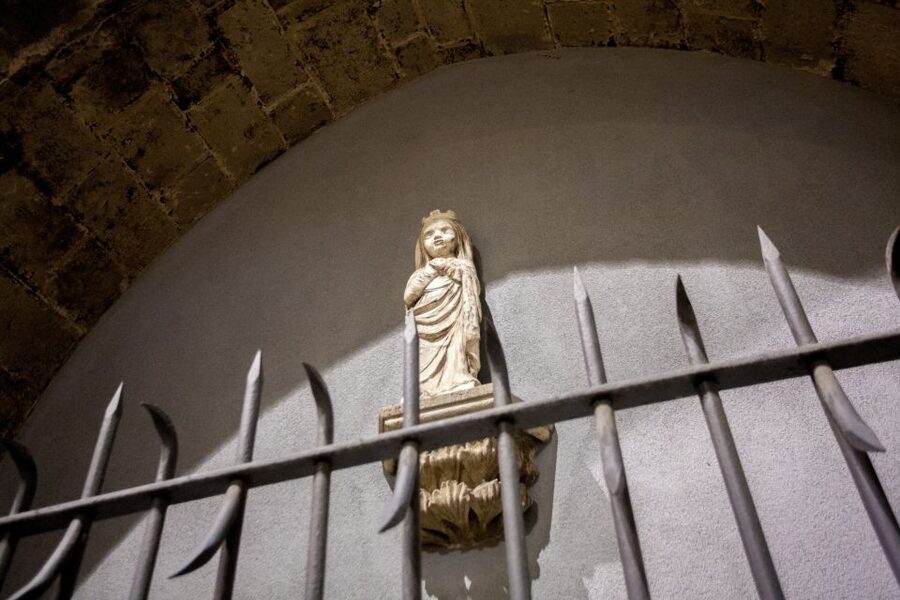
One of the more unusual subjects is the life of Barcelona’s executioner. This adds a useful human angle because it moves beyond the victims and officials to examine the person assigned to carry out public punishment.
The executioner was not presented simply as a horror character. His position lets the guide explore how a city organized executions and how society treated the person responsible for them. It is an uncomfortable subject, but an interesting one because it shows that dark history includes roles, systems, and working lives, not only famous villains.
The tour also looks at dungeons and torture. Those sections may be difficult for some people, particularly if graphic descriptions bother you. The age guidance of 14 and older is sensible, and parents should not treat this as a family-friendly ghost story.
For adults who enjoy social history, this material gives the walk more substance. You are not just hearing that executions occurred. You are learning how punishment operated and how different people were trapped within the system.
Props, projections, and a lively guide
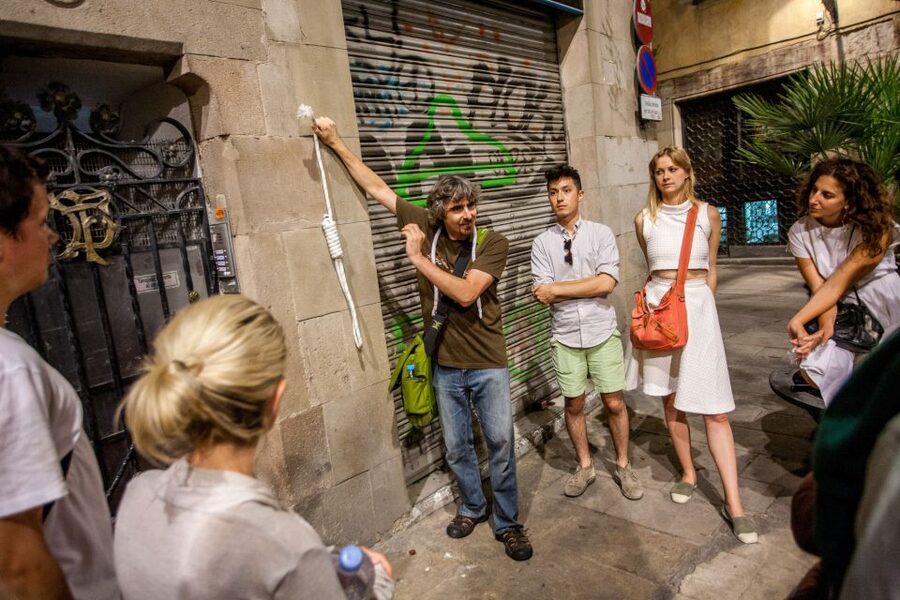
The visual aids are not just decoration. Guides have used projected images, old photographs, paintings, book excerpts, readings, and props to support the stories. In a dark street, a visual reference can make a confusing name, document, or scene easier to grasp.
Several guides have been singled out for their style. Elena is described as interactive and full of energy. Sara is praised for being theatrical, warm, and enthusiastic. Noah is noted for clear speech and a measured pace. Albert and Ross are also praised for preparation, humor, and strong storytelling.
The guide can make or break a walking tour, and this experience clearly depends on that personal touch. The best moments come when the guide involves the whole group instead of delivering a flat lecture. You may be asked questions, shown a prop, or invited to consider how a medieval resident might have understood a trial or accusation.
The tone seems lively without turning the subject into a joke. That balance matters. Barcelona’s darker past deserves care, but two hours of solemn facts would be hard work. The guides use personality to keep the walk moving.
How much walking and how the pace feels
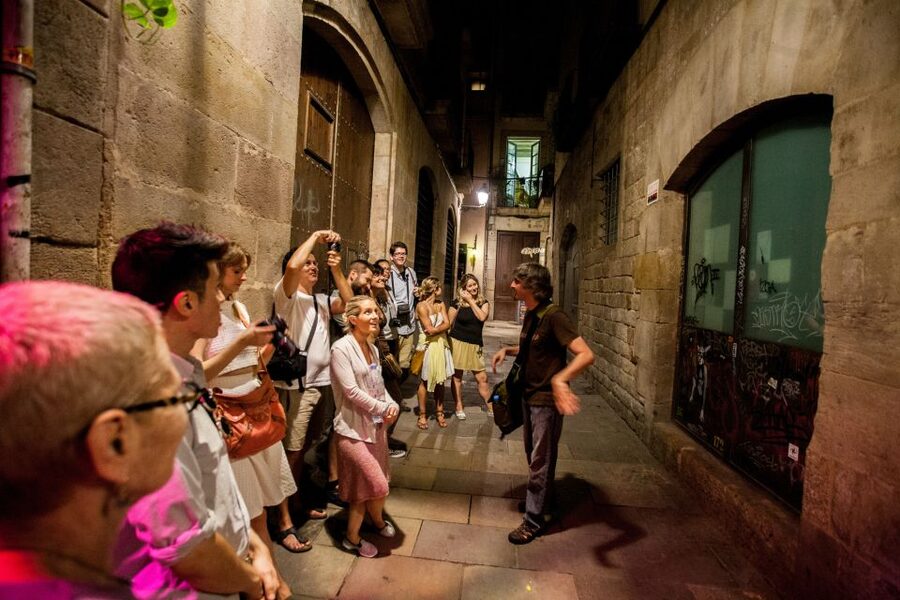
The tour lasts two hours, and the walk has been described as manageable rather than exhausting. You move through central medieval neighborhoods and stop regularly for explanations. It is not a long-distance hike, but you should still wear comfortable shoes.
The pace is one reason the experience works for an evening. You are not rushing from sight to sight or trying to cover half of Barcelona. Instead, you spend time listening, looking around, and letting the setting support the story.
Group size can vary. Some departures have felt intimate, with only three, four, or five people, while other groups may be larger. Limited numbers are part of the booking information, so reserving ahead is sensible, especially during busy periods.
Headsets help with communication, but they do not change the basic nature of the tour. You are walking outdoors at night and listening closely. If you are tired after a full day of museums and sightseeing, the strong storytelling may keep you engaged, but tired feet can still be tired feet.
Weather, timing, and practical planning
The tour runs in all kinds of weather. Rain is not normally a reason for cancellation, so bring proper rain gear if the forecast is uncertain. An umbrella may be awkward in narrow streets or in a group, making a waterproof jacket a more practical choice.
Starting times vary during the year because they depend on nightfall. Check the available departure when you book, and avoid placing a tight dinner reservation immediately afterward. A two-hour duration is clear, but outdoor tours can feel less exact when a group pauses for questions or moves through crowded streets.
The meeting point is accessible by Line 1 metro at Arc de Triomf. The activity is listed as wheelchair accessible, though you should still consider your own comfort with an evening walk through old urban streets.
The tour is conducted in English only. That makes it a good fit for English speakers who want a focused history experience, but it is not suitable if you need another language.
Is $24 a fair price?
At $24, this is good value if you enjoy guided history. You get two hours with a local guide, a focused route through two central neighborhoods, headsets, and visual material that would be difficult to recreate on your own.
The price also compares well with the amount of interpretation involved. You could walk through El Born and La Ribera without paying anything, but you would miss the connections between the streets, the Inquisition, execution sites, cemeteries, and local legends.
Value depends on your interests. If you want a broad introduction to Barcelona’s major architecture, spend your money on a different city tour. If you have already seen the famous sights and want a fresh angle on the old quarter, this offers more depth for a modest fee.
The reserve-now-and-pay-later option gives you some flexibility, and free cancellation is available up to 24 hours before the tour for a full refund. Those terms are useful when your evening plans may change.
Who should book this dark history walk?
I would choose this tour for adults and older teenagers who enjoy historical storytelling, unusual city walks, and the less polished side of the past. It suits people who want real events rather than actors pretending to be ghosts.
It is also a good fit if you have already walked through Barcelona’s old quarter and want to see familiar streets differently. The tour can add context to places you might otherwise pass without noticing.
You should skip it if you want a relaxed stroll with cheerful anecdotes, or if stories about torture, executions, and persecution will make your evening unpleasant. It is not recommended for children under 14.
Solo visitors and couples may appreciate the guided structure, while small groups can enjoy the interactive questions and props. The tour is also a useful choice for English-speaking families with older teenagers, provided everyone is comfortable with the subject.
FAQ
How long is the Barcelona Dark History Night Walking Tour?
The tour lasts two hours.
How much does the tour cost?
The listed price is $24 per person.
Where does the tour meet?
Meet the guide beneath the Arc de Triomf. The nearest metro station is Arc de Triomf on Line 1.
What language is the tour offered in?
The tour is conducted in English only.
Is this a ghost tour?
No. It is a historical night tour focused on documented darker episodes in Barcelona. Some local legends may be included, but there are no gimmicky paranormal activities or scary pranks.
What subjects does the tour cover?
It covers the Spanish Inquisition, medieval punishments, torture, executions, forgotten cemeteries, execution sites, alleged witches, and the life of Barcelona’s executioner.
Is the tour suitable for children?
The tour is not recommended for children younger than 14.
Does the tour run in the rain?
Yes. It operates in all kinds of weather, and rain alone is not enough reason for cancellation. Bring suitable rain gear during wet weather.
Can I cancel my booking?
Yes. You can cancel up to 24 hours in advance for a full refund. You can also reserve now and pay later.
Should you book it?
Book this tour if you want Barcelona’s old streets explained through real, unsettling stories. The strongest reasons to go are the lively guides, the visual aids, the focus on the Spanish Inquisition, and the chance to connect forgotten sites with the city’s past.
I would not book it for a scare-focused night out or a gentle family stroll. For $24, though, it offers a thoughtful and entertaining two hours, especially with a strong guide such as Elena or Sara. Bring comfortable shoes, prepare for serious subject matter, and let the city’s medieval lanes do some of the atmospheric work.
More History Walking Tours in Spain
- Barcelona Historical Walking Tour: Gothic Quarter and El Born
★ 5.0 · 217 reviews - Barcelona in 2 Hours: Guided Walk Through History and Sights
★ 5.0 · 203 reviews - Barcelona: La Boqueria Food, Wine & History Walking Tour
★ 5.0 · 126 reviews - Montjuïc Cemetery Walking Tour – Hidden Art, History & Views
★ 5.0 · 62 reviews
Just added around Barcelona
- Barcelona Jewish & Gothic Tour★ 5.0 · 18 reviews
- Andorra Original History and Sightseeing Tour (Private, Pickup)★ 5.0 · 350 reviews
- History Museum of Catalonia & Rooftop Access Ticket★ 4.5 · 43 reviews
- Sip, Sites & Bites Barcelona Food, Drinks & History Tour★ 4.5 · 95 reviews
- Barcelona Tapas Food Tour, Taverns, History & Local Culture★ 5.0 · 42 reviews
- Taste of Barcelona: Boqueria Market, Tapas & History Tour★ 4.5 · 22 reviews
- Historical Montserrat Half-Day Hiking Tour from Barcelona★ 5.0 · 26 reviews
- Savor Spain: Food, Wine, History & Culture Small Group Tour in Old Barcelona★ 5.0 · 140 reviews
Dark History & Haunted Tours, compared.

Savannah History and Haunts Candlelit Ghost Walking Tour
Read our review →
New Orleans Small-Group Haunted History Carriage Tour
Read our review →

Genteel and Bard’s Savannah Dark History and Ghost Encounter Walking Tour
Read our review →