
Review · ATHENS
Acropolis, Parthenon and Ancient Agora Guided Tour with entrances
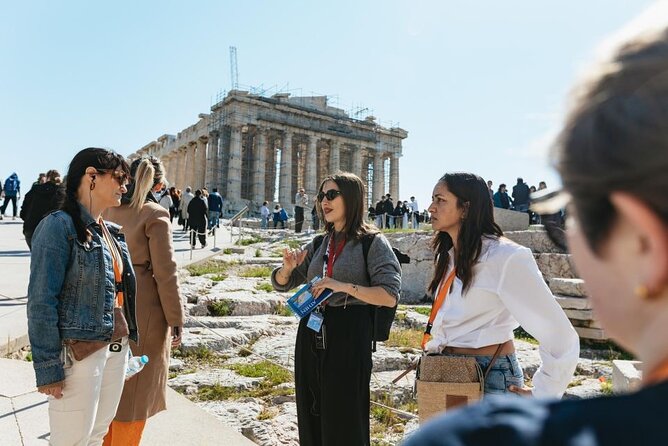
The ancient heart of Athens fits into one morning. This guided walk links the Acropolis, Parthenon, and Ancient Agora with an English-speaking licensed guide, so you get the stories behind the stones instead of simply circling ruins and reading plaques. I especially like the included admission fees and the small group capped at 20 people. The main drawback is the uphill walking, which can feel demanding in Athens heat.
You meet at 9:00 a.m. on Porinou Street, near the Acropolis, and finish at the Ancient Agora. The route runs about three and a half hours, though the listed stops add up to roughly three hours of sightseeing time. You should bring water, wear solid shoes, and expect sun, stone, steps, and very little shade.
Key points to know before booking
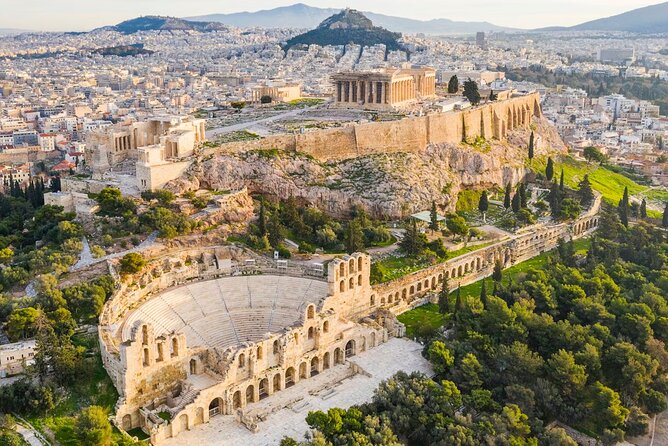
- The tour covers Athens’ two essential ancient sites: the Acropolis and Ancient Agora, with the Parthenon, Theater of Dionysus, Temple of Hephaestus, and Stoa of Attalos included.
- A licensed English-speaking guide leads the walk: Guides such as Laura, Angeliki, Hermes, Elaina, Demos, Elena, and Stevie have been praised for clear explanations, humor, patience, and good pacing.
- The morning start is a smart choice: A 9:00 a.m. departure can help you avoid the worst heat and some of the day’s crowds.
- The climb is real but broken up: You get pauses for photos and views, yet this is not a flat city stroll.
- Headsets are provided: Hearing devices linked to the guide’s microphone help you follow the commentary near busy monuments.
- The tour finishes at the Agora: There is no hotel pickup or drop-off, so you arrange your own way to Porinou Street and onward from the final stop.
Why this combination works so well
Athens can be confusing on a first visit. The Acropolis sits above the city, while the Ancient Agora spreads below it, and each site has enough ruins, temples, and names to blur together after a while. This route gives you a useful sequence: begin with the hilltop symbols of Athens, then walk through the civic center where ordinary political and commercial life once took place.
That contrast is the best reason to choose this experience. The Acropolis is about power, religion, art, and public identity. The Agora is about daily business, debate, law, craft, and community. Seeing both in one outing gives you a fuller picture of ancient Athens than visiting the Parthenon alone.
The guide also adds real value. At this site, a bare column or broken foundation can be hard to read without context. A good explanation helps you understand what you are looking at, why it mattered, and how the surviving pieces fit into the city around you.
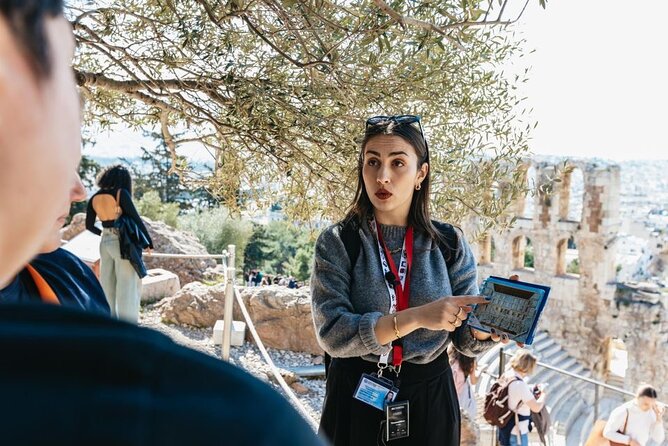
The group limit of 20 is not tiny, but it is manageable. The supplied listening devices matter here. Instead of crowding around one person and trying to catch every word, you can step aside for a photo while still following the guide.
More Ancient History Tours in Athens
- Athens: Ancient Greek Theater Performance
★ 4.7 · 2,481 reviews - Historical Delphi One Day Tour with Arachova Stop & Expert Guide
★ 4.5 · 1,247 reviews - From Athens: Ancient Corinth Day Trip with Canal & VR Guide
★ 4.6 · 1,073 reviews
Starting at the Acropolis and climbing into the past
The meeting point is on Porinou Street, Athens 117 42, close to the Acropolis area. You need to arrive independently because transportation to and from the tour is not included. The route begins at 9:00 a.m., a useful time for an outdoor site where heat can quickly drain your energy.
The Acropolis is an ancient citadel built on a rocky outcrop above Athens. Its most famous building is the Parthenon, but the hill holds a wider collection of monuments and sacred spaces. You will spend about 30 minutes at the Acropolis area before moving through the connected sights on the south slope and summit.
Do not read that short time as a rushed photo stop. The walking between viewpoints, monuments, and gathering places uses part of the schedule. Your guide will focus attention on the most important features rather than trying to explain every visible stone.
The climb deserves respect. Several people found the uphill route more demanding than expected, especially in hot weather. One guide, Hermes, was praised for allowing rest stops, and other guides were noted for keeping slower walkers with the group. That does not turn the walk into an easy one, but it does suggest that a steady pace is part of the experience.
The Odeon and Theater of Dionysus
The Herod Atticus Odeon sits on the southwest slope of the Acropolis. Built in 161 AD by the Roman senator Herodes Atticus in memory of his wife, it was once covered by a wooden roof and could hold about 5,000 people.
You get around 10 minutes here. That is enough to admire the theater’s stone seating and dramatic setting, but not enough for a long independent exploration. The Odeon is still used for performances, which helps connect the ancient structure with modern Athens rather than leaving it as a silent archaeological shell.
Next comes the Theater of Dionysus, with about 15 minutes. It lies on the south slope and was part of the sanctuary of Dionysus Eleuthereus. This is an important stop for understanding the role of theater in Greek public life.
Theater can feel abstract when reduced to a date and a name. From the seats and stage area, you can better picture drama as a public event tied to religion, civic life, and large gatherings. Your guide’s explanation is particularly useful here because the remains are less instantly recognizable than the Parthenon.
The Parthenon deserves more than a quick photograph
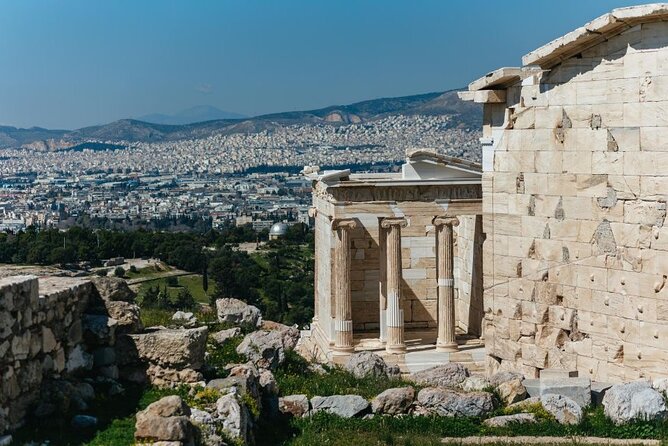
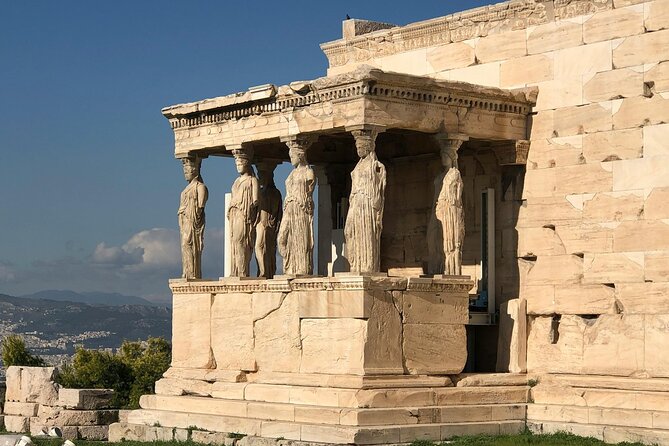
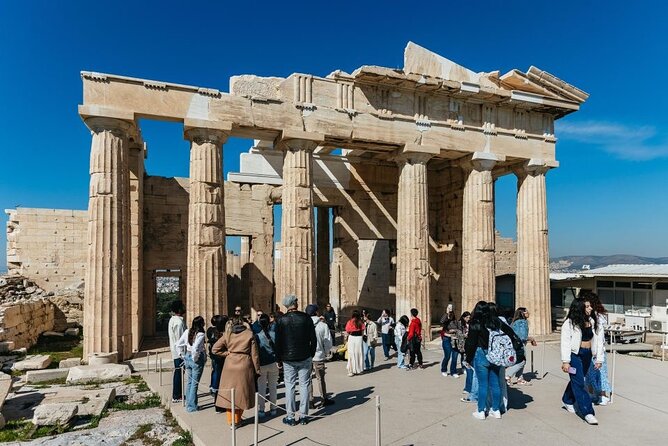
The Parthenon receives about 30 minutes, and rightly so. Dedicated to Athena, the temple is one of the enduring symbols of ancient Greece, democracy, and Western civilization. Its sculptures are considered high points of classical Greek art.
You will not get a quiet, empty monument. The Acropolis is Athens’ major sight, and the approach can be crowded. Still, an organized visit helps you use your time well. The guide can point out architectural details and explain the building’s purpose while you take in the views over Athens.
The Parthenon is also a lesson in looking carefully. From a distance, it can seem like a simple rectangle of columns. Up close, repairs, missing sculptures, weathered marble, and subtle design choices tell a more complicated story. A guide gives those details a place in the larger picture.
The morning schedule is one of the tour’s practical strengths. Several people specifically recommended going early to reduce exposure to heat and avoid some crowds. Conditions can change, but starting at 9:00 a.m. gives you a better chance of having cooler air than you would later in the day.
More Ancient History Tours in Greece
- Acropolis, Parthenon & Athens Old City Heritage Walking Tour
★ 4.5 · 876 reviews - Private Biblical Tour Ancient Corinth & Isthmus Canal from Athens
★ 5.0 · 762 reviews - Athens: Ancient Corinth & Nafplio Full Day Trip with Swim
★ 4.8 · 531 reviews - Athens Skip the Line: Open Air Ancient Greek Theatre Performance
★ 4.5 · 520 reviews
From the Acropolis to the Ancient Agora
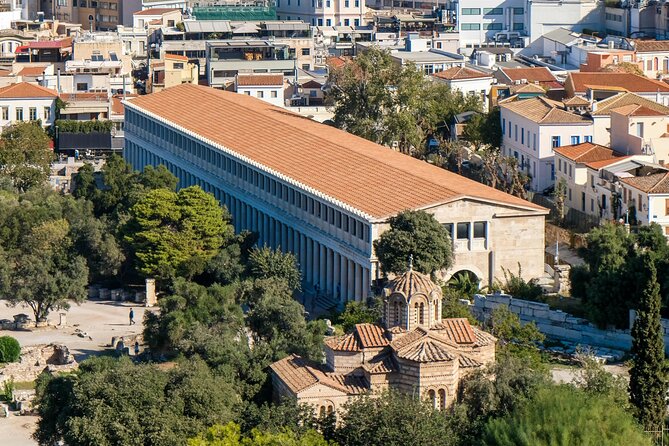
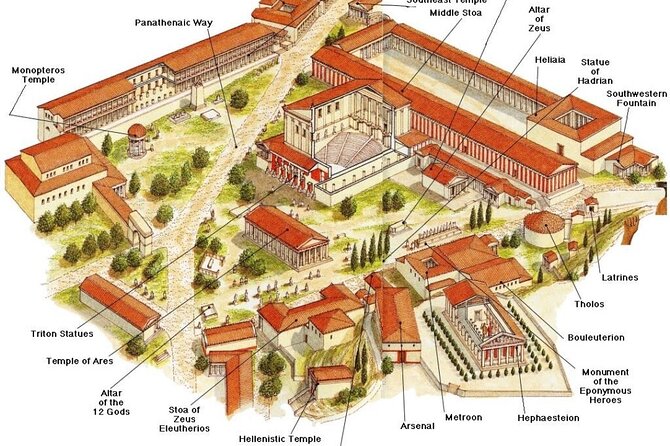
The route ends at the Ancient Agora, northwest of the Acropolis. This was not just a market. It served as a place for commerce, public meetings, and residential activity, making it one of the best places to understand how ancient Athenian life functioned beyond temples and monuments.
You spend about 1 hour and 15 minutes in the Agora, the longest single portion of the experience. That is good planning. The site covers more ground than a single famous building, and its importance comes from the way the parts fit together.
The pace here can feel easier than the Acropolis climb, but you will still be walking over uneven ground. Heat remains a factor. One family found that a teenager nearly quit after the Parthenon, yet the Agora proved worth continuing for. Plan your energy rather than treating the final section as an optional afterthought.
The finish at the Agora is also useful for your day. You can continue exploring the area independently after the guided portion, though the tour itself ends there. Since no drop-off is included, you will need to arrange your own onward plans.
The Temple of Hephaestus and Stoa of Attalos
The schedule labels one stop as the Temple of Aries, but the description identifies the monument as the Temple of Hephaestus. That is the temple you should expect to see.
Built around 449 BC, the Temple of Hephaestus is dedicated to the god of fire and craftsmanship. It is one of the best-preserved ancient Greek temples and a strong counterpoint to the damaged Parthenon. You receive about 15 minutes here.
The temple shows classical Doric architecture in a more complete form. That makes it easier to understand the shape of an ancient Greek temple, even if the Parthenon remains the more famous monument. The short visit should give you time to appreciate its columns and setting without turning the tour into a detailed architectural seminar.
The Stoa of Attalos receives another 15 minutes. Originally built in the second century BC by King Attalos II of Pergamon, it was a two-story covered walkway and shopping area. The building was restored in the 1950s and now houses the Museum of the Ancient Agora.
This is one of the most useful stops for making the Agora feel like a living public center. A stoa was practical architecture: shelter, shops, movement, and social contact. The museum adds objects and displays that help fill in the daily life missing from the open-air ruins.
What the guides add to the experience
The strongest praise goes to the guides’ teaching style. Laura was described as personable and well informed. Angeliki, also called Angel, was praised for being helpful. Hermes was singled out for his explanations and rest stops, while Elaina was appreciated for setting a comfortable pace.
Demos received praise for mixing humor with useful information, and Elena was remembered for making the history fun rather than dry. Stevie was noted for covering the essentials even on a hot day. These details matter because a three-and-a-half-hour archaeological tour can become tiring if the guide talks without reading the group.
The best guide behavior here is simple: clear speech, regular pauses, answers to questions, and attention to the slowest person. The supplied headsets support that. A guide can speak while you stand at the edge of a monument or move to a better view.
You should still keep your own expectations sensible. A group experience cannot stop for every question or give every building a long explanation. Its strength is the broad story, a well-planned route, and enough information to make the ruins meaningful.
Price, pace, and who gets good value
At $129.75 per person, this is not the cheapest way to see Athens. You are paying for a licensed guide, entrance fees to both major sites, hearing equipment, and a carefully connected route. The value improves if you want historical explanation and prefer not to manage tickets and site order yourself.
The price makes less sense if you want to move slowly, sketch, linger at one monument, or spend a full day in the Agora museum. The schedule is designed to cover the highlights, not to provide unlimited independent time.
For many first-time visitors, the combination is efficient. You see the Acropolis and Agora in one morning, then still have the rest of the day for lunch, museums, neighborhoods, or a return to a favorite viewpoint. A perfect score from all published ratings and a 4.9 average from 29 ratings support the idea that the format is working well for its intended audience.
The experience suits history fans, first-time visitors, families with older children, and anyone who wants a guide rather than a self-guided audio tour. It may be less suitable if you have serious difficulty with uphill walking, prolonged standing, or uneven surfaces. One person with mobility issues found the guide accommodating, but the official guidance still calls for a moderate level of physical fitness.
Practical advice for a smoother morning
Wear supportive shoes. The route includes an uphill approach, ancient stone surfaces, and a long period on your feet. Bring water, since one person felt more water options would have helped.
Choose light clothing and sun protection for warm weather. The tour requires good weather, and poor weather can lead to a changed date or a full refund. In cold or windy conditions, bring an extra layer. One outing remained worthwhile despite cold, strong wind, and difficult conditions, largely because the guide kept the group engaged.
Arrive ready to listen and walk. The headsets help, but they do not replace staying close enough to follow the group. Keep a little energy for the Agora, especially if you are traveling with teenagers or anyone who tires quickly.
Cancellation is free up to 24 hours before the start time for a full refund. Changes or cancellations inside that window are not accepted for a refund, and the cutoff uses local Athens time.
Should you book this Athens tour?
Book it if you want the essential ancient sights explained in one well-paced morning. The combination of the Acropolis, Parthenon, Theater of Dionysus, Temple of Hephaestus, Stoa of Attalos, and Ancient Agora gives you both the grand symbols and the everyday setting of ancient Athens.
Skip it if you prefer complete freedom, dislike group pacing, or want to spend hours inside one site. For everyone else, the included entrances, licensed guide, headsets, early start, and strong record of clear, friendly guiding make the $129.75 price reasonable. Bring water, expect a real climb, and save enough energy to reach the Agora. That last stretch is part of what makes the morning worthwhile.
FAQ
Where does the tour start?
It starts at Porinou, Athina 117 42, Greece, near the Acropolis area.
What time does the tour begin?
The tour starts at 9:00 a.m.
Where does the tour finish?
It finishes at the Ancient Agora of Athens, Athens 105 55, Greece.
How long does the experience last?
The tour lasts approximately three hours and 30 minutes.
Is admission included?
Yes. Entrance fees for the Acropolis monuments and the Ancient Agora are included.
Is hotel pickup or drop-off provided?
No. Pickup and drop-off are not included.
What language is the tour offered in?
The tour is offered in English.
How large is the group?
The group can include a maximum of 20 people.
Just added around Athens
- Ancient Corinth★ 5.0 · 29 reviews
- Segway Journey: Athens Tour From The Ancient Past To The Present★ 5.0 · 62 reviews
- Semi-private Historical & Contemporary Segway Tour in Athens★ 5.0 · 56 reviews
- Ancient Corinth, Mycenae, Epidaurus, Nafplio Full Day Private Tour From Athens★ 5.0 · 25 reviews
- Herakleidon Museum of Ancient Greek Technology: Entry Ticket★ 3.5 · 19 reviews
- Ancient Olympia full day private tour from Athens★ 4.9 · 54 reviews
- From Athens: Half-Day Ancient Corinth Tour★ 4.4 · 59 reviews
- From Athens: Explore Ancient Greece 4-Day Tour★ 4.7 · 73 reviews
Ancient History Tours, compared.
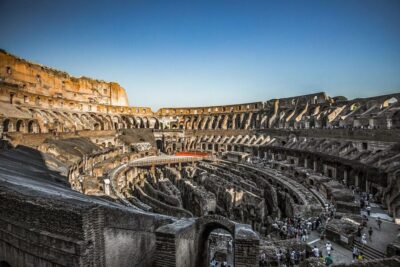
Colosseum: Underground and Ancient Rome Tour
Read our review →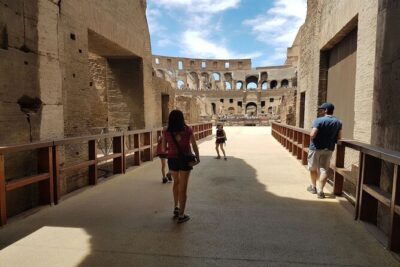
Colosseum & Ancient Rome with Arena Floor Option I Max 6 People
Read our review →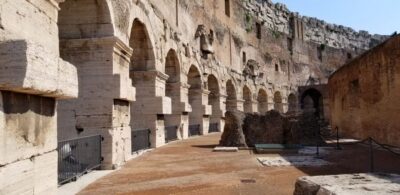
Colosseum, Ancient Rome Tour or AudioGuided Tour
Read our review →
Colosseum Underground & Ancient Rome Guided Tour
Read our review →
Taormina: Ancient Theater Skip-the-Line Ticket & Audio Guide
Read our review →
Discover the Ancient Ruins of Pompeii: Day Trip from Rome
Read our review →
Discover Matera, the ancient city – English tour
Read our review →Browse the lists this tour appears in