
Review · ILE-DE-FRANCE
Explore the Marais: History, Art & Local Culture
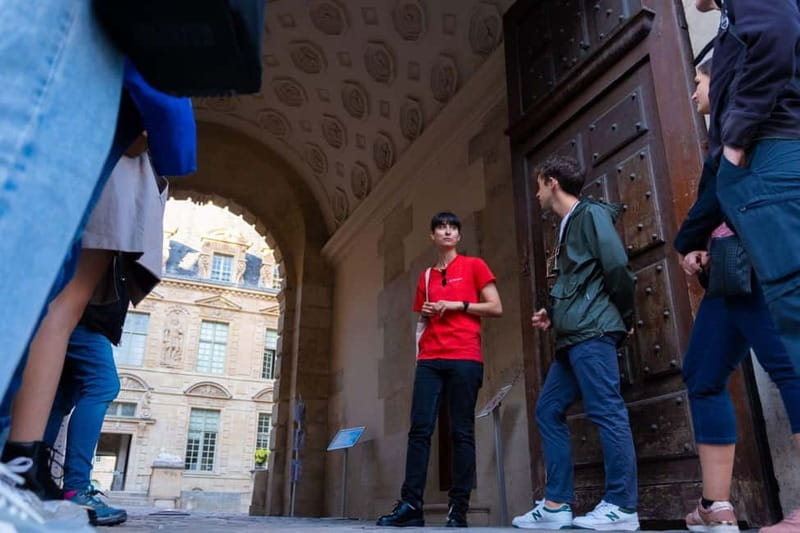
Paris rewards slow walking. This two-hour Marais tour gives you a smart introduction to one of central Paris’s most layered neighborhoods, mixing medieval lanes, Jewish culture, LGBTQIA+ history, street art, churches, revolution, and pastry. I especially like the small group of no more than 12 people and the way the walk balances famous sights with details you could easily miss alone.
I also like the guides’ personal approach. Sarah, Maxi, Camila, Paula, Paloma, and others have been praised for making the past easy to follow while adapting to questions and interests. The main tradeoff is pace: at $49, you are paying for an informed orientation rather than a long food tour or full interior visit at every stop. The two-kilometer route is easy for most walkers, but it packs a lot into two hours.
Key points at a glance
- A compact Marais introduction: Cover medieval streets, Hôtel de Ville, Saint Gervais Church, Rue des Rosiers, Place des Vosges, and Place de la Bastille in about two hours.
- A real pastry stop: The included merveilleux, a meringue-based French pastry, adds a tasty local pause rather than just another photo stop.
- History beyond the postcard: Hear about Victor Hugo, the French Revolution, Paris’s Jewish quarter, and the neighborhood’s changing LGBTQIA+ identity.
- Small-group attention: With a maximum of 12 people, you should have a better chance to ask questions and hear the guide clearly.
- Good first-day choice: The walk helps you get your bearings, with guides also offering useful suggestions for food, shopping, and later exploring.
- Food limitations matter: The pastry tasting suits vegetarians, but the tour is not suitable for lactose-free, gluten-free, or vegan diets.
Why the Marais works so well on foot
The Marais is one of the best Paris neighborhoods for a walking tour because its story changes from street to street. You may pass a grand civic building, then turn into a narrow medieval lane, spot a small piece of street art, and soon find yourself outside a church with centuries of history.
This tour also avoids treating the district as one neat theme. You get architecture, religion, politics, food, art, and present-day community life in one short route. That mix gives you a better sense of how Paris changes over time.
The route covers about 2 kilometers, or 1.2 miles. That is not a strenuous distance, but Paris sidewalks can be uneven and the group pauses often. Wear comfortable shoes, and bring an umbrella. The tour runs in English, and a private group option is available if you want more control over the pace or subject matter.
More Local Culture and Traditions Tours in France:
- Vieux Lyon Cultural & Historical Walking Guided Tour (English)
★ 5.0 · 942 reviews - Culture History & Secrets: Lyon with a local artist -english
★ 4.9 · 29 reviews - Arles: Private Guide Tour – Explore History & Culture
★ 4.3 · 22 reviews
Starting opposite the Centre Pompidou
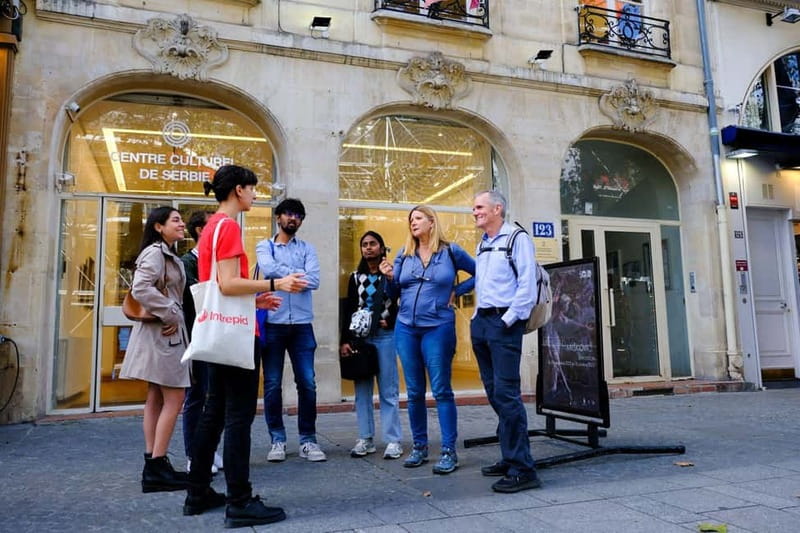
The meeting point is at 123 Rue Saint-Martin, 75004 Paris, opposite the Centre Pompidou by the Centre Culturel de Serbie. Look for the guide holding a Paris Urban Adventures sign. The listed starting point also refers to the automatic Paris public toilet nearby, so use the street address and the Pompidou landmark as your main guide.
Beginning here is useful. The Centre Pompidou gives you an immediate dose of modern Paris, with its famous high-tech exterior and busy public setting. The walk does not turn into a full museum visit, but the guide leads a short introduction around the area before moving toward the older Marais.
That contrast is the point. You start beside one of Paris’s most modern cultural buildings, then walk into a district shaped by much older streets and buildings. If you are new to Paris, this opening helps you see that the city is not divided into tidy historical boxes.
From Stravinsky Fountain to Hôtel de Ville
The early part of the walk includes the Stravinsky Fountain and street art. The fountain’s playful, colorful forms make a good visual counterpoint to the stone facades nearby. Street art adds another layer, and Camila was praised for pointing out small pieces that felt like an informal treasure hunt.
I like this part because it gets you looking at street level. A traditional sightseeing route might hurry between major monuments. Here, the guide encourages you to notice details on walls, corners, and side streets. These observations can change how you walk through Paris for the rest of your trip.
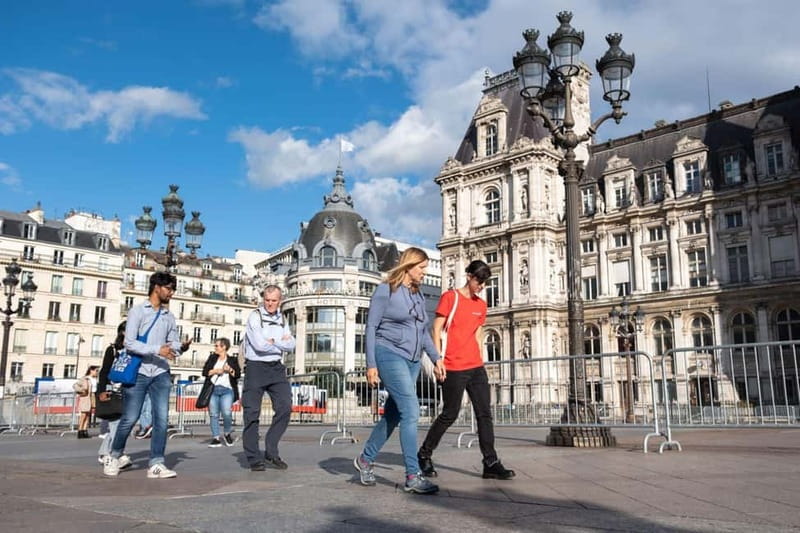
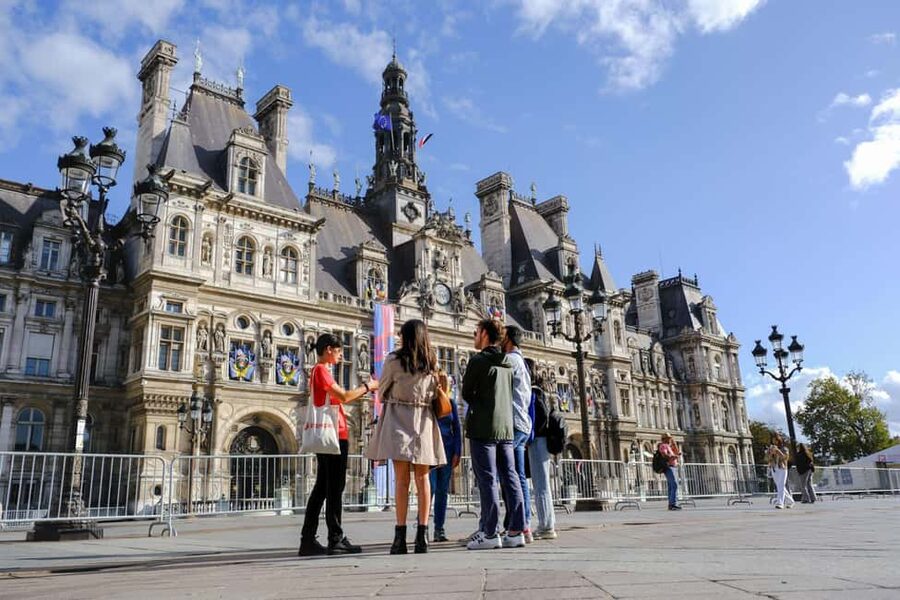
The route then reaches Hôtel de Ville, Paris’s grand city hall. The stop gives the guide a chance to explain civic Paris and the role of this part of the city in public life. It is also a useful orientation point between the Pompidou area and the Marais proper.
You should not expect a lengthy architectural lecture or a full interior tour. The listed visit is brief, about 15 minutes. Think of it as a focused explanation with time for photos, not a deep study of the building.
Saint Gervais Church and medieval street details
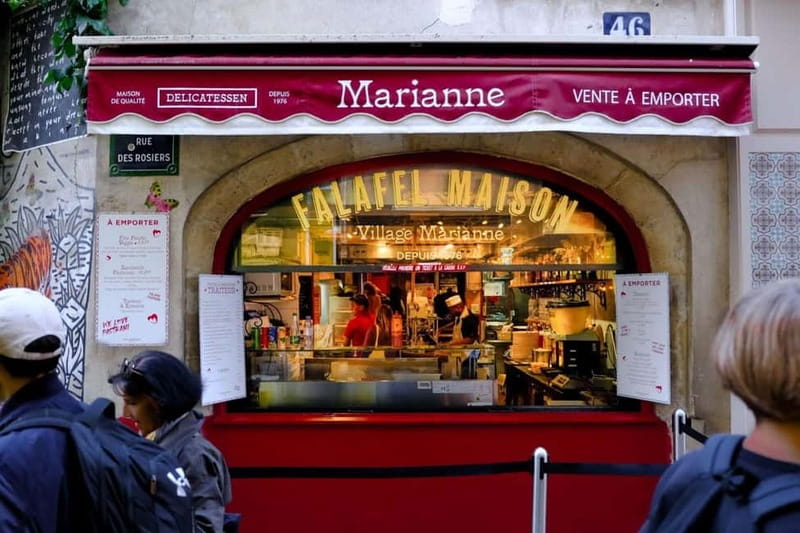
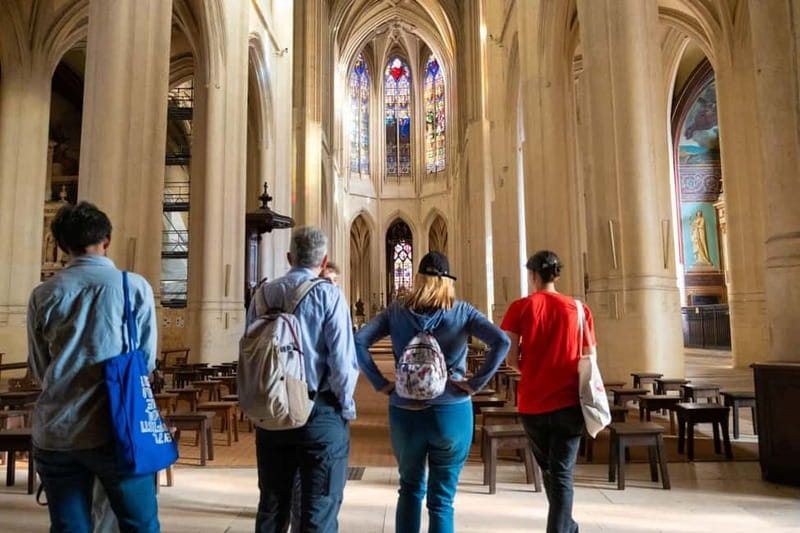
Saint Gervais Church brings a quieter mood. The building offers a chance to look at Paris through religious architecture rather than monuments and royal residences. The stop is listed at about 15 minutes, enough for a guide to point out key features and explain why the church matters.
Afterward, the route moves through older streets and past unusual corbelled houses. These buildings are among the most rewarding parts of the walk because they help you picture a narrower, more crowded medieval city. A corbelled upper floor projects over the street, creating shapes that are easy to miss if you are focused only on major attractions.
This is where an English-speaking local guide earns the fee. A guide can show you what to look for, explain how the street pattern developed, and connect a plain-looking facade to a larger story. Several guides, including Paula and Paloma, were praised for making history feel like a conversation rather than a list of dates.
The pace also seems well suited to families. A family with children aged 10 and 12 enjoyed the mix of architecture, stories, and walking. The tour is officially child-friendly, though younger children may find the frequent historical explanations less engaging than the pastry and street art.
A few more history tours around France worth a look
- Paris: Louvre Museum Entry with History of Mona Lisa
★ 3.9 · 2,823 reviews - Paris: Dark History and Ghostly Guided Walking Tour
★ 4.7 · 1,000 reviews - Bordeaux: Historic Center & Chartrons District Bike Tour
★ 4.8 · 709 reviews - From Strasbourg: Best Of Alsace Historical Day Trip
★ 4.7 · 633 reviews
The merveilleux pastry stop
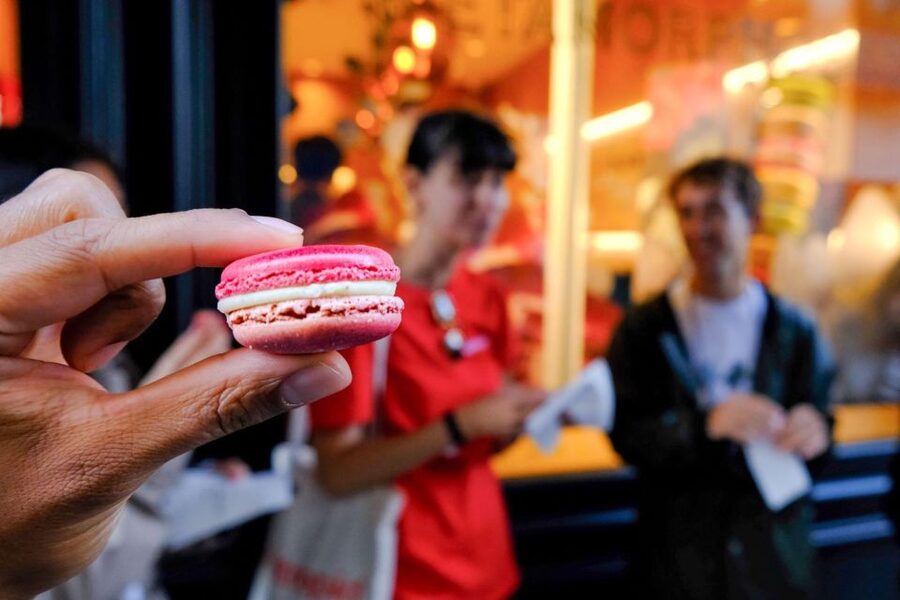
The included food tasting is a merveilleux. This is a light, dramatic pastry built around meringue, cream, and a coating or topping. It is sweet, delicate, and very different from the crusty croissants many people expect from a Paris food stop.
This tasting is a small part of the tour, not a meal. That distinction matters. Earlier versions of similar outings included several pastries, cheese, charcuterie, and wine, but the current experience specifies one merveilleux. Drinks and extra food are not included.
I see the pastry as a pleasant break rather than the main reason to book. It gives you a local food experience tied to the walking route, and it keeps the tour from becoming two straight hours of monuments. If you want a full food crawl, budget separately for lunch or additional snacks.
Dietary needs require care. The tour is suitable for vegetarians, but it is not suitable for lactose-free, gluten-free, or vegan customers. If you have a serious allergy or dietary restriction, this is not the place to hope for an easy substitution.
Rue des Rosiers and the Jewish Quarter
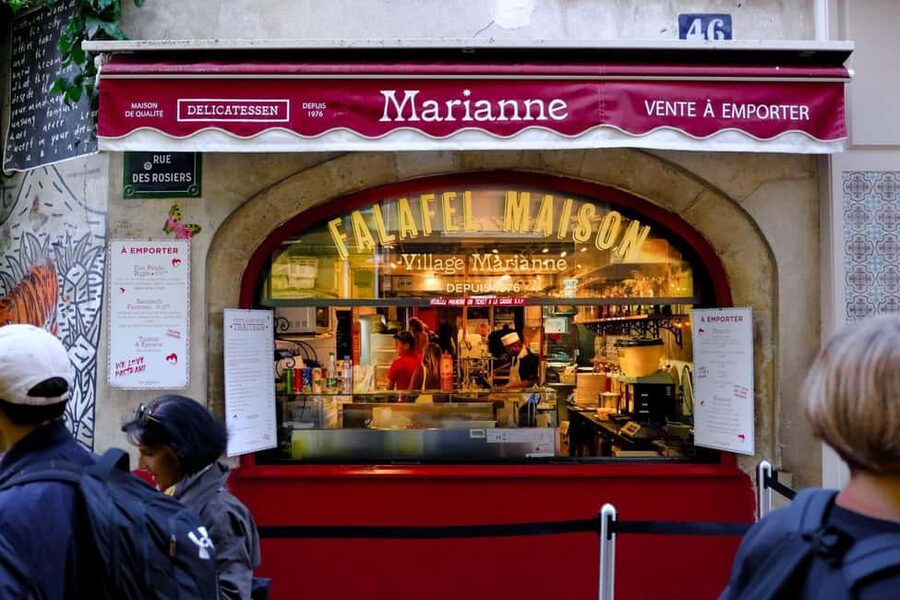
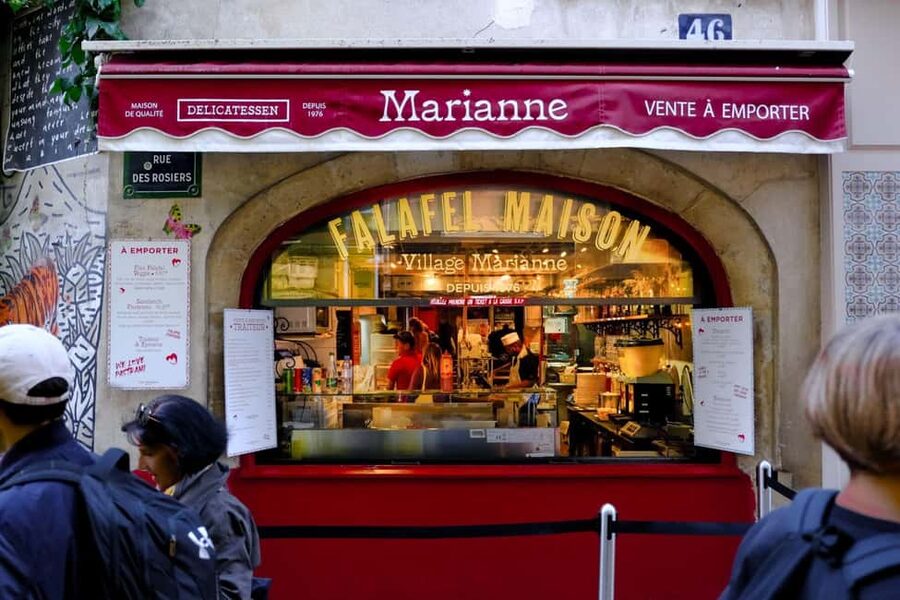
Rue des Rosiers is the cultural heart of the Marais’s Jewish quarter. The street is known for food, shops, and a strong local identity, and the guide uses it to explain the neighborhood’s Jewish heritage. The stop is scheduled for about 15 minutes, so the emphasis is on orientation and context rather than a long tasting session.
The phrase falafel and culture collide captures the street’s appeal, but you should not read it as a promise of an included falafel meal. The listed tasting is the merveilleux, while additional food is your responsibility. If you want to eat here afterward, the guide can point you toward local options, and several guides have been praised for useful recommendations.
This part of the tour is valuable because it keeps the Marais from becoming only a pretty collection of old buildings. You get a sense of community, memory, food, and change. The guide also discusses the neighborhood’s LGBTQIA+ presence, showing how the Marais has continued to develop rather than remaining frozen in the past.
That range of subjects is one of the strongest reasons to choose this walk. You are not simply being led from one photo stop to another. You are being shown how different communities have shaped the same streets.
Place des Vosges and Victor Hugo
Place des Vosges is one of the Marais’s most elegant squares. Its regular arcades and calm proportions create a sharp contrast with the tight medieval lanes nearby. The tour includes about 15 minutes here, enough to take in the layout, hear its historical context, and pause for photographs.
The square is closely linked with Victor Hugo, whose former home is here. The guide uses Hugo to connect literature with the neighborhood. You may not have time for a complete museum visit, but the setting gives a useful sense of the writer’s place in Parisian cultural life.
This is also one of the most attractive points on the route. If you want time to sit under the arcades, browse the square slowly, or visit a museum, plan to return after the tour. Two hours does not allow for every interior, and the guide needs to keep the group moving.
The supplied route information creates a small point of confusion here. It lists Place des Vosges as the finish point, while the route description continues to Place de la Bastille. Confirm the exact ending when you book or meet the guide. This matters if you have a restaurant reservation, a museum time slot, or a plan to use the Métro immediately afterward.
Place de la Bastille and the revolutionary story
The final listed stop is Place de la Bastille, with about 30 minutes devoted to the area. This is the longest single stop, which makes sense. The Bastille is one of the clearest places to discuss the French Revolution and the political forces that reshaped France.
The original fortress is gone, so this is not a preserved castle visit. The value lies in understanding the location and its meaning. A good guide can help you picture why this site became such a powerful symbol, even though the modern square looks like a traffic-heavy urban junction rather than a surviving medieval stronghold.
The tour description suggests ending with the option of having a drink at a local bar. Drinks are not included, so treat that as an optional way to continue the conversation, not part of the $49 package. If your group enjoys social stops, it can be a pleasant finish. If you are tired, you can simply leave after the guide’s final explanation.
Again, verify the endpoint. The stated itinerary names Place de la Bastille as the last sightseeing stop but also gives Place des Vosges as the finish location. That inconsistency is easy to solve with a quick check before the day begins.
What $49 buys you
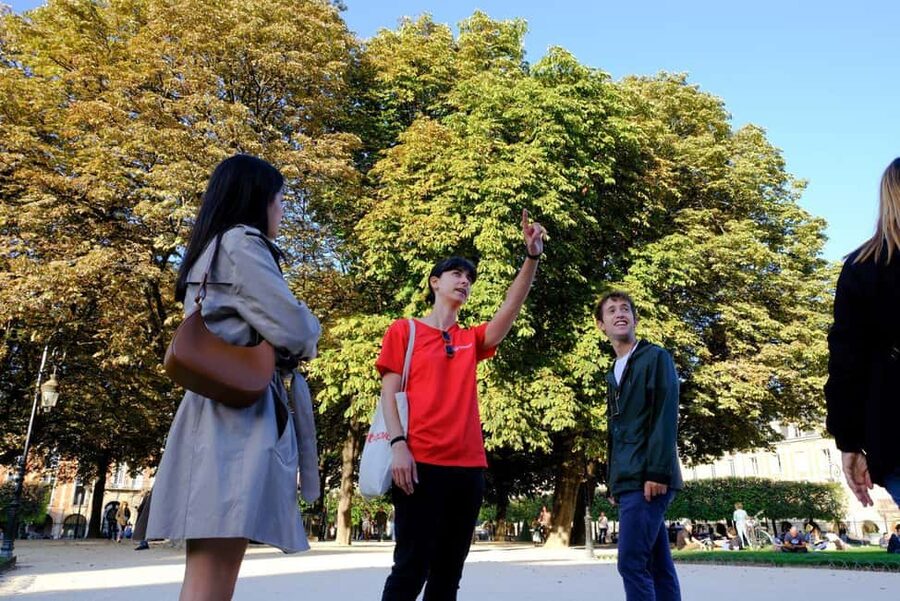
At $49 per person, this is a reasonable price for a two-hour guided introduction in central Paris, especially with a maximum of 12 people and one pastry included. You are paying for a local English-speaking guide, route planning, historical context, and the chance to ask questions in a small group.
The value depends on what you want. If you need a full meal, several tastings, or lengthy access inside monuments, this will feel limited. If you want a clear first look at the Marais and the confidence to explore it alone afterward, the price makes more sense.
Past food-focused versions of this experience received praise for pastry, cheese, charcuterie, and wine. The current details promise only the merveilleux, so I would not book expecting a larger tasting menu. Budget for your own meal, drinks, and any museum entries.
The company also identifies the tour as carbon neutral and operates as a B Corp-certified business committed to using travel for social good. That will not change the route itself, but it may matter to you when choosing between similar walking tours.
The guides make the difference
The strongest part of this experience is the guide. Sarah was praised as an excellent ambassador for Paris, while Maxi was singled out for sharing a great deal of neighborhood history. Camila was friendly, engaging, and generous with suggestions for food and shopping.
Paloma received especially strong praise for her pace, humor, and ability to adjust the walk to personal interests. One family appreciated how she answered questions from both adults and children. Paula was also praised for warmth and clear explanations, and Laure helped bring the medieval district to life.
Those names do not guarantee who you will meet. Guide style can vary from one departure to another. Still, the repeated pattern is useful: this tour works best when you ask questions and tell the guide what interests you. If you care most about architecture, Jewish history, revolution, street art, or modern community life, say so early.
The small group helps here. A maximum of 12 is not the same as a private tour, but it is far more manageable than a large crowd. A private group is available if you want a more tailored experience.
Who should book this Marais walk?
I would choose this tour for a first visit to Paris, particularly if you want to understand the Marais before returning on your own. It also suits solo visitors, couples, families with older children, and anyone who prefers context over a checklist of major sights.
It is a good fit if you enjoy:
- Short walking stops with plenty of explanation
- Architecture, local history, and changing neighborhoods
- Jewish heritage and LGBTQIA+ culture
- Small food tastings rather than a full meal
- Street art and details that are easy to miss
- A guide who can offer suggestions for the rest of your stay
I would look elsewhere if you need a vegan, gluten-free, or lactose-free tasting. I would also skip it if your main goal is an extensive culinary tour, long museum visits, or a slow afternoon in one square.
Book it early in your Paris stay if possible. The route gives you practical ideas for where to eat, shop, and wander later, and several guides have been especially good at answering those follow-up questions.
Should you book it?
Book this Marais walk if you want a compact, well-rounded introduction with a strong guide, a small group, and one distinctive pastry. The best parts are the neighborhood stories, the medieval street details, Rue des Rosiers, and the way the tour connects old Paris with present-day communities.
Do not book it expecting a full meal or a long list of included tastings. Check the final meeting and ending points, wear good shoes, carry an umbrella, and confirm the pastry works for your diet. For $49, it is a sensible choice for getting your bearings fast, provided you value explanation and local perspective more than maximum sightseeing time.
FAQ
How long is the Marais tour?
The tour lasts two hours.
How much walking is involved?
The route covers about 2 kilometers, or 1.2 miles.
Where does the tour start?
It starts at 123 Rue Saint-Martin, 75004 Paris, opposite the Centre Pompidou by the Centre Culturel de Serbie. Look for the guide holding a Paris Urban Adventures sign.
What language is the tour offered in?
The live tour guide speaks English.
What food is included?
The tour includes a tasting of a merveilleux, a meringue-based French pastry. Additional food and drinks are not included.
Is the tour suitable for vegetarians?
Yes. The tour is suitable for vegetarians, but it is not suitable for lactose-free, gluten-free, or vegan customers.
How large is the group?
The small group has a maximum of 12 people. A private group option is also available.
Is the tour suitable for children?
Yes, the tour is child-friendly. Comfortable shoes are recommended, and an umbrella should be brought.
Just added around France
- Discover Caen like never before: Guided tours between history & secrets!★ 4.9 · 67 reviews
- Culture History & Secrets: Lyon with a local artist -english★ 4.9 · 29 reviews
- Champagne Cellar Experience: Explore our historic cellars★ 4.7 · 46 reviews
- Bordeaux: Top Landmarks & Historic Bike Tour★ 4.9 · 346 reviews
- A locals’s guide to Bordeaux’s historic market★ 4.8 · 23 reviews
- Bordeaux: Walking Tour of the City’s Best Bakeries★ 4.8 · 69 reviews
- Avignon: Private Walking Tour – Discover History & Heritage★ 4.3 · 45 reviews
- Avignon: Historic District Guided Food & Wine Walking Tour★ 4.8 · 84 reviews
Local Culture & Traditions Tours, compared.

Amsterdam Food and Cultural Tour with Tastings
Read our review →
Sevilla Food Tour: Tapas, Wine, History & Traditions
Read our review →
Tromsø: Reindeer Camp and Sami Cultural Tour with Lunch
Read our review →
Half Day Dominican Republic Cultural Tour : Small Group
Read our review →
Ultimate Melbourne Walking Tour: History, Laneways & Culture
Read our review →
Tromsø: Sámi Reindeer Sledding and Sami Cultural Tour
Read our review →
Kyoto Gion: 2-Hour Geisha Culture & History Walking Tour
Read our review →
Marrakech Historical and Cultural Tour – Half Day City Tour
Read our review →Browse the lists this tour appears in