
Review · VIENNA (STATE)
Vienna: Essential History Walking Tour
Vienna’s grandest stories hide in plain sight. This two-hour walk links Roman remains, Habsburg palaces, imperial churches, wartime memorials, and St. Stephen’s Cathedral, giving you a useful first map of central Vienna. I like the small-group setting and the way the tour turns quiet facades into stories about rulers, weddings, burial customs, and political power. I also like that guides such as Herbert add food, museum, and sightseeing advice for the rest of your stay.
The main drawback is its strong focus on the Hofburg and Habsburg center. One past participant felt that about an hour and a half leaned heavily toward the imperial district, leaving less time for wider Vienna. You will also spend most of the two hours outdoors, in all weather, and entrance tickets are not included.
Key points to know before booking
- Roman beginnings at Michaelerplatz: Start with excavations that explain why Vienna grew around this location.
- Imperial center in a compact area: Hofburg Palace, Heroes’ Square, the Treasury, and the National Library all appear within a short walk.
- Stories beyond the facades: Learn about Habsburg weddings, unusual burial customs, imperial symbols, and the buildings that once occupied today’s streets.
- A sober wartime chapter: The Albertina and Monument Against War and Fascism bring Vienna’s 20th-century history into the tour.
- A useful first-day introduction: The route ends at St. Stephen’s Cathedral and helps you choose which museums and sights deserve more time.
- Strong value at $34: For two hours with a live guide, the price is fair, especially if you use the advice to plan the rest of your visit.
Starting at Michaelerplatz with Vienna’s Roman past
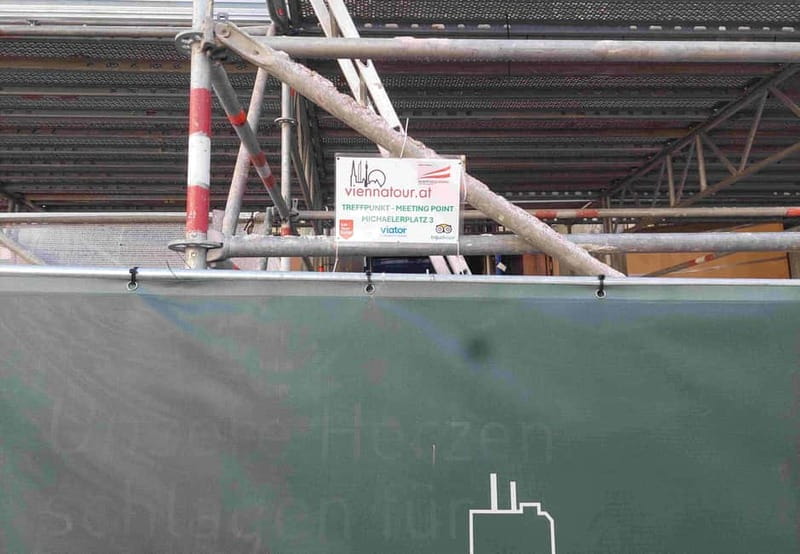
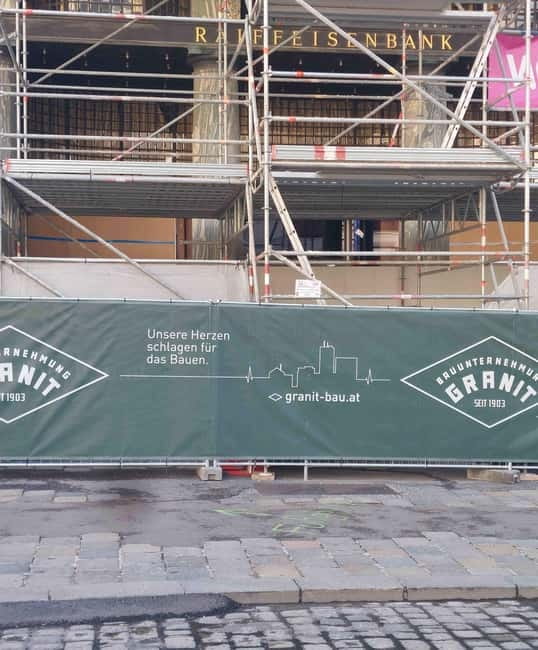
Meet in front of Loos Haus at Michaelerplatz 3, between Kohlmarkt and Herrengasse. Look for the facade marked Raiffeisenbank. The meeting point is about a three-minute walk from Herrengasse station on the U3 metro line, so it is easy to reach from elsewhere in the city.
The tour begins at the Michaelerplatz excavations. This is a smart starting point because Vienna can seem like a city built only for emperors, palace ceremonies, and elegant coffeehouses. The Roman remains remind you that the story began much earlier.
The guide uses the site to raise a practical historical question: why was a castle built here? That question gives the walk a clear thread. You are not simply ticking off monuments. You are considering why this location mattered, how power gathered around it, and how different periods remain visible in the same few streets.
This opening also helps you read Vienna’s center later in your visit. Grand buildings can blur together after a while. A good explanation at the beginning gives you a way to separate Roman Vienna, medieval Vienna, Habsburg Vienna, and the modern city.
More History Walking Tours in the world:
- History and Hauntings of Salem Guided Walking Tour
★ 5.0 · 14,564 reviews - Lisbon: History, Stories and Lifestyle Walking Tour
★ 4.8 · 10,902 reviews - Boston: Freedom Trail History Small Group Walking Tour
★ 5.0 · 6,450 reviews
St. Michael’s Church and the Habsburg entrance
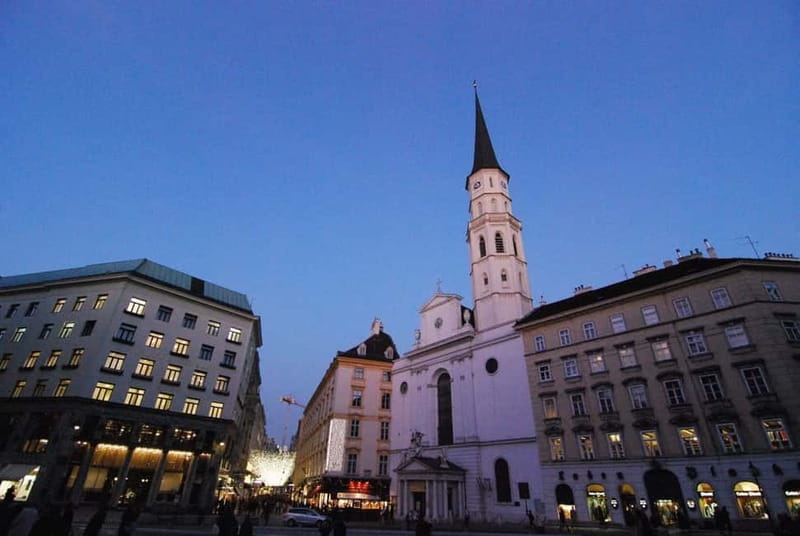
St. Michael’s Church is described as Vienna’s third-oldest church, and its facade combines three architectural styles. That makes it a useful lesson in how old European buildings change over time. Instead of seeing one neat design from one period, you see layers added and altered across centuries.
The church is also part of the approach to the Hofburg. Here, the tour shifts from early Vienna to the imperial city. Your guide explains how the Habsburg rulers shaped the center, not only through a single palace but through a large network of courtyards, wings, institutions, churches, and ceremonial spaces.
This is one of the strongest parts of the walk if you are visiting Vienna for the first time. You get the basic political map before choosing which interior attractions to enter later. Herbert, one of the guides frequently praised for his dry humor and storytelling, is especially associated with making this material feel like human history rather than a list of dates.
Hofburg Palace and the scale of imperial power
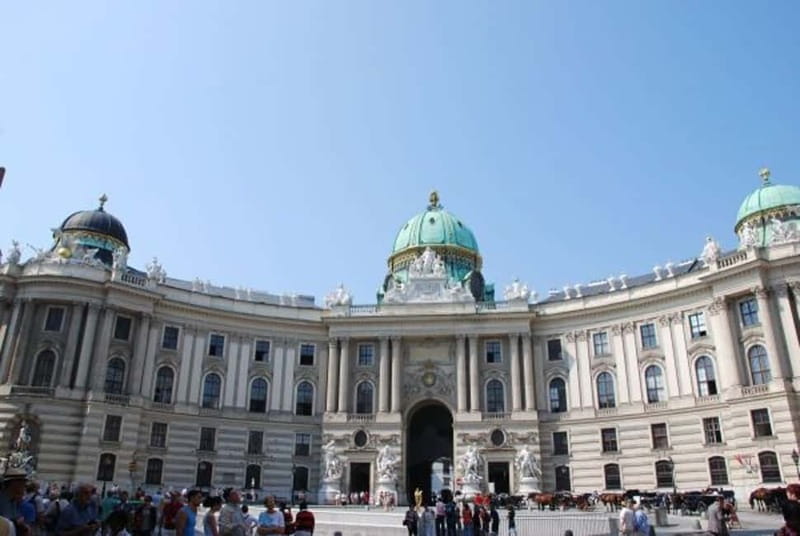
The Hofburg grounds cover about 555,000 square meters. That number matters because the complex can be hard to understand from street level. You see one imposing facade after another, but the guide helps explain how the whole area functioned as the seat of Habsburg power.
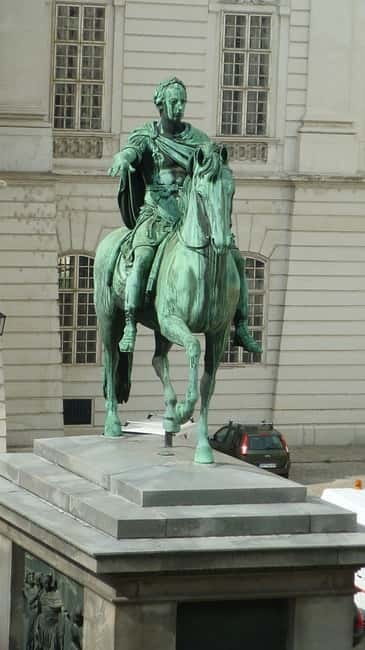
You will hear about major rulers and the role they played in Vienna. The value here is not only factual. You begin to see the Hofburg as a working center of government, ceremony, religion, and household life, rather than just a photogenic palace.
The tour does not include entrance fees, so you will not automatically go inside the palace museums or the Imperial Treasury. That is both a limitation and a useful feature. The walking tour gives you context first, then you can decide if the Treasury, the palace apartments, or another nearby museum deserves your admission money.
If you prefer a broad survey of all Vienna, note the balance of the route. A large share of the walk remains in the Habsburg quarter. If your main goal is imperial history, this is ideal. If you want equal time on neighborhoods, music, modern Vienna, or the city beyond the Ring, you may find the coverage narrow.
Heroes’ Square and what the facades conceal
Heroes’ Square, or Heldenplatz, gives the tour room to breathe. Its size helps you understand the public image of empire. The space was built for ceremony and display, and the guide explains what lies behind the surrounding facades.
This is also where the walk can connect architecture with power. The buildings are impressive, but the stories about the people who used them give them purpose. One of the tour’s most praised qualities is this human focus. Guides such as Herbert have been commended for explaining the lives connected to the buildings, rather than treating the architecture as decoration.
A guide may also use images on an iPad to show how Vienna’s buildings looked after the Second World War. That visual aid has been particularly useful for people trying to picture wartime damage and reconstruction. It is a small detail, but it can make a familiar facade easier to understand.
A few more history tours around the world worth a look
- Colosseum: Underground and Ancient Rome Tour
★ 4.7 · 12,691 reviews - London Small Group Tour of Historical Pubs
★ 5.0 · 10,422 reviews - Prague: Oldtown, Medieval Underground & Dungeon History Tour
★ 4.3 · 10,277 reviews - Charleston’s Old South Carriage Historic Horse & Carriage Tour
★ 5.0 · 10,023 reviews
The Imperial Treasury and the value of a guided preview
The Imperial Treasury is one of the key attractions discussed during the walk. The tour does not provide admission, but it explains why a visit may deserve a place in your schedule.
That advice is valuable because Vienna offers more museums than most short visits can handle. A guide can help you decide if the Treasury fits your interests and how it connects to the rulers and ceremonies discussed earlier. One participant specifically used the tour as preparation for visiting the Treasury independently afterward.
You should treat this stop as an explanation from outside, not a museum visit. If you expect to see the collections during the two-hour walk, you will be disappointed. If you want a clear reason to add the Treasury to your own plans, the stop does its job.
The National Library and Joseph II’s square
The Austrian National Library provides one of the walk’s most attractive architectural moments. You pass its State Hall and hear about the symbol on the roof and the reason the nearby square is named for Emperor Joseph II.
These details are easy to miss without a guide. You can admire the building, take a photograph, and continue walking without understanding the emblems above you or the name under your feet. The tour encourages you to look upward and connect small design features to imperial history.
The State Hall itself is not listed as an included interior visit, so plan on viewing it from outside unless you buy separate admission. That distinction matters. The route gives you a strong orientation, but it is not a substitute for entering the library or palace museums.
Habsburg weddings and the Augustinian Church
The walk includes the church where Habsburg weddings took place. You learn why some grooms were not physically present at their own ceremonies, a striking detail that makes dynastic marriage easier to grasp.
These stories give the tour some of its best human interest. Royal marriage can sound abstract when reduced to alliances and succession. The story of a groom missing from the ceremony shows how political marriage worked in practice.
The church is closed on Sundays and public holidays. The tour can still explain its role, but you should not expect the same access on those days. This is one reason the experience works best as an orientation walk rather than a promise of extensive interior sightseeing.
Albertina, war memory, and the uncomfortable 20th century
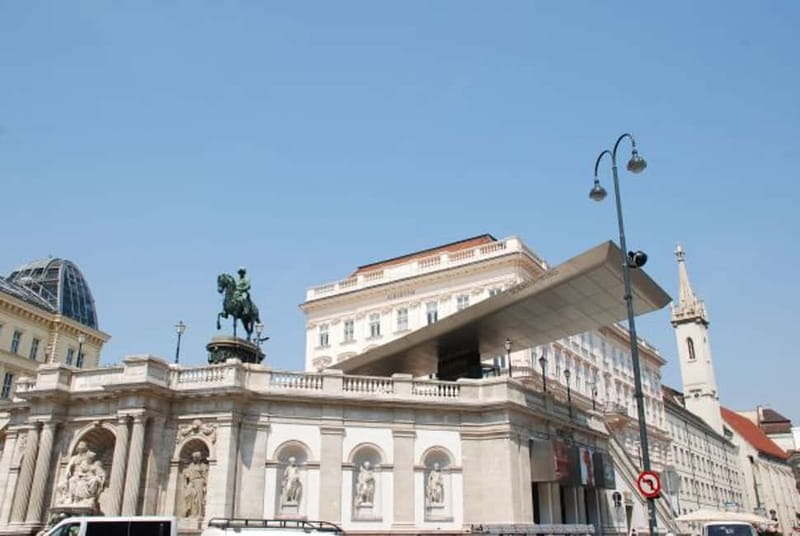
At the Albertina, the tour moves into art and modern history. The museum is home to the world’s largest graphical collection, according to the supplied activity information, but this experience does not include admission.
The nearby Monument Against War and Fascism changes the tone. Vienna’s imperial grandeur can make the city feel polished and distant from the violence of the 20th century. This stop brings the Second World War and its horrors into the route.
That contrast is important. The walk does not present Vienna as only palaces, music, and elegant streets. It acknowledges that the city has a darker past and asks you to read public spaces with more care. For me, this is one of the reasons the tour feels more useful than a simple photo walk.
Again, the stop is outside. You will not explore the Albertina collection during the tour, and the memorial is a brief part of a larger route. Still, the placement gives you a good prompt for a later museum visit or a closer look at the monument.
The State Opera and the former Carinthian Gate Theatre
The State Opera introduces Vienna’s musical identity and the changing shape of the city. You hear why Hotel Sacher now occupies the site where the Carinthian Gate Theatre once stood.
This is the kind of detail that makes a street corner memorable. You may already know the State Opera and Hotel Sacher by name, but the former theatre explains how one cultural landmark replaced another. Vienna’s center becomes a record of vanished buildings as well as surviving ones.
The stop also works well for planning. If opera interests you, you will know where to return. If you mainly want cafes, museums, or imperial sights, you can still place this corner within the wider story of the city.
Neuer Markt, the Providentia Fountain, and the Imperial Crypt
At Neuer Markt, the guide shares anecdotes about the Providentia Fountain. The activity description does not promise a long stop, but this is exactly the sort of small feature that often disappears in a busy city center.
The Imperial Crypt adds another unusual chapter. You hear about the Habsburg burial ritual, an especially memorable subject because it reveals how the dynasty handled death, ceremony, and identity. This is more revealing than another account of palace rooms. It shows the private and religious customs behind public power.
The crypt itself is not included in the tour price. You pass through the area and receive context, then decide if you want to return and pay for entry. That arrangement keeps the walking tour affordable while still pointing you toward a worthwhile interior sight.
Ending at St. Stephen’s Cathedral
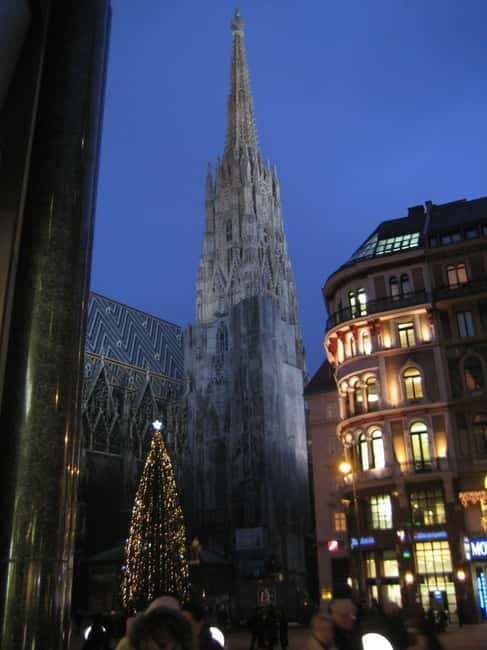
The route finishes at St. Stephen’s Cathedral, Vienna’s best-known landmark, at Stephansplatz 8A. Ending here makes practical sense. You finish in a central location with easy access to the rest of the city, and you can continue exploring on your own.
The guide discusses the cathedral’s partial destruction during the Second World War and challenges at least one version of the story commonly taught in school. That promise of correction fits the tour’s larger approach: look closely, question simple explanations, and connect the building to real events.
Because the tour ends here, you leave with more than a collection of photographs. You have a route through the imperial center, a list of possible museums, and a clearer sense of how the city’s past changed over time.
Guide style, group size, and pace
The listed languages are English and German, with a live guide. Herbert is the name most often associated with the experience, and comments about him consistently highlight his humor, warmth, and ability to explain complex history in an engaging way. Dorothy and Wolfgang are also named as guides who provided clear explanations and a friendly experience.
Groups are described as small. One group had six people, another seven, and some bookings were nearly private. Group size can vary, but the small format gives you a better chance to ask questions and hear the guide clearly.
The pace is not described as strenuous, and one participant liked that the tour covered major sights without too much walking. Still, this is a walking tour lasting two hours, with no promise of seating or shelter. It is not suitable for people with mobility impairments, and children under 12 are not accepted.
You must leave large bags and luggage behind, and video or audio recording is not allowed. The tour runs in all weather, so bring suitable clothing and shoes. You can cancel up to 24 hours ahead for a full refund, and the reserve-now, pay-later option keeps your plans flexible.
Is $34 a fair price for two hours?
At $34 per person, the tour offers good value if you want historical context quickly. You are paying for a live guide, a compact route through Vienna’s imperial center, and advice that can shape the rest of your visit. The price is especially reasonable for a small group, where questions and conversation are easier.
The value drops if you want museum entry included. The Treasury, National Library, Albertina, Imperial Crypt, and other interiors require separate admission. You should budget for those only if you choose to return.
A 4.9 rating from 633 bookings points to a very strong record, and the praise centers on clear explanations, humor, useful recommendations, and a manageable route. The most repeated strength is the guide’s ability to keep history lively without turning the walk into a dry lecture.
Who should book this Vienna walking tour?
I would book it early in a first visit, ideally near the start of your stay. The route helps you decide which museums to enter, where to return, and how the central sights fit together. Several participants wished they had taken it on their first day for exactly this reason.
It suits adults and older teenagers who enjoy history, architecture, royal stories, and unusual local details. It is also a good choice if you want a short introduction rather than an all-day excursion.
I would choose another experience if you want a broad look at Vienna’s neighborhoods, a tour built around food or music, or extensive time inside museums. I would also think twice if rain, standing, or two hours of walking will make the day uncomfortable.
Final verdict: book it for a strong first orientation
Book this tour if you want Vienna’s central monuments to make sense instead of simply looking grand. The best parts are the small details: the Roman remains, the three architectural styles at St. Michael’s, the absent Habsburg grooms, the burial ritual, the vanished theatre, and the wartime damage at St. Stephen’s.
It is not a complete tour of Vienna, and the Habsburg focus may feel heavy if you want a wider city portrait. For $34, though, the combination of a compact route, small groups, lively guides, and practical follow-up advice makes it a sound introduction to the city.
FAQ
Where does the Vienna Essential History Walking Tour begin?
It begins in front of Loos Haus at Michaelerplatz 3, 1010 Vienna. The building is between Kohlmarkt and Herrengasse and has Raiffeisenbank on its facade.
How close is the meeting point to public transportation?
The meeting point is about a three-minute walk from Herrengasse metro station on line U3.
Where does the tour end?
The tour ends at St. Stephen’s Cathedral, at Stephansplatz 8A in central Vienna.
How long does the walking tour last?
The tour lasts two hours.
What languages are available?
The live tour is offered in English and German.
Are entrance fees included?
No. Entrance fees are not included, so you must pay separately if you later enter attractions such as the Imperial Treasury, the Albertina, or the Imperial Crypt.
Is the tour held in bad weather?
Yes. The tour operates in all weather conditions.
Is this a large-group tour?
The tour is conducted in a small group. Exact group size can vary.
Can children join the tour?
Children under 12 are not permitted to join.
Can I cancel and receive a refund?
You can cancel up to 24 hours in advance for a full refund. The activity also offers a reserve-now, pay-later option.
Just added around the world
- The Queenstown Story @ Cobh Heritage Centre , Great Stories of Emigration.★ 4.5 · 181 reviews
- Visit 16 Sites Key Historical Sites And Experience Cobh Rebel Tours★ 5.0 · 167 reviews
- Historical Bicycle Tour of Dunedin★ 5.0 · 44 reviews
- 2.5 Hour Kayaking with Manatee and History Tour in Tarpon Springs★ 5.0 · 24 reviews
- Cincy Brunch History and Streetcar Tour with Riverside Food Tours★ 5.0 · 108 reviews
- Private Tour in Chichen Itza Official History Guide★ 5.0 · 36 reviews
- Dazu Ancient Rock Carvings Private Tour Extension★ 5.0 · 24 reviews
- Chicago River Architecture Tour Aboard a Historic Yacht★ 5.0 · 45 reviews
History Walking Tours, compared.
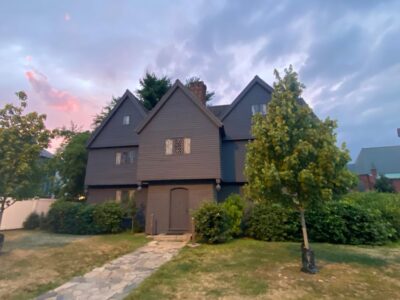
History and Hauntings of Salem Guided Walking Tour
Read our review →
Freedom Trail History Small Group Walking Tour
Read our review →
Historic Charleston Guided Sightseeing Walking Tour
Read our review →
Tapas Walking Tour with Food, Wine, and History
Read our review →
Savannah History and Haunts Candlelit Ghost Walking Tour
Read our review →
A History of Terror – Belfast City Centre Walking Tour
Read our review →Browse the lists this tour appears in