
Review · COUNTY DURHAM
Durham History Tour
Durham reveals itself on foot. I like the way this 1.5-hour walking tour links the Market Place, historic bridges, riverside paths, and the UNESCO World Heritage Site instead of treating the cathedral as a lone photo stop. I also like the human scale of the stories, from Prince Bishops to local characters and modern Durham, usually delivered by Peter, a guide praised for his warmth, humor, and clear storytelling.
The $24 price is fair for a guided introduction, especially if you are new to the city and want to understand what you are seeing. The main limitation is clear: you do not enter Durham Cathedral, Durham Castle, or any other building. You see these grand places from outside, so plan a separate visit if you want the interiors.
That tradeoff suits a first afternoon in Durham. You get an easy-paced route, time for questions, useful local suggestions, and an ending at the cathedral doors, only a four-minute walk from the starting point.
Key points at a glance
- Starts at the Man on the Horse statue: Meet in Durham Market Place and look for the guide carrying a black umbrella.
- Covers two historic bridges: The route uses crossings and riverside walkways to explain how Durham developed around the River Wear.
- Explains the Prince Bishops: Medieval power, religion, defense, and local politics all come into the story.
- Finishes at Palace Green: The tour ends beside Durham Cathedral in the heart of the UNESCO World Heritage Site.
- Peter is a major part of the appeal: His relaxed delivery, local knowledge, humor, and willingness to answer questions receive especially strong praise.
- Dogs are welcome: A useful detail for anyone exploring Durham with a dog.
Why this Durham walk works so well
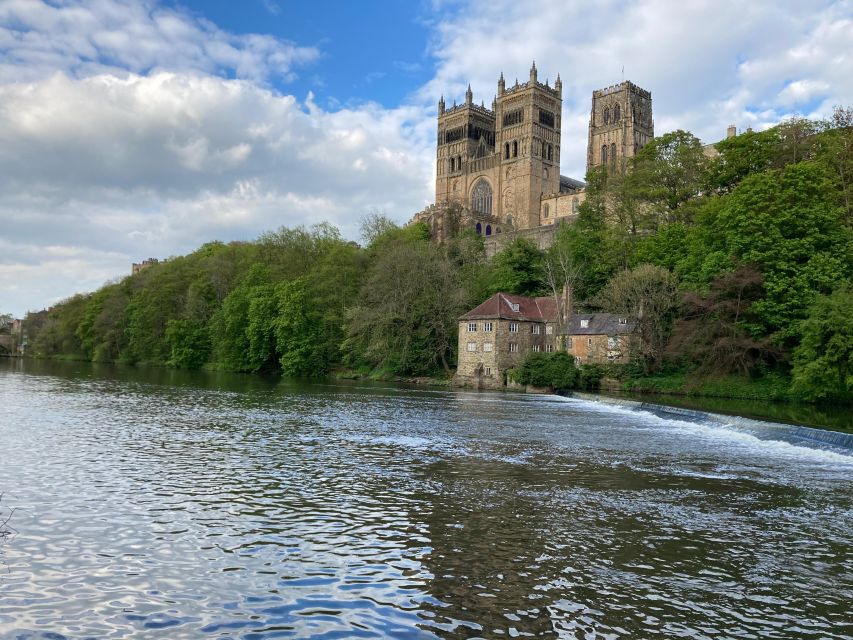
Durham can look straightforward at first glance: a market square, a river, a cathedral, and a castle above it all. The challenge is understanding how those pieces fit together. This tour gives you that connection without burying you under dates and names.
I like the route because it moves through Durham’s story in a natural order. You begin in the civic center, walk toward the river, follow the city’s medieval shape, pass through the university area, and finish at Palace Green. The route itself becomes a kind of map lesson.
The tour also seems to keep a sensible pace. Several people describe it as relaxed, easy, and well timed for a 90-minute walk. That matters in Durham, where slopes, bridges, and cobbled stretches can make a hurried route tiring. You have time to look up, take photographs, and ask questions rather than simply follow a guide from one stop to the next.
Peter is named as the guide, and his style is one of the strongest reasons to book. His delivery is described as informative, funny, patient, and conversational. He can explain the main historical thread while answering questions and offering suggestions for other places to visit, along with restaurant and café tips.
A few more history tours around the UK worth a look
- London Small Group Tour of Historical Pubs
★ 5.0 · 10,422 reviews - Edinburgh: Edinburgh Castle Guided History Tour with Tickets
★ 4.8 · 9,933 reviews - A History of Terror – Belfast City Centre Walking Tour
★ 5.0 · 2,883 reviews
Starting in the Market Place
The tour begins at the Man on the Horse statue in Durham Market Place. Look for a black umbrella, which gives you a simple way to identify the guide in a busy public square.
This is a smart starting point. The Market Place is the city’s everyday center, so you begin with Durham as a living town rather than jumping straight into its medieval monuments. It provides context for how the city functions today before the tour turns toward its older roots.
At the opening, expect an overview of Durham’s founding and the people who shaped it. The focus is not only on grand buildings. The tour brings in stories about the city’s characters, events, geography, and changing identity.
That mix is useful if you have little background. You do not need to arrive with a list of kings or church officials in your head. The guide builds the story while you walk, and the informal approach makes it easier to ask about anything that catches your attention.
Two bridges and the River Wear
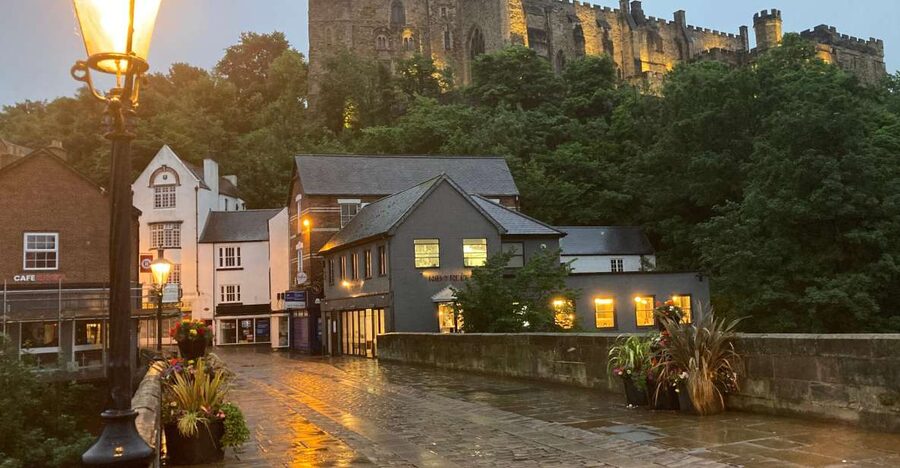
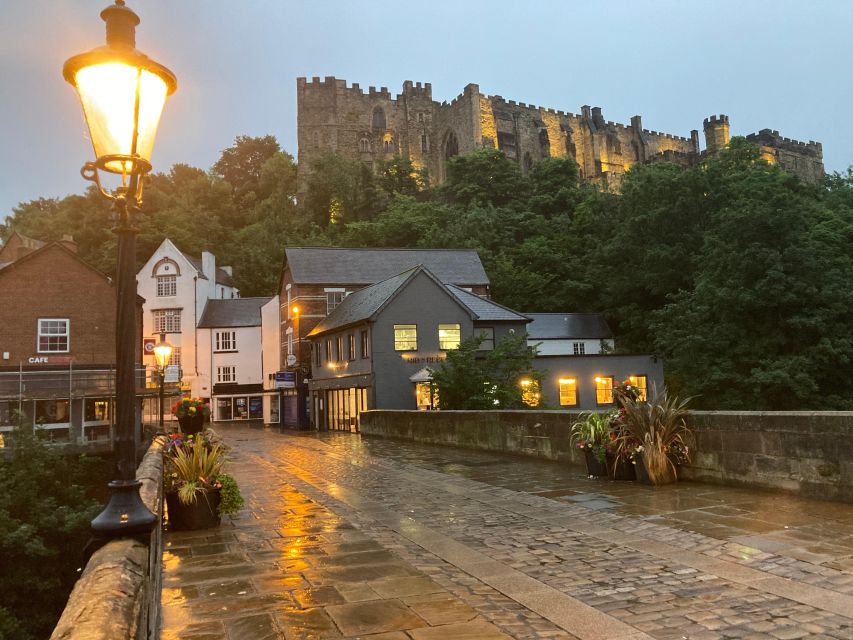
From the Market Place, the route takes in two of Durham’s historic bridges and quiet riverside walkways. These sections give the tour some of its best visual variety. You are not standing in one square listening to a long lecture. You are moving through the city’s physical setting as the story unfolds.
The river helps explain Durham’s character. The bridges are not just useful crossings. They connect the city’s different levels and offer views back toward the older buildings and steep banks. The route uses those viewpoints to discuss the city’s founding and its difficult medieval past.
This is also where the geography lesson becomes valuable. One particularly interesting description of the tour praises Peter for using geography to explain what might otherwise sound like miracles or legends. That suggests a guide who does more than repeat dramatic stories. He adds the physical reasons behind Durham’s location and development.
The riverside portion should appeal to you if you prefer a walk with breathing room. It is quieter than the Market Place and gives you a chance to absorb the setting. Still, remember that this is a city walk, not a countryside hike. The appeal comes from the combination of water, old stone, bridges, and views of the historic center.
Prince Bishops and Durham’s medieval power
Durham’s Prince Bishops are central to the tour. Their story helps explain why a relatively compact city has such imposing religious and defensive buildings.
The title itself points to their unusual position. These church leaders held religious authority while also playing a major role in governing the area. Their power shaped Durham’s politics, architecture, and place in medieval England.
You can expect the guide to connect the Prince Bishops with legends, conflict, and the growth of the city. The emphasis is on people and events, not simply construction dates. That makes the subject easier to follow, especially if medieval English history is not already your specialty.
I appreciate this approach because the Prince Bishops are easy to reduce to a slogan. A good guide needs to show how their power affected daily life and the city’s appearance. Peter’s style, as described by those who have taken the tour, seems to favor stories that make the past understandable without turning the walk into a formal lecture.
There is also room for questions. The relaxed format is useful here because Durham’s medieval story can lead in several directions. You may want to ask about church authority, local legends, the castle, the cathedral, or the people who challenged power. The tour appears designed to handle that kind of curiosity.
Same place, a different slice of the past:
- Edinburgh: Whisky Tasting with History and Storytelling
★ 4.9 · 2,451 reviews - Edinburgh: Old Town History and Tales Walking Tour
★ 4.8 · 2,361 reviews - Old Town Walking Tour History and Tales in Edinburgh
★ 5.0 · 2,168 reviews - Soho Music & Historic Pubs Tour
★ 5.0 · 1,993 reviews
South Bailey, North Bailey, and Durham University
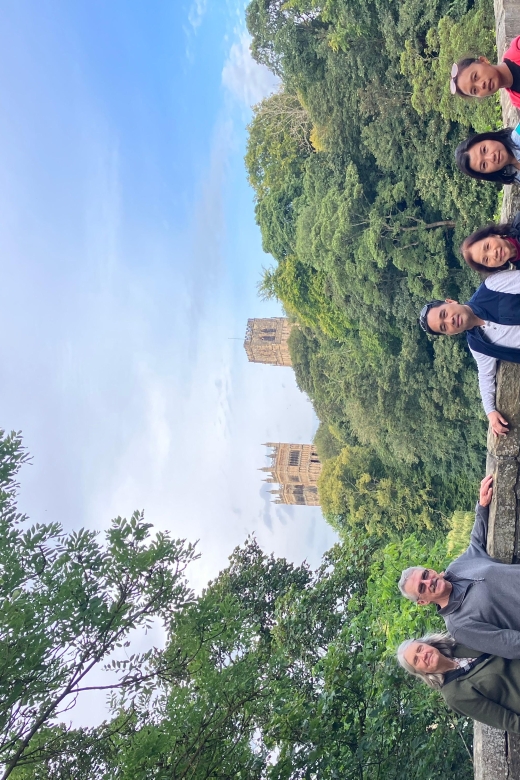
The route continues along the South Bailey and North Bailey, home to Durham University. This gives you a different view of the city, where medieval buildings and university life share the same streets.
The university presence matters because it shows that Durham is not only a preserved historic center. It is also a working city with students, residents, shops, cafés, and an active daily rhythm. The walk helps connect the old Durham with the city you see now.
This section may be especially useful if you are trying to understand Durham’s layout. The Baileys lead toward the cathedral and castle area, but they also show how the historic center extends beyond the postcard view. You see the transition from market town to university quarter and then into the protected historic core.
Several comments describe the tour as an introduction that revealed areas people would not have found alone. That is one of the real benefits of a guided walk. You may pass through a street without knowing its importance, while a local guide can explain why it belongs in the city’s story.
Do not expect every stop to be a major monument. Some of the value lies in the connections between places. A bridge, street, river path, or university building becomes more interesting once you know how it fits into Durham’s past.
Palace Green and the cathedral finale
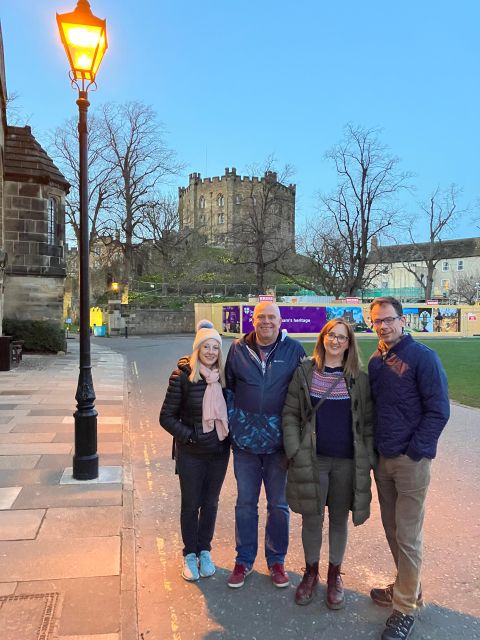
The final stretch brings you to Palace Green, the heart of Durham’s UNESCO World Heritage Site. This is the grand payoff of the route, with Durham Cathedral and Durham Castle forming the historic center of the view.
Ending here makes good sense. By this point, you have heard about Durham’s founding, medieval struggles, Prince Bishops, bridges, riverside paths, and university quarter. Palace Green gives all those threads a physical focus.
The tour finishes at the doors of Durham Cathedral. You do not go inside, so you should allow extra time afterward if you want to see the cathedral’s interior. The good news is that the endpoint is convenient: it is only about a four-minute walk back to the Market Place.
That arrangement also gives you flexibility. You can finish the guided walk, take photographs, visit the cathedral separately, or return to the market area for food. The guide’s recommendations for cafés and restaurants may help you decide what to do next.
The cathedral is likely to be the most dramatic sight on the route, but the tour is stronger because it does not rush there. You understand more of the setting before you reach it.
What the guide adds to the experience
A city history walk succeeds or fails with its guide. Here, the strongest pattern is Peter’s personal delivery. He is repeatedly praised for being engaging, friendly, clear, funny, and passionate about Durham and the wider county.
That matters more than simply knowing a lot of facts. A guide can recite dates and still lose you. Peter’s appeal seems to come from explaining the material in an accessible way, then adjusting to the group’s questions and interests.
The experience also appears flexible in tone. It is described as informal rather than stiff, with enough structure to cover Durham’s main story but enough room for conversation. That is a good balance for a short city walk.
You should also expect practical local advice. Suggestions for places to eat and other sites to visit have been useful to people after the tour. If this is your first time in Durham, ask for recommendations before the walk ends.
The guide’s local connection is another plus. His interest extends beyond the city itself to County Durham, which can add useful context if you are spending more than one day in the area.
Value at $24 per person
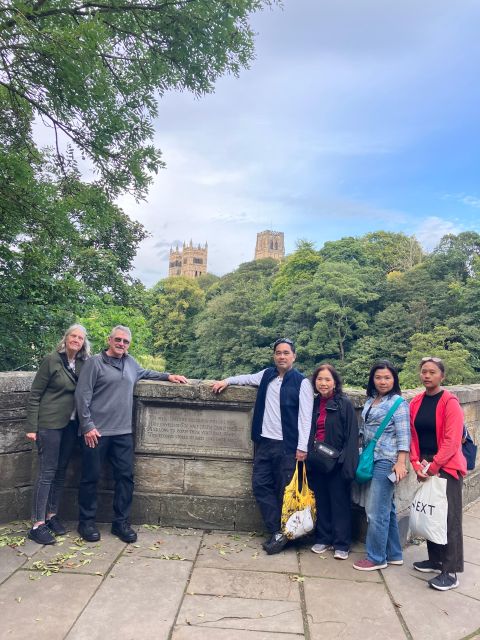
At $24 per person, this is a reasonable purchase for a first look at Durham. You are paying for 90 minutes with a live English-speaking guide, a planned route through several important areas, and explanations you would not get from simply following a map.
The value is strongest if you are new to the city. A self-guided walk costs less, but you would need to research the history, choose a route, and work out how the bridges, river, university quarter, castle, and cathedral relate to one another. The tour handles that work for you.
It is also useful if your time is limited. Ninety minutes is long enough to cover the central story without taking up an entire day. Several comments describe the length as just right, which feels accurate for a first orientation.
The price is less compelling if you already know Durham well or mainly want access to the cathedral and castle interiors. Those are not part of the tour. In that case, treat this as a guided introduction, not a complete sightseeing package.
Free cancellation up to 24 hours before the start and the option to reserve now and pay later add useful flexibility. You should still check the available start time when booking, since the duration is fixed but the departure time can vary.
Practical details before you go
Meet at the Man on the Horse statue in the Market Place and look for a black umbrella. Arriving a little early is sensible, especially if you do not know the square.
The tour is in English, and it lasts 1.5 hours. Wear comfortable shoes and bring protection from rain, since Durham weather can change and the experience takes place entirely outdoors. A previous walk remained enjoyable even in drizzle, but good waterproof clothing will make the experience more pleasant.
No buildings or attractions are entered during the tour. That point is important enough to plan around. If you want to visit Durham Cathedral or Durham Castle inside, arrange that separately after checking their own opening details.
Dogs are welcome, making this one of the easier guided options for people exploring with a pet. You should still keep your dog under control around busy streets, bridges, and other walkers.
The route is described as easy paced, but Durham is not completely flat. Bridges, river paths, and the approach to the historic center may include changes in level. The available details do not provide a distance or accessibility specification, so contact the provider if you have particular mobility needs.
Who should book the Durham History Tour?
I would choose this tour for a first visit, a short stay, or an afternoon when you want to get your bearings before exploring alone. It suits couples, families, solo visitors, and anyone who prefers stories to guidebooks.
It is also a good match for people who enjoy local detail. You get more than a list of monuments, including legends, geography, medieval politics, university life, and stories about people who shaped Durham.
Families may appreciate the easy pace and conversational style, though the tour is still a history walk rather than a children’s activity. Dogs are welcome, which expands its appeal.
I would think twice if your main goal is indoor sightseeing. Since the route does not enter the cathedral, castle, or other attractions, you need to add those visits yourself.
Should you book it?
Yes, if you want a friendly and efficient introduction to Durham before exploring on your own. The route covers the city’s essential historic areas, ends at the cathedral, and gives you a clearer sense of how the river, bridges, university, castle, and medieval center belong together.
The best reason to book is Peter’s guiding style. His relaxed humor, local pride, clear explanations, and practical suggestions appear to turn a simple walk into a useful orientation.
Skip it only if you already know Durham well or want an indoor visit rather than an outdoor overview. For $24, the tour offers solid value, especially on your first day in the city.
FAQ
How long does the Durham History Tour last?
The tour lasts 1.5 hours.
Where does the tour start?
It starts at the Man on the Horse statue in Durham Market Place. Look for a black umbrella.
Where does the tour finish?
It finishes at the doors of Durham Cathedral on Palace Green. The Market Place is about a four-minute walk away.
Does the tour enter Durham Cathedral or Durham Castle?
No. The tour does not enter any buildings or attractions.
Is the tour conducted in English?
Yes. It has a live English-speaking guide.
Are dogs allowed on the tour?
Yes, dogs are welcome.
Just added around the UK
- Curious Cambridge – The History Tour that’s FUN!!!★ 5.0 · 80 reviews
- Birmingham Gangs Nighttime Historical Walking Tour with Pub Stops★ 5.0 · 53 reviews
- 2.5-Hours Walking Tour of Birmingham into Black Heritage Madiba★ 5.0 · 49 reviews
- Belfast Walking Tour: City Centre History, Troubles & Stories★ 5.0 · 39 reviews
- Award Winning Private 2 Hour Belfast Political Black Taxi Tour★ 5.0 · 53 reviews
- Belfast Political/history/troubles private taxi/cab tour★ 5.0 · 69 reviews
- Private Political History & Murals Tour Belfast★ 5.0 · 182 reviews
- Ancient Britain Tour – Private Day Trip from Bath★ 5.0 · 17 reviews
UK History Tours, compared.

Edinburgh Castle Guided History Tour with Tickets
Read our review →
A History of Terror – Belfast City Centre Walking Tour
Read our review →
Old Town Walking Tour History and Tales in Edinburgh
Read our review →

Browse the lists this tour appears in