
Review · EXTREMADURA
Guided Tour of Historic and Monumental Trujillo
Trujillo rewards slow looking. This two-hour walking tour takes you from the grand Plaza Mayor into the medieval town, linking its castle, churches, fortified houses, palaces, and old gates. I like the way it covers both famous sights and smaller corners, and I especially like that the guide points out good places for photographs along the route.
The tour costs $13.90 per person, which is strong value for a guided introduction to one of Extremadura’s most striking historic towns. The main consideration is the pace: two hours gives you a useful overview, but not much time for extended visits inside individual monuments.
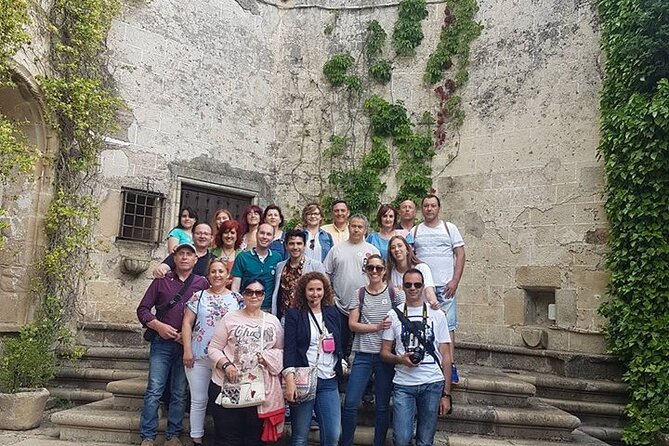
The route is led by TurismoTrujillo.es Actividades Turísticas and is capped at 30 people. Guide Ana has received particular praise for making the walk friendly and complete, with plenty of comments about the old town. If you want detailed museum time or a private experience, this may feel too brisk.
Five details that make this Trujillo walk worthwhile
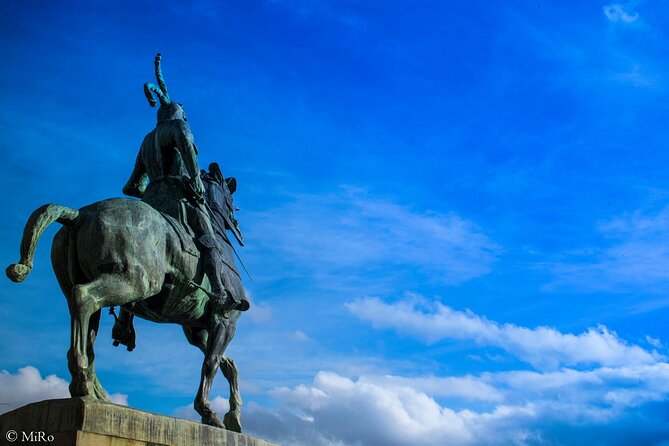
- Plaza Mayor sets the scene: Begin among Renaissance palaces and the famous equestrian statue of Francisco Pizarro.
- The route connects several eras: You move from Muslim fortifications and medieval churches to Renaissance palaces and houses linked with the conquest of Peru.
- The castle includes an old water cistern: Trujillo’s Alcazaba and aljibe date from the 10th to 12th centuries.
- Small fortified houses get their due: Casa-Fuerte de Luis de Chaves and the Bejarano Redoubt show how families defended the town.
- Photography tips are built in: The guide recommends particularly attractive viewpoints and corners as you walk.
- A strong price for a first visit: At $13.90, the tour offers a useful orientation before you explore further on your own.
Start with Trujillo’s grand Plaza Mayor
The walk begins at TurismoTrujillo.es Actividades Turísticas, at Plaza Mayor 20. This is a sensible meeting point because the square is both easy to recognize and central to the town’s story.
Give yourself a moment to take in the setting before the explanation begins. Plaza Mayor is framed by Renaissance palaces, creating one of those Spanish squares where the buildings do much of the talking. The equestrian monument to Francisco Pizarro occupies a key position in the scene, linking Trujillo to the Spanish conquest of Peru.
The square was developed in the 16th century, with construction beginning in 1562 under Hernando Pizarro. That date helps you read the architecture: this is not simply a medieval market space, but a later public setting shaped by wealth, status, and the success of families connected with overseas conquest.
The opening portion lasts about 20 minutes, followed by a short look at the square’s construction. That sounds modest, but it is useful. You get the basic orientation before heading into the tighter streets of the old town.
More Guided Tours in Spain:
- Madrid Historical Tour with Local Guide in Eco Tuk Tuk Private
★ 5.0 · 876 reviews - Guided Tour of Madrid of the Austrias and the Historic Center
★ 5.0 · 520 reviews - Seville: Tapas, Taverns and History Guided Walking Tour
★ 4.9 · 515 reviews
Francisco Pizarro and the money behind the monuments
The statue of Francisco Pizarro receives its own brief stop. It is a quick two-minute look, so do not expect a long discussion devoted only to the conquistador. Still, the monument gives you a clear visual anchor for understanding Trujillo’s connection with Peru.
Pizarro was born in Trujillo, and the town’s grand houses reflect the fortunes made by local families involved in Spain’s imperial expansion. You will see that connection repeatedly, not only in the statue but also in the palaces and family homes around the historic center.
I like this approach because the tour does not isolate the statue from the rest of the town. It places Pizarro within a wider story of local ambition, military power, religion, and family wealth. You get a more useful picture than you would from stopping for a photograph and moving on.
Palacio de San Carlos and the Plateresque town
The Palacio de San Carlos, also known as the Palacio de los Vargas-Carvajal, is a short stop of about four minutes. It is a Plateresque building, a Spanish style known for detailed decoration and carefully worked façades.
The palace keeps its original Plateresque front, along with another façade facing Domingo Street. The brief visit is mainly about reading the exterior. Since the time is limited, you should think of this as an architectural explanation rather than an interior tour.
That is a recurring feature of the walk. Many monuments are introduced from the outside, allowing the guide to cover more ground. This works well if your goal is to understand Trujillo as a whole. It works less well if you want to inspect carved details at length or enter every building.
The medieval center, where the route really opens up
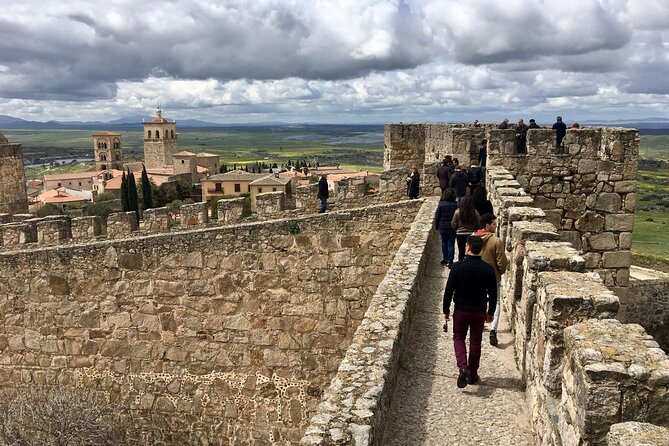
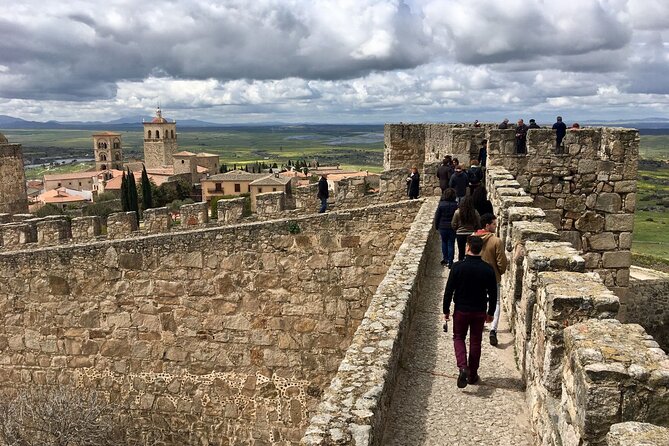
The historic center is the heart of the experience. The route takes roughly two hours overall, with stops at fortified houses, churches, palaces, convents, the walls, and the castle. The streets and buildings are not treated as separate attractions. They form one connected medieval town.
This is where the tour’s broad coverage pays off. You learn how the Muslim Alcazaba, defensive walls, strong houses, manor homes, religious buildings, and grand palaces fit together. Instead of seeing isolated stone structures, you begin to understand why the town looks so fortified and why powerful families built such imposing homes.
The old center also connects with several themed routes, including the routes associated with the Discoverers, Isabel la Católica, and Carlos V. Trujillo has also served as a setting for film productions. These themes add useful context without changing the basic character of the walk.
I would bring comfortable shoes. The experience is on foot, and the old town includes historic streets and fortified areas. The supplied information does not specify the exact surface or level of steepness, so anyone concerned about walking conditions should check directly before booking.
A few more history tours around Spain worth a look
- Madrid Essential: Historic Center, Plaza Mayor & Royal Palace
★ 5.0 · 6,416 reviews - Barcelona: Tapas Walking Tour with Food, Wine, and History
★ 4.8 · 4,261 reviews - Sevilla Food Tour: Tapas, Wine, History & Traditions
★ 5.0 · 3,468 reviews - Valencia Old Town Tour with Wine & Tapas in 11th Century Historic Monument
★ 5.0 · 3,234 reviews
Luis de Chaves and the politics of royal power
Casa-Fuerte de Luis de Chaves El Viejo is a strong house dating from the 13th and 14th centuries. The Catholic Monarchs stayed here during the Wars of Succession, giving the building importance beyond its appearance.
This is one of the most interesting stops because it shows how private residences could also act as defensive structures. In a town where noble families competed for influence, a thick-walled house was both a home and a statement of power.
The visit lasts about 10 minutes, enough to understand its role and place in Trujillo’s political story. I would pay close attention here if you like the connection between architecture and events. The building tells you that medieval life in Trujillo was not only about trade and religion. It was also about alliances, conflict, and access to the crown.
Palacio Viejo and the military orders
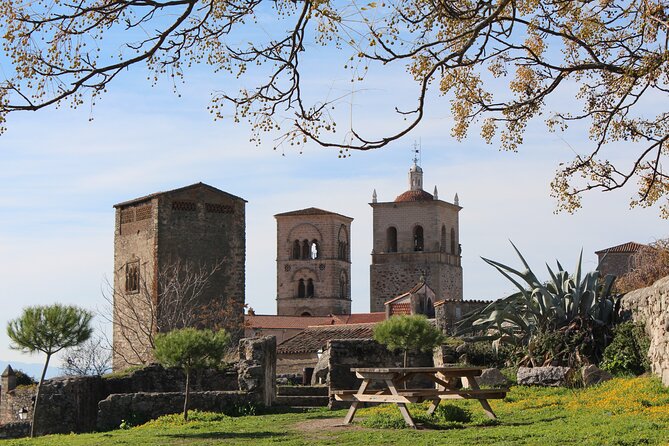
The Palacio Viejo, also called the Palacio de la Cadena, is paired with a 13th-century church founded by the Military Order of Santiago. The stop is short, about five minutes, but it brings another force into the story: the military orders that helped shape medieval Spain.
The connection between church and military order is important. It shows how religious authority and military organization often worked side by side during the medieval period. In Trujillo, those relationships appear in stone, in the buildings that protected the town and supported its religious life.
This part of the route is best appreciated as a quick piece of context. If you want a close study of the church’s interior, the tour may not provide enough time. If you want to understand the town’s main influences, it fits neatly into the larger walk.
Trujillo Castle and the Muslim Alcazaba
The Castillo de Trujillo is one of the major stops. Its Muslim Alcazaba and aljibe date from the 10th to 12th centuries, placing the castle among the oldest parts of the town’s built story.
The aljibe, or water cistern, is especially useful for understanding how a fortified settlement worked. Defense was not only about walls and towers. A stronghold also needed water, and the presence of the cistern shows the practical planning required to hold the site.
The castle stop lasts about 10 minutes. That is enough for a guided introduction, but it is not a full castle visit. If you want to linger over the fortifications, study every view, or explore independently, plan to return after the tour if your schedule allows.
The castle also changes your sense of Trujillo. From the earlier palaces and squares, you move into a place built for protection and control. The contrast helps explain why the town’s highest ground and defensive walls mattered so much.
Pizarro’s house and the story of local families
The Pizarro House Museum is a 15th-century manor house belonging to a hidalgo, a member of Spain’s lower nobility. The stop lasts about 10 minutes and adds a domestic setting to the political and military buildings already seen.
This is a valuable pause because grand public monuments can make history feel too distant. A manor house brings the story back to family status, domestic life, and the social world that produced figures such as Pizarro.
The name may suggest a full museum visit, but the timed stop is short. You should treat it as an introduction unless the tour specifically includes more access than the supplied details indicate. The guide’s explanation is likely to be more important here than the amount of time spent inside.
Santa María la Mayor and Torre Julia
I would pay close attention at Iglesia de Santa Maria la Mayor. It is a Gothic church declared a National Monument, with earlier Romanesque remains including Torre Julia. Inside, the Spanish-Flemish altarpiece by Fernando Gallego gives the church a major artistic feature.
This stop brings together several layers of Trujillo’s past. The church is not only Gothic. Its earlier remains show that the site developed over time, while the altarpiece reflects later artistic connections and religious wealth.
The information provided does not give a set duration for this stop, so the amount of time may depend on the guide and access on the day. Admission is listed as free. If church interiors are a priority for you, this is one of the places where it makes sense to ask the guide how much time is available.
The Torre Julia is also a useful reminder that monuments often preserve more than one era. Look for the older elements rather than judging the church only by its later Gothic form.
The Escobar family and Trujillo’s link with Peru
Casa Fuerte de los Escobar is a 15th-century military building and the former home of María de Escobar. She is remembered as the first woman to bring wheat and barley seeds to Peru.
That detail gives the conquest story a different angle. The town’s links with Peru were not limited to famous male commanders. Agricultural crops, family networks, and practical knowledge also moved across the Atlantic.
The fortified character of the house matters too. Like Casa-Fuerte de Luis de Chaves, it shows how prominent families lived with security in mind. The building combines private life with defense, a pattern you will see across the old center.
The stop lasts about 10 minutes. For me, this is exactly the kind of detail that makes a walking tour worthwhile. You may not remember every date, but you are likely to remember the unusual connection between one Trujillo resident and the crops carried to Peru.
Gates, walls, and the final stretch
The final part of the route includes the Triumph Gate, the Bejarano Redoubt, and Puerta de San Andres. These stops shift attention from houses and churches to the town’s defensive edge.
The Triumph Gate was an important entrance through the walls. The Bejarano Redoubt, a 13th-century strong house, defended this gate. That pairing makes the military layout easier to understand: the gate was an opening that needed protection, and the fortified house helped control access.
Puerta de San Andres is one of seven gates in the town wall and sits beside the Church of San Andrés. The combination of gate and church is typical of how religious and defensive structures could exist side by side in a medieval town.
These final stops reward you for remembering the earlier explanations. By this point, the walls are no longer just attractive stonework. You can read them as part of a system of entry, defense, residence, and religious life.
The activity ends back at the meeting point in Plaza Mayor. That makes it easy to continue exploring, return to a favorite monument, or use the square as your base for food and further sightseeing.
What $13.90 gets you
At $13.90 per person, this is a good-value orientation tour. You receive about two hours of guided context across a large number of major sites, including the castle, churches, palaces, fortified homes, walls, and gates.
The value is strongest if you are visiting Trujillo for the first time. A guide can help you understand why the town looks the way it does and point out connections you might miss while walking alone. The suggestions for photographic corners are a useful extra, especially if you want more than the standard Plaza Mayor picture.
The tradeoff is depth. The tour covers many places, but most stops are short. You will not have unlimited time for interiors, detailed architectural study, or quiet wandering. I would use the tour as your framework, then revisit the buildings that interest you most.
The group can include up to 30 people. That is not a tiny group, so the experience may feel less personal than a private walk. Still, a group of this size is reasonable for a central town tour, and the strong overall rating of 5 from 933 reviews, with 100 percent recommending it, suggests that the format has worked well for many people.
Practical planning before you go
The tour is confirmed at booking, uses a mobile ticket, and begins at Plaza Mayor 20. It is near public transportation, and service animals are allowed. Most people can participate, but remember that this is a walking experience through a historic town.
The tour is usually booked about eight days ahead. That is a useful planning guide, not a rule, but I would avoid leaving it until the last minute if you are visiting on fixed dates.
Free cancellation is available until 24 hours before the start time. Cancellations or changes made less than 24 hours in advance are not accepted for a refund, and the cut-off follows local time.
Guide Ana has been singled out for making the walk both lively and complete, with many comments about the historic center. If she is leading your departure, you can reasonably expect a talkative route rather than a silent procession from building to building.
Who should book this Trujillo tour?
I recommend it most strongly to first-time visitors who want a clear introduction to Trujillo. It also suits anyone interested in medieval defenses, noble families, religious architecture, or the town’s links with Francisco Pizarro and Peru.
The tour is a good fit if you like structure and want help choosing what to revisit later. It is less suitable if you prefer to set your own pace, spend an hour inside one church, or avoid group walks.
For families and mixed-age groups, the variety helps. Castles, gates, statues, churches, and fortified houses offer more visual change than a tour focused only on architecture. The short stops may also make the route easier to follow than one long lecture.
Should you book it?
Book this tour if you want a well-priced, broad introduction to Trujillo’s historic center. For $13.90, you get a guided route through the town’s main architectural and historical chapters, plus useful advice on photographs and lesser-known corners.
Skip it only if you already know Trujillo well or want a private, slow-paced examination of individual monuments. For most first visits, the combination of Plaza Mayor, the castle, Santa Maria la Mayor, fortified houses, and old gates makes this an efficient way to get your bearings before exploring on your own.
FAQ
Where does the tour start?
It starts at TurismoTrujillo.es Actividades Turísticas, Plaza Mayor 20, 10200 Trujillo, Cáceres, Spain.
Where does the tour end?
The activity ends back at the meeting point in Plaza Mayor.
How long does the tour last?
The tour lasts approximately two hours.
How much does the tour cost?
The listed price is $13.90 per person.
Is the tour available with a mobile ticket?
Yes. The experience includes a mobile ticket.
How large can the group be?
The tour has a maximum group size of 30 people.
Can I cancel for a full refund?
Yes. You can cancel up to 24 hours before the experience start time for a full refund. Changes or cancellations made less than 24 hours before the start time are not accepted for a refund.
Just added around Spain
- Jerez de la Frontera History and Art Walking Tour★ 4.5 · 49 reviews
- 2 Hours Tour around Cádiz: History, anecdotes and curiosities★ 5.0 · 89 reviews
- Bilbao Historical Small Group Tour★ 4.5 · 159 reviews
- Barcelona Jewish & Gothic Tour★ 5.0 · 18 reviews
- Andorra Original History and Sightseeing Tour (Private, Pickup)★ 5.0 · 350 reviews
- History Museum of Catalonia & Rooftop Access Ticket★ 4.5 · 43 reviews
- Sip, Sites & Bites Barcelona Food, Drinks & History Tour★ 4.5 · 95 reviews
- Barcelona Tapas Food Tour, Taverns, History & Local Culture★ 5.0 · 42 reviews
Spain History Tours, compared.
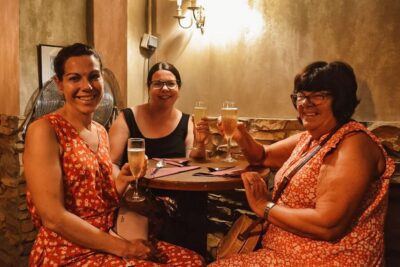
Tapas Walking Tour with Food, Wine, and History
Read our review →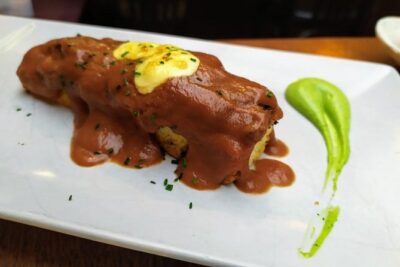
Sevilla Food Tour: Tapas, Wine, History & Traditions
Read our review →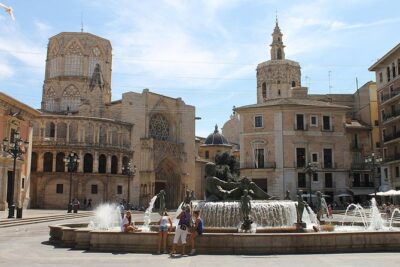
Valencia Old Town Tour with Wine & Tapas in 11th Century Historic Monument
Read our review →
Madrid Tapas & Taverns Small Group Food & History Tour
Read our review →
Barcelona Tapas Walking Tour: Food, Wine & History
Read our review →
Ultimate Seville Tapas, Wine & History Small Group Tour
Read our review →
Córdoba: Skip-the-Line Great Mosque-Cathedral History Tour
Read our review →
Browse the lists this tour appears in