
Review · TIRANA
Tirana Walking Tour: History, Culture &Gems by a Passionate Guide
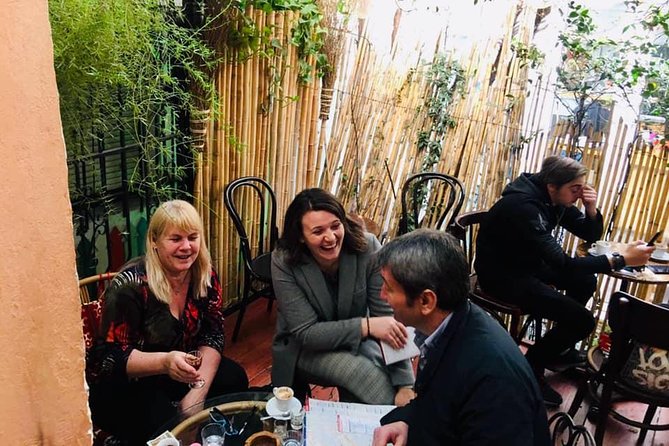
Tirana rewards curious walkers. This 3 to 4-hour tour links the city’s Ottoman, communist, and modern sides with Albiona, a warm local guide who explains not just what you are seeing, but why it matters. I like the small maximum of 11 people, and I like the generous spread of stops, from Skanderbeg Square to Blloku. You also get a complimentary shot of rakia, Albania’s famous fruit brandy.
The main drawback is pace. The route includes 21 stops, so several visits last only five or ten minutes and are viewed from outside. If you want long museum visits or time inside every church and monument, this is not that kind of tour. It is best for getting your bearings and building a useful first picture of Tirana.
Five useful things to know before you book
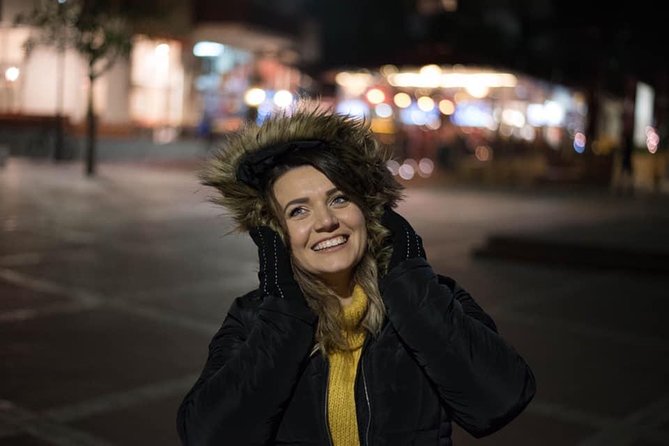
- Albiona is the heart of the experience: Her clear English, personal stories, and easy conversation are repeatedly praised.
- The route covers three Tiranas: You move from Ottoman landmarks to communist memorials and today’s café-filled neighborhoods.
- It is a true orientation walk: The tour begins and ends at Skanderbeg Square, making it handy for your first day.
- Expect many short stops: The route is broad rather than slow, with a few minutes at several landmarks.
- Rakia adds a local touch: A complimentary shot is included, while other personal spending is not.
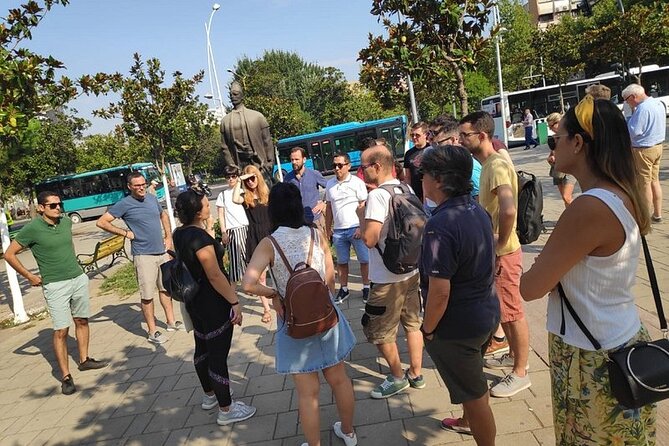
- The group stays small: A maximum of 11 people allows room for questions and a more personal feel.
Why this is a smart first walk in Tirana

Tirana can feel like several cities placed on top of one another. Ottoman religious buildings, Italian-influenced civic architecture, communist concrete, colorful new construction, and lively café streets all share the center. Without context, the mix can look random. With a good guide, it begins to read like a story.
I like this tour because it gives you that story early. Albiona starts with a broad explanation of Albania’s past, then connects it to the places along the route. Her approach, based on the experience described by past participants, is detailed without becoming a lecture. She leaves room for questions and personal conversation, which is especially helpful if Albania is new to you.
The tour is conducted in English. It uses a mobile ticket, begins at Skanderbeg Square, and returns there. Since it lasts about three to four hours and stays on foot, wear comfortable shoes and bring water. The route is long enough to cover a lot of ground, but not so long that it takes over your entire day.
At $36.20 per person, I see solid value if you use it as an introduction to the city. You are paying for a local perspective, a small group, historical explanation, and help finding places you might pass without noticing. It is less valuable if you already know Tirana well or plan to spend most of your time inside museums.
More Local Culture and Traditions Tours in the world:
- Amsterdam Food and Cultural Tour with Tastings
★ 5.0 · 4,315 reviews - Sevilla Food Tour: Tapas, Wine, History & Traditions
★ 5.0 · 3,468 reviews - Tromsø: Reindeer Camp and Sami Cultural Tour with Lunch
★ 4.7 · 3,326 reviews
Skanderbeg Square gives you the big picture
The tour starts at Skanderbeg Square, Tirana’s main public space. It is named for Albania’s national hero and acts as the city’s natural starting point. Give yourself time to look around before the guide begins. The square helps you understand Tirana’s scale and its role as the capital.
This is where the tour’s historical framework matters. The center has changed sharply over time, and the square reflects that shift. Albiona’s opening explanation helps place the later sights in context, rather than treating each building as an isolated stop.
From here, you move to the Et’hem Bey Mosque. Its outside is modest, but the interior is known for unusual frescoes showing trees, bridges, waterfalls, and other natural scenes. These images are especially striking because figurative and natural decoration is less common in Islamic religious art.
The mosque visit is scheduled for about ten minutes. That means you should not expect a long, quiet study of every detail. Still, it is an important stop, and the short visit gives you a chance to see one of Tirana’s most distinctive religious interiors.
Nearby, the 35-meter Clock Tower adds another layer. Built in the nineteenth century, it blends Ottoman and Venetian influences. Five minutes is enough to appreciate its shape and position, but not enough for an extended architectural discussion, so listen closely when the guide points out what makes it different.
From Sulejman Pasha Square to the New Bazaar
The route continues to Sulejman Bargjini Square, named for the founder of Tirana. It is smaller than Skanderbeg Square, but it helps connect the city’s present-day streets with its origins.
Then comes Pazari i Ri, or the New Bazaar. This is one of the more enjoyable parts of the walk because it brings history into everyday life. The area combines renovated public space with stalls and shops selling produce, spices, traditional food, and local crafts.
You have about 20 minutes here. That is enough for a quick look and perhaps a snack if the pace allows, but personal purchases are not included. I would save room for this part of the route because the bazaar gives you a more immediate feel for ordinary city life than a monument can.
At Teqja Pazari, the focus turns spiritual. This Bektashi site introduces you to a branch of Sufi Islam with an important place in Albanian religious culture. The Bektashi tradition is known for mysticism and progressive values, making this a useful reminder that Albania’s religious life is not limited to the country’s mosques, Catholic churches, and Orthodox churches.
The ten-minute visit will be brief, but the stop is valuable. It gives the guide a chance to explain a part of Albanian identity that many first-time visitors would miss.
Small monuments with large historical questions
Kapllan Pasha’s Tomb is an octagonal stone monument from the early nineteenth century. Its columns rest on stone bases and capitals decorated with plant designs. Kapllan Pasha, once Tirana’s ruler, was buried here before his remains were later returned to Istanbul.
The tomb is a quick stop, about ten minutes. It is not a grand building, but that is part of its appeal. You are looking at a small surviving piece of the city’s earlier political life, tucked into a modern capital.
The nearby Toptani Sarajet, also called the Ethnographic Museum of Tirana, offers a glimpse of traditional Albanian domestic life. The scheduled five-minute stop suggests that you may see the building rather than spend time touring a full collection. If traditional houses interest you, ask Albiona for extra explanation while you are there.
Bunk’Art 2 follows, bringing the story into Albania’s communist period. The museum occupies a former bunker and examines the machinery and fear of the dictatorship. The stated stop is only five minutes, and admission is not listed as included, so treat this as an outside introduction unless you arrange a separate museum visit.
That distinction matters. This tour takes you to many major places, but it is not an admission-heavy museum tour. You get the map and the context. You may then choose to return to the places that catch your attention.
More History Walking Tours in the world:
- History and Hauntings of Salem Guided Walking Tour
★ 5.0 · 14,564 reviews - Lisbon: History, Stories and Lifestyle Walking Tour
★ 4.8 · 10,902 reviews - Boston: Freedom Trail History Small Group Walking Tour
★ 5.0 · 6,450 reviews - Historic Charleston Guided Sightseeing Walking Tour
★ 5.0 · 6,216 reviews
Murat Toptani Street and Tirana Castle
Rruga Murat Toptani has a different mood. It combines historic character with modern city life and gives you a pleasant walking link between major sights. The ten-minute portion helps break up the monument stops with a street-level look at Tirana.
Tirana Castle is another short visit. The site includes old remains alongside modern shops and places to eat. Five minutes is enough to understand the location and its role, but not enough to explore every corner at leisure.
I appreciate this kind of stop because it shows how Tirana handles its past. Old walls are not always isolated behind a gate. They often sit beside cafés, shops, and ordinary city traffic. That mixture is part of what makes the capital interesting, even if it sometimes feels visually untidy.
Saint Paul’s Cathedral provides a change of tone. The Catholic cathedral offers architectural detail and a quiet religious setting. It also helps explain Albania’s religious variety, especially when seen alongside the mosque, Bektashi site, and Orthodox cathedral later in the walk.
Komiteti, the Pyramid, and the memory of dictatorship
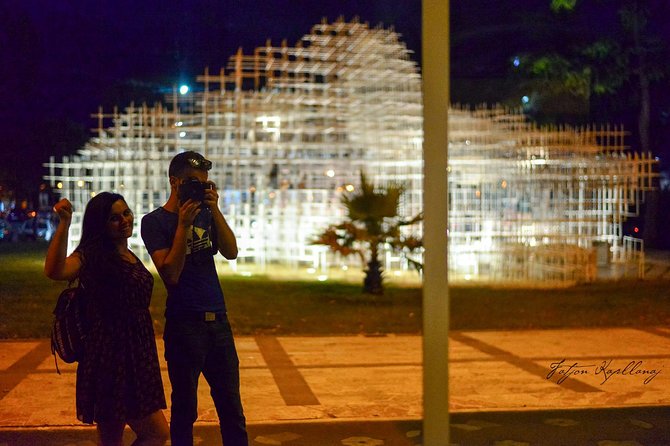
Komiteti Kafe Museum is one of the more atmospheric stops. It combines a café with objects and memories linked to Albania’s socialist era, along with traditional Albanian hospitality. The planned 20 minutes makes this one of the longer pauses, and it is a good place to slow down.
A past participant also enjoyed gelato during the walk, and the tour can include relaxed café time depending on the day and pace. Treat food and drinks beyond the included rakia as personal expenses.
The Pyramid of Tirana is next. Built as a symbol of the communist era, it has taken on a new role in the modern city. Its changing identity makes it a useful place to discuss how Albania remembers, reuses, and argues with its past.
At Postbllok, or the Checkpoint Memorial, the history becomes more direct. This open-air installation near Blloku recalls the restrictions and pressure of communist rule. It is not simply another photo stop. It gives Albiona a place to explain how the regime affected families and daily life.
That human detail is one of the strongest reasons to choose this tour. The guide’s value is not just a list of dates. She brings attention to the fear, separation, resilience, and lasting effects of the period.
Blloku shows Tirana after communism
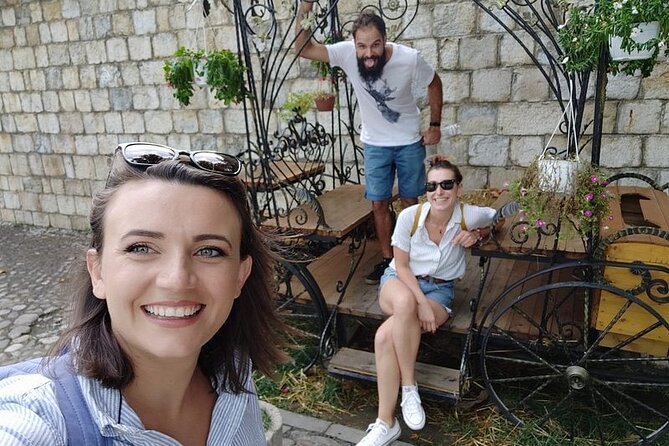
The former villa of Enver Hoxha sits in Blloku, a neighborhood once reserved for senior communist officials. Ordinary citizens could not freely enter this elite zone. Today, Blloku is one of Tirana’s main social districts, filled with cafés, restaurants, and nightlife.
The villa stop lasts about five minutes, so do not expect a full house tour. The point is the contrast between the area’s past and present. A neighborhood once defined by secrecy is now part of the city’s public social life.
Blloku itself receives another short stop. I find this pairing useful because the villa explains the old power structure, while the neighborhood shows what happened after that system disappeared. The area’s modern energy is easier to understand when you know who once lived behind its walls.
Shallvaret adds another historic neighborhood to the route. The five-minute stop offers a quick look at an area with roots in Tirana’s earlier development. It is one more reminder that the city’s story is spread across ordinary streets, not only famous buildings.
Religious revival and the House of Leaves
The Orthodox Cathedral of the Resurrection of Christ is among the most important religious buildings on the route. It represents the return of open religious life after Albania’s communist government banned religious practice in 1967 and declared the country the world’s first atheist state.
The cathedral was built between 2001 and 2012 and consecrated on June 24, 2012. The ten-minute stop cannot cover every detail, but it gives you a clear way to understand the building as a symbol of religious revival.
The Museum of Secret Surveillance, known as the House of Leaves, is a serious stop near the end. It occupies a former surveillance center connected to the communist period. Unlike most other stops, admission is not included.
The route allows about ten minutes there. If the museum interests you, plan to return separately for a longer visit. The tour can give you the background, but a short stop is not enough to absorb the full subject.
Finally, the walk passes the Bank of Albania. Founded in 1925 as the National Bank of Albania, it connects the city’s political story with its economic development. This is a brief five-minute stop and a fitting final note before returning to Skanderbeg Square.
What the guide adds, and where the tour is limited
Albiona is the main reason this tour receives such strong praise. She is described as friendly, passionate, flexible, and able to explain Albania’s past without overwhelming you. Her English is considered excellent, and she welcomes questions rather than rushing through a fixed speech.
That flexibility can matter. One participant arrived late after a traffic delay, and Albiona adjusted the experience so the tour remained useful and enjoyable. Another described it as feeling like time spent with an old friend. Those details suggest a personal style rather than a rigid script.
The tour also seems suited to different levels of prior knowledge. If you know very little about Albania, the opening history lesson gives you a foundation. If you already read about the country, you can ask for more detail and personal interpretation.
The tradeoff is the route’s ambition. Twenty-one stops in three to four hours means you will often pause, listen, photograph, and move on. You will not have long inside each religious site or museum. That is not a flaw if you want orientation, but it is important to set the right expectation.
The walk is offered in English, allows service animals, is near public transportation, and is described as suitable for most people. Good weather is required. You can cancel for a full refund up to 24 hours before the start time, but late cancellations and late changes are not accepted.
Should you book this Tirana walking tour?
I would book it for your first day in Tirana, especially if Albania is new to you. The route gives you the city center, the New Bazaar, religious landmarks, communist memorials, Blloku, and several useful places to revisit later.
Book it if you want history explained by a passionate local, a small group, and a broad introduction rather than a slow museum visit. It is also a good choice if you value practical orientation and want advice that a standard guidebook cannot provide.
Skip it if you dislike walking, prefer long unhurried visits, or mainly want to tour museum interiors. For everyone else, $36.20 is a fair price for a thoughtful first look at Tirana, especially with Albiona’s personal approach and the included rakia.
FAQ
How long does the Tirana walking tour last?
The experience lasts approximately three to four hours.
Where does the tour begin?
It begins at Skanderbeg Square, Plaza Tirana, Sheshi Skender Beu, Tirana 1001, Albania.
Where does the tour end?
The tour ends back at the meeting point in Skanderbeg Square.
How many people can join the tour?
The maximum group size is 11 people.
Is the tour offered in English?
Yes. The experience is offered in English.
Is rakia included?
Yes. One complimentary shot of rakia, a traditional Albanian spirit, is included.
Is admission to the House of Leaves included?
No. Admission to the Museum of Secret Surveillance, also called the House of Leaves, is not included.
Can I cancel for a full refund?
Yes. You can cancel at least 24 hours before the start time for a full refund. Cancellations or changes made less than 24 hours before the start time are not accepted, and poor weather may lead to a different date or a full refund.
Just added around the world
- The Queenstown Story @ Cobh Heritage Centre , Great Stories of Emigration.★ 4.5 · 181 reviews
- Visit 16 Sites Key Historical Sites And Experience Cobh Rebel Tours★ 5.0 · 167 reviews
- Historical Bicycle Tour of Dunedin★ 5.0 · 44 reviews
- Cincy Brunch History and Streetcar Tour with Riverside Food Tours★ 5.0 · 108 reviews
- 2.5 Hour Kayaking with Manatee and History Tour in Tarpon Springs★ 5.0 · 24 reviews
- Private Tour in Chichen Itza Official History Guide★ 5.0 · 36 reviews
- Dazu Ancient Rock Carvings Private Tour Extension★ 5.0 · 24 reviews
- Chicago River Architecture Tour Aboard a Historic Yacht★ 5.0 · 45 reviews
Local Culture & Traditions Tours, compared.

Amsterdam Food and Cultural Tour with Tastings
Read our review →
Sevilla Food Tour: Tapas, Wine, History & Traditions
Read our review →
Tromsø: Reindeer Camp and Sami Cultural Tour with Lunch
Read our review →
Half Day Dominican Republic Cultural Tour : Small Group
Read our review →
Ultimate Melbourne Walking Tour: History, Laneways & Culture
Read our review →
Tromsø: Sámi Reindeer Sledding and Sami Cultural Tour
Read our review →
Kyoto Gion: 2-Hour Geisha Culture & History Walking Tour
Read our review →
Marrakech Historical and Cultural Tour – Half Day City Tour
Read our review →Browse the lists this tour appears in