Review · ROME
Rome Food Tour in the Historic Centre with 8+ Food Tastings
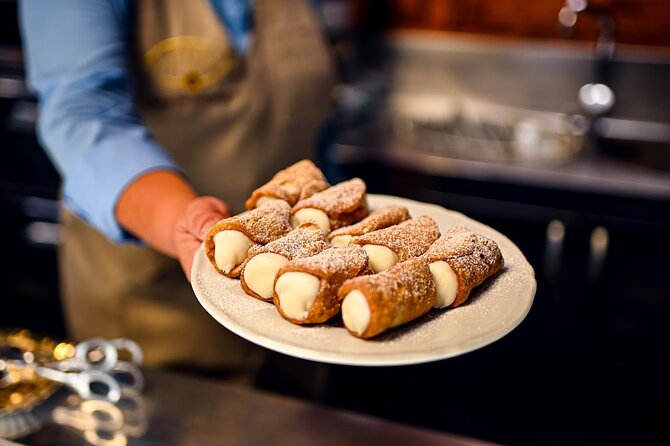
Come hungry, leave happily stuffed. This three-hour walking tour links eight or more Roman tastings with some of central Rome’s most memorable squares, fountains, and ancient ruins. You’ll try two types of homemade pizza, supplì, cold cuts, cheeses, two Roman pastas, cannoli, gelato, and a secret dish while walking from Piazza Navona to Largo di Torre Argentina.
I like the tour’s mix of food and place. You are not simply seated in one restaurant for a long meal. You move through the old center and the former Jewish Ghetto, learning why certain foods belong to Rome. I also like the small group size, capped at 12 people, which gives guides such as Massimiliano, Rocio, Luda, Eduardo, and Federico room to answer questions and keep the group together.
The main drawback is the amount of walking and food packed into a short outing. On a hot day, the route can feel tiring, and the generous portions may be too much if you prefer light meals. The menu and stops can also change because of weather or local availability.
Quick reasons to consider this Rome food tour
- Eight or more tastings in three hours: Expect pizza, supplì, Roman pasta, cured meats, cheeses, cannoli, gelato, and a secret dish.
- A route through central Rome: The walk connects Piazza Navona, Campo de’ Fiori, the former Jewish Ghetto, Largo di Torre Argentina, and other historic sights.
- Small groups capped at 12: This is a more personal setup than a large city tour, with a better chance to speak with your guide.
- A proper introduction to Roman food: You sample both street food and sit-down dishes, rather than focusing on one category.
- Strong guide-led storytelling: Massimiliano, Rocio, Luda, Robbie, Eduardo, and Federico are praised for humor, local insight, and practical help.
- A filling experience: The portions are substantial, so this works best as a main meal rather than a small snack walk.
Starting at Piazza Navona with pizza and Roman stories
The meeting point is Sant’Agnese in Agone at Piazza Navona. This is a sensible place to begin because the square gives you an immediate look at Rome’s layered past. Piazza Navona occupies the site of an ancient stadium and is now framed by Baroque buildings, fountains, cafés, and restaurants.
The tour allows about 20 minutes here before moving on. You’ll likely hear about the square’s architecture and its role in daily Roman life, then begin tasting the foods that make a Roman stroll so enjoyable. The first bites may include homemade pizza, with two different types included during the tour.
Roman pizza is not one single thing. Depending on the stop, you might encounter a crisp, thin style or a softer, breadier slice. Pizza bianca, a simple flatbread often served plain or filled, is part of the city’s everyday food culture. This is the sort of dish that makes sense when you eat it while walking through town, rather than treating it like a formal restaurant course.
Piazza Navona can be crowded and noisy, especially around its fountains. That adds atmosphere, but it also means you should arrive early enough to locate the meeting point without rushing. The starting location is near public transportation, though hotel pickup is not included.
More Food and History Tours in Rome
- Private Rome Food Tour in the Historic Centre with 8+Tastings
★ 5.0 · 135 reviews - Rome: Ultimate Street Food Tour in the Old Town by Do Eat Better
★ 5.0 · 73 reviews - Rome: Trastevere street food and history tour – small group
★ 5.0 · 58 reviews
A Baroque palace and the city’s grand public spaces
One stop is a major High Renaissance palace that now serves as the French embassy in Italy. The building gives the walk a useful change of pace. You are not only moving from one food counter to another. You are also seeing how Rome’s streets combine government, religion, art, and ordinary eating within a few blocks.
The route includes the classical 17th-century Fountain of the Four Rivers, with its obelisk and dove. This is one of the city’s most recognizable public fountains, and it offers a good moment to pause between tastings. Your guide may connect the fountain to Rome’s habit of turning public spaces into grand displays of power and art.
I appreciate this kind of stop because it helps you understand why food tours work well in Rome. The city rarely separates its sights into tidy museum zones. A bakery, a fountain, a palace, and an ancient ruin may all appear along one short street route. You get a better feel for Rome when you see those elements together.
Still, do not expect a dedicated sightseeing tour with long talks at every monument. Food is the main subject. The historical commentary adds context, but the group needs to keep moving so that all the tastings fit into the schedule.
Roman street food: supplì, cold cuts, and cheese
Supplì is one of the essential Roman bites on this outing. It is a fried rice croquette, usually associated with tomato and mozzarella, though fillings can vary. The appeal is simple: crisp outside, soft and savory inside, and easy to eat as street food.
The menu also includes Italian cold cuts and cheeses. These tastings help show how much of Italian food depends on quality ingredients and careful preparation rather than complicated recipes. You may sample several textures and flavors together, with your guide explaining what you are eating and how it fits into local habits.
This part of the tour is useful if you are still learning the difference between Roman food and the broad category of Italian food. Rome has its own specialties and rhythms. Fried snacks, bread, cheese, cured meat, and pasta all appear in everyday meals, but they do not all serve the same purpose.
The food is served in several stops rather than as one plated course. That makes the walk social and varied, but it can also create a full stomach quickly. Several people who took the tour found themselves completely full by the end, so I would avoid eating a large lunch beforehand.
Entering the former Jewish Ghetto
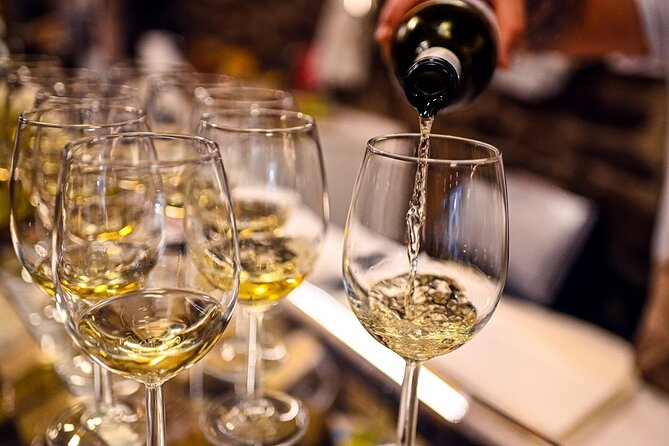
The route continues into Rome’s former Jewish Ghetto in Rione Sant’Angelo. This neighborhood was established in 1555 and remains one of the city’s most distinctive areas. Its importance is not limited to food. The streets carry the memory of Rome’s Jewish community, changing laws, religious life, and centuries of urban history.
Here, food and history come together in a particularly meaningful way. Roman cooking developed through many communities and traditions, and the former Ghetto is an important place to hear about that connection. A good guide can help you see that local dishes are not isolated recipes. They reflect who lived in the city, what ingredients were available, and how families adapted over time.
The neighborhood is also a practical part of the route because it offers plenty of places to eat. You may stop at small eateries and food shops rather than only at highly formal restaurants. That keeps the experience closer to everyday Rome.
The streets can be uneven and busy, so comfortable shoes matter. The walk is not described as difficult, and most people can participate, but anyone with limited stamina should remember that the tour lasts about three hours and includes repeated stops on foot.
More Old Town and Historic Centre Walks in Italy
- Rome in a Day Tour with Vatican, Colosseum and Historic Center
★ 4.5 · 1,042 reviews - Rome: Colosseum, Vatican Museums & Historic Center in a Day
★ 4.7 · 228 reviews - Rome: Food Tour of the Historic Center with Rooftop Spritz
★ 4.7 · 43 reviews - Genoa: 2-Hour Guided Walking Tour of the Historical Center
★ 4.2 · 605 reviews
Two Roman pastas, served as the main event
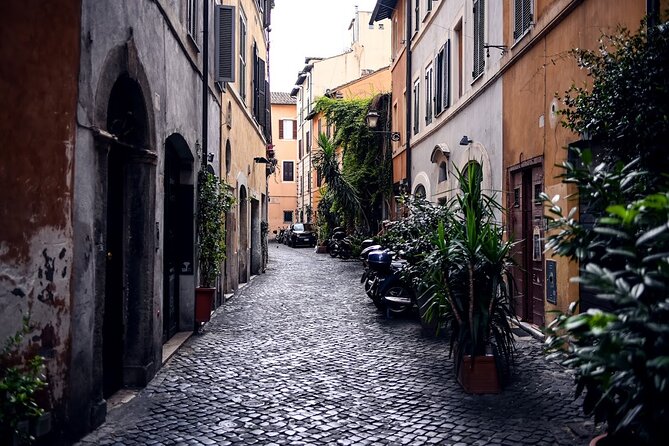
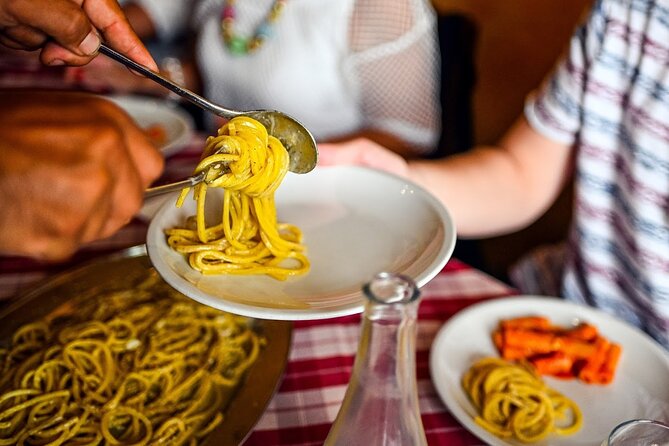
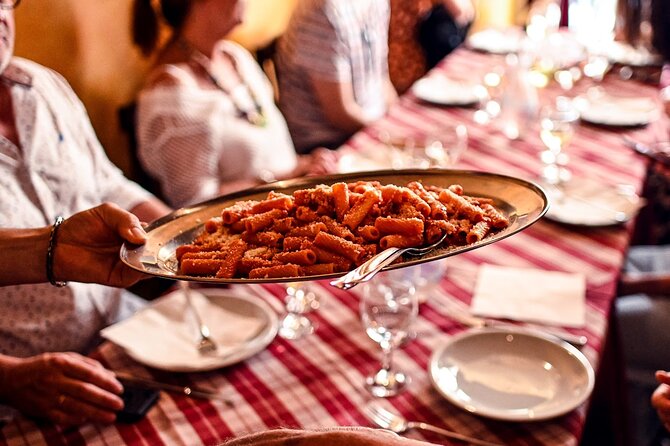
The pasta courses are likely to be the heart of the tour. Two Roman pastas are included, giving you a chance to compare the city’s best-known pasta traditions. The exact dishes can change, but Roman cooking is famous for bold, simple combinations built around ingredients such as cheese, pepper, cured pork, and tomato.
Eating pasta during a walking food tour is different from ordering one large bowl in a restaurant. You receive a tasting portion, then continue through the city. That lets you try more than one recipe without committing your entire meal to a single dish.
The tour’s guides are repeatedly praised for explaining the food as well as serving it. Massimiliano is especially noted for connecting each restaurant and dish with Roman history. Eduardo is praised for tying local stories to the food, while Federico is described as friendly and especially attentive to individual needs.
If you have dietary concerns, contact the provider before booking rather than assuming every dish can be changed. One vegetarian participant received vegetarian pasta and other alternatives, but the general menu is not presented as fully vegetarian or allergy-free.
Campo de’ Fiori and the shifting character of Rome
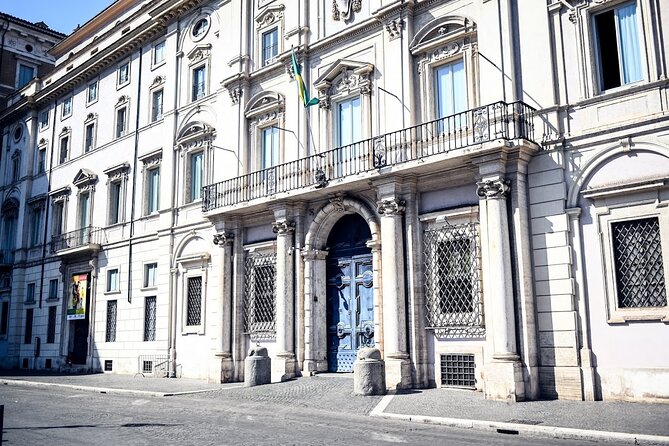
The route includes Campo de’ Fiori, a rectangular square south of Piazza Navona. Its name translates as field of flowers, a reminder that Rome’s public spaces often preserve traces of earlier uses even as the city changes around them.
Campo de’ Fiori is a useful contrast to the formal beauty of Piazza Navona. It feels more commercial and practical, and it has long been linked with food shopping and daily city life. Depending on the time and day, the square can feel quite different, so the tour’s exact atmosphere will vary.
The food stops here or nearby help keep the tour grounded. You are tasting pizza, fried snacks, meats, cheeses, and pasta while walking through places where Romans have gathered for centuries. I find that more useful than hearing a long lecture about cuisine in a hotel room. You learn with your hands, appetite, and surroundings all working together.
Dessert arrives with cannoli and artisanal gelato
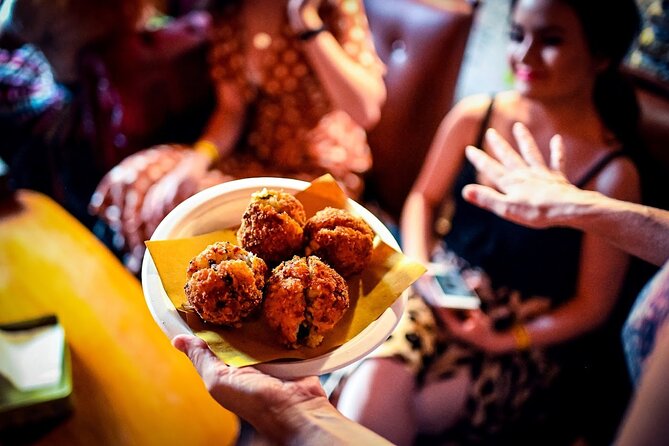
Cannoli and artisanal gelato provide the sweet finish. Even if cannoli is not normally your favorite dessert, it is worth trying it here. One person who usually avoids cannoli found this version to be the best dish of the entire Rome visit.
Gelato is served near the end, which is a smart choice after the savory courses. The best part is not simply the sugar. Your guide can explain how to recognize good gelato and how it differs from mass-produced ice cream, though the exact information depends on the person leading your group.
The final stop ends the meal on an easy note, but it also confirms the tour’s main weakness: there is a lot of food. Reports from the experience repeatedly describe people leaving very full. Treat the tour as lunch or an early dinner, not as a warm-up before another substantial meal.
Largo di Torre Argentina and the ancient city beneath you
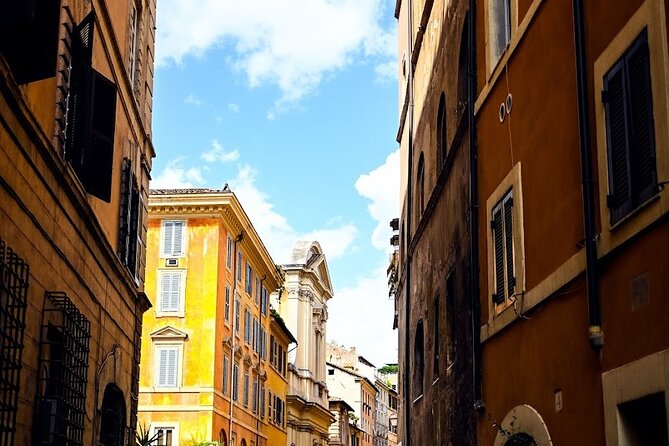
The tour ends at Largo di Torre Argentina. This square contains four Republican-era Roman temples and the remains of Pompey’s Theatre, part of the ancient Campus Martius. It is also near an ancient walkway built in the second century BC to connect two Roman temples.
The ending is fitting because it leaves you among visible fragments of Rome’s earliest urban past. You have spent the afternoon eating food shaped by later Roman life, then finish beside ruins that reach back much further.
The end point is not the same as the meeting point, so plan your next activity from Largo di Torre Argentina rather than from Piazza Navona. The area is near public transportation, and the central location makes it practical for continuing sightseeing on foot.
What the $118.51 price really buys you
At $118.51 per person, this is not a cheap way to grab a slice and a gelato. The value comes from the quantity of food, the number of stops, the small group, and the guide’s interpretation of Rome.
You receive at least eight tasting experiences across roughly three hours. The menu covers multiple categories: two pizzas, supplì, cold cuts, cheeses, two pasta dishes, cannoli, gelato, and a secret dish. Add the time spent moving through major squares and the former Jewish Ghetto, and the price becomes easier to justify for someone who wants both a meal and a guided introduction to the city.
It is less valuable if you mainly want a restaurant recommendation or a single memorable pasta dish. You could eat more cheaply on your own. You would not receive the same route, explanation, or organized variety.
Group discounts may be available, and the maximum group size is 12. Since the experience is booked an average of 73 days in advance, it is sensible to reserve ahead if your Rome dates are fixed.
The guides make the difference
The strongest praise is aimed at the guides. Massimiliano is described as funny, attentive, and particularly good at explaining both food and Roman history. He also kept a nine-year-old engaged and arranged different drinks while adults had coffee and wine.
Rocio is praised for humor and entertaining historical details. Luda is described as friendly and informative. Robbie helped with suggestions for places to eat later in the trip, which is useful if this tour happens early in your stay.
Eduardo receives high marks for explaining the connection between food and local history. Federico is noted for making a vegetarian participant feel included. Manuel is praised for sharing cultural details that are not easy to pick up from a quick internet search.
Guide assignments can change, so you should not book solely for one named person. The pattern is encouraging, though: the experience depends heavily on the guide, and the staff appear to understand that good food needs good explanation.
Who will enjoy this tour most?
This tour suits first-time visitors who want a quick orientation to central Rome through food. It is also a good fit for couples, families, and solo visitors who enjoy meeting a small group while eating.
Families can participate. One guide kept children aged four and six engaged, and another made special drink arrangements for a nine-year-old. The walking is described as manageable, but it can still feel long for small children, especially in summer.
You should also consider it if you prefer a full meal to a few token samples. The portions are substantial, and wine or other drinks may be included at some stops, though the published menu specifically lists food rather than a fixed drink package. The minimum drinking age is 18.
The tour is less suitable for people who dislike walking, need a tightly fixed menu, or have serious food allergies that require guaranteed substitutions. Pets are not accommodated.
Practical details before you book
The tour is offered in English and uses a mobile ticket. Confirmation is sent within 48 hours, subject to availability. Hotel pickup and drop-off are not included, so you need to reach Piazza Navona on your own.
Wear comfortable shoes and leave room in your schedule afterward. Three hours may sound short, but the route includes several stops, historical commentary, and enough food to count as a main meal.
The itinerary and menu may change because of weather, location availability, or other circumstances. Free cancellation is available if you cancel at least 24 hours before the start time. Cancellations or changes made later are not refunded or accepted.
FAQ
How long does the Rome food tour last?
The tour lasts approximately three hours.
Where does the tour begin?
It begins at Sant’Agnese in Agone, Piazza Navona 14, in Rome.
Where does the tour end?
The tour ends at Largo di Torre Argentina.
How many people can join the tour?
The group has a maximum of 12 participants.
Is the tour offered in English?
Yes. The experience is offered in English.
What food is included?
The menu includes two types of homemade pizza, supplì, Italian cold cuts and cheeses, two Roman pastas, cannoli, artisanal gelato, and a secret dish.
Are drinks included?
Some experiences described wine, coffee, or other drinks, but the published inclusions specifically list food rather than a fixed drink package.
Is hotel pickup included?
No. Hotel pickup and drop-off are not included.
Can children participate?
Most people can participate, and children have joined previous tours. The experience includes walking and substantial food.
Can I cancel for a full refund?
Yes, if you cancel at least 24 hours before the experience starts. Cancellations made less than 24 hours in advance are not refunded.
Should you book the Rome food tour?
Book it if you want a full introduction to Roman food and central Rome in one outing. The combination of pizza, pasta, supplì, sweets, ancient sites, and a small group gives you a useful first look at the city.
I would especially choose it early in a Rome visit, when your guide’s restaurant tips can help shape the rest of your meals. Skip it if you want a quiet sit-down lunch, a guaranteed fixed menu, or a short walk with only a few samples. For hungry first-time visitors who like stories with their food, the $118.51 price is reasonable, and the generous portions make the experience feel more like a guided meal than a simple tasting walk.
More Food Tours in Rome
- Amsterdam Food and Cultural Tour with Tastings
★ 5.0 · 4,315 reviews - Barcelona: Tapas Walking Tour with Food, Wine, and History
★ 4.8 · 4,261 reviews - Sevilla Food Tour: Tapas, Wine, History & Traditions
★ 5.0 · 3,468 reviews - Madrid Tapas & Taverns Small Group Food & History Tour
★ 5.0 · 2,664 reviews
More Old Town and Historic Centre Walks in Rome
- Madrid Essential: Historic Center, Plaza Mayor & Royal Palace
★ 5.0 · 6,416 reviews - Lisbon: Live Fado Show with Port Wine in Historic Center
★ 4.7 · 4,166 reviews - Valencia Old Town Tour with Wine & Tapas in 11th Century Historic Monument
★ 5.0 · 3,234 reviews - Prague Old Town, Medieval Underground and Dungeon Historical Tour
★ 4.5 · 3,227 reviews
Just added around Rome
- Rome: Colosseum and Ancient Rome Guided Walking Tour★ 4.5 · 95 reviews
- Secrets of Rome: Historical True Crime Small Group Tour★ 4.9 · 85 reviews
- Rome: Private Colosseum Experience and Ancient Ruins Tour★ 4.6 · 25 reviews
- Rome Secrets: Dark History & Tasty Bites Tour★ 5.0 · 37 reviews
- Rome: Guided Tour of Colosseum and Ancient Rome★ 4.9 · 74 reviews
- Rome: Rome at Night Evening Historical Walking Tour★ 4.9 · 24 reviews
- Rome: Colosseum with Access to Arena Floor and Ancient Rome★ 4.2 · 320 reviews
- Rome: Food Tour of the Historic Center with Rooftop Spritz★ 4.7 · 43 reviews
Old Town & Historic Centre Walks, compared.
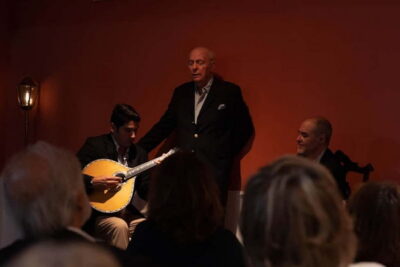
Live Fado Show with Port Wine in Historic Center
Read our review →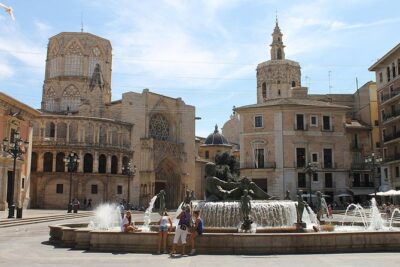
Valencia Old Town Tour with Wine & Tapas in 11th Century Historic Monument
Read our review →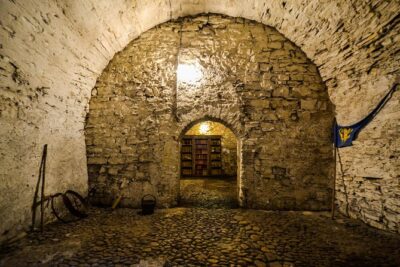
Prague Old Town, Medieval Underground and Dungeon Historical Tour
Read our review →
Historic Center and Getsemaní Shared Walking Tour
Read our review →
Old Town Walking Tour History and Tales in Edinburgh
Read our review →
Philadelphia Old City Historic Walking Tour with 10+ Top Sites
Read our review →