
Review · WESTERN GREECE
Corfu: History and Culture Walking Tour
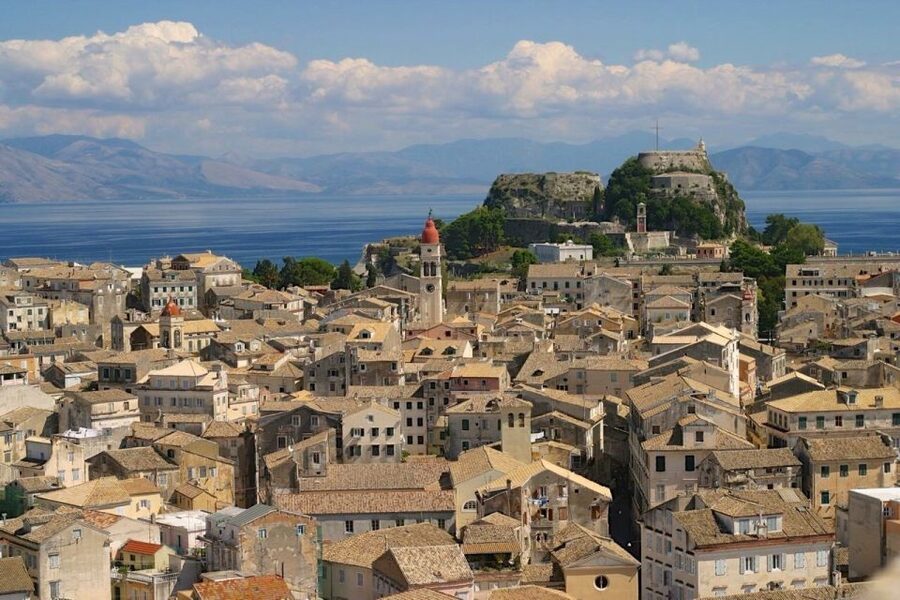
Corfu reveals its past around every corner. This three-hour walk links the Old Venetian Fortress with Corfu Town’s lanes, squares, fountains, churches, and grand public buildings, giving you a useful way to understand how Venetian, French, British, and Greek influences shaped the island. I like the small group size, limited to eight people, and I like that the tour includes the fortress entrance fee rather than leaving you to sort it out separately.
The guides are the real strength. Alice, Nausica, Valia, Arita, and others have been praised for their warmth, local insight, clear storytelling, and willingness to answer questions. The main consideration is the walking itself: uneven lanes, steps, and the fortress setting make this a poor fit for anyone with mobility impairments. Comfortable shoes are essential, and the three-hour schedule leaves little room for a slow pace.
Key points to know before booking
- The Old Fortress sets the historical stage: Begin inside a major Venetian stronghold with a guided visit and scenic views along the way.
- The group is limited to eight people: This gives you a better chance to ask questions and hear the guide clearly.
- St. Spyridon Church adds a strong local and religious focus: Its 16th-century architecture and tall bell tower are central parts of the walk.
- Corfu’s mixed past is the main theme: Venetian, French, British, and Greek influences are explained through buildings, traditions, and public spaces.
- The tour ends at Town Hall Square: Once Corfu’s most exclusive neighborhood, the square offers a look at the city’s old elite.
- The price is $93 per person: That is a serious spend for three hours, but it includes a licensed English-speaking guide and Old Fortress admission.
Starting by the Old Fortress
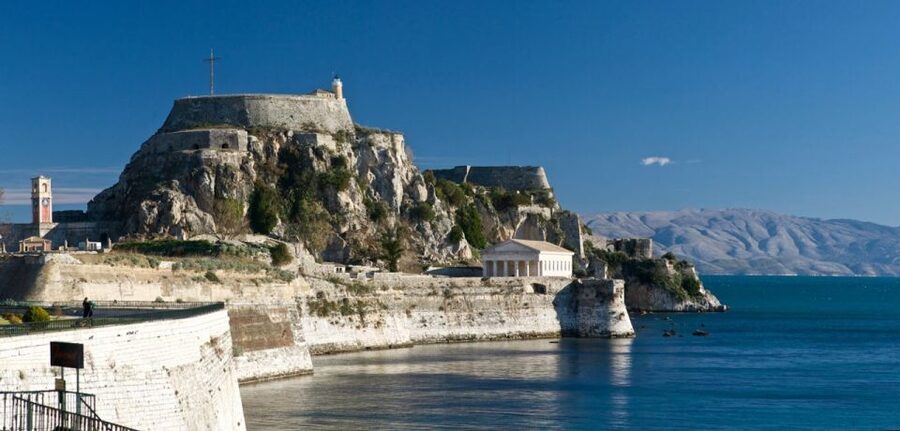
The meeting point is by the statue of Schulenburg in front of the Old Fortress, near Agoniston Politechniou. This is a sensible place to begin because the fortress immediately gives you a physical sense of Corfu’s strategic importance.
You do not start with a general city introduction and then slowly work toward the main sight. You start beside one of the city’s most important monuments. The guide leads you into the Old Fortress for a guided visit, and the entrance fee is included in the tour price.
The fortress dates from the Venetian period, and the visit helps explain how Venetian rule affected Corfu’s culture and traditions. The value here is not just seeing old defensive walls. You are given a way to connect the stonework and position of the fortress with the island’s long contact with outside powers.
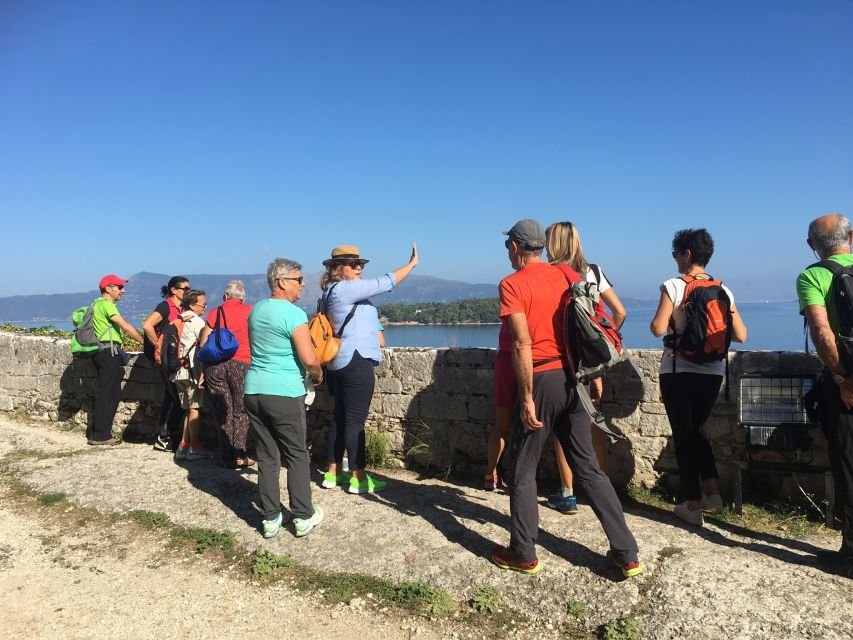
Scenic views are part of the walk through the fortress area. The supplied details do not promise a particular viewpoint or a specific length of time inside, so you should expect the guide to shape the visit around the group’s pace and questions. That flexibility has worked well for past groups, especially when weather was poor or when people wanted more time in one area.
The fortress can also be the most demanding part physically. This is a walking tour, not a seated history talk, and the fortress setting may include uneven surfaces or changes in level. If you have trouble walking, this is the point to think carefully before booking.
More History Walking Tours in Greece
- Acropolis, Parthenon & Athens Old City Heritage Walking Tour
★ 4.5 · 876 reviews - Athens: History of Rebellion Walking Tour
★ 5.0 · 110 reviews - Ancient Athens for Kids 4-Hour Private Walking Tour
★ 5.0 · 66 reviews
Following Corfu Town’s lanes and squares
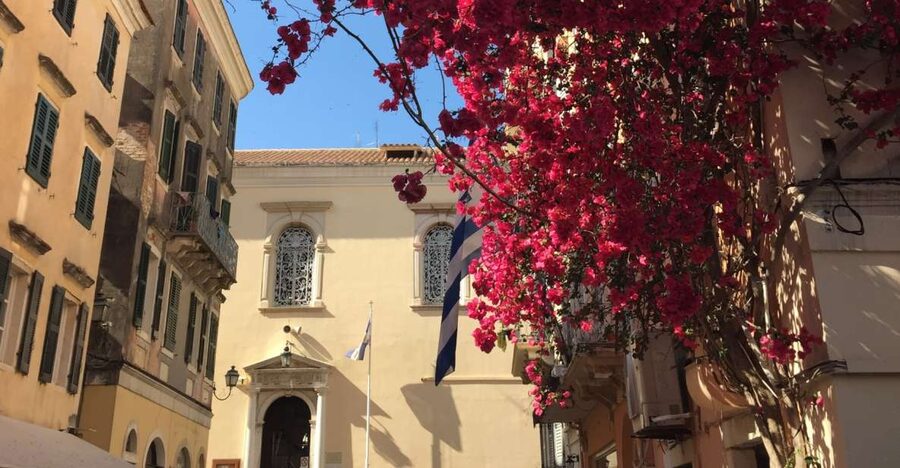
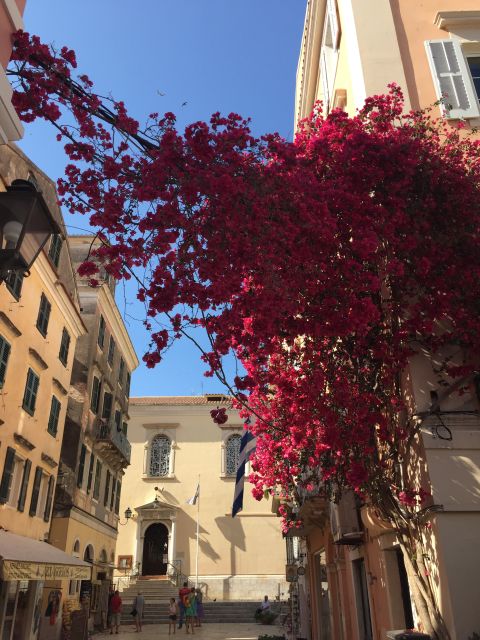
After the fortress, the tour moves into Corfu Town’s historic center. The route passes through narrow alleyways, open squares, fountains, and quieter passages before reaching the more familiar landmarks.
This section is where the tour can help you get your bearings. Corfu Town is easier to appreciate once someone explains how the pieces fit together. The guide points out architectural traces and cultural habits linked to the island’s different rulers, rather than treating the old center as a collection of pretty streets with no story.
I especially like the contrast built into the route. You move from the fortress, a clear symbol of defense and power, into lanes where daily life feels closer and less formal. Then the route opens into squares and public spaces that reveal how the city’s social life developed.
The wording about deserted alleyways should not be taken as a guarantee that every lane will be empty. Corfu Town is a living place, and the atmosphere will change with the time of day. The useful point is that the route is not limited to the obvious main street. You get quieter corners as well as lively public areas.
The guides also appear to adjust their explanations to the group. Dean appreciated that time could be shifted between different parts of the route. Martin found that his guide, Nausica, gave enough historical detail while still answering extra questions. That is a good sign for anyone who wants more than a memorized speech.
St. Spyridon Church and Corfu’s Greek identity
The walk continues to St. Spyridon Church, a 16th-century Greek Orthodox church in the historic center. Its bell tower is described as the highest in the Ionian Islands, giving the building a strong presence in the city.
This stop broadens the story. The fortress shows Venetian power, while St. Spyridon brings you closer to Corfu’s religious and Greek identity. The church is not just an architectural pause between two streets. It helps show how local traditions continued and developed alongside foreign rule.
You should expect the guide to explain the church’s distinctive architecture and importance. The supplied information does not state whether you enter the church interior or only view it as part of the walking route, so do not book this expecting a guaranteed extended interior visit. The focus is on the church, its design, and its place in Corfu’s culture.
One past participant also connected the tour with the church where Prince Philip was christened. Since this detail came up as part of the wider explanation of Corfu’s landmarks, it may be discussed by the guide, but it should not be treated as a separate scheduled stop.
This part of the walk can be especially rewarding if you want to understand Corfu beyond Venetian walls and foreign influence. The island’s identity is not a simple blend of rulers. It includes local faith, customs, memory, and the way Corfu’s people absorbed outside ideas without losing their own traditions.
Town Hall Square and the city’s old elite
The tour finishes at Town Hall Square, once considered Corfu’s most exclusive neighborhood. This final stop shifts the focus from military history and religious life to class, status, and public power.
The square contains important monuments, and the guide explains how Corfu’s elite used to meet there. That gives the ending a social angle. You are not only looking at grand buildings. You are learning who had influence, where they gathered, and how the city’s public life was organized.
Ending here also makes sense as a summary of the cultures discussed earlier. Venetian rule, French influence, British administration, and local Greek traditions all left marks on Corfu’s buildings and institutions. Town Hall Square gives the guide a place to pull those strands together.
The tour returns to the Agoniston Politechniou area. No hotel pickup or drop-off is included, so you need to make your own way to the meeting point and arrange your onward plans after the walk.
More Local Culture and Traditions Tours in Greece
- Naxos Half Day History and Culture Guided Tour
★ 5.0 · 491 reviews - Naxos: Half-Day Guided History and Culture Sightseeing Tour
★ 4.7 · 435 reviews - Small-Group Food and Cultural Tour in Corfu
★ 5.0 · 299 reviews - Corfu Town express tour: 90 minutes of History and Culture
★ 5.0 · 19 reviews
What the guides add to the experience
The guide quality is the most consistently praised feature of this tour. Alice was described as both engaging and effective at explaining culture and history. Nausica was praised for her energy, affection for Corfu, and ability to make people feel closer to the city.
Valia helped one group understand the island’s traditions and several identities. Arita was praised for her command of Corfu Town, the fortress, local people, and heritage. Another guide, Ariti, was described as passionate and open to questions.
These comments point to something important: the experience depends heavily on the individual guide. A strong guide can turn a walk through familiar-looking streets into a clear story about power, religion, architecture, and local life. The available guide names suggest a team with different personalities, but the repeated praise is for enthusiasm, good explanations, humor, and personal connection to Corfu.
You may also receive practical tips along the way. One guide bought a Greek coffee for the group, while another suggested restaurants. A separate outing with the same guiding team included local dairy products, liquor tasting, and food advice, though those extras should not be assumed to be part of this history and culture walk. Treat them as possible signs of local recommendations, not promised inclusions.
Small group size and the pace of the walk
With a maximum of eight participants, this is much more personal than a large city tour. You can usually hear the guide more easily, ask questions without holding up a crowd, and benefit from changes in emphasis based on the group.
The three-hour duration is well judged for a first look at Corfu Town. It is long enough to cover the fortress, historic center, St. Spyridon Church, and Town Hall Square without turning into an all-day commitment. One participant specifically praised the length, calling it just right.
The tradeoff is that three hours is not enough for a slow, detailed visit to every building. You will see important places and receive a connected explanation, but you will not get a museum-style treatment of every monument. If you want to linger at each stop, take many photographs, or explore interiors at length, you may prefer to return on your own afterward.
The tour is conducted in English with a licensed English-speaking guide. It is listed as a walking experience and is not suitable for people with mobility impairments. Wear shoes that can handle old streets and a steady amount of walking.
Is $93 a fair price?
At $93 per person, this is not a cheap orientation walk. The price includes the Old Fortress entrance fee and a licensed guide, but not food, drinks, or transportation from your hotel.
For me, the price makes the most sense in two situations. First, you have only a limited amount of time in Corfu and want a structured introduction without planning the route yourself. Second, you care about context and questions more than simply collecting photographs of the main sights.
The small group helps justify the cost. You are paying for a guide who can explain the city and respond to your interests, not just for access to the fortress. The advice about restaurants, coffee, and later places to visit can also add practical value, though those extras are not guaranteed.
If you are happy to read about Corfu and walk through the old town independently, you can spend less. The tour is best value for someone who wants the city’s different influences explained on the spot and who would rather avoid piecing together the fortress and old center alone.
Who should book this Corfu walk?
I would recommend it to first-time visitors who want a clear introduction to Corfu Town. It also suits repeat visitors who have seen the streets before but want a better explanation of the city’s culture, traditions, and outside influences.
History-minded visitors should enjoy the movement between Venetian defenses, Greek Orthodox heritage, old neighborhoods, and elite public spaces. The tour also works well for curious walkers who prefer local stories and questions over a rigid lecture.
It may not suit you if you dislike walking, have mobility limits, or want a food tour. Food is not included, and although guides may offer restaurant suggestions or occasional local tips, the advertised focus is history and culture.
You should also keep your schedule realistic. Hotel pickup is not included, and the tour begins and ends around the Old Fortress area. Build in time to reach the statue of Schulenburg before the start.
Final verdict: book it if you want context, not just sights
Book this tour if you want Corfu Town to make more sense. The route covers the Old Fortress, historic lanes, St. Spyridon Church, and Town Hall Square, but the real benefit is the link between those places.
I like the three-hour length, the group limit of eight, and the strong record of warm, capable guides. The $93 price is reasonable for a small-group guided visit with fortress admission, especially if you have limited time.
Skip it if you need an accessible route, want a food-focused outing, or prefer to explore entirely on your own. For most visitors who want a lively, useful introduction to Corfu’s past and present, this is a solid choice.
FAQ
How long is the Corfu History and Culture Walking Tour?
The tour lasts three hours.
Where does the tour begin?
Your guide waits by the statue of Schulenburg in front of the Old Fortress, near Agoniston Politechniou.
Where does the tour finish?
The tour returns to the Agoniston Politechniou area.
Is the Old Fortress entrance included?
Yes. The Old Fortress entrance fee is included in the price.
Is hotel pickup included?
No. Hotel pickup and drop-off are not included.
What language is the tour conducted in?
The tour is conducted in English by a licensed English-speaking guide.
How large is the group?
The group is limited to eight participants.
Is food included?
No. Food is not included in the tour price.
What should I bring?
Bring comfortable shoes suitable for a walking tour.
Is the tour suitable for people with mobility impairments?
No. The experience is not suitable for people with mobility impairments.
Just added around Greece
- Chania: Hiking through History and Hidden Gems at Katholiko Bay★ 4.0 · 19 reviews
- Small-Group Women History in Ancient Greece Walking Tour★ 5.0 · 38 reviews
- The original Christian tour on Paul’s footsteps in Athens and ancient Corinth★ 4.5 · 25 reviews
- Athens: Combo Ticket for Acropolis & 6 ancient sites★ 3.0 · 21 reviews
- Ancient Sparta & Mystras Private Day Tour from Athens★ 5.0 · 52 reviews
- Ancient Olympia & Isthmus Canal Private Tour from Athens★ 5.0 · 20 reviews
- Ancient Agora & Temple of Hephaestus Entrance Ticket★ 3.5 · 22 reviews
- Half Day Historical Athens City Private Taxi Service Tour★ 5.0 · 79 reviews
Local Culture & Traditions Tours, compared.

Amsterdam Food and Cultural Tour with Tastings
Read our review →
Sevilla Food Tour: Tapas, Wine, History & Traditions
Read our review →
Tromsø: Reindeer Camp and Sami Cultural Tour with Lunch
Read our review →
Half Day Dominican Republic Cultural Tour : Small Group
Read our review →
Ultimate Melbourne Walking Tour: History, Laneways & Culture
Read our review →
Tromsø: Sámi Reindeer Sledding and Sami Cultural Tour
Read our review →
Kyoto Gion: 2-Hour Geisha Culture & History Walking Tour
Read our review →
Marrakech Historical and Cultural Tour – Half Day City Tour
Read our review →Browse the lists this tour appears in