
Review · PLITVICE LAKES NATIONAL PARK
Zeljava Airbase: History and Adventure Tour/Plitvice
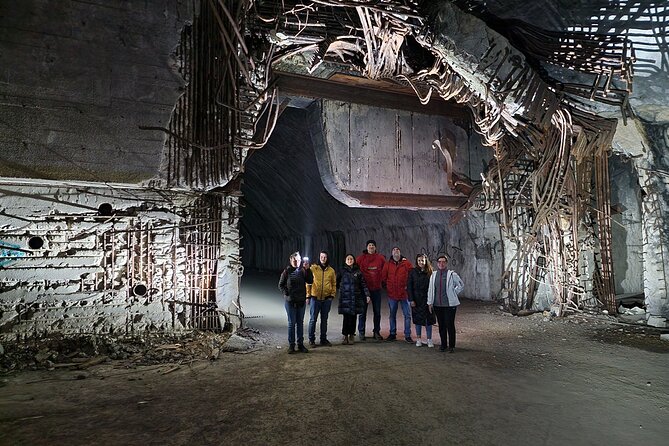
This is no ordinary Plitvice side trip. Željava Airbase combines aviation relics, abandoned runways, and a 3-kilometer walk through a ruined underground military complex. I like the chance to climb inside the old Douglas C-47 Skytrain, and I especially like the personal stories that make the bunker feel connected to real people rather than just concrete and darkness. The main drawback is clear: narrow, unlit tunnels are not for anyone who dislikes confined spaces.
The tour costs $60.34 per person, lasts about two hours, and accepts a maximum of 10 people. A flashlight is included, but you should dress warmly and wear long trousers. Guide Antonio receives repeated praise for his fluent English, strong local knowledge, and ability to lead visitors into parts of the base they would be unlikely to find alone.
Key points to know before you book
- Climb aboard a Douglas C-47: The tour begins with a rare chance to step inside an abandoned Dakota aircraft.
- Walk 3 kilometers underground: Expect dark, cold, narrow passages rather than a polished museum.
- Hear personal stories: The strongest part of the tour is the human side of the base, including stories about workers, neighbors, relationships, and wartime destruction.
- Small groups matter: With no more than 10 people, you should be able to hear the guide and move through the tunnels as one group.
- Bring warm clothing: The underground complex is cool, and one participant specifically recommended a warm layer and long trousers.
- Best for curious explorers: This suits people interested in military history, aviation, abandoned places, and recent Yugoslav history.
Why Željava Airbase is worth your time
Željava Airbase is an unusual stop near Plitvice Lakes National Park. Plitvice is famous for its waterfalls and wooden paths, while Željava offers something far less tidy: a damaged military complex, empty runways, a forgotten aircraft, and a large network of tunnels cut into a hill.
The contrast makes the outing memorable. You can spend one part of your Croatian trip among clear lakes and forest paths, then spend the next few hours walking through a place shaped by military planning, secrecy, conflict, and abandonment.
The base was once a major military installation in the former Yugoslavia. It was later destroyed during the Yugoslav wars, leaving behind ruins, damaged infrastructure, and stories connected to the people who worked there. The tour does not simply point at broken walls. It explains how the facility operated, how it was built, and what happened during its final period.
That context matters. Without a guide, you may see a dark entrance and a series of empty rooms. With a guide, those spaces gain purpose. A passage may have been part of a much larger system. A section of concrete may tell you something about the scale of the installation. A personal account can make the abandoned site feel less like a film set and more like a place where people once had jobs, friendships, arguments, and daily routines.
A few more history tours around Croatia worth a look
- Dubrovnik Old Town History Walking Tour
★ 5.0 · 1,684 reviews - Dubrovnik: Ancient City Walls & Wars Walking Tour
★ 5.0 · 1,270 reviews - Zagreb: City & History Walking Tour & WW2 Tunnels
★ 4.9 · 1,202 reviews
Starting beside the old Douglas C-47
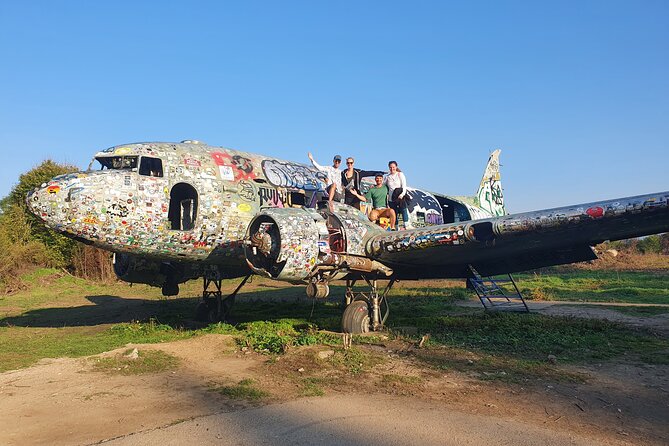
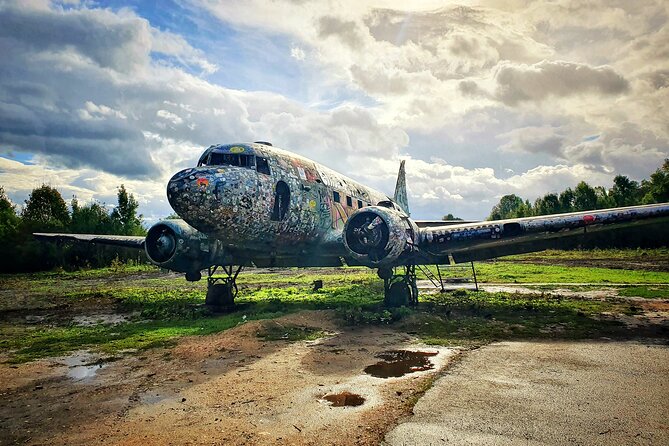
The first stop is an abandoned Douglas C-47 Skytrain, also known as a Dakota. The aircraft acts as both meeting point and opening exhibit. Rather than viewing it from behind a rope, you get the chance to climb on board and look inside.
That is a strong start because it gives you something physical to explore before entering the tunnels. Aviation fans will find the aircraft especially appealing, but you do not need to be an aircraft expert to enjoy it. It is an immediate reminder that Željava was built for aircraft and military operations, not simply as an underground bunker.
The airplane also helps set the mood. It is an obvious piece of history, weathered and abandoned, while the main attraction is still hidden inside the hill. The tour moves from a relic you can see and touch to a much larger complex that is harder to understand without explanation.
The information provided does not specify the exact condition of every part of the aircraft, so you should expect an old abandoned plane rather than a restored museum display. The appeal is its setting and access, not polished presentation.
Driving across the silent runways
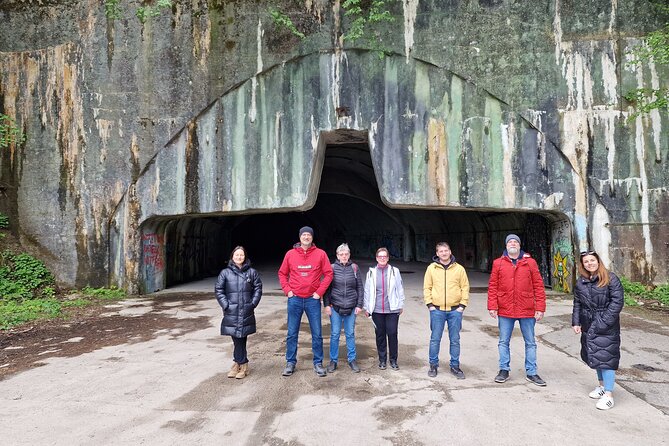
After the aircraft, the group continues toward the runways. The tour includes a cautious drive across the long strips of pavement, with views toward a plane-shaped opening in the hill.
This part helps you understand the scale of the site. The runways are not just a backdrop for photographs. They connect the visible aviation remains to the underground facility ahead. You can picture aircraft moving across the open ground toward the hidden entrances, even though the base is now quiet.
The runway section is also a useful pause before the tunnel walk. You are outside, under open sky, with room to look around. Then the tour changes character as the group reaches the entrances and prepares to go underground.
Private transportation is not included, so you need to arrange your own way to the meeting point. The tour information does not provide a separate transport service from Plitvice or another town. Keep that in mind when planning your day, especially if you are relying on public transport or have a tight schedule.
Entering the 3-kilometer tunnel system
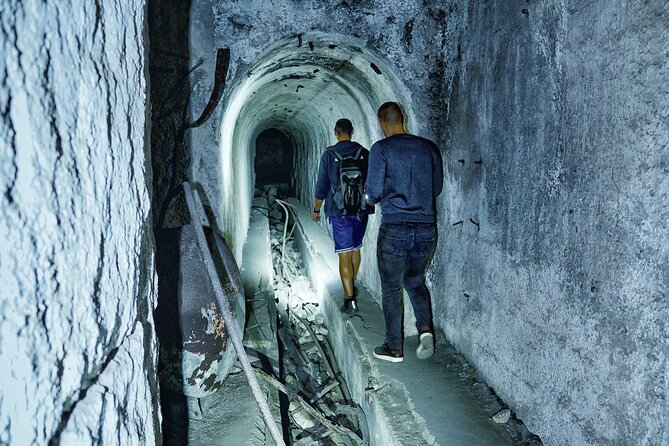
At the tunnel entrance, the guide checks the flashlights and explains basic information and safety rules. This briefing is important. The interior is dark, and the site is not presented as a finished visitor attraction with bright signs and smooth walkways.
The underground walk covers about 3 kilometers. You will hear about the construction of the base, its operating years, and its destruction. The guide also discusses the people connected to the facility, including employees and residents from nearby communities.
This is where a guided visit earns its price. You could attempt to look around independently, but a large abandoned complex is difficult to understand without orientation. It is also easy to miss side areas, lose your sense of direction, or spend the whole visit looking at the same kind of damaged corridor.
Antonio is repeatedly praised for knowing the underground routes and showing more than the entrance area. His role goes beyond pointing out concrete walls. He adds technical information, photographs and short films when available, and personal accounts that connect the base to everyday life.
The human stories are likely to be the most lasting part of the tour. Military ruins can become repetitive after a while. One room can resemble the next, and broken surfaces do not explain themselves. Stories about workers, neighbors, relationships, and conflict give the tunnels a human scale.
The setting remains rough. Some people may find the repeated concrete passages less exciting toward the end of the walk. That is a fair warning, particularly if your interest is mainly in scenery or architecture. The value comes from the combination of the site and the guide’s explanation.
Same place, a different slice of the past:
- Walking Tour of Split with a ‘Magister’ of History
★ 5.0 · 1,122 reviews - Dubrovnik Combo: Old Town & Ancient City Walls
★ 5.0 · 1,019 reviews - Split Walking Tour with Professor of History
★ 5.0 · 926 reviews - Split: History and Heritage Walking Tour
★ 4.9 · 650 reviews
What the guide adds to the experience
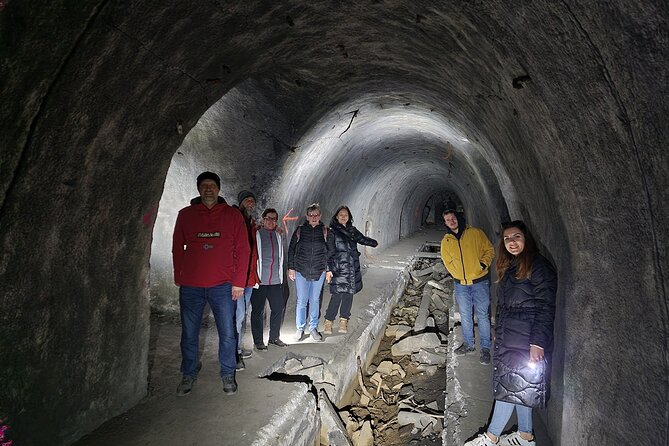
A self-guided visit might show you the physical remains, but it cannot easily provide the full story of how the base functioned. You may also stay close to the entrance because the interior is dark and confusing.
A guide can make three practical differences:
- Orientation: You can follow a planned route instead of guessing where to go.
- Context: Construction, operations, and destruction become easier to understand.
- Access: You may see parts of the complex that you would not find alone.
Antonio receives particularly strong praise for his English, friendly manner, and personal approach. He is described as bringing the bunker to life without turning the visit into a dry lecture. That balance matters in a place where raw information could quickly become a list of dates and military details.
The tour also seems to work well for mixed groups. One family included children aged 8 and 11, while another group booked the experience for a father with a strong interest in bunkers. That does not mean every child will enjoy it. The dark, narrow setting is the deciding factor. If your children are comfortable underground and can manage a 3-kilometer walk, the experience may prompt good conversations. If they dislike darkness or confined spaces, choose another activity.
The practical reality of a dark abandoned base
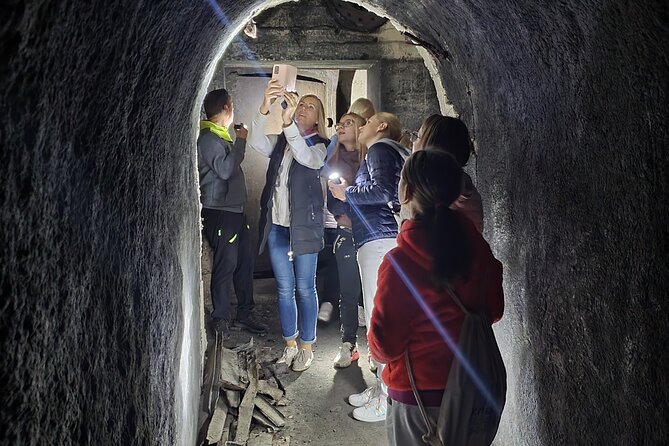
This is an adventure tour, not a standard indoor attraction. You should expect limited light, rough surroundings, and a cool underground temperature.
A flashlight is included, which is essential. The operator also provides safety instructions before the group enters. Still, warm clothing and long trousers are sensible choices. The advice to dress warmly comes directly from the conditions inside, where the temperature can feel much lower than outside.
The tour is not recommended for people with a fear of dark or narrow spaces. Take that warning seriously. You may be underground for a substantial part of the two-hour experience, and the walk covers about 3 kilometers.
Most people can participate, and service animals are allowed according to the tour information. The maximum group size is 10, which should make it easier to stay together and hear the guide. A small group also suits the setting better than a large crowd. In a tunnel system, a packed group could make the experience slow and uncomfortable.
The tour is offered in English. If English is comfortable for you, the guide’s explanations and personal stories should be easy to follow. Confirmation is normally provided at booking, though bookings made within two hours of departure are confirmed as soon as possible, subject to availability.
Is $60.34 a fair price?
At $60.34 per person, this is not a bargain attraction in the usual sense. There is no large museum, restored aircraft collection, or elaborate visitor center included. The admission ticket itself is listed as free, and the price mainly pays for the guided experience.
That distinction is important. You are paying for access, direction, interpretation, and safety at a difficult site. The guide helps you understand the base, keeps the group moving through the tunnels, and may show areas and details you would miss on your own.
I think the price is fair if you are genuinely interested in Željava. The value is strongest for people who would otherwise try to explore alone but want the history and route explained properly. It is less convincing if you simply want a quick photo stop or a short look at an abandoned building.
The small group limit improves the value. A group of up to 10 people allows the guide to speak directly to the group rather than delivering a distant speech. Since the tour lasts around two hours and includes a 3-kilometer underground walk, it is also a substantial experience rather than a brief introduction.
How the two hours unfold

The exact timing can vary, but the experience follows a clear pattern:
- Meet at the abandoned aircraft: You begin beside the Douglas C-47 and can climb inside.
- Continue to the runways: The group drives carefully across the old airfield and looks toward the plane-shaped tunnel entrance.
- Receive the safety briefing: The guide checks flashlights and explains how to move through the interior.
- Walk through the tunnels: The roughly 3-kilometer route covers construction, operations, destruction, and personal stories.
- Return to the aircraft: The tour ends back where it began.
That structure works well. The aircraft provides a friendly opening, the runways give you a sense of scale, and the tunnel walk supplies the main historical and adventurous element. Ending at the plane gives the outing a tidy finish.
The main weakness is that the interior may feel repetitive. You should not expect every section to reveal a new dramatic feature. The guide’s storytelling is what keeps the route meaningful, so the experience depends heavily on the quality of the person leading your group.
Who should book this tour?
I would recommend it to you if you enjoy:
- Abandoned military sites
- Aviation history
- Underground exploration
- Recent history of the former Yugoslavia
- Personal stories tied to historic places
- Small-group activities with a strong guide
It is also a good choice if you are visiting Plitvice and want something completely different from the national park. The two experiences have little in common, which is exactly the point.
I would be cautious if you prefer comfortable attractions, bright interiors, short walks, or highly restored historic sites. The base is damaged and dark. Some parts may feel stark, repetitive, or unsettling.
Book ahead if your dates are fixed. The experience is booked around 14 days in advance on average, and the maximum group size is only 10 people. Free cancellation is available up to 24 hours before the start time. Cancellations made within 24 hours are not refunded, and changes during that period are not accepted. If the minimum number of participants is not reached and the tour is canceled, you are offered another date or experience, or a full refund.
My verdict: book it for the stories, not the polish
I would book the Željava Airbase tour if I wanted an unusual and serious side trip from Plitvice. The abandoned Dakota, silent runways, and underground passages provide the setting, but the guide’s stories supply the real reason to go.
The strongest choice is to join with a guide rather than explore the base alone. Antonio is repeatedly praised for his English, route-finding, friendliness, and ability to connect technical facts with local memories. Wear warm clothes, accept that the tunnels may become repetitive, and enter with realistic expectations.
If you want a polished museum, skip it. If you want to walk through a damaged military complex and understand the people and events connected to it, this is worth the $60.34.
FAQ
Where is the Željava Airbase tour located?
The tour takes place at Željava Airbase near Plitvice Lakes National Park in Croatia.
How long does the tour last?
The experience lasts approximately two hours and includes a walk of about 3 kilometers through the tunnels.
What is included in the price?
A flashlight is included. Private transportation is not included.
Is the tour offered in English?
Yes. The tour is offered in English.
How many people can join the tour?
The maximum group size is 10 people.
Is the tour suitable for people who fear dark or narrow spaces?
No. The experience is not recommended for people with a fear of dark or narrow spaces because much of the tour takes place inside underground tunnels.
Just added around Croatia
- (Official) Korcula Buggy: Our History, Food & Wine (Ana & Branko)★ 5.0 · 27 reviews
- Bits of History – Half day kayak Tour with Wine delight★ 5.0 · 178 reviews
- Private History Old Town and City Wall Tour in Dubrovnik★ 5.0 · 41 reviews
- Private Walking Tour of Dubrovnik Hidden Gems and History★ 5.0 · 19 reviews
- Game of Thrones and History Combo Private Tour★ 5.0 · 53 reviews
- Historic Walk with Game of thrones details in Dubrovnik★ 5.0 · 20 reviews
- Dubrovnik History, Sweets & Liquors in a Private Palace (PRIVATE)★ 5.0 · 63 reviews
- Outdoor Escape Game Dubrovnik – The Spy And The Traitor (History theme)★ 5.0 · 32 reviews
Croatia History Tours, compared.


Walking Tour of Split with a ‘Magister’ of History
Read our review →
Dubrovnik Combo: Old Town & Ancient City Walls
Read our review →


Browse the lists this tour appears in