
Review · SOUTH CAROLINA
Take a History Tour with an actual Historian – Cooper!
History works best when it feels close. This Charleston walk does that by pairing historian Cooper with the city’s harbor, old streets, and overlooked details. I like the opening conversation, which lets your interests shape the tour, and the way the route connects architecture to trade, defense, slavery, and daily life. The main drawback is practical: two and a half hours on foot can be tiring, especially in heat or rain.
You’ll see the original seawall, Waterfront Park, White Point Gardens, colonial homes, old churches, hidden courtyards, and the site of Charleston’s first walled city. I also like that the tour does not treat the past as a string of dates. It aims to explain how Charleston became Charleston. If you prefer a quick overview with little discussion, this may feel slower than you want.
Key points at a glance

- A historian leads the walk: Cooper teaches history and uses conversation to shape the tour around your interests.
- The original seawall anchors the route: Built in 1680, it gives you a physical starting point for understanding Charleston’s harbor and defenses.
- The Pineapple Fountain gets proper context: You learn the real story behind one of the city’s best-known symbols.
- Slavery is addressed directly: The tour distinguishes rural and urban slavery and discusses Charleston’s laws and free people of color.
- Architecture becomes evidence: Colonial homes, churches, cobbled streets, and courtyards help explain how the city changed.
- It is a full 150-minute walk: Plan for steady time outdoors, with no waiting for late arrivals and no shelter guarantee in bad weather.
Why the opening conversation matters
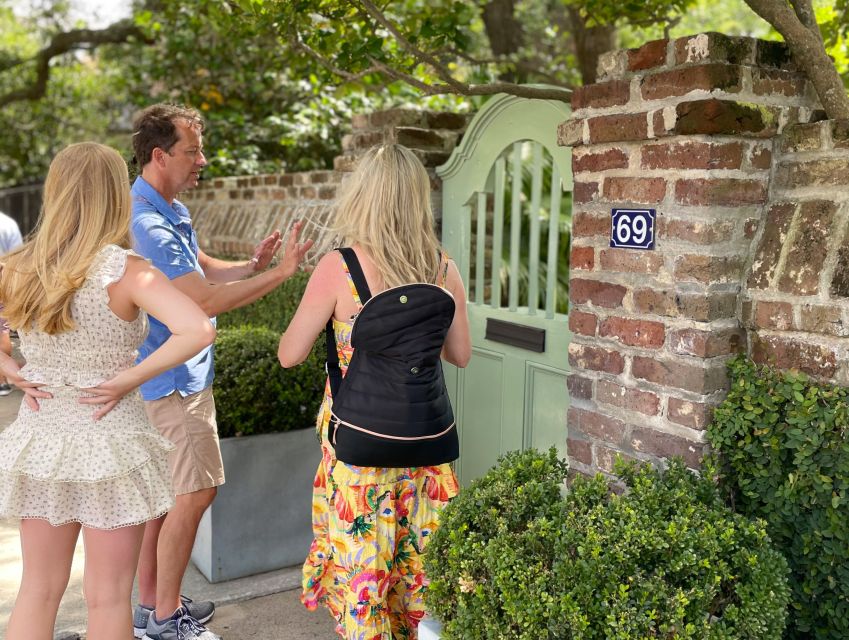
Many city walks begin with a guide talking and a group following. This one begins with more conversation than walking. Cooper asks what interests you about history, then uses that exchange to give the route a clearer purpose.
That is a useful approach in Charleston, where the same building or street can tell several stories. You may care most about colonial politics, architecture, commerce, slavery, military defenses, or the city’s social life. The opening discussion helps decide which threads deserve more attention.
I would not mistake this for a private tour just because the guide asks questions. The experience is still a group walk. But the format gives you a better chance to ask questions and hear explanations connected to your interests.
Cooper’s teaching background is central to the experience. The feedback attached to the tour repeatedly praises his humor, storytelling, conversation, and ability to make difficult material understandable. One person who had visited Charleston many times said the tour still offered a new way into the city. That is a good sign for repeat visitors who already know the obvious sights.
A few more history tours around Charleston worth a look
- Charleston’s Old South Carriage Historic Horse & Carriage Tour
★ 5.0 · 10,023 reviews - Historic Charleston Guided Sightseeing Walking Tour
★ 5.0 · 6,216 reviews - Charleston Horse-Drawn Carriage Tour: Explore Historic Charleston
★ 5.0 · 3,561 reviews
Charleston Harbor explains the whole city
The tour begins by looking out across Charleston’s harbor. This is not just a pleasant viewpoint before the real tour starts. The harbor is the key to understanding why the city developed where it did.
From here, Cooper explains how Charleston’s coastal position supported trade and helped it grow into a major colonial port. You learn to connect the water with the city’s economy, rather than treating the waterfront as scenery alone.
The story reaches back to the city’s origins under King Charles I, the Carolina settlement, and the later founding of Charles Towne under King Charles II. Those names can blur together in a standard lecture, but the route gives them a physical setting. As you look across the harbor, the political decisions and commercial goals behind the settlement become easier to picture.
This opening also sets the tone for the rest of the walk. The tour is less concerned with reciting dates than with explaining causes. Why did Charleston grow here? Why did its streets and homes take their particular forms? How did trade, defense, and social rules shape daily life? Those are the questions that make the information useful after the tour ends.
The 1680 seawall and Charleston’s working waterfront
One of the most distinctive stops comes on Charleston’s original seawall, built in 1680. It is among the oldest surviving structures of its kind in the South, and walking along it gives you a direct connection to the city’s early effort to control and protect its waterfront.
The seawall is valuable because it is easy to miss. You might walk near it and see only old stone. With explanation, it becomes evidence of engineering, commerce, flooding concerns, and defense. Cooper points out details between major stops, including architectural traces and old fortification features that a faster sightseeing walk could pass without notice.
That attention to small details is one of the tour’s strongest qualities. Charleston offers plenty of famous views, but the useful information often sits beside them. The route aims to show you what lies between Point A and Point B, including features that do not come with a large sign.
Waterfront Park adds a modern public setting to this older story. You will encounter the Pineapple Fountain here and hear the real background behind its design and symbolism. The fountain is often treated as a simple photo stop, but placing it in Charleston’s broader story gives it more meaning.
The harbor section should suit you if you like geography, buildings, and economics working together. It may feel less satisfying if you want an immediate parade of famous names and dramatic anecdotes. The guide’s method is to build context first.
White Point Gardens and the city’s defenses
The walk continues toward White Point Gardens, where the city’s defensive past comes into focus. The area also reflects Charleston’s changing public life, so the stop is about more than cannons or military history.
Cooper connects the gardens to Charleston’s role as a protected port and to the practical needs of a growing settlement. You see how the waterfront, defensive structures, open public space, and nearby streets relate to each other.
This is also where the tour shows its value as a walking experience. A museum can display an object behind glass. Here, you are standing in the place where the city’s plans had to work in real space. The harbor is nearby, the streets rise behind you, and the old defensive line helps explain the shape of the district.
The pace is steady but not described as a rushed march. You should still expect a full 150 minutes outdoors. Comfortable shoes are sensible, and you should be ready for conditions that do not change simply because the forecast does.
The tour runs rain or shine. That policy is useful to know before booking, since Charleston’s weather can affect how much you enjoy a long walk. There is also no waiting for late arrivals, so arriving early matters.
Same place, a different slice of the past:
- Charleston Harbor History Day-Time or Sunset Boat Cruise
★ 4.5 · 2,788 reviews - Hidden Alleyways and Historic Sites Small-Group Walking Tour
★ 5.0 · 2,335 reviews - Charleston: Daytime or Sunset Historic Harbor Cruise
★ 4.5 · 1,352 reviews - Charleston historical walking tour with a Professor of History at The Citadel
★ 5.0 · 1,284 reviews
Meeting Street reveals Charleston’s social order
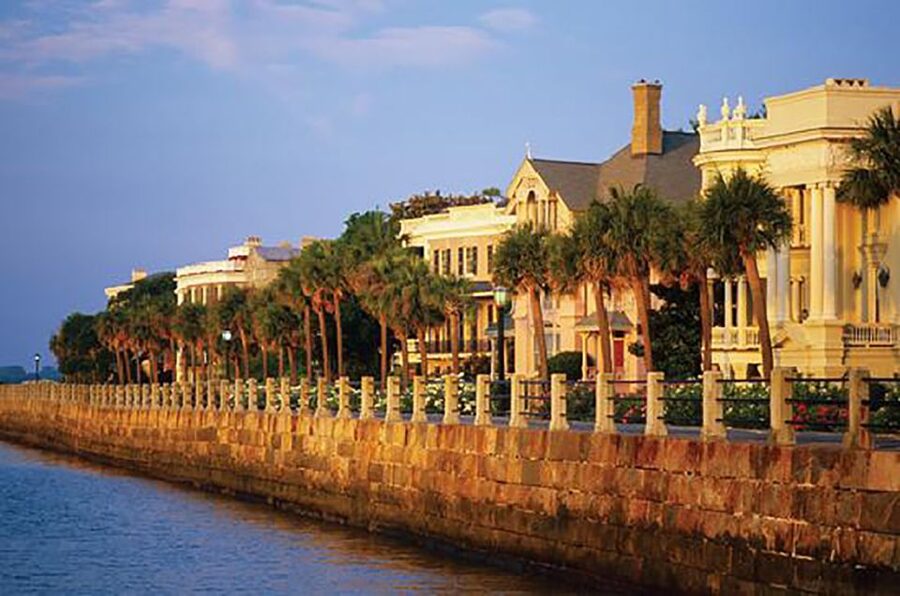
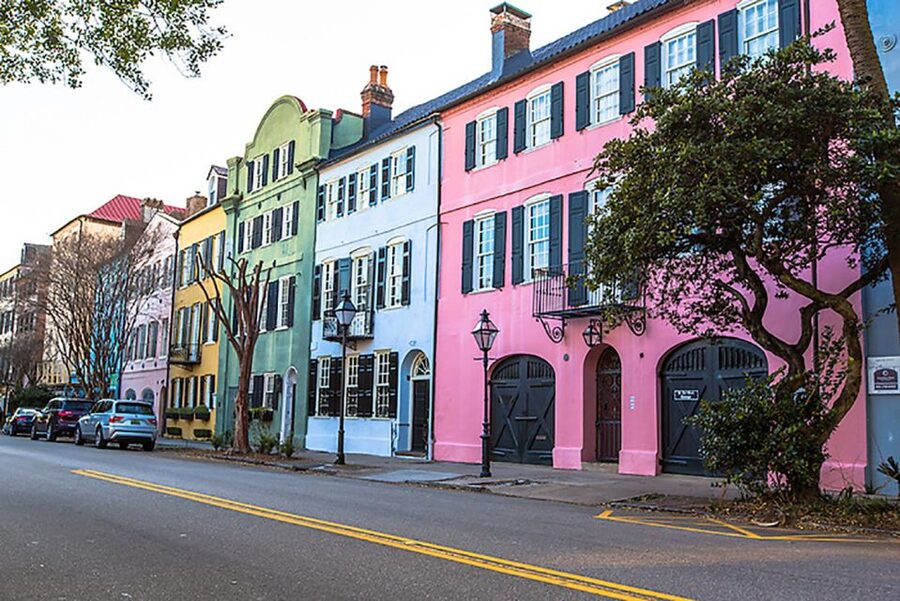
After the waterfront and White Point Gardens, the route moves up Meeting Street. This part of the walk focuses on elegant colonial homes, historic churches, and the forces that shaped their design.
The buildings are not presented as pretty backgrounds. You learn how architecture reflects status, family life, wealth, trade, and local customs. Charleston’s homes become clues to the people who built them and the society they wanted to create.
The walk also moves through streets dating from the early 1700s. Along the way, you may see details that are easy to overlook, including old craftsmanship, courtyards, and changes made over several centuries. Cooper’s role is to connect those physical clues to the larger story instead of treating each address as an isolated fact.
Past participants have singled out the storytelling around historic figures, districts, and buildings. One person remembered standing on steps associated with George Washington and seeing the childhood home of Stephen Colbert. Those details help show the range of the route, although the exact stops and emphasis may vary with the group’s interests and the guide’s conversation.
I especially like the idea of using the streets as a classroom. You are not just told that Charleston changed over time. You can see layers of change in the street plan, buildings, public spaces, and surviving walls.
Slavery is handled with needed clarity
A Charleston history tour cannot be honest without discussing slavery. This experience addresses the subject directly, with attention to context rather than shock value.
The guide distinguishes rural slavery from urban slavery and explains Charleston’s particular laws. The tour also examines the complicated position of free people of color who owned slaves. That is difficult material, but avoiding it would leave out a central part of the city’s past.
The value here is the effort to explain how systems worked, not just to name them. You hear about laws, social relationships, labor, commerce, and the different conditions found in an urban port compared with rural areas. The stated aim is clarity and sensitivity, which should suit you if you want a serious account without theatrical treatment.
This section may not be comfortable, and it should not be. A good history walk lets you ask questions and consider contradictions. The opening conversation gives you a chance to signal the areas you want to understand better, though the tour remains a group experience rather than a custom private lesson.
Colonial streets, churches, and the first walled city
The later part of the route brings together the strands introduced at the harbor. You move through colonial streets, pass historic churches, and learn where Charleston’s original walled city stood.
That location helps explain the compact older district and the city’s early defensive needs. It also shows how Charleston grew beyond its first boundaries. Streets that may look like a pleasant maze begin to make sense as part of an expanding settlement.
Churches and courtyards add a more personal scale. They point toward religious life, family networks, craftsmanship, and the ways residents used limited urban space. Cooper’s explanations give these places a role in the city’s development instead of presenting them as unrelated photo opportunities.
The strongest part of the itinerary is the cumulative effect. The harbor explains the economy. The seawall and White Point Gardens explain defense. Meeting Street and the colonial homes explain status and design. The discussion of slavery explains the human cost behind the city’s growth. By the final streets, Charleston feels less like a collection of attractive buildings and more like a city shaped by choices, conflict, work, and ambition.
Cooper’s teaching style and group experience
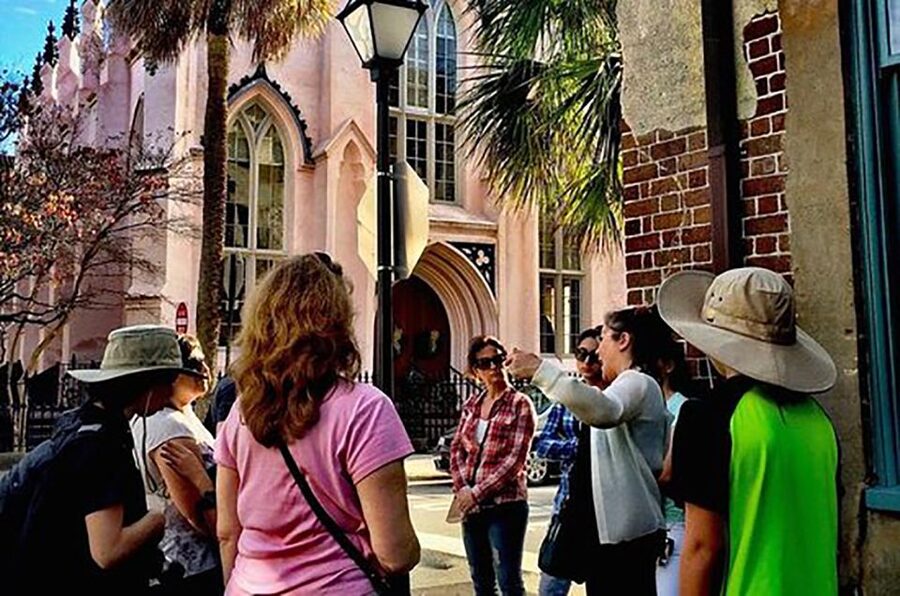
The praise for Cooper is unusually consistent. People describe him as funny, engaging, conversational, and able to make history easy to understand. Several comments emphasize that the time passed quickly, despite the tour lasting two and a half hours.
That matters because a history walk can easily become a lecture with legs. Cooper appears to keep the group involved through questions, personal comments, and stories that put facts into everyday terms. You should expect a guide who talks with the group, not simply at it.
His teaching role also explains the range of subjects. The walk covers the city’s founding, harbor economy, architecture, military history, slavery, social life, and symbols such as the Pineapple Fountain. The connection between topics is more important than the number of stops.
There is some inconsistency in the names recorded in the supplied feedback, including Cooper, Connor, and Connie. The activity itself identifies Cooper as the guide, so that is the name to use when meeting your guide. Look for the Chucktown Tours logo at the meeting point.
Is $45 a fair price for 150 minutes?
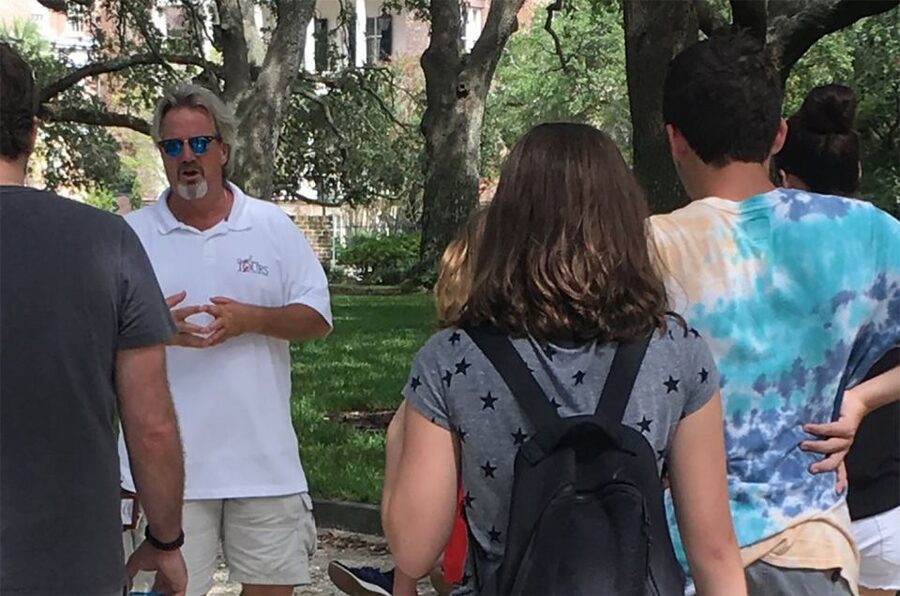
At $45 per person, this sits in a reasonable range for a two-and-a-half-hour guided city walk, especially if you value interpretation rather than a quick checklist of sights.
You are paying for more than access to Waterfront Park or the historic streets, which are free to explore on your own. The value comes from a historian who can explain why the seawall exists, how the port shaped the city, what the architecture reveals, and how slavery affected Charleston’s development.
The price makes the most sense if you are interested in the city’s story and willing to listen, ask questions, and walk at a steady pace. If you only want a short orientation or a few photo stops, you may prefer to explore independently.
I would consider taking this near the beginning of your Charleston visit. The walk can help you read the city afterward, and the guide offers suggestions for other activities and restaurants at the end. That practical follow-up adds value, particularly for a first visit.
Who should book this Charleston history walk?
This tour fits adults, older children, and teenagers who enjoy asking questions and learning through stories. Children under 10 are not suitable for the experience, and the pace and subject matter may be too demanding for younger visitors.
It is also a good choice for repeat visitors. The focus on details between major sights means you can find new information even if you have already walked the historic district several times.
You should think carefully if you have mobility limits. The activity is a walking tour through streets, gardens, and historic areas, and people with mobility impairments are advised not to book it.
The route is conducted in English. Street parking is limited to two hours, except on Sundays and holidays when street parking is free, so parking beside the meeting point may not work for the full tour. The meeting point is directly across from the Harbor View Inn at Waterfront Park, under the street sign for Concord and Vendue Range.
Should you book it?
Book this tour if you want Charleston explained by a history teacher rather than simply pointed out. Cooper’s humor, conversation, and command of the city’s story are the main reasons to choose it, while the original seawall, colonial streets, slavery discussion, and Pineapple Fountain give the walk a strong range.
Skip it if you dislike long walking tours, serious historical subjects, or a guide who begins with discussion instead of immediate sightseeing. For most history-minded visitors, $45 buys a useful framework for the rest of your time in Charleston.
FAQ
How long does the Charleston history tour last?
The tour lasts 150 minutes, or two and a half hours.
How much does the tour cost?
The price is $45 per person.
Who leads the tour?
The tour is led by Cooper, a historian with a PhD who teaches history.
Where does the tour meet?
Meet directly across from the Harbor View Inn at Waterfront Park, under the street sign for Concord and Vendue Range. Look for someone wearing or carrying the Chucktown Tours logo.
What language is the tour conducted in?
The live tour is conducted in English.
What places are included on the walking route?
The route includes Charleston Harbor, the original 1680 seawall, Waterfront Park, White Point Gardens, Meeting Street, colonial homes, historic churches, hidden courtyards, and the location of Charleston’s original walled city.
Does the tour discuss slavery?
Yes. It addresses slavery with historical context, including differences between rural and urban slavery, Charleston’s laws, and the complicated history of free people of color who owned slaves.
What happens if it rains?
The tour takes place rain or shine.
Can I cancel or pay later?
You can cancel up to 24 hours in advance for a full refund. You can also reserve now and pay later.
Just added around Charleston
- Charleston walking tour with a Citadel history professor★ 5.0 · 105 reviews
- Charleston: Historic City Tour & Magnolia Plantation Combo★ 4.4 · 187 reviews
- Charleston: History and Architecture Guided Walking Tour★ 4.8 · 349 reviews
- Charleston: Sip History Cocktail Making Class w Drinks Incl.★ 4.8 · 28 reviews
- Charleston: Historic City Tour and Harbor Cruise★ 4.5 · 260 reviews
- Charleston: Historic City and Southern Mansion Combo Tour★ 4.5 · 129 reviews
- Charleston: Hidden Alleys and Historic Sites Walking Tour★ 4.9 · 22 reviews
- Charleston: Historic Downtown Food Tour★ 4.7 · 67 reviews
Charleston History Tours, compared.

Charleston’s Old South Carriage Historic Horse & Carriage Tour
Read our review →
Historic Charleston Guided Sightseeing Walking Tour
Read our review →
Charleston Horse-Drawn Carriage Tour: Explore Historic Charleston
Read our review →
Charleston Harbor History Day-Time or Sunset Boat Cruise
Read our review →
Hidden Alleyways and Historic Sites Small-Group Walking Tour
Read our review →

Charleston historical walking tour with a Professor of History at The Citadel
Read our review →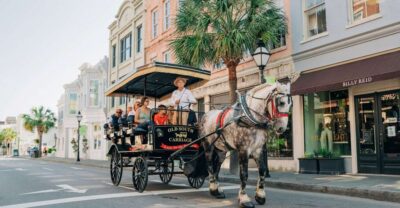
Historical Downtown Tour by Horse-drawn Carriage
Read our review →Browse the lists this tour appears in