Review · UTTAR PRADESH
Agra Fort: Guided UNESCO Heritage Walking Tour
History feels close at Agra Fort. This one-hour private walk brings you through Mughal courtrooms, royal chambers, gardens, and the poignant room where Shah Jahan spent his final days. I especially like the focus on the Diwan-i-Am, Diwan-i-Khas, and Jahangiri Mahal, plus the chance to hear the fort’s stories from a live English or Hindi guide. I also like the low $6 price, which makes a guide an easy choice beside the cost of getting to Agra.
The main thing to consider is time. One hour passes quickly inside a huge fort with uneven surfaces and plenty of walking. You will see the key areas, but this is a highlights walk rather than a slow, detailed study of every courtyard and palace.
Key points to know before you go
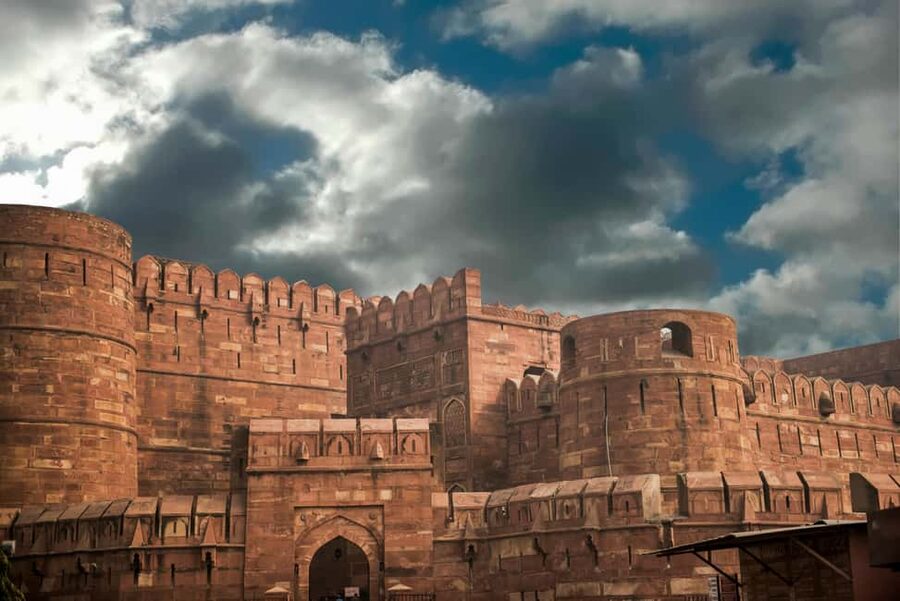
- Enter through Amar Singh Gate: This is the sole visitor entrance, with security checks and restrictions on large bags.
- See the Mughal courtrooms: The Diwan-i-Am and Diwan-i-Khas reveal how emperors received subjects, officials, and visiting dignitaries.
- Pause at Musamman Burj: This is the spot linked with Shah Jahan’s imprisonment and his view toward the Taj Mahal.
- Expect a private one-hour tour: You receive a live English or Hindi guide, rather than joining a large shared group.
- Bring walking shoes and a camera: Surfaces can be uneven, and photography is allowed, though drones and tripods are usually prohibited.
- Plan it with the Taj Mahal: Agra Fort is about 2.5 kilometers from the Taj Mahal, making both sites practical in one day.
Why Agra Fort deserves more than a quick photo stop
The Taj Mahal gets the postcards, but Agra Fort gives you the setting for the Mughal court that made that monument possible. From behind its red sandstone walls, emperors ruled, held audiences, built palaces, and shaped the political life of northern India.
That mix is what makes a guided visit worthwhile. Without help, you can admire arches and courtyards but miss why one room was public, another private, and another built for royal comfort. A guide can point out the meeting of Rajput, Persian, and Islamic design, visible in the arches, jharokhas, marble work, and palace layouts.
I would not treat this as a simple stroll around old walls. Agra Fort was both a military stronghold and a royal residence. The broad defenses tell one story, while the delicate carvings, mirrored rooms, and formal gardens tell another. You are constantly moving between power and luxury.
The private format matters here. You can ask about a particular emperor, pause for photographs, or request a slower pace without keeping up with a large group. The available guides speak English or Hindi, and the tour is designed for a private group.
More Castle and Palace History Tours in India
- Private Heritage Walking Tour in Jaisalmer Fort and Old Bazaar
★ 5.0 · 306 reviews - Private Jaisalmer Fort & old city tour
★ 5.0 · 168 reviews - Kochi Tour Guide -A Heritage walking tour in Fort kochi and Mattancherry !
★ 5.0 · 143 reviews
Amar Singh Gate sets the tone
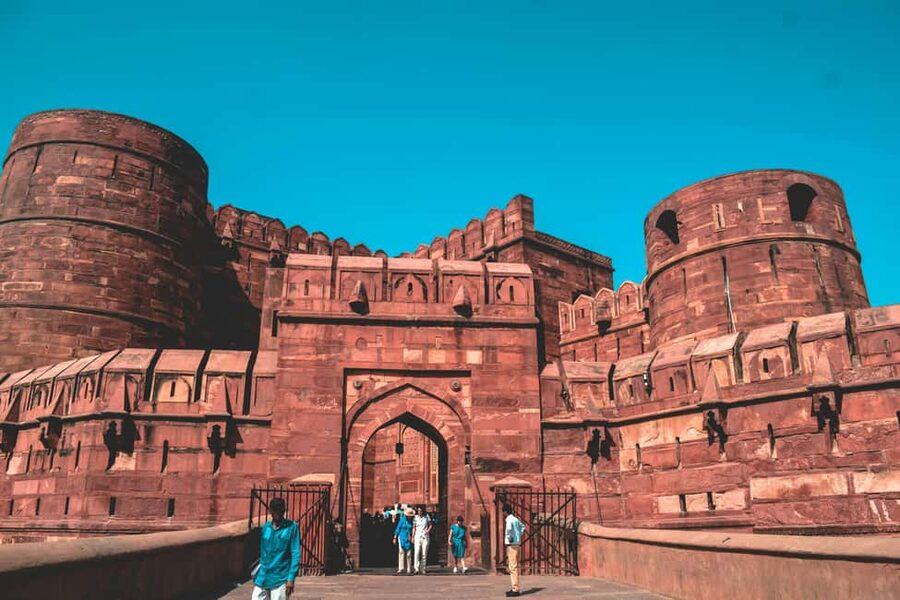
Your visit begins at Amar Singh Gate, the only entrance used by visitors. It is an imposing approach, and it immediately makes clear that Agra Fort was built to control movement as much as to impress the eye.
Expect a bag check at the entrance. Large bags and prohibited items are not allowed, so arriving with a small amount of luggage will make this part easier. Drones and tripods are usually prohibited without special permission, but ordinary photography is allowed.
Once inside, the scale becomes clear. The fort is large, and the route includes uneven surfaces and a good deal of walking. Comfortable shoes are not optional decoration here. They are the difference between enjoying the courtyards and thinking about your feet.
A guide is especially useful during the first part of the visit because the fort can feel like a series of grand spaces without an obvious order. Your guide can explain how the military exterior gave way to royal interiors and show you what to notice before you rush toward the best-known buildings.
Diwan-i-Am reveals the public side of Mughal power

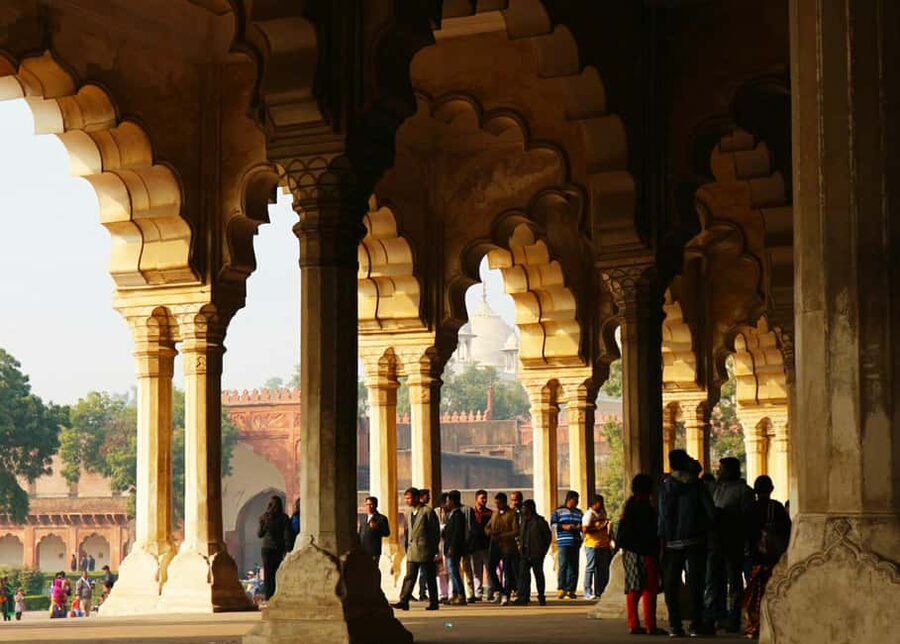
The Diwan-i-Am, or Hall of Public Audience, is one of the clearest places to understand the emperor’s public role. This was where subjects and officials could present matters before the ruler.
Look for the repeated arches and pillared arrangement. The design creates a formal setting without feeling closed off. Your guide can help you picture the court in use, with the emperor raised above the gathering and the surrounding space arranged to reinforce rank and ceremony.
This is also a good place to ask questions. What seems like a decorative hall becomes more interesting when you understand who was allowed near the emperor, how audiences were organized, and how architecture directed attention.
The short tour limits how long you can linger. If you are fascinated by court procedure or architectural details, one hour may leave you wanting more. Still, the Diwan-i-Am gives you a strong visual introduction to how Mughal authority was displayed.
Diwan-i-Khas and the memory of the Peacock Throne
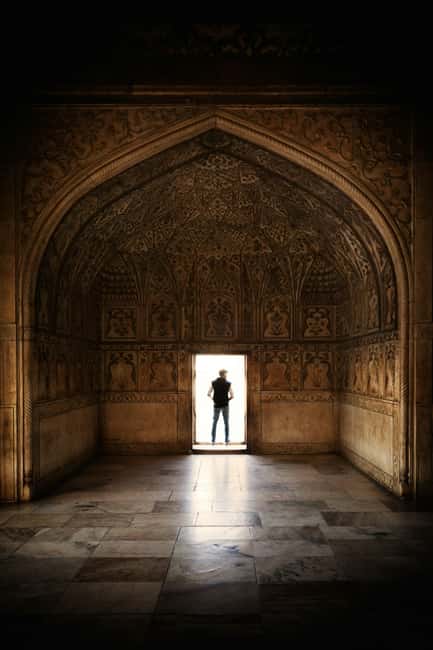
The Diwan-i-Khas served a more private and select purpose. Here, the emperor received important guests and officials in a setting more refined than the public audience hall.
The room is associated with the Peacock Throne, once a dazzling symbol of Mughal wealth and power. The throne itself is no longer here, so do not expect to see it in place. The value of the stop lies in understanding what the space represented and why the court invested so heavily in ceremony, materials, and visual splendor.
A good guide will shift your attention from simply taking a photograph to reading the room. Notice the balance of open arches, carved surfaces, and carefully framed views. The architecture was not just attractive. It helped separate ordinary business from the emperor’s most important meetings.
For many people, this is where the fort’s royal side becomes more vivid. The Diwan-i-Am showed public power. The Diwan-i-Khas showed controlled access and courtly privilege.
More History Walking Tours in India
- Fontainhas Heritage Walk by Make It Happen
★ 5.0 · 2,834 reviews - The Great Indian Food Tour: Old Delhi Food and Heritage Walk
★ 5.0 · 1,698 reviews - Old Goa Heritage Walk by Make It Happen
★ 5.0 · 797 reviews - Old Delhi Food, Heritage&Cultural Walk with Rickshaw ride to Masterji Kee Haveli
★ 5.0 · 742 reviews
Jahangiri Mahal connects several design traditions
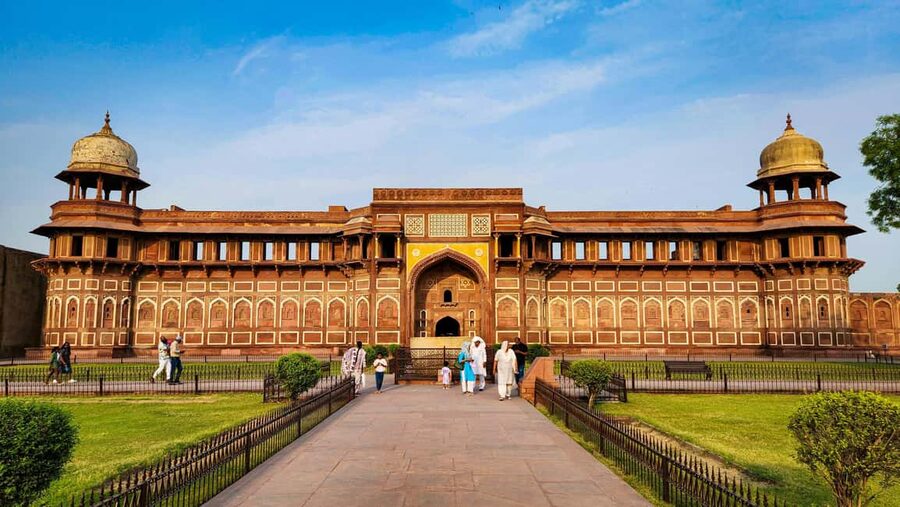
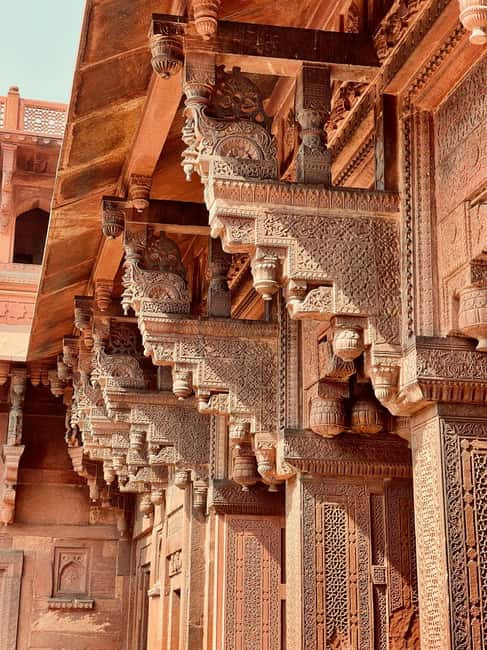
Jahangiri Mahal is one of the important palace stops on the route. Its design brings together Rajput, Persian, and Islamic influences, giving you a useful lesson in how Mughal architecture developed through contact between cultures.
Pay attention to the contrast between sturdy sandstone construction and more delicate ornamental work. Jharokhas, or projecting window features, add both beauty and a sense of ceremony. They also show how the palace was designed for royal life, not just defense.
This is one of the places where a guide’s explanation adds real value. You might notice a repeated pattern or a particular opening, but your guide can connect it with the broader style of the palace. The result is a more readable building, rather than a blur of red stone and carved decoration.
The route does not promise an exhaustive architectural lecture, and the one-hour limit keeps the pace moving. That is useful if you are fitting Agra Fort between other sights, but less ideal if you want time to study every carved surface.
Musamman Burj brings the human story into focus
Musamman Burj is the most emotionally charged stop. It is linked with Shah Jahan’s final days after his son Aurangzeb imprisoned him. From here, Shah Jahan could gaze toward the Taj Mahal, the monument associated with his beloved wife Mumtaz Mahal.
The view gives the fort a personal story that stone alone cannot provide. You are not just looking at another Mughal chamber. You are considering an aging emperor confined within the palace he had helped shape, with the Taj Mahal visible in the distance.
This is likely to be one of the best photo points on the tour. The guide can also help you find the best spots for seeing the Taj Mahal from the fort. One guide, Shahid Khan, is particularly praised for knowing strong photo locations and for helping visitors capture memorable pictures.
Keep expectations sensible. The Taj Mahal is not the main sight from every corner of Agra Fort, and the view depends on where you are permitted to go and what is accessible during your visit. Still, Musamman Burj adds a powerful human note to the tour.
The mirrored palace and Anguri Bagh add royal detail
If accessible, the mirrored palace offers a sharp change in mood. Instead of broad fortifications and open audience halls, you get a room built around reflection and sparkle. The shimmering surfaces show the Mughal interest in controlled light, intimate luxury, and theatrical interiors.
Access is not guaranteed, so treat this as a possible highlight rather than the central promise of the experience. If the room is open, your guide can help you understand what makes it different from the larger public spaces. It is also a place where you should be careful with your footing and your time, since the tour continues through a large complex.
Anguri Bagh provides another change of pace. Its geometric garden design reflects the ordered side of Mughal palace life. Formal lines and repeated shapes contrast with the heavy walls around them, creating a space intended for royal relaxation.
The garden is more than a pleasant photo background. Its geometry shows how the Mughals brought order into their private surroundings. After the formal courtrooms and defensive gates, Anguri Bagh gives you a glimpse of leisure and controlled beauty.
A private guide can change the whole visit
At $6 per person, the tour offers strong value if the guide is active and clear. The fee covers the guided visit, but not transfers, so you will need to arrange your own way to Agra Fort. That distinction matters if you are coming from a hotel, railway station, or another city.
The private group format gives you more flexibility than a large scheduled walk. You can ask for explanations, take photographs, and keep a pace that suits your group. The tour is not designed for a full-day exploration, so the guide’s ability to choose the right highlights matters.
Gagan is described as having 17 years of guiding experience. He is also praised for clear meeting communication, arriving on time, taking photographs, explaining Agra Fort, and helping visitors avoid scam photographers and vendors around the entrance. That last point is practical, since the area outside a major monument can feel confusing when you are arriving for the first time.
Shahid Khan is described as active, enthusiastic, and helpful during a busy weekend visit. He explained the importance of the fort’s sights, helped with queues when needed, and knew good places for photographs. Those details suggest a guide who does more than recite dates.
The individual guide assigned to your booking may differ, so I would not book on the assumption that you will receive Gagan or Shahid. Still, the qualities to value are clear: good communication, a steady pace, useful local direction, and an ability to make the fort understandable.
How to fit Agra Fort and the Taj Mahal together
Agra Fort is about 2.5 kilometers from the Taj Mahal. That makes it sensible to visit both on the same day, especially if you want to understand the Mughal setting before seeing the famous white marble monument.
You can use Agra Fort as the historical lead-in. The fort shows the working world of emperors, military control, court ritual, and palace life. The Taj Mahal then offers a more focused monument built around memory and love.
The order can depend on your plans, but the important point is to allow enough time for movement between places and for your own entry arrangements. This one-hour experience covers the fort itself, not transfers between sights.
Do not pack the day so tightly that the fort becomes a rushed box to check. The guide can keep the visit moving, but the site is large, the surfaces are uneven, and security takes time. A little breathing room will make the whole day calmer.
Who will get the most from this tour
I would recommend this walk to first-time visitors who want the main architectural and historical points without spending half a day inside the fort. It also suits couples, families, and small private groups who prefer to ask questions rather than follow a large crowd.
It is a particularly good fit if you are visiting Agra on a tight schedule. The low price makes guided context affordable, and the one-hour length leaves room for the Taj Mahal or another stop.
You may want a longer visit if you are a serious architecture enthusiast, a photographer who works slowly, or someone who likes to read every inscription and inspect every courtyard. The tour gives you a guided framework, not unlimited time.
People with limited mobility should also think about the walking conditions. The fort is large, with uneven surfaces and many areas to cover. The supplied details do not describe specific accessibility arrangements, so ask the provider before booking if you need special assistance.
Booking remains flexible, with cancellation allowed up to 24 hours before the tour for a full refund, and reserve-now, pay-later availability. The guide’s contact details are sent by WhatsApp, or by email if you do not use WhatsApp, one day before the visit.
Is the $6 Agra Fort tour worth booking?
Yes, if you want a short, private introduction to Agra Fort and you value explanation over simply walking through the gates. At $6 per person, the cost is modest, and the strongest part of the experience is the chance to connect the Diwan-i-Am, Diwan-i-Khas, Jahangiri Mahal, Musamman Burj, mirrored palace, and Anguri Bagh into one clear story.
I would book it alongside the Taj Mahal, not instead of allowing time for the Taj Mahal. Wear proper shoes, bring a camera, carry only a small bag, and keep your schedule flexible enough for security and walking.
Choose this experience if you want the fort’s key stories, good photo guidance, and a private pace. Skip it only if you prefer exploring every corner independently or need a long, unhurried architectural visit.
FAQ
How long does the Agra Fort guided tour last?
The tour lasts one hour.
What is included in the price?
The price includes a guided tour of Agra Fort.
Are transfers included?
No. Transfers are not included, so you must arrange your own transportation to and from the fort.
Which languages are available?
The live guide is available in English or Hindi.
Is this a private tour?
Yes. The experience is arranged for a private group.
Where do I meet the guide?
You receive the guide’s contact details through WhatsApp, or by email if you do not use WhatsApp, one day before the tour. The provider’s WhatsApp number is also listed on your booking voucher.
What should I bring?
Bring comfortable shoes and a camera. The fort has uneven surfaces and requires plenty of walking.
Can I visit Agra Fort and the Taj Mahal on the same day?
Yes. The Taj Mahal is about 2.5 kilometers from Agra Fort, so visiting both on the same day is practical.
More UNESCO World Heritage Tours in India
- World heritage Somnathpur sculptures and Talakadu temple mystery
★ 5.0 · 79 reviews - 2 days Private tour of Hampi world heritage site from Bangalore by car
★ 5.0 · 75 reviews - World heritage Ahmedabad city tour in private car with guide and lunch
★ 5.0 · 44 reviews - Private Elephanta Caves UNESCO World Heritage Site Tour
★ 5.0 · 34 reviews
Just added around India
- Colonial Heritage Walking Tour in Darjeeling★ 5.0 · 55 reviews
- Georgetown heritage walking tour in Chennai about the founding of Chennai★ 5.0 · 144 reviews
- Private Chennai Day Tour – Art History and Contemporary Chennai★ 5.0 · 21 reviews
- Chennai Heritage & Cultural Walk (2 Hours Guided Walking Tour)★ 3.5 · 32 reviews
- Exploring Mylapore: A Cultural & Historical Walking Tour★ 5.0 · 42 reviews
- See Bangalore through my eyes (Cultural / Historical / Walking Tour)★ 5.0 · 60 reviews
- Treasures of Mysuru – day tour★ 5.0 · 27 reviews
- Malleswaram heritage walk, an immersive walking tour in Bangalore★ 5.0 · 20 reviews
UNESCO World Heritage Tours, compared.

World Heritage Shirakawa-go and Experience Tours from Kanazawa
Read our review →

Bali: Tanah Lot UNESCO World Heritage Sites Full-Day Tour
Read our review →World Heritage Kyoto & Nara Uji Authentic Matcha Experience
Read our review →

UNESCO’s Ayutthaya Historical Park: Full-Day Tour from Bangkok
Read our review →
Rotterdam: Kinderdijk UNESCO World Heritage Entry Ticket
Read our review →