Review · MYRTLE BEACH
Myrtle Beach History, Movies and Music Trolley Tour
Myrtle Beach has stories beyond the beach. This two-hour trolley ride connects early movie locations, famous musicians, old cabanas, and the city’s changing historic district. I like the easy overview, and I especially like the stop at Charlie’s Place, where the Green Book, segregation, and American music history come together. The main drawback is that some original buildings are gone, so parts of the tour rely on stories, current businesses, and views from the trolley rather than preserved landmarks.
The ride costs $45 per person and starts at 10 a.m. from 4002 Deville Street. I’d choose it early in your Myrtle Beach stay, since it can help you understand the city before you spend the rest of your time on the shore. Just arrive ready for a lot of information. Guide Kathryn is praised for her local knowledge, humor, and personal connection to Myrtle Beach.
Key points to know before you book
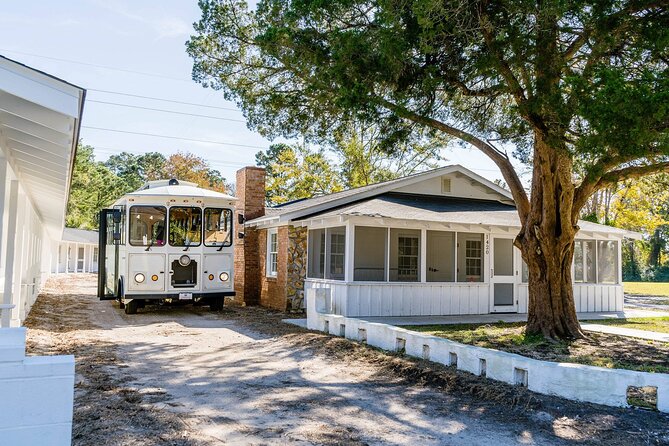
- Charlie’s Place gives the tour its strongest historical moment: See Charlie’s home and a reconstruction of the Fitzgerald Motel, once listed in the Green Book.
- The movie section reaches beyond Hollywood trivia: Hear about Myrtle Beach filming locations, including homes and sites connected with Shag.
- You cover more ground than you could on foot: The trolley links the beach, historic district, music sites, sculptures, and redevelopment areas.
- Kathryn is the central attraction: Her stories, local perspective, and trivia keep a large amount of information moving.
- Climate control matters: The enclosed trolley makes this a useful choice in hot weather or on a rainy day.
- Expect history in transition: Some original clubs and buildings have disappeared, while old areas are being restored or reused.
Why Myrtle Beach’s past is easy to miss
Myrtle Beach is often sold as a place for sand, golf, family attractions, and nightlife. That image is real, but it leaves out the town’s older layers. This tour helps you see the city as a place where movies were made, musicians performed, Black travelers searched for safe lodging, and local preservation efforts are still underway.
I like that the tour does not stay in one narrow time period. The stories reach from the 1920s through the 1970s, covering early movies, performers, old beach businesses, cabanas, railroad connections, and the city’s plans for its historic district.
The format also makes sense here. Myrtle Beach is spread out, and many of the places connected with its past are not gathered around one compact old quarter. From the trolley, you can hear the story while moving between sites instead of trying to piece everything together on foot.
The tradeoff is that Myrtle Beach has lost many of its original buildings. You may pass modern businesses occupying old structures, or hear about a club that no longer exists. That can feel less satisfying than walking through a perfectly preserved historic street, but it also gives the tour an honest theme: this is a town deciding what to save and what to rebuild.
A few more history tours around the USA worth a look
- History and Hauntings of Salem Guided Walking Tour
★ 5.0 · 14,564 reviews - Charleston’s Old South Carriage Historic Horse & Carriage Tour
★ 5.0 · 10,023 reviews - Beneath The Streets Underground History Tour
★ 4.5 · 8,006 reviews
Starting at 10 a.m. on Deville Street
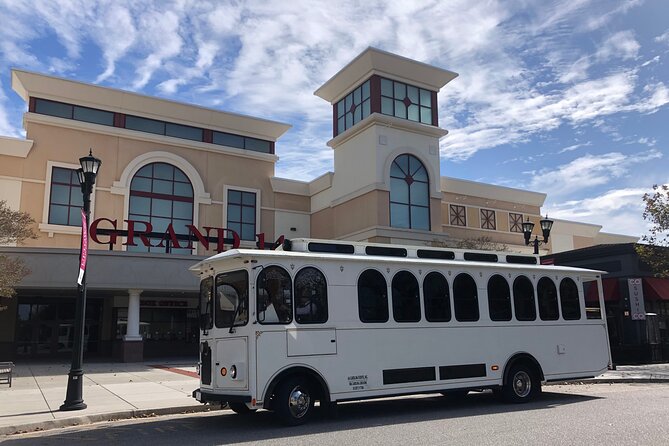
The tour begins at 10 a.m. at 4002 Deville Street and returns to the same meeting point. A central start and finish make the outing simple, especially if you do not want to arrange several pickups around town.
The trolley is climate-controlled, with wood paneling and the familiar old-fashioned trolley look. That detail gives the ride some character without sacrificing comfort. One driver was singled out for checking the temperature during the trip, which is the sort of small service that matters during a two-hour ride.
The group can include up to 33 people. That is large enough to create a lively atmosphere, but still small enough for a guide to speak to the whole vehicle. If you have trouble walking, note that a person using a cane was able to sit in front with a companion. Service animals are allowed, and most people can take part.
I would choose a seat where you can hear clearly and see out the windows. You will want to look outside for houses, sculptures, buildings, and street scenes while also following the narration. Since the tour has several layers of information, a notebook or phone for quick notes could be useful.
The new historic district and a city in transition
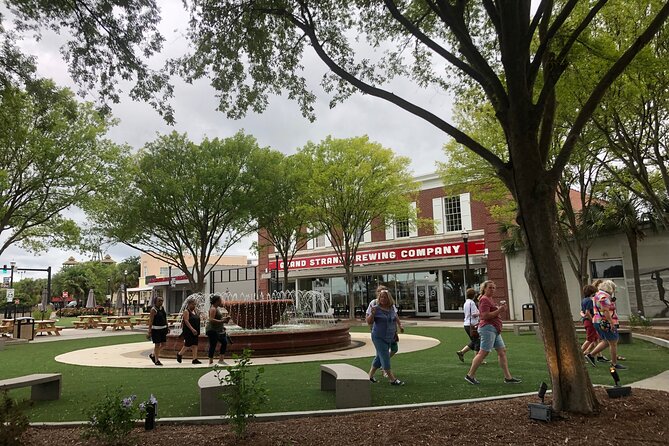
The first brief stop is in Myrtle Beach’s new historic district. You get about 10 minutes there, with no separate admission charge.
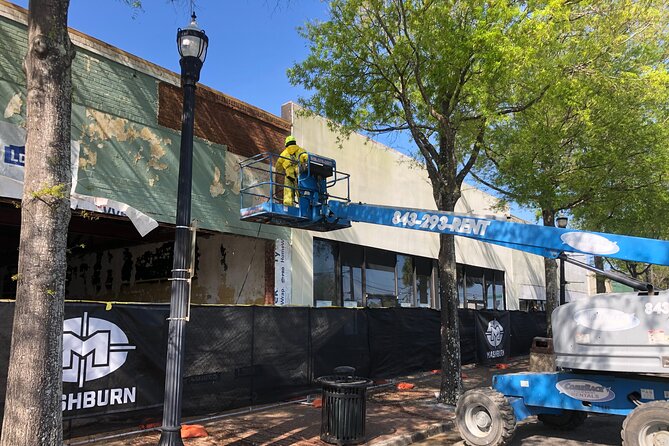
This stop is less about a single grand building and more about seeing the direction of local preservation. Old buildings are being renovated, new businesses are moving into them, and the area is taking shape. You may see current businesses rather than a fully restored historical setting, so keep your expectations realistic.
That unfinished quality is part of what makes the stop useful. You can hear about the past while looking at the present and future of the district. The guide also discusses the train station and revitalization plans, giving you a sense of how civic projects are changing the area.
The downside is that this portion may feel abstract if you want famous landmarks at every turn. Some of the original structures are gone, and the tour cannot recreate them. Kathryn’s narration does much of the work here, explaining what stood in the area and why preservation matters now.
For me, this would be most useful at the beginning of a Myrtle Beach visit. You can return later with a better eye for the older buildings and ongoing projects.
Charlie’s Place and the Green Book story
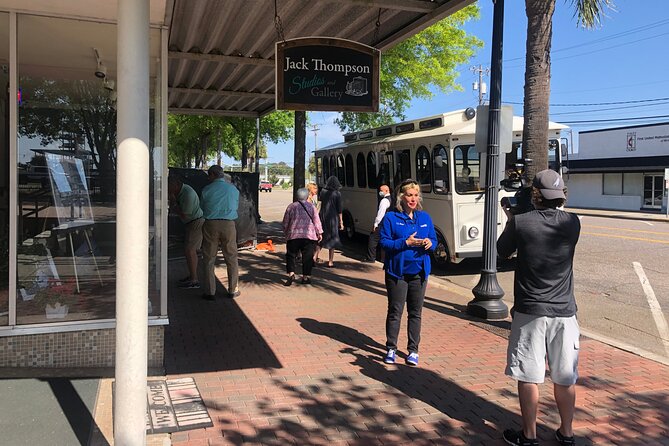
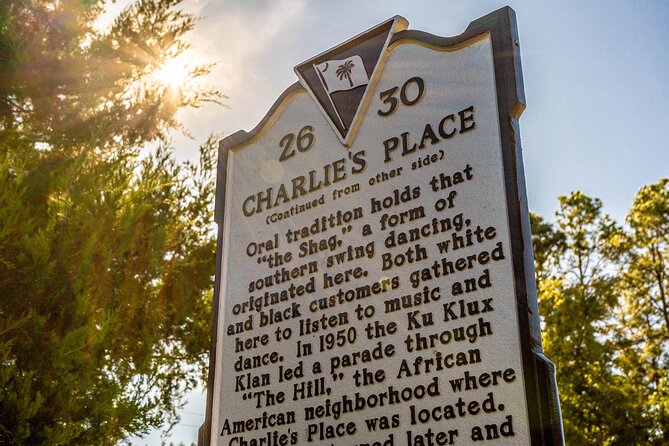
The most meaningful stop is Charlie’s Place Historic Site, where you spend about 15 minutes. The nightclub itself is gone, but Charlie’s home remains, along with a reconstruction of the Fitzgerald Motel.
Charlie’s Place was part of the Chitlin’ Circuit, the network of venues that welcomed Black performers during segregation. Major names in 20th-century American music performed there from the 1930s through the 1960s. The stop connects local Myrtle Beach history with the wider story of Black music, travel, and business in the United States.
The Green Book connection gives the site special weight. The Green Book guided African-American travelers toward hotels, restaurants, and other businesses where they could expect safer, more welcoming treatment during segregation. Seeing a reconstructed motel listed in that guide makes the subject concrete in a way that a general lecture cannot.
The Fitzgerald Motel is arranged to suggest its period of operation, helping you picture the setting rather than simply hear a name. The site also provides a chance to take photographs and consider how much of the original entertainment district has vanished.
I would allow yourself time to listen closely here. The stop is short, and Charlie’s Place contains several stories at once: music, race, travel, entrepreneurship, and Myrtle Beach’s role in the entertainment world. The tour’s strongest emotional and educational impact comes from this part.
One limitation is that the music is discussed rather than performed. If you expect live songs or recorded excerpts, you may find the stop quieter than anticipated. Still, the absence of the club makes the storytelling important. You are learning about a place that no longer survives in its original form.
Same place, a different slice of the past:
- Boston: Freedom Trail History Small Group Walking Tour
★ 5.0 · 6,450 reviews - Historic Charleston Guided Sightseeing Walking Tour
★ 5.0 · 6,216 reviews - Charleston Horse-Drawn Carriage Tour: Explore Historic Charleston
★ 5.0 · 3,561 reviews - Savannah History and Haunts Candlelit Ghost Walking Tour
★ 5.0 · 3,235 reviews
Movies, musicians, and the stories between the stops

Much of the tour takes place from your seat as the trolley moves through Myrtle Beach. Kathryn’s narration covers movie history, performers who appeared in town, and locations connected with productions filmed in the area.
The film section includes the movie Shag, with references to houses and locations used in the film. If you know the movie, these connections will likely be more fun because you can match the screen memories with real streets and buildings. If you do not know it, the stories still show how Myrtle Beach has served as a setting for popular culture.
The tour also discusses early movies made in the area and the local entertainment scene from the 1920s through the 1970s. The focus leans more toward movie history than some people may expect from the title. If music is your main interest, you will hear about performers and venues, but you should not expect a concert-style experience.
The cabana stories add another local layer. These small beach structures helped shape the look and social life of earlier Myrtle Beach, and they offer a more everyday view of the town than celebrity stories alone. You may also hear about sculptures and other features around the city as the trolley passes.
This is where the guide’s delivery matters most. Kathryn is described as funny, energetic, and deeply familiar with local stories. Trivia keeps the ride active, and her personal perspective gives the narration a hometown feel rather than a dry timeline.
The amount of information can be heavy. I would not try to remember every date, actor, musician, and building. Pick one or two themes that interest you, such as Black travel history, movie locations, or historic preservation, and let the rest wash over you.
What $45 buys you
At $45, this is not the cheapest way to spend two hours in Myrtle Beach, but it offers more than a simple sightseeing loop. You are paying for transportation, a guide-led overview, access to Charlie’s Place, and context that would be difficult to assemble on your own.
The value depends on your interests. If you mainly want beach views, shopping, or amusement attractions, you may find better uses for the money. If you like local history, movies, music, architecture, or civil rights history, the price is more reasonable because the tour joins those subjects in one outing.
I also see value in the amount of ground covered. Walking between the historic district, Charlie’s Place, movie locations, and other points would be impractical. The trolley lets you stay comfortable while the guide ties separate places into one story.
There is an added benefit for first-time visitors. You can use the tour to decide which areas deserve a second look later. It can also work well for locals bringing visiting family or friends, especially if everyone wants more than the standard beach routine.
The tour has earned a 4.7 rating from 107 reviews, with 93 percent recommending it. Those numbers fit the experience described here: the guide and subject matter receive the strongest praise, while the main reservations involve the large amount of information and the lack of original buildings or music at some stops.
Rain, heat, and the practical side of the ride
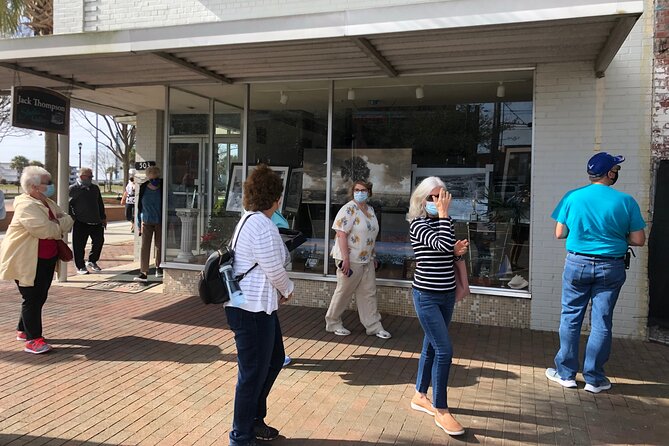
The climate-controlled trolley is a real advantage. Myrtle Beach weather can make a walking tour tiring, and this ride remains comfortable in heat or light rain. One group took the tour on a rainy day and still found the presentation worthwhile.
The experience requires good weather, so poor conditions can lead to a new date or a full refund. The operator also requires a minimum number of participants, meaning a cancellation is possible if that number is not reached. You can cancel for a full refund up to 24 hours before the start time, but changes or cancellations inside that window are not accepted.
The tour is offered in English and uses a mobile ticket. Most people can participate, and service animals are allowed. Since the vehicle holds up to 33 people, I would not expect an intimate private tour. You will get the best experience if you enjoy listening in a group and asking questions when the guide pauses.
Who should book this Myrtle Beach trolley tour?
I would recommend it to anyone curious about the Myrtle Beach that existed before the modern resort strip. It suits people who enjoy local stories, movie locations, American music, Black history, historic architecture, and preservation projects.
It is also a good fit for couples, families, and older visitors who prefer sightseeing without a long walk. The enclosed trolley, short stops, and return to the original meeting point keep the day easy.
I would be more cautious if you want a hands-on museum visit, a long time at each site, or live music. The tour moves steadily, and many stories are told from the trolley. You also need to accept that some places survive only through photographs, reconstruction, current buildings, and narration.
Should you book it?
Book this tour if you want to understand Myrtle Beach beyond its modern attractions. The strongest reasons are Kathryn’s lively local storytelling, the wide range of subjects, and the visit to Charlie’s Place and the Fitzgerald Motel.
Skip it if you want a short, relaxed ride with little narration or if your main goal is live music. You will hear a great deal, and some of the old sites are no longer intact. For the right audience, though, $45 buys a useful introduction to the people, performances, films, and difficult chapters that helped shape Myrtle Beach.
FAQ
How long is the Myrtle Beach History, Movies and Music Trolley Tour?
The tour lasts approximately two hours.
Where does the tour begin?
It begins at 4002 Deville Street, Myrtle Beach, South Carolina 29577.
What time does the tour start?
The scheduled start time is 10 a.m.
Does the tour return to the starting point?
Yes. The activity ends back at the original meeting point.
What is the price?
The cost is $45 per person.
Is Charlie’s Place still operating as a nightclub?
No. The original club is no longer there, but Charlie’s home remains, along with a reconstruction of the Fitzgerald Motel connected with the Green Book.
Is the tour wheelchair accessible?
The provided information says most people can participate and notes that service animals are allowed. It does not give full wheelchair-accessibility details, so you should confirm specific needs before booking.
What happens if the tour is canceled because of weather?
You will be offered another date or a full refund if poor weather causes the cancellation.
Just added around the USA
- Legends of Music City Guided Historical Walking Tour★ 4.5 · 68 reviews
- Wander Nashville- Guided Historic Walking Tour★ 5.0 · 55 reviews
- Bootleg and Barrels: Tennessee Whiskey Tasting Golf Cart Tour★ 4.5 · 35 reviews
- Historic Grounds: A Music City History and Coffee Morning Tour★ 5.0 · 19 reviews
- Nashville Music, History and Hidden Gems Tour★ 5.0 · 19 reviews
- Dolphin and Manatee Adventure Tour of Naples with Florida History★ 5.0 · 187 reviews
- Historical Tour of Nantucket★ 4.5 · 108 reviews
- Early Myrtle Beach History and The WWII Years Trolley Tour★ 4.5 · 54 reviews
USA History Tours, compared.
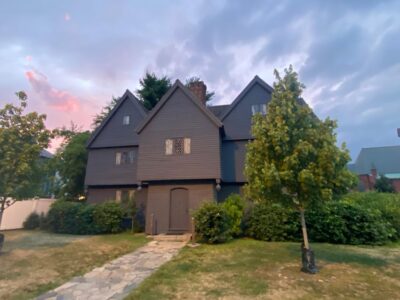
History and Hauntings of Salem Guided Walking Tour
Read our review →
Charleston’s Old South Carriage Historic Horse & Carriage Tour
Read our review →
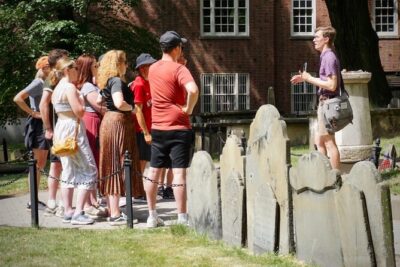
Freedom Trail History Small Group Walking Tour
Read our review →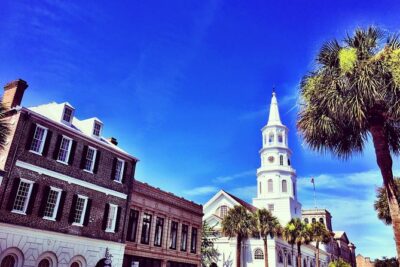
Historic Charleston Guided Sightseeing Walking Tour
Read our review →
Charleston Horse-Drawn Carriage Tour: Explore Historic Charleston
Read our review →
Savannah History and Haunts Candlelit Ghost Walking Tour
Read our review →