Review · LAFAYETTE
Tour Historic Vermilionville
Step into old Acadiana. Vermilionville gives you a thoughtful look at Louisiana life between 1760 and 1890, with historic buildings, costumed artisans, local stories, and the cultures that shaped the region. I like the freedom to explore the 23-acre site at my own pace, and I like that you can add a guided tour when you want more context. The main drawback is the heat: there is plenty of walking outdoors, with limited air-conditioning.
A visit usually takes about two hours, though you may want longer if you stop often or eat at the on-site cafe. The setting is beautiful and the staff are praised for being warm and well informed. I would choose the guided option if you want the history to connect clearly, especially the story of the Acadian deportation and the links between Native, Acadian, Creole, and African cultures.
Key things to know before you go
- A 23-acre living history site: Vermilionville uses historic buildings, working demonstrations, and costumed artisans to show daily life from 1760 to 1890.
- You choose the pace: The basic visit lets you walk through the village independently, stopping where your interest takes you.
- The guided upgrade adds meaning: Guides explain buildings, regional history, French words, family traditions, and the development of modern Acadiana.
- Many cultures are included: The story covers Native Americans, Acadians, Creoles, and people of African descent rather than presenting Cajun history in isolation.
- Plan for outdoor walking: Reviews praise the site but warn that May and summer conditions can be hot, and there are few cool indoor areas.
- Strong guide reports: Camille, Kevin, and Madeleine have all been praised for clear explanations and personal connection to the region, though guide assignments can change.
What Vermilionville is really showing you
Vermilionville is not simply a row of old houses. It is designed as a living history museum and folklife park, which means the focus is on how people worked, spoke, built homes, made things, and passed on customs.
The period covered, from 1760 through 1890, takes you through major changes in Louisiana life. You are not looking at one frozen moment. Instead, the site helps you see how different communities shaped Acadiana over time.
That wider view matters. It keeps the story from becoming only a celebration of Cajun food and music, enjoyable as those subjects are. Here, you also hear about Native people of the region, Acadian settlers, Creole communities, and people of African descent. Their cultures developed alongside one another, sometimes under difficult conditions, and together helped form the traditions associated with Acadiana today.
I especially like that the experience connects objects and buildings to people. A house becomes more useful when you understand who lived there, what work took place inside, and how language and customs moved from one generation to the next.
A few more history tours around the USA worth a look
- History and Hauntings of Salem Guided Walking Tour
★ 5.0 · 14,564 reviews - Charleston’s Old South Carriage Historic Horse & Carriage Tour
★ 5.0 · 10,023 reviews - Beneath The Streets Underground History Tour
★ 4.5 · 8,006 reviews
Walking through the 23-acre village
Your visit begins at 300 Fisher Road in Lafayette. From there, you enter a large outdoor site where the route leads through historic buildings and demonstrations.
The scale is worth noting. Twenty-three acres is not enormous by theme-park standards, but it is large enough to make the visit feel like a walk through a small settlement rather than a quick museum circuit. You will be on your feet, moving between structures and activity areas.
The self-guided format suits people who like to set their own rhythm. You can pause at a building, spend extra time with an artisan, or move along when a subject does not catch your attention. For families and mixed-age groups, that flexibility can be more useful than a strict walking schedule.
The downside is equally clear. This is not a compact indoor museum where you can escape the weather after every room. A May visit was described as very hot, with the gift shop providing the main air-conditioned relief at the beginning and end. Bring that reality into your planning, especially if you have limited stamina or do not enjoy walking in heat.
Costumed artisans and old trades
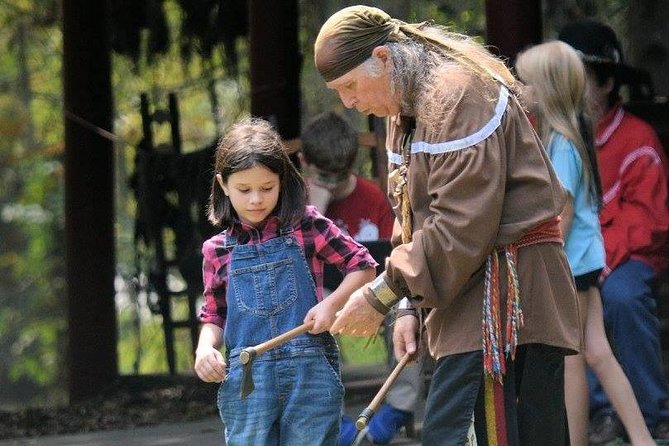
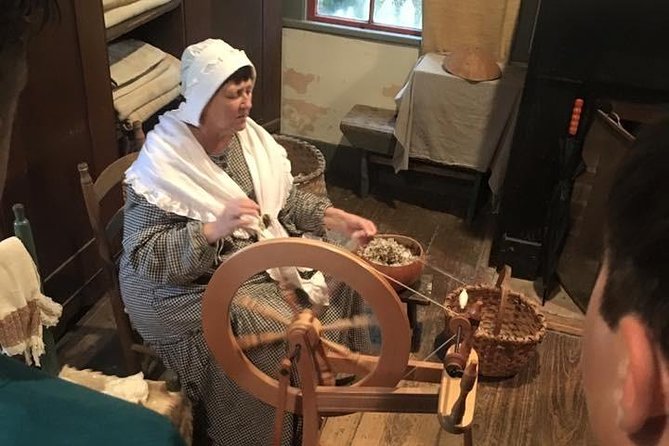
One of the best parts of the site is the chance to meet costumed artisans demonstrating trades and crafts as they would have been practiced during the period.
That hands-on element gives the buildings a purpose. Instead of only reading a sign about an old craft, you can watch the work being explained and see how much time, skill, and patience it required. The demonstrations also help younger children stay interested, since there is something happening rather than only something to look at.
The exact artisans and demonstrations may vary, so I would treat the schedule as part of the pleasure rather than expecting every visit to look identical. Give yourself time to stop and ask questions. The staff and volunteers are repeatedly praised for their courtesy and ability to explain local traditions.
This is also where the village feels most connected to everyday life. Large historical events can seem distant. A craft, tool, building technique, or spoken phrase brings the past down to human scale.
Why the guided tour is worth considering
You can explore independently, but I think the guided option offers better value if you want the site to make full sense.
A guide can explain how the buildings fit together, clarify the differences among Acadian, Cajun, Creole, Native, and African cultural traditions, and connect local events to wider Louisiana and American history. One especially useful subject is the Acadian deportation, which several visitors wanted to understand in greater detail.
The guide can also point out things you might otherwise pass without noticing. A building has more impact when you know its history. A French word makes more sense when you hear how it fits into local speech. A family story can turn an ordinary object into a clue about regional life.
Past guide names praised for their warmth and skill include Camille and Kevin. Kevin was described as especially passionate about Acadiana, with a gift for explaining the region in a personal way. Madeleine was also praised for her kindness and clear presentation during a French-language visit. The listed experience is offered in English, so confirm language options when booking if that matters to you.
A guided visit may also help you use your two hours well. Without a guide, it is easy to linger over attractive buildings but miss the larger connections. With a guide, you get a clearer framework, then you can revisit the parts that interest you most.
Same place, a different slice of the past:
- Boston: Freedom Trail History Small Group Walking Tour
★ 5.0 · 6,450 reviews - Historic Charleston Guided Sightseeing Walking Tour
★ 5.0 · 6,216 reviews - Charleston Horse-Drawn Carriage Tour: Explore Historic Charleston
★ 5.0 · 3,561 reviews - Savannah History and Haunts Candlelit Ghost Walking Tour
★ 5.0 · 3,235 reviews
The people and cultures behind Acadiana
The strongest educational feature is the way Vermilionville presents several communities together.
You hear about the Native Americans who lived in the region, the Acadians who arrived through a difficult history of displacement, Creole communities, and people of African descent. These groups did not develop in separate boxes. Their foodways, language, work, music, beliefs, and family traditions influenced the culture now associated with Acadiana.
That is why the experience can be useful even if you already know a little about Cajun culture. It adds missing pieces. You are encouraged to see Cajun identity as part of a larger regional story, not as the whole story.
I also appreciate the attention to language. Guides have explained French words during the tour, which can help you understand why the area’s speech and place names sound different from standard American English. You do not need prior knowledge to follow along, but curiosity helps.
The museum is at its best when it avoids turning history into a simple, comfortable tale. The Acadian deportation, cultural change, and the lives of people of African descent are serious subjects. A good guide helps you face those subjects without losing sight of the creativity and endurance that followed.
How long to allow, and how the visit feels
The advertised duration is about two hours. That is enough for a useful first visit, especially if you keep moving and choose either a self-guided walk or a focused guided tour.
I would allow extra time if you want to examine many buildings, stop for longer conversations, or have lunch at the cafe. One family combined the visit with a cafe reservation and praised the food, so the site can work well as part of a relaxed afternoon rather than a quick stop between larger attractions.
The walking is the main physical demand. A past visitor with neuropathy wished they had requested a wheelchair and noted the presence of handicap ramps. That is a useful warning: accessible features exist, but you should think ahead about your own stamina and mobility needs.
Service animals are allowed, and most people can take part. Still, the combination of outdoor paths, heat, and a 23-acre site means comfort depends on the day and your pace. If you need a wheelchair or other support, ask about arrangements before arrival rather than waiting until you reach the entrance.
Weather, comfort, and practical planning
Lafayette heat can shape the whole experience. Even a visit in May was described as hot, with limited air-conditioned space. The village is more enjoyable when you are prepared for outdoor conditions.
Wear comfortable walking shoes and plan to take breaks. Lightweight clothing, sun protection, and water are sensible choices, though only the provided information confirms the general walking and heat concerns, not specific on-site amenities. If you are sensitive to heat, schedule the visit for a cooler part of the day when possible.
The start and finish are both at 300 Fisher Road, Lafayette, Louisiana. The activity returns to the same meeting point, so you do not need to arrange a separate pickup location.
The experience is listed as private, meaning only your group participates. That can make it easier to ask questions and move at a pace that suits your party. It also means the value depends partly on how much your group wants to engage. A quiet group that skips explanations may get less from the guided upgrade than a curious group that asks questions.
Is the admission good value?
No price is provided here, so I cannot judge the exact cost against other Lafayette attractions. I can judge what you receive for the admission.
You are paying for access to a large historical site, the buildings and demonstrations within it, and the chance to learn about several cultures through one connected visit. That is better value for someone who enjoys history, architecture, crafts, and local culture than for someone seeking a fast photo stop.
The guided upgrade makes the value stronger if you want interpretation. Without it, you still get the setting and displays, but some of the meaning may remain hidden. With it, the visit becomes a lesson in how Acadiana developed, including the Acadian deportation and the cultural connections that shaped the region.
I would not choose this experience solely because it is convenient. The outdoor walking requires time and energy. I would choose it because it offers something hard to get from a standard city sightseeing tour: a place where regional history is shown through buildings, work, language, and personal stories.
Who will enjoy Vermilionville most?
This is a good match for you if you:
- Want an introduction to Acadian and Cajun culture
- Enjoy historic buildings and craft demonstrations
- Prefer local history to a broad, fast city tour
- Like asking questions and learning from guides
- Are comfortable walking outdoors for around two hours
- Want a family activity with visual and hands-on elements
- Have an interest in French influence and Louisiana cultural history
It may be less suitable if you dislike heat, need a fully indoor attraction, or want constant entertainment with little explanation. The site rewards patience. You get more from it when you stop, listen, and let the details build a picture of the region.
Should you book the Historic Vermilionville tour?
I would book it if you want to understand Lafayette beyond restaurants and nightlife. Vermilionville gives you a clear starting point for the region’s history, and the combination of historic buildings, costumed artisans, and cultural interpretation makes the visit more substantial than a quick museum stop.
Choose the guided option if available. The strongest experiences come from explanations of the buildings, the Acadian deportation, local French terms, and the relationship between Native, Acadian, Creole, and African communities.
Go prepared for heat and walking, and allow extra time if you want lunch at the cafe. If those conditions suit you, this is a worthwhile Lafayette visit with real educational value and a strong sense of place.
FAQ
Where is Vermilionville located?
Vermilionville is at 300 Fisher Road, Lafayette, Louisiana 70508, USA.
How long does the experience take?
The visit lasts approximately two hours.
Is admission included?
Yes, admission to Vermilionville is included.
Can I explore Vermilionville at my own pace?
Yes. The experience allows you to walk through the 23-acre site independently and set your own pace.
Is a guided tour available?
Yes. You can upgrade to include a guided tour of the village.
What time period does Vermilionville cover?
The site presents life in Acadiana from 1760 to 1890.
What cultures and communities are covered?
The experience includes the history of Native Americans of the region, Acadians, Creoles, and people of African descent.
Is the tour offered in English?
Yes. The experience is offered in English.
Are service animals allowed?
Yes, service animals are allowed.
Is the activity private?
Yes. Only your group participates in the private activity.
Can I cancel for a full refund?
Yes, if you cancel at least 24 hours before the experience start time. Cancellations made less than 24 hours in advance are not refunded, and changes within that period are not accepted.
Just added around the USA
- Historic La Jolla Walking Tour★ 5.0 · 124 reviews
- Baton Rouge Historic Downtown Self-Guided Audio Walking Tour★ 4.0 · 19 reviews
- Key West Historic Schooner When And If Sunset Cruise★ 5.0 · 114 reviews
- Key West Art History Private Tour★ 5.0 · 35 reviews
- Marathon: Historic 7-Mile Bridge Sunset Cruise★ 5.0 · 55 reviews
- Key Lime Pie Walking Tour of Key West Historic Seaport★ 5.0 · 38 reviews
- Florida Keys Nature & History Tour from Key West★ 5.0 · 110 reviews
- Cruisin’ and Boozin’ – 90 minute Historical Walking Tour of Sites and Bars★ 5.0 · 28 reviews
USA History Tours, compared.
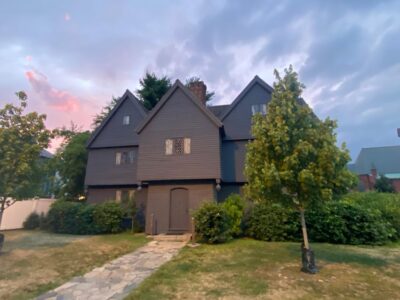
History and Hauntings of Salem Guided Walking Tour
Read our review →
Charleston’s Old South Carriage Historic Horse & Carriage Tour
Read our review →
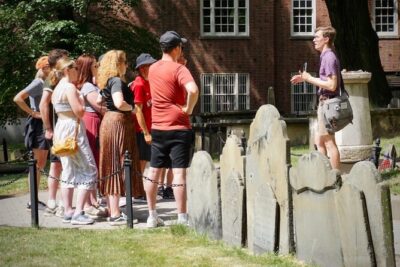
Freedom Trail History Small Group Walking Tour
Read our review →
Historic Charleston Guided Sightseeing Walking Tour
Read our review →
Charleston Horse-Drawn Carriage Tour: Explore Historic Charleston
Read our review →
Savannah History and Haunts Candlelit Ghost Walking Tour
Read our review →