
Review · JERUSALEM
Jerusalem Yad Vashem Holocaust History Museum Tour
History here is impossible to keep at arm’s length. The Yad Vashem Holocaust History Museum guides you through nine galleries, from Nazi propaganda and antisemitic games to the Warsaw Ghetto and the final memorial spaces. I especially like the official Yad Vashem guide and the headset, which make the dense material easier to follow. I also value the chance to see original objects such as the Auschwitz Album and a copy of Schindler’s List. The main consideration is emotional weight: this is a painful visit, not a light museum stop.
At about $12 per person, the tour offers good value if you want structure and context rather than simply walking through alone. The advertised visit lasts around two hours, but the museum can easily demand much longer, especially if you stop for survivor testimony and documents. Plan your day carefully, because you may need quiet time afterward.
Key points to know before you go
- Nine galleries create a clear timeline: The museum moves from prewar antisemitism and Nazi propaganda through persecution, ghettos, killing operations, and the aftermath.
- Moshe Safdie’s building shapes the visit: The long, prism-like structure cuts through the mountain and uses its stark form to reinforce the subject.
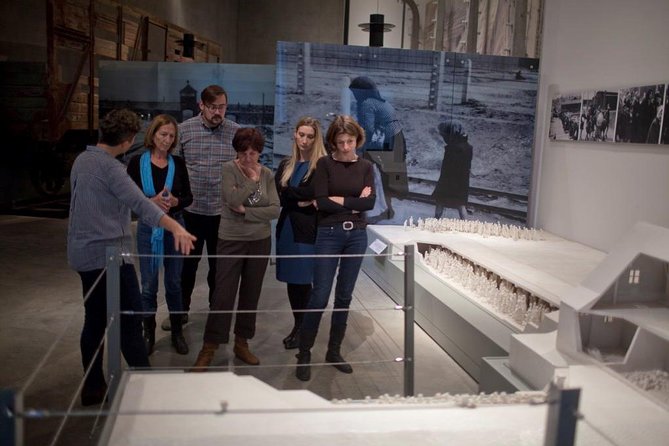
- The guide adds order to a huge amount of material: You receive a headset, so you can hear the official Yad Vashem guide without crowding around.
- Original evidence carries the visit: The Auschwitz Album, a copy of Schindler’s List, posters, propaganda, photographs, and personal objects make the history concrete.
- The Hall of Names is a quiet change of pace: Its memorial purpose shifts attention from statistics to individual lives.
- Two hours is a starting point, not a limit: The guided portion is short compared with the museum’s full scope, so leave extra time if you want to continue independently.
Why Yad Vashem needs more than a quick stop
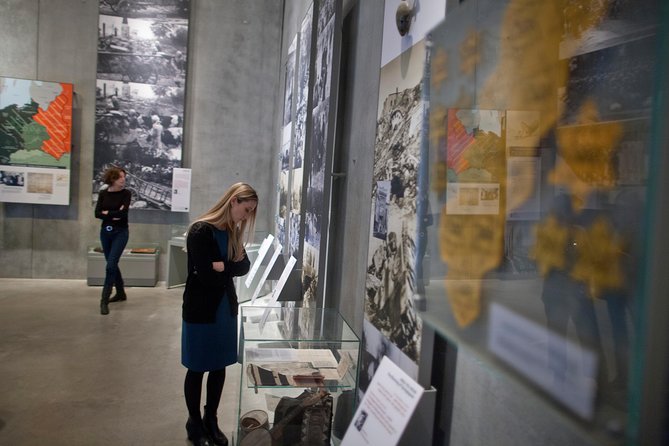
Yad Vashem is not a single display room with a few famous photographs. It is a large historical museum built around a chronological account of the Holocaust, with each section adding another piece to the story.
That structure matters. You begin with the political and social conditions that allowed persecution to grow. You then see how propaganda, discriminatory laws, forced separation, ghettos, deportation, and mass murder developed. The museum does not treat the Holocaust as an isolated burst of evil detached from ordinary society. It shows the process that led there.
I like this approach because it gives you something to think about beyond the shock of individual artifacts. You are asked to follow cause and effect. Antisemitic posters and board games from Nazi Germany may seem less dramatic than photographs from the camps, but they help show how hatred was taught, repeated, and made to look normal.
The subject is difficult for adults, and the museum includes graphic and distressing material. One practical point matters here: do not schedule this visit when you need to rush straight into a cheerful activity. You may want time afterward to sit, walk, or visit somewhere less heavy.
More WWII and D-Day Tours in the world:
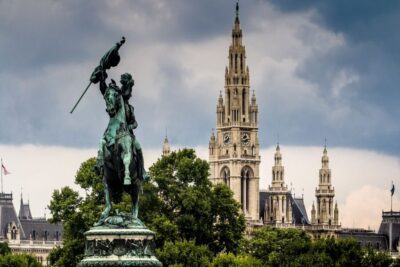
- Vienna: World War II Historical Walking Tour
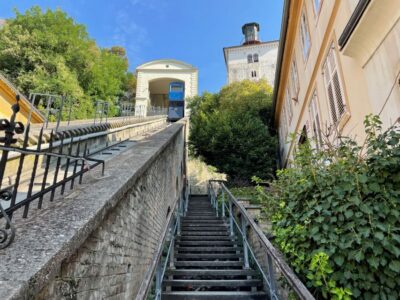
★ 4.8 · 1,772 reviews - Zagreb: City & History Walking Tour & WW2 Tunnels
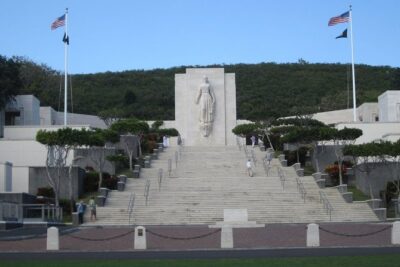
★ 4.9 · 1,202 reviews - Pearl Harbor History Remembered Tour from Ko Olina
★ 5.0 · 1,009 reviews
The stark Moshe Safdie building sets the tone
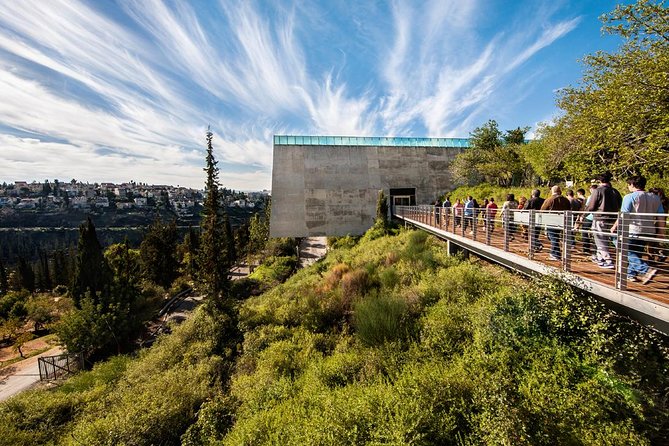
Before the exhibits begin, the building itself makes an impression. Architect Moshe Safdie designed the Holocaust History Museum as a triangular, prism-like form that cuts through the mountain. Its ends extend dramatically into the open air, creating a severe shape rather than a welcoming one.
That design helps prepare you for the visit without relying on decoration. The museum feels spare and monumental. A peaceful approach lined with cypress and olive trees contrasts sharply with the angular structure, and that contrast can make the entrance feel even more serious.
You will not experience the museum as one wide-open hall. The route carries you through separate galleries, each devoted to a different chapter. This arrangement keeps the story moving, but it also means you should expect frequent stops, changes in tone, and a lot of material competing for your attention.
The building is easy to navigate according to the supplied visitor comments, but easy navigation does not mean a quick visit. If you try to read every panel and watch every film, two hours will pass quickly.
Nine galleries, one unfolding story
The guided route covers nine galleries. Each one focuses on a different part of Holocaust history, giving the visit a firm beginning, middle, and end.
The early sections deal with Jewish life and the spread of antisemitism in Nazi Germany during the 1930s. Posters, propaganda, and antisemitic board games show how prejudice moved beyond political speeches and into public culture. These objects are disturbing because they reveal the effort to shape how children and adults viewed their neighbors.
From there, the museum follows the tightening of Nazi control. You see how exclusion became persecution, and how persecution became organized destruction. The value of the guide is especially clear here. The exhibits contain so much information that it can be hard to understand what changed from one stage to the next when you visit alone.
The museum also places personal stories beside official documents and public propaganda. That combination keeps the story from becoming only a list of laws, dates, and military operations. It reminds you that the Holocaust happened to families and communities, not only to an abstract population counted in millions.
This is where the headset helps. You can look at the displays while listening, rather than squeezing close to the guide or missing the explanation because someone is standing in front of you. Since the tour is shared, the audio equipment is a small but useful feature.
Walking Leszno Street in the Warsaw Ghetto
One of the most distinctive sections is Leszno Street, a reconstructed cobblestone street from the Warsaw Ghetto.
A recreated street can never reproduce the experience of the people who lived there, but it gives the historical account a physical setting. Instead of moving only from case to case, you walk through a place associated with forced confinement and the destruction of Warsaw’s Jewish community.
The cobblestones also change your pace. You are no longer simply scanning labels. You are moving through a built environment that suggests how public space was controlled and how ordinary streets became part of a system of imprisonment.
This section may be especially useful if you know the broad outline of the Warsaw Ghetto but have trouble picturing daily life there. The guide can connect the reconstructed setting to the wider chronology, helping you understand where it fits in the Nazi campaign.
As with the rest of the museum, expect the material to be upsetting. The setting is not presented as a theatrical attraction. Its purpose is remembrance and historical understanding.
More Museum and Gallery History Tours in the world:
- Paris: Louvre Museum Entry with History of Mona Lisa
★ 3.9 · 2,823 reviews - Venice’s Best: Basilica, Doge’s Palace, Gondola & History Gallery
★ 4.5 · 2,478 reviews - Guided African American History Tour with Reserved Museum Entry
★ 4.5 · 1,180 reviews - Warsaw: POLIN Museum of the History of Polish Jews Ticket
★ 4.7 · 1,142 reviews
The Auschwitz Album and Schindler’s List
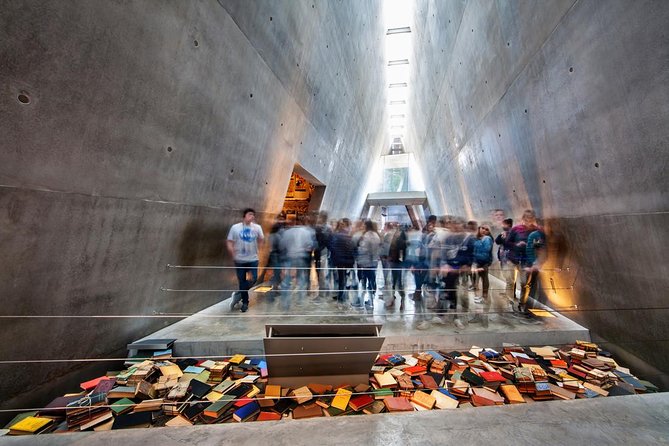
The museum includes two especially recognizable pieces of evidence: the Auschwitz Album and a copy of Schindler’s List.
The Auschwitz Album is important because it documents the arrival and processing of Jewish deportees at Auschwitz. Seeing such evidence in the middle of a broader museum route connects individual photographs to the system that produced them.
A copy of Schindler’s List brings another familiar name into the galleries. If you know the film or the story of Oskar Schindler, this display gives you a chance to place that account within the much wider history of Nazi persecution and rescue.
These objects draw attention, but they are not the whole point of the visit. Yad Vashem uses famous documents alongside less familiar posters, photographs, artifacts, and testimony. That balance keeps the museum from reducing the Holocaust to a handful of well-known stories.
I would not plan your visit around only one or two famous items. The power comes from seeing how the evidence fits together. The ordinary objects and propaganda material can be just as revealing as the pieces you already recognize.
Survivor testimony and the human scale
Film and survivor testimony add voices to the written record. This is one of the reasons you should allow more time than the official two-hour estimate if you can.
Video testimony can slow the visit in a useful way. You may find yourself listening longer than planned, especially after moving through rooms filled with statistics and documents. The voices bring attention back to memory, family, fear, survival, and loss.
The museum’s scale can be overwhelming. Some people have reported spending three or four hours and still not seeing everything. Others have wished they had more time. I would treat the two-hour tour as an introduction, not a complete examination of the museum.
If you already visited Holocaust museums or former camps elsewhere, Yad Vashem may still feel different. The collection is broad, the chronology is detailed, and the Jerusalem setting gives the museum a particular memorial purpose. At the same time, prior experience does not make the material easier. You may recognize themes and still find the presentation deeply painful.
The Hall of Names and memorial purpose
The Hall of Names gives the visit a different focus. Instead of concentrating only on events, it honors the individual victims of the Holocaust.
The name itself explains the purpose. The memorial asks you to remember people as people, not only as part of a number. After the chronological galleries, this shift can feel quiet and personal.
You may find the Hall of Names more difficult than the historical sections because it narrows the subject to individual lives. The museum’s earlier rooms explain how the destruction happened. This memorial space asks you to consider who was destroyed.
It is worth slowing down here. You do not need to treat every room as a race toward the exit. A few quiet minutes can make the memorial more meaningful than simply checking it off your route.
How the guided format improves the visit
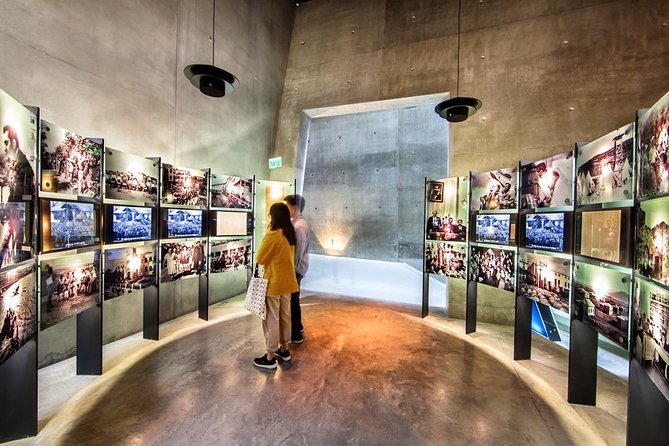
The official Yad Vashem guide is the main reason to choose this experience instead of visiting entirely on your own.
The museum contains an enormous amount of written and visual material. A guide can point out what matters, explain the order of events, and connect one gallery to the next. That structure is useful if you have limited time or if you worry that the collection will feel confusing.
The shared format also keeps the price low. At $12 per person, you receive a professional guide, a headset, admission, taxes, fees, and gratuities. Parking is not included, and food and drinks are not included, but those exclusions are ordinary for a museum tour and do not greatly reduce the value.
The main tradeoff is pace. A group tour cannot stop for every object that catches your attention. You may want to linger over a photograph or read a long panel while the guide needs to keep moving.
The good news is that you can continue exploring after the guided portion. I would use the tour to build a framework, then return to the galleries or displays that mattered most to you.
Timing, transport, and practical planning
The advertised start time is 10:30 am, and the experience lasts approximately two hours. Because the museum can hold your attention much longer, block out extra time if your schedule allows.
Yad Vashem is near public transportation, and most people can participate. Service animals are allowed. Parking is available for a fee payable on site, so drivers should budget for that separately.
The mobile ticket makes entry simple, but you should still arrive prepared for a serious museum visit rather than a quick sightseeing stop. Wear comfortable shoes, since the route involves moving through multiple galleries and the reconstructed Leszno Street.
This is not an ideal choice for a young child. One supplied comment specifically notes that children under 10 are not allowed, so check the current age rules before booking for a family. The material is also emotionally intense even for older children and teenagers.
The experience is booked, on average, about 28 days ahead. That suggests you should not assume a last-minute place if your Jerusalem schedule is fixed.
Who will get the most from this tour
I would recommend this tour to you if you want historical structure, official interpretation, and a focused introduction to Yad Vashem.
It suits first-time visitors who might otherwise feel lost in the amount of material. It also suits people who have visited other Holocaust museums but want to understand how Yad Vashem presents the story through its own collection and memorial spaces.
It may be less suitable if you want a relaxed cultural outing or if you have only a strict two-hour window. You can complete the guided portion in about that time, but you will probably leave with the feeling that there is much more to see.
If you have already been to Auschwitz, Dachau, or another Holocaust site, the museum may still be worthwhile. Just do not expect the subject to feel familiar or emotionally easy. The combination of artifacts, testimony, propaganda, and memorials can remain powerful even after several related visits.
Should you book the Yad Vashem tour?
Book it if you want a serious, guided introduction to one of Jerusalem’s most important museums. The $12 price is strong value, especially because it includes admission, an official guide, a headset, taxes, and gratuities.
Skip the guided option only if you strongly prefer setting your own pace and are comfortable handling a large, detailed museum alone. Even then, plan more than two hours and be ready for a difficult visit.
My practical advice is simple: reserve ahead, arrive ready to listen, and leave open time afterward. Yad Vashem is not a box to tick between the Old City and lunch. It is a place for attention, patience, and remembrance.
FAQ
How long does the Yad Vashem tour last?
The guided experience lasts approximately two hours. You can continue exploring the museum after the tour, and many people may want several additional hours.
What time does the tour start?
The stated start time is 10:30 am.
Is admission included?
Yes. Admission to the Holocaust History Museum is included.
Is a guide provided?
Yes. The experience includes a professional official Yad Vashem guide.
Do I receive a headset?
Yes. Headsets are provided so you can hear the guide clearly during the shared tour.
What can I see during the visit?
The tour includes nine galleries, the Auschwitz Album, a copy of Schindler’s List, survivor testimonies, propaganda and antisemitic board games, reconstructed Leszno Street, and the Hall of Names.
Is parking included?
No. Parking is not included and is payable on site.
Can I cancel for a refund?
Yes. You can cancel at least 24 hours before the local start time for a full refund. Cancellations or changes made less than 24 hours before the start time are not accepted for a refund.
Just added around the world
- 3in1 Notre Dame Tour plus Boat Cruise and Eiffel Tower History★ 4.5 · 19 reviews
- Private walk tour of Paraty’s historical center – BY PARATY TOURS★ 5.0 · 49 reviews
- Your Private boat Captain Guide Explore Historical Paris★ 5.0 · 23 reviews
- Historical Tour with Cachaça Tasting – BY PARATY TOURS★ 5.0 · 40 reviews
- Day Tour to Famagusta, Ghost Town & Ancient Salamis★ 5.0 · 28 reviews
- Beautiful Panama World Heritage City Tour★ 5.0 · 32 reviews
- History, Nature & Art: A Day in Larnaca & Ayia Napa From Paphos★ 4.5 · 19 reviews
- Discover Palermo in 3 hours. Art, history, markets and street food★ 5.0 · 352 reviews
WWII & D-Day Tours, compared.
Pearl Harbor History Remembered Tour from Ko Olina
Read our review →
Hiroshima Peace (Heiwa) Walking Tour at World Heritage Sites
Read our review →
Pearl Harbor & USS Arizona Small-Group Tour [Early Access]
Read our review →
Anne Frank and the Jewish History of Amsterdam Private Tour
Read our review →
Browse the lists this tour appears in