Review · CHRIST CHURCH
Bridgetown: A Guided Walking Tour of The History of a City
Bridgetown’s story is best read on foot. This two-hour walk connects the city’s bridges, Parliament Buildings, dock, churches, commercial streets, and waterfront with clear explanations from a local guide. I like the small-group feel and personal storytelling, especially when guides such as Evan, Zachary, Deborah, and Christian answer questions instead of simply reciting dates. The audio equipment is another smart touch, since town traffic can make a normal walking tour hard to hear.
I also like the water and snack pack provided on many departures, though the listed inclusion is a light snack containing nuts, so check carefully if you have an allergy. The main drawback is the heat: Bridgetown’s streets offer some shade, but you will spend much of the tour outdoors, and the route may change or be rescheduled in bad weather.
Key points at a glance
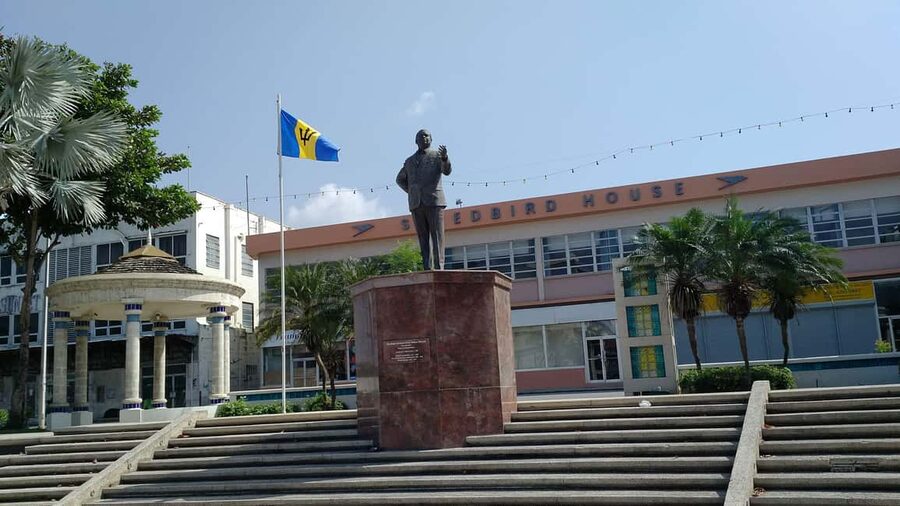
- Start at Independence Square: Meet by the Errol Barrow Statue, a useful central point for beginning your look at Bridgetown.
- Hear the city’s difficult stories: The route addresses slavery, war, Jewish heritage, colonial power, and independence rather than offering only pretty buildings.
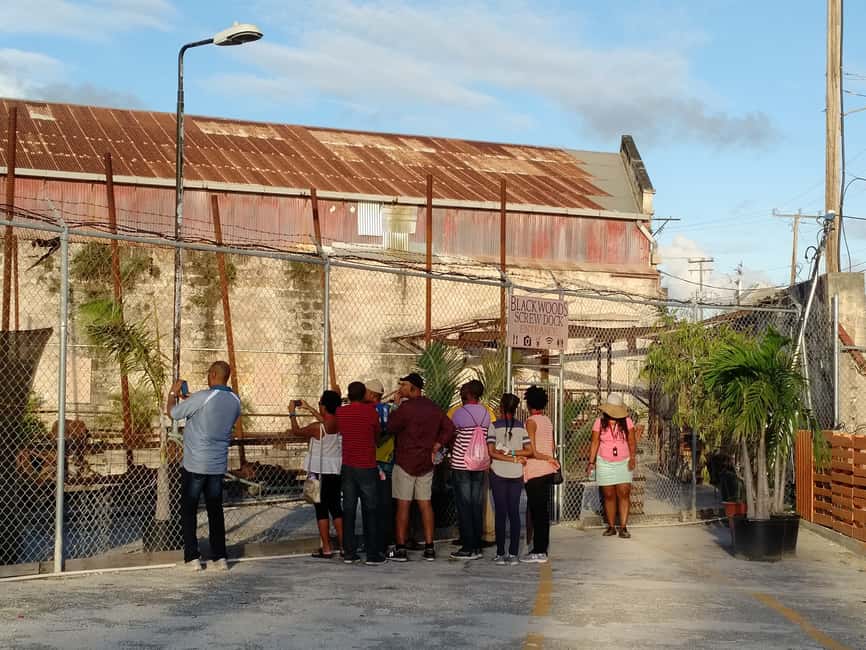
- See the Blackwood Screw Dock: This unusual industrial landmark is one of the tour’s most distinctive stops.
- Follow the bridges and streets: Learn how Bridgetown got its name while walking through Swan Street, past the fountain, and toward the wharf.
- Use the audio equipment: Headsets help you follow the guide beside busy roads and in noisy parts of town.
- Pay $25 for a useful introduction: The price is fair if you want context for the rest of your Barbados stay, though it is not a sightseeing tour built around entering many buildings.
Why this walk is a smart first look at Bridgetown
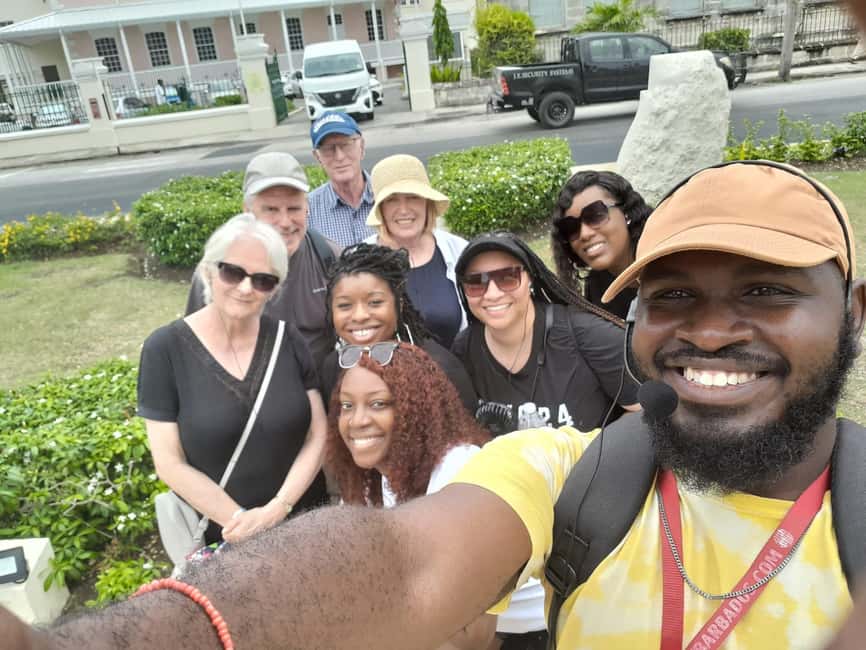
Bridgetown can seem easy to understand at first. There is the water, the shopping, the colonial-era architecture, and the compact center. But the city’s character comes from several layers of trade, migration, forced labor, politics, religion, war, and independence. This walk gives those layers a place and a face.
I would take it early in a Barbados visit. Once you know why the bridges matter, where commerce developed, and how the waterfront shaped the city, later walks through Bridgetown become more meaningful. You will recognize places instead of passing them as background scenery.
The route is also a good choice if you prefer a guide who talks with you rather than at you. Several guides have been praised for being calm, friendly, patient, and willing to answer questions. Evan is repeatedly singled out for his clear explanations and easy manner, while Zachary is praised for his warmth and attention to the group. Deborah has been described as engaging and especially good at finding shade during a hot walk.
That said, you should not expect a museum tour with long indoor visits. Much of the value comes from listening to the guide beside streets and buildings. If you want air conditioning, extensive time inside historic rooms, or a fast checklist of photo stops, this may feel too conversational.
More History Walking Tours in the world:
- History and Hauntings of Salem Guided Walking Tour
★ 5.0 · 14,564 reviews - Lisbon: History, Stories and Lifestyle Walking Tour
★ 4.8 · 10,902 reviews - Boston: Freedom Trail History Small Group Walking Tour
★ 5.0 · 6,450 reviews
Meeting Errol Barrow and beginning in Independence Square
The tour begins at the Errol Barrow Statue in Independence Square, at coordinates 13.0957448, -59.6134232. The meeting point is listed in Bridgetown, St Michael, although the overall location information also refers to Christ Church, Barbados. Use the precise meeting details when planning your arrival.
Independence Square is not treated as a simple place to gather. The opening explanation paints a picture of what this area meant before its current form. That approach is useful because it asks you to imagine Bridgetown as a changing port city, not just a collection of old buildings.
The beginning also pays attention to the unceremonious burial ground associated with enslaved people arriving on the island. This is one of the tour’s most serious moments. The subject is not pushed aside in favor of lighter sightseeing, and that gives the walk a more honest shape.
You may find the opening slower than a typical sightseeing tour because the guide is setting the political and human context first. I consider that a strength, but it may not suit someone who wants to get straight to architecture.
The Blackwood Screw Dock and Bridgetown’s working waterfront
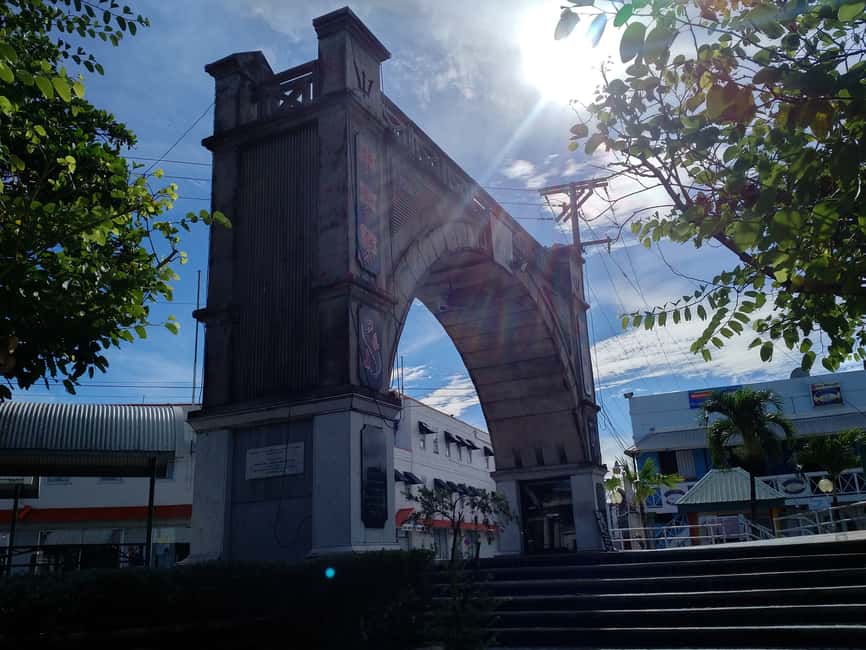
The Blackwood Screw Dock is one of the most unusual stops. The tour presents it as the only remaining screw dock of its kind in the world. Rather than simply pointing out a pretty waterfront view, the guide explains the working side of Bridgetown and the practical machinery that supported ships.
This is the kind of stop that benefits from a live explanation. A dock can be easy to overlook when you do not know what you are seeing. With the guide’s help, it becomes evidence of how ships were repaired and how closely the city’s fortunes were tied to the sea.
The waterfront portion also leads toward the wharf and the Spirit Bond. These locations add a commercial and maritime thread to the walk. You hear about the movement of goods, the role of storage, and the people who made Bridgetown a place of business as well as government.
The route later includes a stroll along the boardwalk. That final stretch offers a change of pace after the denser streets and gives you a chance to look back toward the water.
Bridges, fountains, and the city’s name
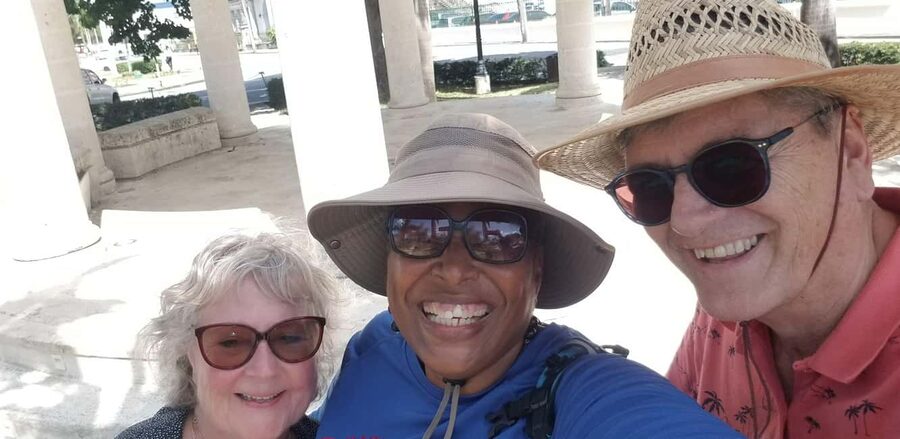
Bridgetown’s name is explained through the city’s bridges. The tour takes you toward one of two bridges and uses that setting to explain how the city developed around crossings and water.
This is a small detail with a useful payoff. A city name can seem like a label until you learn the physical reason behind it. Here, the name connects directly to the shape of the place.
The route also pauses at a fountain associated with bringing running water into the city. That detail puts daily life beside grander political stories. Water systems rarely make the front page of a sightseeing brochure, but they tell you how a city grew and what its residents needed.
The Cenotaph adds another layer. Here, the guide recognizes the sacrifices of Barbadian men in the two world wars. It is a brief but important reminder that the island’s story reaches beyond the Caribbean and includes military service, loss, and international conflict.
More Guided Tours in the world:
- Edinburgh: Edinburgh Castle Guided History Tour with Tickets
★ 4.8 · 9,933 reviews - Historic Charleston Guided Sightseeing Walking Tour
★ 5.0 · 6,216 reviews - Rome: Colosseum with Arena, Roman Forum and Palatine Guided Tour
★ 4.0 · 5,598 reviews - Venice: St. Mark’s Basilica Guided Tour & VR History Intro
★ 3.9 · 4,880 reviews
Parliament Buildings across the bridge
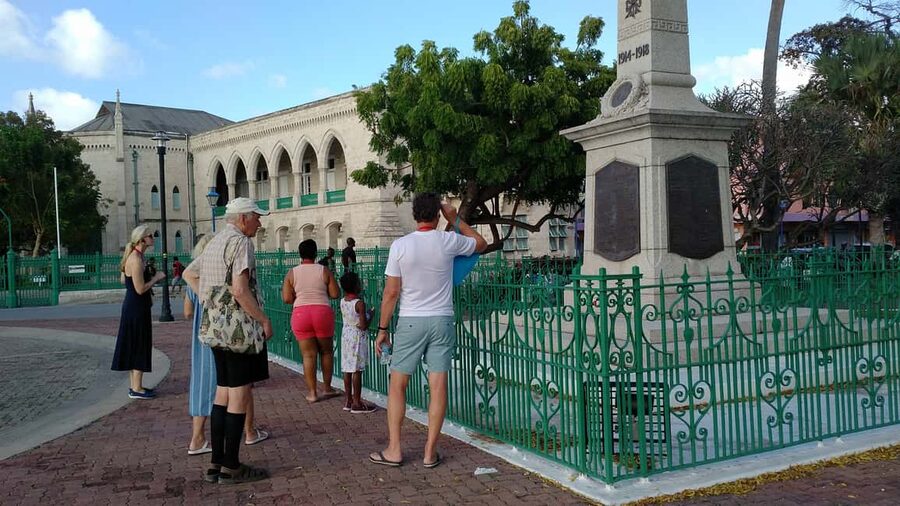
The Parliament Buildings receive one of the tour’s main storytelling moments. The guide explains the importance of one of the oldest continuously functioning parliaments in the Commonwealth, while the buildings provide a formal architectural counterpoint to the working waterfront.
You will not simply be asked to admire the façade. The stop connects the building to the growth of representative government and the political history of Barbados. That makes the view more useful than a quick photograph.
The phrase across the bridge matters here. The route uses the bridge as both a physical crossing and a way to move between different parts of the city’s story. On one side, you have trade and movement. On the other, government and civic life.
There is a practical limitation. The tour information does not promise an interior visit to Parliament or any other building. Plan on hearing the story from outside, and enjoy the chance to take photographs when the group pauses.
Rum, Jewish heritage, and the people behind the city
One of the liveliest subjects is the birth of rum. The tour explains how rum began in Barbados and treats its origin as more than a drink story. Rum is tied to agriculture, trade, labor, and the island’s economic development, so this stop helps connect everyday culture with larger forces.
The guide then recognizes Barbados’s Jewish ancestors. This is a valuable inclusion because it broadens the story beyond the most familiar colonial landmarks. You get a sense of the different communities that helped shape Bridgetown’s commercial and social life.
The human stories are a major reason to choose this tour. The route looks for the men and women who made the city exciting, not only the officials whose names appear on plaques. That can include merchants, workers, religious communities, political figures, and ordinary people affected by the city’s growth.
The tone matters. Guides have been praised for handling the past respectfully while keeping the walk approachable. You can ask questions as you go, and the pace leaves room for photographs and conversation.
Swan Street, the oldest church, and Town Hall
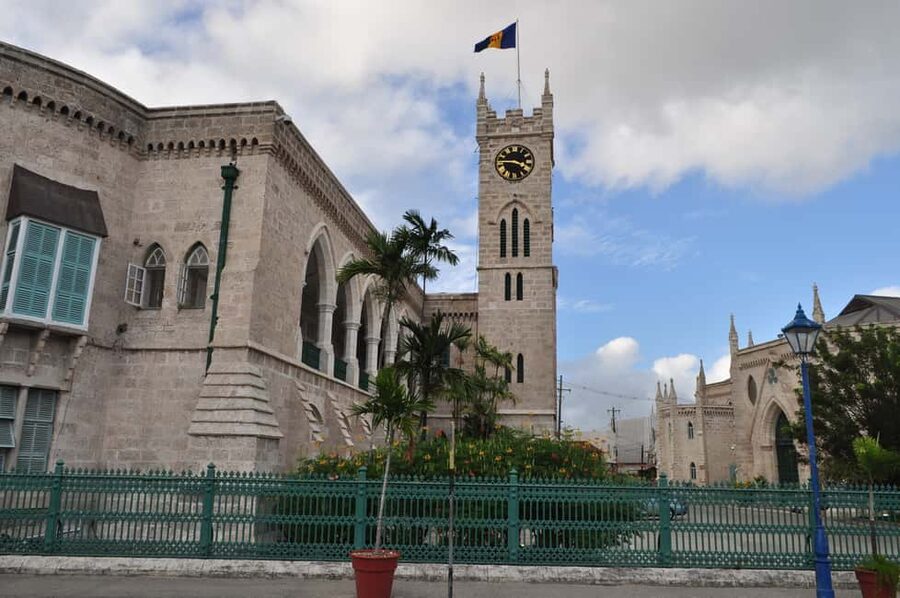
Swan Street brings the tour into Bridgetown’s commercial heart. It is described as the city’s oldest street, and the guide uses its shops and activity to explain how trade developed in the center.
This is where the contrast between old and new becomes clear. You may be looking at modern commerce while hearing about the street’s earlier role. I like that the route does not isolate history behind museum glass. It shows how old patterns remain part of a working city.
The tour continues to the oldest church and Town Hall. These stops help you compare religious and civic authority. The church reflects the importance of faith and community, while Town Hall points to local administration and public business.
The route covers several landmarks in a relatively short time, so some stops will naturally be more detailed than others. If you want a full architectural study of every building, two hours will not be enough. If you want a well-shaped introduction, the sequence works.
The Mutual Building and another commercial street
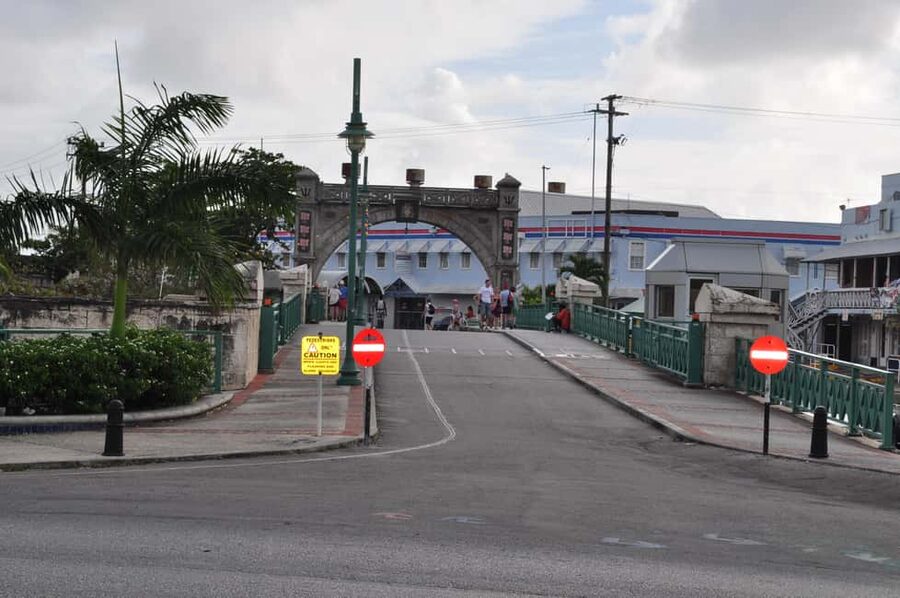
The Mutual Building is described as a magnificent structure with many stories to tell. It provides another chance to look up and pay attention to Bridgetown’s built character, especially after hearing about government, religion, and trade.
The next commercial street continues that theme. The tour shows that Bridgetown’s history is not confined to monuments. Streets used for buying, selling, shipping, and meeting people are just as important to understanding the city.
This portion may appeal to you if you like urban history. You see how a capital works as a living place, not just as a heritage district. The guide’s explanations help connect buildings that might otherwise seem unrelated.
Because the tour stays outdoors, comfortable shoes are essential. A hat, sunscreen, and water are sensible additions, even though water has often been supplied on departures. The route is not described as strenuous, and one account notes that people in their 80s completed it with ease, but Bridgetown’s heat can still make a slow pace feel demanding.
The Spirit Bond, boardwalk, and independence
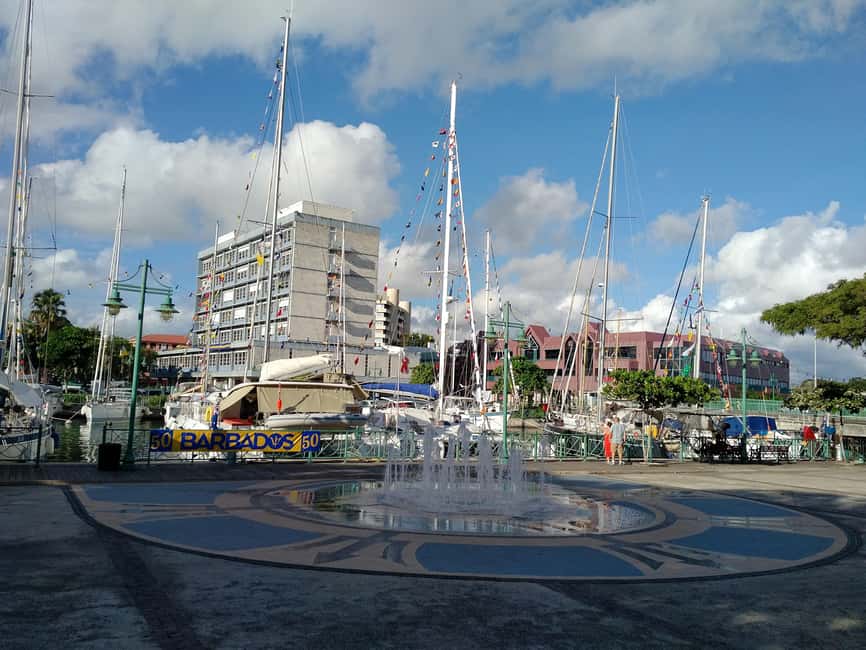
Near the end, the tour returns to the waterfront through the Spirit Bond and the wharf. These stops bring the commercial and maritime threads together before the boardwalk provides a more open walk back toward the starting area.
The final story concerns independence. After hearing about slavery, trade, government, war, religion, and migration, you reach the modern political chapter. The tour frames independence as the point where the city’s long story moves into a new national era.
That ending gives the walk a clear shape. It does not leave you with disconnected facts. You begin with the place itself, follow its growth and conflicts, and finish with the country defining its own future.
The boardwalk is also a welcome chance to cool down and take in the water. If the group has been talkative, the full outing may run close to two hours. One account described the walking portion as around 90 minutes, with questions and conversation extending the total time. Allow the full two hours rather than planning a tight connection immediately afterward.
Guides, headsets, snacks, and the practical details
The live guide is the heart of this experience. English is the tour language, and English audio equipment is included. The headsets are especially useful near traffic or busy streets, where you might otherwise miss a sentence while standing at the back of the group.
Guides named in recent departures include Evan, Zachary, Deborah, Christian, Christen, Kristin, and Ewen. Guide assignments can change, so do not book solely for one person. Still, the consistent pattern is clear: the strongest part of the tour is the guide’s ability to explain local events, answer questions, and adjust the pace.
The official inclusion is a light snack containing nut products. Small bags with snacks, water, and sometimes mints have also been provided on departures. Treat the nut warning seriously if you have an allergy, and confirm the current snack arrangements before booking if that affects your plans.
The price is $25 per person. I consider that good value for a two-hour introduction, especially because you receive a live guide, audio equipment, and a snack. You are paying for interpretation and local context, not simply for a walk between buildings.
Transportation to the meeting point is not included. You need to make your own way to Independence Square and arrange your own return. The central location makes this easier than a tour that starts outside town, but leave enough time to find the Errol Barrow Statue.
Free cancellation is available up to 24 hours before the start, and you can reserve while paying later. Bad weather may affect the outing, with rescheduling offered where possible. Smoking is not allowed, and comfortable shoes are required.
Who should book this Bridgetown walk?
I would recommend it to first-time visitors, cruise passengers with a few hours in town, history fans, and anyone who wants to understand Barbados beyond beaches and rum shops. It also suits people who like asking questions and hearing local stories in a relaxed setting.
The walk can work well for older adults because the pace is manageable and the route is not described as strenuous. Families may also appreciate the short duration, though younger children who dislike listening at historic stops could lose interest.
You may want another option if you need a private tour, a fully indoor experience, transportation, or a very fast route focused only on photographs. The heat and occasional rain are real considerations, and the snack contains nuts.
Should you book it?
Yes, if you want a well-priced introduction to Bridgetown with serious history, useful local detail, and a guide who can respond to your questions. The best reasons to book are the clear audio system, the unusual Blackwood Screw Dock, the honest treatment of slavery and independence, and the chance to connect ordinary streets with major events.
Book it early in your stay if possible. Bring comfortable shoes, sun protection, and a flexible attitude about weather. At $25, this is a practical way to get your bearings and understand what you are seeing when you explore Bridgetown on your own later.
FAQ
Where does the Bridgetown walking tour begin?
It begins at the Errol Barrow Statue in Independence Square, Bridgetown, St Michael. The listed coordinates are 13.0957448, -59.6134232.
How long does the tour last?
The scheduled duration is two hours. The walking portion may sometimes feel shorter, while questions and conversation can bring the total outing close to two hours.
What language is the tour offered in?
The live tour guide speaks English, and the included audio guide equipment is also in English.
What is included in the price?
The price includes a live guide, use of audio equipment, and a light snack. The snack includes nut products.
Is water provided?
Water has been provided on many departures, often with snacks in a small bag. The formal inclusion lists a light snack, so confirm current arrangements if water is important to you.
Do I need transportation to the meeting point?
Yes. Transportation to and from the assembly point is not included, so you must arrange your own way to Independence Square and back.
What should I bring?
Bring comfortable shoes. Sun protection and extra water are sensible for an outdoor walk, especially in hot weather.
Can the tour be canceled or rescheduled because of weather?
Inclement weather can affect the tour. Rescheduling is offered where possible, and you can cancel up to 24 hours in advance for a full refund.
Just added around the world
- Bruges: Historical Walking Tour with Food Tasting★ 3.6 · 22 reviews
- Brno: Historic Downtown Walking Tour★ 3.8 · 302 reviews
- Bruges: Nightly Tales and Untold History Walking Tour★ 4.9 · 154 reviews
- Bruges: History, Chocolate and Beer Walking Tour★ 4.9 · 65 reviews
- NYC: Brownstone Brooklyn History, Culture and Food Tour★ 4.8 · 151 reviews
- Unforgettable Bruges: Sightseeings, History and Tasting.★ 4.3 · 27 reviews
- Braga and Guimarães – The Heritage Tour★ 4.8 · 19 reviews
- Boston: Underground Railroad History Tour of Beacon Hill★ 4.9 · 38 reviews
History Walking Tours, compared.
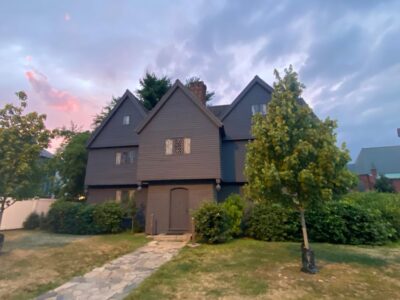
History and Hauntings of Salem Guided Walking Tour
Read our review →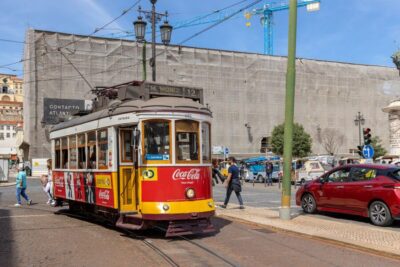
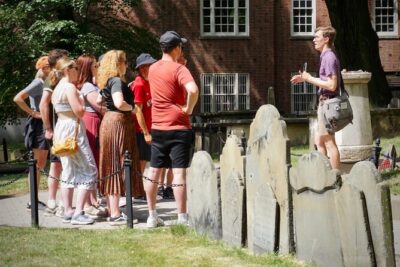
Freedom Trail History Small Group Walking Tour
Read our review →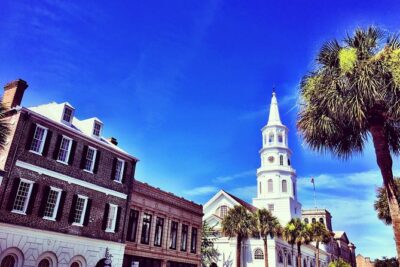
Historic Charleston Guided Sightseeing Walking Tour
Read our review →
Tapas Walking Tour with Food, Wine, and History
Read our review →
Savannah History and Haunts Candlelit Ghost Walking Tour
Read our review →