
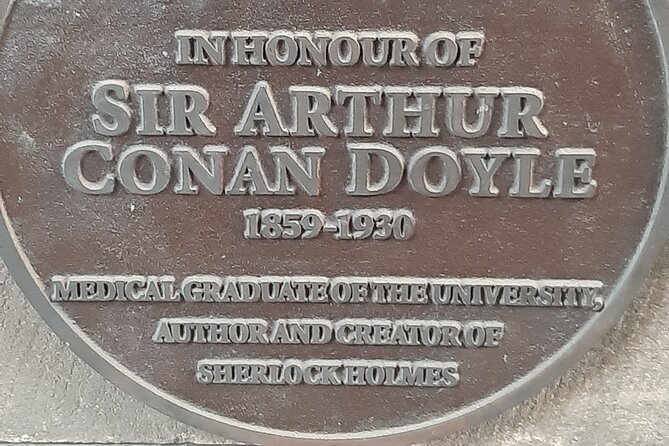
Review · EDINBURGH
Medical and Surgical History of Edinburgh – Private Walking Tour
Edinburgh’s medical past is hiding in plain sight. This private walking tour links the Royal Mile, Cowgate, Surgeons’ Hall, and the old Royal Infirmary into one lively story about doctors, surgeons, students, and patients. I especially like the small-scale private format and the way the route connects buildings to real medical and social change.
I also like the guide’s personal connection to medicine. Moray is praised for his warm manner, clear explanations, Scottish facts, and entertaining delivery. The main drawback is practical: the walk covers about 2.5 miles, often over three to four hours, so it is not a good fit if walking causes chronic or painful joint and muscle problems.
Key points to know before you book
- Medical stories unfold along real Edinburgh streets, from the Royal Mile to Lauriston Place.
- The Little House and first Royal Infirmary reveal how medical teaching and hospital care began in the city.
- Women’s fight to enter medical school is a major part of the visit to Surgeons’ Hall.
- Charles Darwin’s former student lodgings appear along the route near Bristo Place.
- A cafe break is built in, but coffee, tea, and food cost extra.
- The private format suits curious small groups, especially anyone interested in medicine, education, or social history.
Why this Edinburgh walk is different
Edinburgh is often sold through its castle, closes, and dramatic old town views. Those sights matter, but this tour gives you another way to read the city. A narrow alley may become the birthplace of a medical institution. A handsome university building may reveal years of hard student work, strict training, and fierce arguments over who was allowed to study medicine.
I like tours that make familiar streets useful. This one does that by following the growth of Edinburgh medicine from early professional organizations and basic teaching facilities to major hospitals and formal medical education.
The subject is specialized, but the tour is not limited to doctors. You will hear about medical practice, hospital life, student routines, social class, gender barriers, and the city’s growing role as a center for medical learning. That wider frame gives the walk more weight than a simple list of famous physicians.
The guide, Moray, is a large part of the appeal. His background as a physician adds a personal point of view, while his delivery keeps the material moving. The tone appears friendly and conversational rather than stiff. One particularly useful detail is that the walk can run beyond four hours if the discussion takes off, so avoid scheduling a tight afternoon appointment.
More History Walking Tours in the UK
- Edinburgh: Old Town History and Tales Walking Tour
★ 4.8 · 2,361 reviews - Old Town Walking Tour History and Tales in Edinburgh
★ 5.0 · 2,168 reviews - Edinburgh: Witches & Haunted History Walking Tour
★ 4.8 · 1,290 reviews
Starting on the Royal Mile at Hunter Square
The tour begins at Hunter Square, a convenient point near the Royal Mile. You start by walking down Edinburgh’s oldest main street, using its lanes and buildings to trace the beginnings of medicine and surgery in the city.
The first section lasts about 45 minutes. It is a good introduction because you are not asked to absorb a long lecture before moving. Instead, the city itself supplies the setting. You will locate the alleyway connected with the early College of Physicians and learn how Edinburgh’s medical profession began to organize.
This opening also sets the tour’s style. The emphasis is not on entering a series of museums or viewing a large collection of objects. It is on understanding the places where medical work, teaching, and professional life actually developed.
Admission is included because the tour is based on outdoor walking and commentary. You should expect historic streets, changing pavement, and some urban walking rather than a formal indoor exhibition.
Robertson’s Close and the first teaching hospital
From the Royal Mile, the route heads toward Cowgate and Robertson’s Close. Here you find the site of The Little House, described as Edinburgh’s first teaching hospital.
The name sounds modest, and that is part of the point. Early medical teaching did not begin in the grand institutional setting you may picture today. The story shows how a small facility could become part of the foundation for a much larger system of instruction and care.
This section takes about an hour and includes the complex associated with the first Royal Infirmary of Edinburgh. I expect this to be one of the most rewarding parts for anyone who wants to understand how hospitals developed. You are not simply told that Edinburgh had an important infirmary. You are shown where that institution took shape and how its role grew.
Cowgate also adds a different side of the Old Town. The route moves away from the most polished tourist streets and into a setting where the history of medicine feels tied to ordinary urban life. The contrast helps explain why hospitals were such important civic institutions.
Because this is a walking tour, the value comes from the guide’s explanation. Without context, a close or old building may look like another piece of Edinburgh masonry. With Moray’s commentary, it becomes part of the story of medical teaching and hospital care.
A refreshment pause at Surgeons’ Hall
The next major stop is Surgeons’ Hall Museums, the historic home of Edinburgh’s surgical profession. The schedule allows about 45 minutes here, including a refreshment break and discussion.
You should note an important detail before booking: the cafe stop is included in the route, but coffee, tea, and food are not included in the price. That is a small extra cost, but it is also a useful pause after several hours of walking and listening.
The subject here shifts from institutions to access. You will hear about the long struggle for women to gain admission to medical school. That story gives the tour a human and social focus. It also shows that medical progress did not happen only through new operations or better hospitals. It depended on who could study, qualify, and enter the profession.
The tour does not promise a museum visit. In fact, the experience is centered on the outside route and spoken commentary, and you should not assume that a medical history museum admission is part of the walk. If you want time to explore Surgeons’ Hall Museums independently, leave extra room in your Edinburgh schedule.
That distinction matters. This tour is best for someone who wants a guided account of Edinburgh’s medical past, not for someone primarily seeking a long museum session with displays and specimens.
More Private History Tours in the UK
- Private Greyfriars Kirkyard history tour
★ 5.0 · 67 reviews - Private Royal Mile walking tour – Discover the history of our most famous street
★ 5.0 · 48 reviews - Private Historical Walking Tour of York
★ 5.0 · 1,324 reviews - Private Group: Historical Pub Walking Tour of London
★ 5.0 · 660 reviews
The University of Edinburgh and student life
The route continues to the former home of the University of Edinburgh Medical School. This stop is shorter, about 20 minutes, but it adds useful context about the city’s rise as a medical center.
Here the focus turns toward education. You will hear more about the growth of Edinburgh’s medical reputation and the daily life of medical students. The phrase drudgery and compensations captures the balance well. Medical training involved hard work and routine, but it also brought status, opportunity, and access to a major center of learning.
I like this part because it keeps the tour from becoming a parade of institutions. Medicine is also made by students sitting through lessons, learning difficult material, and working toward a profession. That perspective can make the grand names and buildings feel more human.
The shorter timing is probably helpful. After several longer stops, a compact explanation lets you keep moving without losing the main thread. You will also have more time to notice the streets and buildings around the university instead of rushing through a dense block of facts.
Bristo Place and Darwin’s Edinburgh address
Near Bristo Place, the route passes the site of Charles Darwin’s former medical student lodgings. The stop takes around 25 minutes and connects a famous scientific figure with the less glamorous reality of student accommodation.
Darwin’s connection gives the walk a familiar name, but the wider point is more useful. Edinburgh attracted students who came to study medicine and science, and their daily lives were part of the city’s intellectual growth. You get a glimpse of the people behind the institution, not just the institution itself.
The route then leads toward the imposing 1880s Medical School and graduation hall. The change in scale is striking. Earlier sections focus on closes, small teaching spaces, and the first hospital complex. Here, the architecture reflects a more established and confident medical system.
You should not expect a separate admission experience at every building. The tour works by placing these sites in sequence and explaining their role from the street. That keeps the day efficient, but it also means the quality of the commentary matters a great deal.
Lauriston Place and the former Royal Infirmary
The final stop is Lauriston Place, where the walk ends in the grand front courtyard of the former Royal Infirmary of Edinburgh. The site is now connected with the University of Edinburgh’s Futures Institute.
The last 15 minutes focus on some of the doctors and surgeons associated with the institution. After following the story from The Little House and the first infirmary, this grand entrance gives the route a clear ending. You can see how far Edinburgh’s medical institutions had developed.
Ending here is also practical. The tour does not bring you back to Hunter Square, so plan your next move from Lauriston Place rather than assuming you will finish in the Old Town. The stated end point is Edinburgh Futures Institute, at 1 Lauriston Place.
This final setting should appeal to anyone who enjoys architecture as part of a historical story. The courtyard is not just a place to finish the walk. It represents the scale and authority that Edinburgh medicine eventually gained.
What the private format adds
The price is about $130.44 per person, which is a serious charge for a walking tour. Its value depends on how much you want a focused, private conversation rather than a general city tour.
You are paying for exclusive guiding and commentary for your own group. That can make a big difference if you have a strong interest in medicine, medical education, or Scottish social history. You can ask questions, spend more time on a subject that catches your attention, and set a more personal pace within the demands of a 2.5-mile route.
Group discounts are available, though the exact saving is not stated. For a larger private party, check the final price carefully before booking. The per-person cost may make more sense when divided across a group, especially if the alternative is booking several separate activities.
The tour is less compelling value if you want broad coverage of Edinburgh’s main sights. It does not focus on the castle, royal history, whisky, or general Old Town sightseeing. You should choose it because the medical theme interests you, not because you want an inexpensive orientation walk.
The strong response to Moray’s warm and entertaining delivery also matters. A specialized topic can feel heavy if presented as a formal lecture. Here, the personal medical perspective and the chance to discuss healthcare help keep the subject grounded.
Pace, walking demands, and planning advice
The advertised duration is about three to four hours. One outing lasted more than four hours, so I would protect at least half a day for it. Do not place a timed museum visit or train departure immediately afterward.
The total distance is approximately 2.5 miles. That is manageable for many people, but Edinburgh’s old streets are not designed like a flat modern promenade. You should have a moderate level of physical fitness and wear shoes suited to extended city walking.
The experience is not recommended for people with chronic or painful musculoskeletal conditions. That warning is worth taking seriously. The private format may allow conversation about pacing, but it does not remove the distance or the demands of walking through the Old Town.
The tour is offered in English. Service animals are allowed, and the starting point is near public transportation. Confirmation is sent within 48 hours of booking, subject to availability.
The tour requires good weather. If poor conditions cancel it, you are offered another date or a full refund. You can also cancel up to 24 hours before the start time for a full refund. Changes or cancellations inside that 24-hour window are not accepted.
Who will enjoy this most
I would recommend this walk to people who already have some interest in medicine, hospitals, science, or the history of education. It also suits anyone who prefers stories about ordinary systems and working lives over a standard list of royal landmarks.
Medical professionals may appreciate Moray’s professional perspective and the chance to compare past healthcare with present practice. Families can enjoy it too, especially if older children or teenagers are curious about doctors, science, or Darwin, though the amount of spoken information may be demanding for very young children.
This is also a good pick for repeat visitors to Edinburgh. If you have already walked the Royal Mile and visited the castle, the tour gives you a fresh reason to look at familiar streets.
I would be more cautious if you dislike long explanations or want a mostly visual sightseeing experience. The buildings and locations matter, but the spoken account is the heart of the tour.
Should you book the Medical and Surgical History of Edinburgh walk?
Book it if you want a thoughtful, specialized look at Edinburgh and enjoy learning through places rather than displays. The route is well-shaped, the private format gives you room to ask questions, and Moray’s medical background adds credibility and warmth.
Skip it if you need a short, low-cost activity, have painful walking limitations, or mainly want Edinburgh’s headline attractions. For the right person, the price buys a memorable half-day conversation about how medicine, education, gender, and city life changed together.
FAQ
Where does the tour begin?
The tour begins at Hunter Square in Edinburgh, near the Royal Mile.
Where does the tour end?
It ends at Edinburgh Futures Institute, 1 Lauriston Place, in the former front courtyard of the Royal Infirmary of Edinburgh.
How long does the walking tour last?
The planned duration is approximately three to four hours. It may run longer, with one reported outing lasting more than four hours.
How far do you walk?
The route covers approximately 2.5 miles.
Is food or drink included?
No. The tour includes a refreshment cafe stop, but coffee, tea, and food are not included.
Is this a private tour?
Yes. Only your group participates in the activity.
Is the tour suitable for people with mobility problems?
A moderate level of physical fitness is recommended. Because the walk covers about 2.5 miles, it is not recommended for people with chronic or painful musculoskeletal conditions.
What happens if the weather is poor?
The experience requires good weather. If it is canceled because of poor weather, you will be offered another date or a full refund.
More Private History Tours in Edinburgh
- Private Guided Historic Electric Cart Tour of St. Augustine
★ 5.0 · 1,194 reviews - Istanbul: Acemoglu Historical Turkish Bath w/Private Options
★ 4.6 · 1,190 reviews - From Cairo: Private Full-Day Tour of Historical Alexandria
★ 4.1 · 1,155 reviews - Porto: Private Tour of the Historic City in a Ford T Car
★ 4.8 · 932 reviews
More History Walking Tours in Edinburgh
- Edinburgh Old Town: Historical Guided Walking Tour
★ 5.0 · 1,016 reviews - Edinburgh: 3-Hour Historical Walking Tour in Italian
★ 4.7 · 734 reviews - Edinburgh: Witches & Haunted History Walking Tour
★ 5.0 · 632 reviews - Edinburgh: Old Town History Walking Tour
★ 4.9 · 528 reviews
Just added around Edinburgh
- The History Behind Outlander Tour★ 5.0 · 18 reviews
- Thirsty for Edinburgh: Scotlands Best Historical Pub Tour★ 5.0 · 24 reviews
- St Andrews, Fife Coast Walk & Historic Abbey Tour from Edinburgh★ 5.0 · 62 reviews
- Old Town Walking Tour★ 5.0 · 17 reviews
- The Anatomist – Award Winning Historical Escape Room Experience★ 5.0 · 151 reviews
- Edinburgh: History Lovers Old Town Walking Tour★ 5.0 · 216 reviews
- Private Royal Mile walking tour – Discover the history of our most famous street★ 5.0 · 48 reviews
- Small-Group Historic Coffee Tour in Edinburgh★ 5.0 · 64 reviews
History Walking Tours, compared.
History and Hauntings of Salem Guided Walking Tour
Read our review →
Freedom Trail History Small Group Walking Tour
Read our review →
Historic Charleston Guided Sightseeing Walking Tour
Read our review →
Tapas Walking Tour with Food, Wine, and History
Read our review →
Savannah History and Haunts Candlelit Ghost Walking Tour
Read our review →
A History of Terror – Belfast City Centre Walking Tour
Read our review →Browse the lists this tour appears in