

Review · DENVER
Historical Walking Tour Of Denver With A Haunting Twist
Denver keeps its best stories behind grand doors. This two-hour walk brings you through Capitol Hill, where old mansions, political power, doomed fortunes, literary characters, and reported hauntings all share the same streets. Costumed guide Jules, known in character as Madame DuBois, leads the walk with history, humor, and plenty of spooky lore.
I like the mix of Denver architecture and human drama. You are not simply checking off landmarks. You hear about the people who built these houses, lost their fortunes, fell ill, entertained famous writers, or supposedly never left. I also like the small group limit of 16, which should make it easier to follow the storytelling than on a large city tour.
The main drawback is practical: this is an outdoor walking tour, and one past participant found it difficult to hear the guide while she was walking and speaking. Hot weather can also make the route tiring, so bring water, a hat, and comfortable shoes. If you prefer ghost stories with theatrical thrills over detailed local history, parts of the tour may feel more historical than frightening.
Key Things to Know Before You Go

- Madame DuBois, also known as Jules, leads the walk in costume and is praised for her lively storytelling and friendly manner.
- The route focuses on Capitol Hill and Millionaire’s Row, with grand homes linked to Denver’s wealthy families and its old social elite.
- You see the exteriors only, including the Colorado State Capitol, Molly Brown House, Peabody-Whitehead Mansion, Patterson Inn, and other historic properties.
- The tour costs $30 per person and lasts about two hours, making it a reasonably priced way to explore a concentrated historic district.
- The walk combines architecture, local scandals, literary history, and ghost tales, so it suits curious history fans as well as people seeking a spooky evening.
- The group is capped at 16 people, but you should stay near the guide so you do not miss details while moving between stops.
Why Capitol Hill Makes Such a Good Setting
Denver’s Capitol Hill district gives this tour a strong sense of place. The route passes grand residences from the city’s late 19th-century boom, when wealthy families built elaborate homes near the state government and competed for status.
The houses reflect what the tour describes as the Denver Style. Owners mixed classical forms with turrets, spires, porches, and decorative flourishes. The result was often flamboyant rather than orderly. You will see buildings that look as if several architects argued over the same drawing board.
That visual setting matters. A ghost story told beside an ordinary apartment block can feel thin. A story told outside a mansion with carved stone, dark windows, and a complicated past has more weight. Even if you do not believe in ghosts, the buildings make the stories easy to picture.
The tour also gives you a look at a side of Denver that can be missed if you stay around the main downtown sights. Capitol Hill is close to the center, but its old mansions and historic streets create a different mood. You get a better sense of how Denver’s early wealth shaped the city.
More History Walking Tours in the USA
- History and Hauntings of Salem Guided Walking Tour
★ 5.0 · 14,564 reviews - Boston: Freedom Trail History Small Group Walking Tour
★ 5.0 · 6,450 reviews - Historic Charleston Guided Sightseeing Walking Tour
★ 5.0 · 6,216 reviews
Meeting at the Capitol and Sherman Street
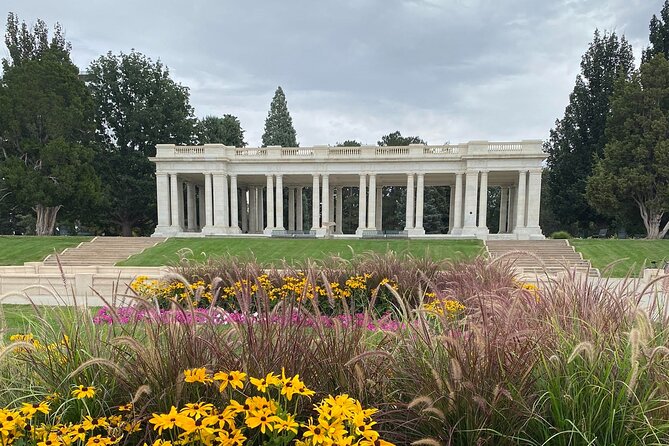
The walk begins at East 10th Avenue and Sherman Street. This is a useful starting point because the first section brings together government, old society, architecture, and views toward the Capitol.
The Colorado State Capitol is the first major stop. You do not enter, but the guide explains its history and the stories connected with it. Ten minutes may not sound like long, but the purpose here is orientation. The Capitol gives you a reference point for understanding the district and Denver’s political past.
From there, you pass the Molly Brown House Museum. Again, there is no admission to the museum as part of this experience. The value is in hearing about Molly Brown and the stories attached to her home while seeing the setting from the street.
That distinction is important. If you want to tour the inside of the Molly Brown House, you will need a separate ticket and additional time. This walk is designed to keep moving through the neighborhood rather than spend an hour inside one property.
The route then reaches Poets Row, described here through the Mark Twain stop. The homes on this block carry the names of writers and poets, and the area forms part of the Sherman Street Historic District, listed on the National Register of Historic Places in 2004.
This is one of the more unusual stops because it combines architecture, literature, and local scandal. You also get a good view of the Colorado State Capitol from here. The guide uses the location to tell the less polished stories of the block, giving the pretty facades a more complicated backstory.
Mansion Stories at Crawford Hill and Peabody-Whitehead
At 100 East 10th Avenue, you hear about the Crawford Hill Mansion and the woman known as Denver’s Queen Bee of Society. The stop is less about entering a building than about understanding the social world around it.
This is where Madame DuBois’s performance style matters. The stories are presented with theatrical flavor, and the tour description promises enough scandal to make old Denver society sound like a serialized drama. If you enjoy stories about rivalries, status, and private misfortune, this should be one of the more entertaining sections.
Next comes the Peabody-Whitehead Mansion at 1128 Grant Street. It is presented as one of Denver’s two most haunted houses, with the Patterson Inn appearing later as the other. The guide covers the residents, the house’s history, and the strange events associated with it.
You should approach claims of haunting as folklore rather than proven fact. That does not make them useless. Ghost stories often preserve the memory of people and places that might otherwise be reduced to dates and architectural styles. The best part is usually the combination of documented history and local belief.
At 1244 Grant Street, the Creswell Mansion offers a different kind of story. It is now known as the Marijuana Mansion because of its connection to the history of marijuana legalization. The property also has an eclectic design and its own collection of ghost tales.
This stop broadens the tour beyond the 19th century. You get a reminder that Denver’s old buildings continue to gather new identities. A house can move from private residence to cultural landmark, and its story can keep changing long after its first owners are gone.
Walking Millionaire’s Row on Pennsylvania Street
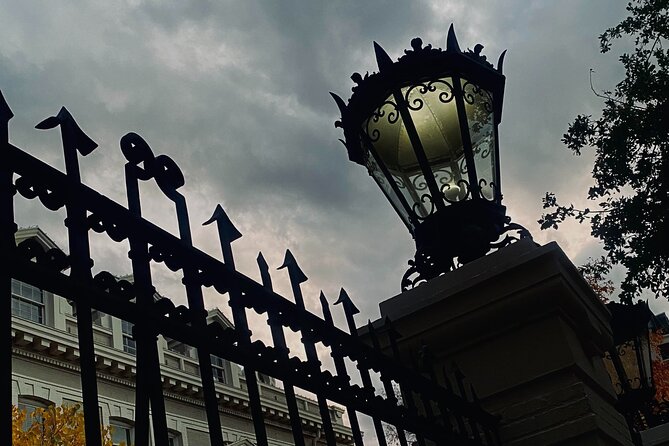
Pennsylvania Street is the architectural centerpiece of the walk. The area was once known as Millionaire’s Row, where Denver’s richest residents built lavish homes on Quality Hill in the late 1800s.
The tour presents this street as Denver’s most haunted. Again, that is a claim rooted in local lore, not something you should treat as a scientific finding. Still, the setting does much of the work. Grand homes, narrow sidewalks, old trees, and elaborate details create an atmosphere that suits stories about restless spirits.
You will hear how wealthy owners tried to outdo one another. Their houses combined different classical styles, often with little concern for restraint. Turrets, spires, and porches were added for effect, and the final buildings could look nothing like the simple plans from which they began.
I like this part because it gives you something concrete to look at while listening. The architecture is not background decoration. It reveals how Denver’s elite wanted to be seen. The houses tell stories of money, ambition, taste, and competition before the Silver Crash of 1893 changed the city’s fortunes.
The walking pace also helps you compare the homes. Rather than seeing one isolated mansion, you follow the street and notice how each owner tried to make a mark. The ghost stories add drama, but the architectural context gives the stop lasting value.
Same place, a different slice of the past:
- Charleston’s Old South Carriage Historic Horse & Carriage Tour
★ 5.0 · 10,023 reviews - Beneath The Streets Underground History Tour
★ 4.5 · 8,006 reviews - Charleston Horse-Drawn Carriage Tour: Explore Historic Charleston
★ 5.0 · 3,561 reviews - Savannah History and Haunts Candlelit Ghost Walking Tour
★ 5.0 · 3,235 reviews
The Capitol Hill Mansion and the Pennborough
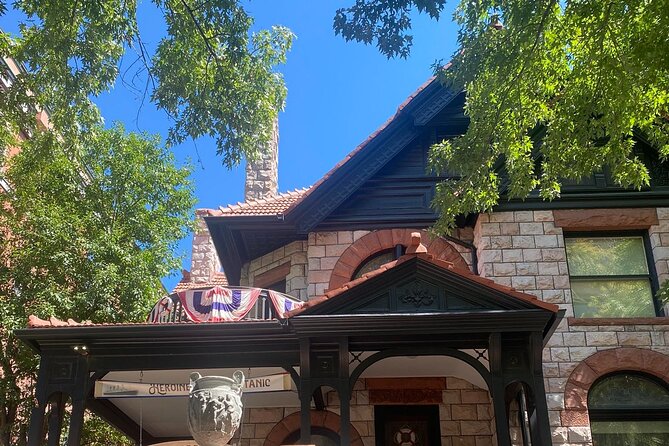
The Capitol Hill Mansion Bed & Breakfast Inn is another strong visual stop. Its Richardsonian Romanesque and Queen Anne design gives it the sort of detailed exterior that rewards a slower look. The property was one of the last homes built before the Silver Crash of 1893.
The tour presents the house as one of the most atmospheric places on the route, especially when its lighting gives the building an otherworldly appearance. You do not need to enter to appreciate why it photographs well. If you enjoy historic architecture, keep your attention on the stonework, shapes, and contrasting styles while the guide explains the property’s past.
At 1165 Pennsylvania Street, the Pennborough adds a darker chapter. The site began as twin mansions, later purchased by Dr. Tilden. A connecting wing joined them, and the complex became a tuberculosis home.
That history gives the stop more seriousness than a simple haunted-house story. Tuberculosis shaped many families and institutions in earlier Denver, and a former treatment home naturally carries stories of illness, fear, and loss. The guide also discusses strange events associated with the property, but the historical setting is the real anchor.
This part of the tour works best if you listen for the changes in use. A mansion can begin as a display of wealth, then become a medical institution, and later take on a reputation for unexplained activity. Those shifts show how the city’s buildings survived changing times.
The Patterson Inn and Denver’s Most Haunted Reputation
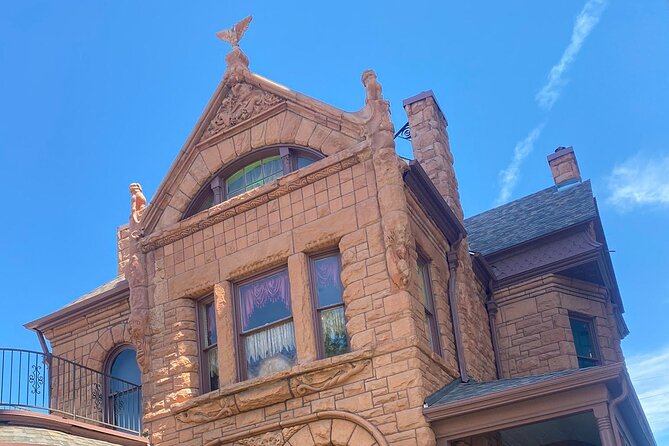
The Patterson Inn, also called the Croke-Patterson Mansion, is the second of the tour’s two especially haunted houses. The guide pauses here for a longer collection of stories about the building and the spirits said to remain there.
The property is also associated with the 12 Spirits Tavern, where one past tour group ended the evening with a drink. The tour itself is a walking experience, not a bar visit, and admission to attractions or drinks is not included. Still, the location offers a natural option for extending the night after the storytelling ends.
The Patterson stop is likely to appeal most to people who want atmosphere. You are looking at a historic mansion while hearing about its former residents and reported hauntings. The setting gives the stories a physical anchor, but the experience remains a matter of folklore and interpretation.
If you are bringing children, consider how they handle ghost stories. The information provided does not give a specific age minimum, and most people can participate, but the tone is clearly spooky and includes stories about illness, death, and troubled residents.
Finishing at the Colburn Apartments and Charlie Brown’s

The final scheduled stop is the Colburn Apartments. This former hotel was connected with Denver’s bohemian period and later became a meeting place for Hollywood figures and writers.
The guide links the property with Jack Kerouac, Neal Cassady, Allen Ginsberg, and William S. Burroughs. That gives the closing section a different flavor. Instead of focusing only on wealthy mansion owners and old social families, the tour shifts toward artists, writers, nightlife, and counterculture.
Charlie Brown’s bar has been located on the property since 1928 and is described as having changed very little. The bar has attracted figures such as Bill Murray and Tony Bennett, and former and current employees have shared stories about hauntings there.
Ending with a bar connected to the building gives the tour a more relaxed final note. You can finish with a drink if you choose, though that costs extra. It is a fitting close because the tour moves from Denver’s formal old society to the city’s more eccentric and creative side.
There is one practical point to clarify before booking. The tour details say the activity ends back at the meeting point, while the route description says the tour ends at the Colburn Apartments. Ask the operator where the guide will officially finish on your chosen date.
What the Two-Hour Format Feels Like
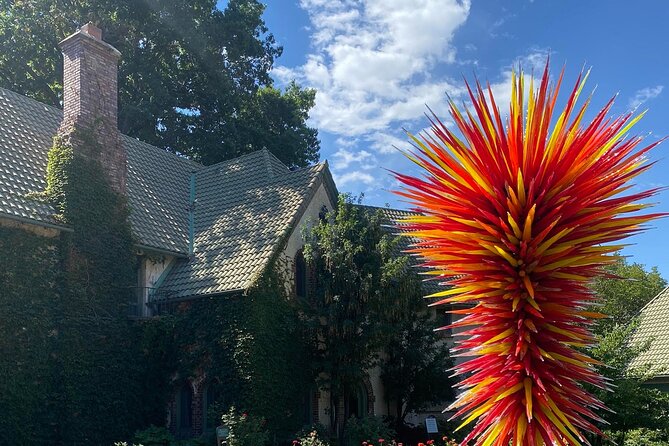
The route includes many short stops, most lasting about 10 minutes, with longer pauses at Poets Row and Pennsylvania Street. That format lets you cover a lot of ground without spending the entire evening at one address.
The tradeoff is that the guide may need to speak while walking. One past participant had trouble hearing sections of the commentary, especially when the guide faced away from the group. Stay close, ask the guide to repeat a point when needed, and gather near the front at each stop.
The group limit is 16 people, which is small enough for a more personal feel. Several people specifically praised Jules for being kind, entertaining, and willing to adapt to the group. She has even helped with a surprise engagement, showing that the tour can handle a little personal theater alongside its planned stories.
The walk begins in the late afternoon or evening, with listed operating hours from Monday through Thursday between 4:00 PM and 10:00 PM. Exact tour timing should be confirmed when you book. Since the experience depends on good weather, poor conditions can lead to a different date or a full refund.
Is $30 a Fair Price?
At $30 per person, this is a fair price for a two-hour guided walk with a small group and a specialized theme. You are paying for the guide’s storytelling and local research, not for museum admissions or entry into the mansions.
The value is strongest if you want several experiences in one: a Capitol Hill orientation, an architecture walk, a local history lesson, and a ghost tour. You would need more than one activity to get the same mix elsewhere.
The price is less appealing if you expect indoor access, dramatic special effects, or proof of paranormal activity. The buildings are viewed from outside, and the stories are delivered through live narration. Bring the right expectations and the cost makes sense.
Free cancellation is available up to 24 hours before the start time. Cancellations within 24 hours are not refunded, and poor weather may lead to a new date or a full refund.
Who Should Book This Denver Walk?
I would recommend it to first-time visitors who want a different introduction to Denver, locals who think they already know Capitol Hill, and anyone who enjoys architecture with a side of scandal.
It is also a good choice for couples, families with older children, and small groups of friends. The tour can be playful enough for a celebration, yet informative enough for people who want more than a string of ghost stories.
You should think twice if walking for two hours is difficult, if you need guaranteed indoor access, or if hearing a guide outdoors is a serious concern. Service animals are allowed, the route is near public transportation, and most people can participate, but the tour still requires steady walking and attention in an outdoor setting.
Should You Book It?
Book this tour if you like old houses, local characters, architectural detail, and ghost stories told with a wink. Madame DuBois gives the experience its personality, while Capitol Hill provides the scenery and the old Denver stories provide the substance.
I would choose it for an evening when you want to see a familiar city from a stranger angle. Bring water, wear good shoes, stay close enough to hear, and treat the hauntings as colorful local lore. At $30, it is a good-value introduction to one of Denver’s most story-filled neighborhoods.
FAQ
How long does the Denver haunted history tour last?
The tour lasts approximately two hours.
How much does the tour cost?
The price is $30 per person.
Where does the tour begin?
The meeting point is East 10th Avenue and Sherman Street in Denver, Colorado.
Is the tour offered in English?
Yes. The tour is offered in English.
Does the tour enter the Molly Brown House Museum?
No. The route passes the Molly Brown House Museum, but museum entry is not included.
What is the maximum group size?
The tour has a maximum of 16 travelers.
Is the tour canceled in bad weather?
The experience requires good weather. If poor weather causes a cancellation, you will be offered another date or a full refund.
Can I cancel for a full refund?
Yes. You can cancel at least 24 hours before the start time for a full refund. Cancellations made less than 24 hours in advance are not refunded.
Just added around the USA
- 700 Year Tour – Half Day Mesa Verde Cultural Tour★ 4.5 · 109 reviews
- Self Guided Detroit’s Spirit and History Solo Walking Tour★ 4.5 · 41 reviews
- Best Downtown Detroit Historical Walking Tour★ 5.0 · 56 reviews
- Detroit’s Hidden History Guided Walking Tour★ 5.0 · 48 reviews
- Private Nightlife Tour in Denver: Culture, History, and Cocktails★ 5.0 · 48 reviews
- Denver – Capitol Hill Guided Walking Ghost / History Tour★ 4.5 · 75 reviews
- Tip Based: Capitol Hill History & Ghost Tour★ 5.0 · 34 reviews
- Downtown Dallas Sightseeing & History 2 Hour E-Scooter tour★ 5.0 · 155 reviews
History Walking Tours, compared.
History and Hauntings of Salem Guided Walking Tour
Read our review →
Freedom Trail History Small Group Walking Tour
Read our review →
Historic Charleston Guided Sightseeing Walking Tour
Read our review →
Tapas Walking Tour with Food, Wine, and History
Read our review →
Savannah History and Haunts Candlelit Ghost Walking Tour
Read our review →
A History of Terror – Belfast City Centre Walking Tour
Read our review →Browse the lists this tour appears in