
Review · BLENHEIM
Skip the Line: Dangerous Skies WWII Exhibition – Omaka Aviation Heritage Centre
History takes wing here. Omaka Aviation Heritage Centre’s Dangerous Skies exhibition in Blenheim tells the story of World War II aviation through restored aircraft, dramatic displays, and personal stories that are easy to follow. It is more than a hangar full of old planes. The Battle of Stalingrad presentation adds sound, movement, and visual drama, while the story of Russia’s all-woman Night Witches bombing squad gives the exhibition a human edge.
I especially like the quality of the aircraft restoration and the work of Wellington’s Weta Workshop, whose mannequins help turn static displays into scenes with real character. I also like the choice between exploring independently and arranging guided commentary. The main drawback is practical: transportation, food, and drinks are not included, so you must make your own way to Omaka and allow enough time before the 4 pm or 5 pm closing hour.
Key points to know before you go
- World War II takes center stage: Dangerous Skies focuses on aviation’s people, machines, and battles rather than presenting aircraft as silent museum objects.
- The Night Witches get their due: The exhibition tells the story of Russia’s famous all-woman bombing squad, one of its most memorable subjects.
- Weta Workshop built the mannequins: The displays use detailed figures created by the Wellington effects company.
- The Battle of Stalingrad display uses multimedia: Expect more than labels and glass cases in this section.
- Allow at least 45 minutes: You can stay much longer, with the overall visit lasting from about 45 minutes to several hours.
- The price is modest: At about NZ$15.51 per person, the admission offers good value if you have an interest in military history, aircraft, or museum design.
What Dangerous Skies sets out to show
Omaka Aviation Heritage Centre covers aviation during both World Wars, a period when aircraft changed at remarkable speed. Dangerous Skies is the centre’s second major exhibition, unveiled in 2016, and it continues Omaka’s focus on historic aircraft with a strong World War II angle.
That focus matters. You are not simply looking at a collection of machines arranged in rows. The exhibition connects planes with the people who flew, maintained, and faced them. The result is easier to appreciate even if you are not an aircraft expert.
I would approach this as a story-led museum visit. You can admire the restoration work, of course, but the strongest parts ask what these aircraft meant in wartime. A bomber is not just a large metal object. It represents crews, missions, risk, and the technical limits of its time.
The centre is described as a world-class destination for historic aircraft, but the useful point for you is simpler: the displays are designed to work for enthusiasts and general sightseers alike. You do not need to know aircraft types or military abbreviations before arriving.
More WWII and D-Day Tours in the world:
- Vienna: World War II Historical Walking Tour
★ 4.8 · 1,772 reviews - Zagreb: City & History Walking Tour & WW2 Tunnels
★ 4.9 · 1,202 reviews - Pearl Harbor History Remembered Tour from Ko Olina
★ 5.0 · 1,009 reviews
Entering the exhibition at Omaka
The centre is open seven days a week, except Christmas Day. From January 5 through November 30, opening hours are 9 am to 4 pm, with last entry at 4 pm and closing at 5 pm. From December 1 through March 31, hours are listed as 9 am to 5 pm.
Check the date carefully when planning your visit. A late afternoon arrival may work during the longer summer schedule, but it gives you less room for a slow visit. I would aim to arrive earlier, especially if you want time for both the aircraft displays and the multimedia sections.
The minimum suggested visit is 45 minutes. That is enough for a quick look, but not enough if you read every panel, pause at the scenes, and spend time with the aircraft. The stated visit range of 45 minutes to seven hours reflects the fact that you can make this a short stop or give it a large part of your day.
Your ticket includes admission and GST. Transportation to and from the centre is not included, so plan your own route. There is a coffee kiosk and light refreshments on site, along with a shop selling souvenirs for children and adults.
Restored aircraft and the value of careful workmanship
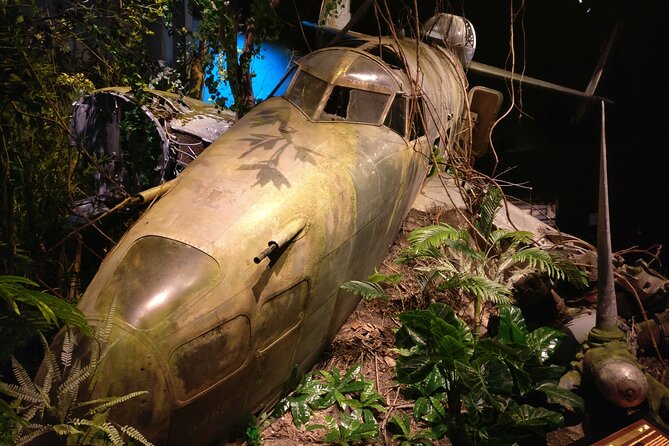
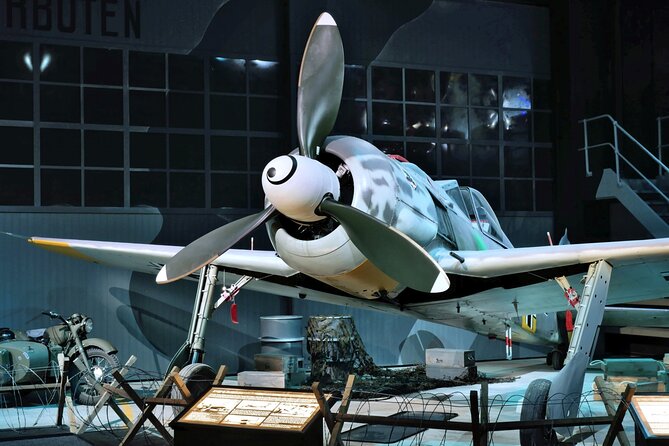
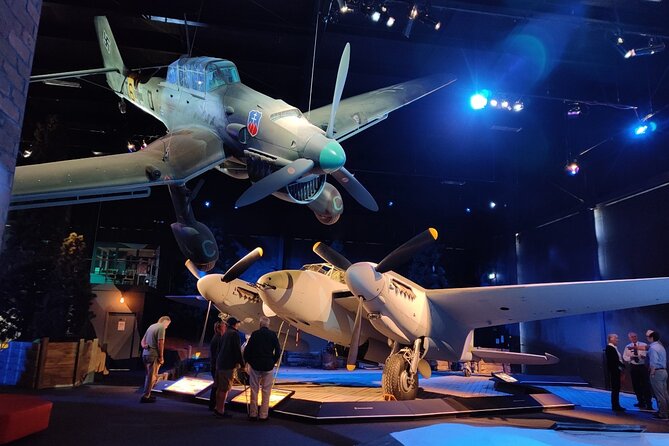
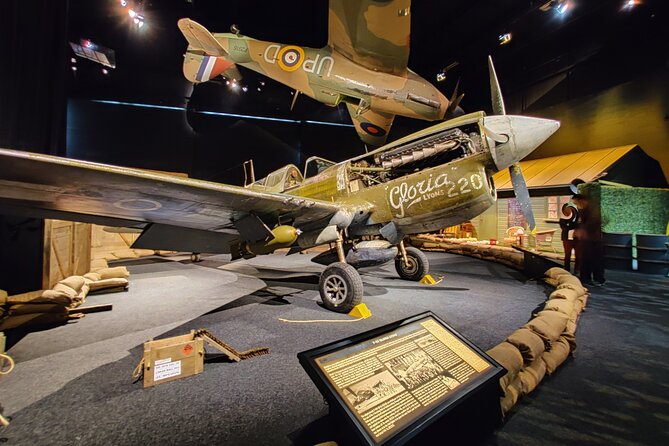
The restored bombers and fighter planes are the physical heart of the exhibition. Their size gives you an immediate sense of what wartime aviation demanded from both machines and people.
The restoration work has received especially strong praise, and that is easy to understand as a reason to visit. A restored aircraft lets you look closely at construction, shape, and mechanical detail. It also helps explain why aviation history is not only about battles. It is about engineering, maintenance, production, and the men and women who kept aircraft in the air.
If you already know your aircraft, you will likely spend more time examining details. If you do not, the large objects still provide a useful anchor for the stories around them. The planes give scale to the exhibition in a way that photographs cannot.
Do not rush past the aircraft to reach the dramatic presentation. The restored machines are not background decoration. They are the evidence that gives the stories weight.
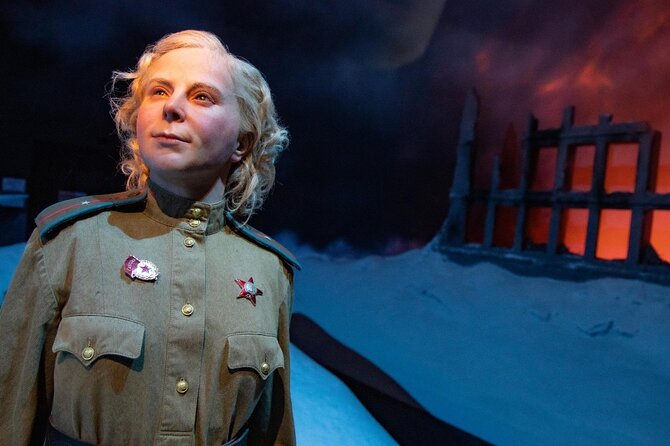
The Night Witches and the human side of war
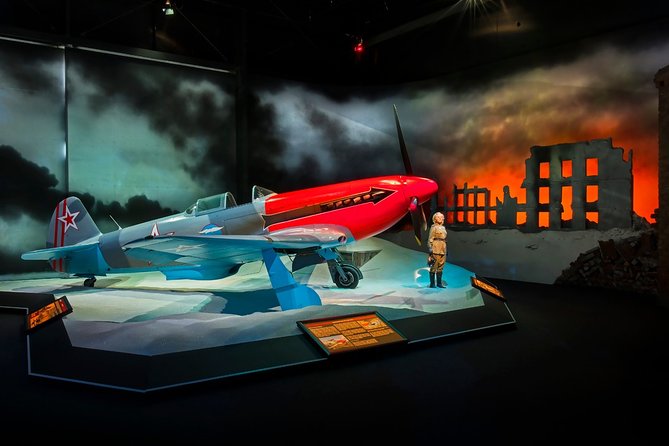
One of the most distinctive subjects is Russia’s Night Witches, the all-woman bombing squad known for nighttime missions during World War II. Their story broadens the exhibition beyond the usual list of famous male pilots and commanders.
This section is valuable because it brings attention to people who are often left at the edge of popular wartime storytelling. The Night Witches were not included merely as a footnote. Their presence gives the exhibition a stronger human focus and reminds you that aviation history includes many kinds of service.
The subject also makes Dangerous Skies a good choice for families and mixed-interest groups. Someone drawn to aircraft can study the machines, while another person can connect with the stories of courage, danger, and service.
The information provided does not give the length or format of this section, so you should treat it as one important part of the wider exhibition rather than a separate tour. If this is the story that interests you most, allow more than the 45-minute minimum so you can read and pause without watching the clock.
More Museum and Gallery History Tours in the world:
- Paris: Louvre Museum Entry with History of Mona Lisa
★ 3.9 · 2,823 reviews - Venice’s Best: Basilica, Doge’s Palace, Gondola & History Gallery
★ 4.5 · 2,478 reviews - Guided African American History Tour with Reserved Museum Entry
★ 4.5 · 1,180 reviews - Warsaw: POLIN Museum of the History of Polish Jews Ticket
★ 4.7 · 1,142 reviews
Weta Workshop’s mannequins bring the displays to life

The mannequins were created by Wellington’s Weta Workshop, best known internationally for detailed film effects and figures. That connection matters because the figures are not an afterthought. They help establish the mood and human scale of the scenes.
A mannequin can never replace a real person’s account, but it can show how a scene was arranged and where your eye should go. Figures make it easier to picture an aircrew member, ground worker, or person caught in a wartime setting.
This is one of the exhibition’s most approachable features. You do not need specialist background to understand a scene built around people. The displays offer a visual way into the subject, especially for younger visitors who may not spend long reading technical labels.
The tradeoff is that highly theatrical displays can guide your emotions quite strongly. If you prefer quiet museums with minimal staging, you may find the presentation more dramatic than expected. If you want a museum that gives context and atmosphere, the mannequins are a clear strength.
The Battle of Stalingrad presentation

The Battle of Stalingrad section is described as a multimedia experience that places you close to one of World War II’s most famous sieges. This is the most theatrical part of the centre, using more than traditional aircraft displays.
The benefit is immediacy. Sound, images, and staged presentation can help you understand the scale and pressure of a major battle more quickly than a wall of text. It gives the exhibition a change of pace and keeps the visit from becoming a long sequence of similar cases.
The drawback is that multimedia displays may not suit everyone. If you prefer to study aircraft in silence, this section could feel less relaxed. I would treat it as a presentation to watch carefully, then give yourself time afterward to return to the quieter displays.
Because the supplied information does not specify the exact running time or technical format, do not plan your visit around catching a particular scheduled show. Think of it as part of the exhibition experience rather than a separate timed performance.
Guided visit or self-guided exploration
The centre offers self-guided viewing, which gives you control over your pace. That is useful if you want to focus on particular aircraft, move quickly, or spend extra time with the Night Witches and Stalingrad displays.
A guided option can add more context, especially if you are unfamiliar with aviation history. The strongest praise for the guided experience centers on the quality of the presentation and the guide’s subject knowledge. That is important because aircraft museums can sometimes assume that you already understand the machines on display.
The information supplied also says guided commentary is not included unless requested. Confirm the guided arrangement when booking rather than assuming it is automatically part of every admission. If you choose the self-guided route, the displays still give you a complete museum visit, but you will not have someone on hand to explain technical details or answer questions.
For a first visit, I would choose the guided option if available and if you want the stories explained in a clear sequence. For repeat visits or a short stop, self-guided viewing is more flexible.
How long should you allow?

Allow at least 45 minutes for the exhibition. That is the minimum useful visit, not the ideal length for every person.
A short visit works if Omaka is one stop on a larger Blenheim day and you mainly want to see the aircraft and major displays. You can get a sense of the centre without spending half a day.
Give yourself several hours if you enjoy reading exhibit panels, examining restoration details, and watching the Battle of Stalingrad presentation at an unhurried pace. The stated maximum visit length is about seven hours, so the centre can occupy a substantial part of your schedule for serious enthusiasts.
Keep the closing time in mind. Last entry is at 4 pm during the shorter schedule, and the centre closes at 5 pm. During the December to March period, the listed hours run from 9 am to 5 pm. The supplied opening information uses date ranges, so check the current hours for your exact visit.
Is the NZ$15.51 price good value?
At about NZ$15.51 per person, admission is reasonably priced for a museum with restored aircraft, a major themed exhibition, multimedia presentation, and carefully built display scenes.
The value is strongest if you have even a moderate interest in aviation, World War II, or military history. You are paying for more than a quick look at one aircraft. The visit combines machines, historical subjects, visual design, and a self-guided option that lets you stay as long as you like during opening hours.
It is also good value for a mixed group because the centre offers several ways to connect with the subject. Aircraft enthusiasts can study restoration work. Families can follow the mannequins and visual scenes. History-minded visitors can focus on the Night Witches and Stalingrad.
The price does not cover transportation, food, drinks, or requested guided commentary. Add those costs and arrangements to your day plan. The coffee kiosk and light refreshments are convenient, but this is not presented as a full meal stop.
Who will enjoy Omaka most?
I would recommend Dangerous Skies to:
- People who enjoy restored aircraft and military technology
- Anyone interested in World War II beyond the most familiar stories
- Families looking for a museum with strong visual displays
- Visitors who want a flexible, self-guided stop
- Enthusiasts who value restoration quality and technical detail
- Anyone passing through Blenheim with at least 45 minutes to spare
It may be less suitable if you want a quiet art museum, a short outdoor activity, or a tour that includes transport from your accommodation. The centre is focused on aviation and wartime history, so its appeal depends on your interest in those subjects.
Most participants can take part, and service animals are allowed. All visitors must be well and sign in for contact tracing, according to the provided visit information.
Booking, cancellation, and small practical details
A mobile ticket makes entry simple once you arrive. Confirmation is provided at the time of booking.
Free cancellation is available if you cancel at least 24 hours before the experience start time. Cancellations made inside that window are not refunded, and changes made less than 24 hours before the start time are not accepted. The cut-off follows local time.
The centre has a shop with souvenirs for young and old. That is useful if you want a small reminder of the visit without turning the museum stop into a major shopping trip.
Should you book Dangerous Skies?
Yes, if you want a well-presented aviation museum with real aircraft, strong restoration work, and stories that go beyond the usual fighter-pilot narrative. The Night Witches, Weta Workshop mannequins, and Battle of Stalingrad presentation give the visit variety, while the self-guided format keeps the pace in your hands.
Book it with realistic expectations. Transportation is your responsibility, guided commentary may need to be requested, and 45 minutes is only enough for a brisk visit. If you can spare two or three hours, the price becomes especially good value. For aircraft enthusiasts, it may be worth giving Omaka a large part of your day.
FAQ
Where is Dangerous Skies located?
The exhibition is at Omaka Aviation Heritage Centre in Blenheim, New Zealand.
How much does admission cost?
The listed price is about NZ$15.51 per person.
How long does the visit take?
The minimum recommended time is 45 minutes. The visit may last from about 45 minutes to seven hours, depending on how closely you explore the displays.
What does the exhibition cover?
Dangerous Skies presents World War II aviation, restored bombers and fighter planes, the Night Witches, and a multimedia Battle of Stalingrad presentation.
Are guided tours available?
Guided commentary is available if requested. Self-guided viewing is also offered.
Is transportation included?
No. Transportation to and from the Omaka Aviation Heritage Centre is not included.
Is food available at the centre?
A coffee kiosk and light refreshments are available. Food and drinks are not included in the admission price.
Does the centre have a gift shop?
Yes. Souvenirs are available for both children and adults.
When is the centre open?
It is open seven days a week except Christmas Day. The listed hours are 9 am to 4 pm from January 5 through November 30, and 9 am to 5 pm from December 1 through March 31.
Can I cancel for a refund?
Yes, if you cancel at least 24 hours before the experience start time. Cancellations made less than 24 hours in advance are not refunded.
More Skip-the-Line Tickets in the world
- Taormina: Ancient Theater Skip-the-Line Ticket & Audio Guide
★ 4.5 · 2,412 reviews - Historic Milan Tour with Skip-the-Line Last Supper Ticket
★ 4.5 · 1,976 reviews - Córdoba: Skip-the-Line Great Mosque-Cathedral History Tour
★ 4.7 · 1,690 reviews - Skip-the-Line Schonbrunn Palace Guided Tour and Vienna Historical City Tour
★ 3.5 · 940 reviews
Just added around the world
- The Queenstown Story @ Cobh Heritage Centre , Great Stories of Emigration.★ 4.5 · 181 reviews
- Visit 16 Sites Key Historical Sites And Experience Cobh Rebel Tours★ 5.0 · 167 reviews
- Historical Bicycle Tour of Dunedin★ 5.0 · 44 reviews
- Cincy Brunch History and Streetcar Tour with Riverside Food Tours★ 5.0 · 108 reviews
- 2.5 Hour Kayaking with Manatee and History Tour in Tarpon Springs★ 5.0 · 24 reviews
- Private Tour in Chichen Itza Official History Guide★ 5.0 · 36 reviews
- Dazu Ancient Rock Carvings Private Tour Extension★ 5.0 · 24 reviews
- Chicago River Architecture Tour Aboard a Historic Yacht★ 5.0 · 45 reviews
WWII & D-Day Tours, compared.
Pearl Harbor History Remembered Tour from Ko Olina
Read our review →
Hiroshima Peace (Heiwa) Walking Tour at World Heritage Sites
Read our review →
Pearl Harbor & USS Arizona Small-Group Tour [Early Access]
Read our review →
Anne Frank and the Jewish History of Amsterdam Private Tour
Read our review →
Anne Frank and Amsterdam Jewish History Walking Tour
Read our review →Browse the lists this tour appears in