

Review · BALTIMORE
Baltimore Walking & Driving Self-Guided Audio Tour
Baltimore tells its stories from the driver’s seat. This self-guided tour links more than two dozen sites across a route of over nine miles, from the Inner Harbor and Fells Point to Fort McHenry and Oriole Park. I like the strong mix of famous landmarks and less obvious stops, especially the stories about Frederick Douglass, Edgar Allan Poe, and Baltimore’s maritime past. I also like the price: $16.99 covers a group of up to four people, not each passenger. The main concern is navigation. The GPS and route instructions can be unreliable, so you need to keep your phone charged and be ready to use a separate map if you miss a turn.
The tour works best as a flexible introduction to Baltimore. Lifetime access lets you pause, restart, or return on another trip, and offline maps help reduce the need for a cell signal. Still, this is not a live tour with a person in the car. You will manage the app, traffic, parking, attraction hours, and occasional route problems yourself.
Key points before you start

- More than 42 audio stories cover Baltimore’s harbor, historic neighborhoods, monuments, museums, sports sites, and famous residents.
- One $16.99 purchase covers up to four people, making it a strong value for a couple, family, or small group in one car.
- The route mixes driving with optional walking, so bring earbuds if you plan to explore on foot.
- GPS is the weak point, especially if you drive too fast, miss a turn, face road closures, or rely on the app as your only navigation tool.
- The audio never expires, so you can complete the route over several days or replay it on a future visit.
- Attraction admission is separate, including entry to the National Aquarium, Fort McHenry, museums, and other sites.
Starting at the Baltimore Visitor Center
Your route begins at the Baltimore Visitor Center on Light Street, near the Inner Harbor. No one meets you there. You arrive at the first point, open the Action Tour Guide app, and let the GPS trigger the opening story.
The introduction sets up Baltimore as a port city shaped by shipbuilders, abolitionists, politicians, artists, athletes, and soldiers. The tour then sends you toward the Inner Harbor, the city’s best-known public waterfront area. This first section is easy to understand geographically, but you still need to watch traffic and avoid trying to operate the phone while driving.
The tour includes more than 42 stories, and the full route takes about one to two hours of moving time. With photos, meals, museum visits, parking, and walking stops, you can easily stretch the experience to three hours or more.
More History Walking Tours in the USA
- History and Hauntings of Salem Guided Walking Tour
★ 5.0 · 14,564 reviews - Boston: Freedom Trail History Small Group Walking Tour
★ 5.0 · 6,450 reviews - Historic Charleston Guided Sightseeing Walking Tour
★ 5.0 · 6,216 reviews
The Inner Harbor and Baltimore’s working waterfront

The Inner Harbor provides a useful opening because several major attractions sit close together. The audio points out the USS Constellation, a three-masted ship that predates the Civil War. Its history is more complicated than a simple naval display. The ship helped intercept vessels involved in the illegal transportation of enslaved people, giving the harbor section an important connection to the fight over slavery and maritime law.
The National Aquarium follows. It houses more than 20,000 sea and land creatures and is one of Baltimore’s largest attractions. You can hear the story from outside and decide later if you want to pay for entry. That flexibility is useful, since the audio tour does not include attraction tickets or reservations.
You will also pass the Seven Foot Knoll Lighthouse, an unusual structure that once guided ships into the Chesapeake Bay. Nearby, the tour points out Mr. Trash Wheel, the harbor-cleaning device known for collecting floating rubbish. It is a clever modern contrast to the historic ships and monuments around it.
The National Katyn Memorial adds a more solemn note. Its story connects Baltimore to Polish history and the memory of those killed at Katyn. This section shows one of the tour’s strengths: it does not limit Baltimore to the most familiar tourist stops.
Fells Point, Frederick Douglass, and maritime history
The route continues toward Fells Point, one of Baltimore’s oldest areas. Once an independent town founded in 1763, it still has a strong historic identity. The audio explains how the neighborhood was home to free and enslaved African Americans, many of whom worked along the port.
The Horse You Came In On Saloon is an especially colorful stop. It occupies a Colonial-era building and is known for drinks, pub food, and nightly live music. The saloon also has a connection to Edgar Allan Poe, who reportedly drank there. Stories of Poe’s ghost add a little theatrical fun, though you should treat that part as local folklore rather than documented fact.
The Fells Point Corner Theatre is another marker in the neighborhood. You do not need to enter it for the audio to explain the area around it, but Fells Point is one place where you may want to pause the tour and walk. Narrow streets, old buildings, restaurants, and waterfront views make it more rewarding at a slower pace.
The Frederick Douglass and Isaac Myers Maritime Park gives the tour more historical weight. Douglass worked at the shipyard here during his time in Baltimore, and Isaac Myers later became an important Black labor leader and shipyard organizer. The site connects African-American history to skilled work, unions, shipping, and the struggle for civil rights.
The audio also covers Douglass’s support for women’s rights. He attended the 1848 convention in Seneca Falls and argued that voting rights should not depend on race or sex. That broader portrait is valuable because it presents Douglass as more than an abolitionist. You get a sense of the range of causes he supported.
City Hall, Mount Vernon, and Baltimore’s grand civic center
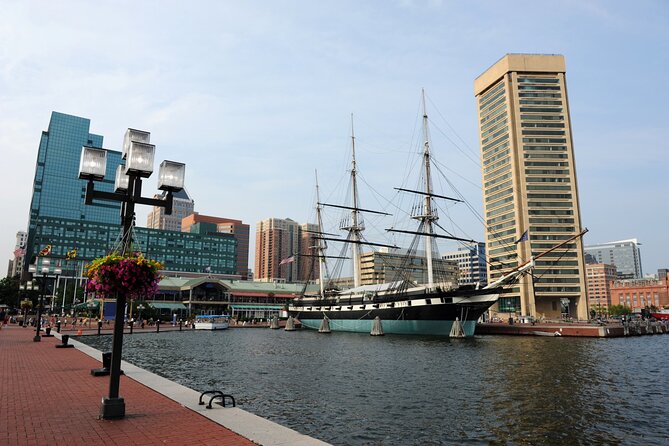
From the waterfront, the route moves toward Baltimore City Hall. The building’s grand design is hard to miss, and the audio adds a grim political story. In 1883, a dispute between Democratic politicians James Busey and William Harig turned violent outside the building. After a fistfight, both men drew pistols. Harig shot Busey, who died from his wounds.
It is a striking reminder that political conflict in the nineteenth century was not always confined to speeches and ballots. The story also gives City Hall a human edge, rather than treating it as a photogenic building without context.
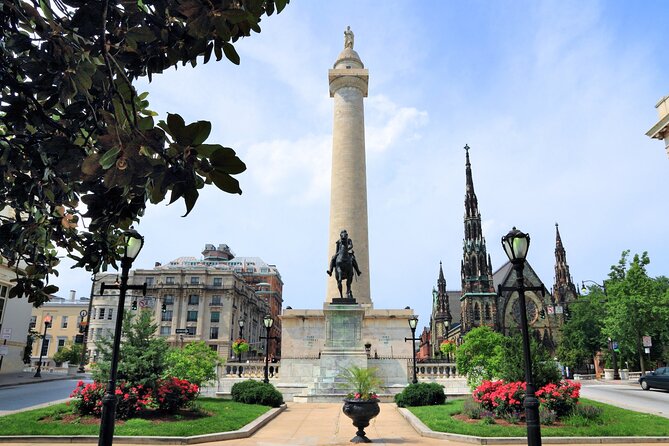
Next comes Mount Vernon Place and Baltimore’s Washington Monument. The monument predates the better-known structure in Washington, D.C. Architect Robert Mills designed Baltimore’s monument first and later reused the basic idea for the much larger Washington monument in the capital.
This is one of the tour’s most useful architectural details. You can look at the two monuments differently after learning that Baltimore’s was not a copy of the one in Washington. The Mount Vernon area also gives you a chance to stop, take photos, and reset before the route moves on.
More Self-Guided History Audio Tours in the USA:
- Taormina: Ancient Theater Skip-the-Line Ticket & Audio Guide
★ 4.5 · 2,412 reviews - Athens: Ancient Agora E-Ticket and Audio Tour
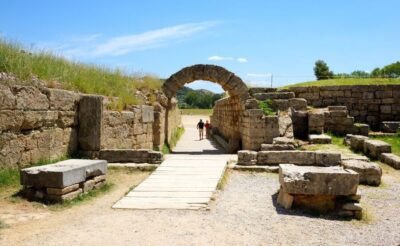
★ 3.9 · 413 reviews - Katakolo Port: Transfer to Ancient Olympia and VR Audio Tour
★ 4.1 · 403 reviews - Budapest Paddle Steamer Danube Cruise with Tokaj & Audio Guide
★ 4.5 · 338 reviews
Poe’s grave and the city’s literary mystery

Edgar Allan Poe appears several times, and the stop at his grave is one of the tour’s most memorable stories. The audio explains the tradition of the Poe Toaster, a mysterious figure who reportedly visited Poe’s grave on the writer’s birthday beginning in the 1930s.
The visitor wore black, hid his face with a wide-brimmed hat and white scarf, raised a glass of cognac, and left three roses with the bottle. The ritual continued for decades before the visits stopped. The identity of the visitor was never confirmed.
Poe’s grave is a good example of how the tour combines documented history with local legend. You get the facts, the mystery, and enough background to decide how seriously you want to take the ghostly side of the story.
The nearby H. L. Mencken House adds another literary stop. Mencken was a major Baltimore writer and critic, and the house helps widen the tour’s view beyond Poe. The audio does not ask you to spend an entire day on literature, but it gives you a reason to notice Baltimore’s role in American writing.
Babe Ruth, Federal Hill, and the road to Fort McHenry
The Babe Ruth Birthplace and Museum connects the city to baseball. Ruth was born in Baltimore, and the stop points toward his early life and later fame. Oriole Park at Camden Yards appears later in the route, creating a useful link between the city’s baseball beginnings and its modern stadium.
Federal Hill Park provides a scenic pause and a clear change of pace. From here, you can take in views toward the harbor and understand Baltimore’s geography better than you can from a moving car. If you stop, be mindful of parking and traffic, since the audio does not arrange those details for you.
The route then heads to Fort McHenry National Monument and Historic Shrine. This is arguably the most important historical stop on the tour. In 1814, nineteen British warships approached Baltimore, and roughly 1,000 defenders prepared for an attack. The fort endured heavy bombardment, but its reinforced defenses held.
The story becomes familiar through Francis Scott Key, who saw the American flag still flying over the fort after the battle. He wrote a poem inspired by that sight, and the poem later became the national anthem. The Star-Spangled Banner Flag House adds more context about the flag and the people who made it.
Fort McHenry is also the place where you are most likely to want a separate admission ticket and extra time. The audio introduces the setting, but it cannot replace walking the grounds, entering the buildings, or seeing the harbor from the fort itself. Plan ahead if the fort is a priority, since attraction hours can change and admission is not included.
Families, museums, and Baltimore’s wider story
The route includes Port Discovery Children’s Museum, which gives families a possible indoor activity. The tour does not include entry, but the stop helps you identify a place to visit if you are traveling with children.
You will also hear about the Mother Seton House on North Paca Street. Elizabeth Ann Seton lived there temporarily and later became the first American-born person canonized as a saint. Her story includes a move to Italy with her sick husband, his death, and her conversion to Catholicism.
The Walters Art Museum adds an art-focused option. Like the other museums on the route, it is an optional visit rather than part of the tour price. The audio can help you decide where to spend your limited time, but you should check opening hours yourself before setting out.
Mount Clare Museum House and the B&O Railroad Museum bring in Baltimore’s industrial and transportation past. The railroad museum is particularly relevant to the city’s growth, since Baltimore played an important role in early American rail travel. These stops help explain how the city developed beyond its waterfront.
Poe’s death and the route’s final stops
The tour returns to Poe’s story at the site of his death, formerly connected with Church Home and Hospital. Poe disappeared while traveling from Richmond toward Philadelphia in September 1849. He was later found in Baltimore in a distressed condition and died at the hospital.
The exact cause of his death remains uncertain. The tour handles this mystery as part of the city’s literary identity, but you should not expect a definitive answer. That uncertainty is part of why Poe continues to attract attention.
The final major stops include Oriole Park at Camden Yards and the Maryland Science Center. Camden Yards is worth seeing even if you are not attending a baseball game. The stadium is tied to generations of Baltimore baseball and gives the tour a modern sporting finish.
The Maryland Science Center offers another family-friendly option and is one of the country’s older scientific institutions. The route ends at the Star-Spangled Banner National Historic Trail area near Fort Avenue, although the exact experience depends on how closely you follow the route and how many optional stops you visit.
How the app works in real Baltimore traffic
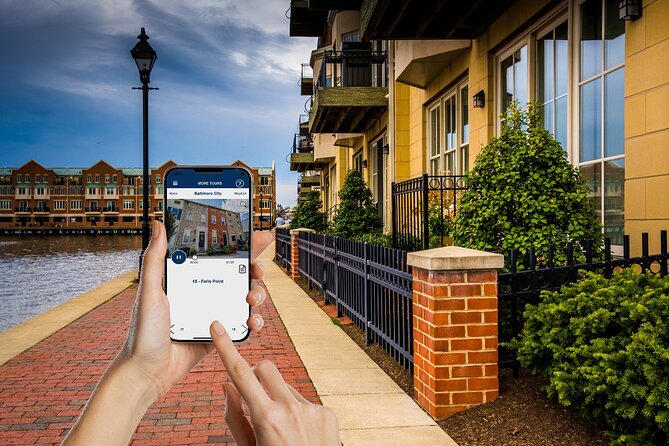
Before leaving Wi-Fi or a strong cellular connection, download the separate Action Tour Guide app and enter the password sent by email and text. The tour is designed to work offline after that. An iPhone using iOS 15 or later, an Android device using version 9 or later, or an iPad or tablet with GPS and cellular service is recommended.
You can connect the phone to your car stereo by Bluetooth, USB, or AUX. Apple CarPlay works with the audio, while Android Auto support is described as forthcoming. For walking sections, earbuds are the better choice.
The automatic playback is convenient. As you reach each location, the next story should begin without requiring you to tap the screen. The trouble is that the system can trigger the next point before you finish the current story if you move too quickly. One practical fix is to slow down, pull over safely, or walk the stop rather than rushing from marker to marker.
GPS problems have caused real frustration. Tall buildings, downtown signal issues, road closures, and missed turns can put you off course. The app does not always redirect clearly. I strongly suggest keeping Google Maps or another navigation tool available, especially if you are the only person in the car. Never try to solve a route problem while moving.
Price, timing, and who gets the best value
At $16.99 per group of up to four, this is inexpensive compared with a private guide or a sightseeing vehicle. A full car can hear the same narration for one fee, and the lifetime access makes the purchase more useful than a single-use ticket.
The value is strongest if you plan to visit several sites but do not need entry to all of them. You can listen outside the National Aquarium, Fort McHenry, the museums, and the railroad museum, then choose where to spend your admission money.
It is less useful if you want a perfectly managed route or a person who can answer questions. The tour takes about one to two hours of driving time, but parking, walking, and attraction visits require longer. You can also pause it for lunch or spread it over several days.
Free cancellation is available until 24 hours before the scheduled start. Inside that window, the purchase is nonrefundable. Since the access does not expire, you can also save the tour for a later Baltimore visit.
Should you book this Baltimore audio tour?
Book it if you want a low-cost introduction to Baltimore, especially with three or four people sharing one car. I particularly like it for first-time visitors who want a broad mix of harbor history, African-American history, Poe stories, baseball, architecture, and Fort McHenry without following a fixed group schedule.
Skip it if you need reliable turn-by-turn navigation or if you plan to drive alone and cannot safely manage an app. The storytelling is the best part, while the navigation requires patience and a backup map.
My practical choice would be to use this as a flexible first look, then return to Fort McHenry, Fells Point, the museums, or the Inner Harbor on foot. Used that way, $16.99 buys useful context without locking you into someone else’s timetable.
FAQ
How much does the Baltimore audio tour cost?
The price is $16.99 per group of up to four people. It is not charged separately for each passenger in the same car.
How long does the tour take?
The route is over nine miles long and takes about one to two hours to complete while moving. With walking, photos, meals, parking, and attraction visits, you should allow up to three hours or more.
Where does the tour begin?
It begins at the Baltimore Visitor Center on Light Street in Baltimore, Maryland.
Where does the tour end?
The listed ending point is the Star-Spangled Banner National Historic Trail near 2400 East Fort Avenue in Baltimore.
Is this a guided tour with a person?
No. It is a private, self-guided audio tour. No guide meets you at the starting point.
Does the tour include attraction admission?
No. Entry fees, attraction passes, and reservations are not included. This applies to places such as the National Aquarium, Fort McHenry, museums, and other attractions along the route.
Does the audio tour expire?
No. The tour includes lifetime access, so you can use it on another Baltimore visit or replay it as often as you wish.
Do I need cellular service during the tour?
You need strong Wi-Fi or cellular service to download the tour first. After downloading, it is designed to work offline with offline maps.
What should I bring?
Bring a charged phone, headphones or earbuds for walking sections, and a backup navigation app. You can connect your phone to your car stereo by Bluetooth, USB, or AUX.
Just added around the USA
- The Story of Austin: Downtown History Walking Tour★ 5.0 · 216 reviews
- Historic Austin Private Pedicab Tour★ 5.0 · 149 reviews
- 2-Hour Food, History and Street Art Tour of Ponce City Market★ 5.0 · 159 reviews
- Austin’s Afternoon Stroll★ 4.5 · 33 reviews
- Atlanta Then and Now Private History Tour★ 5.0 · 23 reviews
- 2 Hour Historic Market Food Tour and Hands-On Biscuit Class★ 5.0 · 251 reviews
- Private Atlanta History Tour From Civil War to Civil Rights★ 5.0 · 47 reviews
- Atlanta Historical Homes Tour★ 4.5 · 26 reviews
Self-Guided History Audio Tours, compared.

Taormina: Ancient Theater Skip-the-Line Ticket & Audio Guide
Read our review →
Katakolo Port: Transfer to Ancient Olympia and VR Audio Tour
Read our review →
Budapest Paddle Steamer Danube Cruise with Tokaj & Audio Guide
Read our review →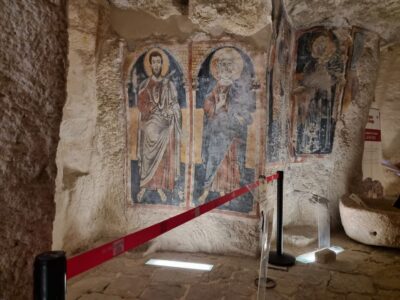
Matera: Sassi di Matera Historical Self-Guided Audio Tour
Read our review →
Hagia Sophia History Museum Entry with Audio Guide
Read our review →

Browse the lists this tour appears in