
Review · AVIGNON
Roman Heritage & Wine Legacy
Wine and Roman stone make a fine afternoon. This five-hour outing pairs two excellent Provençal pleasures: Châteauneuf-du-Pape wine tastings and the Pont du Gard, one of France’s great Roman monuments. I like the small maximum group of eight and the warm, personal guiding style of Gordana, whose local stories bring both wine and history to life.
I also like the timing. Leaving Avignon at 2:30 pm can put you at the Pont du Gard in softer evening light, and the air-conditioned vehicle makes the road time easier. The main drawback is the distance between the wine country and the aqueduct, about 45 minutes according to the operator, so some of your five hours will be spent driving.
Key points to know before booking
- Two Châteauneuf-du-Pape winery visits: The tastings give you more than one producer’s view of the appellation, with explanations of grapes, growing methods, and winemaking.
- A late-day Pont du Gard stop: The Roman aqueduct is especially appealing when the afternoon heat begins to ease and the light turns warmer.
- A genuinely small group: The vehicle carries no more than eight participants, which allows more conversation with Gordana and easier questions at the wineries.
- A guide with a personal touch: Gordana is praised for her humor, local knowledge, language skills, and thoughtful gestures, including bringing cold water during a 41 C heatwave.
- A practical half-day from Avignon: Pickup and return are at the Avignon tourism office, with transport, entrance to Pont du Gard, and guiding included.
- A tour for wine and history fans: You get both, but neither stop receives a full day, and the connecting drive may feel long if you want a very active itinerary.
Why this Avignon tour works
Avignon is a fine base for exploring Provence, but its most famous sights can make your day feel heavy on palaces, churches, and stone lanes. This excursion changes the rhythm. You leave the city, cross the Rhône region, taste local wine, and then walk beside a Roman aqueduct that still looks almost impossible.
That mix is the central appeal. Châteauneuf-du-Pape gives you a close look at a living agricultural tradition. Pont du Gard gives you a large-scale reminder of what the Romans could build with careful planning and stubborn engineering. The two stops do not tell the same story, and that contrast keeps the afternoon varied.
The tour costs $113.84 per person. I consider that a fair price if you value a small group, a dedicated guide, transport from Avignon, two winery visits, and admission to Pont du Gard. It is less attractive if you mainly want a wine tasting, since a large part of the outing is devoted to the aqueduct and driving between sites.
The experience is offered in English and uses a mobile ticket. Confirmation arrives within 48 hours, subject to availability. Free cancellation is available until 24 hours before the 2:30 pm start time.
More Wine Tours in France:
- Nice : Wine Tasting at a Historic Château in a Land Rover !
★ 4.9 · 156 reviews - Nice: Sunset & Wine Tasting in a historic Land Rover
★ 5.0 · 91 reviews - Avignon: Historic District Guided Food & Wine Walking Tour
★ 4.8 · 84 reviews
Meeting Gordana in Avignon at 2:30 pm
The meeting point is the Office de Tourisme d’Avignon at 41 Cours Jean Jaurès. The tour returns to the same place, which makes planning easier if you are staying in central Avignon or connecting the outing with an evening meal.
The air-conditioned vehicle matters in Provence. Afternoon heat can be serious, especially in summer, and the drive between stops is part of the five-hour total rather than extra time. The group limit is eight, though some departures may be smaller. One couple even had an almost private outing in the low season.
Gordana is the heart of the experience. Her style comes through as friendly, funny, energetic, and deeply connected to Provence. She is also praised for her history knowledge and language skills. A separate driver may handle the vehicle, giving Gordana more freedom to talk with you and focus on the visit.
That arrangement can be a real advantage on narrow country roads and busy routes. You can listen, ask questions, and look out the window instead of worrying about directions. The driving itself is not the point of the tour, but safe and comfortable transport makes the whole afternoon feel more relaxed.
The vineyards of Châteauneuf-du-Pape
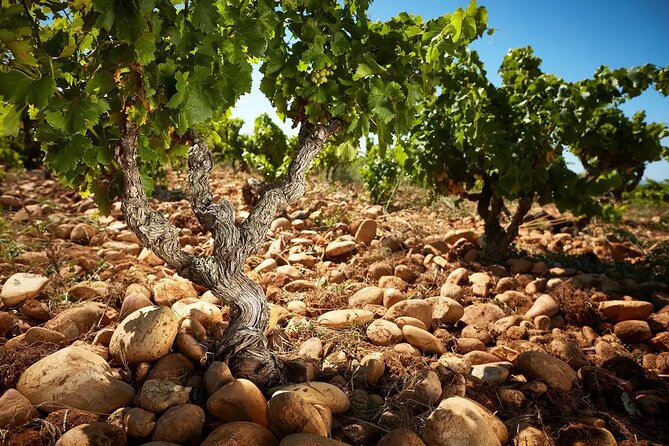
Châteauneuf-du-Pape is one of the best-known wine names in France, and the visit gives you a useful introduction without requiring prior wine expertise. The area is marked by hot, dry conditions, scrub, vines, and stony, sandy soils. Those physical details matter because they shape how the region farms and what the wine tastes like.
Expect the wine portion to include two tastings at different wineries. That is more useful than visiting one cellar alone. You can compare producers, hear different explanations, and get a better sense of how one appellation can still contain varied styles.
The tastings are not treated as a quick pour and goodbye. Gordana explains the region, the grapes, the growing practices, and the broader place of wine in Provençal life. At one visit, a winemaking expert added more detail about the vineyards and the finer points of production. The strongest part of this stop is the chance to ask questions in plain language, without needing to arrive as a wine specialist.
I would give yourself permission to taste with curiosity rather than pressure. You do not need to identify every aroma or remember every grape. Pay attention to how the wines differ, what the producer says about the soil and farming, and which bottles you actually enjoy.
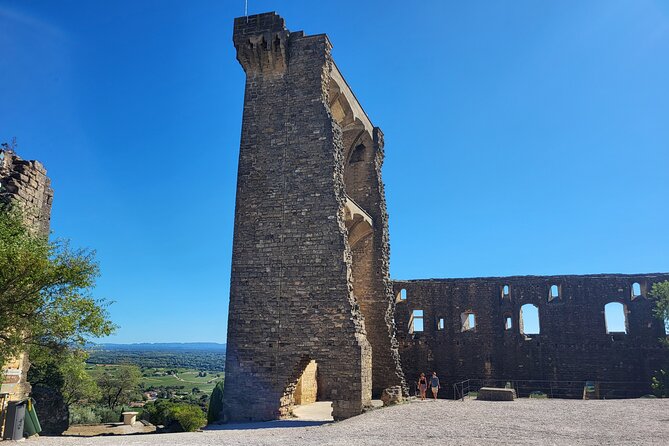
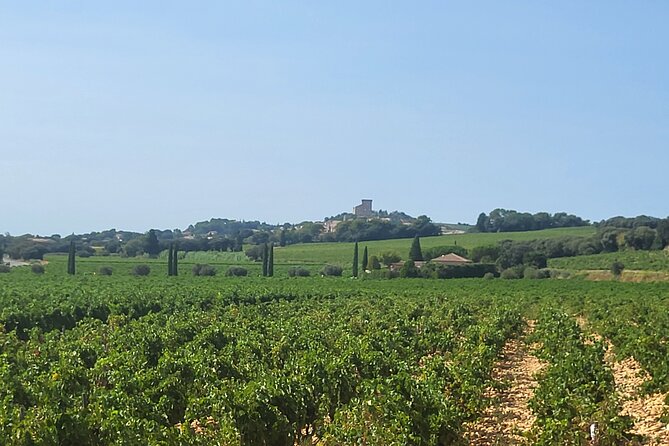
The setting also adds to the appeal. The vineyards sit among dry scrub and pale, rough ground, a very different view from the leafy lanes and stone buildings of Avignon. From higher ground, you might find broad views over the vines and nearby chateaus. The exact wineries are not specified in advance, so the character of this portion can vary by departure.
The tour’s reviews point to generous tastings and strong winery choices. One afternoon included two separate vineyard visits, while another included an expert discussion and an unexpected cheese snack. Those details are not guaranteed, but they show the kind of personal attention this operator tries to provide.
The drive to Pont du Gard
Here is where you should set realistic expectations. Châteauneuf-du-Pape and Pont du Gard are not next door. The drive between them is about 45 minutes, and that road time is included in the five-hour duration.
Some people will see the drive as a pleasant chance to hear more about Provence, Avignon, and the Roman site. Others will feel the afternoon is stretched too far. If you want an unhurried wine day, choose a wine-only tour instead. If you want both wine and a major Roman monument, the transfer is the price of combining them.
Gordana’s storytelling helps. She discusses regional history during the journey, so the vehicle does not feel like dead time. Still, I would not book this experience expecting five hours of continuous sightseeing. It is a half-day outing with two main visits separated by road travel.
The timing also depends on the season and the day’s traffic. The stated start is 2:30 pm, and the tour ends back at the Avignon meeting point. Since the exact return time is not given, avoid booking a tight dinner reservation immediately afterward.
A few more history tours around France worth a look
- Paris: Louvre Museum Entry with History of Mona Lisa
★ 3.9 · 2,823 reviews - Paris: Dark History and Ghostly Guided Walking Tour
★ 4.7 · 1,000 reviews - Vieux Lyon Cultural & Historical Walking Guided Tour (English)
★ 5.0 · 942 reviews - Bordeaux: Historic Center & Chartrons District Bike Tour
★ 4.8 · 709 reviews
Pont du Gard, a Roman engineering lesson
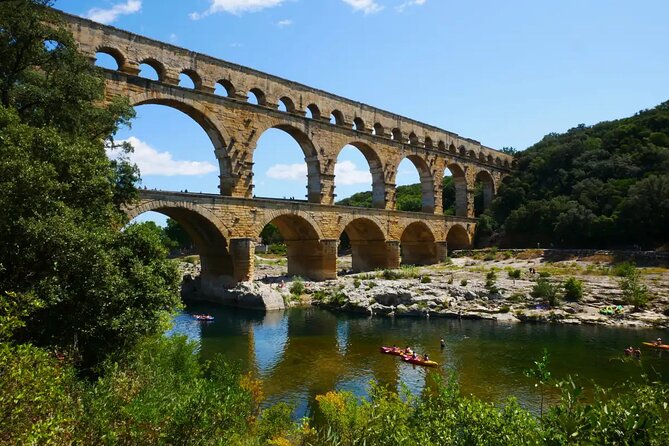
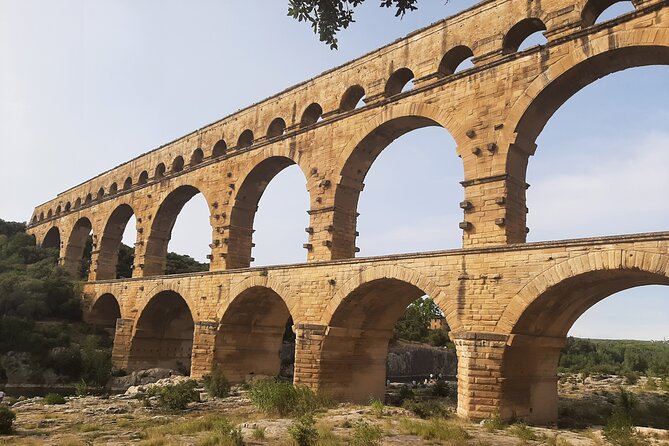
The Pont du Gard is the grand finish. It is a UNESCO World Heritage Site and the highest Roman bridge in the world. More precisely, it is part of an ancient aqueduct system, built to carry water across the valley. Even if you have little interest in Roman engineering, the scale is hard to ignore.
The visit includes admission and about an hour at the site. You have time for a leisurely walk and views of the arches, rather than only a quick roadside photograph. The monument looks especially striking in evening light, and several outings have arrived near sunset.
The hour is enough for a strong first impression, but not for every possible path or museum activity. You should think of this as a focused stop. Gordana provides the historical setting, then you get time to walk, take photographs, and look closely at the stonework.
Summer heat deserves attention. One outing reached 41 C at the aqueduct, and cold water brought from the vehicle became an important comfort. The vehicle is air-conditioned, but the Pont du Gard visit is outdoors, so bring sun protection and wear shoes suitable for walking. Those are practical choices, not minor details, especially after a wine tasting and a warm drive.
There is also a pleasing change in mood here. The winery visits are social and conversational. At Pont du Gard, you can slow down and look up. The arches, the river setting, and the open space give the final hour a sense of scale that a cellar cannot provide.
How much personal attention should you expect?
The maximum group size is eight. That is small enough for direct conversation and far more personal than a large coach excursion. It also helps at the wineries, where questions about grapes, farming, and production can be answered without competing with a crowd.
Gordana receives nearly all the praise for the tour’s success. Her strengths are not limited to facts. She is described as warm, upbeat, entertaining, and unhurried. That last quality matters. Wine tasting can feel rushed when the guide is trying to keep a big group on schedule, but a smaller vehicle gives the afternoon more room to breathe.
Her knowledge of Provence covers more than bottles. She connects Avignon, the Rhône wine region, and Pont du Gard, so the tour feels like one regional story rather than two unrelated attractions. She also appears attentive to simple comforts, from cold water in extreme heat to an occasional cheese snack.
The experience is not dependent on Gordana alone, since departures may involve a driver and winery staff. Still, her personality shapes the outing. If you enjoy asking questions and chatting as you go, you are likely to get more from the day than someone who wants to remain entirely independent.
The value of $113.84 per person
At $113.84, the tour sits in the reasonable range for a five-hour small-group excursion. The value comes from several pieces working together:
- Round-trip transport from Avignon
- An air-conditioned vehicle
- A maximum group of eight
- Two wine tasting visits in Châteauneuf-du-Pape
- A guide who covers wine and regional history
- Admission to Pont du Gard
Lunch is not included, and this is an afternoon tour rather than a full meal experience. The supplied details also do not promise a set number of wine samples or a specific food pairing. If lunch matters to you, eat before departure or plan food after returning to Avignon.
I would compare the price with the cost and effort of arranging these visits alone. You would need transport, winery appointments, admission, and a plan for getting between places. The tour saves you that work and adds local interpretation.
The value drops if you dislike scheduled group outings or already have a car and firm winery bookings. It also drops if your main goal is an extended tasting session. In that case, the operator itself points toward a wine-only option.
Who should book this experience?
I would recommend it to couples, friends, solo visitors, and families with older children who want a compact introduction to the area. It suits people who like a guide’s stories and prefer not to drive after wine tasting.
It is particularly good for first-time visitors to Avignon. You get a glimpse of the Rhône wine world, a major Roman site, and a bit of regional context in one afternoon. It also works well for anyone with limited time who wants more than city sightseeing.
Wine enthusiasts will appreciate the two producers and the chance to compare approaches. Beginners should feel comfortable too, since the explanations cover basic growing and winemaking ideas rather than assuming advanced knowledge.
I would hesitate to recommend it to you if you want a slow, luxurious day at one estate. The schedule has two destinations and a significant transfer. The tour is also not ideal if you need a completely private vehicle, since the normal format is a small group of up to eight.
Most participants can take part, and service animals are allowed. The meeting point is near public transportation. The operator states that confirmation is subject to availability and that a minimum number of participants is required for the tour to run.
What to bring and how to prepare
Wear comfortable shoes for the walk at Pont du Gard. The visit lasts about an hour, and the site can be hot and exposed, especially in summer.
Bring water, sunglasses, and sun protection. The vehicle is air-conditioned, but the Roman site is outdoors. A hat is a sensible addition in the hotter months.
Keep your afternoon open beyond the stated five hours. The tour includes all travel time, but traffic or the pace of the group can affect the return. Since no lunch is included, plan a meal before the 2:30 pm departure or after you return.
Use the mobile ticket and arrive at the tourism office with enough time to find the meeting point. You can cancel for a full refund up to 24 hours before the start, but changes or cancellations inside that window are not accepted.
Should you book Roman Heritage & Wine Legacy?
Book it if you want two very different sides of Provence in one small-group outing. The combination of Châteauneuf-du-Pape and Pont du Gard is memorable, and Gordana’s personal, cheerful guiding style appears to be a major reason the experience works so well.
Skip it if you want a pure wine tour, a private vehicle, or a completely unhurried schedule. The 45-minute transfer is the one real compromise. For most people who want wine, Roman history, comfortable transport, and a well-guided afternoon from Avignon, $113.84 is a sensible price for the mix.
FAQ
Where does the tour begin and end?
It begins at the Office de Tourisme d’Avignon, 41 Cours Jean Jaurès, 84000 Avignon, France, and ends back at the same meeting point.
What time does the tour start?
The scheduled start time is 2:30 pm.
How long does the experience last?
The tour lasts approximately five hours, including driving time between Avignon, Châteauneuf-du-Pape, and Pont du Gard.
Is lunch included?
No. Lunch is not included in the price.
How many people can join the tour?
The tour has a maximum of eight participants.
Can I cancel for a full refund?
Yes. You can cancel at least 24 hours before the experience start time for a full refund. Cancellations or changes made less than 24 hours in advance are not accepted.
Just added around France
- Private Walking Guided Tour of Historic Bayeux English or French★ 5.0 · 36 reviews
- Historic Bayeux Daily Group City Tour In English 2 hrs (Apr-Sept)★ 5.0 · 220 reviews
- Roman Sites and Historical Places Day Trip from Avignon★ 4.0 · 101 reviews
- Enchanting Historical Walking Tour in Avignon★ 5.0 · 53 reviews
- History and Van Gogh in Provence from AIX-EN-PROVENCE★ 4.5 · 24 reviews
- Gourmet & Cultural Tour Aix En Provence English / Espanol★ 5.0 · 88 reviews
- Toulouse Food & History Tour with a Chef (in English)★ 5.0 · 59 reviews
- The historic district of Montmartre★ 4.9 · 66 reviews
Wine Tours, compared.

Douro Valley: Historical Sites, Wine Experience, Lunch & Cruise
Read our review →
Tapas Walking Tour with Food, Wine, and History
Read our review →
Live Fado Show with Port Wine in Historic Center
Read our review →
Sevilla Food Tour: Tapas, Wine, History & Traditions
Read our review →
Valencia Old Town Tour with Wine & Tapas in 11th Century Historic Monument
Read our review →
Barcelona Tapas Walking Tour: Food, Wine & History
Read our review →
Ultimate Seville Tapas, Wine & History Small Group Tour
Read our review →
Browse the lists this tour appears in