Review · ASPEN
Aspen’s Past to Present Historic Tour
Aspen’s best stories are on foot. This 90-minute walk through downtown connects silver-mining days, local characters, old buildings, mountain views, and modern Aspen without turning the town into a dry museum lesson. I especially like the small group limit of 20 people and the fact that the tour stays focused on the central streets, so you can learn the town’s story while getting your bearings.
I also like the guide-led storytelling. Dean is repeatedly praised for his friendly style, useful restaurant suggestions, props, and ability to answer questions. The main consideration is simple: this is a walking tour in an alpine town, and it operates in all weather. Bring suitable clothing and shoes, because the experience depends on being outside for the full 90 minutes.
Key points at a glance
- Meet at the Wheeler Opera House: The tour begins at 320 E Hyman Avenue, a central location that is easy to reach on foot or by nearby public transportation.
- Aspen’s silver-mining past comes alive: You learn how mining shaped the town and hear about the people and legends behind Aspen’s early years.
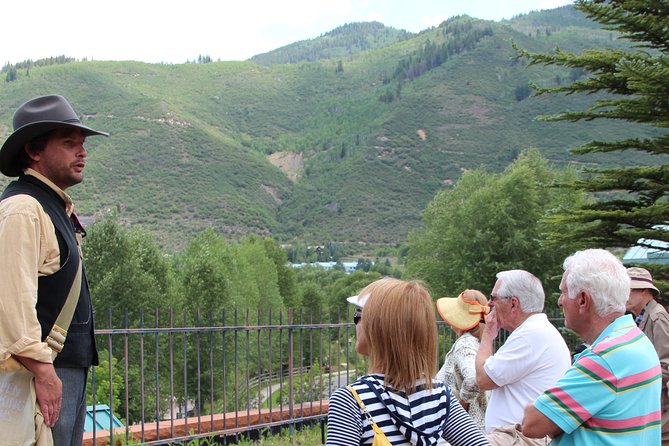
- Dean brings the stories to life: He has more than 20 years of local experience and may use historic items or props to make the past easier to picture.
- Mountain views are part of the tour: Aspen Mountain and Smuggler Mountain provide a scenic backdrop while the guide explains their place in local history.
- The route ends at Mill Street Fountain: This is a pleasant photo stop and a useful look at how locals use downtown public spaces today.
- Good value at $45: For a 90-minute introduction to Aspen, the price is reasonable, especially if you are visiting for the first time.
Why a walking tour is a smart first look at Aspen
Aspen can seem to explain itself through expensive shops, polished hotels, and ski-town scenery. That surface tells only part of the story. The town’s identity was shaped first by silver mining, then by periods of reinvention, and later by its role as a major mountain destination.
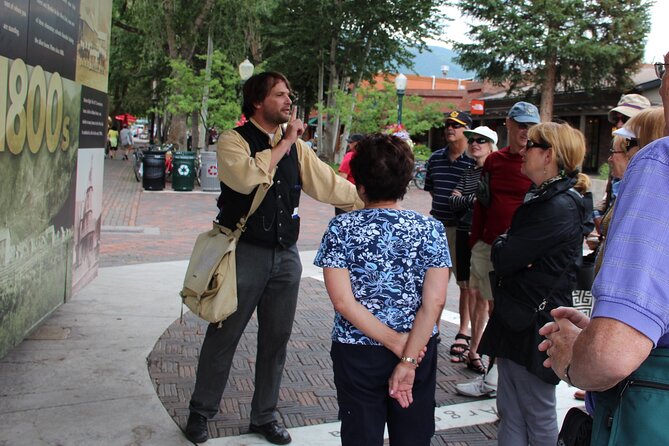
This tour gives you a timeline while you walk through the places where that story unfolded. I like this format because you do not spend an hour and a half sitting in a room looking at photographs. You see the streets, buildings, mountains, fountains, and public spaces as the guide explains how they fit together.
The route also helps you understand the contrast between Aspen’s past and present. The town can feel modern and highly polished, yet mining history remains visible in the surrounding mountains and in the stories connected to downtown.
At $45 per person, the tour is not the cheapest way to fill 90 minutes in Aspen. Still, it is a fair price for a professional guide, a small group, local interpretation, and a useful orientation to one of Colorado’s best-known mountain towns. If you are new to Aspen, I would take this early in your stay. It can make later walks through downtown more meaningful.
A few more history tours around the USA worth a look
- History and Hauntings of Salem Guided Walking Tour
★ 5.0 · 14,564 reviews - Charleston’s Old South Carriage Historic Horse & Carriage Tour
★ 5.0 · 10,023 reviews - Beneath The Streets Underground History Tour
★ 4.5 · 8,006 reviews
Starting at the Wheeler Opera House
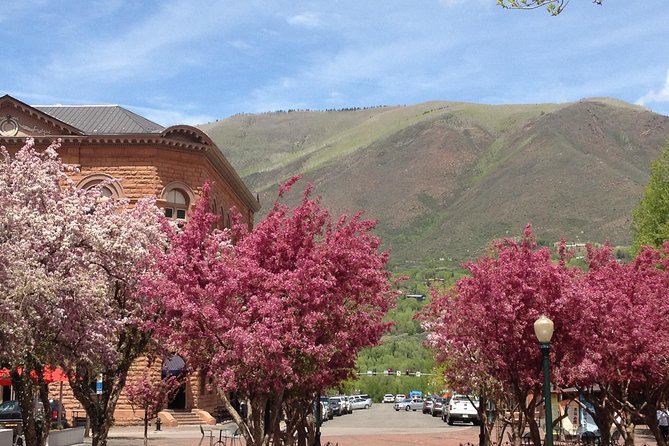
The meeting point is in front of the Wheeler Opera House at 320 E Hyman Avenue. This is a practical starting place because it puts you in the middle of historic downtown rather than at a remote visitor center or hotel pickup point.
You should arrive ready to walk and dressed for changing mountain weather. The tour runs in all conditions, and the information provided does not promise an indoor alternative. Comfortable shoes matter more than fashionable ones here.
The first part of the experience sets the tone by placing Aspen’s past in the middle of its present-day streets. Rather than treating history as something separate from modern life, the guide points out how the town’s earlier chapters still shape what you see around you.
The group can include up to 20 people. That is large enough to have a social feel but small enough for the guide to address questions. Several people praised Dean’s ability to encourage questions, so you should feel free to ask when a building, name, or local story catches your attention.
Downtown stories and the people behind Aspen
The heart of the tour is the walk through historic downtown. The focus is not just on dates and construction styles. You hear about the characters who helped make Aspen the mountain town it is today.
That human angle is one of the tour’s strongest features. A list of mining statistics can explain how Aspen began, but stories about real people make the place easier to remember. Dean is described as animated, personable, and a strong storyteller, which matters when the group is standing outside rather than viewing a display indoors.
The guide also brings physical evidence and props on some tours. That hands-on touch can help you picture the past more clearly than a spoken explanation alone. The exact props may vary, so I would treat this as a welcome possibility rather than a guaranteed part of every departure.
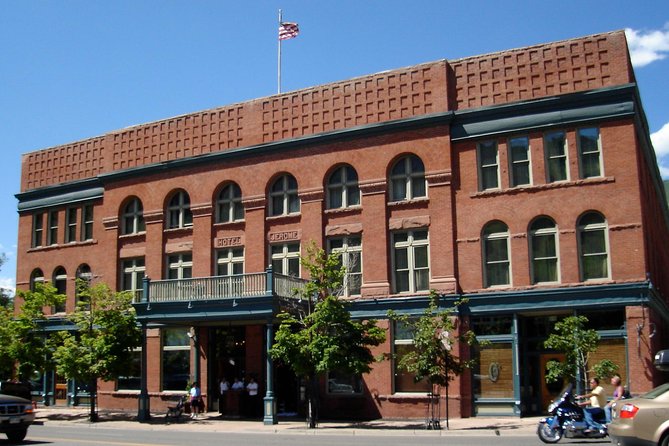
Architecture also receives attention. You may learn why certain buildings matter and how downtown changed over time. This is useful if you plan to explore on your own later, because you will have a better idea of what deserves a closer look.
The pace is designed for sightseeing rather than exercise. Even so, you remain on your feet for about an hour and a half. If you prefer a very slow stroll with frequent seating, this may feel active. For most people who can participate in a normal walking tour, the length should be manageable.
Aspen Mountain provides the scenic backdrop
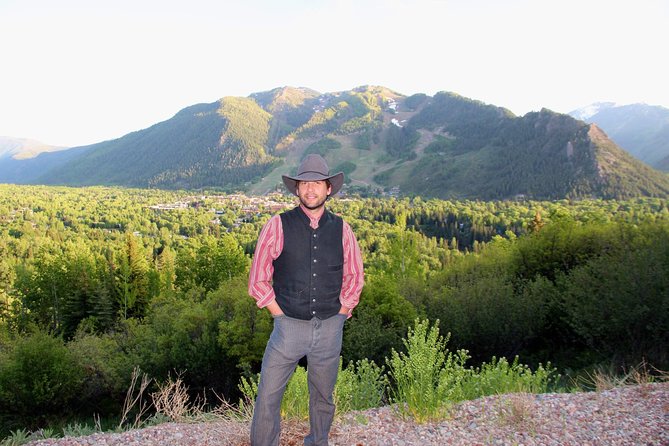
One of the pleasures of this experience is the way history is tied to mountain views. Aspen Mountain appears as more than a pretty background. The guide uses the view to explain part of Aspen’s story and local lore.
This gives the tour a strong sense of place. You are not learning about Aspen in an abstract way. You are looking toward the mountain while hearing why it matters to the town’s identity.
The views are also a practical benefit for anyone carrying a camera. Aspen is photogenic from nearly every angle, but a guide can help you pause at moments when the scenery connects naturally with the story. The tour is not advertised as a dedicated photography walk, so you should keep your camera time reasonable and stay with the group.
Weather can change how this part feels. In clear conditions, the mountain views may be one of the tour’s most memorable elements. On a cloudy or wet day, the scenery may be less dramatic, but the historical explanation still gives the stop value.
Same place, a different slice of the past:
- Boston: Freedom Trail History Small Group Walking Tour
★ 5.0 · 6,450 reviews - Historic Charleston Guided Sightseeing Walking Tour
★ 5.0 · 6,216 reviews - Charleston Horse-Drawn Carriage Tour: Explore Historic Charleston
★ 5.0 · 3,561 reviews - Savannah History and Haunts Candlelit Ghost Walking Tour
★ 5.0 · 3,235 reviews
A modern library with a look back
The route includes a modern library that showcases historic images. This is a useful contrast to the older streets and mining stories.
The library helps show that Aspen preserves its past in more than one way. You get the old town outdoors, then see historic images presented within a modern public building. That combination reinforces the tour’s past-to-present theme.
The stop may appeal especially to people who want visual evidence of how Aspen changed. Historic photographs can reveal differences in streets, buildings, clothing, and daily life that are difficult to capture in a short spoken explanation.
Because the experience is primarily a walking tour, do not expect a long museum visit. The library is one stop within a broader route, not a substitute for a full history museum. Its value comes from the way it adds images to the stories you are hearing.
Smuggler Mountain and the mining story
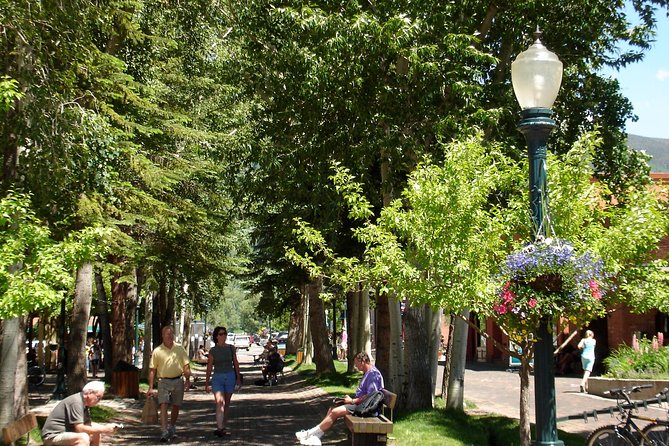
Smuggler Mountain is another important point on the walk. Here, the guide connects the mountain’s mining past with the ways the area is used for recreation today.
This is a particularly good example of the tour’s central idea. The same mountain can represent hard mining work, local legend, scenic beauty, and outdoor activity, depending on which chapter of Aspen’s story you are considering.
The stop also gives the history a physical setting. Rather than hearing only that Aspen grew through silver mining, you look toward a place tied to that industry. That makes the subject more concrete and helps explain why the surrounding mountains are so important to the town.
The view may also be one of the strongest photo opportunities along the route. Again, conditions matter. Clear weather will give you a sharper mountain view, while poor weather may make the stop more about the story than the scenery.
Mill Street Fountain and present-day Aspen
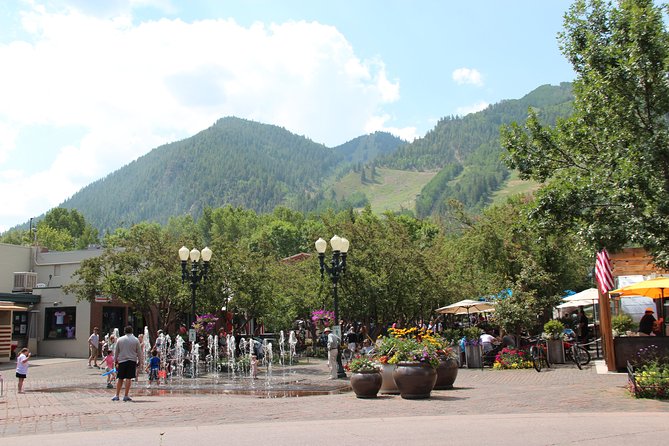
The tour finishes at or near the Mill Street Fountain before returning to the starting point. When the fountain is operating in summer, it becomes a gathering place for local children and dogs.
That detail gives the stop a cheerful, everyday quality. Aspen is not only a historic mining town or a ski destination. It is also a place where people use public spaces for ordinary summer routines.
The fountain is also a good place for photographs of Aspen’s pedestrian mall. This lets you shift from stories about early mining days to a view of how the downtown area functions now.
Because the activity ends back at the meeting point, you do not need to arrange a separate ride from the final stop. You can continue exploring downtown afterward, find a meal, or return to your lodging using the same central area.
How Dean’s guiding style affects the experience
The guide can make or break a history walk, and Dean receives especially strong praise for his approach. He is described as friendly, animated, personable, and willing to answer questions.
People also appreciated that he offered practical restaurant suggestions. That is a small but useful bonus, especially if you take the tour near the beginning of your stay and want local ideas for dinner.
Dean has lived in the area for more than 20 years, according to the information provided. That length of local experience can add useful context, particularly when the conversation moves beyond formal history into local lore and present-day Aspen.
A few descriptions also indicate that the tour can run slightly longer than the advertised 90 minutes. I would not count on extra time if you have a tight schedule, but a modest extension may happen when the group has questions or the storytelling takes longer than planned.
The tour has a 4.9 rating from 37 reviews, with 97 percent of people recommending it. That is a strong signal, especially because the praise is consistent across couples, families, and friends. The repeated compliments focus on storytelling, local knowledge, useful answers, and the quality of the historical overview.
Who will get the most from this tour?
I think this is best for a first visit to Aspen. It gives you a clear framework for understanding downtown, the mining era, the surrounding mountains, and the town’s modern character.
It also suits repeat visitors who have seen Aspen’s main streets but never learned why they look the way they do. One person specifically described the tour as worthwhile even after visiting Aspen before, which makes sense. Familiar streets often become more interesting once you know their backstory.
Couples and friends should find the pace easy to share, while families can benefit from the stories and hands-on evidence. The tour is also suitable for many people because it stays in downtown and does not require specialized equipment.
Service animals are allowed, and the activity is near public transportation. Most people can participate, but you should still consider the full walking time, outdoor conditions, and the possibility of uneven or tiring pavement.
The tour is offered in English only. If you need another language, this experience will not meet that need.
Price, timing, and practical value
The cost is $45 per person, including taxes, fees, handling charges, and a professional guide. You receive a mobile ticket, and confirmation is sent when you book.
For a 90-minute walking tour, the price seems fair rather than bargain-level. You are paying for interpretation, not transportation or admission to a major attraction. The value improves if you use the tour as an introduction to the town and then spend the rest of your visit exploring with more context.
The tour is often booked about 20 days ahead. That suggests you should not leave it until the last minute if your dates are fixed, especially during a busy Aspen visit.
Free cancellation is available if you cancel at least 24 hours before the start time. A cancellation inside that window is not refunded, and changes are not accepted. The experience also requires a minimum number of people, so a departure could be canceled if that minimum is not reached, with a different date, another experience, or a full refund offered.
Should you book Aspen’s Past to Present Historic Tour?
Book it if you want a friendly introduction to Aspen that combines mining history, local personalities, architecture, legends, and mountain views. The strongest reasons are Dean’s storytelling, the central route, the small group size, and the way the tour links old Aspen with the town you see today.
Skip it if you dislike walking, want a fully indoor history experience, or prefer to explore without a guide. Also think twice if your schedule is so tight that a possible extension beyond 90 minutes would cause trouble.
For most first-time visitors, I would book this early in the stay. At $45, it is a sensible way to get your bearings, learn what shaped Aspen, and collect a few useful ideas for the rest of your time in town.
FAQ
Where does the Aspen’s Past to Present Historic Tour begin?
It begins in front of the Wheeler Opera House at 320 E Hyman Avenue, Aspen, Colorado 81611.
How long does the tour last?
The tour lasts approximately 1 hour and 30 minutes. It may run a little longer when questions and storytelling add time.
Where does the tour finish?
The activity ends back at the meeting point.
How much does the tour cost?
The price is $45 per person. Taxes, fees, handling charges, and a professional guide are included.
What language is the tour offered in?
The tour is offered in English.
How large can the group be?
The maximum group size is 20 people.
Does the tour operate in bad weather?
Yes. It operates in all weather conditions, so you should dress appropriately.
Are service animals allowed?
Yes. Service animals are allowed on the tour.
Can I cancel for a full refund?
Yes, if you cancel at least 24 hours before the experience starts. Cancellations made less than 24 hours before the start time are not refunded.
Just added around the USA
- Historic Music Scene Walking Tour in Asheville★ 5.0 · 26 reviews
- Historic Annapolis Food Tour★ 4.5 · 44 reviews
- Alaska Native Heritage Center Admission Ticket★ 4.5 · 65 reviews
- Annapolis Historic Walking Tour at Harbor and Naval Academy★ 5.0 · 38 reviews
- Downtown Anchorage Food and History Walking Tour★ 5.0 · 199 reviews
- Historic Old Town Albuquerque smart phone App/Audio Walking Tour★ 4.0 · 27 reviews
- 12pm – Public High Noon History, Legends & Lore Tour – Guided Old Town Stroll★ 5.0 · 247 reviews
- PRIVATE History, Legends and Lore Guided Old Town Stroll – 10am or 2pm★ 5.0 · 40 reviews
USA History Tours, compared.
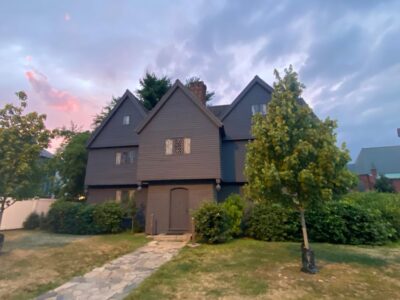
History and Hauntings of Salem Guided Walking Tour
Read our review →
Charleston’s Old South Carriage Historic Horse & Carriage Tour
Read our review →
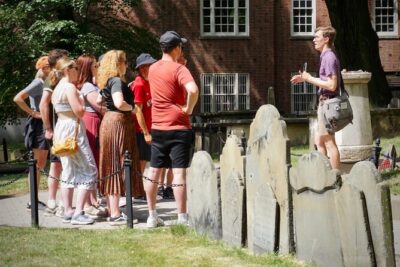
Freedom Trail History Small Group Walking Tour
Read our review →
Historic Charleston Guided Sightseeing Walking Tour
Read our review →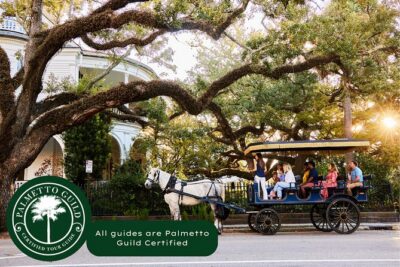
Charleston Horse-Drawn Carriage Tour: Explore Historic Charleston
Read our review →
Savannah History and Haunts Candlelit Ghost Walking Tour
Read our review →